Foot & Ankle
You rolled your ankle.
It swelled up.
You rested, iced it, maybe wore a brace… and eventually, the pain went away.
So why does it still feel unstable months later?
And worse — why does it keep happening again?
If you’ve had more than one lateral ankle sprain, you’re not unlucky. You’re stuck in one of the most common injury cycles in sports and daily life.
Let’s break down why ankle sprains recur — and what actually stops the cycle.
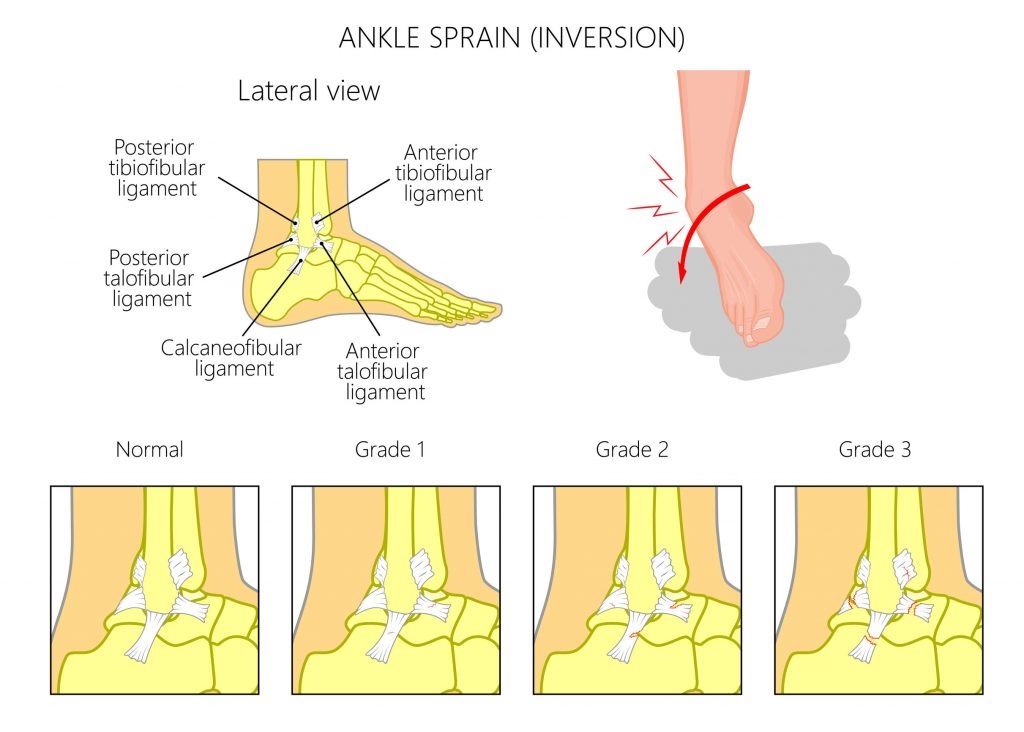
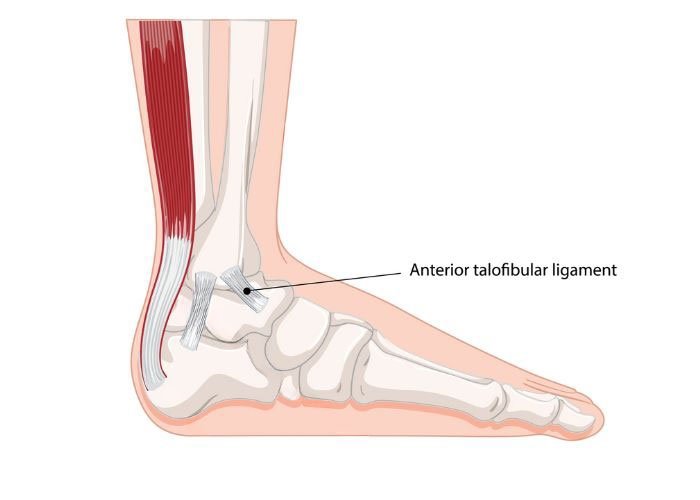
A lateral ankle sprain damages the ligaments on the outer side of your ankle, most commonly the anterior talofibular ligament (ATFL).
Here’s the issue most people don’t realize:
👉 Ligaments don’t fully regain their original strength or elasticity after injury.
That means even a “mild” Grade 1 sprain can permanently change how your ankle functions — unless rehab addresses the right systems.
And most rehab programs don’t.
Ligaments don’t just hold joints together — they provide proprioception, your body’s ability to sense position and movement.
After a sprain:
This is why people say:
“It just gave out.”
That’s not weakness. That’s a neuromuscular timing problem.
You can:
…and still be at high risk of re-sprain.
Why?
Because most people regain straight-line strength but never retrain:
That’s why up to 75% of initial lateral ankle sprains lead to repeat sprains.
Pain is a terrible indicator of readiness.
Many Grade 2–3 sprains:
Returning to sport or work too early is one of the biggest predictors of chronic ankle instability (CAI).

Early protection matters — especially in the first 72 hours.
But long-term recovery requires:
Without this:
That’s why 55–72% of people still report symptoms months later when rehab is incomplete.
Skipping Phase 4 is the #1 reason sprains return.
If you don’t want it to happen again, yes.
Even Grade 1 sprains can cause:
Physiotherapy isn’t just about healing — it’s about future-proofing your ankle.

A lateral ankle sprain doesn’t become chronic because it was “bad.”
It becomes chronic because:
The good news?
Chronic ankle instability is preventable — and reversible — with the right approach.
At Vaughan Physiotherapy Clinic, we don’t just treat pain — we rebuild stability, confidence, and control.
📞 905-669-1221
📍 Thornhill | North York | Richmond Hill
🌐 Online booking available
Stop rolling your ankle.
Start trusting it again.
Recover faster, move better, and feel stronger with expert physiotherapy. Our team is here to guide you every step of the way.


