Physiotherapy for Caesarean section recovery to restore strength and mobility.
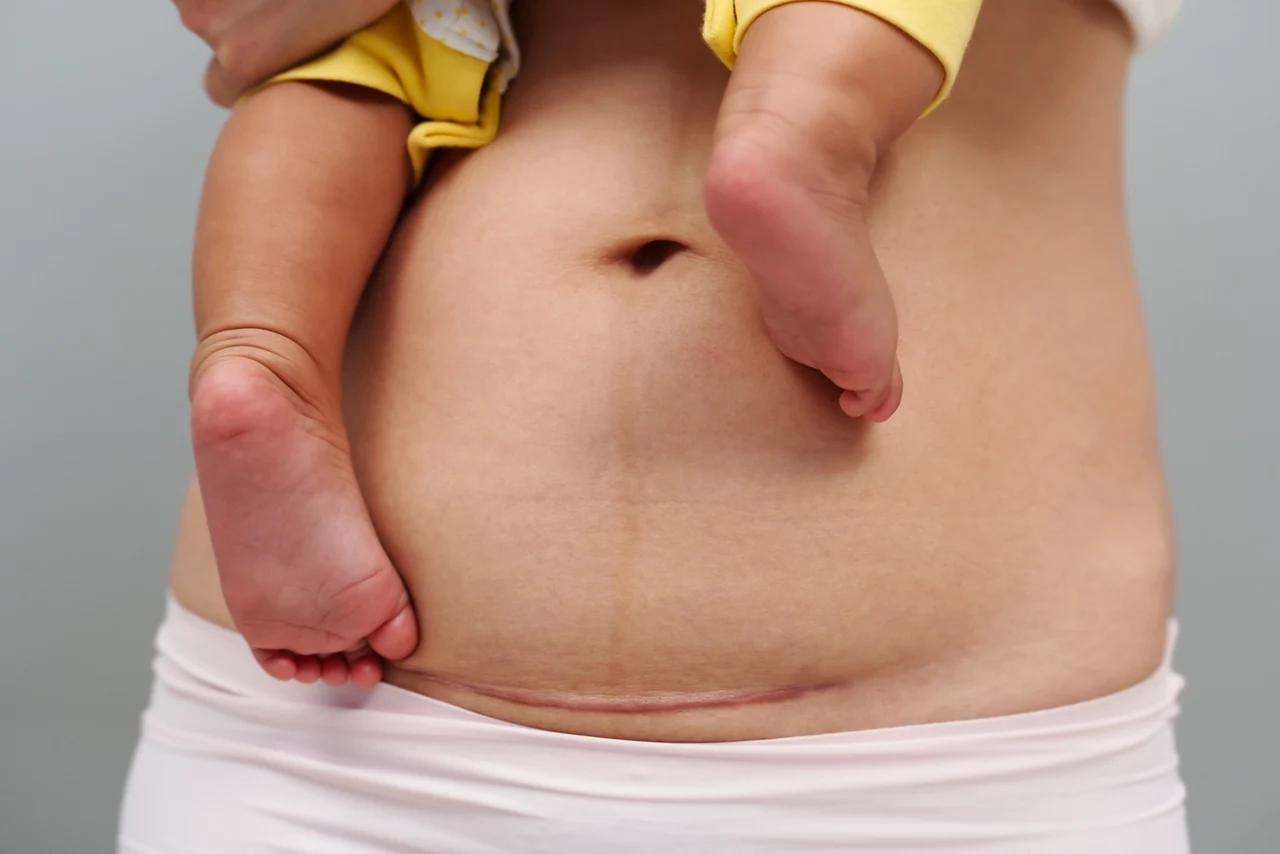
A cesarean section (C-section) is a major surgical procedure involving an incision in the abdominal wall (laparotomy) and the uterus (hysterectomy) to deliver a baby. While often essential, it is associated with a range of post-operative challenges, including incision-related pain, intestinal problems, nausea, and a delayed return to functional activities. Physiotherapy is a critical component of post-partum care, offering an integrative approach to speed recovery and improve long-term well-being.
Common Post-Operative Symptoms
Prevalence
The "rising tide" of C-sections is a global concern, with rates increasing significantly over recent decades. Because it is a major surgery, the recovery period often entails higher risks of complications like deep vein thrombosis, pulmonary embolism, and pelvic floor dysfunction compared to vaginal births.
A cesarean section involves several layers of the body:
Although the abdominal muscles are usually separated rather than cut, they can become weakened and inhibited after surgery.
Key structures affected include:
Rehabilitation focuses on restoring coordination and strength to these systems.
Post-cesarean dysfunction develops through a combination of surgical impact, physiological changes from pregnancy, and the unique physical demands of early motherhood.
Surgical Trauma and Physiological Impact
A C-section is a major surgery involving a laparotomy (abdominal incision) and a hysterectomy (uterine incision),. This dual trauma leads to significant incision-related pain, which is a primary barrier to returning to functional activities,. Beyond localized pain, the surgery can trigger visceral dysfunction, specifically decreased intestinal motility. This often manifests as "wind pain" or gas, which further complicates the early recovery phase.
Core Muscle Weakness and Structural Changes
While the rectus abdominis (abdominal muscles) are typically separated rather than cut during the lower segment transverse incision, they undergo significant stretching during pregnancy,. This stretching, combined with surgical trauma, can lead to muscle inhibition and weakness,. A specific risk factor mentioned in research is Diastasis Rectus Abdominis (DRA)—a separation of the abdominal muscles that can persist postpartum and contribute to core instability.
Scar Tissue and Adhesion Formation
As the body heals, scar adhesions may develop around the incision site. These adhesions can restrict the normal sliding of tissue layers, creating tightness in the abdomen and potentially limiting movement. Sources note that conservative physiotherapy is often targeted specifically to prevent or reduce these incision-related adhesions.
Postural Changes and Newborn Care
The postpartum period is frequently associated with postural difficulties and backache. These issues are often exacerbated by the physical requirements of caring for a newborn, such as lifting, feeding, and frequent bending. Without proper education on body mechanics, these repetitive movements can strain the already sensitized pelvic and lower back structures, leading to persistent musculoskeletal pain.
Risks of Reduced Activity
A sedentary lifestyle immediately following surgery increases the risk of several co-morbidities. Limited movement can lead to:
Physiotherapy is critical for cesarean section (C-section) recovery because it provides a comprehensive, integrative approach that addresses the physical, functional, and psychological challenges of major abdominal surgery. Research consistently demonstrates that structured physiotherapy programs significantly improve a mother's post-natal quality of life (QOL), reduce pain, and facilitate a faster return to normal daily activities.
Immediate Post-Operative Benefits
In the early post-operative period (the first 48 hours), physiotherapy intervention has been shown to:
Functional Restoration and Anatomical Recovery
Physiotherapy addresses the structural impacts of both pregnancy and surgery:
Enhancing Quality of Life (QOL)
The long-term value of physiotherapy lies in its ability to improve a mother's overall well-being. Studies using the SF-36 health survey show that women who undergo physiotherapy education and training experience:
Effectiveness of Prehabilitation
A key finding is the effectiveness of face-to-face pre-operative training (prehabilitation). Even a brief, 10-minute session before surgery—supplemented by an information leaflet—can empower patients with accurate expectations and the specific skills (like the protected huffing technique to clear secretions without pain) needed to manage their own recovery safely and effectively.
The overall prognosis for recovery after a C-section is excellent, particularly when an integrative physiotherapy approach is utilized. This approach significantly enhances the mother’s post-natal quality of life (QOL) and functional independence.
The First 48–72 Hours (Early Post-Operative Period)
The most critical phase for regaining basic function occurs within the first few days:
Weeks 1–2 (Initial Healing)
Weeks 3–6 (Functional Transition)
The 6-Week Milestone
This is a major recovery marker where the benefits of early intervention become highly visible. Research shows that women who received physiotherapy education and training exhibit significantly higher Quality of Life (QOL) scores at 6 weeks in the following domains:
3–6 Months and Beyond (Full Restoration)
The physiotherapy treatment approaches for post-cesarean recovery involve an integrative approach that addresses respiratory function, pain management, core stability, and functional mobility starting as early as the first 24 hours after surgery,.
Breathing and Core Activation Exercises
Rehabilitative breathing techniques are vital for restoring lung function and initiating core stability.
Pelvic Floor Rehabilitation
Even though the delivery was abdominal, the pelvic floor requires specific attention to prevent long-term dysfunction.
Scar Management and Incision Care
Conservative physiotherapy management is used to support the healing of the surgical site.
Postural and Movement Training
Because C-section recovery involves major abdominal surgery, retraining safe movement patterns is critical to avoid backache and postural instability.
Gradual Strengthening and Circulation
A progressive program helps restore full-body function while preventing vascular complications.
Providing this structured education and training prior to surgery (prehabilitation) has been shown to significantly enhance post-natal quality of life and shorten hospital stays
Recover faster, move better, and feel stronger with expert physiotherapy. Our team is here to guide you every step of the way.

Preventing complications after a C-section requires a proactive, integrative approach that combines early mobilization, targeted exercise, and education on body mechanics. According to sources, the following strategies are essential for a safe and effective recovery:
Early and Gradual Activity
Proper Body Mechanics and Posture
Pelvic Floor and Core Rehabilitation
Respiratory Strategies
Long-Term Impact of Prevention
Implementing these strategies, particularly through prehabilitation (education before surgery), has a profound effect on long-term well-being. Sources indicate that women who follow a structured physiotherapy program experience:
A specialized rehabilitation program for recovery following a cesarean section (C-section) is essential because the procedure involves both a laparotomy (abdominal incision) and a hysterectomy (uterine incision), which can significantly delay a return to functional activities.
Comprehensive Postpartum Assessment
A thorough assessment is the first step in identifying specific post-operative needs. Clinicians screen for conditions like Diastasis Rectus Abdominis (DRA)—the separation of the abdominal muscles—to determine the appropriate intensity of rehabilitation. Assessment also includes evaluating incision-related pain and the patient’s difficulty with basic tasks like turning in bed, sitting, and standing without support.
Gentle Core and Pelvic Floor Retraining
Rehabilitation focuses on re-engaging muscles that were stretched during pregnancy and inhibited by surgery.
Scar Mobility and Soft Tissue Techniques
Addressing surgical trauma is vital for pain management and tissue flexibility.
Postural and Functional Movement Education
Restoring functional independence is a primary goal of early rehabilitation.
Progressive Strengthening and Long-Term Recovery
The transition back to normal exercise is supported by a phased approach.
Don't let a c-section limit your activities or affect your daily life. Our experienced team is ready to help you build a strong foundation for lasting recovery.
Book Your Specialized Assessment Today:
Phone: 905-669-1221
Location: 398 Steeles Ave W #201, Thornhill, ON L4J 6X3
Online Booking: www.vaughanphysiotherapy.com
Serving communities across Thornhill, Langstaff, Newtonbrook, Willowdale, North York, Markham, Richmond Hill, Concord, and North Toronto.
Conveniently located in the heart of Thornhill, offering flexible scheduling to accommodate your recovery needs.
Created by Sara Lam
Explore the latest articles written by our clinicians