
Spinal condition affecting lower back pain, mobility, and daily function.
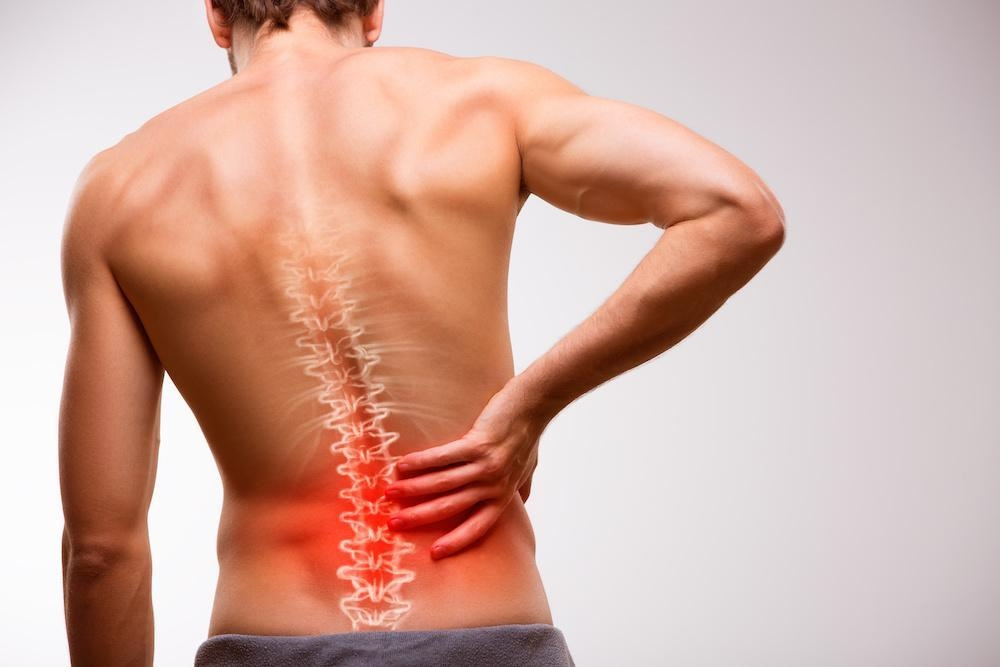
Chronic Low Back Pain (CLBP) is defined as persistent or recurring pain in the area below the level of the scapulas (shoulder blades) and above the cleft of the buttocks. It can occur with or without radiation of pain into the legs, such as sciatica or nerve root pain
Common Symptoms
Prevalence
The anatomy of the lower back, or lumbar spine, is a sophisticated structure designed to provide support, flexibility, and protection for the spinal cord. According to sources, pain in this region—located between the scapulas and the cleft of the buttocks—is a multifactorial phenomenon that can involve any of the following components:
Vertebrae (Structural Support)
The vertebrae are the bony building blocks of the spine that provide its primary structural support. In the context of chronic pain, healthcare providers often look for "clinical instability" or specific conditions like spondylolisthesis (displacement of a vertebra). Manual therapy, such as spinal mobilization and manipulation, is frequently used to target these structures to reduce pain and improve mobility.
Muscles and Ligaments (Movement and Stability)
There is a heavy emphasis on the muscular system's role in maintaining a healthy back. It is divided into two primary systems:
Nerves (Signal Transmission)
Nerves transmit vital signals between the brain and the rest of the body. When these pathways are compromised, patients may experience nerve root pain or sciatica, which is pain radiating down the lower extremities. Specialized physiotherapy techniques, such as neuromeningeal mobilization, are sometimes employed to address these neural symptoms.
Intervertebral Discs (Shock Absorbers)
While the provided excerpts focus largely on rehabilitation, they acknowledge the role of discs as part of the spine's complex structure. When structural issues become severe, treatments such as surgical spinal fusion (stabilization) may be compared against intensive rehabilitation programs.
The development of Chronic Low Back Pain (CLBP) is described as a multifactorial phenomenon rather than a condition with a single, isolated cause. It involves a complex interplay of physical, functional, and psychosocial factors that transition a temporary injury into a long-term problem.
The Transition to Chronicity
Physical and Functional Causes
Psychosocial and Cognitive Factors
In many patients, cognitive and behavioral factors act as enduring barriers to recovery.
Lifestyle and Environmental Risk Factors
Recover faster, move better, and feel stronger with expert physiotherapy. Our team is here to guide you every step of the way.

Physiotherapy is critical for the recovery of Chronic Low Back Pain (CLBP) because it moves beyond simple symptom relief to address the physical, functional, and psychosocial drivers of the condition. Sources highlight several ways in which this multifaceted approach is essential:
Improvements in Physical Capacity
Physiotherapy utilizes diverse exercise regimes to restore the body's functional capabilities:
Pain Reduction Through Combined Strategies
Effective physiotherapy does not rely on a single technique but rather a combination of strategies that target different aspects of pain:
Addressing Root Causes and Imbalances
Physiotherapy looks at the multifactorial nature of the condition. It addresses muscle imbalances between the "local" stabilizing system (deep core) and the "global" muscle system (larger movement muscles) to restore precise coordination and proprioception.
Regaining Confidence in Movement
A vital component of recovery is overcoming psychosocial barriers such as "pain-related fear" and depression.
Preventing Long-Term Disability
Physiotherapy is a powerful tool for preventing the progression of pain into a permanent disability:
The Superiority of Active Rehabilitation
Sources consistently emphasize that active rehabilitation is superior to passive treatments (such as rest or medication alone). While passive treatments may offer temporary relief, an active approach involving exercises, manual therapy, and education produces more potent and lasting symptomatic and functional improvements.
The prognosis for Chronic Low Back Pain (CLBP) is highly variable and depends on a combination of physical treatment, patient education, and self-management strategies.
Gradual Improvement and Study Timelines
While acute back pain often resolves in six to eight weeks, the recovery process for CLBP is notably slower. Evidence from clinical trials shows significant improvements within specific timeframes:
Ongoing Symptoms and Long-Term Management
For many, CLBP is considered a long-term condition where the goal shifts from a "cure" to effective self-management—the process of managing the day-to-day impact of the condition.
Managing Flare-Ups and Recurrence
Flare-ups are a common part of the CLBP profile, but they are manageable with the right tools.
Long-Term Outlook
The long-term prognosis is favorable for those who engage in active rehabilitation.
Physiotherapy for Chronic Low Back Pain (CLBP) is most effective when it employs a multidimensional approach, as the condition is a multifactorial phenomenon involving physical, functional, and psychosocial elements.
Education
Modern physiotherapy has shifted from traditional "back schools" toward neurophysiology education (pain science), which focuses on helping patients reconceptualize their pain to reduce disability and healthcare utilization. This education often includes activity pacing, recognizing "red flags," and learning how to handle flare-ups. Additionally, postural education and advice on ergonomics are frequently provided to improve functional capacity.
Exercise Therapy
Exercise is a cornerstone of CLBP management, though no single technique has been proven consistently superior to others.
Manual Therapy
Manual therapy, including spinal mobilization and manipulation, is highly effective for reducing pain intensity. Physiotherapists may also use soft tissue massage and neuromeningeal mobilization to reduce discomfort and improve physical function.
Functional Training
Functional restoration programs are designed to improve a patient's ability to perform daily activities and return to work. These programs often replicate typical work-day situations, helping patients regain confidence in movement and normalize their physical activity levels.
Cognitive-Behavioural Strategies
Because psychosocial factors can be enduring barriers to recovery, these strategies address pain-related fear and dysfunctional beliefs about injury. By focusing on self-efficacy and problem-solving, these interventions help patients overcome fear-avoidance behaviors and normalize their cognitions regarding pain.
The Efficacy of Combined Treatment
Research indicates that a combined physiotherapy program—integrating manual therapy, specific exercise, and neurophysiology education—is significantly more effective than any of these components used in isolation. Such programs have been shown to produce meaningful improvements in both pain and disability that are maintained for at least one year.
Preventing the recurrence of Chronic Low Back Pain (CLBP) is a critical challenge, as 60% to 86% of patients experience a repeat incidence within the first year after an initial acute episode. The following strategies, supported by research, are essential for long-term management and risk reduction:
Stay Physically Active and Avoid Inactivity
There is a strong medical consensus that keeping people moving is one of the most effective ways to prevent long-term disability.
Maintain Strong Core and Back Muscles
The sources emphasize that deconditioning of specific muscles is a major factor in back pain vulnerability.
Practice Good Posture and Ergonomic Habits
Education on posture and ergonomics is a staple of effective physiotherapy.
Use Proper Lifting Techniques
While often considered basic, proper lifting and bending are key self-management skills. Physiotherapists aim to equip patients with these technical skills to prevent mechanical strain during daily activities.
Manage Stress and Maintain a Healthy Lifestyle
Because CLBP is a multifactorial phenomenon, psychological and lifestyle factors are just as important as physical ones.
The Role of Long-Term Support
Sources suggest that even with the best intentions, many patients struggle to maintain these habits alone.
The specialized approach to rehabilitation described in the research emphasizes that Chronic Low Back Pain (CLBP) is a multifactorial phenomenon requiring a multidimensional strategy that goes beyond simple physical treatment.
Individualized Assessment and Goal Setting
A critical component of successful rehabilitation is that physiotherapists must individually assess each patient’s needs and prescribe exercises specifically tailored to them. Sources indicate that setting and achieving personal goals is a major factor in whether a patient successfully adopts a self-management approach.
Gradual Progression Based on Tolerance
Effective exercise programs, particularly spinal stabilization training, are designed to begin in low-loaded positions and are gradually progressed as the patient's functional capacity increases. For these exercises to be effective in the long term, they must be realistic and tailored to the individual's lifestyle and physical tolerance.
Education for Independence and Self-Management
Education is used to promote independence through two distinct methods:
Integration of Physical and Psychological Aspects
Because physical pain is often linked to psychosocial barriers—such as pain-related fear, anxiety, and dysfunctional movement patterns—rehabilitation must address both.
Long-Term Strategies and Flare-Up Prevention
The ultimate goal of rehabilitation is to move the patient toward long-term self-management.
Don't let chronic low back pain limit your activities or affect your daily life. Our experienced team is ready to help you build a strong foundation for lasting recovery.Book Your Specialized Assessment Today:Phone: 905-669-1221Location: 398 Steeles Ave W #201, Thornhill, ON L4J 6X3Online Booking: www.vaughanphysiotherapy.comServing communities across Thornhill, Langstaff, Newtonbrook, Willowdale, North York, Markham, Richmond Hill, Concord, and North Toronto.Conveniently located in the heart of Thornhill, offering flexible scheduling to accommodate your recovery needs.
Created by Sara Lam
Explore the latest articles written by our clinicians


.png)


