.png)
We are at the forefront of comprehensive vestibular rehabilitation, specializing in concussion management.
You don't remember the exact moment of impact—maybe it was a collision during a soccer game, a fall while skiing, or a car accident. But you'll never forget what came after: the pounding headache, the overwhelming dizziness, the way even reading a text message makes your symptoms worse. You were told to rest, to stay in a dark room, to avoid screens and activity.
But weeks have passed, and you still don't feel like yourself.
A concussion, or mild traumatic brain injury (mTBI), affects an estimated 1.6 to 3.8 million people annually in the United States through sports-related incidents alone [Farì et al., 2024; Ellis, Leddy & Willer, 2015]. Despite being called "mild," the impact on your daily life can be anything but minor—affecting your ability to work, study, exercise, and engage in activities you once took for granted.
Here's what many people don't know: While rest is important in the first few days after concussion, emerging research shows that early, controlled physical activity and physiotherapy interventions are not only safe but can actually accelerate recovery [Art et al., 2023; Farì et al., 2024]. In fact, excessive rest may actually slow your recovery [Farì et al., 2024].
At Vaughan Physiotherapy Clinic, we specialize in evidence-based concussion rehabilitation that goes beyond "just rest and wait." Our comprehensive approach addresses the physiological, vestibular, cervical, and aerobic components of concussion recovery—helping you return to school, work, sports, and life faster and more safely.
A concussion, or mild traumatic brain injury (mTBI), is a complex pathophysiological process affecting the brain [Farì et al., 2024; Art et al., 2023]. It represents a significant public health concern, particularly in sports medicine, due to its high incidence [Farì et al., 2024].
A concussion is induced by direct or indirect biomechanical forces that cause the brain to move forward and backward inside the skull [Farì et al., 2024; Art et al., 2023].
Common Causes:
The Injury:When your head experiences a sudden acceleration or deceleration force, your brain—which floats in cerebrospinal fluid—crashes against the inside of your skull. This mechanical force sets off a cascade of neurological changes that affect how your brain functions.
The hallmark of concussions is the rapid onset of neurological impairments that are generally transient and resolve spontaneously [Farì et al., 2024].
Key Distinction:
Why This Matters:Because there's no visible structural damage on scans, concussions are sometimes minimized or misunderstood. But the functional disruption—the way your brain processes information, regulates energy, and manages symptoms—is very real and requires appropriate treatment.
Concussion triggers a cascade of molecular processes characterized by [Ellis, Leddy & Willer, 2015]:
Immediate Changes:
The Two Phases:
Critical Implication:During this "acute energy crisis" phase, repeat brain trauma is detrimental and poorly tolerated, raising the concern for the rare but catastrophic "second-impact syndrome" [Ellis, Leddy & Willer, 2015].
What This Means:Your brain is operating in an energy-depleted state. Activities that normally require minimal metabolic effort—reading, walking, watching TV—now overwhelm your brain's limited energy capacity, triggering symptoms.
Higher Risk:
Why?Developing brains may be more vulnerable to metabolic disruption and may compensate less efficiently than mature adult brains.
Significant Finding:Female athletes have a higher incidence of concussion compared to male athletes
Contributing Factors:
The leading cause of head injury in the younger population (15-24 years old) occurs from sport-related accidents
Common Sports:
Sports-Related Concussions:Account for an estimated 1.6 to 3.8 million incidents annually in the United States [Farì et al., 2024; Ellis, Leddy & Willer, 2015]
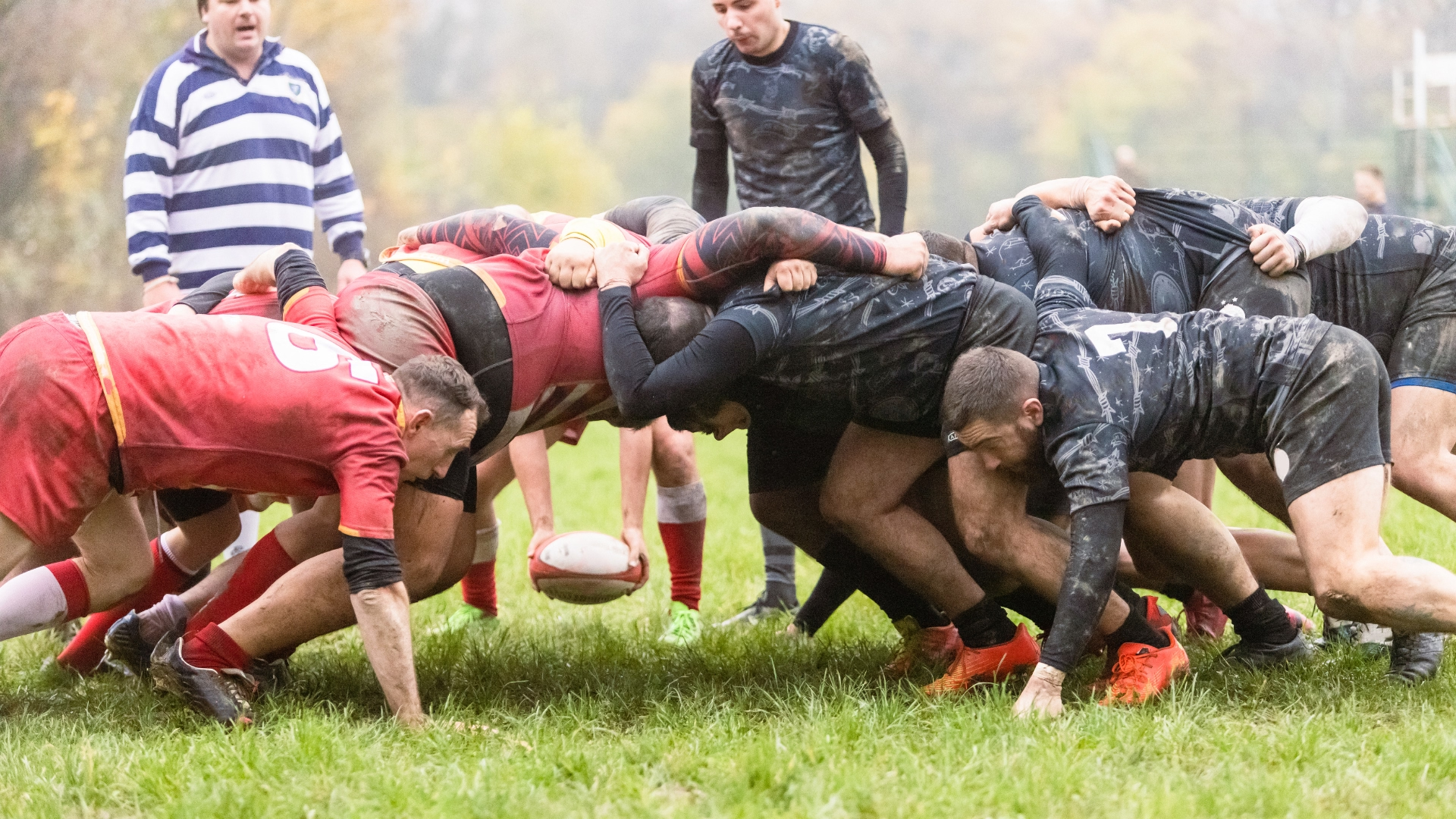
Most Common Mechanism:Player-to-player contact is the leading cause of sport-related concussion, frequently observed in football and ice hockey [Art et al., 2023]
Broader Context:These numbers reflect only sports-related concussions—the total incidence including motor vehicle accidents, falls, workplace injuries, and assaults is substantially higher.
The initial signs and symptoms of acute concussion reflect global neurological dysfunction and the acute energy crisis [Ellis, Leddy & Willer, 2015].
Most Common Complaints [Farì et al., 2024; Art et al., 2023]:
Headaches:
Dizziness and Balance Problems:
Nausea:
Neck Pain:
Sensory Sensitivities:
Fatigue:
Information Processing:
Mental Clarity:
Sleep Disturbances:
Symptom Exacerbation with Minimal Activity:
A key distinguishing feature of acute concussion symptoms is that even low-demand activities will exacerbate symptoms:
What This Tells Us:If activities that were previously effortless now trigger or worsen your symptoms, this reflects the underlying metabolic disruption—your brain simply doesn't have the energy reserves to handle these tasks without becoming symptomatic.
The prognosis for concussion is generally positive, with most symptoms being transient [Farì et al., 2024].
7-10 Days:
1-2 Weeks:
Key Point:Most people recover relatively quickly with appropriate management—this is truly a "mild" traumatic brain injury for the majority.
15-20% of Patients:Experience symptoms lasting beyond 3 weeks, meeting criteria for Post-Concussion Syndrome (PCS) [Ellis, Leddy & Willer, 2015]
Risk Factors for Prolonged Recovery:
Critical Window:The first 7-10 days are crucial for setting the stage for optimal recovery.
Balance Required:
This delicate balance is where evidence-based physiotherapy becomes essential.
Primary Goal: Reduce symptoms and allow for neurological stabilization [Farì et al., 2024].
What "Rest" Means:
Why This Is Essential: During the acute energy crisis, your brain needs time to stabilize metabolically. Premature activity during this phase can:
Duration:Typically 24-48 hours of relative rest, but individualized based on symptom severity.
Emerging Evidence: Research suggests that physical activity and physical therapy interventions are beneficial as early as a couple of days following injury [Art et al., 2023].
Key Finding: Symptom-limited aerobic exercises are effective and safe in improving symptoms and reducing recovery time in adolescents [Langevin et al., 2020; Farì et al., 2024].
When to Start: Can be gradually introduced when the patient is symptom-free at rest
Intensity Guidelines:
Activities:
The Principle: Exercise below the threshold that triggers symptoms. If symptoms begin during activity, stop and rest. The goal is to stay just under your symptom threshold, gradually expanding your tolerance.
Why This Works: Early, controlled aerobic activity:
Evidence:Studies show that patients engaging in early, symptom-limited aerobic exercise recover faster than those prescribed complete rest [Leddy et al., 2019; Art et al., 2023].
Primary Goal: Gradual reintroduction of activity and targeted rehabilitation for specific deficits [Farì et al., 2024].
Intensity Increase:
Progression Principle:Gradually increase duration and intensity as long as symptoms remain stable. If symptoms worsen, reduce intensity and build back up more gradually.
For Patients with Dizziness, Balance Issues, or Visual Disturbances:
Gaze Stabilization Exercises:
Balance Exercises:
Purpose:Many concussion patients experience vestibular dysfunction contributing to dizziness and imbalance. Targeted vestibular exercises accelerate recovery of these specific systems.
For Patients with Neck Pain or Cervicogenic Symptoms:
Interventions:
Why This Matters: The same forces that cause concussion often cause whiplash-type cervical injuries. Addressing neck dysfunction is essential for comprehensive recovery.
Evidence: Combined cervical spine and vestibular rehabilitation has been shown to be more effective than standard care alone [Schneider et al., 2014; Art et al., 2023].
Once patients are asymptomatic at rest, they should follow graduated protocols to prevent premature exposure to high-risk activities [Ellis, Leddy & Willer, 2015].
Progressive Stages:
Stage 1: Light Aerobic Activity
Stage 2: Sport-Specific Exercise
Stage 3: Non-Contact Training Drills
Stage 4: Full-Contact Practice
Stage 5: Return to Play
Critical Rules:
For Students: Graduated academic programs provide school accommodations to limit cognitive demand and minimize symptom recurrence during the healing phase.
Progressive Academic Reintegration:
Stage 1: At-Home Activities
Stage 2: School Activities (Modified)
Stage 3: Gradual Reintegration
Stage 4: Full Academic Participation
Common Accommodations:
Recover faster, move better, and feel stronger with expert physiotherapy. Our team is here to guide you every step of the way.

Landmark Finding:Studies demonstrate that combining spinal rehabilitation (cervical spine therapy) and vestibular rehabilitation is more effective than individual treatments or standard care.
Specific Results:One randomized controlled trial found that 73% of participants in the combined intervention group were medically cleared to return to sport within eight weeks, compared to only 7% in the control group receiving standard care [Schneider et al., 2014; Farì et al., 2024; Art et al., 2023].
Implication:These individuals were 10.27 times more likely to be medically cleared within eight weeks [Schneider et al., 2014; Art et al., 2023].
Concussions Are Heterogeneous:No two concussions are exactly alike. Some patients have primarily:
Most Patients Have Multiple Domains Affected:A comprehensive approach addresses all contributing factors rather than hoping a single intervention will resolve complex, multifaceted symptoms.
Components of Our Comprehensive Approach:
Sport-Specific Strategies:
General Safety:
The Critical Rule:Never return to contact sports or high-risk activities while still symptomatic.
Why This Matters:During the acute energy crisis phase, repeat brain trauma is detrimental and poorly tolerated, raising concern for the rare but catastrophic second-impact syndrome [Ellis, Leddy & Willer, 2015].
Second-Impact Syndrome:
Early Appropriate Management:The best way to prevent Post-Concussion Syndrome is proper acute management:
Red Flags Requiring Immediate Medical Attention:
Timeline Varies:
Factors Affecting Timeline:
With Multimodal Physiotherapy:Evidence shows that combined interventions can dramatically accelerate clearance for return to activity—73% cleared within 8 weeks vs. only 7% with standard care [Schneider et al., 2014; Art et al., 2023].
Yes—but strategically and progressively.
Initial Phase (First Few Days):Relative rest until symptom-free at rest
Early Active Phase (2-7 Days):Sub-symptom threshold aerobic activity (SSTAE) [Farì et al., 2024]:
Subacute Phase (1-3 Weeks):Progressive increase in intensity and duration:
Evidence: Symptom-limited aerobic exercises are effective and safe in improving symptoms and reducing recovery time [Langevin et al., 2020; Farì et al., 2024].
Studies show faster recovery:
No—excessive rest may actually slow recovery [Farì et al., 2024].
The New Paradigm:While initial rest (24-48 hours) is important, prolonged strict rest is associated with slower recovery and can lead to:
The Balance:
Cognitive Rest Modifications: Rather than complete cognitive rest:
15-20% of people develop Post-Concussion Syndrome (symptoms lasting >3 weeks) [Ellis, Leddy & Willer, 2015].
If You're Not Improving:
Importance of Specialized Care: Persistent symptoms often indicate specific sub-types of post-concussion disorders requiring targeted interventions—generic "rest and wait" is insufficient.
Concussion recovery is time-sensitive. The decisions you make in the first days and weeks after injury can significantly impact your recovery trajectory. At Vaughan Physiotherapy Clinic, we stay current with the latest concussion research and apply evidence-based protocols that have been proven to accelerate recovery.
We understand that:
Our comprehensive concussion program includes:
Most importantly, we're committed to getting you back to your life—school, work, sports, and activities—as quickly and safely as possible.
Our comprehensive programs include:
📞 Phone: 905-669-1221
📍 Location: 398 Steeles Ave W #201, Thornhill, ON L4J 6X3
🌐 Online Booking: www.vaughanphysiotherapy.com
Don't settle for outdated "just rest in a dark room" advice. Modern concussion management involves early, strategic, symptom-limited activity that has been proven to accelerate recovery. Whether you're an athlete trying to return to sports, a student struggling to keep up with school, or a professional who needs to get back to work, we can help. Contact us today to start your evidence-based recovery journey.
Explore the latest articles written by our clinicians





.avif)


