Woman checking abdominal separation associated with diastasis recti

Diastasis Recti

Diastasis recti rehabilitation to restore core strength and abdominal function.
Diastasis Recti: A Physiotherapy Guide

What Is Diastasis Recti? Understanding the Condition

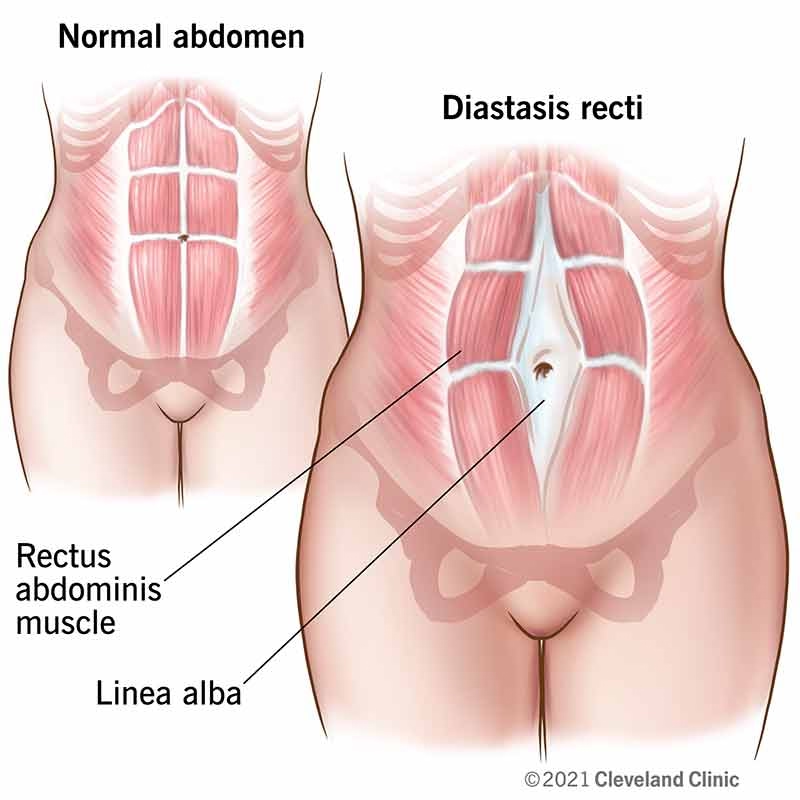
Diastasis Recti Abdominis (DRA) is defined as the separation of the right and left rectus abdominis muscle bellies as a result of partitioning or stretching at the linea alba. The linea alba is a strong fibrous cord, typically at least 10mm wide, that runs medially from the xiphoid process to the pubic symphysis. During pregnancy, particularly in the third trimester, increased levels of hormones such as relaxin and elastin soften this connective tissue, causing it to become flaccid and wider

Common Symptoms

The symptoms and experiences of individuals with Diastasis Recti Abdominis (DRA) are deeply rooted in the structural compromise of the abdominal wall and its role in trunk stabilization.

  • Visible Bulge and Abdominal "Doming"
    • One of the most characteristic signs of DRA is a visible bulge or ridge along the midline of the abdomen.
      • Intra-abdominal Pressure: This bulging, sometimes called "doming," often occurs when the abdominal muscles are too weak to actively contract against an increase in intra-abdominal pressure, such as when sitting up, straining, or performing certain exercises.
      • Weak Point at the Navel: The widest part of the separation is most frequently found at the umbilicus (navel), which is considered the anatomical weak point of the linea alba.
      • Psychological Impact: Beyond the physical sensation, nearly half of patients (45.2%) report that the cosmetic appearance of the abdominal bulge causes them significant distress.
  • Core Weakness and Reduced Stability
    • Because the rectus abdominis is a primary part of the trunk muscles, it plays a vital role in stabilizing and moving the spine.
      • Functional Decline: When these muscles separate, the abdominal wall's structural integrity is jeopardized, leading to a measurable decline in core strength and stability.
      • Patient Reports: Clinical surveys show that approximately 70% of patients explicitly complain of muscle weakness during their initial evaluation.
      • Impaired Function: This weakness isn't just a feeling; it results in impaired functioning of the muscles that have lost their proper anatomical position.
  • Lower Back Pain and Discomfort
    • Lower back pain is perhaps the most common secondary impairment associated with DRA.
      • Most Common Referral: Research indicates that 80.7% of patients treated for DRA were originally referred to physiotherapy for low back pain rather than the separation itself.
      • Biomechanical Link: The pain typically occurs because the weakened abdominal muscles can no longer maintain proper pressure on the lumbar section of the spine. This failure in support forces other structures to compensate, leading to chronic discomfort.
  • Poor Posture and Daily Difficulties
    • The loss of core stability directly impacts an individual's ability to maintain a healthy alignment.
      • Hyperlordosis: Patients with DRA frequently exhibit poor posture, specifically hyperlordosis (an exaggerated lower back curve) and increased anteversion of the pelvis.
      • Lifting Challenges: Individuals are often advised to avoid activities that engage the "abdominal press," such as lifting heavy objects, because the core cannot effectively manage the load.
      • Functional Limitations: The separation can jeopardize a wide range of basic movements, including trunk flexion, rotation, and side bending.
  • Asymptomatic and Secondary Complications
    • It is important to note that the connective tissue of the linea alba itself does not have pain receptors, meaning many individuals may not feel pain specifically at the site of the separation. Instead, they notice:
      • Cosmetic Changes: Changes in the appearance or "flaccidity" of the abdomen.
      • Secondary Impairments: Because a single disruption in the abdominal wall creates a cascade of issues, patients may also experience pelvic floor dysfunction, urinary incontinence, fecal incontinence, or even abdominal hernias

Prevalence

Diastasis recti abdominis (DRA) is most frequently seen secondary to pregnancy, with a steady increase in incidence as pregnancy advances toward a peak in the third trimester. Research indicates that approximately 70% of pregnant women are affected by the condition during this period. Immediately following childbirth, the prevalence remains high, affecting about 60% of postpartum women.

While small cases of diastasis may resolve naturally, many significant cases persist long-term if they are not treated. Statistics show that while 60% of women are affected immediately after birth, the condition remains evident in 30% of women at eight weeks postpartum. Without intervention, a pathological inter-recti distance has been shown to remain above normal values even six months after delivery.

Sources clarify that DRA is not gender-specific and can affect men as well as non-pregnant individuals. The condition is commonly associated with factors that increase intra-abdominal pressure, such as obesity, chronic obstructive pulmonary disease (COPD), multiple pregnancies, or a large amount of amniotic fluid. Other risk factors for developing a separation include:

  • Increasing age
  • A history of midline abdominal surgery
  • Significant hormonal changes due to menopause or replacement therapy
  • Strenuous activities, such as regular heavy lifting or performing full-excursion sit-ups
  • Congenital factors, as the condition can be present in newborns from birth

Anatomy of the Abdomen

The abdominal wall is composed of several muscles that work together to stabilize the trunk and support movement.

Key structures include:

  • Rectus abdominis: The paired muscles running vertically along the front of the abdomen.
  • Linea alba: The connective tissue band that joins the two rectus abdominis muscles at the midline.
  • Transversus abdominis: The deep abdominal muscle that acts like a natural corset to stabilize the core.
  • Internal and external obliques: Muscles responsible for trunk rotation and side bending.
  • Pelvic floor muscles: Support pelvic organs and work with the core for stability.

When the linea alba becomes stretched, the rectus abdominis muscles separate, reducing the effectiveness of the abdominal wall.

How Does Diastasis Recti Develop? Causes and Risk Factors

Diastasis Recti Abdominis (DRA) is defined as the separation of the right and left rectus abdominis muscle bellies within their respective sheaths due to the partitioning or stretching of the linea alba. This fibrous cord, which runs from the xiphoid process to the pubic symphysis, typically measures at least 10mm wide but can become flaccid and wider under specific physiological stresses.

The development of this separation is driven by several interrelated factors:

Pregnancy-Related Changes

  • Structural Stretching: As the fetus grows, the rectus abdominis muscles must elongate and stretch to accommodate the expanding uterus.
  • Hormonal Influence: During pregnancy, especially in the third trimester, the body increases the secretion of hormones like relaxin and elastin. These hormones soften the connective tissue of the linea alba, making it more susceptible to widening and zwiotczenie (flaccidity).
  • Incidence: DRA occurs in approximately 60% to 70% of pregnant women, peaking in the third trimester and often remaining high immediately postpartum.

Increased Intra-Abdominal Pressure

  • Mechanical Strain: High intra-abdominal pressure from activities such as regularly lifting heavy weights or performing full-excursion sit-ups can contribute to the separation.
  • Medical Conditions: Chronic conditions like Obesity and Chronic Obstructive Pulmonary Disease (COPD) are known risk factors because they maintain high internal pressure on the abdominal wall.
  • Labor Mechanics: During the second stage of labor, too intensive pushing with a closed glottis (the Valsalva maneuver) can significantly increase pressure and risk for the mother.

Weak Deep Core Muscles

  • Conditioning as Prevention: Research indicates that women who perform regular abdominal exercises prior to pregnancy have a lower incidence of DRA, suggesting that pre-existing muscle weakness is a contributing factor.
  • Role of the Transverse Abdominis (TA): Insufficient activation or weakness of the TA means the abdominal wall lacks the deep internal support needed to resist the stretching forces on the linea alba. Physiotherapy often focuses on the TA because it can be trained to generate force to resist the separation of the rectus muscles.

Successive and High-Load Pregnancies

  • Cumulative Stretching: Consecutive or multiple pregnancies increase the likelihood of DRA because the connective tissues are repeatedly subjected to extreme stretching.
  • Specific Risk Factors: Carrying a large baby, a multiple-birth pregnancy (such as twins), or having excessive amniotic fluid (polyhydramnios) places even greater mechanical demand on the abdominal wall.

Poor Movement Patterns and Improper Exercise

  • Harmful Exercises: Performing abdominal crunches or sit-ups in the presence of DRA can be counterproductive; these exercises may actually widen the inter-recti distance if the core is not stable.
  • The Oblique Muscle Pull: Exercises involving rotating or flexing the trunk sideways engage the oblique muscles, which are connected to the rectus muscles via fascia. If these muscles are used improperly, they can pull the rectus bellies further apart.
  • Abdominal "Doming": If a patient observes bulging or doming along the midline during activity, it indicates that the muscles are too weak to manage the current intra-abdominal pressure, and the activity should be avoided or modified to prevent worsening the separation.

Why Physiotherapy Is Critical for Diastasis Recti Recovery

Physiotherapy is essential for the recovery of Diastasis Recti Abdominis (DRA) because a separation of the rectus muscles larger than 2 to 2.5 cm jeopardizes nearly every function of the abdominal wall, including posture, trunk stability, and respiration. Left untreated, the condition can persist for years, leading to a decreased quality of life and serious secondary complications such as chronic low back pain, urinary incontinence, and abdominal hernias.

Restoring Core Muscle Strength and Coordination

A primary goal of physiotherapy is the restoration of core strength and coordination, with a specific focus on the transversus abdominis (TA) muscle. Research indicates that isometric TA training—specifically drawing-in exercises—is more effective and gentler than traditional crunches at reducing the inter-recti distance (IRD). Physiotherapists guide patients in synchronizing these exercises with breathing (exhaling during the effort) to minimize intra-abdominal pressure, which is critical for protecting the weakened connective tissue during recovery.

Improving Abdominal Support and Stability

Proper abdominal muscle tension is required to hold internal organs at the correct height and maintain balanced pressure on the lumbar section of the spine, which prevents the deepening of lordosis. To support the abdominal wall while strength is being rebuilt, many clinicians utilize abdominal binders or splinting, particularly when the patient is performing strenuous activities or household chores that might otherwise cause the separation to worsen.

Correcting Posture and Movement Patterns

Physiotherapy is vital for correcting the postural imbalances often caused by a weakened core, such as hyperlordosis (increased lower back curve) and increased anteversion of the pelvis. Beyond specialized exercise, physiotherapists provide essential education on daily body mechanics, teaching patients the proper way to lift, breastfeed, and even get out of bed from a side-lying position to avoid placing excessive strain on the linea alba.

Guiding a Safe Return to Exercise

A specialist ensures a safe return to activity by implementing a progressive overload approach, moving carefully from supine exercises to sitting and eventually standing positions. They help patients identify and avoid abdominal "doming" or bulging, a sign that the core is unable to manage the current internal pressure and that the activity could potentially widen the separation. In the early stages of recovery, traditional exercises involving the oblique muscles (such as twisting) are often eliminated because their fascial connections to the rectus muscles can pull the separation further apart.

What to Expect: Prognosis and Recovery Timeline

The recovery timeline for Diastasis Recti Abdominis (DRA) varies based on the size of the separation and individual adherence to a rehabilitation program, but the sources provide a clear framework for what to expect during this process.

Prognosis for Conservative Recovery

With consistent, specialized physical therapy, the prognosis is generally positive. Surveys of women’s health specialists show that clinicians help patients reduce significant separations to two finger widths or less 41% to 80% of the time. Furthermore, nearly 70% of therapists report a success rate between 41% and 100% in their overall plans of care. However, research indicates that while mild cases may improve naturally, significant DRA often persists indefinitely without treatment, with pathological distances frequently remaining above normal values even six months after delivery.

First Few Weeks Postpartum

  • Early Intervention: Specialized exercises can begin as early as the third day after natural labor or a C-section.
  • Focus: Initial efforts center on breathing techniques and the Noble technique, which involves manually pushing the rectus muscles toward the midline while performing a gentle head lift.
  • Precautions: Patients are advised to avoid activities that engage the "abdominal press," such as heavy lifting, and must avoid oblique muscle exercises (twisting or side-bending), as these can pull the rectus bellies further apart.

6–12 Weeks Postpartum

  • Structured Rehabilitation: Many patients begin clinical physical therapy around the six-week mark. The average duration of a formal treatment plan is often 4 to 6 weeks, with patients attending therapy once or twice a week.
  • Focus: The primary goal during this phase is strengthening the transversus abdominis (TA) muscle in isolation and integrating it into functional daily tasks like lifting and breastfeeding.
  • Progressive Overload: Exercises transition from lying on the back to sitting and eventually standing positions, provided the patient can maintain abdominal control without "doming" or bulging.

3–6 Months

  • Achieving Normal Range: For many individuals, reaching the "normal" range for inter-recti distance (IRD) requires a three-month-long structured program.
  • Maintenance: Clinicians emphasize that a home exercise program (HEP) should be a lifelong commitment to maintain abdominal stability and prevent the recurrence of symptoms like low back pain.

When Surgery is Considered

While conservative treatment is the preferred first step, surgical intervention may be considered in specific circumstances:

  • Severity: When the separation is severe (e.g., greater than 2.5 cm to 3 finger widths) or if an abdominal hernia is present.
  • Lack of Functional Improvement: If the inner layer of the rectus sheath cannot be trained to generate enough force to resist separation during movement.
  • Cosmetic and Tissue Factors: Surgical options are often explored for individuals with low subcutaneous fat but significant skin laxity or striae.

Start Your Journey to 

Better Health Today

Recover faster, move better, and feel stronger with expert physiotherapy. Our team is here to guide you every step of the way.

Physiotherapy Treatment Approaches

Physiotherapy treatment for Diastasis Recti Abdominis (DRA) is a specialized process that prioritizes restoring the structural integrity of the abdominal wall through targeted, functional rehabilitation.

Deep Core Activation Exercises

Strengthening the transversus abdominis (TA) is the primary focus of conservative treatment.

  • Drawing-in Maneuver: This specific exercise isolates the TA and internal oblique muscles. Isometric contraction of the TA has been clinically shown to significantly reduce the inter-recti distance (IRD).
  • Selective Muscle Recruitment: Exercise protocols prioritize recruiting the deep TA while initially avoiding the rectus abdominis (RA) to ensure the patient can stabilize the core without widening the separation.
  • Integration: TA training is often integrated into broader methods such as the Tupler technique, which uses progressive contractions, or specialized Pilates programs.

Pelvic Floor Strengthening

Rehabilitating the pelvic floor is highly integrated into DRA treatment, with 87% of surveyed specialists including it in their care plans.

  • Coordination: Strengthening focuses on coordinating the pelvic floor with the abdominal muscles to restore trunk stability.
  • Addressing Comorbidities: Because DRA is often linked to urinary or fecal incontinence and pelvic pain, pelvic floor exercises (Kegels) are essential for managing these secondary impairments.

Breathing Techniques

Proper breathing is fundamental to managing intra-abdominal pressure during exercise.

  • Synchronization: Every rehabilitative movement is synchronized with breath: the patient is typically instructed to inhale first, then perform the contraction (drawing-in) while exhaling.
  • Pressure Management: Exhaling during abdominal muscle activation is critical because it minimizes internal pressure, protecting the weakened linea alba from further stretching. Diaphragmatic breathing is also utilized to improve overall respiratory control.

Postural Training

Restoring proper alignment is vital to reducing chronic stress on the abdominal wall.

  • Correcting Imbalances: DRA often leads to hyperlordosis (an exaggerated lower back curve) and increased pelvic tilt.
  • Functional Education: Physiotherapists provide intensive education on proper body mechanics for daily tasks, teaching patients how to sit, stand, lift, and breastfeed in positions that protect the core.
  • Pain Relief: Normalizing posture not only supports the abdominal wall but is also a key strategy for resolving the low back pain frequently associated with the condition.

Progressive Strengthening

Rehabilitation follows the principle of progressive overload, carefully advancing as muscle control improves.

  • Positional Progression: Training typically moves from supine (lying on the back) to sitting and eventually standing positions.
  • Movement Precautions: Patients are strictly advised to avoid exercises that could worsen separation, such as traditional abdominal crunches or sit-ups, which may actually pull the rectus bellies further apart.
  • Early Phase Strategies: Early stages may involve the Noble technique, where the rectus muscles are manually pushed toward the midline during a gentle head lift to bridge the gap safely. Twisted movements (obliques) are often avoided initially because their fascial connections can increase the separation.

Preventing Diastasis Recti Worsening or Recurrence

Preventing the worsening or recurrence of Diastasis Recti Abdominis (DRA) requires a proactive approach centered on managing intra-abdominal pressure and restoring the functional integrity of the core. According to the sources, the following strategies are essential for long-term recovery:

Practicing Proper Core Engagement

The foundation of prevention is the strengthening of the transversus abdominis (TA) muscle in isolation and during functional activities.

  • The Drawing-In Maneuver: Clinicians emphasize drawing the abdominal wall toward the spine to stabilize the core.
  • Breathing Synchronization: Every movement should be synchronized with breathing, specifically exhaling during the contraction phase. Exhaling while tightening the muscles minimizes intra-abdominal pressure, which protects the weakened linea alba from further stretching.

Monitoring for Abdominal "Doming"

Individuals must be vigilant for any visible bulging or doming along the midline of the abdomen during exercise or daily tasks.

  • Indication of Weakness: Doming serves as a clear sign that the abdominal muscles are currently too weak to manage the increase in internal pressure.
  • Prevention of Injury: If bulging is observed, the activity should be avoided or modified immediately to prevent the diastasis from enlarging or potentially leading to a hernia.

Utilizing Safe Movement Mechanics

Education on proper body mechanics is vital for reducing daily strain on the abdominal wall.

  • Daily Activities: Patients are advised to use proper positions for sitting, standing, arising from bed, and breastfeeding. For example, getting out of bed should be done from a side-lying position rather than a direct trunk flexion.
  • Lifting Techniques: It is critical to avoid heavy lifting and activities that engage the "abdominal press" during the early stages of recovery. When lifting is necessary, using an abdominal binder or splint during strenuous activity is recommended by many specialists to provide external support to the abdominal wall.

Gradual Progression and Selective Exercise

A progressive overload principle must be followed to rebuild strength without causing recurrence.

  • Exercise Order: Rehabilitation typically moves from supine positions to sitting and finally standing.
  • Exercises to Avoid: During the early recovery phase, individuals should avoid oblique muscle exercises (twisting or side-bending) because these muscles are connected to the rectus bellies via fascia and can pull the separation further apart. Some experts also suggest avoiding traditional abdominal crunches, as they may widen the inter-recti distance if the core is not yet stable.

Lifelong Commitment to Core and Pelvic Health

Long-term recovery and prevention are supported by a holistic approach to the "core" system.

  • Pelvic Floor Integration: Strengthening the pelvic floor muscles (Kegels) is a common component of care, helping to coordinate trunk stability and prevent secondary issues like urinary incontinence.
  • Maintenance: Clinicians stress that a home exercise program (HEP) should be viewed as a lifelong commitment to maintain the resting tension of the abdominal muscles and prevent the return of symptoms like low back pain.

Our Specialized Approach to Rehabilitation

Comprehensive Core and Abdominal Assessment

A thorough evaluation is necessary because DRA often goes undiagnosed and patients are frequently referred for other conditions, such as low back pain (80.7% of cases), pelvic floor dysfunction, or urinary incontinence,.

  • Standardized Testing: Clinicians primarily use the finger width technique to measure the inter-recti distance (IRD), which has shown high interrater reliability,,.
  • Assessment Protocol: The patient is positioned in a "crook lying" position (on the back with knees flexed) and instructed to perform a partial curl-up while exhaling,,.
  • Reference Points: Measurements are taken at the umbilicus (the most common site for separation), as well as points 5–10 cm above and 2.5–5 cm below the navel,,.
  • Postural Screening: Assessment also includes screening for hyperlordosis (exaggerated lower back curve) and increased pelvic tilt, which are common secondary impairments of core weakness,,.

Targeted Deep Core Strengthening Exercises

Rehabilitation prioritizes the transversus abdominis (TA) muscle, as it can be trained to generate the force needed to resist the separation of the rectus muscles,,.

  • The Drawing-In Maneuver: This isometric contraction involves drawing the abdominal wall toward the spine during a slow exhalation,,. It is considered more effective and gentler than traditional crunches, which may actually widen the IRD in early recovery,,.
  • The Noble Technique: This specialized approach involves the manual approximation of the rectus muscle bellies (pushing them toward the midline) while the patient performs a gentle head lift,,.
  • Isolation and Recruitment: Initial protocols focus on recruiting the deep TA while avoiding the use of the rectus abdominis until the patient can stabilize the core without causing "doming" or bulging,,.

Pelvic Floor Rehabilitation

Pelvic floor training (Kegel exercises) is integrated into 87% of specialized care plans because of the high correlation between abdominal separation and pelvic health,.

  • Functional Stability: A single disruption in the abdominal wall can create a multitude of impairments, including urinary and fecal incontinence,,.
  • Coordinated Support: Strengthening these muscles helps restore balanced pressure on the lumbar spine and pelvic organs, which is essential for resolving chronic lumbopelvic pain,.

Education on Safe Movement and Exercise

Education is stressed to ensure that daily activities do not hinder the healing of the linea alba (the connective tissue between the muscles),.

  • Body Mechanics: Patients are taught proper positions for sitting, standing, breastfeeding, and lifting,.
  • Safe Transitions: Instructions include arising from bed through a side-lying position rather than direct trunk flexion to protect the abdominal wall,.
  • Exercise Modifications: In the early stages, patients are advised to avoid oblique muscle exercises (twisting or side-bending), as these muscles can pull the rectus bellies further apart,,.

Gradual Progression Toward Physical Activity

Rehabilitation follows the principle of progressive overload, ensuring that the abdominal wall can handle increasing internal pressure without doming,.

  • Positional Advancement: Training typically progresses from supine (lying down) to sitting and eventually standing,.
  • Supportive Modalities: Many clinicians recommend an abdominal binder or splint to be worn during strenuous activities or exercise to provide external support for the weakened wall,,.
  • Timeline and Success: Formal treatment programs often last 4 to 6 weeks, with patients recommended to participate in a home exercise program (HEP) up to twice daily,,.
  • Long-Term Outcomes: Consistent rehabilitation can successfully reduce significant separations to two finger widths or less in up to 80% of patients, while also significantly improving postnatal quality of life,,.

FAQs

  • Can diastasis recti heal on its own?
    • While small cases of diastasis may heal naturally, many significant cases persist for a longer time if left untreated. Research indicates that without intervention, the pathological inter-recti distance (IRD) in postpartum women often does not return to normal values even six months after delivery. Physiotherapy can significantly enhance recovery and prevent secondary issues, such as decreased quality of life, poor posture, low back pain, and urinary incontinence
  • How do I know if I have diastasis recti?
    • A healthcare professional can assess the separation using several techniques, most commonly the finger width measure, which has been proven reliable between raters. During the exam, you lie on your back with knees flexed and perform a partial curl-up while the clinician palpates the midline of your abdomen. A separation is generally considered a diastasis when the gap is greater than two finger widths (approximately 2 cm). Clinicians may also use calipers or real-time ultrasound for more precise and objective measurements
  • Can I exercise with diastasis recti?
    • Yes, but specific modifications are required to ensure the separation does not worsen. You should avoid traditional abdominal crunches and sit-ups, as these movements may actually widen the inter-recti distance. Additionally, exercises that engage the oblique muscles, such as trunk rotation or side bending, should be eliminated in the early stages because they pull the rectus muscles sideways. A physiotherapist will recommend safe "drawing-in" exercises that isolate the deep transverse abdominis (TA) and the Noble technique, which involves manually pushing the abdominal muscles toward the midline during a gentle head lift. It is vital to synchronize these exercises with exhalation to minimize intra-abdominal pressure
  • Is surgery required to treat diastasis recti?
    • Most cases are managed effectively with conservative physiotherapy, and surgery is generally not the first line of treatment. Surgical intervention is typically reserved for severe cases, such as a separation greater than 2.5 cm or 3 finger widths, or if an abdominal hernia is present. Surgery may also be considered if the rectus sheath cannot be trained to generate enough force to resist the effect of daily movements. For the majority of patients, the focus of rehabilitation is on achieving functional muscle activation and stability rather than surgical closure

Take the First Step Toward Recovery

Don't let diastasis recti limit your activities or affect your daily life. Our experienced team is ready to help you build a strong foundation for lasting recovery.

Book Your Specialized Assessment Today:

Phone: 905-669-1221

Location: 398 Steeles Ave W #201, Thornhill, ON L4J 6X3

Online Booking: www.vaughanphysiotherapy.com

Serving communities across Thornhill, Langstaff, Newtonbrook, Willowdale, North York, Markham, Richmond Hill, Concord, and North Toronto.

Conveniently located in the heart of Thornhill, offering flexible scheduling to accommodate your recovery needs.

Created by Sara Lam

Team

Expert Insights

Explore the latest articles written by our clinicians