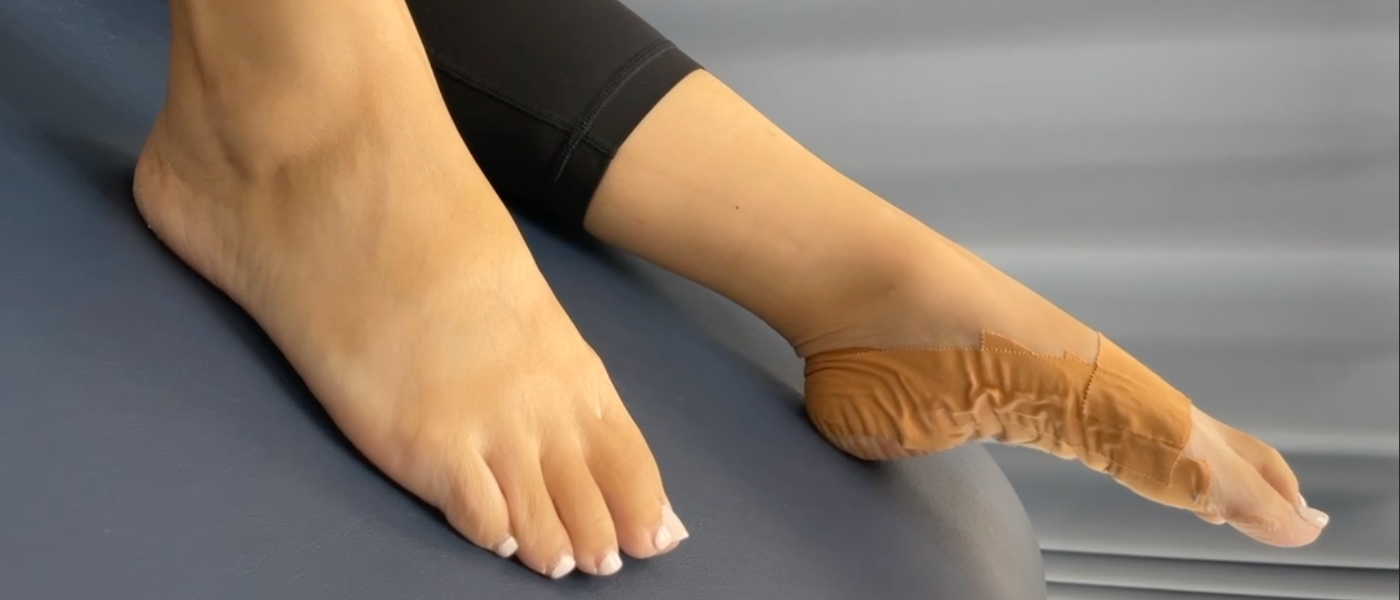
Flat Feet (Pes Planus): A Physiotherapy Guide
Flat feet are one of the most common foot conditions, affecting an estimated 20-37% of the general population. While many people with flat feet experience no symptoms at all, others develop significant pain, functional limitations, and secondary problems throughout the lower limb. The good news is that physiotherapy offers highly effective, evidence-based strategies for managing flat feet and preventing complications, whether you are an athlete looking to optimize performance or someone experiencing daily discomfort.
What Are Flat Feet? Understanding Pes Planus
Pes planus, commonly known as flat feet or fallen arches, is a postural deformity characterized by the partial or complete collapse of the medial longitudinal arch during weight-bearing. When you stand, the inner part of your foot presses flat against the ground rather than maintaining its normal curved shape.
Key Aspects of Flat Feet:
- Definition: The arch of the foot contacts or nearly contacts the ground during standing, identified clinically by reduced navicular height and increased foot pronation
- Prevalence: Research shows flat feet affect between 20% and 37% of the population, with higher rates observed in certain ethnic groups, males, and individuals with obesity
- Impact: When symptomatic, flat feet alter the biomechanics of the entire lower extremity and can contribute to pain in the feet, ankles, knees, hips, and even the lower back
Types of Flat Feet:
- Flexible Pes Planus: The most common type. The arch appears normal when the foot is non-weight-bearing (sitting or on tiptoe) but collapses when standing. This is the type most responsive to physiotherapy intervention. Most children with flat feet have this form, and many outgrow it as the arch typically develops fully by ages 7 to 10
- Rigid Pes Planus: A less common and more serious form where the arch remains collapsed regardless of whether weight is placed on the foot. This is often caused by structural abnormalities such as tarsal coalition (abnormal bone fusion), congenital vertical talus, or advanced degenerative changes. Rigid flat feet may require more intensive intervention
Common Symptoms:
- Aching or fatigue in the arch, heel, or along the inner ankle
- Pain that worsens with prolonged standing, walking, or physical activity
- Visible flattening of the arch when standing
- The heel tilting outward (calcaneal valgus)
- Difficulty standing on tiptoe or performing single-leg heel raises
- Swelling along the inner ankle or arch region
- Secondary pain in the knees, hips, or lower back due to altered mechanics
Anatomy of the Foot Arch: Why Arch Structure Matters
Understanding the anatomy of the foot arch is essential for appreciating how flat feet develop and why targeted physiotherapy is so effective.
The Medial Longitudinal Arch (MLA):
The MLA is the primary arch of the foot, formed by the calcaneus (heel bone), talus, navicular, three cuneiform bones, and the first three metatarsals. This arch functions as an adaptive, flexible base that absorbs shock and dissipates weight-bearing forces during the gait cycle. A well-functioning arch stores and releases elastic energy during walking and running, making movement efficient and protecting joints from excessive impact.
Key Supporting Structures:
- Plantar Fascia (Plantar Aponeurosis): This thick band of connective tissue runs along the bottom of the foot from the heel to the toes. It acts as a primary passive stabilizer of the arch through the "windlass mechanism," tightening as the toes extend during push-off to raise and stiffen the arch
- Tibialis Posterior Tendon: The most critical dynamic stabilizer of the medial arch. This muscle-tendon unit runs behind the inner ankle bone and attaches to multiple bones on the underside of the foot. Dysfunction of this tendon is the single most common cause of adult-acquired flat foot deformity
- Spring Ligament (Calcaneonavicular Ligament): A strong ligament that supports the head of the talus and forms part of the "socket" for the arch. When this ligament becomes stretched or damaged, the arch loses critical passive support
- Deltoid Ligament: Provides stability to the inner aspect of the ankle and works in concert with the spring ligament to maintain arch integrity
- Intrinsic Foot Muscles: Small muscles within the foot itself, including the abductor hallucis, flexor digitorum brevis, and quadratus plantae, that provide active, dynamic support to the arch. A systematic review and meta-analysis in the Journal of Athletic Training (Tourillon et al., 2024) confirmed that intrinsic foot muscle exercises significantly improve navicular height, Foot Posture Index scores, balance, and strength in individuals with pes planus
How These Structures Relate to Flat Feet:
When any combination of these structures becomes weakened, stretched, or dysfunctional, the arch progressively collapses. The tibialis posterior tendon bears the greatest load, and its failure creates a cascade effect where the spring ligament stretches, the plantar fascia becomes overloaded, and the intrinsic foot muscles cannot compensate for the lost structural support. This is why comprehensive physiotherapy must address multiple structures simultaneously.
How Do Flat Feet Develop? Causes and Risk Factors
Flat feet can be present from birth or develop over time. Understanding the underlying cause is essential for guiding effective treatment.
Congenital and Developmental Causes:
- Normal childhood development: All infants are born with flat feet. The medial longitudinal arch develops gradually, typically forming fully by age 7 to 10. Persistent flat feet in children are usually flexible and often asymptomatic
- Genetic predisposition: Flat feet run in families, with inherited ligamentous laxity and bone structure playing significant roles
- Connective tissue disorders: Conditions such as Ehlers-Danlos syndrome, Marfan syndrome, and Down syndrome involve generalized ligament laxity that predisposes individuals to flat feet
Acquired Causes:
- Posterior Tibial Tendon Dysfunction (PTTD): The most common cause of adult-acquired flat foot. The tendon progressively degenerates, losing its ability to support the arch. A systematic review in BMC Musculoskeletal Disorders (Ross et al., 2018) highlighted that exercise targeting this tendon shows moderate effects on pain and disability, though optimal exercise protocols are still being refined
- Obesity and excess body weight: Studies report flat foot prevalence of 4-28% in overweight children, and excess weight in adults accelerates tendon and ligament deterioration
- Aging: Natural degeneration of tendons, ligaments, and muscles over time reduces arch support
- Injury and trauma: Fractures, dislocations, or severe sprains affecting the midfoot or hindfoot can directly damage arch-supporting structures
- Pregnancy: Hormonal changes increase ligamentous laxity, and weight gain places additional stress on the arch
- Inflammatory conditions: Rheumatoid arthritis and other inflammatory arthropathies can destroy the joints and ligaments that maintain the arch
Biomechanical Risk Factors:
- Achilles tendon tightness: A tight calf muscle forces the foot into increased pronation to compensate for limited ankle dorsiflexion
- Excessive pronation patterns: Habitual overpronation during walking and running accelerates wear on arch-supporting structures
- Proximal weakness: Weakness in hip abductors and external rotators can contribute to excessive internal rotation, increasing pronation forces at the foot
- Inappropriate footwear: Prolonged use of unsupportive footwear can weaken intrinsic foot muscles and stress arch structures
Why Physiotherapy is Critical for Flat Foot Management
Physiotherapy is considered a first-line treatment for flat feet because it addresses the root causes of arch dysfunction rather than merely managing symptoms. Research consistently demonstrates that active, exercise-based approaches produce superior long-term outcomes compared to passive interventions alone.
How Physiotherapy Addresses Root Causes:
- Muscle strengthening restores the dynamic support system of the arch by targeting both intrinsic foot muscles and extrinsic stabilizers like the tibialis posterior
- Flexibility work addresses contributing factors such as Achilles tendon tightness that drive compensatory pronation
- Neuromuscular retraining improves the foot's ability to actively control arch position during movement
- Biomechanical correction identifies and addresses problems throughout the entire kinetic chain, from hip to foot
Evidence for Physiotherapy vs. Orthotics Alone:
A systematic review in the Journal of Foot and Ankle Research (Defined et al., 2021) found that the evidence for foot orthoses alone in adults with flat feet is surprisingly weak, concluding that no firm conclusions can be drawn about the positive effects of orthoses in isolation. In contrast, a network meta-analysis published in Scientific Reports (Wu et al., 2024) demonstrated that exercise alone or exercise combined with foot orthoses produced better outcomes than orthoses alone for reducing pain and improving function in adult flexible flat feet.
Research by Okamura et al. (2019) in a randomized controlled trial showed that an 8-week short-foot exercise program significantly improved static foot alignment and temporal parameters of gait kinematics in individuals with pes planus, demonstrating that targeted muscle training can meaningfully change foot posture and function.
The Power of Muscle Strengthening and Arch Support Training:
A systematic review and meta-analysis examining intrinsic foot muscle training across 13 randomized controlled trials found that these exercises were associated with decreased navicular drop, improved Foot Posture Index scores, better balance, increased toe flexor strength, and reduced self-perceived disability. Furthermore, combining short-foot exercises with orthotic use was shown to be more effective at increasing abductor hallucis muscle size and strength than orthotics alone, reinforcing the superiority of an active, combined approach.
What to Expect: Prognosis and Management Timeline
Understanding realistic timelines helps set appropriate expectations and maintain motivation throughout your rehabilitation.
General Prognosis:
- Flexible flat feet in children frequently resolve naturally as the arch develops through age 7 to 10
- Symptomatic flexible flat feet in adults respond well to conservative management, with most patients experiencing significant improvement within 8 to 16 weeks of consistent physiotherapy
- PTTD-related flat feet (early stages) show moderate improvement with 12 weeks of structured exercise and orthotic use. Conservative treatment is recommended for a minimum of 2 to 3 months before considering surgical options
- Rigid flat feet or those caused by advanced degenerative conditions may require longer management timelines and potentially surgical consultation
Typical Rehabilitation Timeline:
- Weeks 1-4: Pain reduction, initial strengthening, gait education, and orthotic fitting. Research shows that even a 4-week program can produce measurable improvements in balance and self-reported function
- Weeks 4-8: Progressive strengthening of intrinsic and extrinsic foot muscles, improved arch control during static and dynamic activities. The randomized controlled trial by Okamura et al. demonstrated significant improvements in foot posture and gait parameters at the 8-week mark
- Weeks 8-16: Advanced functional training, sport-specific rehabilitation, and transition to independent management
- Ongoing: Long-term maintenance exercises (2-3 times per week) to preserve gains and prevent recurrence
Factors Affecting Outcomes:
- Severity and duration of the condition: longer-standing deformities may respond more slowly
- Body weight: excess weight places ongoing stress on arch structures and slows recovery
- Exercise adherence: research shows adherence rates averaging 68-79% in clinical trials, and higher compliance correlates with better outcomes
- Age: younger patients generally respond more quickly, though older adults still benefit significantly
- Underlying cause: PTTD and degenerative causes may require longer, more intensive management
- Footwear habits: supportive footwear accelerates progress significantly
Physiotherapy Treatment Approaches
Biomechanical Assessment and Gait Analysis
Every effective flat foot treatment begins with a thorough assessment. Your physiotherapist will evaluate:
- Static foot posture using validated tools such as the Foot Posture Index (FPI-6) and navicular drop test
- Dynamic gait analysis to identify excessive pronation, timing abnormalities, and compensatory patterns throughout the kinetic chain
- Muscle strength testing of intrinsic foot muscles, tibialis posterior, peroneals, and hip stabilizers
- Flexibility assessment of the Achilles tendon, calf muscles, and plantar fascia
- Footwear evaluation to identify shoes that may be contributing to the problem
- Functional movement screening to assess how flat feet affect your daily activities and sport-specific movements
This comprehensive assessment allows your therapist to identify the specific contributing factors in your case and create a truly individualized treatment plan.
Intrinsic Foot Muscle Strengthening
Strengthening the small muscles within the foot is one of the most evidence-supported interventions for flat feet. Research across multiple randomized controlled trials confirms the effectiveness of these exercises.
- Short Foot Exercise (SFE): The gold-standard intrinsic foot exercise. You shorten the foot by pulling the ball of the foot toward the heel without curling the toes, creating a raised arch. This exercise specifically activates the abductor hallucis muscle, which is critical for navicular stability. Research demonstrates this exercise improves foot posture, balance, and functional outcomes
- Toe Yoga: Practicing independent movement of the big toe versus the lesser toes improves neuromuscular control and intrinsic muscle activation. Lift the big toe while pressing the smaller toes down, then reverse
- Toe Spreading: Actively spreading all toes apart strengthens the interosseous muscles and improves foot dexterity
- Marble Pickups and Towel Curls: While less effective than the short foot exercise according to comparative research, these exercises provide additional intrinsic muscle activation and can be useful supplementary exercises
- Doming Exercise: Similar to the short foot exercise but performed with greater emphasis on lifting the arch while keeping the toes and heel on the ground
Extrinsic Muscle Strengthening
The muscles originating in the lower leg that control foot movement are equally important:
- Tibialis Posterior Strengthening: Progressive resistance exercises including resisted inversion, heel raises with inversion emphasis, and single-leg balance work. This muscle is the primary dynamic arch stabilizer. Eccentric strengthening protocols have shown moderate effects on pain and disability in clinical trials
- Hip Abductor and External Rotator Strengthening: Weakness in these proximal muscles contributes to excessive internal rotation and pronation forces at the foot. Exercises such as clamshells, side-lying hip abduction, and single-leg squats address this critical link in the kinetic chain
- Calf Strengthening: Progressive heel raise programs build the gastrocnemius and soleus muscles, which provide propulsive force and assist in arch maintenance during gait
- Peroneal Strengthening: Balanced strength between the invertors and evertors of the foot promotes optimal foot mechanics
Stretching and Flexibility
Addressing tightness in key structures removes biomechanical drivers of arch collapse:
- Gastrocnemius Stretch: Wall stretches with the knee straight target the gastrocnemius muscle. Achilles tendon tightness is a significant contributing factor to flat feet, as it forces compensatory pronation
- Soleus Stretch: Wall stretches with the knee bent isolate the deeper soleus muscle, which is often overlooked but equally important
- Plantar Fascia Mobilization: Gentle stretching and self-massage of the plantar fascia using a frozen water bottle or massage ball helps maintain tissue flexibility and reduce pain
- Posterior Chain Flexibility: Hamstring and hip flexor stretching addresses proximal tightness that can alter lower limb mechanics
Orthotic Recommendations
While orthotics alone are not a complete solution, they play a valuable complementary role:
- Custom vs. Prefabricated: Research shows both types can provide benefit, though custom orthotics may be superior for more severe cases
- Medial Arch Support: Orthotics with medial longitudinal arch support help distribute pressure more evenly and reduce stress on the tibialis posterior tendon
- Combination Approach: Evidence strongly supports combining orthotic use with exercise. Studies show that orthotics plus short-foot exercises are more effective at increasing abductor hallucis muscle size and strength than orthotics alone
- Transverse Arch Support: Research indicates that orthotics with transverse arch support can produce immediate improvements in static balance, though these benefits may diminish without concurrent exercise
- Gradual Introduction: Orthotics should be introduced progressively to allow adaptation, starting with a few hours per day and building up
Activity Modification
Strategic changes to activity patterns protect healing structures while maintaining fitness:
- Temporary reduction of high-impact activities such as running during acute symptomatic phases
- Cross-training with low-impact activities such as swimming or cycling to maintain cardiovascular fitness
- Gradual return to full activity guided by symptom response and functional benchmarks
- Surface modification: training on softer surfaces when possible during the rehabilitation phase
- Volume management: monitoring daily step counts and activity levels to avoid overloading recovering structures
Preventing Flat Foot Complications
Proactive management prevents flat feet from causing secondary problems throughout the body.
Footwear Guidance:
- Choose shoes with firm heel counters that resist twisting and provide rearfoot stability
- Look for shoes with adequate arch support and a supportive midsole
- Avoid completely flat, unsupportive shoes such as flip-flops for prolonged wear
- Motion control or stability running shoes are often recommended for runners with flat feet
- Replace athletic shoes regularly (every 500-800 km) as midsole support deteriorates with use
- Consider minimalist footwear for short periods during intrinsic foot muscle training sessions, under professional guidance
Strengthening Routines:
- Perform short foot exercises 3 times per week as a minimum maintenance dose
- Include tibialis posterior and calf strengthening in your regular exercise routine
- Incorporate single-leg balance work to maintain proprioception and dynamic arch control
- Address hip and core strength to maintain optimal lower limb alignment
- Progress exercises regularly to continue challenging the muscles as they adapt
Weight Management:
- Maintain a healthy body weight to reduce mechanical stress on arch structures
- Research consistently shows that obesity is a significant risk factor for both the development and progression of flat feet
- Even modest weight reduction can meaningfully decrease forces through the foot during daily activities
Monitoring and Early Intervention:
- Pay attention to new or increasing foot, ankle, knee, or hip pain that may indicate progressing flat foot complications
- Seek early physiotherapy assessment if you notice changes in your foot shape or increasing difficulty with activities
- Annual foot health checks are advisable for individuals with known flat feet, especially those who are active or have risk factors for progression
FAQs About Flat Feet and Physiotherapy
Can flat feet be permanently corrected without surgery?
For flexible flat feet, physiotherapy can significantly improve arch function and reduce symptoms. While the underlying skeletal structure may not change dramatically in adults, strengthening the muscles that dynamically support the arch can restore functional arch height and eliminate pain. Research shows that 8-week exercise programs produce measurable improvements in foot posture and gait mechanics that are maintained with ongoing exercise.
How long does it take to see results from flat foot physiotherapy?
Most patients notice initial improvements in pain and comfort within 2 to 4 weeks. Measurable changes in foot posture and strength typically occur between 4 and 8 weeks. Full functional recovery, including return to sport, generally takes 8 to 16 weeks depending on severity. Maintenance exercises should continue long-term to preserve gains.
Are orthotics necessary if I do physiotherapy exercises?
Not always. Research suggests that exercise alone can be as effective as, or more effective than, orthotics alone for many patients. However, the combination of orthotics and exercise produces the best outcomes, particularly for moderate to severe cases. Your physiotherapist can help determine whether orthotics would benefit your specific situation.
Can children with flat feet benefit from physiotherapy?
Yes, though it is important to note that most children with flexible flat feet will develop a normal arch naturally by age 7 to 10. Physiotherapy is particularly valuable for children who are symptomatic (experiencing pain or functional limitations) or who have not developed an arch by late childhood. Exercise programs can be adapted to be engaging and age-appropriate.
Is it safe to run with flat feet?
Many people with flat feet run successfully and without pain. The key is ensuring adequate strength and flexibility in the foot and lower limb, wearing appropriate footwear, and building mileage gradually. If running causes pain, a physiotherapy assessment can identify specific issues and develop a plan to get you running comfortably. Gait retraining may also be beneficial.
Do flat feet cause knee or back pain?
They can. Flat feet alter the alignment and mechanics of the entire lower limb, potentially increasing stress on the knees, hips, and lumbar spine. Research shows that individuals with flat feet exhibit altered gait patterns, including increased knee flexion and changes in hip joint mechanics. Addressing flat feet through physiotherapy can reduce or eliminate these secondary symptoms.
What is the difference between flat feet and overpronation?
Flat feet refer to the structural finding of a collapsed arch, while overpronation describes an excessive inward rolling movement of the foot during gait. While related, they are not identical. A person can have flat feet without significant overpronation, and some individuals with normal-appearing arches demonstrate excessive pronation. Both conditions benefit from similar physiotherapy approaches.
Ready to Address Your Flat Feet?
Our Specialized Approach to Rehab
Our comprehensive treatment programs include:
- Detailed biomechanical assessment of your entire lower limb
- Customized exercise programs targeting arch support muscles
- Advanced gait analysis and retraining techniques
- Orthotic assessment and recommendations
- Regular monitoring and program adjustment to optimize recovery
Why Choose Our Clinic for Flat Foot Treatment?
- Evidence-Based Expertise
- Treatment protocols based on the latest research
- Specialized training in foot and ankle rehabilitation
- Proven track record with both athletic and sedentary populations
- Personalized Care
- Individual assessment of your foot mechanics
- Custom treatment plans based on your specific needs
- Regular progress tracking and program modification
- Comprehensive Recovery Support
- Education about footwear and daily management
- Guidance on return to sport/exercise
- Long-term prevention strategies
Take the First Step Toward Better Foot Health
Don't let flat feet limit your activities or lead to secondary problems. Our experienced team is ready to help you build a strong foundation for lasting recovery.
Book Your Specialized Assessment Today:
Serving communities across Thornhill, Langstaff, Newtonbrook, Willowdale, North York, Markham, Richmond Hill, Concord, and North Toronto.
Conveniently located in the heart of Thornhill, offering flexible scheduling to accommodate your recovery needs.
Get Better Today!
Whether you're battling:
- Arch pain after standing or walking
- Ankle rolling inward during activity
- Knee or hip pain caused by poor foot mechanics
Our 3-phase rehab system helps you:
- Phase 1: Reduce pain with targeted support and activity modification
- Phase 2: Rebuild arch strength through progressive foot exercises
- Phase 3: Safely return to full activity with optimized biomechanics