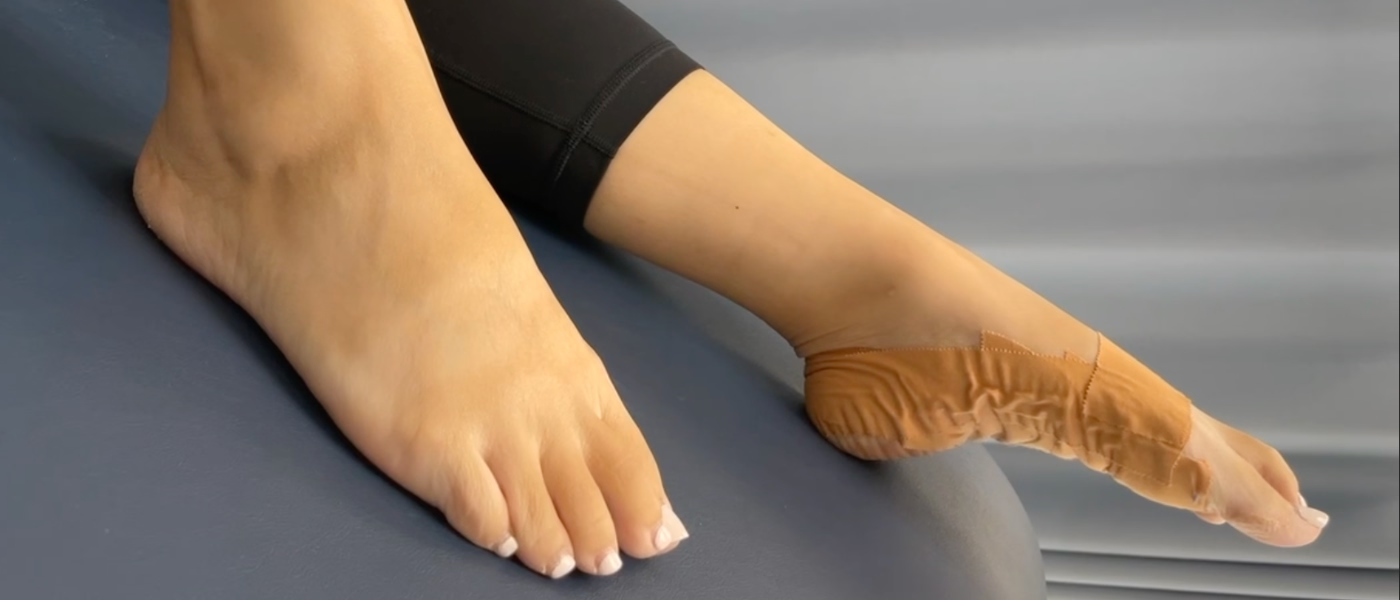
Osteoarthritis of the big toe joint causing stiffness, pain, and limited push-off during walking.
Great toe osteoarthritis, clinically known as hallux rigidus, is a degenerative joint condition affecting the first metatarsophalangeal (MTP) joint at the base of the big toe. It is the most common arthritic condition of the foot and the second most common disorder of the first MTP joint after hallux valgus (bunions). The term "rigidus" reflects the hallmark of the condition: progressive stiffness and loss of motion in the big toe, particularly the upward bending (dorsiflexion) that is essential for walking, running, and pushing off the ground.
Hallux rigidus affects approximately one in forty people over the age of fifty, though it can develop earlier in individuals with specific risk factors or a history of injury. The condition involves a gradual breakdown of the articular cartilage covering the joint surfaces, leading to bone-on-bone contact, the formation of bone spurs (osteophytes), and increasing pain and stiffness. Over time, the dorsal (top) surface of the joint often develops a prominent bony ridge that can be felt or seen through the skin, making shoe wear uncomfortable and further restricting motion.
What makes hallux rigidus particularly disabling is the critical role the first MTP joint plays in everyday movement. During a normal walking stride, the big toe must bend upward approximately 65 degrees during push-off. When this motion is restricted by arthritis, the body compensates by shifting weight to the outer edge of the foot, altering hip and knee mechanics, and shortening the stride. These compensations can lead to secondary pain in the ankle, knee, hip, or lower back if left unaddressed.
The good news is that hallux rigidus responds well to conservative management, especially when identified early. Physiotherapy, joint mobilization, targeted strengthening, appropriate footwear, and custom orthotics can significantly reduce pain, improve function, and slow the progression of the condition without the need for surgery.
Understanding the anatomy of the first metatarsophalangeal joint helps explain why this area is so vulnerable to osteoarthritis and why targeted treatment is effective.
The first MTP joint is a condyloid synovial joint formed by the rounded head of the first metatarsal bone and the concave base of the proximal phalanx of the big toe. This joint configuration allows flexion (downward bending), extension (upward bending or dorsiflexion), and small amounts of side-to-side motion. The joint surfaces are covered with hyaline articular cartilage, a smooth, resilient tissue that allows nearly frictionless movement and absorbs compressive forces during weight-bearing.
One of the most distinctive features of the first MTP joint is the sesamoid complex: two small, oval-shaped bones (the medial and lateral sesamoids) embedded within the tendons of the flexor hallucis brevis muscle on the underside of the metatarsal head. These sesamoids sit within grooves on the plantar surface of the metatarsal and are connected by the intersesamoid ligament, the plantar plate, and the metatarsosesamoid and sesamoidphalangeal ligaments.
The sesamoids serve several important functions. They act as pulleys, increasing the mechanical advantage of the flexor tendons that power push-off. They elevate the first metatarsal head, helping to bear and distribute weight. During walking, the sesamoid complex transmits approximately 50 percent of body weight during stance and more than 300 percent of body weight during the push-off phase. This enormous loading makes the sesamoid-metatarsal articulation another area susceptible to cartilage wear.
The joint is enclosed by a fibrous capsule lined with synovial membrane, which produces the fluid that lubricates and nourishes the cartilage. The collateral ligaments on the medial and lateral sides provide side-to-side stability, while the plantar plate (a thick fibrocartilaginous structure incorporating the sesamoids) provides stability from below and resists hyperextension.
The muscles controlling the big toe include the flexor hallucis longus and brevis (which bend the toe downward and power push-off), the extensor hallucis longus (which lifts the toe), and the intrinsic muscles of the foot that fine-tune position and stability.
The first MTP joint bears up to 90 percent of the load along the medial column of the foot during walking and can experience forces of up to eight times body weight during athletic activities such as running and jumping. This extraordinary mechanical demand explains why the articular cartilage in this joint is particularly vulnerable to wear and degeneration, and why even modest losses of range of motion can have outsized effects on gait and function.
Clinicians use grading systems to classify the severity of hallux rigidus, which helps guide treatment decisions. The most widely used system was developed by Coughlin and Shurnas (2003) and incorporates both clinical findings and X-ray changes.
It is worth noting that research has shown the correlation between radiographic grade and actual pain levels is imperfect. Some patients with advanced X-ray changes report moderate symptoms, while others with milder radiographic findings experience significant pain. This is why treatment decisions should always be guided by a combination of imaging, clinical examination, and the patient's functional goals.
Recover faster, move better, and feel stronger with expert physiotherapy. Our team is here to guide you every step of the way.

Hallux rigidus can develop from a combination of structural, biomechanical, traumatic, and systemic factors.
Conservative management is the recommended first-line approach for hallux rigidus, and physiotherapy plays a central role. A retrospective study of 772 patients with symptomatic hallux rigidus found that 55 percent were treated successfully with conservative care alone, avoiding the need for surgery. Of those treated conservatively, 84 percent achieved good outcomes with orthotic devices, and pain levels remained stable in 92 percent of cases over an average follow-up of 14.4 years.
Physiotherapy for hallux rigidus is effective because it addresses the condition from multiple angles:
Manual therapy techniques, including joint mobilization and manipulation of the first MTP and sesamoid joints, have been shown to improve dorsiflexion range of motion. One clinical trial demonstrated that patients receiving sesamoid mobilization combined with flexor hallucis strengthening achieved a mean dorsiflexion of 42.7 degrees compared to only 14.4 degrees in the control group.
Targeted strengthening of the flexor hallucis longus and the intrinsic foot muscles improves the dynamic stability of the first MTP joint and enhances the power of push-off during gait. Stronger muscles also help protect the joint by absorbing forces that would otherwise be transmitted directly to the cartilage.
Hallux rigidus often leads to compensatory gait patterns, such as walking on the outer edge of the foot, shortening the stride, or rotating the foot outward to avoid bending the big toe. Physiotherapy includes gait analysis and retraining to correct these compensations, reducing secondary strain on the ankle, knee, hip, and lower back.
Physiotherapists provide guidance on activity modification, footwear selection, home exercises, and pain management strategies that empower patients to manage their condition independently over the long term.
The initial focus is on reducing pain and inflammation through manual therapy, activity modification, and modalities as needed. Joint mobilization techniques begin to restore accessory motion at the MTP joint. Most patients notice a reduction in acute pain and improved comfort during walking within the first two to three weeks.
As pain settles, treatment progresses to more active interventions: progressive strengthening of the flexor hallucis and intrinsic foot muscles, range-of-motion exercises, and gait retraining. Patients typically report improved toe mobility and more comfortable push-off during walking.
The focus shifts to higher-level functional activities, sport-specific training if applicable, and optimizing footwear and orthotic interventions. Patients are gradually returned to full activity. Most individuals with mild to moderate hallux rigidus achieve significant, lasting improvement within this timeframe.
Hallux rigidus is a chronic condition, and ongoing self-management is important. A home exercise program, appropriate footwear, and periodic check-ins with your physiotherapist help maintain gains and slow further progression. Long-term studies show that conservative management can keep symptoms stable for well over a decade.
Your first visit begins with a detailed history and physical examination. We assess your first MTP joint range of motion, strength, joint play (accessory motion), gait pattern, footwear, and any compensatory movement patterns. We also review any imaging you may have and determine the clinical grade of your hallux rigidus to guide your treatment plan.
Manual therapy is a cornerstone of our treatment. Techniques include:
We prescribe specific exercises to maintain and improve the motion gained through manual therapy:
We analyze your walking pattern to identify compensations caused by hallux rigidus and retrain a more efficient, pain-free gait. This may involve cueing strategies to improve push-off mechanics, stride length optimization, and exercises to improve single-leg balance and propulsion.
Footwear plays a critical role in managing hallux rigidus. We provide specific recommendations:
For many patients, custom orthotic devices provide significant and lasting relief:
Surgery is considered when conservative management has been given an adequate trial (typically three to six months of consistent physiotherapy, footwear modification, and orthotic use) and the patient continues to experience significant pain and functional limitation.
Surgical options depend on the grade of hallux rigidus:
Your physiotherapist will discuss these options with you if conservative care is not providing sufficient relief and can coordinate a referral to an orthopaedic foot and ankle surgeon.
Most people first notice stiffness in the big toe, particularly when trying to bend it upward (as when pushing off while walking). As the condition progresses, pain develops at the top of the joint, especially during activities like walking, climbing stairs, or squatting. You may also notice a bony bump on the top of the toe that makes certain shoes uncomfortable.
No. A bunion (hallux valgus) involves the big toe angling toward the smaller toes, creating a bony prominence on the inside of the foot. Hallux rigidus is arthritis of the big toe joint, causing stiffness and a bony prominence on the top of the joint. They are distinct conditions, though both affect the first MTP joint and can occasionally coexist.
Yes. In fact, staying active is encouraged. Your physiotherapist will help you identify exercises and activities that do not aggravate the joint. Low-impact options such as cycling, swimming, and elliptical training are generally well tolerated. Running and jumping may need to be modified depending on the severity of your condition.
Hallux rigidus is a progressive condition, meaning it tends to worsen gradually if untreated. However, research shows that conservative management, including physiotherapy, orthotics, and appropriate footwear, can keep symptoms stable for well over a decade. Early intervention offers the best opportunity to slow progression and maintain function.
Most patients experience meaningful improvement within six to twelve weeks of consistent treatment. The exact timeline depends on the severity of the condition, your adherence to the home exercise program, and whether appropriate footwear and orthotics are used. Your physiotherapist will set clear milestones at each stage of your recovery.
Not everyone does, but orthotics are one of the most effective conservative interventions for hallux rigidus. A study of 772 patients found that 84 percent of those treated successfully with conservative care used orthotic devices. Your physiotherapist will assess whether orthotics are appropriate for your case and what type would be most beneficial.
Look for shoes with a stiff sole, a rocker-bottom profile, and a high, wide toe box. Avoid high heels and flexible, flat shoes that allow excessive bending at the big toe joint. Your physiotherapist can provide specific brand and model recommendations based on your foot type and activity level.
If big toe stiffness or pain is affecting your walking, exercise, or daily activities, do not wait for the condition to worsen. Early physiotherapy intervention for hallux rigidus delivers the best outcomes and may help you avoid surgery altogether.
Call us at 905-669-1221 or visit us at 398 Steeles Ave W, Unit 201, Thornhill, Ontario to book your assessment.
Get Better Today. Our experienced physiotherapists will develop a personalized treatment plan to reduce your pain, restore your toe mobility, and get you back to the activities you enjoy.
Explore the latest articles written by our clinicians