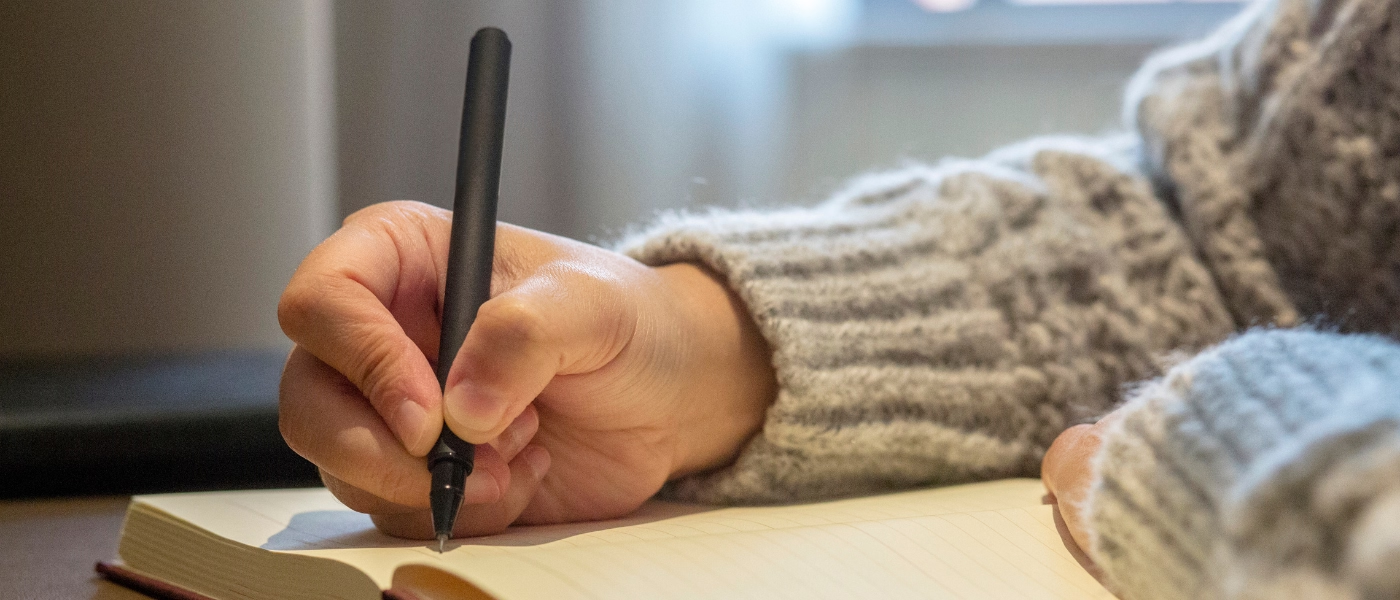
Hand osteoarthritis causes pain, stiffness, and reduced grip strength in the finger and thumb joints. Learn how physiotherapy, exercise, and splinting can restore hand function and slow progression.
Hand osteoarthritis (OA) is a degenerative joint condition characterized by the progressive breakdown of articular cartilage in the finger and thumb joints. It is the most common form of arthritis affecting the hand, leading to pain, stiffness, reduced grip strength, and difficulty performing everyday tasks such as opening jars, turning keys, or buttoning clothing. According to the Global Burden of Disease Study 2021, osteoarthritis affects over 500 million people worldwide, with hand OA representing one of the most prevalent subtypes (GBD 2021 Osteoarthritis Collaborators, Lancet Rheumatol, 2023).
Unlike inflammatory arthritis such as rheumatoid arthritis, hand OA is primarily a wear-and-tear condition, although emerging research recognizes that low-grade inflammation plays an important role in disease progression. The condition tends to develop gradually over months to years, and while it cannot be fully reversed, early physiotherapy intervention can significantly slow progression, reduce pain, and preserve hand function.
Hand OA most frequently affects the distal interphalangeal (DIP) joints at the fingertips, the proximal interphalangeal (PIP) joints in the middle of the fingers, and the first carpometacarpal (CMC) joint at the base of the thumb. The thumb base joint is particularly vulnerable because it bears tremendous force during pinch and grip activities, making it one of the most functionally limiting sites of hand OA.
Hand osteoarthritis is most common in adults over the age of 50, and its prevalence increases substantially with age. Women are affected two to three times more often than men, particularly after menopause, which suggests a hormonal component to disease development. Radiographic evidence of hand OA is found in over 65 percent of adults aged 60 and older, though not all individuals with imaging findings experience symptoms.
Understanding hand anatomy helps explain why osteoarthritis develops in specific locations and why targeted physiotherapy is so effective.
The hand contains 27 bones and more than 20 joints. The fingers each have three phalanges (distal, middle, and proximal) connected by two interphalangeal joints, while the thumb has two phalanges and one interphalangeal joint. The metacarpal bones form the palm and connect to the phalanges at the metacarpophalangeal (MCP) joints and to the carpal bones of the wrist at the carpometacarpal (CMC) joints.
The three joint areas most commonly affected by hand OA are:
Each joint surface is covered with a smooth layer of hyaline articular cartilage, typically two to four millimetres thick. This cartilage functions as a shock absorber and provides a near-frictionless surface for joint movement. In osteoarthritis, this cartilage gradually thins, softens, and develops fissures, eventually exposing the underlying subchondral bone.
The joints are stabilized by a network of ligaments, a joint capsule lined with synovial membrane, and surrounding tendons. The synovial membrane produces synovial fluid that lubricates the joint and nourishes the cartilage. In hand OA, the synovial membrane can become mildly inflamed, contributing to joint swelling and stiffness. The intrinsic and extrinsic muscles of the hand, including the thenar muscles that control thumb movement, play a critical role in maintaining joint stability.
Hand osteoarthritis develops from a combination of mechanical, biological, and genetic factors that disrupt the balance between cartilage breakdown and repair.
Recover faster, move better, and feel stronger with expert physiotherapy. Our team is here to guide you every step of the way.

Physiotherapy is recommended as a first-line, core treatment for hand osteoarthritis by every major international guideline, including the 2018 EULAR recommendations (Kloppenburg et al., Ann Rheum Dis, 2019).
A landmark Cochrane systematic review evaluated seven randomized controlled trials involving 534 participants with hand OA. The review found that exercise therapy produced statistically significant improvements in hand pain, finger joint stiffness, and hand function compared with no exercise (Østeras et al., Cochrane Database Syst Rev, 2017). More recently, a 2024 systematic review confirmed that exercise-based rehabilitation significantly reduces pain and improves grip strength and pinch strength (Huang et al., J Orthop Sports Phys Ther, 2024). The most comprehensive 2025 systematic review found that exercise therapy and multimodal physiotherapy were among the safest and most effective non-pharmacological approaches (Kjeken et al., RMD Open, 2025).
Your physiotherapist will perform a comprehensive assessment including grip and pinch strength measurement, range of motion testing, and joint stability evaluation. Initial treatment focuses on pain relief through gentle range-of-motion exercises, paraffin wax baths, manual therapy, and education about joint protection strategies.
The program progresses to include targeted strengthening exercises for the hand and forearm muscles. Your therapist may introduce a custom splint for the thumb base joint if CMC OA is present.
The focus shifts toward building exercise independence and integrating a sustainable home exercise program. Research shows the greatest improvements in grip strength and hand function occur between six and twelve weeks (Huang et al., J Orthop Sports Phys Ther, 2024).
Long-term maintenance is essential. Benefits of exercise therapy can be sustained for three to six months or longer when patients adhere to a home program (Østeras et al., Cochrane Database Syst Rev, 2017).
Education on protecting hand joints during daily activities is a cornerstone of management (Kloppenburg et al., Ann Rheum Dis, 2019): using ergonomic handles, distributing loads across multiple joints, taking regular micro-breaks during repetitive activities, and using adaptive equipment.
No. Hand OA is a degenerative condition primarily affecting the DIP, PIP, and thumb base joints. Rheumatoid arthritis is an autoimmune inflammatory disease that typically affects the MCP joints and wrists symmetrically, requiring different medical management.
When performed correctly, exercise does not worsen hand OA. Multiple systematic reviews confirm that exercise therapy is safe and produces meaningful improvements in pain, stiffness, and function (Østeras et al., Cochrane Database Syst Rev, 2017; Huang et al., J Orthop Sports Phys Ther, 2024).
Most people with hand OA can be effectively managed without surgery. Physiotherapy, exercise, splinting, and joint protection are first-line treatments. Surgery is typically reserved for severe cases where conservative measures have failed.
Hand exercises are most effective as a long-term, ongoing program. Benefits are sustained as long as the program is maintained. Your physiotherapist will design a manageable daily routine of approximately 10 to 15 minutes.
No. Splints for hand OA are designed to support the joint during activities while still allowing functional hand use. They reduce pain and improve the ability to perform tasks, encouraging more hand use rather than less.
Yes. Physiotherapy can help you develop strategies to manage symptoms at work, including ergonomic adjustments, activity modification, and targeted exercises to maintain hand strength and endurance.
Hand OA affects the joints, causing pain, stiffness, and bony enlargements. Carpal tunnel syndrome involves compression of the median nerve at the wrist, causing numbness, tingling, and weakness. Both are more common with age but require different treatment approaches.
At Vaughan Physiotherapy, our experienced team provides comprehensive, evidence-based physiotherapy for hand osteoarthritis, combining therapeutic exercise, manual therapy, custom splinting, and practical joint protection education.
Phone: 905-669-1221
Location: 398 Steeles Ave W, Unit 201, Thornhill, Ontario
Website: vaughanphysiotherapy.com
Early intervention leads to better outcomes. The sooner you begin a targeted exercise and physiotherapy program, the more effectively we can manage your symptoms, protect your joints, and preserve your hand function for the years ahead.
Explore the latest articles written by our clinicians


