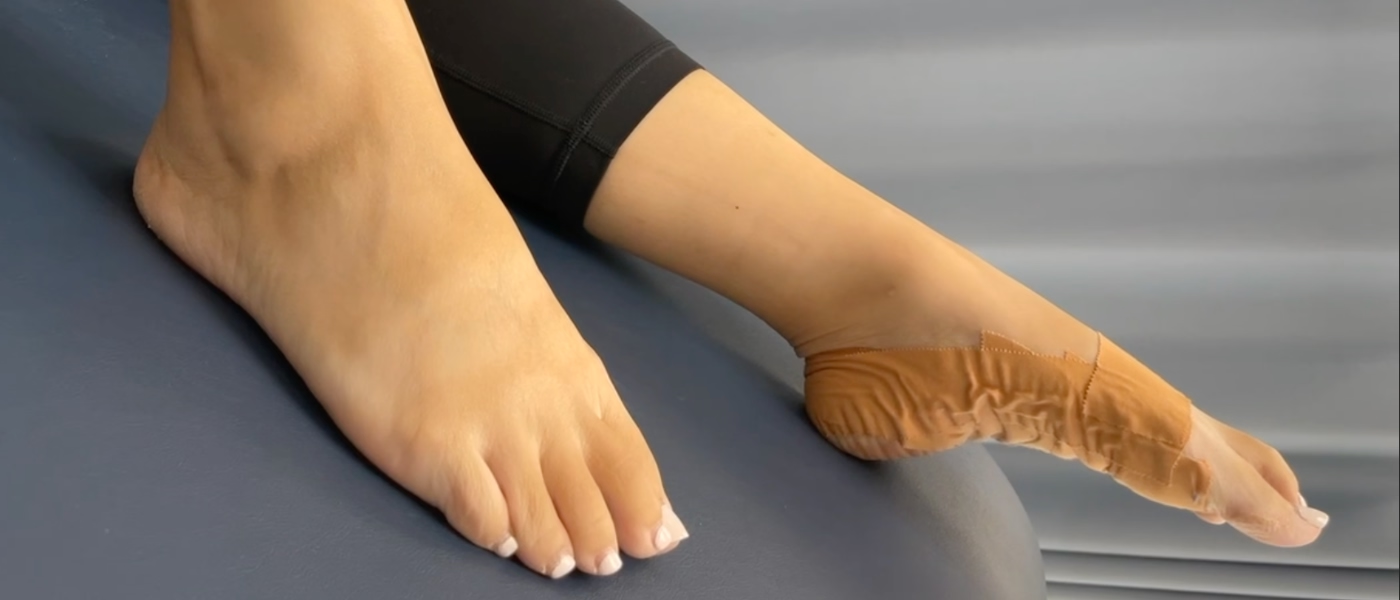
Excessively high foot arch causing lateral ankle instability, metatarsalgia, and altered weight distribution.
High arches, known clinically as pes cavus, is a foot condition characterized by an excessively elevated medial longitudinal arch that does not flatten during weight-bearing. Unlike a normal arch that absorbs shock by lowering slightly when you step down, the cavus foot remains rigidly elevated, concentrating pressure on the heel and the ball of the foot while reducing the contact area along the outer midfoot. This abnormal weight distribution creates a cascade of biomechanical problems that can affect the entire lower kinetic chain, from the ankle and knee to the hip and lower back.
Pes cavus affects an estimated 8 to 15 percent of the general population, though prevalence varies depending on the diagnostic criteria used and the population studied (Burns et al., 2005). While less commonly discussed than flat feet (pes planus), high arches can be equally debilitating, particularly when they progress without intervention. Patients often describe the sensation of walking on the outer edges of their feet, difficulty finding comfortable footwear, and recurrent ankle sprains that gradually undermine their confidence in physical activity.
The condition can range from mild, where the arch is simply higher than average with minimal symptoms, to severe, where the foot becomes markedly rigid with fixed clawing of the toes and significant hindfoot deformity. Early recognition and appropriate physiotherapy management are essential to prevent the progressive complications that untreated pes cavus can cause.
Understanding pes cavus requires a working knowledge of the structures that create and maintain the foot's arched shape. The foot contains 26 bones, 33 joints, and more than 100 muscles, tendons, and ligaments, all working in concert to provide both stability and flexibility during movement.
The medial longitudinal arch is the most prominent of the foot's three arches and the one primarily affected in pes cavus. It spans from the calcaneus (heel bone) through the talus, navicular, three cuneiform bones, and the first three metatarsals. This arch is maintained by several key structures:
The peroneal muscles (peroneus longus and peroneus brevis) are of particular importance in pes cavus because their weakness is a key driver of the deformity:
Research by Vinci and Perelli (2002) demonstrated that selective denervation of the intrinsic foot muscles, particularly the lumbricals, may be the initial mechanism driving forefoot cavus deformity in neurological conditions. When the lumbricals weaken, the long toe flexors and extensors act unopposed, leading to clawing of the toes and elevation of the metatarsal heads, further increasing arch height.
Pes cavus is broadly classified by both the location of the deformity and its underlying cause.
The causes of pes cavus span a broad spectrum from inherited neurological conditions to trauma and idiopathic origins.
CMT is the single most common cause of pes cavus, responsible for up to 50% of cases referred to specialty clinics. CMT is a hereditary motor and sensory neuropathy affecting peripheral nerves, with an estimated prevalence of 1 in 2,500 people. Research published in the Journal of Neurology (Vinci and Perelli, 2011) provided new insights into the pathophysiology, demonstrating that selective weakness of the intrinsic foot muscles occurs early, the peroneus longus overpowers the weakened tibialis anterior driving first ray plantarflexion, and the tibialis posterior overpowers the weakened peroneus brevis pulling the hindfoot into varus.
In approximately 30% of patients, no underlying neurological cause is identified. These patients typically present with bilateral, symmetric high arches that are relatively flexible in early stages but may stiffen over time. There is often a strong family history, suggesting a genetic component that has not yet been fully characterized.
Fractures of the calcaneus, talus, or midfoot that heal with malunion can produce a secondary cavus deformity. Compartment syndrome of the deep posterior compartment of the leg, if inadequately treated, can result in contractures that elevate the arch.
Recover faster, move better, and feel stronger with expert physiotherapy. Our team is here to guide you every step of the way.

Physiotherapy is the cornerstone of conservative management for pes cavus, and evidence supports its role in reducing pain, improving function, and preventing progression.
The fundamental biomechanical problem in pes cavus is muscle imbalance, where certain muscles overpower their weakened antagonists. Physiotherapy targets this imbalance directly by strengthening weakened muscles (particularly the peroneals and tibialis anterior) while stretching and lengthening overactive muscles and tight soft tissues.
A landmark randomized controlled trial by Burns et al. (2006), involving 154 adults with painful pes cavus, demonstrated that custom-made foot orthoses reduced foot pain by approximately 75% compared to sham insoles. The Cochrane Systematic Review on pes cavus interventions confirmed that custom foot orthoses are significantly more beneficial than sham orthoses for treating chronic musculoskeletal foot pain.
The rigid nature of the cavus foot means that mobility work is essential to prevent further stiffening and to maximize the effectiveness of orthotic devices.
Without intervention, pes cavus leads to progressive complications including chronic ankle instability, stress fractures, metatarsalgia, and callus formation. Early physiotherapy can interrupt this progression and preserve function for decades.
Pes cavus is typically a chronic condition rather than one with a defined recovery endpoint. Most patients notice significant pain reduction within the first 4 to 6 weeks of combined orthotic use and physiotherapy. Strength gains in the peroneal muscles and improved ankle stability typically take 3 to 6 months to fully develop. Patients with neurological pes cavus require lifelong monitoring as their condition may be progressive.
At Vaughan Physiotherapy, we use an evidence-based, individualized approach to managing pes cavus that addresses both the symptoms and the underlying biomechanical dysfunction.
Every patient receives a thorough initial evaluation including detailed history, Coleman block test (differentiating forefoot-driven from hindfoot-driven cavus), gait analysis, muscle strength testing of the peroneus longus, peroneus brevis, tibialis anterior, tibialis posterior, and intrinsic foot muscles, range of motion assessment, and neurological screening with referral for nerve conduction studies when indicated.
Strengthening the peroneal muscles is the single most important exercise intervention for pes cavus. Our progressive program includes resisted eversion with resistance band, heel walks, single-leg stance on unstable surfaces, and eccentric peroneal training.
Tight calf muscles and a contracted plantar fascia are nearly universal findings in pes cavus. Our stretching protocol includes gastrocnemius stretch (30 seconds, 3-5 times per session, twice daily), soleus stretch, plantar fascia stretch performed before first morning steps, and frozen bottle rolling combining stretching with cryotherapy.
Ankle instability is one of the most disabling complications of pes cavus. Our balance training protocol includes single-leg stance progressions, wobble board training, dynamic balance challenges using the star excursion balance test pattern, and sport-specific drills for athletic patients.
Based on the strong evidence supporting custom orthoses for painful pes cavus (Burns et al., 2006), we recommend custom-made foot orthoses with a deep heel cup, lateral forefoot posting, full-length contoured arch support, lateral wedging for patients with hindfoot varus, and metatarsal pads positioned proximal to the metatarsal heads. Orthotic replacement is recommended every 12 to 18 months.
We advise patients with pes cavus to select shoes with a wide toe box, cushioned sole with good shock absorption, neutral or slightly curved last, and high-top or mid-cut boots for those with recurrent ankle instability. Patients should avoid flat, unsupportive footwear such as flip-flops, ballet flats, and minimalist shoes.
While pes cavus itself may not be preventable, many of its most disabling complications can be avoided with proactive management including ankle sprain prevention through peroneal strengthening and proprioceptive training, stress fracture prevention through adequate cushioning and gradual activity progression, metatarsalgia management through metatarsal pads and offloading orthotics, toe deformity prevention through intrinsic foot muscle exercises such as towel curls and marble pick-ups, and regular monitoring for progression in neurological cases.
In most cases, physiotherapy and orthotics cannot change the bony structure of a high-arched foot, but they can effectively manage symptoms, improve function, and prevent complications. Surgery is typically reserved for severe, rigid deformities that do not respond to conservative management.
Warning signs include progressive worsening of arch height, asymmetric deformity, associated muscle weakness or wasting in the legs, numbness or tingling in the feet, difficulty with balance, and a family history of neurological conditions. Your physiotherapist can perform a neurological screening and refer for nerve conduction studies if indicated.
Research strongly supports custom-made orthoses over off-the-shelf alternatives for painful pes cavus. A randomized controlled trial involving 154 patients found that custom foot orthoses reduced pain by approximately 75% compared to sham insoles.
Yes, many people with pes cavus successfully participate in running and sports. The keys are proper footwear with adequate cushioning, well-fitted custom orthotics, a consistent strengthening and flexibility program, and gradual progression of training loads.
This depends on the underlying cause. Idiopathic pes cavus often remains relatively stable. Neurological pes cavus, particularly from conditions like CMT, tends to be progressive and requires ongoing monitoring.
Custom foot orthoses typically last 12 to 18 months with daily use. Signs that replacement is needed include visible wear, flattening of the arch support, or a return of symptoms.
If you are experiencing foot pain, recurrent ankle sprains, or difficulty finding comfortable shoes due to high arches, our team at Vaughan Physiotherapy can help. We provide comprehensive assessment, evidence-based treatment, and custom orthotic solutions to help you move with confidence and comfort.
Book your appointment today:
Don't let high arches hold you back from the activities you love. Early intervention leads to the best outcomes, so reach out today and take the first step toward better foot health.
Explore the latest articles written by our clinicians