Lumbar Muscle Strains and Ligament Sprains: A Physiotherapy Guide
What Are Lumbar Muscle Strains and Ligament Sprains? Understanding the Conditions
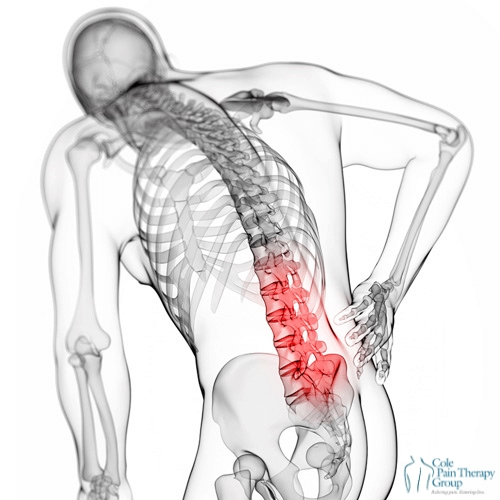
Lumbar strains and sprains are clinical terms often used to describe an episode of acute low back pain. While they involve different structures, they frequently present together with similar symptoms and are managed through comparable rehabilitation strategies.
Definitions: Strain vs. Sprain
Lumbar Strain: This involves an injury to the muscles or tendons of the lower back (often referred to as a "pulled muscle"). It typically results from muscular fatigue or overstretching of the paraspinal muscles that support the spine.
Lumbar Sprain: This refers to the overstretching or tearing of ligaments, the tough bands of connective tissue that join bones together. In the lumbar spine, sprains frequently affect the interspinous and supraspinatus ligaments, which can become significant generators of localized, central back pain
Common Symptoms
Sudden Onset: Pain often develops acutely following traumatic or strenuous events, such as sports participation, falls, motor vehicle accidents, or lifting heavy objects.
Sharp or Pulling Sensation: The pain is frequently described as sharp and shooting in character.
Localized Tenderness: Discomfort is predominantly located in the lumbosacral area, overlying the lumbar spinous processes and along the paraspinal muscles. Clinical examinations may identify a focal, well-localized tender area specifically between the spinous processes.
Muscle Guarding and Spasms: Pain is typically accompanied by paraspinal muscle tightness or "spasms". These contractions act as a protective mechanism around the affected area.
Increased Pain with Movement: Mechanical load significantly impacts symptoms. Trunk rotation, sitting, bending forward, and lifting are common exacerbating factors.
Transitional Movements: Patients often report difficulty with activities of daily living (ADL), particularly raising themselves from a sitting posture to a standing position
Prevalence
Prevalence and Lifetime Incidence
Widespread Impact: It is estimated that 50% to 80% of adults will experience at least one episode of acute low back pain (LBP) during their lifetime.
Leading Symptom: Episodes of low back pain are the second leading symptom prompting patients to seek a physician's evaluation.
Acute vs. Radicular: The incidence of axial back pain (strains/sprains) is significantly higher than that of radiculopathy, which is reported to be only 2% to 6%.
Demographics and Risk Factors
Gender: While the sources do not explicitly state "equal" prevalence globally, research data shows balanced gender distribution in clinical studies of these conditions; for example, one randomized controlled trial included 43 males and 37 females.
Age Range: These conditions are most prevalent among the young and middle-aged. Studies specifically targeting this condition often focus on individuals aged 25 to 55.
Lifestyle and Occupation: High prevalence is strongly associated with physical work, sports participation, and increasingly sedentary lifestyles or poor ergonomic practices. Factors such as heavy weight lifting and repetitive bending are primary traumatic or strenuous triggers.
Recurrence and Chronicity
High Recurrence Rates: The sources state that recurrences are common. While 90% of patients with an acute episode recover within six weeks, approximately 2% to 7% of patients transition to chronic back pain.
Contributing Factors: Recurrence is often driven by maladaptive neuromuscular patterns and structural stress that compromise spinal stability.
The Cycle of Dysfunction: Chronic strain involves a "cycle of pain and dysfunction" where weakness or delayed activation of stabilizing muscles—such as the multifidus and transversus abdominis—leads to increased mechanical stress on the spine. Passive treatments like heat or massage are noted for providing only short-term relief because they do not address these underlying neuromuscular deficits
Anatomy of the Low Back (Relevant to Sprains and Strains)
Muscles of the Low Back
The lumbar spine is supported by a dynamic system of muscles categorized by their functional roles:
Superficial Movers (Global Mobilizers): These include the erector spinae and other paraspinal muscles. Their primary role is to generate force for movement and provide general trunk stability.
Deep Stabilizers (Local Stabilizers): Key structures include the multifidus and quadratus lumborum. The multifidus is a critical lumbopelvic stabilizer; a reduction in its cross-sectional area is a known predictor of lower limb injuries.
Supporting Core Muscles: The transversus abdominis and deep abdominal musculature function as a "muscular corset".
Functions: These muscles function synergistically to maintain segmental stability, facilitate load transfer, and preserve optimal spinal alignment during movement.
Ligaments of the Low Back
Ligaments provide the passive stability of the spine and limit excessive ranges of motion.
Key Ligaments: Sources highlight the interspinous and supraspinatus (supraspinous) ligaments as significant structures. Other relevant ligaments include the ligamentum flavum and the longitudinal ligaments.
Functions: These ligaments join bones together and are the primary structures affected in a sprain, which involves their overstretching or tearing. Specifically, the interspinous and supraspinatus ligaments work together to limit excessive forward bending
How Do Lumbar Sprains and Strains Develop? Causes and Risk Factors
Common causes:
Traumatic and Strenuous Events: Injuries frequently follow sudden movements such as lifting heavy objects, repetitive bending, trunk rotation (twisting), and reaching.
Sudden Impact: Physical trauma from falls, motor vehicle accidents, or slips can cause acute tearing or overstretching of the paraspinal muscles (strain) or ligaments (sprain).
Sports Participation: High-demand activities involving running, kicking, and cutting maneuvers—common in football, soccer, and gymnastics—are leading triggers for acute episodes.
Repetitive or Cumulative Stress:Overuse and repetitive strain can lead to micro-damage in the tissues over time, especially when movement strategies are inefficient.
Prolonged Static Postures: Maintaining a single position for too long, such as prolonged sitting or standing, leads to muscular fatigue and impaired postural control, which reduces the spine's ability to absorb loads safely
Risk factors:
Muscle Weakness and Atrophy: Weakness or delayed activation of the deep stabilizers—specifically the multifidus and transversus abdominis—is a primary risk factor. The multifidus provides significant segmental stiffness, and its atrophy is a known predictor of future injury.
Deconditioning and Lifestyle:Sedentary lifestyles and poor physical conditioning (low trunk endurance) reduce the threshold at which the back can be injured.
Previous Injury: Having a prior low back injury is one of the strongest predictors of future episodes. Muscles like the multifidus do not recover automatically after pain subsides, leaving the spine vulnerable unless targeted rehabilitation is performed.
Poor Biomechanics: Incorrect lifting techniques and alignment faults during dynamic activity increase the mechanical load on the lumbosacral junction.
Reduced Flexibility: Tightness in the hamstrings, hip flexors, or hip adductors can alter pelvic tilt and mechanics, leading to increased strain on the lumbar spine.
Occupational and Environmental Demands: Jobs requiring heavy lifting or repetitive manual labor expose individuals to high mechanical loads.
Psychosocial Factors and Stress: Negative recovery expectations and stress can act as "yellow flags," increasing the likelihood that acute pain will transition into chronic disability.
Why Physiotherapy Is Critical for Lumbar Sprain/Strain Recovery
Physiotherapy is the cornerstone of a complete recovery from lumbar sprains and strains because it moves beyond temporary symptom relief to address the underlying neuromuscular deficits and postural deficiencies that contribute to chronic pain. While conventional treatments like rest and medication can alleviate acute symptoms, they often fail to restore the muscular coordination necessary to prevent recurrent strain.
Key Therapeutic Benefits
Pain and Spasm Reduction: Passive modalities such as heat and ice are effective for mitigating immediate pain, but structured, supervised stabilization exercises lead to statistically superior reductions in pain intensity (VAS scores) compared to general activity or educational guidance alone.
Targeted Activation of Stabilizers: A critical component of rehabilitation is the progressive activation of deep spinal stabilizers, specifically the multifidus and transversus abdominis. These muscles are essential for maintaining segmental stability and optimal spinal alignment during daily tasks, yet they are frequently weakened or show delayed activation following an injury.
Restoring Flexibility and Mobility: Effective physiotherapy programs incorporate stretching of the lumbosacral muscles, pelvis, and lower extremities to restore functional capacity and range of motion.
Correcting Movement Patterns: By retraining neuromuscular patterns, physiotherapy identifies and reduces aberrant motion, which allows for a more effective redistribution of mechanical loads across the spine. In athletic populations, lumbopelvic exercises have been shown to significantly reduce the incidence of muscle strain injuries.
Essential Patient Education: Clinicians provide vital training in postural control, proper body mechanics, and ergonomics. Educating patients on these strategies, along with proper pacing and activity modification, helps move them toward long-term self-management and prevents the "cycle of pain and dysfunction".
Functional Progression: Structured, supervised exercise regimens facilitate a clinically meaningful return to daily activities, significantly improving scores on the Oswestry Disability Index (ODI) and enhancing the patient's confidence during physical exertion
What to Expect: Prognosis and Recovery Timeline
The prognosis for lumbar sprains and strains (often clinically referred to as acute low back pain) is generally excellent, with the majority of patients experiencing a rapid return to their normal activities.
Based on sources, the recovery timeline and expectations for this condition are as follows:
Typical Recovery Timeline
1–2 Weeks (Initial Recovery): Most patients will experience significant improvement within this timeframe. Research indicates that patients typically see enough improvement to return to work within one month.
Up to 6 Weeks (Complete Resolution): Studies consistently show that 90% of patients with an acute episode of low back pain recover within 6 weeks. During this initial 6-week period, there is typically a marked reduction in both mean pain scores and functional disability.
6 Weeks to 12 Weeks (Chronic Management): For the small percentage (2% to 7%) of patients whose pain persists beyond the acute phase, recovery rates slow down after 6 weeks. However, structured 12-week lumbar stabilization programs—consisting of supervised sessions three times per week—have been proven to substantially reduce pain intensity and functional disability in these chronic cases.
Beyond 6 Months (Long-Term Outcomes): By the one-year mark, most patients can expect to have minimal pain or disability.
Prognostic Factors and Recurrence
While the short-term prognosis is favorable, sources highlight several factors that can influence the recovery timeline:
High Recurrence Rates: Recurrences are common in axial back pain. Primary prevention and specialized rehabilitation are essential to break the "cycle of pain and dysfunction".
Psychosocial Influence: A patient's expectations play a significant role in recovery. Patients with negative recovery expectations are twice as likely to progress to chronic low back pain and remain absent from work compared to those with a positive outlook.
Targeted Exercise: Participation in a regular spine stabilization program is considered the cornerstone for a complete recovery and is vital for preventing the transformation of acute pain into chronic disability.
Athletic Recovery: In recreational athletes, specific lumbopelvic stabilization and agility training significantly reduce the risk of recurrent muscle strains (such as hamstring injuries) both at two weeks and one year after returning to sport
Physiotherapy Treatment Approaches
1. Early-Stage Management (Acute Phase)
In the acute phase (the first 1–6 weeks), the primary goal is to manage symptoms while maintaining as much function as possible.
Active Recovery over Bed Rest: One of the most critical recommendations is that bed rest is not recommended; instead, patients should remain active as much as possible.
Modalities for Relief: The application of heat or ice can help mitigate acute pain.
Manual Therapy: While massage and spinal manipulation may provide short-term symptom relief, the sources note they are generally no more effective than established medical treatments and do not address the underlying neuromuscular deficits.
Education and Pacing: Early education focuses on the pathologic process and ruling out "red flags". Patients are advised to wait until severe pain begins to subside before starting a formal exercise program, as pain can limit the ability to participate effectively.
2. Mid-Stage Rehabilitation
Once acute symptoms stabilize, the focus shifts to a structured lumbar stabilization program to address the "cycle of pain and dysfunction".
Targeting Deep Stabilizers: This stage emphasizes the controlled activation of the local muscle system, specifically the multifidus, transversus abdominis, and quadratus lumborum. These muscles are responsible for maintaining segmental stability and preserving optimal spinal alignment.
Stretching and Flexibility: Rehabilitation includes stretching the lower extremities, specifically the hamstrings, pelvis, and lumbosacral muscles. Reduced hip flexibility is a known risk factor for lower limb muscle strain injuries.
Neuromuscular Retraining: Mid-stage rehab aims to correct "aberrant motion patterns" by restoring coordinated activation between local stabilizers and global mobilizers.
3. Functional Strength and Return-to-Activity
This phase prepares the patient for the demands of daily life and sports by integrating stability into dynamic movements.
Movement Quality: Exercises focus on improving motor control and trunk endurance during functional activities such as bending, lifting, and transitional movements.
Lumbopelvic Control for Athletes: In recreational athletes, lumbopelvic exercise—specifically stabilization and agility training—has been proven to significantly reduce the incidence and recurrence of lower limb muscle strain injuries.
Mechanics and Loading: Training focuses on proper body mechanics and redistributing mechanical loads effectively across the spine to ensure that functional mobility does not cause excessive stress on passive ligaments.
4. Education Throughout
Continuous education is considered a "cornerstone" for complete recovery and the prevention of the transformation of acute pain into chronic disability.
Ergonomics and Posture: Patients are educated on ergonomic practices for work and daily life to counter the negative effects of sedentary lifestyles and prolonged static postures.
Load and Flare-up Management: ADL modifications involve avoiding prolonged static postures, restricting excessive forward bending, and avoiding excessive weight lifting.
Psychosocial Factors: Education also addresses patient expectations; those with positive recovery expectations are significantly less likely to develop chronic LBP or remain absent from work compared to those with negative outlooks.
Preventing Lumbar Sprain/Strain Recurrence
Preventing the recurrence of lumbar sprains and strains is a critical goal of rehabilitation, as approximately 50% to 80% of adults experience at least one acute episode, and recurrences are common. The sources emphasize that moving beyond passive symptom relief toward a consistent, targeted conditioning program is the most effective way to break the "cycle of pain and dysfunction".
1. Regular Strengthening of Core and Lumbar Muscles
The "Cornerstone" of Prevention: Targeted Lumbar Stabilization Exercises (LSE) are considered the cornerstone for a complete recovery and the prevention of future episodes.
Targeted Muscles: Programs should focus on the deep stabilizers, specifically the multifidus, transversus abdominis (TrA), and quadratus lumborum. These muscles maintain segmental stability and protect the spine from the "aberrant motion patterns" that lead to strain.
Superiority of Specificity: Structured, progressive LSE programs are significantly more effective at reducing pain intensity and long-term functional disability than conventional physiotherapy or general educational guidance alone.
2. Maintain Flexibility in Hips and Hamstrings
Reducing Load: Reduced hip flexibility and tight hamstrings are documented risk factors for lower limb muscle strain and increased mechanical stress on the lumbar ligaments.
Kinetic Chain Link: Improving flexibility in the hips, pelvis, and lower extremities offloads the lumbosacral region by allowing for better force transmission through the kinetic chain.
Stretching as Maintenance: Regular stretching of the lumbosacral muscles should be incorporated into a daily routine to preserve functional mobility.
3. Use Proper Lifting Mechanics
Avoiding Sudden Overload: Injuries are often triggered by sudden heavy weight lifting or lifting with poor mechanics.
Education and Training: Rehabilitation plans must include learning proper body mechanics to ensure that the spine remains in optimal alignment during dynamic activities. This involves using the legs and maintaining a neutral spine rather than relying on the back muscles to bear the load.
4. Avoid Prolonged Static Positions
Preventing Ligamentous Creep: Prolonged static postures, such as long-term sitting or standing, lead to muscular fatigue and the degeneration of posterior spinal ligaments (interspinous and supraspinatus).
Movement Breaks: Modifying activities of daily living (ADL) to include frequent position changes is essential for reducing "ongoing structural stress".
5. Gradually Increase Training Loads
The Motor Learning Model: Effective programs are progressive, starting with low-load isolation of stabilizers and gradually increasing complexity as motor control improves.
Safety First: Exercise programs should ideally begin once severe acute pain has started to subside, as high pain levels can limit a patient's ability to participate effectively in the necessary neuromuscular retraining.
6. Address Early Symptoms and Psychosocial Factors
Early Intervention: Addressing symptoms before they persist for more than four to six weeks is vital to prevent the transition from acute to chronic pain.
The Power of Expectation: Interestingly, patients with positive recovery expectations are significantly less likely to experience a progression to chronic disability compared to those with negative outlooks
Start Your Journey to
Better Health Today
Recover faster, move better, and feel stronger with expert physiotherapy. Our team is here to guide you every step of the way.
A successful rehabilitation plan begins with a precise clinical diagnosis to differentiate between various "LBP generators".
Specific Structures: Sources identify common sources of pain as intervertebral discs, facet (zygapophyseal) joints, and sacroiliac joints.
Lumbar Ligaments: Recent research increasingly identifies the interspinous and supraspinatus ligaments as significant contributors to central, non-radiating back pain, which are often overlooked in standard practice.
Differential Diagnosis: Physical examination must involve specialized maneuvers—such as the Straight-leg raise for radiculopathy or the Patrick (FABER) test for facet and sacroiliac joint issues—while screening for "red flags" like fever, weight loss, or neurological deficits that require prompt medical imaging.
2. Manual Therapy and Spasm Reduction
While exercise is the cornerstone of long-term recovery, initial management often focuses on reducing protective muscle guarding.
Symptom Mitigation:NSAIDs and muscle relaxants are frequently used to manage inflammation and muscle "tightness" or spasms.
Manual Techniques: Passive modalities such as massage, heat, and ice provide temporary relief of myofascial trigger points. However, the sources note that manual therapies are most effective when used to facilitate a patient's transition into an active exercise program, as they do not address underlying neuromuscular deficits.
3. Evidence-Based Core Activation
The sources emphasize that progressive lumbar stabilization exercises (LSE) are statistically superior to conventional physiotherapy for reducing pain and disability.
Targeting Deep Stabilizers: Your focus on specific muscle activation is critical for restoring the "local muscle system"—including the multifidus, transversus abdominis, and quadratus lumborum—which provide segmental stability.
The Progressional Model: Effective programs move from controlled activation to progressive loading over approximately 12 weeks, which has been shown to reduce functional disability by up to 28.5% on the Oswestry Disability Index.
4. Functional Retraining of Movement Patterns
Rehabilitation aims to break the "cycle of pain and dysfunction" by replacing maladaptive habits with natural movement patterns.
Addressing Aberrant Motion: By restoring the synchrony between deep stabilizers and global mobilizers, your approach reduces the aberrant lumbar motion and mechanical stress on passive structures like ligaments.
Athletic Applications: For recreational athletes, lumbopelvic exercises—specifically those focusing on stability, agility, and neuromuscular control—significantly reduce the incidence of lower limb muscle strain injuries (LLMSI).
5. Education for Independence
Education is considered a "logical management strategy" to prevent acute pain from becoming a chronic disability.
Body Mechanics: Patients must be taught proper mechanics for sitting, standing, and lifting to avoid prolonged mechanical deformation of soft tissues.
Psychosocial Factors: Sources highlight that patients with positive recovery expectations are significantly less likely to progress to chronic LBP, underscoring the importance of education in fostering patient confidence.
6. Collaboration and Escalation of Care
Specialized rehabilitation recognizes when a multidisciplinary approach is necessary.
Advanced Interventions: If conservative management does not yield results within four weeks, collaboration with medical providers for MRI imaging or spinal injections (such as epidural steroids
FAQs
Is a lumbar strain the same as a sprain?
No. While the terms are often used interchangeably to describe acute low back pain, they involve different tissues. A lumbar strain involves an injury to the muscles or tendons of the lower back, often referred to as a "pulled muscle". In contrast, a lumbar sprain involves the overstretching or tearing of ligaments, such as the interspinous and supraspinatus ligaments, which are increasingly recognized as significant sources of central back pain
Do I need imaging?
Usually not. For standard strains and sprains, diagnostic imaging and laboratory testing are not required. Imaging is typically only recommended if "red flags" are present, such as a history of cancer, significant trauma, constitutional symptoms (like fever or unexplained weight loss), or if symptoms persist for more than one month without improvement
Can I continue working or exercising?
Yes. The sources explicitly state that bed rest is not recommended for managing acute low back pain. It is advisable to remain as active as possible and return to normal activities promptly. Once initial severe pain begins to subside, participating in a structured spine stabilization program is considered the cornerstone for a complete recovery and the prevention of future recurrences
Why do back spasms happen?
Back spasms, or paraspinal muscle tightness, are protective "guarding" responses. When structures like facet joints or ligaments are injured or unstable, the surrounding muscles contract involuntarily to protect the area from further movement or irritation
How long until I feel normal again?
The prognosis for these conditions is excellent. Most patients recover within two weeks, and approximately 90% of individuals with an acute episode recover within six weeks. Research shows a rapid improvement in both pain and disability within the first month of appropriate management
Take the First Step Toward Recovery
Don't let sprains and strains limit your activities or affect your daily life. Our experienced team is ready to help you build a strong foundation for lasting recovery.
Book Your Specialized Assessment Today:
Phone: 905-669-1221
Location: 398 Steeles Ave W #201, Thornhill, ON L4J 6X3
.avif)


.png)


