
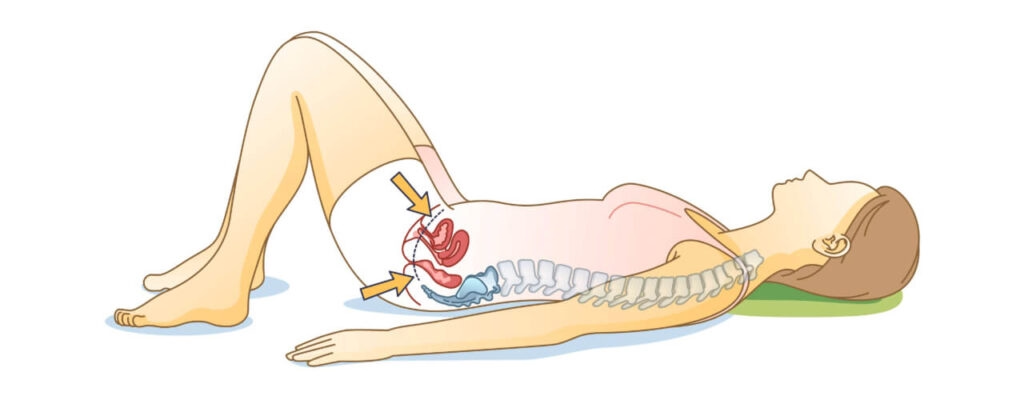
Woman performing stretching exercise for pelvic floor dysfunction rehabilitation and core control

Pelvic Floor Dysfunction

Pelvic condition affecting pelvic floor strength, control, and function.
What Is Pelvic Floor Dysfunction? Understanding the Condition

Pelvic floor dysfunction refers to a group of conditions in which the muscles of the pelvic floor do not function properly. These muscles support the bladder, bowel, and reproductive organs and help control urination, bowel movements, and sexual function. When the muscles become too weak, too tight, poorly coordinated, or injured, individuals may experience difficulties with bladder control, bowel movements, pelvic pain, or pressure in the pelvic region.

Pelvic floor dysfunction can affect people of all ages and genders, though it is more commonly reported in women due to factors such as pregnancy, childbirth, and hormonal changes.

Common Symptoms

Symptoms vary depending on whether the pelvic floor muscles are weak, tight, or poorly coordinated. Common symptoms include:

  • Urinary incontinence (leaking urine when coughing, laughing, or exercising)
  • Frequent or urgent need to urinate
  • Difficulty starting or fully emptying the bladder
  • Constipation or difficulty with bowel movements
  • Pelvic pain or pressure
  • Pain during intercourse
  • Lower back, hip, or pelvic discomfort
  • Feeling of heaviness or a bulging sensation in the pelvic area

Symptoms can range from mild to severe and may worsen without appropriate treatment.

Prevalence

Pelvic floor dysfunction is a common condition. Studies estimate that up to one in three women will experience some form of pelvic floor disorder during their lifetime. It can also affect men, particularly after prostate surgery, chronic straining, or pelvic injury. Despite its prevalence, many individuals delay seeking treatment due to embarrassment or lack of awareness that effective treatments exist.

Anatomy of the Pelvic Floor

The pelvic floor consists of a group of muscles, ligaments, and connective tissues located at the base of the pelvis. These muscles form a supportive sling that stretches from the pubic bone at the front to the tailbone at the back.

Key functions of the pelvic floor muscles include:

  • Supporting pelvic organs (bladder, uterus or prostate, and rectum)
  • Controlling bladder and bowel function
  • Assisting with core stability
  • Contributing to sexual function

When these muscles become weakened, tight, or uncoordinated, normal pelvic function can be disrupted.

How Does Pelvic Floor Dysfunction Develop? Causes and Risk Factors

The development of pelvic floor dysfunction (PFD) is a complex process often involving a combination of physical, biological, and behavioral stressors that disrupt the normal support system of the pelvic organs. When the pelvic floor muscles (PFMs) possess normal strength and tone, the pelvic organs are supported with minimal tension on the surrounding ligaments and fascia. However, when these structures are subjected to repeated stress, they can become stretched, weak, or hypertonic (excessively tight), eventually leading to clinical dysfunction.

The Mechanism of Gradual Development

Sources indicate that PFD often develops through a progression of stages rather than all at once:

  • Neuromuscular and Musculodystrophic Stages: Dysfunction often begins after an initial injury or insult (such as a fall or chronic infection) that triggers hypertonicity or muscle spasms. Over time, if the muscles cannot adjust to the increased metabolic activity, they enter a musculodystrophic phase where healthy muscle tissue is replaced by less flexible connective tissue and fibrosis.
  • The Vicious Cycle: A "vicious cycle" often forms where muscular tension and visceral symptoms (like urgency) drive one another. For example, chronic muscle tension can obstruct voiding, which creates urgency; this urgency then causes the patient to involuntarily contract their muscles even more, further reducing flexibility and causing more dysfunction.

Primary Causes and Risk Factors

  • Pregnancy and Childbirth: These are considered major risk factors, as PFMs can become significantly stretched and damaged during delivery. Childbirth can lead to denervation (nerve damage) or situations where muscles are torn from their attachments, both of which severely compromise the continence mechanism.
  • Aging and Hormonal Changes: As individuals age, their muscles naturally weaken. The prevalence of PFD symptoms, particularly urinary incontinence, increases significantly in older age groups.
  • Chronic Straining and Constipation: Repetitive minor trauma from straining during bowel movements or chronic constipation is a common behavioral cause of muscle damage.
  • Physical Activity and Pressure: High-impact movements, heavy lifting, and high-velocity sports (such as gymnastics or dance) can create repetitive minor trauma and altered postures that weaken the pelvic floor.
  • Chronic Coughing: Activities that raise intra-abdominal pressure, such as a persistent cough, place a repetitive load on the pelvic connective tissues.
  • Pelvic Surgery: Surgical procedures, including those for prolapse or incontinence, can sometimes be associated with the development or complication of PFD.
  • Trauma or Injury: Direct injuries, such as falls onto the sacrum or coccyx or unexpected slips that create shear force at the pubic symphysis, can trigger immediate muscle guarding and dysfunction.
  • Postural and Core Weakness: Faulty biomechanics—including scoliosis, short leg syndrome, and increased lumbar lordosis (an arched low back)—are frequently associated with chronic PFM dysfunction. A deconditioned core (weakness in the abdominals and hip flexors) further reduces the support available to the pelvic floor.

Sources emphasize that because these conditions are often multifactorial, an effective recovery usually requires a multidisciplinary approach to address the various systems (muscular, fascial, and visceral) that have been impacted.

Start Your Journey to 

Better Health Today

Recover faster, move better, and feel stronger with expert physiotherapy. Our team is here to guide you every step of the way.

Why Physiotherapy Is Critical for Pelvic Floor Dysfunction Recovery

Sources confirm that physiotherapy is the "cornerstone" of conservative management and a first-line, non-surgical treatment for pelvic floor dysfunction (PFD). Specialized pelvic health physical therapists utilize functional retraining to improve muscle strength, endurance, power, and relaxation, which is critical for reversing damage to muscles and connective tissues.

Specialized Assessment and Personalized Programs

A critical part of physiotherapy is a comprehensive assessment that evaluates the patient's ability to perform voluntary contractions and relaxations. This often involves the PERFECT scheme, a structured method to determine a personalized training effect based on:

  • P (Power): Muscle strength measured on a 0–5 modified Oxford scale.
  • E (Endurance): How long a contraction can be held (up to 10 seconds).
  • R (Repetitions): The number of times a contraction can be repeated before fatigue.
  • F (Fast): The number of quick, one-second contractions performed before fatigue.

Therapists also take a whole-body approach, assessing posture, gait, and the musculoskeletal, fascial, and visceral systems to identify all contributors to dysfunction.

Key Benefits of Physiotherapy

  • Improving Bladder and Bowel Control: Women with stress urinary incontinence (SUI) are eight times more likely to report a cure after physiotherapy compared to no treatment. For overactive bladder, therapy helps patients use pelvic floor contractions to inhibit the voluntary urinary inhibition reflex. It is also a beneficial first-line treatment for fecal incontinence, often using supplemental biofeedback or electrical stimulation.
  • Reducing Pelvic Pain: In hypertonic (overly tight) disorders like vulvodynia or myofascial pain, therapists use manual therapy—including myofascial release and trigger-point pressure—to normalize muscle tone. Studies show that 59% to 80% of women report significant improvement in pelvic pain following these specialized interventions.
  • Restoring Strength and Coordination: Physiotherapy restores the "trampoline effect" of the pelvic floor, ensuring muscles can properly support pelvic organs and provide closure pressure for the urethral and anal sphincters.
  • Improving Quality of Life: PFD can lead to social isolation, restricted employment, and sexual inhibition. Physiotherapy has been shown in controlled trials to restore confidence and significantly improve sexual function and satisfaction.

The Role of Early Intervention

Early intervention is particularly effective in the peripartum and postpartum periods. Performing antenatal pelvic floor exercises significantly reduces the risk of developing urinary incontinence both in late pregnancy and 3–6 months after birth. Furthermore, teaching patients "The Knack"—a well-timed voluntary contraction before a cough or sneeze—can provide immediate protection against leakage and prevent symptoms from worsening.

While it may take three to six months to fully train these muscles, research suggests that the benefits of physiotherapy are often maintained for years after treatment ends

What to Expect: Prognosis and Recovery Timeline

The provided sources confirm that recovery from pelvic floor dysfunction (PFD) varies significantly based on individual factors, though they offer specific benchmarks for what patients can generally expect during their rehabilitation journey.

Prognosis and Recovery Timelines

Evidence suggests that muscle training and functional retraining are not immediate; it typically takes three to six months to fully train the pelvic floor muscles.

  • Mild to Moderate Cases: For conditions like stress urinary incontinence (SUI), a standard trial of physiotherapy is often recommended for three months (approximately 12 weeks) before considering further interventions like surgery. Some symptoms, such as pelvic floor myofascial pain, can show significant improvement in pain scores in as little as 5 weeks with intensive (twice weekly) therapy.
  • Chronic or Complex Conditions: Patients with more complex dysfunctions, such as chronic hypertonic disorders or those with multiple coexisting symptoms, may need to continue therapy for several months. For example, a retrospective study on lifelong vaginismus found that patients required an average of 29 physical therapy sessions to achieve their goals.

Factors Influencing Recovery

The success of the prognosis is heavily dependent on several variables:

  • Patient Adherence and Motivation: Compliance with daily home exercise programs is cited as a main influence on the success of treatment. Factors like forgetting exercises or boredom can negatively impact long-term adherence and, consequently, recovery.
  • Severity and Complexity: Recovery is influenced by whether the dysfunction is hypotonic (weakness) or hypertonic (excessive tension). Complex cases involving multiple "compartments" (bladder, bowel, and sexual function) may require a longer, coordinated multidisciplinary approach to address all pain generators and functional deficits.
  • Surgical History: Previous pelvic surgeries can complicate recovery, as they may unmask pre-existing symptoms or create new ones, such as sexual dysfunction.

Long-Term Outcomes

Most individuals experience significant symptom improvement that persists long after the active treatment phase.

  • Sustainable Results: Research indicates that the benefits of pelvic floor exercises are often maintained for at least five years after treatment ends, with some women continuing to improve even after stopping formal therapy.
  • Decade-Long Benefits: A 10-year follow-up study on women treated for vulvodynia found that 85% reported their symptoms remained completely or greatly resolved without further physical therapy intervention.

Ultimately, the goal of management is to improve symptoms enough to maintain a normal lifestyle and restore confidence, allowing patients to return to social, employment, and leisure activities.

Physiotherapy Treatment Approaches

Sources strongly support the treatment approaches you listed, framing physiotherapy as a program of functional retraining designed to improve the strength, endurance, power, and relaxation of the pelvic floor muscles. These interventions are considered first-line, conservative treatments for a wide range of disorders, including incontinence, pelvic organ prolapse (POP), and chronic pelvic pain.

1. Pelvic Floor Muscle Training (PFMT)

PFMT is the "mainstay" of physiotherapy for pelvic dysfunction. It involves regular, maximum voluntary contractions and relaxations to "overload" the muscles, causing them to work harder or longer than normal to achieve a training effect.

  • The PERFECT Scheme: Before starting PFMT, therapists often use this structured assessment to determine a patient's specific starting point for power, endurance, and repetitions.
  • "The Knack": A specific technique taught to patients to perform a well-timed voluntary contraction before activities that increase intra-abdominal pressure, such as coughing or sneezing, to prevent leakage.

2. Biofeedback Therapy

Biofeedback uses specialized equipment, such as vaginal or rectal pressure sensors, to provide audible or visual feedback on muscle activity. This is particularly critical for the one-third of women who are unable to correctly locate or contract their pelvic floor muscles on their own. It helps patients learn to either strengthen weak muscles or, in hypertonic cases, learn to fully relax them to reduce pain.

3. Manual Therapy

For patients with hypertonic (overly tight) pelvic floor disorders, hands-on manual therapy is pivotal. Techniques include:

  • Myofascial Release and Trigger-Point Pressure: These help to normalize muscle tone and release "knots" or tension in the pelvic floor and surrounding hip muscles.
  • Visceral and Neural Mobilization: Therapists may work to ease tension in the pelvic organs (bladder, rectum, uterus) or address compressed nerves to reduce pain.

4. Core and Postural Training

The pelvic floor muscles are integral to core stability at the base of the trunk. Research shows that a maximum pelvic floor contraction naturally triggers a co-contraction of the transversus abdominis (deep abdominal muscle), and training these together can produce a stronger effect. Therapists also address "pelvic pain posture"—such as excessive arching of the low back or rounded shoulders—which can chronically strain the pelvic floor.

5. Bladder and Bowel Retraining

Retraining strategies are used to restore a more normal voiding or defecation pattern.

  • Bladder Training: Includes "voiding by the clock" (scheduling trips at set intervals) or "hanging on" (postponing the urge to void) to increase the functional capacity of the bladder.
  • Defecation Habits: Strategies may involve training the anal sphincters to relax properly and improving stool consistency through lifestyle changes.

6. Education and Lifestyle Modifications

Education is used to reduce anxiety and improve treatment adherence.

  • Anatomy Education: Therapists often use 3D pelvic models to help patients visualize the relationship between their muscles and organs.
  • Lifestyle Changes: This may include dietary and fluid manipulation, such as eliminating irritants like caffeine or increasing hydration, and teaching proper lifting mechanics to avoid excessive downward pressure on the pelvic floor.

Additional Modalities

Sources also frequently highlight Electrical Stimulation—which uses a small current to help isolate and contract weak muscles—and Vaginal Weighted Cones, which patients hold in place during activity to promote reflex muscle activity.

Preventing Pelvic Floor Dysfunction Recurrence

Sources emphasize that preventing the recurrence of pelvic floor dysfunction (PFD) requires a combination of behavioral changes, lifestyle modifications, and long-term adherence to exercise regimens. Because PFD is often influenced by chronic environmental and physical stressors, ongoing management is necessary to protect the "trampoline effect" of the pelvic floor muscles and connective tissues.

Key Preventive Strategies

  • Managing Intra-Abdominal Pressure: Chronic increases in intra-abdominal pressure are major risk factors for the development and recurrence of PFD. This includes maintaining a healthy body weight, as obesity places a constant load on the pelvic structures. It also involves managing chronic respiratory disorders, as persistent coughing can lead to muscle and nerve damage over time.
  • Correcting Bowel Habits: Avoiding chronic straining during bowel movements is critical, as repetitive minor trauma and straining from constipation can damage the innervation of the voluntary anal and periurethral sphincters.
  • Practicing "The Knack": A specific preventive technique involves performing a well-timed voluntary contraction before activities that cause a sudden rise in pressure, such as a cough, sneeze, or heavy lift. This provides immediate protection against leakage and prevents further stretching of the supportive fascia and ligaments.
  • Regular Pelvic Floor Muscle Training (PFMT): PFMT is the "mainstay" of management and is effective both therapeutically and prophylactically. Consistent exercise increases blood flow, improves pelvic support, and enhances proprioception of the muscle position. Long-term success is highly correlated with adherence; one 10-year follow-up study found that 85% of women with resolved symptoms continued their prescribed exercises daily.
  • Core and Postural Stability: The pelvic floor muscles provide core stability at the base of the trunk. Maintaining strong core and hip muscles (including the transversus abdominis and obturator internus) supports the pelvic floor's function. Conversely, "pelvic pain posture"—characterized by increased lumbar lordosis (arched back) and rounded shoulders—can create chronic tension that leads to recurrence.
  • Avoiding Strenuous Exertion: High-impact exercises, such as running or aerobics, can subject the pelvic floor to forces three to four times a woman’s body weight. For those at risk of recurrence, practicing proper lifting mechanics and potentially modifying high-impact activities may be necessary to prevent weakening the support mechanism.

The Importance of Education and Awareness

Public and professional awareness is critical because many women incorrectly believe that pelvic floor symptoms are an inevitable part of aging or childbirth. Education empowers women to identify early "triggers" of dysfunction and seek intervention before symptoms become chronic. Furthermore, understanding that symptoms in one compartment (like the bladder) often affect another (like the bowel) allows for a more comprehensive approach to preventing a total relapse of pelvic health.

While significant improvement can be achieved within three to six months, maintaining these gains often requires a permanent lifestyle shift to avoid common pitfalls like boredom or forgetting to perform exercises, which are the primary reasons for low treatment adherence.

Our Specialized Approach to Rehabilitation

A comprehensive, patient-centered approach to pelvic floor rehabilitation is the "cornerstone" of conservative management, emphasizing that recovery depends on a systematic process of assessment, tailored intervention, and ongoing education.

1. Thorough Assessment

A thorough evaluation is critical because pelvic floor dysfunction (PFD) is often multifactorial, involving complex interactions between muscles, nerves, and connective tissues.

  • Functional and Musculoskeletal Assessment: Specialists evaluate posture, gait, and generalized mobility, often identifying a "pelvic pain posture" (such as an arched low back or rounded shoulders) that contributes to muscle tension.
  • The PERFECT Scheme: A structured assessment tool is used to quantify specific muscle defects: Power (strength), Endurance (duration of hold), Repetitions (count before fatigue), and Fast (quick-twitch contractions).
  • Whole-Body Evaluation: Internal and external examinations assess muscle tone, elasticity, and tenderness, as well as the status of abdominal viscera, the bladder, and the pelvic side walls.

2. Individualized Treatment Plan

Effective rehabilitation is a program of functional retraining tailored to the objective findings of the initial exam.

  • Specific Exercise Regimens: Therapists use the PERFECT assessment to devise a patient-specific exercise program that ensures muscles are appropriately "overloaded" to achieve a training effect.
  • Multi-Compartment Focus: Because symptoms in one area (like the bladder) frequently impact another (like the bowel), treatment plans often address the muscular, fascial, and visceral systems simultaneously.
  • Supplemental Modalities: For patients who cannot correctly isolate their muscles, plans may include biofeedback, electrical stimulation, or manual therapy such as myofascial release.

3. Progress Monitoring

Regular follow-ups are essential to track improvements and address adherence, which is cited as a main influence on treatment success.

  • Objective Auditing: Progress is tracked using bladder and bowel diaries, pad tests, and repeated digital examinations to update muscle grading and adjust exercises as the patient gains strength.
  • Symptom Sensitivity: For those with chronic pain, tools like the modified Q-tip test or numeric pain rating scales are used to measure changes in sensitivity over the course of treatment.

4. Education and Prevention Strategies

The goal of rehabilitation is to empower the patient with long-term habits that protect the pelvic floor.

  • Anatomy and Awareness: Therapists often use 3D pelvic models to help patients visualize the relationship between their muscles and organs, which improves voluntary muscle activation and reduces anxiety.
  • Prevention Techniques: Patients are taught strategies like "The Knack"—a well-timed voluntary contraction before a cough or sneeze—and receive guidance on lifestyle modifications such as dietary changes and proper lifting mechanics to reduce chronic strain.

This collaborative approach has been shown in controlled trials to significantly improve quality of life, restore social confidence, and often allow patients to avoid surgical intervention entirely.

FAQs

  • Is pelvic floor dysfunction treatable?
    • Yes. Pelvic floor physical therapy (PFPT) is considered a first-line, minimally invasive treatment for many pelvic floor disorders. It is described as the "cornerstone" of conservative management and has been shown in multiple controlled trials to be effective in improving symptoms and signs of dysfunction, thereby enhancing quality of life. For instance, women with stress urinary incontinence who undergo PFPT are eight times more likely to report a cure compared to those receiving no treatment
  • Are Kegel exercises always recommended?
    • Not always. While pelvic floor muscle training (strengthening) is a mainstay for hypotonic (weak) muscles, it is not appropriate for everyone. Some individuals suffer from hypertonic pelvic floor disorders, where the muscles are overly tight, short, or in spasm. In these cases, the goal of therapy is relaxation and normalizing resting muscle activity. Treatment for hypertonicity often involves manual therapy, such as myofascial release and trigger-point pressure, rather than active strengthening exercises like Kegels
  • How long does pelvic floor physiotherapy take?
    • While some patients notice significant improvements in pain scores in as little as five weeks with intensive therapy, a full course of rehabilitation typically takes longer. It generally takes three to six months to fully train and "overload" the pelvic floor muscles to achieve a lasting training effect. Standard clinical guidelines suggest that a trial of physiotherapy may take up to 20 weeks (about five months) before determining if further interventions are needed
  • Can pelvic floor dysfunction occur in men?
    • Yes. Although sources state that PFD is a disorder that predominantly affects females, research confirms it occurs in both sexes. In men, factors such as chronic straining at stool, strenuous exertion, or high-impact exercise can weaken the support mechanisms or cause neurological damage to the pelvic floor. Management strategies like biofeedback and electrical stimulation have been found to improve symptoms of incontinence in both men and women
  • Do I need a referral for pelvic floor physiotherapy?
    • Sources emphasize that referral to a specialized pelvic health physical therapist should occur routinely as part of a multidisciplinary approach for anyone presenting with pelvic or vulvovaginal pain and dysfunction. Because PFD is often multifactorial—involving the muscular, fascial, and visceral systems—coordinated care between physicians and therapists is essential to improve the accuracy of diagnosis and the efficacy of treatment. While specific booking requirements vary by healthcare system, professional organizations like the American Physical Therapy Association provide directories to help patients locate certified specialists

Take the First Step Toward Recovery

Don't let pelvic floor dysfunction limit your activities or affect your daily life. Our experienced team is ready to help you build a strong foundation for lasting recovery.

Book Your Specialized Assessment Today:

Phone: 905-669-1221

Location: 398 Steeles Ave W #201, Thornhill, ON L4J 6X3

Online Booking: www.vaughanphysiotherapy.com

Serving communities across Thornhill, Langstaff, Newtonbrook, Willowdale, North York, Markham, Richmond Hill, Concord, and North Toronto.

Conveniently located in the heart of Thornhill, offering flexible scheduling to accommodate your recovery needs.

Created by Sara Lam

Team

Expert Insights

Explore the latest articles written by our clinicians