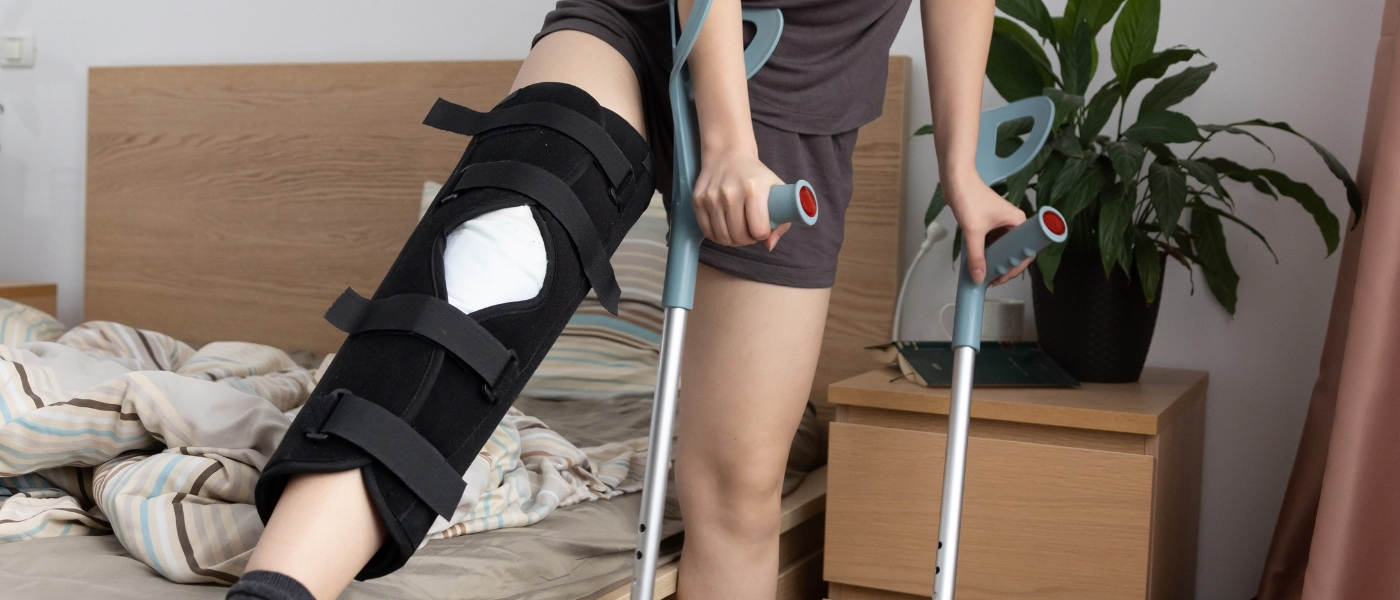
ACL surgery rehab focused on restoring knee strength, stability, and function.
An anterior cruciate ligament (ACL) injury occurs when this ligament, located in the middle of the knee, is overstretched or torn. This could be due to sudden twisting movements, sports injuries, or accidents. Such an injury can impact the stability of the knee, leading to a loss of leg strength and limited range of motion. Severe tears or ruptures of the ACL often necessitate surgery to either reconstruct or repair the torn ligament.
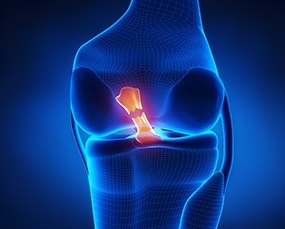
ACL tears are graded from 1-3. Grade 1 involves a minor sprain or stretch, Grade 2 is a partial tear, and Grade 3 is a complete tear. The severity of the injury plays an important role in prognosis and rehabilitation.
Proper rehabilitation is key to returning to sports and activities. ACL surgery and rehabilitation aim to restore knee function and promote long-term joint health. Early rehabilitation (24-48 hours post-surgery) can pose many benefits for long term recovery, such as:
1. Prevents Knee Stiffness (Arthrofibrosis)
Risk: Scar tissue can form quickly, limiting range of motion in the knee
Solution: Early movement keeps the joint mobile
Goal: Achieve full knee extension within 2 weeks—delays lead to permanent stiffness
2. Reduces Muscle Atrophy
Risk: Quadriceps can lose 20–30% of strength in just 1–2 weeks of inactivity
Solution: Early quad activation exercises (straight leg raises, NMES) to preserve muscle
3. Controls Swelling & Pain
Risk: Excess swelling slows healing and weakens muscles
Solution: Ice, compression, and gentle movement improve fluid drainage
4. Restores Normal Walking (Gait)
Risk: Limping alters movement patterns long-term
Solution: Early weight-bearing (as tolerated) retrains proper walking mechanics
5. Lowers Blood Clot Risk
Risk: Immobility increases deep vein thrombosis (DVT) chances
Solution: Ankle pumps, leg lifts, and early movement boost circulation
6. Improves Neuromuscular Control
Risk: The brain "forgets" how to stabilize the knee
Solution: Early balance/proprioception drills (e.g., weight shifts) rebuild coordination
7. Faster Return to Sport
Evidence: Patients who start rehab early regain strength 2–3 months sooner than delayed starters
Key: Early rehab sets the foundation for later agility and sport-specific training
The primary goals include:
Before Surgery (Prehab):
Begin strengthening exercises immediately after injury to prepare for surgery and address muscle weaknesses or movement issues that may have contributed to the injury.
Surgery Options:
Surgeons use either single-bundle or double-bundle techniques, depending on knee anatomy, to best restore stability.
After Surgery:
Post-surgery,
Quadriceps strength is key – Strong thigh muscles protect the knee and improve recovery.
Recover faster, move better, and feel stronger with expert physiotherapy. Our team is here to guide you every step of the way.

After ACL surgery, your physiotherapist (PT) will design a customized rehab plan tailored to your body, goals, and progress. While everyone heals differently, rehab follows structured phases to safely rebuild strength, mobility, and confidence.
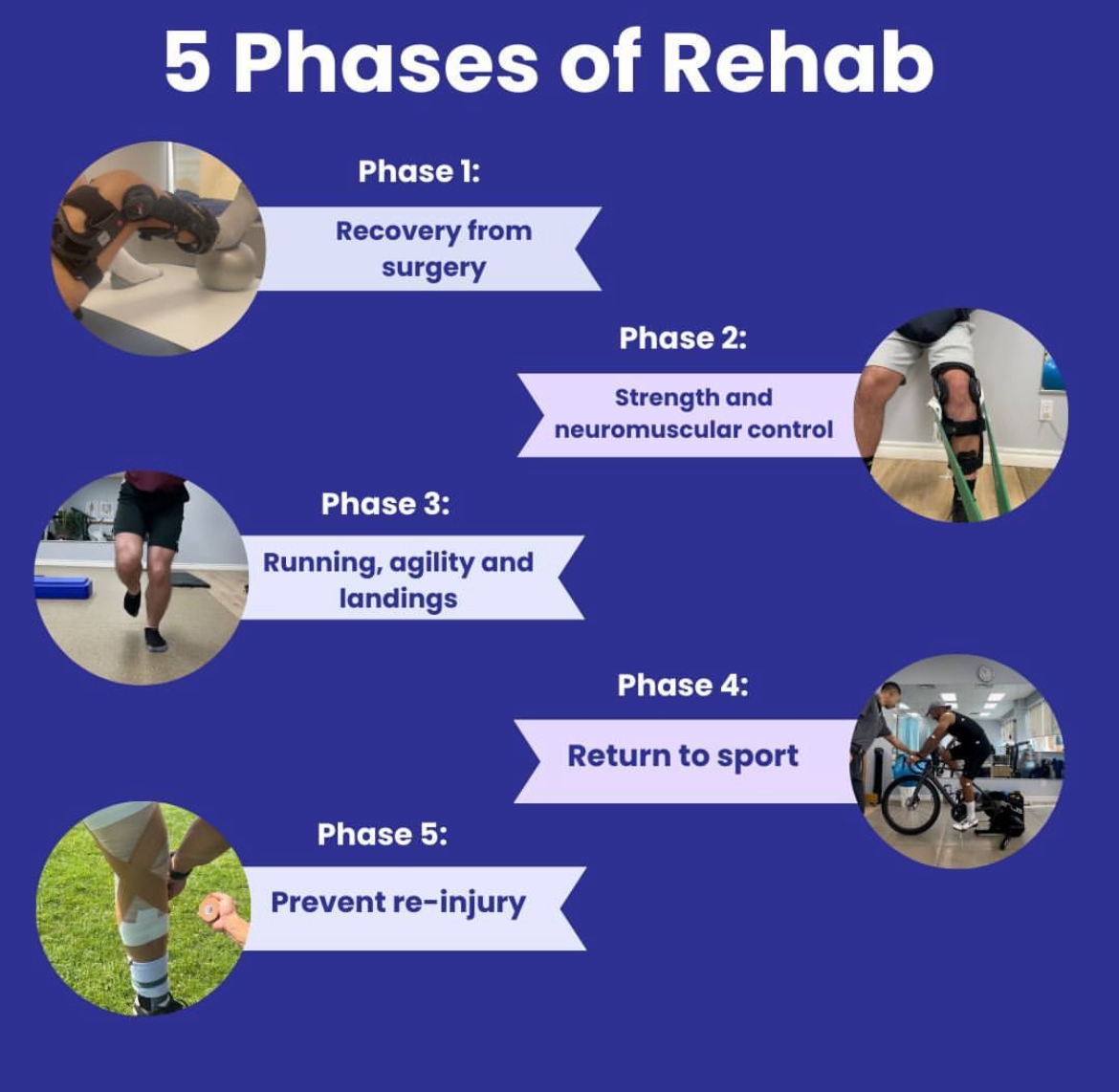
1. Recovery From Surgery (Weeks 0-2)
2. Strength and Neuromuscular Control (Weeks 2-12)
3. Movement Confidence Phase - Running, Agility, Landings (Months 3-6)
4. Sport Preparation Phase/Return to Sport (Months 6-9+)
5. Long-Term Maintenance - Preventing Re-Injury (9+ Months)
📓 Important Notes:
✓ Pain/swelling guide your progress
✓ Mental recovery matters as much as physical
Recovery isn't a race - it's about coming back stronger and smarter. Listen to your body, trust your rehab team, and celebrate every small victory along the way.
✅ Safe Progress – Your PT adjusts exercises based on your healing, not just time.
✅ Targeted Strength – Focuses on your weak spots (e.g., quads, balance).
✅ Confidence Boost – Gradually rebuilds trust in your knee.
Following ACL surgery and during rehabilitation, it is important to be aware of key precautions and potential red flags to ensure proper healing and prevent complications. Some red flags to look out for include:
1. 🔥 Pain That’s Getting Worse
2. 🙅 Swelling That Won’t Go Away
3. 🦵 Knee Won’t Fully Straighten
4. 🚶♀️➡️Walking with a Limp or Bad Form
5. 🏋️ Hamstring Pain (If Hamstring Graft Used)
6. ⏱️ Trying to Return to Sports Too Early
Positive Outcomes with Proper Rehab:
Key Challenges & Risks:
✅ Good prognosis with proper rehab, but re-injury risk remains high for active athletes
✅ Physiotherapy is non-negotiable—it ensures healing, restores function, and minimizes setbacks
✅ Success depends on:
1. How long does recovery take after ACL surgery?
2. When can I walk without crutches?
3. When can I bend or straighten my knee fully?
4. How soon can I drive after ACL surgery?
5. When can I return to sports?
6. Will I need a knee brace?
7. What are the signs of a failed ACL graft?
8. How can I prevent re-injury?
9. Will I develop arthritis after ACL surgery?
Our experienced team is ready to help you build a strong foundation for lasting recovery.
Serving communities across Thornhill, Langstaff, Newtonbrook, Willowdale, North York, Markham, Richmond Hill, Concord, and North Toronto.
Conveniently located in the heart of Thornhill, offering flexible scheduling to accommodate your recovery needs.
Written by Tiffany Corpus
Explore the latest articles written by our clinicians