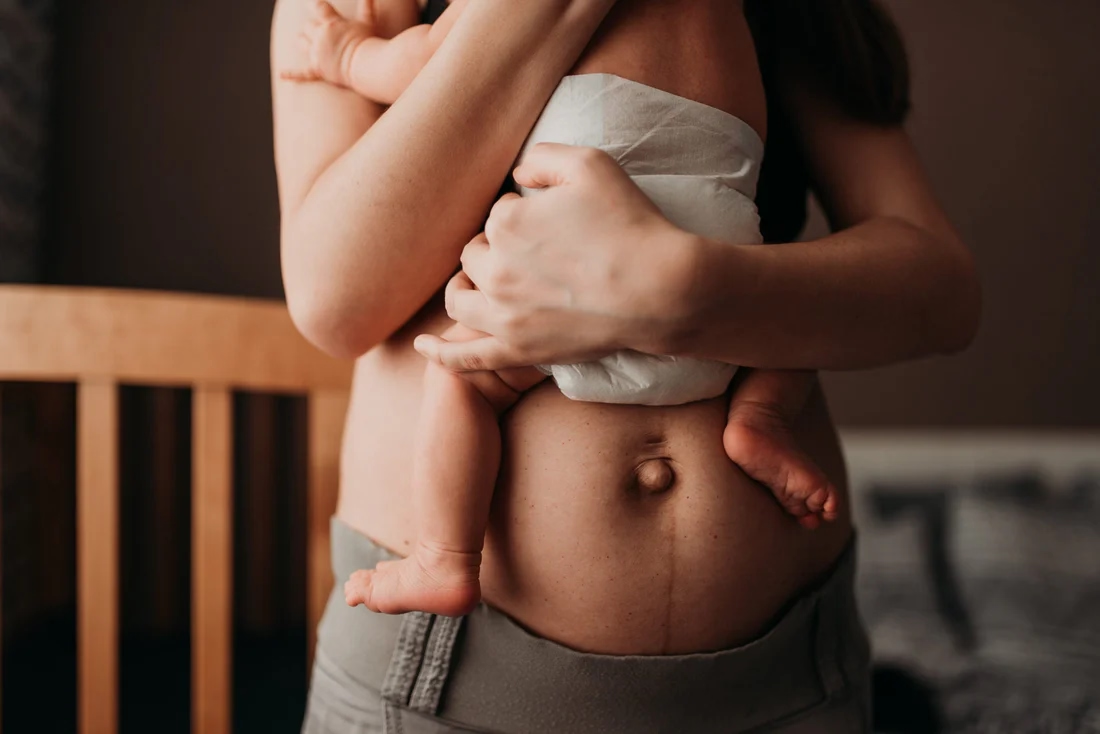
Why Physiotherapy Is Critical for Postpartum Recovery
Physiotherapy is considered a cornerstone of comprehensive maternal care, transitioning the recovery process from passive healing to active, targeted intervention. Without proper rehabilitation, birth injuries can lead to a "cycle of morbidity" that may affect a woman's health and quality of life for years or even decades.
Restoring Pelvic Floor Strength and Coordination
- Restoration of Function: Postpartum pelvic floor muscles (PFMs) are typically dysfunctional in terms of strength, motor control, and endurance due to being stretched to 250% of their resting length during delivery.
- Targeted Retraining: Specialized exercises like Pelvic Floor Muscle Training (PFMT) restore the tone and contractility of the levator ani and other supporting muscles.
- Advanced Modalities: Physiotherapists use biofeedback and electrical stimulation to help women who have difficulty isolating the correct muscles, facilitating neuromuscular re-education and improved coordination.
Improving Core Stability and Functional Movement
- The "Core Canister": Rehabilitation emphasizes the coordination of the transversus abdominis (TrA) with diaphragmatic breathing to manage intra-abdominal pressure effectively.
- Stabilization Exercises: Programs incorporating abdominal bracing, side-support, and quadrupled exercises improve functional performance and help manage the musculoskeletal demands of daily activities like caring for a newborn.
Reducing Pain and Discomfort
- Lumbopelvic Relief: Clinical trials demonstrate that rehabilitation programs combining PFM training with other modalities significantly reduce lumbopelvic pain intensity and improve physical quality of life.
- Manual Therapy: Techniques such as perineal massage help mobilize tight, fibrous scar tissue from tears or episiotomies, reducing chronic discomfort and dyspareunia (painful intercourse).
- Addressing Secondary Tension: Massage also alleviates guarding patterns and tension in compensatory muscles like the gluteal and hip muscles.
Preventing Long-Term Complications
- Mitigating Sequelae: Proactive rehabilitation can prevent or resolve long-term issues such as urinary and fecal incontinence, pelvic organ prolapse (POP), and chronic perineal pain.
- Breaking the Timeline: Research shows that if incontinence persists at three months postpartum, there is a significantly higher risk it will continue at the five-year mark; physiotherapy intervenes to prevent this progression.
Guiding Safe Return to Activity
- Bridging the Gap: Physiotherapy provides a structured, criterion-based approach to activity during the "fourth trimester," a period often marked by clinical neglect.
- Sport-Specific Readiness: For athletes, therapists use tools like the Run Readiness Scale to ensure a woman can handle high-impact forces (1.6–2.5x body weight) before resuming running, thereby preventing activity-related dysfunction.
- Body Mechanics: Education on proper body mechanics for lifting and carrying a newborn is integrated into early recovery to prevent new musculoskeletal injuries.
The Risk of Inaction
Many women dismiss symptoms like incontinence or hip and knee pain as "normal" rather than treatable, which often leads to the deferral of treatment for several years. Delaying guided rehabilitation until the standard six-week checkup may compromise a woman's recovery, as many attempt to navigate physical challenges independently and without the necessary musculoskeletal support.
What to Expect: Prognosis and Recovery Timeline
The prognosis and recovery timeline for postpartum individuals is not a passive waiting period but a structured, criterion-based progression designed to restore musculoskeletal integrity. While the "six-week checkup" is a common medical milestone, sources emphasize that recovery of tissues like the pelvic floor (levator ani) may actually take four to six months to maximize.
0–6 Weeks Postpartum: The Initial Healing Phase
This phase focuses on minimizing musculoskeletal stress while initiating gentle neuromuscular "reconnection".
- Physical Activity: Ambulation should be limited to small bouts of household walking with an intensity (RPE) of 0–2.
- Key Interventions: Focus is placed on diaphragmatic breathing to restore rib and lumbar mobility, and gentle pelvic tilts to begin transversus abdominis (TrA) activation.
- Education: Patients are taught proper body mechanics for newborn care—such as lifting and carrying—to prevent secondary musculoskeletal strain.
6–12 Weeks Postpartum: Gradual Strengthening
During this window, rehabilitation transitions from basic mobility to functional load-bearing.
- Exercise Progression: Walking programs gradually increase to 30 minutes. Strengthening incorporates functional movements like sit-to-stands, step-ups, and single-leg balance tasks.
- Impact Readiness: At roughly 8 weeks, individuals may begin "impact readiness" drills (e.g., short 20-second jogging bouts) if they can walk for 30 minutes and perform functional tests like the Run Readiness Scale without symptoms.
- Clinical Milestone: This is a typical time for an internal muscle examination (if desired) to assess pelvic floor strength, endurance, and the need for "up-training" or "down-training".
3–6 Months Postpartum: Restoring Endurance and Function
Research suggests that if pain or dysfunction persists at three months, it is less likely to resolve without targeted intervention.
- Tissue Remodeling: Pelvic floor muscle recovery is thought to be maximized in this timeframe (4–6 months).
- Rehabilitation Focus: Programs like those used in clinical trials for lumbopelvic pain typically last 12 weeks and focus on biofeedback-assisted pelvic floor training combined with core stabilization (abdominal bracing and quadruped exercises).
- Progression: Most individuals begin returning to more sport-specific training programs, focusing on power and endurance.
6+ Months Postpartum: Return to Higher-Level Activity
By this stage, the focus shifts to optimizing performance and managing the cumulative load of returning to sport or demanding work.
- Volume Control: For runners and athletes, training volume should increase gradually (approximately 2–10% per week) while monitoring for delayed symptoms like heaviness or leaking.
- Long-Term Support: Individuals may require ongoing management of postural habits acquired during pregnancy, such as excessive pelvic tilting or limited thoracic rotation.
Prognosis and the "Cycle of Morbidity"
Sources warn that without appropriate physiotherapy, common symptoms can become chronic:
- The 5-Year Outlook: If urinary incontinence is present at three months postpartum, there is a significantly higher risk it will persist at the five-year mark.
- Secondary Morbidity: Untreated perineal trauma or pelvic instability can lead to a "cycle of morbidity," contributing to chronic pain, dyspareunia, and pelvic organ prolapse years or decades later.
- Success Rates: Conversely, structured programs incorporating biofeedback-assisted training have been shown to significantly improve physical quality of life and reduce pain intensity within 12 weeks.
Physiotherapy Treatment Approaches
Physiotherapy treatment for postpartum recovery utilizes a multi-modal, individualized approach that transitions from passive healing to active functional restoration. These programs are designed to address the specific musculoskeletal trauma of childbirth and prevent long-term morbidities such as incontinence and prolapse.
Pelvic Floor Muscle Training (PFMT)
- Foundational Strength: PFMT is the cornerstone of rehabilitation, focusing on restoring the tone, contractility, and coordination of the levator ani and supporting muscles.
- Fiber Recruitment: Programs target both fast-twitch fibers for rapid sphincteric closure during coughs or sneezes and slow-twitch fibers for sustained postural support.
- Advanced Modalities: Therapists often use biofeedback to provide real-time visual data on muscle activity, helping patients isolate the correct muscles. Electrical stimulation may also be used to re-educate neuromuscular pathways in women with severe weakness.
Core Stabilization and Synergy
- The TrA-PFM Connection: Rehabilitation emphasizes the transversus abdominis (TrA) because its contraction naturally triggers a co-contraction of the pelvic floor.
- Stabilization Exercises: Programs typically include abdominal bracing, side-support, and quadruped exercises to improve load transfer and stabilize the sacroiliac joints.
- Progression: Exercises advance from basic isometric holds to closed-kinetic chain tasks like squats, lunges, and single-leg balance to prepare for the demands of daily life and sport.
Breathing and Pressure Management
- Diaphragmatic Coordination: Reconnecting with diaphragmatic breathing is essential for restoring rib mobility and managing intra-abdominal pressure.
- The Exhale Technique: Patients are taught to exhale during pelvic floor contractions and during the "work" phase of any exercise to prevent excessive pressure on weakened tissues.
Manual Therapy and Scar Management
- Perineal Trauma: For tears or episiotomies, perineal massage is used to mobilize fibrous, painful scar tissue, increasing flexibility and reducing chronic discomfort or pain during intercourse.
- C-Section and Inflammation: Modalities like therapeutic ultrasound can help reduce inflammation and assist in breaking down deep scar tissue.
- Secondary Relief: Massage is also applied to the lower back and hips to release tension in compensatory muscles that often tighten due to "guarding" patterns from pelvic pain.
Postural Correction and Ergonomics
- Addressing the Shift: Pregnancy shifts the center of gravity, often leading to increased lumbar lordosis (arched back) and rounded shoulders.
- Mobility Focus: Therapy targets thoracic rotation and extension to counteract these habits and manage abnormal tension at the linea alba (the connective tissue between abdominal muscles).
Functional Training and Education
- Daily Mechanics: Therapists provide specific instruction on proper body mechanics for lifting, carrying, and nursing a newborn to prevent secondary musculoskeletal strain.
- Return to Sport: A criterion-based approach is used for athletes, requiring them to pass functional tests like the Run Readiness Scale before resuming high-impact activities.
- Gradual Loading: Education focuses on increasing training volume slowly (typically 2–10% per week) while monitoring for delayed symptoms like heaviness or leaking.
Preventing Postpartum Dysfunction Recurrence
Preventing the recurrence of postpartum dysfunction requires a transition from acute clinical rehabilitation to long-term pelvic health maintenance. Because the pelvic floor is stretched to 250% of its resting length during delivery, the risk of persistent issues like incontinence or prolapse remains high without a structured, preventative approach.
Maintaining Pelvic Floor and Core Strength
- Neuromuscular Synergy: Prevention is built on the "core canister," where the pelvic floor muscles (PFMs) and the transversus abdominis (TrA) work together. Research confirms that a correct PFM contraction naturally triggers a co-contraction of the TrA, which is the deepest abdominal muscle responsible for stabilizing the pelvic ring.
- Long-Term Biofeedback: Techniques like biofeedback-assisted training help women develop "neuroplasticity," allowing them to better monitor and control their muscle activity during daily movements long after formal therapy ends.
- Addressing Overactivity: It is a misconception that more strength (repeated Kegels) is always better; for some, preventing recurrence means learning to relax and down-train overactive muscles to avoid pain or urgency.
Practicing Proper Lifting and Movement Techniques
- Functional Mechanics: New mothers face unique musculoskeletal demands, such as repetitive lifting and carrying a newborn. Prevention includes education on proper body mechanics to prevent secondary strain on the back and pelvic floor.
- Postural Restoration: Habits acquired during pregnancy, such as excessive anterior pelvic tilt (arched back) or rounded shoulders from nursing, must be actively corrected to prevent chronic lumbopelvic pain.
Gradually Progressing Exercise Intensity
- The 2–10% Rule: To prevent injury recurrence, any increase in training volume or intensity (especially for runners) should follow a gradual progression of 2–10% per week.
- Criterion-Based Return: Before returning to high-impact activities, individuals should pass functional tests like the Run Readiness Scale, which includes being able to perform single-leg squats, planks, and hopping for one minute without symptoms.
Managing Intra-Abdominal Pressure
- Monitoring "Coning": Prevention involves self-monitoring for coning (a visible bulging along the midline of the stomach), which indicates that the abdominal connective tissue (linea alba) cannot handle the current pressure.
- Coordinated Breathing: A key strategy is "exhaling with exertion." Coordinating diaphragmatic breathing with pelvic floor contractions helps manage intra-abdominal pressure during lifting or exercise, protecting weakened tissues from further damage.
Follow-up Physiotherapy and Systemic Support
- Beyond the Six-Week Check: The standard six-week medical checkup is often insufficient for assessing musculoskeletal readiness. Professional guidance is critical to determine if a woman needs up-training (strengthening) or down-training (relaxation) to prevent future dysfunction.
- Breaking the "Cycle of Morbidity": Early intervention and periodic follow-ups are essential because symptoms present at three months postpartum—such as urinary incontinence—have a significantly higher likelihood of persisting five years later if left untreated. Specialized physical therapy can break this cycle by identifying subtle dysfunctions before they become chronic.
Our Specialized Approach to Rehabilitation
This specialized approach to postpartum rehabilitation aligns with current clinical research, which emphasizes that a multi-modal, individualized strategy is fundamental for achieving optimal recovery from the physical trauma of childbirth. By moving beyond a "one-size-fits-all" model, this framework addresses the complex musculoskeletal and psychosocial needs of the postpartum period.
Individualized and Evidence-Based Care
- Synergistic Modalities: Evidence suggests that combining Pelvic Floor Muscle Training (PFMT) with biofeedback, manual therapy, and neuromuscular electrical stimulation (NMES) is more effective than any single intervention.
- Criterion-Based Progression: Rather than relying solely on the standard six-week timeline, an evidence-based approach uses a criterion-based model to determine readiness for activity, ensuring that tissues have healed and muscles can handle specific loads.
- Load Transfer Restoration: Personalized plans focus on restoring the "core canister" and the synergy between the pelvic floor, the transversus abdominis, and the diaphragm to improve functional load transfer.
Comprehensive Assessment of Function
- Internal and External Examinations: A thorough assessment includes evaluating the strength, endurance, and motor control of the pelvic floor muscles, often through an internal muscle exam to determine if a patient needs "up-training" for weakness or "down-training" for overactivity.
- Core and Diastasis Screening: Assessments routinely screen for diastasis recti abdominis and observe for "coning" during movement, which indicates a struggle to manage intra-abdominal pressure.
- Functional Testing: Specialized tools, such as the Run Readiness Scale, are used to evaluate an individual's ability to perform tasks like single-leg squats and hopping without symptoms before they return to high-impact activities.
Tailored Treatment and Goal Alignment
- Patient-Centered Planning: Treatment must be adaptable to the structural realities of a new mother’s life, such as sleep deprivation and the demands of newborn care, to ensure adherence.
- Sport-Specific Readiness: For athletes, plans are specifically designed to bridge the gap between early recovery and the high-impact forces (up to 2.5x body weight) required for their specific sport.
- Functional Mechanics: Training incorporates daily tasks like proper body mechanics for lifting and carrying a newborn to prevent secondary musculoskeletal pain in the back and hips.
Education, Empowerment, and Support
- "Common vs. Normal" Education: A critical part of the process is teaching women that symptoms like incontinence or pelvic pain, while common, are not a "normal" part of motherhood and are treatable.
- Psychosocial Support: Rehabilitation must occur in a supportive environment that acknowledges the emotional burden of birth injuries, including feelings of shame or frustration that can hinder proactive recovery.
- Long-Term Pelvic Health: The ultimate goal is to empower women with the physical capacity and knowledge to maintain their pelvic health and reproductive wellness throughout their lives.
FAQs
- When should I start postpartum physiotherapy?
- While the standard medical checkup typically occurs at six weeks, musculoskeletal interventions can safely begin in the immediate postpartum period (weeks 0–2). Early rehabilitation focuses on minimizing stress to allow for tissue healing, initiating gentle diaphragmatic breathing, and performing very light mobility work like pelvic tilts. Delaying guided rehabilitation until the six-week mark can lead women to navigate physical challenges independently, which may compromise their long-term recovery
- Is postpartum physiotherapy only for vaginal deliveries?
- No. Individuals who have had Cesarean sections benefit significantly from rehabilitation. Even without a vaginal birth, the pelvic floor can experience dysfunction, weakness, and coordination issues due to the prolonged pressure of the growing uterus during pregnancy. Additionally, C-section recovery requires management of uterine scar remodeling, which is still ongoing at the six-week mark
- How long will I need physiotherapy?
- The duration varies based on individual goals and the severity of the injury, but research suggests that many structured programs last for 12 weeks. It is important to note that the recovery of the pelvic floor muscles (levator ani) and associated connective tissues is thought to take between four to six months to maximize fully
- Are Kegel exercises enough?
- No; Kegels are only one component of a multi-modal approach. A comprehensive program often includes biofeedback, manual therapy (massage), core stabilization, and pressure management techniques. In fact, for women with overactive muscles, performing repeated Kegels without proper instruction can actually make symptoms worse. A specialized therapist helps determine if a patient needs "up-training" for weakness or "down-training" for relaxation
- Can postpartum issues resolve on their own?
- While some initial healing occurs naturally, many symptoms persist for years if left untreated. For example, studies show that if urinary incontinence is present at three months postpartum, there is a significantly higher risk it will still be present at the five-year mark. Without targeted treatment, these issues can contribute to a "cycle of morbidity" affecting a woman’s health and quality of life for decades
Take the First Step Toward Recovery
Don't let postpartum recovery limit your activities or affect your daily life. Our experienced team is ready to help you build a strong foundation for lasting recovery.Book Your Specialized Assessment Today:Phone: 905-669-1221Location: 398 Steeles Ave W #201, Thornhill, ON L4J 6X3Online Booking: www.vaughanphysiotherapy.comServing communities across Thornhill, Langstaff, Newtonbrook, Willowdale, North York, Markham, Richmond Hill, Concord, and North Toronto.Conveniently located in the heart of Thornhill, offering flexible scheduling to accommodate your recovery needs.
Created by Sara Lam