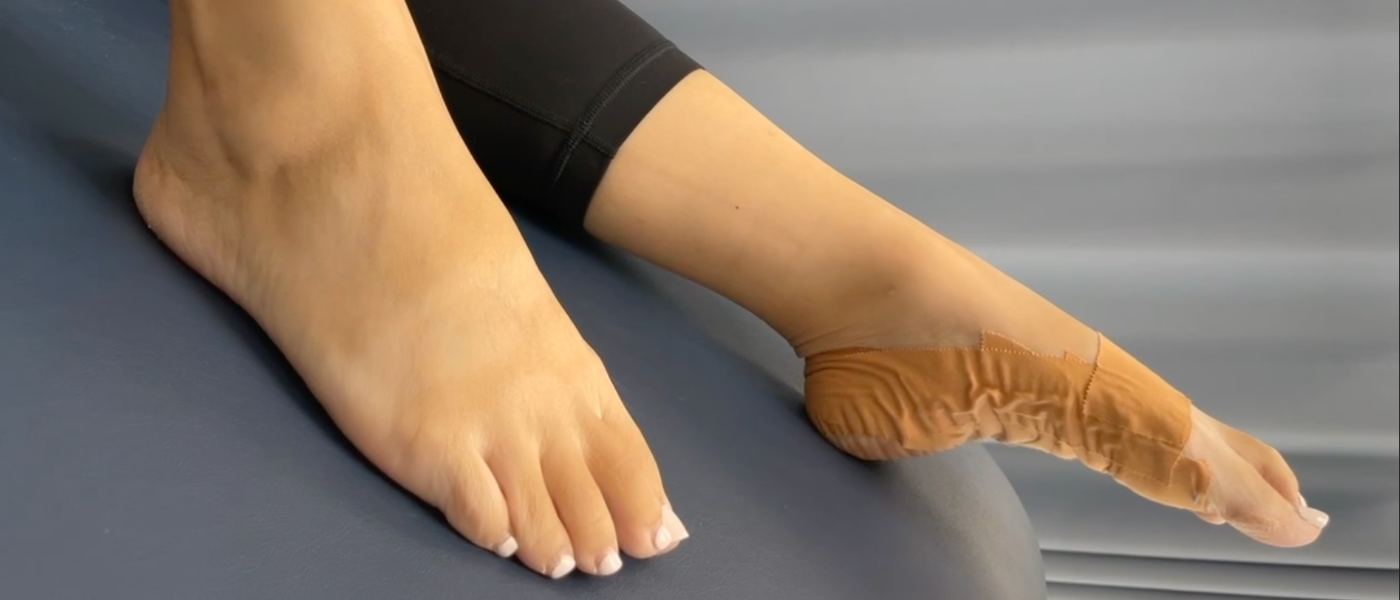
Inflammation of the bursa between the Achilles tendon and calcaneus causing posterior heel pain.
Retrocalcaneal bursitis is the inflammation of the retrocalcaneal bursa, a small fluid-filled sac located between the back of the heel bone (calcaneus) and the Achilles tendon. This bursa serves as a cushion and lubricant, reducing friction between the tendon and bone during movements such as walking, running, and jumping. When this bursa becomes irritated or inflamed, it leads to pain and swelling at the back of the heel, often making everyday activities uncomfortable.
The condition is sometimes confused with Achilles tendinopathy or general heel pain, but retrocalcaneal bursitis is a distinct diagnosis with its own characteristics and treatment approach. It is one of the most common causes of posterior heel pain and is frequently seen in runners, dancers, and individuals who spend extended periods on their feet. While the condition can affect anyone, it is particularly prevalent among active adults between the ages of 20 and 60.
Retrocalcaneal bursitis can occur on its own or as part of a broader condition known as Haglund’s syndrome, which involves a triad of Haglund’s deformity (a bony prominence on the heel), retrocalcaneal bursitis, and insertional Achilles tendinopathy. Understanding the anatomy and mechanics behind this condition is essential for effective treatment and long-term prevention.
To fully appreciate retrocalcaneal bursitis, it helps to understand the structures involved in the posterior heel region. The anatomy here is intricate and the interplay between bone, tendon, and bursa creates what researchers call an “enthesis organ” — a functional unit where each structure influences the health of the others.
There are two bursae located near the Achilles tendon insertion at the heel. The retrocalcaneal bursa (also called the subtendinous bursa) sits deep between the anterior surface of the Achilles tendon and the posterosuperior aspect of the calcaneus. It is a horseshoe-shaped sac lined with synovial membrane that produces a small amount of fluid to reduce friction during ankle movement. This bursa is a “native” or anatomical bursa, meaning it is present from birth and exists in everyone.
The second bursa, the subcutaneous calcaneal bursa (sometimes called the Achilles bursa or superficial bursa), lies behind the Achilles tendon between the tendon and the skin. This bursa is an “adventitious” bursa, meaning it can form in response to repeated external pressure, such as from rigid shoe counters rubbing against the heel. While both can become inflamed, retrocalcaneal bursitis specifically refers to inflammation of the deeper, subtendinous bursa.
The Achilles tendon is the strongest and thickest tendon in the human body, formed by the merging of the gastrocnemius and soleus muscles of the calf. It inserts into the middle third of the posterior surface of the calcaneus. The insertion site, or enthesis, is a specialized zone where the tendon transitions from soft tissue into bone through layers of fibrocartilage. This region is subject to considerable mechanical stress during weight-bearing activities and is a common site of injury.
At the insertion, the Achilles tendon wraps slightly around the posterosuperior corner of the calcaneus, compressing the retrocalcaneal bursa during ankle dorsiflexion (pulling the foot upward). This compression is a normal part of movement, but when it becomes excessive or repetitive, the bursa can become inflamed.
Haglund’s deformity is a structural variation characterized by an enlarged bony prominence on the posterosuperior-lateral aspect of the calcaneus. This prominence can be congenital or develop over time due to mechanical stress. When a Haglund’s deformity is present, it reduces the space available for the retrocalcaneal bursa, leading to increased mechanical impingement between the bone and the Achilles tendon, particularly during dorsiflexion.
The combination of Haglund’s deformity, retrocalcaneal bursitis, and insertional Achilles tendinopathy is referred to as Haglund’s syndrome. The intimate anatomical relationship between these structures means that irritation of one component often affects the others. Research has shown that the Achilles tendon insertion, the fibrocartilaginous walls of the retrocalcaneal bursa, and the adjacent calcaneus function as a unified “enthesis organ,” where a bony prominence significantly predisposes an individual to mechanical irritation of both the bursa and the tendon.
This is why a thorough clinical assessment is essential — what appears to be simple heel pain may involve multiple overlapping pathologies that each require attention within the treatment plan.
Retrocalcaneal bursitis develops when the retrocalcaneal bursa is subjected to excessive friction, pressure, or repetitive mechanical loading. Understanding the causes and risk factors helps both in preventing the condition and in tailoring an effective treatment plan.
Overuse and Repetitive Loading. The most common cause of retrocalcaneal bursitis is cumulative microtrauma from repetitive activities. Running, jumping, and prolonged walking place repeated compressive and shearing forces on the bursa, especially during the push-off phase of gait. Athletes who suddenly increase training volume, intensity, or duration without adequate recovery are particularly vulnerable.
Footwear-Related Irritation. Shoes with rigid, tight, or high heel counters can press directly against the posterior heel, compressing the bursa and Achilles tendon insertion. This is one of the most modifiable risk factors. High heels, dress shoes, ice skates, and even poorly fitting running shoes have all been implicated. The condition was historically nicknamed “pump bump” because of its association with rigid-backed women’s dress shoes.
Direct Trauma. A single impact injury, such as a fall onto the heel or a direct blow during sport, can acutely inflame the retrocalcaneal bursa, though this is less common than gradual-onset cases.
Haglund’s Deformity. A prominent posterosuperior calcaneal ridge reduces the space for the bursa and increases the likelihood of mechanical impingement. Individuals with this structural variation are predisposed to recurring episodes of bursitis.
Biomechanical Abnormalities. A misaligned subtalar joint axis in relation to the Achilles tendon can result in an asymmetrical force load on the tendon, disrupting normal biomechanics and increasing stress on the bursa. Excessive pronation, tight calf muscles, and limited ankle dorsiflexion range of motion are all contributing biomechanical factors.
Tight Calf Muscles and Achilles Tendon. Reduced flexibility in the gastrocnemius-soleus complex increases the compressive load on the retrocalcaneal bursa during dorsiflexion. This is why stretching is a cornerstone of both treatment and prevention.
Training Errors. Starting a new exercise program without proper conditioning, rapidly increasing mileage or hill running, and inadequate warm-up and cool-down routines all increase risk.
Systemic Inflammatory Conditions. In some cases, retrocalcaneal bursitis can be associated with systemic inflammatory conditions such as rheumatoid arthritis, ankylosing spondylitis, psoriatic arthritis, or gout. When bursitis occurs without a clear mechanical cause, or when it presents bilaterally, screening for an underlying inflammatory condition is warranted.
Age and Activity Level. The condition most commonly affects active adults between 20 and 60 years of age, though it can occur at any age. Both highly active individuals and sedentary individuals who suddenly increase activity are at risk.
Recover faster, move better, and feel stronger with expert physiotherapy. Our team is here to guide you every step of the way.

Physiotherapy is considered the first-line treatment for retrocalcaneal bursitis, and for good reason. Research consistently shows that the majority of patients respond well to conservative management without the need for injections or surgery. A structured physiotherapy program addresses not just the symptoms but the underlying biomechanical factors that contributed to the condition in the first place.
Here is why physiotherapy is the preferred approach:
Evidence-Based Outcomes. Most patients with retrocalcaneal bursitis respond well to a combination of activity modification, Achilles stretching, targeted strengthening, and footwear changes. Conservative treatment has been shown to resolve symptoms in the majority of cases, with studies indicating that over 70% of patients do not require any further intervention beyond physiotherapy and self-management strategies.
Addresses Root Causes. Painkillers and anti-inflammatory medications may reduce symptoms temporarily, but they do not address the mechanical factors driving the inflammation. Physiotherapy identifies and corrects the underlying issues, whether they involve calf tightness, poor ankle mobility, biomechanical imbalances, or training errors.
Reduces Recurrence. By strengthening the supporting musculature, improving flexibility, and educating patients on load management and footwear selection, physiotherapy significantly reduces the likelihood of the condition returning.
Avoids Surgical Risks. Surgery for retrocalcaneal bursitis, such as endoscopic calcaneoplasty or open bursectomy, carries inherent risks including infection, nerve damage, and prolonged recovery. Conservative physiotherapy avoids these risks entirely and should always be exhausted before surgical options are considered.
Individualized Care. Every case of retrocalcaneal bursitis is different. A physiotherapist can assess your specific biomechanics, identify contributing factors unique to you, and create a tailored treatment plan that progresses at the right pace for your body.
The initial focus is on reducing pain and inflammation. During this phase, you may need to significantly modify your activities. Ice application, anti-inflammatory strategies, and avoiding aggravating footwear are priorities. Most patients notice a meaningful reduction in pain within the first two to three weeks when they follow the recommended modifications.
As pain subsides, the emphasis shifts to restoring flexibility, building strength, and gradually reintroducing load. Eccentric exercises, stretching, and progressive weight-bearing activities are introduced. This is the phase where the foundational work is done to prevent recurrence. Patients with mild to moderate cases often feel substantially better by the six- to eight-week mark.
For athletes and active individuals, this phase involves a structured return to sport or higher-level activity. Training volume and intensity are gradually increased, with ongoing attention to footwear, biomechanics, and muscle conditioning. Complete resolution and return to full activity typically occurs within three to four months for most patients.
Patients with longstanding symptoms (more than three to six months), significant Haglund’s deformity, or associated Achilles tendinopathy may require a longer recovery timeline of four to six months or more. In these cases, consistent adherence to the treatment plan is especially important. Even in chronic cases, conservative treatment remains effective for the majority of patients.
It is important to note that recovery is not always linear. Mild flare-ups during rehabilitation are normal, especially when increasing load. Your physiotherapist will help you navigate these fluctuations and adjust your program accordingly.
A comprehensive physiotherapy program for retrocalcaneal bursitis incorporates multiple treatment strategies, each targeting different aspects of the condition. Here is what an evidence-based treatment plan typically includes.
Load modification is the cornerstone of early treatment. This does not mean complete rest, which can actually be counterproductive by leading to deconditioning. Instead, it means temporarily reducing activities that place excessive compressive load on the retrocalcaneal bursa, such as hill running, stair climbing, and high-impact jumping, while maintaining overall fitness through low-impact alternatives.
Swimming, cycling, and aqua jogging are excellent substitutes that maintain cardiovascular fitness and lower-limb strength without compressing the bursa. The goal is to find the “sweet spot” of loading: enough activity to promote tissue health and prevent deconditioning, but not so much that the bursa remains irritated.
As symptoms improve, load is gradually reintroduced according to a structured progression plan, typically following the 10% rule (increasing weekly volume by no more than 10%).
Eccentric strengthening exercises are a cornerstone of Achilles tendon and posterior heel rehabilitation. These exercises focus on the controlled lengthening of the calf muscles under load, which stimulates tendon remodelling and strengthens the musculotendinous unit.
The Alfredson eccentric heel drop protocol is the most widely studied approach. It involves standing on the edge of a step, rising up on the toes (concentric phase), then slowly lowering the heels below step level over a count of three to five seconds (eccentric phase). This is performed with both a straight knee (targeting the gastrocnemius) and a bent knee (targeting the soleus), typically in three sets of 15 repetitions, twice daily.
It is important to note that a small amount of discomfort during eccentric exercises is acceptable (up to 4 out of 10 on a pain scale), but sharp or worsening pain is not. Your physiotherapist will modify the exercise parameters — load, speed, range of motion — based on your response.
Heel lifts are a simple but effective intervention for retrocalcaneal bursitis. By elevating the heel slightly (typically 6–12 mm), heel lifts reduce the degree of ankle dorsiflexion during gait, which decreases the compressive load on the retrocalcaneal bursa. They also shift some of the Achilles tendon tension, reducing strain at the insertion.
Heel lifts should always be placed in both shoes to avoid introducing a leg-length discrepancy. Silicone heel cups with a softer posterior edge are often recommended, as they both elevate and cushion the heel.
In cases where biomechanical abnormalities such as excessive pronation are contributing factors, custom orthotics may be recommended to address these issues more comprehensively.
Manual therapy techniques play a supporting role in the treatment of retrocalcaneal bursitis. Common interventions include:
Manual therapy is most effective when combined with an active exercise program rather than used in isolation. The hands-on work creates a window of reduced pain and improved mobility that allows patients to perform their exercises more effectively.
Footwear modification is one of the most impactful and immediately accessible treatment strategies. Recommendations include:
Ice therapy is recommended during the acute and early recovery phases, applied for 15 to 20 minutes several times daily to reduce inflammation and provide pain relief.
Taping techniques such as kinesiology taping can offload the Achilles tendon insertion and provide proprioceptive feedback during activity.
Shockwave therapy (ESWT) may be considered for cases that are slow to respond to standard physiotherapy. Extracorporeal shockwave therapy has shown promising results in stimulating tissue healing in chronic posterior heel conditions.
Maintain Calf Flexibility. Regular stretching of the gastrocnemius (straight knee) and soleus (bent knee) muscles is one of the most effective prevention strategies. Hold each stretch for 30 to 60 seconds and perform at least two to three times daily, especially before and after exercise.
Progress Training Gradually. Follow the 10% rule for increasing weekly training volume. Avoid sudden spikes in running mileage, hill work, or jump training. Build in regular rest days and recovery weeks.
Choose Appropriate Footwear. Wear shoes that fit well, have a soft or notched heel counter, and provide adequate cushioning. Replace running shoes every 500 to 800 kilometres (300 to 500 miles). Avoid wearing rigid-backed shoes for prolonged periods.
Strengthen the Calf Complex. A regular calf strengthening program (both straight-knee and bent-knee variations) builds the capacity of the Achilles tendon and reduces the relative load on the retrocalcaneal bursa.
Address Biomechanical Issues. If you have a history of posterior heel problems, a biomechanical assessment with a physiotherapist can identify and address contributing factors such as limited dorsiflexion, excessive pronation, or proximal weakness.
Warm Up Properly. A dynamic warm-up before activity prepares the calf muscles and Achilles tendon for loading, reducing the risk of irritation to the bursa.
Listen to Your Body. Posterior heel pain that develops during or after activity is a warning sign. Early intervention, even just a brief period of load modification and targeted stretching, can prevent a minor irritation from developing into a full-blown case of retrocalcaneal bursitis.
Retrocalcaneal bursitis typically causes pain and swelling at the back of the heel, specifically in the soft spot between the Achilles tendon and the heel bone. The pain is usually worse with activity, especially when pushing off or going uphill, and may be aggravated by firm-backed shoes. Squeezing the heel from side to side just in front of the Achilles tendon insertion often reproduces the pain. However, posterior heel pain can also be caused by Achilles tendinopathy, Haglund’s deformity, stress fractures, or other conditions. A physiotherapist can perform a thorough clinical assessment to determine the exact diagnosis and rule out other causes.
It depends on the severity. In mild cases, you may be able to continue running at a reduced volume and intensity, avoiding hills and speed work. In moderate to severe cases, a temporary break from running is usually necessary to allow the inflammation to settle. During this time, low-impact alternatives such as swimming, cycling, or aqua jogging can maintain your fitness. Your physiotherapist will guide you on when and how to safely return to running based on your symptoms and progress.
Mild cases that are caught early may resolve within three to six weeks with appropriate treatment and activity modification. More established cases typically take two to four months. Chronic cases or those associated with Haglund’s deformity may take four to six months or longer. Consistent adherence to your physiotherapy program, including exercises, footwear changes, and load management, is the most important factor in recovery speed.
Retrocalcaneal bursitis is primarily a clinical diagnosis, meaning it can usually be identified through a physical examination. However, imaging may be recommended in certain situations. X-rays can reveal a Haglund’s deformity or calcification at the Achilles insertion. Ultrasound is useful for confirming bursal inflammation and assessing the Achilles tendon. MRI may be ordered in complex or chronic cases to evaluate all the structures in detail. Your physiotherapist or physician will determine if imaging is necessary based on your presentation.
Image-guided corticosteroid injections into the retrocalcaneal bursa can provide short-term pain relief in some patients. Research shows that approximately 63% of patients experience a significant short-term decrease in pain following injection, and over 70% do not require repeat injection or surgery. However, injections carry risks including potential weakening of the Achilles tendon, and they do not address the underlying mechanical factors. Injections are typically considered when conservative physiotherapy has not provided adequate relief, and they are most effective when combined with ongoing rehabilitation.
Surgery is considered only when a comprehensive course of conservative treatment (typically six to twelve months) has failed to provide adequate relief. Surgical options include endoscopic calcaneoplasty (removing the bony prominence and inflamed bursa through small incisions) and open bursectomy. Surgery is generally effective, but recovery takes several months and rehabilitation is required afterward. The vast majority of patients improve with physiotherapy alone and never need surgery.
No, they are distinct conditions, though they can coexist. Retrocalcaneal bursitis involves inflammation of the bursa between the Achilles tendon and the heel bone, while Achilles tendinopathy is a degenerative condition of the tendon itself. The two conditions share some risk factors and treatment approaches, but the clinical presentation and specific management differ. When both conditions are present together along with a Haglund’s deformity, the combined presentation is called Haglund’s syndrome.
Posterior heel pain from retrocalcaneal bursitis does not have to keep you on the sidelines. At Vaughan Physiotherapy, our experienced team will provide a thorough assessment to identify the exact cause of your heel pain and develop a personalized treatment plan to get you back to the activities you enjoy.
Whether you are a runner dealing with training-related heel pain, someone struggling with pain from everyday footwear, or you have been told you have a Haglund’s deformity, we have the expertise to help you recover and prevent future episodes.
Book your appointment today:
Phone: 905-669-1221
Location: 398 Steeles Ave W, Unit 201, Thornhill, ON
Website: www.vaughanphysiotherapy.com
Don’t let heel pain hold you back. Contact Vaughan Physiotherapy to start your recovery journey. Our team is ready to help you move without pain and return to the activities you love. Call us at 905-669-1221 or visit vaughanphysiotherapy.com to book online.
Explore the latest articles written by our clinicians