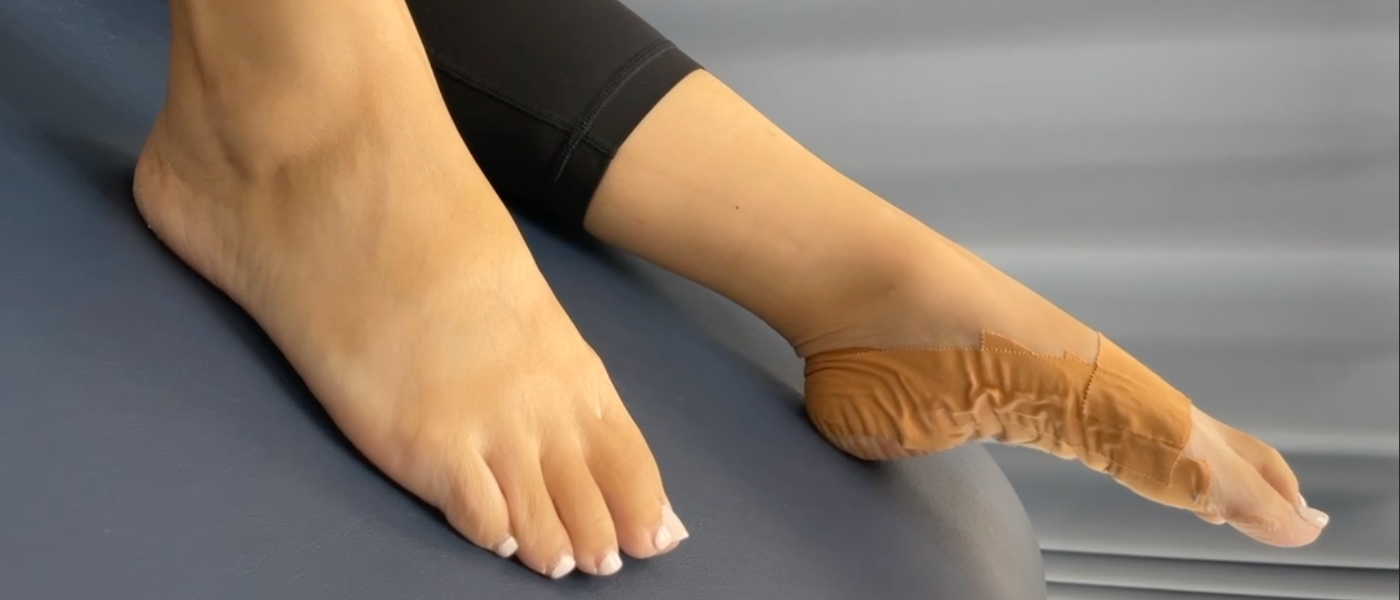
Ligament injury to the toe joints from hyperextension or impact, common in sports and daily activities.
A toe sprain is a stretching or tearing of the ligaments that support one or more of the toe joints. These injuries most commonly affect the metatarsophalangeal (MTP) joint at the base of the toe, though the interphalangeal (IP) joints further along the toe can also be involved. When the ligaments surrounding these joints are forced beyond their normal range of motion, the resulting damage can range from mild overstretching to a complete tear.
Toe sprains are among the most frequently encountered foot injuries in both athletic and everyday settings. The first MTP joint sprain, widely known as "turf toe," has received significant attention in sports medicine literature due to its prevalence among football, soccer, and basketball players (McCormick & Anderson, 2010). However, sprains of the lesser toes (second through fifth) are also common and can be equally debilitating if not properly managed.
Despite their relatively small size, the toes play a critical role in balance, propulsion during walking and running, and overall foot mechanics. Even a seemingly minor sprain can alter gait patterns, reduce athletic performance, and lead to compensatory injuries elsewhere in the kinetic chain if left untreated. Understanding the anatomy, causes, and evidence-based treatment options for toe sprains is essential for achieving a full and lasting recovery.
To understand how toe sprains occur and why they matter, it helps to know the structures involved.
The MTP joints are located at the base of each toe, where the long metatarsal bones of the midfoot meet the shorter phalangeal bones of the toes. These joints bear tremendous forces during activities such as walking, running, and jumping. The first MTP joint, at the base of the big toe, is the largest and bears the most load, handling up to 40 to 60 percent of body weight during the push-off phase of gait.
Each of the lesser toes (second through fifth) has two interphalangeal joints: the proximal interphalangeal (PIP) joint and the distal interphalangeal (DIP) joint. The big toe has only one interphalangeal joint. These hinge-type joints allow the toes to curl and extend, contributing to grip and balance during movement.
The plantar plate is a thick, fibrocartilaginous structure on the underside of each MTP joint. It is the strongest stabilizer of the MTP joint and is specifically designed to resist hyperextension (McCormick & Anderson, 2010). The plantar plate also helps distribute pressure across the ball of the foot during weight-bearing. Injury to this structure is a hallmark feature of more severe toe sprains, particularly turf toe.
On either side of each toe joint are the medial and lateral collateral ligaments. These ligaments provide side-to-side stability, preventing excessive movement in the lateral plane. During a toe sprain, the collateral ligaments may be stretched or torn along with or independently of the plantar plate, depending on the direction and magnitude of the injuring force (Sripanich et al., 2023).
The joint capsule, a fibrous envelope surrounding each joint, works in concert with the plantar plate and collateral ligaments to maintain joint integrity. Additionally, the flexor and extensor tendons that cross the toe joints provide dynamic stability during movement. The sesamoid bones, two small bones embedded within the tendons beneath the first MTP joint, serve as pulleys for the flexor tendons and help absorb impact forces.
Toe sprains result from forces that push the toe joint beyond its normal range of motion. Several common mechanisms and risk factors contribute to these injuries.
The most frequently reported mechanism of toe sprain is hyperextension of the MTP joint. This occurs when the toe is forcibly bent upward while the foot is planted and the ankle is in a dorsiflexed position. An axial load applied through the forefoot in this position places extreme stress on the plantar plate and surrounding ligaments (Anderson & Trevino, 2022). This is the classic mechanism for turf toe and is particularly common on artificial playing surfaces, which provide less shock absorption and greater traction than natural grass.
Athletic activities that involve sudden starts, stops, direction changes, and explosive push-off movements carry a high risk for toe sprains. Football, soccer, basketball, volleyball, wrestling, and martial arts are among the sports most commonly associated with these injuries. Dancers are also at elevated risk due to the extreme positions their feet assume during performance. A study of Division I college athletes found that first MTP joint injuries accounted for a notable proportion of foot injuries and resulted in significant time lost from competition (George et al., 2014).
Stubbing a toe against a hard surface, such as furniture, a door frame, or an uneven sidewalk, can cause a sudden and forceful hyperextension or hyperflexion of the joint. This everyday mechanism is one of the most common causes of toe sprains outside of organized sport. Direct blows to the toe, such as having something heavy dropped on it, can also damage the ligaments.
While less common than hyperextension injuries, forceful downward bending of the toe (hyperflexion) or sideways forces (valgus or varus stress) can also sprain the toe. These mechanisms may injure the dorsal capsule or collateral ligaments rather than the plantar plate. A valgus or varus force applied to the toe can specifically damage the collateral ligaments on the side opposite the direction of force.
Several factors increase susceptibility to toe sprains:
Toe sprains are classified into three grades based on the extent of ligament damage, clinical findings, and functional impact. This grading system, originally described for turf toe injuries and refined by Anderson and colleagues, guides treatment decisions and helps predict recovery timelines.
A Grade I sprain involves stretching of the plantar plate and surrounding capsular ligaments without significant tearing. Patients typically experience localized tenderness and mild swelling at the affected joint but maintain a normal range of motion and can bear weight with minimal discomfort. There is no joint instability on examination. Grade I injuries generally resolve within one to two weeks with conservative management, and athletes can often return to play as tolerated with taping or a stiff-soled shoe (McCormick & Anderson, 2010).
A Grade II sprain represents a partial tear of the plantar plate, joint capsule, or collateral ligaments. Clinical findings include more pronounced swelling, bruising (ecchymosis), painful range of motion, and discomfort with weight-bearing. There may be mild joint laxity but no gross instability. Recovery from a Grade II sprain typically requires two to six weeks, depending on the specific structures involved and the demands of the patient's activities (Anderson & Trevino, 2022). Immobilization with a walking boot or stiff-soled shoe is often necessary in the early stages.
A Grade III sprain indicates a complete tear or rupture of the plantar plate, capsule, or collateral ligaments. These injuries present with marked tenderness, significant swelling and bruising, restricted range of motion, and difficulty or inability to bear weight. Joint instability is evident on clinical examination. Grade III sprains may require six to ten weeks or longer for recovery. The hallux MTP joint should demonstrate 50 to 60 degrees of painless passive dorsiflexion before running or explosive activities are attempted (McCormick & Anderson, 2010). In some cases, particularly when there is gross instability or associated fractures, surgical intervention may be considered.
Many people dismiss toe sprains as minor injuries that will resolve on their own. While mild sprains may indeed improve with basic self-care, there are compelling reasons to seek professional physiotherapy treatment.
Without proper rehabilitation, toe sprains can lead to chronic joint stiffness, persistent pain, and long-term instability. Research has shown that injuries are often overtreated by prolonged immobilization, resulting in stiffness that may become permanent (Sripanich et al., 2023). Conversely, returning to full activity too soon before adequate healing risks re-injury or progression to a higher-grade sprain. A physiotherapist can find the right balance between protection and progressive loading.
The toes are integral to normal gait mechanics. Even subtle changes in toe joint function can alter weight distribution across the foot, change push-off dynamics, and create compensatory movement patterns that stress the ankle, knee, hip, or lower back. Physiotherapy addresses not only the injured joint but also the broader kinetic chain to restore efficient, pain-free movement.
Every toe sprain is different. The severity of the injury, the specific structures involved, the patient's activity level, and their functional goals all influence the optimal treatment approach. A physiotherapist conducts a thorough assessment, identifies the grade of injury and contributing factors, and designs a rehabilitation program tailored to the individual's needs.
Research supports the effectiveness of structured physiotherapy for toe sprains. A randomized clinical trial found that kinesiology taping combined with exercise resulted in more favourable improvements in pain, gait characteristics, and functional abilities compared to exercise alone in patients with first MTP joint sprains (Mokadam et al., 2024). Structured rehabilitation protocols have also been shown to facilitate safer and more predictable return-to-sport outcomes.
Recovery from a toe sprain depends on the grade of injury, adherence to the rehabilitation program, and individual factors such as age, overall health, and activity demands.
| Grade | Typical Recovery Time | Key Milestones |
|---|---|---|
| Grade I | 1 to 3 weeks | Pain-free weight-bearing within days; return to activity as tolerated |
| Grade II | 2 to 6 weeks | Progressive weight-bearing by week 2; sport-specific training by week 4 |
| Grade III | 6 to 12 weeks | Protected weight-bearing for 4 to 6 weeks; 50 to 60 degrees painless dorsiflexion before running |
Rehabilitation protocols for non-operative management typically consist of three phases lasting up to 10 weeks. Progression should be guided primarily by pain and swelling rather than arbitrary time frames (Anderson & Trevino, 2022). Professional athletes who suffer from turf toe injuries tend to return to sport sooner than recreational athletes, likely due to access to intensive daily rehabilitation and treatment resources.
Effective management of toe sprains follows a phased approach, progressing from acute care through to full functional restoration.
Regardless of the grade, initial treatment for most toe sprains follows the RICE principles:
For Grade II and III sprains, a stiff-soled shoe, rocker bottom sole, or controlled ankle motion (CAM) boot may be used to limit motion at the joint and allow the ligaments to heal. Pain-free walking is encouraged as soon as possible to maintain cardiovascular fitness and prevent deconditioning.
Taping is a cornerstone of toe sprain management that can be used throughout the recovery process and during return to activity.
Buddy Taping involves taping the injured toe to an adjacent healthy toe, which provides support and limits excessive motion while still allowing functional movement. This technique is particularly useful for collateral ligament injuries and lesser toe sprains.
Kinesiology Taping applied to the first MTP joint has been shown in a randomized clinical trial to be a useful complementary modality to exercise, resulting in favourable improvements in pain reduction, gait parameters, and functional ability (Mokadam et al., 2024).
Athletic Taping uses rigid tape to restrict the range of motion at the MTP joint, specifically limiting hyperextension. This is particularly important for athletes returning to sport after a turf toe injury.
The goal of taping is to place the toe in a neutral position, provide stability, and prevent progression of the deformity while allowing healing to occur.
Once pain and swelling begin to subside, gentle range of motion exercises are introduced to prevent joint stiffness and promote tissue healing.
Joint mobilizations should be added to the treatment protocol early to aid in pain management and to increase range of motion.
As range of motion improves and pain continues to decrease, a structured strengthening program targets the intrinsic and extrinsic muscles of the foot and toe.
Exercises for the core, ankle, and hip focusing on stability can also be incorporated, as these muscle groups contribute to overall lower extremity alignment and load management during gait.
Altered gait patterns are common after toe sprains, as patients unconsciously shift weight away from the injured toe or limit push-off force to avoid pain. If not addressed, these compensatory patterns can persist long after the injury has healed.
Continued use of modified footwear and/or insertable rigid insoles is recommended during this phase and beyond to protect the healing structures.
While not all toe sprains can be prevented, several evidence-based strategies can significantly reduce risk.
Choosing appropriate footwear is one of the most effective preventive measures. Shoes with a stiffer sole or a rigid forefoot insert, such as a graphite or carbon fibre plate, limit excessive MTP joint motion and reduce stress on the plantar plate. Athletic shoes should be sport-appropriate and replaced regularly before they lose their structural integrity. High-top shoes may provide additional proprioceptive input and help limit extreme ranges of motion.
Regular foot and toe strengthening exercises build the muscular support around the joints, reducing reliance on passive ligament restraint. Exercises such as towel scrunches, short foot exercises, marble pickups, and resistance band work should be incorporated three to four times weekly. Core and lower extremity strengthening also contributes to overall movement control and reduced injury risk.
Balance and proprioceptive exercises improve the body's ability to sense and respond to changes in joint position, reducing the risk of awkward landings and missteps. Effective exercises include single-leg balance with eyes closed, wobble board training, tandem balance on a folded towel, and lateral hops with controlled landings. These exercises are best introduced as part of a regular warm-up routine before physical activity.
Athletes with a history of toe sprains or those competing in high-risk sports can use prophylactic taping or bracing to provide additional joint support during competition. Both taping and bracing have been found to reduce the risk of recurrent sprains by providing mechanical support and enhanced proprioceptive feedback.
Being mindful of playing surfaces and environmental hazards can help reduce injury risk. Athletes competing on artificial turf should ensure their footwear is appropriate for the surface and may benefit from additional forefoot protection. In daily life, clearing clutter from walkways and wearing supportive footwear around the home can reduce the risk of stubbing injuries.
Both toe sprains and fractures can cause pain, swelling, and bruising, making them difficult to distinguish without professional assessment. A sprain involves damage to the ligaments, while a fracture involves a break in the bone. Key differences include that fractures often produce more intense, pinpoint pain directly over the bone, may cause visible deformity, and typically cause more difficulty with weight-bearing. However, severe sprains can mimic fractures in their presentation. If you have significant pain, swelling, or difficulty walking after a toe injury, it is important to seek professional evaluation, as imaging may be needed to confirm the diagnosis.
In many cases, yes, though this depends on the severity of the injury. With a Grade I sprain, most people can continue to walk with mild discomfort, especially with supportive footwear or buddy taping. Grade II sprains may require modified weight-bearing and a stiff-soled shoe or walking boot for the first one to two weeks. Grade III sprains often require significant activity modification and may need a CAM boot to allow comfortable walking during the initial healing phase.
Mild (Grade I) sprains typically heal within one to three weeks. Moderate (Grade II) sprains usually require two to six weeks. Severe (Grade III) sprains can take six to twelve weeks or longer for full recovery. These timelines assume appropriate treatment and rehabilitation. Without proper management, recovery can be prolonged, and chronic symptoms may develop.
Buddy taping is a helpful technique for many toe sprains, particularly those involving the lesser toes or collateral ligament injuries. It provides support by linking the injured toe to an adjacent stable toe, limiting excessive motion while still allowing functional movement. However, taping alone may not be sufficient for more severe sprains, and it is important to ensure the tape is not applied too tightly, which could restrict circulation. A physiotherapist can demonstrate proper taping technique and advise whether additional interventions are needed.
You should seek professional assessment if you experience significant swelling or bruising, difficulty bearing weight, pain that does not improve within a few days of self-care, a sensation of joint instability or "giving way," or if you have sustained a previous toe sprain in the same joint. Early intervention leads to better outcomes, as evidence shows that results are significantly improved when injuries are addressed within four weeks of occurrence.
Not all toe sprains require imaging. A physiotherapist or physician can often diagnose a sprain based on the mechanism of injury, clinical examination, and functional testing. However, X-rays may be recommended if a fracture is suspected, if there is significant joint instability, or if symptoms are not improving as expected. For more complex injuries, advanced imaging such as MRI may be used to evaluate the plantar plate and soft tissue structures in greater detail.
Yes, toe sprains can become chronic if not properly managed. Incomplete healing of the plantar plate or collateral ligaments can lead to persistent joint instability, ongoing pain, progressive joint stiffness, and in some cases, toe deformity over time. This is one of the key reasons why proper rehabilitation is important, even for injuries that may initially seem minor. Physiotherapy helps ensure complete healing and restoration of normal joint function.
A toe sprain may seem like a small injury, but without the right care it can sideline you from the activities you love. At Vaughan Physiotherapy, our experienced team provides thorough assessment and individualized, evidence-based rehabilitation to get you back on your feet, pain-free and confident.
Whether you are an athlete looking to return to competition or simply want to walk without discomfort, we are here to help.
Call us today at 905-669-1221 to book your appointment.
Visit us at: 398 Steeles Ave W, Unit 201, Thornhill, ON
Learn more at: www.vaughanphysiotherapy.com
Recover faster, move better, and feel stronger with expert physiotherapy. Our team is here to guide you every step of the way.

Choosing appropriate footwear is one of the most effective preventive measures. Shoes with a stiffer sole or a rigid forefoot insert, such as a graphite or carbon fibre plate, limit excessive MTP joint motion and reduce stress on the plantar plate. Athletic shoes should be sport-appropriate and replaced regularly.
Regular foot and toe strengthening exercises build muscular support around the joints. Exercises such as towel scrunches, short foot exercises, marble pickups, and resistance band work should be incorporated three to four times weekly.
Balance and proprioceptive exercises improve the body's ability to sense and respond to changes in joint position. Effective exercises include single-leg balance with eyes closed, wobble board training, tandem balance on a folded towel, and lateral hops with controlled landings.
Athletes with a history of toe sprains can use prophylactic taping or bracing during competition for additional joint support and enhanced proprioceptive feedback.
Athletes competing on artificial turf should ensure appropriate footwear. In daily life, clearing clutter from walkways and wearing supportive footwear around the home reduces stubbing risk.
Both cause pain, swelling, and bruising. Fractures often produce more intense pinpoint pain over the bone and may cause visible deformity. If you have significant pain or difficulty walking, seek professional evaluation, as imaging may be needed.
In many cases, yes. Grade I sprains allow walking with mild discomfort. Grade II sprains may need a stiff-soled shoe for one to two weeks. Grade III sprains often require a CAM boot during initial healing.
Grade I: one to three weeks. Grade II: two to six weeks. Grade III: six to twelve weeks or longer. These timelines assume appropriate treatment and rehabilitation.
Buddy taping is helpful for many toe sprains, particularly lesser toe and collateral ligament injuries. Ensure tape is not too tight. A physiotherapist can demonstrate proper technique.
Seek assessment if you experience significant swelling, difficulty bearing weight, pain not improving within a few days, joint instability, or a history of prior toe sprains. Early intervention leads to better outcomes.
Not always. Clinical diagnosis is often sufficient. X-rays may be recommended if a fracture is suspected or symptoms persist. MRI can evaluate soft tissue structures in greater detail.
Yes. Incomplete healing can lead to persistent instability, ongoing pain, progressive stiffness, and toe deformity. Proper rehabilitation is important even for seemingly minor injuries.
A toe sprain may seem like a small injury, but without the right care it can sideline you from the activities you love. At Vaughan Physiotherapy, our experienced team provides thorough assessment and individualized, evidence-based rehabilitation to get you back on your feet.
Call us today at 905-669-1221 to book your appointment.
Visit us at: 398 Steeles Ave W, Unit 201, Thornhill, ON
Learn more at: www.vaughanphysiotherapy.com
Anderson, R.B. & Trevino, S. (2022). Turf toe injuries in the athlete: an updated review. Current Reviews in Musculoskeletal Medicine, 16(12), 644-654.
George, E., et al. (2014). Case series of first MTP joint injuries in Division 1 college athletes. Foot & Ankle Specialist, 7(6), 452-458.
McCormick, J.J. & Anderson, R.B. (2010). Turf toe: anatomy, diagnosis, and treatment. Sports Health, 2(6), 487-494.
Mokadam, A.E., et al. (2024). Kinesiology taping for first MTP joint sprain. BMC Sports Science, Medicine and Rehabilitation, 16(1), 97.
Sripanich, Y., et al. (2023). Injuries to the great toe. Foot and Ankle Clinics, 28(1), 127-144.
Explore the latest articles written by our clinicians