.avif)
Pelvic floor condition affecting bladder control and urinary function.
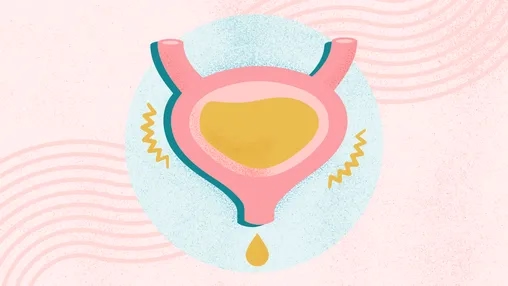
Urinary incontinence (UI) is professionally defined as the complaint of any involuntary loss of urine that presents a social or hygienic problem and is objectively demonstrable,. While it can affect both sexes, it is twice as common in women and its prevalence increases significantly with advancing age.
Understanding the Subtypes
Medical experts categorize urinary incontinence into several primary subtypes based on the symptoms and triggers:
Common Symptoms
The symptoms of urinary incontinence are categorized based on the underlying cause and the specific triggers that lead to involuntary leakage. These symptoms are often divided into three primary clinical presentations:
Clinical Assessment of Symptoms
Prevalence
Urinary incontinence (UI) is a widespread global issue with significant functional, psychological, and social consequences. Sources provide detailed context regarding your points on prevalence, gender-specific causes, and the barriers to seeking treatment:
The bladder and urinary system are supported by several important structures in the pelvic region.
Key anatomical structures include:
When the pelvic floor muscles or sphincter muscles become weak or poorly coordinated, urinary leakage may occur.
Pelvic Floor Muscle Weakness and Support
Urinary incontinence is fundamentally related to a dysfunction of the bladder or the pelvic floor muscles. These muscles and the urogenital diaphragm play an essential role in keeping the urethra closed when pressure is placed on the bladder. When the supporting apparatus (including ligaments and fascia) is weakened, it fails to resist the "top-down" forces in the pelvis, leading to leakage.
Pregnancy and Childbirth
Incontinence often first appears during pregnancy or after childbirth. This is frequently a result of denervation of the pelvic floor and striated sphincter during delivery. Furthermore, significant factors for this weakening include perinatal tissue damage and the development of flaccid ligaments and parametria.
Aging and Hormonal Changes
While prevalence increases with advancing age, the menopause transition is a particularly critical period for women. This is often due to hypoestrogenism (estrogen insufficiency), which leads to decreased tissue tone and is considered one of the primary mechanisms behind "tissue aging" in the pelvic area.
Prostate Surgery in Men
Stress incontinence is rare in men but occurs most commonly as a complication of transurethral resection of the prostate (TURP) or radical prostatectomy. In these cases, leakage results when surgery damages the sphincter mechanisms or the nerves that control them.
Obesity and Abdominal Pressure
Prevalence of the condition increases significantly with a higher Body Mass Index (BMI). Excess weight and obesity act as chronic stressors that increase intra-abdominal pressure, thereby aggravating symptoms of stress incontinence.
Chronic Strain (Coughing, Lifting, and Work)
Repeated physical strain from illnesses with a persistent cough, heavy physical work, or even chronic constipation can weaken the pelvic floor over time. Involuntary leakage then occurs during any activity that increases intra-abdominal pressure, such as laughing, running, or even walking.
Additional Contributing Factors
Physiotherapy, specifically focused on pelvic floor muscle training (PFMT), is critically recognized by medical experts as the first-line, conservative treatment for adult patients with urinary incontinence. This approach is essential because it directly addresses the underlying structural and neuromuscular failures that cause leakage.
Restoring the Urethral Closure Mechanism
The primary goal of physiotherapy is to ensure the pelvic floor muscles and urogenital diaphragm can fulfill their "essential role" of keeping the urethra closed when pressure is placed on the bladder.
Muscle Remodeling and Coordination
Physiotherapy is critical for changing the physical nature of the supporting muscles to improve both strength and reaction time.
Bridging the Awareness Gap
A major barrier to recovery is that many patients have "insufficient awareness" of their pelvic floor muscles.
By combining these behavioral, physical, and neuromuscular strategies, physiotherapy can significantly improve both subjective quality of life and objective measures like urine leakage volume.
The outlook for urinary incontinence is generally positive, as physiotherapy is recognized as a highly effective first-line treatment that can significantly improve both subjective quality of life and objective measures of leakage. While individual recovery varies, sources provide the following insights into the typical progression and timeline:
First Few Weeks: Education and Initial Changes
4–8 Weeks: Noticeable Physical Progress
3–6 Months: Peak Results and Strengthening
Long-Term Outlook and Maintenance
Recover faster, move better, and feel stronger with expert physiotherapy. Our team is here to guide you every step of the way.

Sources characterize physiotherapy as a first-line, effective conservative treatment for urinary incontinence (UI), specifically for stress urinary incontinence (SUI). These interventions address the underlying dysfunction of the pelvic floor muscles (PFMs) and the urogenital diaphragm, which are essential for keeping the urethra closed under pressure.
Pelvic Floor Muscle Training (PFMT)
This is considered the most important part of physiotherapy. PFMT involves active exercises designed to:
Bladder Training
This behavioral therapy is the mainstay for managing urge incontinence and overactive bladder syndrome.
Biofeedback Therapy
Biofeedback is a modern technique used as an adjunct to PFMT to bridge the "awareness gap".
Postural and Movement Training
Improving body mechanics helps manage the internal pressures acting on the pelvic floor.
Core Strengthening Exercises
Sources emphasize that the pelvic floor does not work in isolation; it relies on muscle synergies with the surrounding core.
Preventing urinary incontinence involves managing the balance of forces acting within the pelvis to ensure the supporting apparatus of the pelvic organs remains effective. The following strategies are key to reducing the risk or severity of the condition:
Regular Pelvic Floor Strengthening Exercises
Maintaining a Healthy Body Weight
Managing Internal Pressures (Coughing and Constipation)
Practicing Healthy Bladder Habits
Additional Lifestyle Considerations
Our specialized rehabilitation approach is built on clinical evidence that emphasizes the need for correct qualification of patients for appropriate techniques and the development of a tailored therapy management plan. By focusing on the patient's current clinical picture, we can select the most effective interventions to address their specific subtype of urinary incontinence.
Comprehensive Pelvic Health Assessment
Before beginning treatment, a thorough diagnostic algorithm is essential to identify the underlying mechanism of leakage. This assessment includes:
Personalized Pelvic Floor Muscle Training (PFMT)
PFMT is the cornerstone of conservative therapy and is personalized to improve individual muscle function.
Education on Bladder Health and Lifestyle Factors
Rehabilitation extends beyond exercise to include comprehensive behavioral therapy.
Postural and Movement Retraining
Effective rehabilitation recognizes that the pelvic floor does not work in isolation but relies on muscle synergies.
Progressive Strengthening for Long-Term Management
Recovery is a gradual process that requires consistent, intensive effort for lasting results.
Improving Confidence and Quality of Life
The ultimate goal of this patient-centered approach is to restore both physical function and psychological well-being. Because urinary incontinence is often viewed as a socially embarrassing or "taboo" subject, effective treatment is vital for reducing associated emotional disorders and depression. By improving bladder control, patients can regain the confidence to return to professional and personal activities they may have previously avoided.
Don't let urinary incontinence limit your activities or affect your daily life. Our experienced team is ready to help you build a strong foundation for lasting recovery.
Book Your Specialized Assessment Today:
Phone: 905-669-1221
Location: 398 Steeles Ave W #201, Thornhill, ON L4J 6X3
Online Booking: www.vaughanphysiotherapy.com
Serving communities across Thornhill, Langstaff, Newtonbrook, Willowdale, North York, Markham, Richmond Hill, Concord, and North Toronto.
Conveniently located in the heart of Thornhill, offering flexible scheduling to accommodate your recovery needs.
Created by Sara Lam
Explore the latest articles written by our clinicians