Targeted care and vestibular rehabilitation addressing concussion symptoms like dizziness, headaches, and balance issues, with gradual rehabilitation and safe return to activity
A concussion is a mild traumatic brain injury caused by a sudden blow or jolt to the head, resulting in complex physiological changes affecting brain function. Common symptoms include:
Long-term effects can be significant if not properly managed. Early intervention is critical to preventing prolonged recovery and potential permanent neurological complications. Our specialized program focuses on comprehensive assessment and personalized rehabilitation.
Our advanced concussion management program combines various therapeutic techniques designed to support recovery:

Physiotherapists play a crucial role in concussion care by:

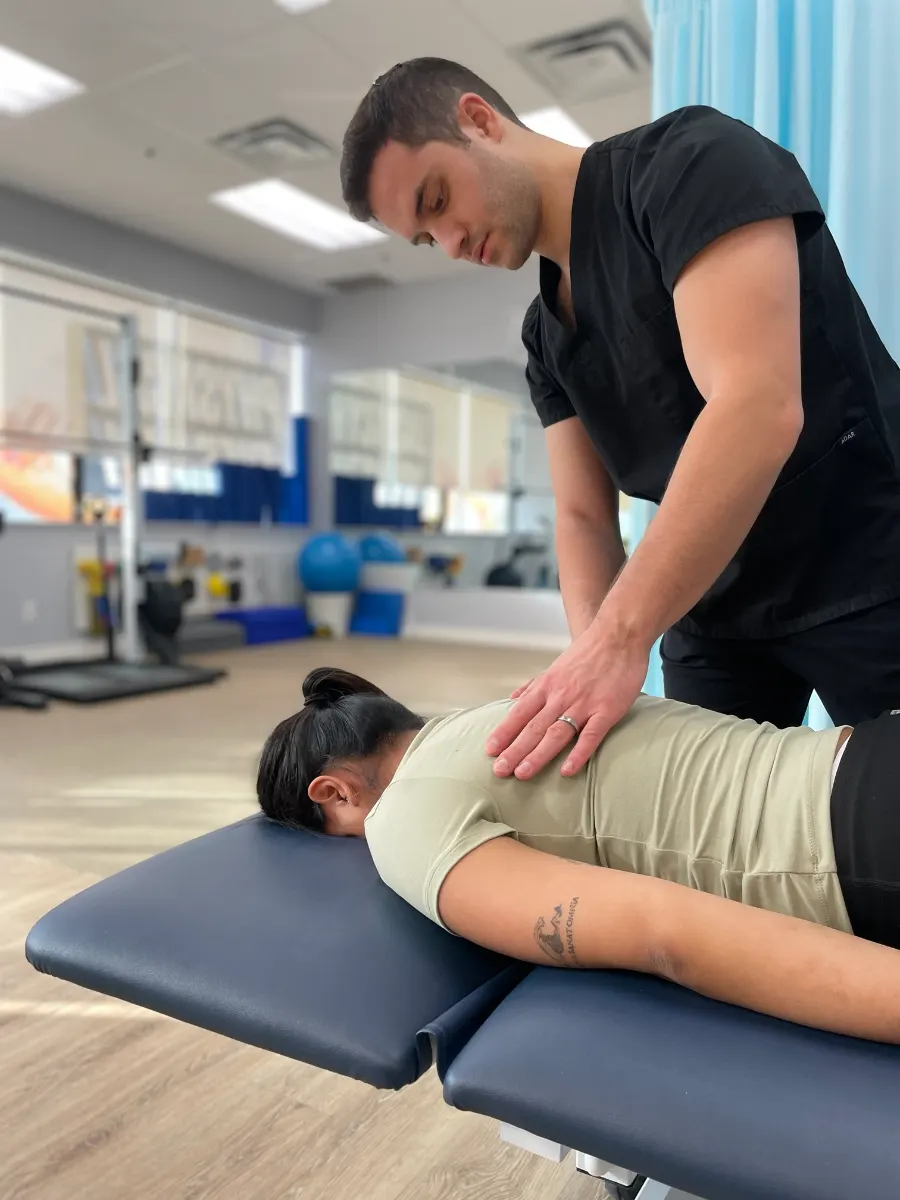
If a concussion is suspected, it’s essential to take the situation seriously and seek medical attention promptly. Halt all physical activities immediately to prevent further injury. Look for symptoms such as confusion, headache, dizziness, nausea, sensitivity to light or noise, and memory difficulties. Monitor the person closely, as symptoms can sometimes worsen or develop hours later. Avoid giving medicationslike aspirin, which may increase the risk of bleeding. Physical and cognitive rest is crucial, so limit activities such as screen time and reading. If symptoms like worsening headache, repeated vomiting, drowsiness, or seizures occur, seek emergency medical care without delay. Always follow the guidance of a healthcare professional for evaluation and recovery.
Expert care from assessment to recovery, designed just for you. No referral necessary.
Your therapist will tailor a plan, and we'll schedule sessions that suit you. Healing takes time - we're with you the whole way.
Use your benefits to access top-quality physiotherapy.
Learn about how we handle insurance claims and direct billing.
❖
Free Phone Consultation (10 min)
❖
Comprehensive Consultation & Assessment (60 min)
❖
Personalized Follow-Up Sessions (45 min)
We understand that every concussion is unique. Our approach involves:
Each treatment plan is meticulously crafted to address individual symptoms, recovery goals, and lifestyle requirements.
Our structured recovery process includes:
1. Initial Rest Phase (24-48 hours of cognitive and physical rest)
2. Gradual Symptom-Limited Activity
3. Supervised Return-to-Activity Progression
4. Continuous Symptom Monitoring
Concussion guide
Plain-language answers from our concussion team, based on the international concussion consensus and the training our therapists complete. Tap a topic to open it.
A concussion is a type of traumatic brain injury. It can come from a direct hit to the head, face or neck, or from a hit to the body that whips the head quickly. It is a problem with how the brain is working, not a visible injury to its structure, which is why CT and MRI scans usually look normal.
01
Cells are stretched
The jolt stretches brain cells. Chemicals rush in and out of the cells and the brain's networks briefly misfire.
02
An energy crisis
The brain needs more energy to recover just as blood flow to it drops. This is why simple tasks can bring on headaches, fog and fatigue.
03
It usually settles
For most people the brain rebalances over days to weeks. When symptoms linger, a guided plan helps the systems that are still struggling.
Scans are used to rule out bleeding or a skull fracture when there are red flags. They are not used to diagnose concussion itself. Diagnosis comes from your symptoms and a clinical exam.
Every concussion is different. Most people have symptoms from more than one group, and the groups feed each other: poor sleep makes headaches worse, and mental strain makes fatigue worse.
Physical
Thinking
Emotional
Sleep
Recognize and remove. Anyone with a suspected concussion should come out of the game or practice right away and should not return the same day. If there may be a neck injury, do not move the player. Keep them still until help arrives.
First 24 to 48 hours: relative rest
Rest your body and brain, but strict bed rest is no longer advised. Light activity like walking is fine if it only raises symptoms a little. Cut back on screens.
Days 2 to 10: start moving with a plan
A therapist can test how much exercise you can handle, then prescribe aerobic exercise just below the point where symptoms rise. This is linked with a faster recovery.
About 2 to 4 weeks: back to normal
Most people recover in this window. Recovery means you are back to school, work and sport with no symptoms coming back.
Symptoms that hang on
If symptoms last more than 10 to 14 days in adults, or more than 4 weeks in children and teens, it is time for a closer look and a more focused rehab plan.
Exercise testing
We use the Buffalo Concussion Treadmill Test, or a bike version, to find the heart rate where your symptoms start to rise. That number sets your safe exercise zone.
Graded aerobic exercise
Daily walking, cycling or similar, kept just under your symptom threshold and stepped up as you improve.
Neck treatment
The same force that causes a concussion often strains the neck, which can cause headaches and dizziness. Hands-on treatment and neck exercises are a key part of care.
Vestibular and balance rehab
Exercises for dizziness, balance and motion sensitivity, plus treatment for positional vertigo (BPPV) if it is found. See our vestibular rehabilitation page.
Eye movement training
Drills for tracking, focusing near and far, and keeping your vision steady when your head moves.
Pacing for school and work
Breaking tasks into shorter blocks, planning rest breaks, cutting down on light and noise, and building back up step by step.
Each stage takes at least 24 hours. If symptoms come back, drop to the previous stage and try again once they settle.
Daily activity
Everyday tasks that do not bring on symptoms.
Light aerobic exercise
Walking, swimming or a stationary bike at an easy pace.
Sport-specific exercise
Running or skating drills with no risk of a hit to the head.
Non-contact training
Harder drills, resistance training and coordination work.
Full-contact practice
Only after medical clearance.
Return to play
Normal games and competition.
Students follow a similar step-by-step return to learn, and adults a return to work, before full return to sport.
Stronger neck
Studies of high school athletes link greater neck strength with fewer concussions. A strong neck helps steady the head on impact.
Bracing for contact
Training the neck muscles to switch on before a hit, with reaction and sport-specific drills.
Rules and equipment
Good tackling and checking technique and fair play rules help. Helmets and mouthguards protect against skull and dental injuries, but they cannot fully prevent concussion.
Know the signs
Players, parents and coaches who can spot a concussion and pull a player early help prevent a second hit and a longer recovery.
Concussion questions
Within the first few days. Light activity like walking can start within 24 to 48 hours, and supervised exercise can start 2 to 10 days after the injury. Starting early is linked with a faster recovery.
No. Rest for a day or two, then start light activity as long as symptoms only rise a little. Long stretches of complete rest are linked with a slower recovery.
Most people recover in about 2 to 4 weeks. Some people have symptoms for longer, and rehab for lasting symptoms can take a few months. Your therapist will give you a plan based on your own symptoms.
Yes. Vestibular rehab, neck treatment, graded exercise and eye movement training can all help people whose symptoms have lasted a long time.
You walk on a treadmill while the incline slowly increases, and we track your heart rate and symptoms. It shows the heart rate where symptoms start to rise, and that sets your safe exercise zone. A bike version is also available.
Not to diagnose a concussion. Scans usually look normal because the problem is in how the brain works, not its structure. A doctor may order one to rule out bleeding or a fracture if there are red flags.
After working through the six-stage return to sport, with at least 24 hours at each stage. Full-contact practice and games need medical clearance first. Going back too soon raises the risk of another injury and a longer recovery.
What the research says
The 2022 Amsterdam consensus on concussion in sport sets out the current approach. Relative rest is advised for up to the first 2 days, but strict rest is not. Clinicians with access to exercise testing can prescribe aerobic exercise below the symptom threshold from 2 to 10 days after injury. If dizziness, neck pain or headaches last more than 10 days, it recommends neck and vestibular rehab.
In a trial of 103 athletes aged 13 to 18, those given aerobic exercise below their symptom threshold recovered in a median of 13 days, compared with 17 days for those who only stretched.
Related: vestibular rehabilitation, post-concussion syndrome, post-concussion dizziness and rugby concussion and safe return to play.
This page is general information, not a diagnosis. If you are worried about a head injury, see a doctor, and use the red flags above to decide when to go to emergency.
Recover faster, move better, and feel stronger with expert physiotherapy. Our team is here to guide you every step of the way.

Explore the latest articles written by our clinicians