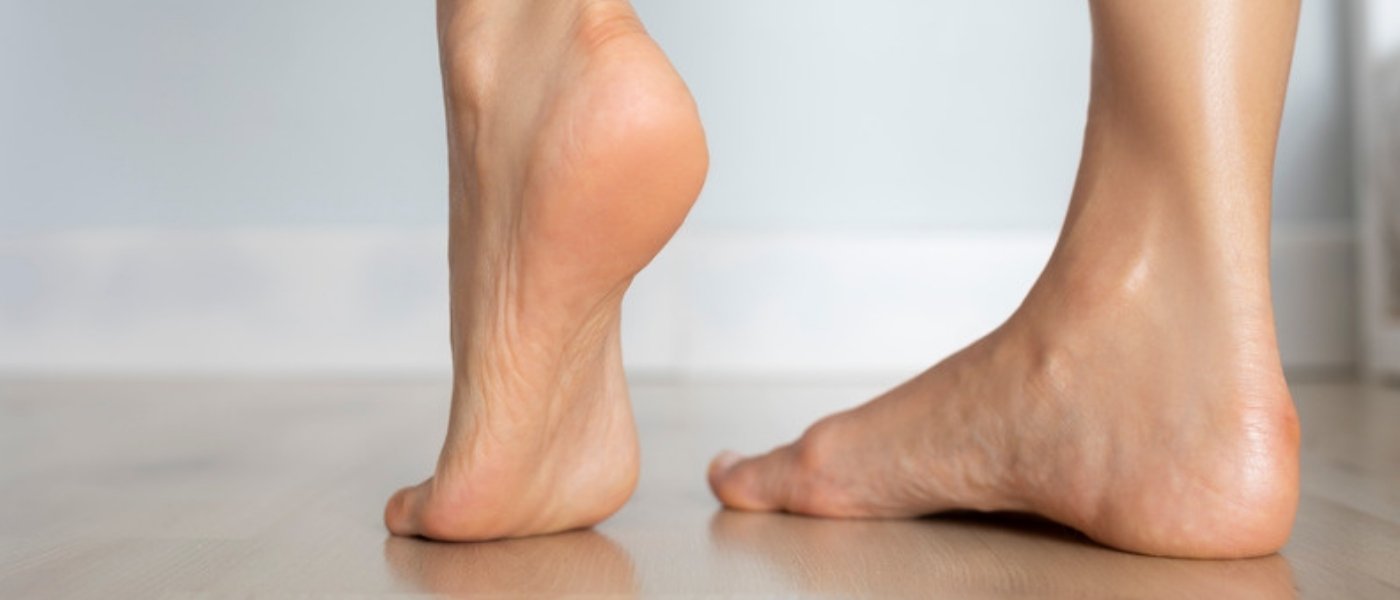


Condition guide
Plantar Plate Tear
Pain under the ball of the foot near the second toe? Learn what a plantar plate tear is and how physiotherapy and custom orthotics can help.
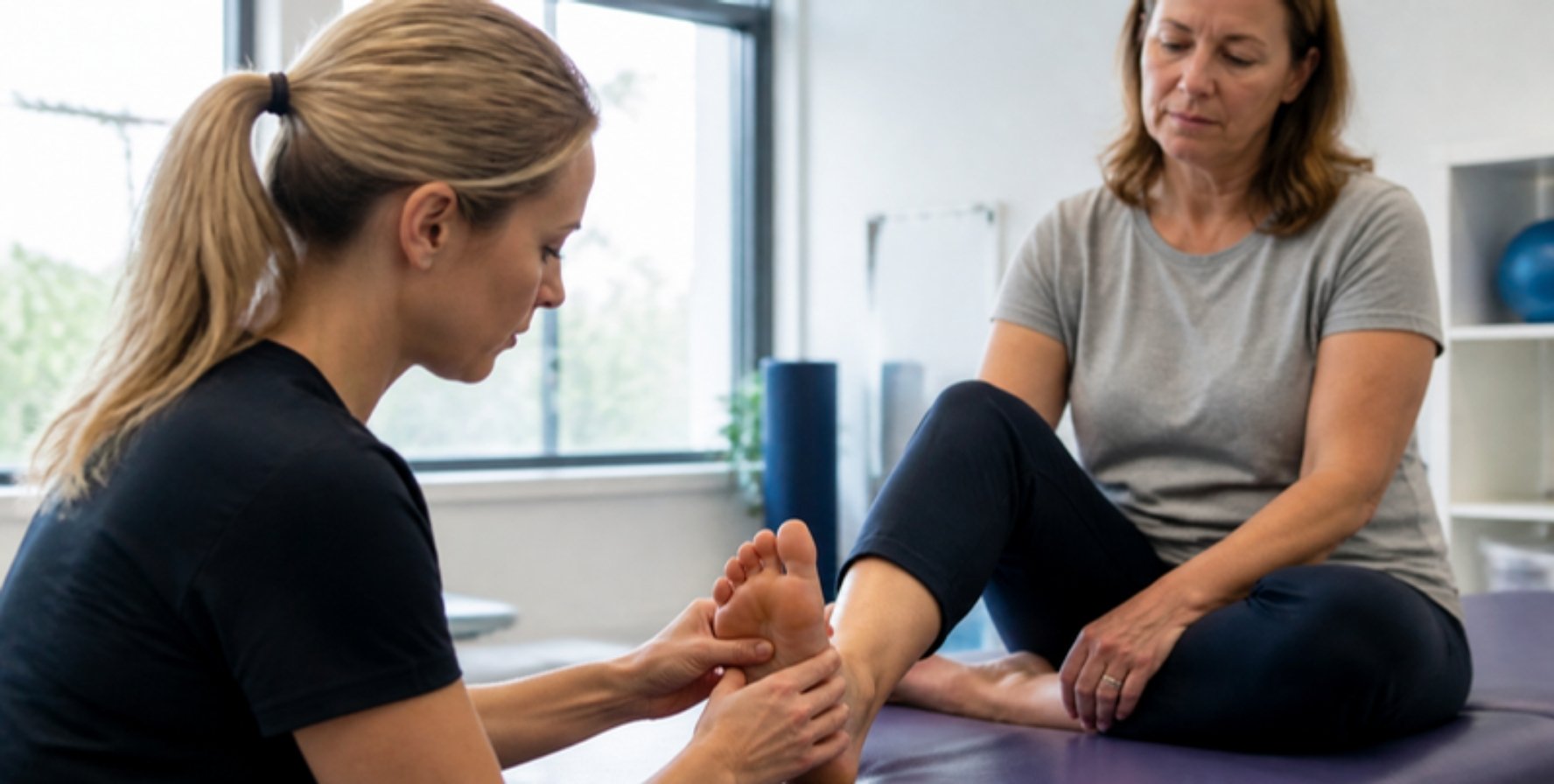
What Is a Plantar Plate Tear? Types and Symptoms
A plantar plate tear is a tear in the thick, tough pad on the underside of a toe joint at the ball of the foot. It most often affects the second toe and can make the joint unstable over time.
Here’s a breakdown of the key aspects of a plantar plate tear:
- Definition: The plantar plate is a strong band of fibrocartilage (tough, flexible tissue) under the metatarsophalangeal (MTP) joint, where the toe meets the foot. It can tear gradually from repeated stress or suddenly when the toe is forced upward. As it weakens, the toe can drift upward or sideways.
- Grades: Clinicians grade plantar plate injuries from 0 to 4. Grade 0 is joint pain with normal toe alignment. Grade 4 is a fully dislocated toe.
- Symptoms:
- Pain under the ball of the foot, usually at the base of the second toe
- A feeling like stepping on a marble or pebble
- Pain that is worse when barefoot, on hard floors, or when the toe bends upward
- Swelling or tenderness under the joint
- The toe no longer touching the ground when you stand
- In later stages, the toe spreading, drifting, or crossing over the big toe (crossover toe)
Anatomy of the Forefoot: Support and Function
The plantar plate is a small structure that plays a big role in keeping each lesser toe stable.
- Anatomy:
- A rectangular pad of fibrocartilage about 2 cm long, made mostly of collagen
- Attaches loosely to the metatarsal (the long bone of the foot) and firmly to the base of the toe bone
- Connects to the ligaments on each side of the joint and to the ligament that links the metatarsals
- Forms a channel that the toe flexor tendons glide through
- Support and Function:
- The main structure that stops the toe from sliding upward or bending back too far when you stand and walk
- Cushions the end of the metatarsal against ground forces
- Works with the plantar fascia to support the arch during push-off
- Works with the toe flexor muscles to keep the toe on the ground
Causes and Risk Factors
Instability of the lesser toe joints accounts for about 40% of metatarsalgia (ball of foot pain) cases. Most plantar plate tears develop slowly from repeated load on the forefoot.
- Overuse:
- Repeated stress on the forefoot during push-off when walking
- High-impact sports and dance
- Biomechanical Factors:
- A longer second metatarsal (Morton’s toe)
- Bunions (hallux valgus), which shift load onto the smaller toes
- Hammertoes
- Flat feet or feet that roll inward
- Thinning of the fat pad under the forefoot with age
- Other Risk Factors:
- Wearing high heels
- A sudden injury that forces the toe upward
- Rheumatoid arthritis, general joint looseness, or diabetes
- Repeated cortisone injections into the joint
- More common in women and in middle-aged and older adults
A Multidisciplinary Approach to Plantar Plate Tear
A plantar plate tear is largely a load problem. The tissue needs protection from the forces that keep straining it while the joint settles and the toe regains strength. That is why care at VPC combines physiotherapy, for taping, protected loading, and toe strengthening, with custom orthotics, which reduce pressure under the ball of the foot in your everyday shoes. The sections below cover what the research shows for each.
Why Physiotherapy Is Essential for Recovery
For early to moderate tears (Grades 0 to 2), conservative care is the first approach. The goal is to protect the plantar plate from ongoing strain so the tissue can heal and the toe does not progress toward dislocation. Physiotherapy guides this process from the protected phase through your return to activity.
Physiotherapy addresses:
- Joint Protection:
- Offloading and limiting joint movement to calm inflammation in the joint lining (synovitis)
- Taping that holds the toe slightly downward to keep the joint aligned
- Strength and Stability:
- Rebuilding toe flexor strength to restore stability and toe contact with the ground
- Return to Activity:
- A gradual, structured return to walking and sport
- A non-surgical option for many early-stage tears
Physiotherapy Treatment Approaches
- Taping and Splinting:
- Sling taping to hold the toe at about 10 degrees of downward bend
- Buddy taping the injured toe to a neighbouring toe
- A Budin splint (a flat pad with an elastic toe loop) if tape irritates the skin
- Strengthening:
- Toe flexor and small foot muscle exercises, such as gripping exercises, once acute pain settles
- Gradual reconditioning for walking and sport
- Offloading:
- A post-op shoe, stiff-soled shoe, or rocker-bottom shoe in the early phase
- Metatarsal pads in supportive athletic shoes
- Education:
- Avoiding barefoot walking, high heels, and thin-soled shoes
- Wearing protective footwear consistently
- Realistic expectations: full return to sport can take up to a year
- Forceful stretching of the toe upward is avoided while the plantar plate heals
Custom Orthotics for Plantar Plate Tear
Orthotics help by changing how pressure moves through the forefoot. Custom orthotics with a metatarsal pad shift load away from the injured joint toward the midfoot, which can make walking more comfortable while the plantar plate heals. Most orthotic research looks at metatarsalgia, a broader group of ball of foot pain conditions, rather than plantar plate tears alone.
Here’s what the research shows:
- Custom orthoses reduced forefoot pain in randomized trials. A review of 9 randomized trials with 487 participants found that custom semi-rigid orthoses with metatarsal offloading reduced forefoot pain more than prefabricated insoles, wide shoes alone, or no treatment. The studies varied in conditions and materials. (Arias-Martín et al., International Orthopaedics, 2018)
- Orthoses with a metatarsal pad lowered pressure under the toe joints. In 23 people with chronic metatarsalgia, orthoses with a medial wedge and metatarsal pad reduced peak pressure under the metatarsal heads more than standard orthoses. This was a lab study and did not track pain over time. (Payen et al., Gait & Posture, 2025)
- Evidence specific to plantar plate tears is limited. Case reports describe athletes, including a professional ballet dancer, returning to full activity at one year with offloading shoes, taping, and metatarsal pads, with MRI showing gradual healing. Promising, but more research is needed. (Kinter & Hodgkins, Sports Health, 2020)
How our team helps
- Assess your foot posture, toe alignment, and where pressure builds under your forefoot
- Prescribe custom orthotics with metatarsal offloading that fit the shoes you wear most
- Coordinate your orthotics with your taping and footwear plan as you return to activity
Orthotics work best as part of your physiotherapy plan, protecting the joint during daily life while rehab restores strength.
Prognosis: Healing Timeline for Plantar Plate Tear
Recovery depends mainly on the grade of the tear and how early treatment starts.
- Conservative care: Recommended for Grades 0 to 2. In one group of 99 patients treated without surgery using footwear advice, padding, taping, and anti-inflammatory medication, 52% were satisfied with their result. Most evidence comes from case reports and small studies.
- Typical timeline:
- Weeks 1 to 6: Protective shoe and taping full time (up to 6 months in more severe cases)
- Weeks 6 to 14 and beyond: Supportive shoes with metatarsal pads, continued taping, and a gradual return to walking
- Around 1 year: Full return to high-impact sport has been reported in case reports
- Acute vs chronic: Acute tears follow a sudden injury that forces the toe upward. Most tears are chronic and build up from repeated overload.
- Factors that affect recovery:
- Grade of the tear at diagnosis
- Consistency with footwear, taping, and offloading
- Repeated cortisone injections
- Foot shape, such as bunions or a long second metatarsal
Surgery may be considered when conservative care does not help or for Grade 3 or 4 injuries. After surgery, patients typically wear a post-op shoe for 4 to 6 weeks, then stiff-soled shoes for 3 to 6 months, with a return to high-impact sport at about one year.
Preventing Recurrence
Long-term protection of the forefoot helps keep symptoms from returning.
- Footwear:
- Supportive shoes with enough cushioning under the forefoot
- Avoiding high heels, narrow toe boxes, and thin, unsupportive soles
- Orthotics and Equipment:
- Continued use of metatarsal pads or custom orthotics in your regular shoes
- Load Management:
- Returning to sport based on a stable toe joint on examination, not only on pain relief
- Medical Care:
- Avoiding repeated cortisone injections into the joint
FAQs
“Why does it feel like I’m stepping on a marble?”
When the plantar plate is damaged, the joint becomes inflamed and swollen, and the area loses some of its normal cushioning. Together, these create the feeling of a hard lump under the ball of the foot.
“Do I need an MRI?”
Not always. A clinician can often identify a plantar plate injury with hands-on tests such as the drawer test, which checks whether the toe slides upward, and the toe purchase test. Ultrasound or MRI is used when the diagnosis is unclear or to confirm how severe the tear is.
“Can a plantar plate tear heal without surgery?”
Early to moderate tears (Grades 0 to 2) are usually managed without surgery using a protective shoe, taping, and metatarsal pads. Case reports with repeat MRI scans have shown gradual healing over about a year. More severe tears may need a surgical opinion.
“Should I get a cortisone injection?”
Cortisone injections into the joint should be limited or avoided. Repeated injections can weaken the plantar plate and raise the risk of a complete tear and toe dislocation.
“Which treatment is right for me?”
Most people do best with a combination of physiotherapy for taping, protected loading, and toe strengthening, and custom orthotics to reduce pressure under the ball of the foot. Your assessment will grade the injury and shape how these fit together.
What the Research Says
Research on plantar plate tears is still thin. A 2022 review of non-surgical treatment found that splinting, offloading and joint injections are the main options, but the reported success of these treatments comes only from case studies and case series, which are low-level evidence. The authors also noted that these treatments tend not to work once the tear reaches its advanced stages, and they called for better studies and a more standard approach (Malani et al., 2022).
Orthotics have more research behind them, although it covers ball of foot pain in general rather than plantar plate tears alone. A 2018 systematic review of 9 randomized trials with 487 people found that custom-made foot orthoses reduced forefoot pain more than the other treatments in most of the trials. The trials included people with rheumatoid arthritis, bunions and metatarsalgia (Arias-Martín et al., 2018).
Taken together, early diagnosis, protecting the joint and reducing pressure under the ball of the foot remain the sensible first steps, with a surgical opinion if the toe keeps drifting or pain does not settle.
Key Takeaways
- A plantar plate tear most often affects the joint at the base of the second toe.
- Early grades are usually treated without surgery using taping, stiff or rocker-sole shoes and metatarsal pads.
- Evidence for non-surgical care of plantar plate tears comes from case reports and small series, so results vary.
- Custom orthoses reduced forefoot pain in most of 9 randomized trials of ball of foot pain.
- Advanced tears with a drifting or dislocated toe often need a surgical opinion.
Related pages: metatarsalgia, Morton's neuroma, bunion pain and toe sprain.
Why Choose Vaughan Physiotherapy Clinic?
Our physiotherapists and custom orthotics service work together to protect your toe joint and get you moving comfortably again.
- Comprehensive Assessment: Drawer testing, toe purchase testing, and a full look at your foot alignment and footwear
- Personalized Multidisciplinary Treatment Plans: Taping, strengthening, and orthotics matched to the grade of your injury
- Collaborative Care: We coordinate with your physician or foot specialist if imaging or a surgical opinion is needed
- Home Programs: Clear guidance on taping, footwear, and exercises to keep progress going between visits
Meet Our Specialized Team
Our physiotherapists regularly assess and treat ball of foot pain, from metatarsalgia to toe joint injuries, and work closely with our custom orthotics service. Our therapists are experienced working with athletes, and VPC works with Sport Physio Canada, so runners, dancers, and court sport players get a plan built around the demands of their sport.
Book a Specialist Assessment
If pain under the ball of your foot is changing how you walk, book an assessment with our team.
- Phone: 905-669-1221
- Address: 398 Steeles Ave W, Unit 201, Thornhill, ON L4J 6X3
- Online Booking: Book Your Assessment
A plantar plate tear caught early, while the toe still lines up, is usually managed with taping, offloading and orthotics. Our team in Thornhill and Vaughan can grade the injury and start that plan with you, and direct billing is available.
Walk more comfortably on hard floors
Protect your toe joint from getting worse
Return to running, dance, and sport with a clear plan
References
Arias-Martín, I., Reina-Bueno, M., & Munuera-Martínez, P. V. (2018). Effectiveness of custom-made foot orthoses for treating forefoot pain: A systematic review. International Orthopaedics, 42(8), 1865-1875. https://doi.org/10.1007/s00264-018-3817-y
Malani, K., Ravine, M., & Schneider, H. P. (2022). Nonoperative treatment of plantar plate tears. Clinics in Podiatric Medicine and Surgery, 39(3), 451-459. https://doi.org/10.1016/j.cpm.2022.02.006