


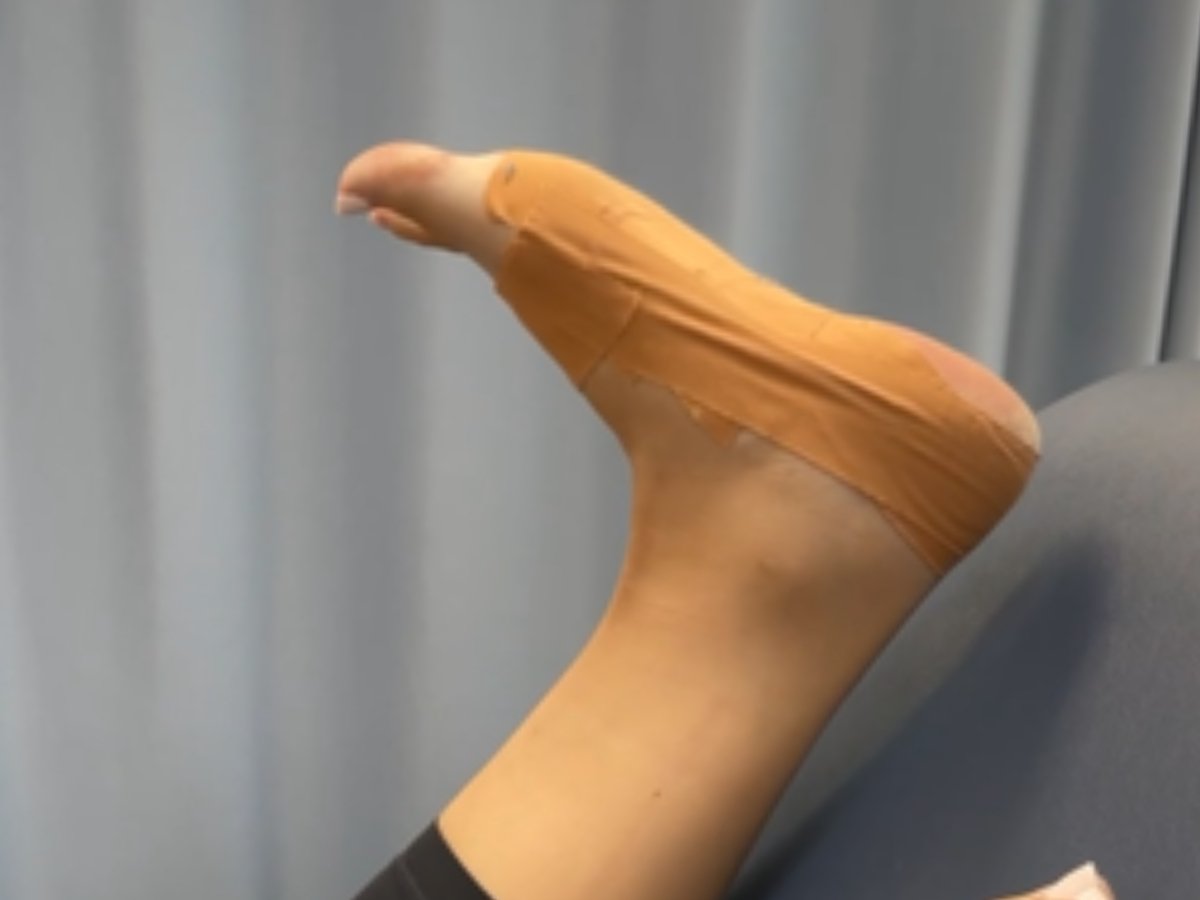
Heel and Achilles area supported with kinesiology tape during rehabilitation after Achilles tendon repair

Post-Operative Achilles Repair Rehabilitation

Rehabilitation after surgical repair of a torn Achilles tendon, following your surgeon's protocol to protect the repair and rebuild calf strength.
Have you just had surgery to repair a torn Achilles tendon and are wondering what the next six to twelve months will look like? Are you unsure how hard to push, when the boot comes off, or whether you will ever run, jump, or play your sport again? These are the questions almost everyone asks after an Achilles repair.

At Vaughan Physiotherapy Clinic, we guide patients through every stage of recovery after Achilles tendon surgery, from the first weeks in a boot to the return to running and sport. We work within your surgeon's protocol, and our job is to make sure each stage is done well: protecting the repair early, then rebuilding the calf strength that this injury is known to take away.

Here is what an Achilles repair involves, what to expect in the weeks after surgery, which warning signs need urgent attention, and what the research says about rehabilitation.

What Is Post-Operative Achilles Repair Rehabilitation?

The Achilles tendon is the thick tendon at the back of the ankle that connects the calf muscles to the heel bone. It is the strongest tendon in the body, and it is what lets you push off when you walk, run, climb stairs, and jump. A complete rupture usually happens during a sudden push-off or landing, and most people describe feeling as if someone kicked them in the back of the leg.

In an Achilles repair, the surgeon stitches the torn tendon ends back together. Afterward, the ankle is protected in a cast or walking boot, usually with the toes pointed down at first, while the tendon heals. Post-operative rehabilitation is the structured program that takes you from that protected position back to full strength and activity.

Achilles ruptures are most common in active adults in their 30s and 40s. In a large review of more than 6,500 patients, the average age was about 41, and about 4 out of 5 were men (Zellers et al., 2016).

Types of Achilles Repair

Your surgeon will choose the technique that suits your injury. The main types are:

  • Open repair: a longer incision along the back of the ankle so the surgeon can see and stitch the tendon directly
  • Minimally invasive or mini-open repair: a shorter incision, with special instruments used to pass stitches through the tendon
  • Percutaneous repair: stitches placed through several small skin punctures

The type of repair, the quality of the tendon, and your surgeon's preference all shape your rehab protocol. This is why we always ask for your operative report and written protocol before your first session.

Understanding the Anatomy

Knowing the main structures helps explain why rehab follows the order it does:

  • Gastrocnemius and soleus: the two main calf muscles. They join to form the Achilles tendon
  • Achilles tendon: attaches to the back of the heel bone (calcaneus). After a repair, the healing tissue is weak at first and gets stronger over many months
  • Tendon length: a healing tendon can stretch out. A longer tendon makes it harder for the calf to lift the heel fully, which is linked to lower heel-raise height and changes in ankle movement years later (Brorsson et al., 2017)
  • Sural nerve: a small sensory nerve that runs close to the outer edge of the Achilles. It supplies feeling to the outer side of the heel and foot, and it can be irritated during or after surgery

Recognizing the Symptoms

After an Achilles repair, some symptoms are a normal part of healing. Common ones include:

  • Swelling around the ankle and foot, which often comes and goes for several months, especially at the end of the day
  • Stiffness in the ankle, particularly when first bringing the foot up toward the shin after time in the boot
  • Calf weakness: difficulty doing a heel raise on the operated leg, which is expected and is the main focus of later rehab
  • A thickened tendon: the repaired area often feels firm and wider than the other side for a long time
  • Scar sensitivity and mild aching after a busy day
  • A limp once you start walking without the boot, which improves as strength returns

What Makes It Worse?

  • Doing too much too soon: long walks, stairs, or standing for hours before your calf is ready often bring on swelling and aching
  • Stretching the calf hard: aggressive stretching early on can put strain on the healing tendon. Your surgeon's protocol will tell you which ankle positions are safe and when
  • Leaving the boot or wedges early: removing heel wedges or the boot ahead of your protocol can overload the repair
  • Keeping the leg down all day: long periods sitting with the foot hanging down increase swelling in the early weeks
  • Skipping the home program: the calf loses strength quickly when it is not loaded, and rebuilding it takes consistent work

What Else Could It Be?

Not every new pain or change after Achilles surgery is part of normal healing. Your physiotherapist will watch for other causes, including:

  • Re-rupture of the tendon: a new tear of the repaired tendon, often after a slip, a sudden push-off, or a fall
  • Deep vein thrombosis (DVT): a blood clot in the deep veins of the calf, which is common after Achilles rupture and surgery. In one study using routine ultrasound scans, about half of patients had a clot within six weeks of surgery. Routine scans also pick up clots that cause no symptoms, so this is higher than the number of people who notice a problem (Svedman et al., 2020)
  • Wound healing problems or infection: the skin over the Achilles is thin and has a limited blood supply, so the incision needs close watching. Deep infection may be more common after open repair than after percutaneous repair (Yang et al., 2017)
  • Sural nerve irritation: numbness, tingling, or burning along the outer side of the heel and foot. In a review comparing techniques, this was more common after percutaneous repair than after open repair (Yang et al., 2017)
  • Stiffness or scar adhesion: the tendon and scar can become stuck to the surrounding tissue, limiting ankle movement
  • Pain elsewhere from limping: knee, hip, or lower back pain, or pain in the other leg, from months of altered walking

When to See a Doctor First

Contact your surgeon right away, or go to the emergency department, if you notice:

  • Calf pain, swelling, warmth, or redness that is new or getting worse, which can be a sign of a blood clot (DVT)
  • Sudden shortness of breath, chest pain, a fast heartbeat, or coughing up blood, which can signal a clot in the lungs (pulmonary embolism). Call 911
  • Wound problems: increasing redness, warmth, or pain around the incision, pus or cloudy drainage, a wound that opens, or a fever or chills
  • Signs of re-rupture: a sudden pop or snap, a feeling of being kicked in the back of the leg, a new gap or dent in the tendon, or a sudden loss of push-off strength
  • Sural nerve symptoms that are new, spreading, or getting worse: numbness, tingling, burning, or electric pain along the outer side of the heel or foot
  • Pain that is severe and not controlled by your prescribed medication, or a cast or boot that feels too tight

Our physiotherapists check for these signs at your first visit and at every session, and we contact your surgeon or send you to urgent care whenever something does not look right.

Related reading: You may also find our guides to Achilles tendinopathy and calf strains helpful, along with our article on Achilles pain in basketball.

Start Your Journey to 

‍Better Health Today

Recover faster, move better, and feel stronger with expert physiotherapy. Our team is here to guide you every step of the way.

Why Physiotherapy Is Essential

Surgery puts the tendon back together, but it does not rebuild the calf. After an Achilles rupture, calf weakness is the most common long-term problem. In one long-term study, people who still had a large heel-raise deficit one year after injury had less push-off power, lower heel-raise height, and longer tendons six years later than people who had recovered well (Brorsson et al., 2017). Calf endurance deficits have been reported up to 10 years after injury (Zellers et al., 2016).

Rehabilitation after repair has changed a lot. Older protocols kept the ankle in a rigid cast for six weeks or more without putting weight through the leg. Research now supports early functional rehabilitation: a removable boot, early protected weight-bearing, and early controlled ankle movement. A review of 10 randomized trials (570 patients) found that people in a functional brace after surgery were more likely to rate their result as good or excellent, and most trials showed a faster return to sport, with no increase in major complications compared with a cast (McCormack & Bovard, 2015).

Physiotherapy helps with each part of recovery:

  • Protecting the repair: following your surgeon's boot, heel wedge, and weight-bearing plan exactly, while controlling swelling and stiffness
  • Rebuilding the calf: progressive strengthening to close the strength gap between legs, which is the main long-term goal
  • Returning to running and sport: using clear strength and hop tests, not just the calendar, to decide when you are ready

Your Treatment Plan at Vaughan Physiotherapy Clinic

The phases below are a general guide. Your surgeon's protocol always comes first. Timelines for weight-bearing, wedge removal, boot weaning, and ankle movement vary between surgeons and between repairs, and we follow your protocol exactly.

Phase 1: Assessment and Protection (about Weeks 0 to 6)

Your first visit is usually in the first few weeks after surgery. We start by reviewing your operative report and your surgeon's written protocol. A full assessment includes:

  • Safety checks: the incision for redness or drainage, the calf for signs of a clot, and feeling along the outer heel and foot for sural nerve symptoms
  • Swelling and range of motion: measured only within the limits your surgeon allows
  • Walking in the boot: making sure you are bearing weight as prescribed, with crutches as needed
  • Hip, knee, and core strength: the parts of the body we can safely start strengthening right away

What this phase usually involves

  • Boot and heel wedges: most protocols start with the foot pointed down using wedges inside the boot, then remove them gradually to bring the ankle toward a neutral position. We help you follow your wedge schedule, not change it
  • Progressive weight-bearing: moving from crutches toward full weight in the boot as your surgeon allows. Early weight-bearing is part of the functional rehab approach supported by the research (McCormack & Bovard, 2015)
  • Gentle ankle movement: if your protocol allows it, controlled active movement of the ankle in the safe range, with no stretching of the tendon past the limits set by your surgeon
  • Swelling control and staying strong: elevation and compression if your surgeon recommends it, plus exercises for the hips, thighs, core, and the other leg

Phase 2: Out of the Boot and Walking Normally (about Weeks 6 to 12)

Once your surgeon clears you to come out of the boot, the focus shifts to walking well and rebuilding basic strength. A heel lift in your shoe is often used for a short time as you transition.

  • Gait retraining: working on an even, symmetrical walk without a limp
  • Restoring ankle movement: gradually regaining ankle range within your protocol. We avoid forcing calf stretches, because a tendon that heals too long weakens push-off (Brorsson et al., 2017)
  • Early calf strengthening: seated calf raises, resistance band work, and two-leg calf raises as allowed
  • Balance training: standing on one leg, progressing to less stable surfaces
  • Manual therapy: soft tissue work around the scar and calf, and gentle joint mobilization of the ankle and foot, to help with stiffness and comfort
  • Low-impact cardio: stationary cycling and, once the wound is fully healed and your surgeon agrees, pool work

Phase 3: Rebuilding Calf Strength (about Months 3 to 6)

This is the most important phase for your long-term result. The calf needs heavy, progressive loading to recover, and this phase often takes longer than people expect.

Calf strengthening program
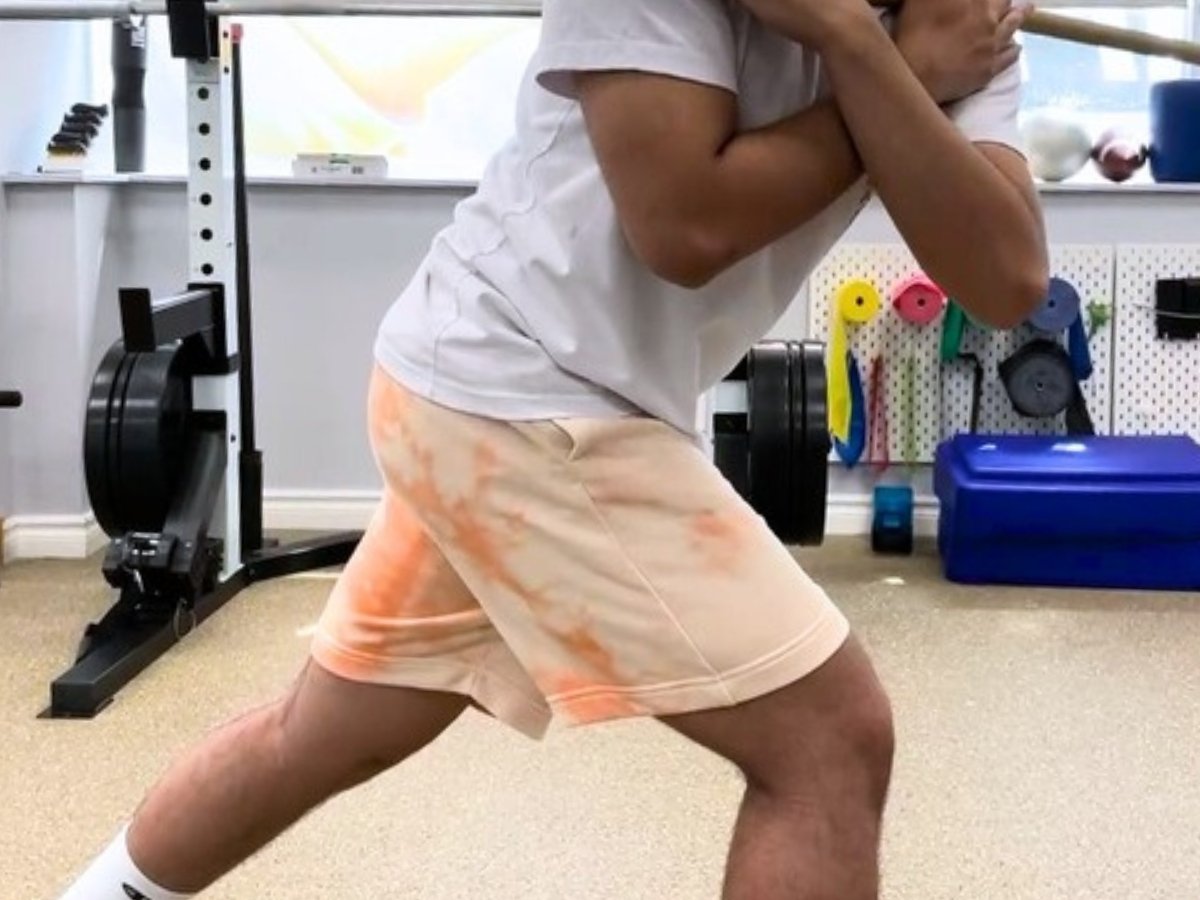
Patient doing a loaded split squat in the Vaughan Physiotherapy Clinic gym to rebuild leg strength
Heavy, progressive strengthening of the calf and the whole leg, alongside calf raises toward full height on the operated side, is the core of rebuilding strength after an Achilles repair.

Heel-raise height and work are key markers of recovery. People who still had a deficit of more than 30 percent in heel-raise height at one year showed lasting changes in ankle movement and push-off power six years later (Brorsson et al., 2017). That is why we test and track your heel raises closely. Your program may include:

  • Two-leg to single-leg calf raises: working toward full height on the operated leg, not just more repetitions at a lower height
  • Weighted calf raises: straight-knee and bent-knee versions, to load both the gastrocnemius and the soleus
  • Slow, controlled lowering: to build strength through the full range
  • Leg press and squat variations: to strengthen the whole leg
  • Balance and control: single-leg balance with reaching and turning

We compare the operated leg with the healthy one at regular check-ins, so progress is measured rather than guessed.

Phase 4: Return to Running and Sport (about Months 4 to 12)

Return to running and sport is based on meeting criteria, not just on a date, and always with your surgeon's clearance. Studies use many different ways of deciding when someone is ready (Zellers et al., 2016), and there is no single agreed test. At our clinic, we generally look for:

  • Surgeon clearance for running and impact
  • Walking without a limp and with little or no swelling after activity
  • Strong single-leg heel raises: close to the other side in both height and number of repetitions
  • Pain-free two-leg and then single-leg hopping with good control
  • Hop test results close to the other leg before cutting, jumping, and sport drills
  • Confidence: fear of a re-rupture is common and can hold people back (Zellers et al., 2016), so we build up gradually and talk it through

The return is staged: walk-run, faster running, hopping, change of direction, then sport-specific training before competition.

Beyond Physiotherapy: Complementary Care for Post-Operative Achilles Repair Rehabilitation

Exercise and progressive loading, guided by your surgeon's protocol, are the foundation of recovery after Achilles repair. Some patients also use other services at our clinic to help with pain, stiffness, and comfort along the way. Research on these options after Achilles surgery is very limited, so here is an honest summary.

How Acupuncture and Dry Needling Can Help

Acupuncture and dry needling use fine needles to ease pain and muscle tension.

  • What the evidence shows: we did not find any published trials of acupuncture or dry needling after Achilles tendon repair. A trial testing acupuncture alongside a rehab program for Achilles rupture has been registered, but results are not yet available. Any benefit is therefore based on indirect evidence for general muscle pain
  • Where it fits: as an optional add-on for calf tightness or general aches from walking differently, such as in the hip or lower back, once your surgeon is comfortable with it
  • Safety: needles are never placed into or near the repaired tendon or incision, or near a calf with a suspected clot. Minor soreness or bruising at needle sites is the most common side effect

How Massage Therapy Can Help

Registered massage therapy focuses on the calf, foot, and surrounding soft tissues.

  • What the evidence shows: there are no published trials showing that massage improves long-term outcomes after Achilles repair. Small studies have looked at the short-term effects of soft tissue techniques in people with repaired tendons, but not at long-term recovery
  • Where it fits: once the wound has fully healed, gentle scar and calf massage may help with comfort, swelling, and a feeling of tightness. It works best alongside your exercise program
  • Safety: no massage over an unhealed wound. Deep calf massage is avoided if a blood clot is suspected, and any calf pain with swelling or warmth should be checked by a doctor first

How Chiropractic and Joint Manipulation Can Help

Chiropractic care for the lower limb uses joint mobilization and, in some cases, manipulation of the ankle and foot.

  • What the evidence shows: we did not find peer-reviewed trials of chiropractic care after Achilles repair. Gentle ankle and foot joint mobilization is commonly used in rehab to help with stiffness, but its effect on long-term outcomes after this surgery has not been studied
  • Where it fits: later in recovery, for stiffness in the ankle and foot joints, or for back or hip discomfort caused by months of limping, and always within the ankle range your surgeon allows
  • Safety: forceful ankle manipulation or any technique that stretches the healing tendon is avoided, especially in the first months after surgery

These therapies can make recovery more comfortable, but none of them replaces the calf strengthening that this injury needs. When used, they are coordinated with your physiotherapy program and your surgeon's restrictions.

Working With Your Surgical Team

Your surgeon is in charge of your recovery plan, and we work as part of that team. That means:

  • Following the protocol: we ask for your operative report and written protocol, and we follow its boot, heel wedge, weight-bearing, and ankle range limits exactly
  • Never skipping ahead: if you feel ready to drop a wedge, come out of the boot, or start running early, we check with your surgeon first
  • Blood clot prevention: if you have been prescribed blood thinners, take them exactly as directed. Clots are common after Achilles surgery, and in one study they were linked to worse patient-reported results and lower calf endurance one year later (Svedman et al., 2020)
  • Knowing your type of repair: different techniques carry slightly different risks. In a review comparing techniques, sural nerve injury was more common after percutaneous repair (about 5.5 percent) than open repair (about 1.2 percent), while deep infection was more common after open repair in the pooled studies (about 3.6 percent versus 0.6 percent), although this difference was not significant when only randomized trials were analysed. Re-rupture rates were similar, at around 3 percent for both (Yang et al., 2017). Knowing which repair you had tells us what to watch for most closely
  • Keeping your surgeon informed: we report on your progress and flag concerns such as wound problems, nerve symptoms, unusual swelling, a stalled heel raise, or signs of a re-rupture

If you notice any of the red flags listed above, contact your surgeon or seek urgent care right away rather than waiting for your next physiotherapy appointment.

How Long Will It Take?

Recovery from an Achilles repair is measured in months. As a general guide, and always depending on your surgeon's protocol:

  • Boot and protected weight-bearing: usually the first several weeks after surgery, with the exact length set by your surgeon
  • Walking normally without a limp: builds gradually over the months after the boot comes off, as calf strength returns
  • Return to running: once you meet the strength and hopping criteria above and your surgeon agrees, rather than on a fixed date
  • Return to sport: in a large review, the average time back to play was about 6 months, with study averages ranging from about 3 to 10 months (Zellers et al., 2016)

About 80 percent of people return to their sport after an Achilles rupture (Zellers et al., 2016). Among elite male athletes who had surgery, between 61 and 100 percent returned to play depending on the sport, and some saw a drop in performance in the first seasons back (LaPrade et al., 2022). Function improves quickly between about 3 and 12 months, then more slowly for up to two years (Zellers et al., 2016), so it is normal to still be making gains well after you are back to your usual activities.

Prevention and Long-Term Management

  • Follow your protocol: the early weeks set up the rest of your recovery. Protect the repair as instructed
  • Keep doing calf raises: calf strength deficits can last for years (Zellers et al., 2016), so keep a calf strengthening routine going two or three times a week, even after you are back to sport
  • Test, do not guess: recheck your single-leg heel raise every few months. A drop in height or repetitions is a sign to step up your program
  • Build training gradually: increase running and jumping volume step by step rather than jumping straight back to your old level
  • Warm up well before sprinting, jumping, and court or field sports
  • Act early: new pain, swelling, or weakness in either Achilles deserves a check-up

Frequently Asked Questions

When can I take the boot off?

That depends on your surgeon's protocol, the type of repair, and how your healing is going. Most protocols use a boot for the first several weeks, with heel wedges removed gradually over that time. Do not remove the boot or wedges early without your surgeon's approval.

Is it safe to put weight on my foot so soon after surgery?

If your surgeon has allowed it, yes. Early protected weight-bearing in a boot is a key part of functional rehabilitation, and research comparing it with rigid casting has not shown more major complications, while patients reported better results (McCormack & Bovard, 2015). The key word is protected: the boot and wedges keep the tendon in a safe position.

Why can I still not do a single-leg heel raise?

This is very common and is the main challenge of Achilles recovery. It often takes months of steady, progressive loading, and we track your progress so you can see it even when it feels slow.

What does a re-rupture feel like?

Usually a sudden pop or snap at the back of the ankle, as if you were kicked, followed by a loss of push-off strength. You may feel a gap in the tendon. If this happens, stop, protect the ankle, and contact your surgeon or go to urgent care.

Will I get back to my sport?

Most people do. About 80 percent of people return to sport, at an average of about 6 months (Zellers et al., 2016). Getting the calf strength back is the biggest factor we can influence, which is why we test it before clearing you to return.

Can acupuncture, massage, or chiropractic replace my rehab exercises?

No. There is no published evidence that these therapies improve long-term outcomes after Achilles repair. Progressive calf strengthening within your surgeon's protocol is what restores function. Needling, massage, and joint mobilization can help with comfort and stiffness along the way, but they are add-ons, not replacements.

Our Specialized Approach at Vaughan Physiotherapy Clinic

✓ Protocol-driven care: we follow your surgeon's boot, heel wedge, and weight-bearing plan and keep your surgical team informed

✓ Safety screening every visit: checks for blood clots, wound problems, nerve symptoms, and signs of re-rupture

✓ Protecting tendon length: careful, gradual return of ankle movement instead of aggressive stretching

✓ Measured calf strength: heel-raise height, repetitions, and strength testing tracked against your other leg

✓ Criteria-based return to sport: staged running, hopping, and sport drills when you meet the targets and your surgeon agrees

✓ Integrated care: physiotherapy, massage therapy, acupuncture, and chiropractic under one roof when they add value

Take the First Step Toward a Strong Return to Activity

An Achilles repair is a long recovery, but with the right plan most people get back to the activities they love. Our team at Vaughan Physiotherapy Clinic helps patients from Thornhill, Vaughan, North York, Richmond Hill, and surrounding communities recover from Achilles surgery with evidence-based, hands-on care that works hand in hand with your surgeon.

Book your assessment today:

📞 Phone: 905-669-1221

📍 Location: 398 Steeles Ave W #201, Thornhill, ON L4J 6X3

🌐 Online Booking: www.vaughanphysiotherapy.com

References

Brorsson A, Willy RW, Tranberg R, Grävare Silbernagel K. Heel-rise height deficit 1 year after Achilles tendon rupture relates to changes in ankle biomechanics 6 years after injury. American Journal of Sports Medicine. 2017;45(13):3060-3068. doi:10.1177/0363546517717698

LaPrade CM, Chona DV, Cinque ME, et al. Return-to-play and performance after operative treatment of Achilles tendon rupture in elite male athletes: a scoping review. British Journal of Sports Medicine. 2022;56(9):515-520. doi:10.1136/bjsports-2021-104835

McCormack R, Bovard J. Early functional rehabilitation or cast immobilisation for the postoperative management of acute Achilles tendon rupture? A systematic review and meta-analysis of randomised controlled trials. British Journal of Sports Medicine. 2015;49(20):1329-1335. doi:10.1136/bjsports-2015-094935

Svedman S, Edman G, Ackermann PW. Deep venous thrombosis after Achilles tendon rupture is associated with poor patient-reported outcome. Knee Surgery, Sports Traumatology, Arthroscopy. 2020;28(10):3309-3317. doi:10.1007/s00167-020-05945-2

Yang B, Liu Y, Kan S, et al. Outcomes and complications of percutaneous versus open repair of acute Achilles tendon rupture: a meta-analysis. International Journal of Surgery. 2017;40:178-186. doi:10.1016/j.ijsu.2017.03.021

Zellers JA, Carmont MR, Grävare Silbernagel K. Return to play post-Achilles tendon rupture: a systematic review and meta-analysis of rate and measures of return to play. British Journal of Sports Medicine. 2016;50(21):1325-1332. doi:10.1136/bjsports-2016-096106

Disclaimer: This article is for educational purposes only and does not replace professional medical advice. Rehabilitation after Achilles tendon repair must follow the protocol set by your surgeon, and timelines vary between individuals and surgical techniques. Calf pain or swelling, shortness of breath, wound changes, or a sudden pop at the back of the ankle need urgent medical attention. Always consult your surgeon or a qualified healthcare provider about your specific recovery.

Team

Condition guide

Post-Operative Achilles Repair Rehabilitation

Rehabilitation after surgical repair of a torn Achilles tendon, following your surgeon's protocol to protect the repair and rebuild calf strength.

Heel and Achilles area supported with kinesiology tape during rehabilitation after Achilles tendon repairPost-Operative Achilles Repair Rehabilitation

Have you just had surgery to repair a torn Achilles tendon and are wondering what the next six to twelve months will look like? Are you unsure how hard to push, when the boot comes off, or whether you will ever run, jump, or play your sport again? These are the questions almost everyone asks after an Achilles repair.

At Vaughan Physiotherapy Clinic, we guide patients through every stage of recovery after Achilles tendon surgery, from the first weeks in a boot to the return to running and sport. We work within your surgeon's protocol, and our job is to make sure each stage is done well: protecting the repair early, then rebuilding the calf strength that this injury is known to take away.

Here is what an Achilles repair involves, what to expect in the weeks after surgery, which warning signs need urgent attention, and what the research says about rehabilitation.

What Is Post-Operative Achilles Repair Rehabilitation?

The Achilles tendon is the thick tendon at the back of the ankle that connects the calf muscles to the heel bone. It is the strongest tendon in the body, and it is what lets you push off when you walk, run, climb stairs, and jump. A complete rupture usually happens during a sudden push-off or landing, and most people describe feeling as if someone kicked them in the back of the leg.

In an Achilles repair, the surgeon stitches the torn tendon ends back together. Afterward, the ankle is protected in a cast or walking boot, usually with the toes pointed down at first, while the tendon heals. Post-operative rehabilitation is the structured program that takes you from that protected position back to full strength and activity.

Achilles ruptures are most common in active adults in their 30s and 40s. In a large review of more than 6,500 patients, the average age was about 41, and about 4 out of 5 were men (Zellers et al., 2016).

Types of Achilles Repair

Your surgeon will choose the technique that suits your injury. The main types are:

  • Open repair: a longer incision along the back of the ankle so the surgeon can see and stitch the tendon directly
  • Minimally invasive or mini-open repair: a shorter incision, with special instruments used to pass stitches through the tendon
  • Percutaneous repair: stitches placed through several small skin punctures

The type of repair, the quality of the tendon, and your surgeon's preference all shape your rehab protocol. This is why we always ask for your operative report and written protocol before your first session.

Understanding the Anatomy

Knowing the main structures helps explain why rehab follows the order it does:

  • Gastrocnemius and soleus: the two main calf muscles. They join to form the Achilles tendon
  • Achilles tendon: attaches to the back of the heel bone (calcaneus). After a repair, the healing tissue is weak at first and gets stronger over many months
  • Tendon length: a healing tendon can stretch out. A longer tendon makes it harder for the calf to lift the heel fully, which is linked to lower heel-raise height and changes in ankle movement years later (Brorsson et al., 2017)
  • Sural nerve: a small sensory nerve that runs close to the outer edge of the Achilles. It supplies feeling to the outer side of the heel and foot, and it can be irritated during or after surgery

Recognizing the Symptoms

After an Achilles repair, some symptoms are a normal part of healing. Common ones include:

  • Swelling around the ankle and foot, which often comes and goes for several months, especially at the end of the day
  • Stiffness in the ankle, particularly when first bringing the foot up toward the shin after time in the boot
  • Calf weakness: difficulty doing a heel raise on the operated leg, which is expected and is the main focus of later rehab
  • A thickened tendon: the repaired area often feels firm and wider than the other side for a long time
  • Scar sensitivity and mild aching after a busy day
  • A limp once you start walking without the boot, which improves as strength returns

What Makes It Worse?

  • Doing too much too soon: long walks, stairs, or standing for hours before your calf is ready often bring on swelling and aching
  • Stretching the calf hard: aggressive stretching early on can put strain on the healing tendon. Your surgeon's protocol will tell you which ankle positions are safe and when
  • Leaving the boot or wedges early: removing heel wedges or the boot ahead of your protocol can overload the repair
  • Keeping the leg down all day: long periods sitting with the foot hanging down increase swelling in the early weeks
  • Skipping the home program: the calf loses strength quickly when it is not loaded, and rebuilding it takes consistent work

What Else Could It Be?

Not every new pain or change after Achilles surgery is part of normal healing. Your physiotherapist will watch for other causes, including:

  • Re-rupture of the tendon: a new tear of the repaired tendon, often after a slip, a sudden push-off, or a fall
  • Deep vein thrombosis (DVT): a blood clot in the deep veins of the calf, which is common after Achilles rupture and surgery. In one study using routine ultrasound scans, about half of patients had a clot within six weeks of surgery. Routine scans also pick up clots that cause no symptoms, so this is higher than the number of people who notice a problem (Svedman et al., 2020)
  • Wound healing problems or infection: the skin over the Achilles is thin and has a limited blood supply, so the incision needs close watching. Deep infection may be more common after open repair than after percutaneous repair (Yang et al., 2017)
  • Sural nerve irritation: numbness, tingling, or burning along the outer side of the heel and foot. In a review comparing techniques, this was more common after percutaneous repair than after open repair (Yang et al., 2017)
  • Stiffness or scar adhesion: the tendon and scar can become stuck to the surrounding tissue, limiting ankle movement
  • Pain elsewhere from limping: knee, hip, or lower back pain, or pain in the other leg, from months of altered walking

When to See a Doctor First

Contact your surgeon right away, or go to the emergency department, if you notice:

  • Calf pain, swelling, warmth, or redness that is new or getting worse, which can be a sign of a blood clot (DVT)
  • Sudden shortness of breath, chest pain, a fast heartbeat, or coughing up blood, which can signal a clot in the lungs (pulmonary embolism). Call 911
  • Wound problems: increasing redness, warmth, or pain around the incision, pus or cloudy drainage, a wound that opens, or a fever or chills
  • Signs of re-rupture: a sudden pop or snap, a feeling of being kicked in the back of the leg, a new gap or dent in the tendon, or a sudden loss of push-off strength
  • Sural nerve symptoms that are new, spreading, or getting worse: numbness, tingling, burning, or electric pain along the outer side of the heel or foot
  • Pain that is severe and not controlled by your prescribed medication, or a cast or boot that feels too tight

Our physiotherapists check for these signs at your first visit and at every session, and we contact your surgeon or send you to urgent care whenever something does not look right.

Related reading: You may also find our guides to Achilles tendinopathy and calf strains helpful, along with our article on Achilles pain in basketball.

Why Physiotherapy Is Essential

Surgery puts the tendon back together, but it does not rebuild the calf. After an Achilles rupture, calf weakness is the most common long-term problem. In one long-term study, people who still had a large heel-raise deficit one year after injury had less push-off power, lower heel-raise height, and longer tendons six years later than people who had recovered well (Brorsson et al., 2017). Calf endurance deficits have been reported up to 10 years after injury (Zellers et al., 2016).

Rehabilitation after repair has changed a lot. Older protocols kept the ankle in a rigid cast for six weeks or more without putting weight through the leg. Research now supports early functional rehabilitation: a removable boot, early protected weight-bearing, and early controlled ankle movement. A review of 10 randomized trials (570 patients) found that people in a functional brace after surgery were more likely to rate their result as good or excellent, and most trials showed a faster return to sport, with no increase in major complications compared with a cast (McCormack & Bovard, 2015).

Physiotherapy helps with each part of recovery:

  • Protecting the repair: following your surgeon's boot, heel wedge, and weight-bearing plan exactly, while controlling swelling and stiffness
  • Rebuilding the calf: progressive strengthening to close the strength gap between legs, which is the main long-term goal
  • Returning to running and sport: using clear strength and hop tests, not just the calendar, to decide when you are ready

Your Treatment Plan at Vaughan Physiotherapy Clinic

The phases below are a general guide. Your surgeon's protocol always comes first. Timelines for weight-bearing, wedge removal, boot weaning, and ankle movement vary between surgeons and between repairs, and we follow your protocol exactly.

Phase 1: Assessment and Protection (about Weeks 0 to 6)

Your first visit is usually in the first few weeks after surgery. We start by reviewing your operative report and your surgeon's written protocol. A full assessment includes:

  • Safety checks: the incision for redness or drainage, the calf for signs of a clot, and feeling along the outer heel and foot for sural nerve symptoms
  • Swelling and range of motion: measured only within the limits your surgeon allows
  • Walking in the boot: making sure you are bearing weight as prescribed, with crutches as needed
  • Hip, knee, and core strength: the parts of the body we can safely start strengthening right away

What this phase usually involves

  • Boot and heel wedges: most protocols start with the foot pointed down using wedges inside the boot, then remove them gradually to bring the ankle toward a neutral position. We help you follow your wedge schedule, not change it
  • Progressive weight-bearing: moving from crutches toward full weight in the boot as your surgeon allows. Early weight-bearing is part of the functional rehab approach supported by the research (McCormack & Bovard, 2015)
  • Gentle ankle movement: if your protocol allows it, controlled active movement of the ankle in the safe range, with no stretching of the tendon past the limits set by your surgeon
  • Swelling control and staying strong: elevation and compression if your surgeon recommends it, plus exercises for the hips, thighs, core, and the other leg

Phase 2: Out of the Boot and Walking Normally (about Weeks 6 to 12)

Once your surgeon clears you to come out of the boot, the focus shifts to walking well and rebuilding basic strength. A heel lift in your shoe is often used for a short time as you transition.

  • Gait retraining: working on an even, symmetrical walk without a limp
  • Restoring ankle movement: gradually regaining ankle range within your protocol. We avoid forcing calf stretches, because a tendon that heals too long weakens push-off (Brorsson et al., 2017)
  • Early calf strengthening: seated calf raises, resistance band work, and two-leg calf raises as allowed
  • Balance training: standing on one leg, progressing to less stable surfaces
  • Manual therapy: soft tissue work around the scar and calf, and gentle joint mobilization of the ankle and foot, to help with stiffness and comfort
  • Low-impact cardio: stationary cycling and, once the wound is fully healed and your surgeon agrees, pool work

Phase 3: Rebuilding Calf Strength (about Months 3 to 6)

This is the most important phase for your long-term result. The calf needs heavy, progressive loading to recover, and this phase often takes longer than people expect.

Calf strengthening program

Patient doing a loaded split squat in the Vaughan Physiotherapy Clinic gym to rebuild leg strength
Heavy, progressive strengthening of the calf and the whole leg, alongside calf raises toward full height on the operated side, is the core of rebuilding strength after an Achilles repair.

Heel-raise height and work are key markers of recovery. People who still had a deficit of more than 30 percent in heel-raise height at one year showed lasting changes in ankle movement and push-off power six years later (Brorsson et al., 2017). That is why we test and track your heel raises closely. Your program may include:

  • Two-leg to single-leg calf raises: working toward full height on the operated leg, not just more repetitions at a lower height
  • Weighted calf raises: straight-knee and bent-knee versions, to load both the gastrocnemius and the soleus
  • Slow, controlled lowering: to build strength through the full range
  • Leg press and squat variations: to strengthen the whole leg
  • Balance and control: single-leg balance with reaching and turning

We compare the operated leg with the healthy one at regular check-ins, so progress is measured rather than guessed.

Phase 4: Return to Running and Sport (about Months 4 to 12)

Return to running and sport is based on meeting criteria, not just on a date, and always with your surgeon's clearance. Studies use many different ways of deciding when someone is ready (Zellers et al., 2016), and there is no single agreed test. At our clinic, we generally look for:

  • Surgeon clearance for running and impact
  • Walking without a limp and with little or no swelling after activity
  • Strong single-leg heel raises: close to the other side in both height and number of repetitions
  • Pain-free two-leg and then single-leg hopping with good control
  • Hop test results close to the other leg before cutting, jumping, and sport drills
  • Confidence: fear of a re-rupture is common and can hold people back (Zellers et al., 2016), so we build up gradually and talk it through

The return is staged: walk-run, faster running, hopping, change of direction, then sport-specific training before competition.

Beyond Physiotherapy: Complementary Care for Post-Operative Achilles Repair Rehabilitation

Exercise and progressive loading, guided by your surgeon's protocol, are the foundation of recovery after Achilles repair. Some patients also use other services at our clinic to help with pain, stiffness, and comfort along the way. Research on these options after Achilles surgery is very limited, so here is an honest summary.

How Acupuncture and Dry Needling Can Help

Acupuncture and dry needling use fine needles to ease pain and muscle tension.

  • What the evidence shows: we did not find any published trials of acupuncture or dry needling after Achilles tendon repair. A trial testing acupuncture alongside a rehab program for Achilles rupture has been registered, but results are not yet available. Any benefit is therefore based on indirect evidence for general muscle pain
  • Where it fits: as an optional add-on for calf tightness or general aches from walking differently, such as in the hip or lower back, once your surgeon is comfortable with it
  • Safety: needles are never placed into or near the repaired tendon or incision, or near a calf with a suspected clot. Minor soreness or bruising at needle sites is the most common side effect

How Massage Therapy Can Help

Registered massage therapy focuses on the calf, foot, and surrounding soft tissues.

  • What the evidence shows: there are no published trials showing that massage improves long-term outcomes after Achilles repair. Small studies have looked at the short-term effects of soft tissue techniques in people with repaired tendons, but not at long-term recovery
  • Where it fits: once the wound has fully healed, gentle scar and calf massage may help with comfort, swelling, and a feeling of tightness. It works best alongside your exercise program
  • Safety: no massage over an unhealed wound. Deep calf massage is avoided if a blood clot is suspected, and any calf pain with swelling or warmth should be checked by a doctor first

How Chiropractic and Joint Manipulation Can Help

Chiropractic care for the lower limb uses joint mobilization and, in some cases, manipulation of the ankle and foot.

  • What the evidence shows: we did not find peer-reviewed trials of chiropractic care after Achilles repair. Gentle ankle and foot joint mobilization is commonly used in rehab to help with stiffness, but its effect on long-term outcomes after this surgery has not been studied
  • Where it fits: later in recovery, for stiffness in the ankle and foot joints, or for back or hip discomfort caused by months of limping, and always within the ankle range your surgeon allows
  • Safety: forceful ankle manipulation or any technique that stretches the healing tendon is avoided, especially in the first months after surgery

These therapies can make recovery more comfortable, but none of them replaces the calf strengthening that this injury needs. When used, they are coordinated with your physiotherapy program and your surgeon's restrictions.

Working With Your Surgical Team

Your surgeon is in charge of your recovery plan, and we work as part of that team. That means:

  • Following the protocol: we ask for your operative report and written protocol, and we follow its boot, heel wedge, weight-bearing, and ankle range limits exactly
  • Never skipping ahead: if you feel ready to drop a wedge, come out of the boot, or start running early, we check with your surgeon first
  • Blood clot prevention: if you have been prescribed blood thinners, take them exactly as directed. Clots are common after Achilles surgery, and in one study they were linked to worse patient-reported results and lower calf endurance one year later (Svedman et al., 2020)
  • Knowing your type of repair: different techniques carry slightly different risks. In a review comparing techniques, sural nerve injury was more common after percutaneous repair (about 5.5 percent) than open repair (about 1.2 percent), while deep infection was more common after open repair in the pooled studies (about 3.6 percent versus 0.6 percent), although this difference was not significant when only randomized trials were analysed. Re-rupture rates were similar, at around 3 percent for both (Yang et al., 2017). Knowing which repair you had tells us what to watch for most closely
  • Keeping your surgeon informed: we report on your progress and flag concerns such as wound problems, nerve symptoms, unusual swelling, a stalled heel raise, or signs of a re-rupture

If you notice any of the red flags listed above, contact your surgeon or seek urgent care right away rather than waiting for your next physiotherapy appointment.

How Long Will It Take?

Recovery from an Achilles repair is measured in months. As a general guide, and always depending on your surgeon's protocol:

  • Boot and protected weight-bearing: usually the first several weeks after surgery, with the exact length set by your surgeon
  • Walking normally without a limp: builds gradually over the months after the boot comes off, as calf strength returns
  • Return to running: once you meet the strength and hopping criteria above and your surgeon agrees, rather than on a fixed date
  • Return to sport: in a large review, the average time back to play was about 6 months, with study averages ranging from about 3 to 10 months (Zellers et al., 2016)

About 80 percent of people return to their sport after an Achilles rupture (Zellers et al., 2016). Among elite male athletes who had surgery, between 61 and 100 percent returned to play depending on the sport, and some saw a drop in performance in the first seasons back (LaPrade et al., 2022). Function improves quickly between about 3 and 12 months, then more slowly for up to two years (Zellers et al., 2016), so it is normal to still be making gains well after you are back to your usual activities.

Prevention and Long-Term Management

  • Follow your protocol: the early weeks set up the rest of your recovery. Protect the repair as instructed
  • Keep doing calf raises: calf strength deficits can last for years (Zellers et al., 2016), so keep a calf strengthening routine going two or three times a week, even after you are back to sport
  • Test, do not guess: recheck your single-leg heel raise every few months. A drop in height or repetitions is a sign to step up your program
  • Build training gradually: increase running and jumping volume step by step rather than jumping straight back to your old level
  • Warm up well before sprinting, jumping, and court or field sports
  • Act early: new pain, swelling, or weakness in either Achilles deserves a check-up

Frequently Asked Questions

When can I take the boot off?

That depends on your surgeon's protocol, the type of repair, and how your healing is going. Most protocols use a boot for the first several weeks, with heel wedges removed gradually over that time. Do not remove the boot or wedges early without your surgeon's approval.

Is it safe to put weight on my foot so soon after surgery?

If your surgeon has allowed it, yes. Early protected weight-bearing in a boot is a key part of functional rehabilitation, and research comparing it with rigid casting has not shown more major complications, while patients reported better results (McCormack & Bovard, 2015). The key word is protected: the boot and wedges keep the tendon in a safe position.

Why can I still not do a single-leg heel raise?

This is very common and is the main challenge of Achilles recovery. It often takes months of steady, progressive loading, and we track your progress so you can see it even when it feels slow.

What does a re-rupture feel like?

Usually a sudden pop or snap at the back of the ankle, as if you were kicked, followed by a loss of push-off strength. You may feel a gap in the tendon. If this happens, stop, protect the ankle, and contact your surgeon or go to urgent care.

Will I get back to my sport?

Most people do. About 80 percent of people return to sport, at an average of about 6 months (Zellers et al., 2016). Getting the calf strength back is the biggest factor we can influence, which is why we test it before clearing you to return.

Can acupuncture, massage, or chiropractic replace my rehab exercises?

No. There is no published evidence that these therapies improve long-term outcomes after Achilles repair. Progressive calf strengthening within your surgeon's protocol is what restores function. Needling, massage, and joint mobilization can help with comfort and stiffness along the way, but they are add-ons, not replacements.

Our Specialized Approach at Vaughan Physiotherapy Clinic

✓ Protocol-driven care: we follow your surgeon's boot, heel wedge, and weight-bearing plan and keep your surgical team informed

✓ Safety screening every visit: checks for blood clots, wound problems, nerve symptoms, and signs of re-rupture

✓ Protecting tendon length: careful, gradual return of ankle movement instead of aggressive stretching

✓ Measured calf strength: heel-raise height, repetitions, and strength testing tracked against your other leg

✓ Criteria-based return to sport: staged running, hopping, and sport drills when you meet the targets and your surgeon agrees

✓ Integrated care: physiotherapy, massage therapy, acupuncture, and chiropractic under one roof when they add value

Take the First Step Toward a Strong Return to Activity

An Achilles repair is a long recovery, but with the right plan most people get back to the activities they love. Our team at Vaughan Physiotherapy Clinic helps patients from Thornhill, Vaughan, North York, Richmond Hill, and surrounding communities recover from Achilles surgery with evidence-based, hands-on care that works hand in hand with your surgeon.

Book your assessment today:

📞 Phone: 905-669-1221

📍 Location: 398 Steeles Ave W #201, Thornhill, ON L4J 6X3

🌐 Online Booking: www.vaughanphysiotherapy.com

References

Brorsson A, Willy RW, Tranberg R, Grävare Silbernagel K. Heel-rise height deficit 1 year after Achilles tendon rupture relates to changes in ankle biomechanics 6 years after injury. American Journal of Sports Medicine. 2017;45(13):3060-3068. doi:10.1177/0363546517717698

LaPrade CM, Chona DV, Cinque ME, et al. Return-to-play and performance after operative treatment of Achilles tendon rupture in elite male athletes: a scoping review. British Journal of Sports Medicine. 2022;56(9):515-520. doi:10.1136/bjsports-2021-104835

McCormack R, Bovard J. Early functional rehabilitation or cast immobilisation for the postoperative management of acute Achilles tendon rupture? A systematic review and meta-analysis of randomised controlled trials. British Journal of Sports Medicine. 2015;49(20):1329-1335. doi:10.1136/bjsports-2015-094935

Svedman S, Edman G, Ackermann PW. Deep venous thrombosis after Achilles tendon rupture is associated with poor patient-reported outcome. Knee Surgery, Sports Traumatology, Arthroscopy. 2020;28(10):3309-3317. doi:10.1007/s00167-020-05945-2

Yang B, Liu Y, Kan S, et al. Outcomes and complications of percutaneous versus open repair of acute Achilles tendon rupture: a meta-analysis. International Journal of Surgery. 2017;40:178-186. doi:10.1016/j.ijsu.2017.03.021

Zellers JA, Carmont MR, Grävare Silbernagel K. Return to play post-Achilles tendon rupture: a systematic review and meta-analysis of rate and measures of return to play. British Journal of Sports Medicine. 2016;50(21):1325-1332. doi:10.1136/bjsports-2016-096106

Disclaimer: This article is for educational purposes only and does not replace professional medical advice. Rehabilitation after Achilles tendon repair must follow the protocol set by your surgeon, and timelines vary between individuals and surgical techniques. Calf pain or swelling, shortness of breath, wound changes, or a sudden pop at the back of the ankle need urgent medical attention. Always consult your surgeon or a qualified healthcare provider about your specific recovery.

How it works

Getting started.

  1. 01

    No referral needed

    You can book directly. Some benefit plans ask for a doctor's note, so check yours before your visit.

  2. 02

    Your first assessment, 45 minutes

    Your history, movement testing, a clear diagnosis and a plan you understand.

  3. 03

    Follow-up sessions

    Hands-on care and exercise, progressed each visit.

  4. 04

    Not the right fit? Second opinion on us

    If you're not satisfied with your initial assessment, a second assessment with another therapist is complimentary.

Who treats this

Clinicians who treat this.

Tap a profile for credentials and booking.

Not sure this is what you have?

One of our therapists can check what is going on and build a plan around what they find. Book online, or call us at 905-669-1221.