Why Physiotherapy is Essential for Recovery
Physiotherapy plays a crucial role in the non-operative management of plantar fasciitis by addressing pain reduction, tissue flexibility improvement, and gait imbalances. Conservative treatment is almost always successful, with most patients responding and improving within 9 months of physiotherapy treatment.
Here's why physiotherapy is essential for recovery:
- Reduces Inflammation and Pain:
- Ultrasound therapy can control pain by modifying the underlying condition or through the transmission of perception. The effects may be due to stimulation of cutaneous thermal receptors or increased soft-tissue extensibility resulting from increased tissue temperature.
- Low-intensity laser therapy can be applied to treat disease and injury.
- Improves Tissue Flexibility:
- Stretching programs help correct functional risk factors, such as tightness of the Achilles tendon and weakness of intrinsic foot muscles. Commonly used stretches include curls or stair stretches, which focus on stretching the gastrocnemius and soleus muscles.
- Plantar fascia-specific stretching exercises improve outcomes in patients with chronic plantar fasciitis.
- Corrects Gait Imbalances:
- Foot orthotics are utilized to decrease abnormal foot pronation, which is thought to cause increased stress on the medial band of the plantar fascia. They can reduce strain on the plantar fascia during static loading, reduce the collapse of the medial longitudinal arch, and reduce elongation of the foot associated with pronation.
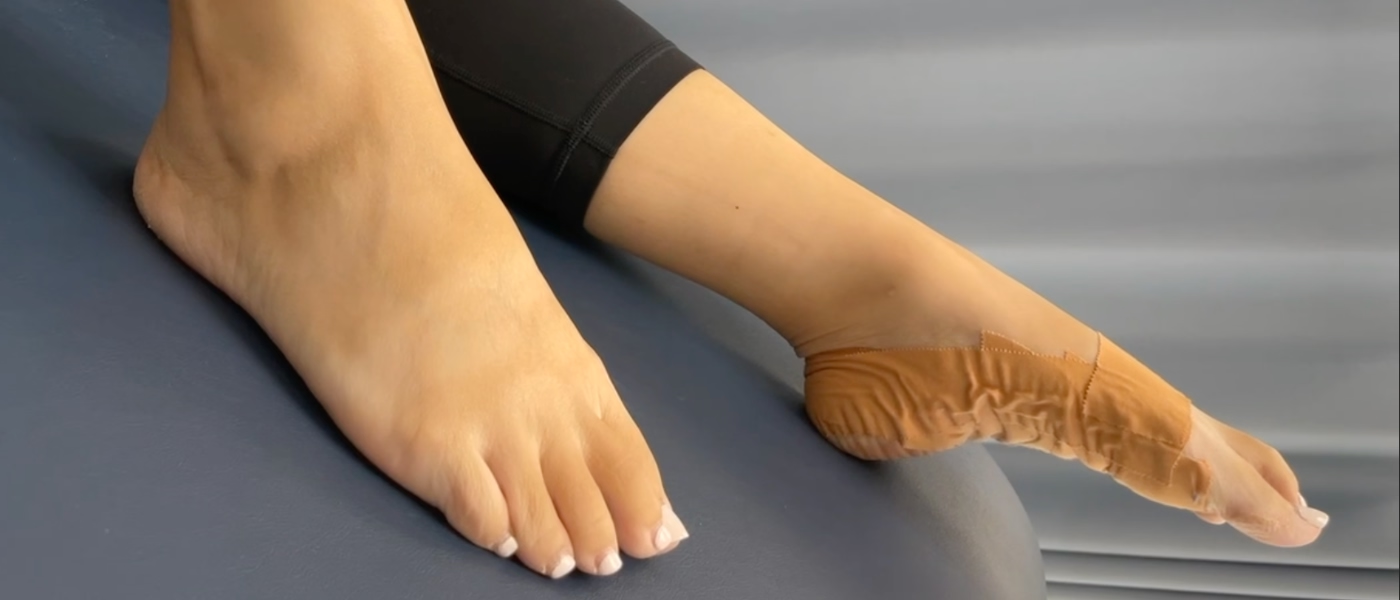
- Taping can cause improvement in the function of the plantar fascia. Calcaneal or low-dye taping can provide short-term (7-10 days) pain relief and limit pronation.
- Additional Physical Therapy Modalities:
- Deep myofascial massage of the plantar fascia, manually or with instrumentation, is thought to promote healing by increasing blood flow to the injured fascia, though most evidence is anecdotal.
- Iontophoresis, which uses electrical pulses to cause absorption of topical medication into the soft tissue beneath the skin, has shown some effectiveness in treating plantar fasciitis.
A suggested treatment plan includes limiting activity, modifying footwear, and initiating a plantar fascial stretching regimen.
Physiotherapy Treatment Approaches
Physiotherapy treatment approaches for plantar fasciitis aim to alleviate pain, improve flexibility, correct biomechanical imbalances, and strengthen the foot. A multimodal, evidence-based approach is recommended.
Here's a breakdown of physiotherapy treatment approaches, as described in the sources:
- Stretching and Mobility:
- Calf stretches: Stretching the Achilles tendon, plantar fascia, and intrinsic muscles of the foot is demonstrated to improve pain. Calf stretches on a step can stretch the gastrocnemius and soleus muscles. Active dorsiflexion less than 10° beyond neutral is indicative of an equinus contracture.
- Plantar fascia-specific stretching: A plantar fascial stretching regimen should be initiated. One exercise involves placing the ball of the foot on the base of a wall, keeping the heel on the ground, and leaning into the wall to stretch the plantar fascia for at least 2 minutes at 10-second intervals on the affected side, at least 2 times daily.
- Towel pick-up: With the toes of the affected foot, pick up a dry paper towel, drop it, and repeat for 2 minutes once daily in the evening.
- Ice roll: Rolling the foot over the top of a frozen water bottle for 2 minutes once daily in the evening.
- Eccentric stretches: Exercises performed under load while the muscle is slowly lengthened, have supportive evidence in improving various tendinopathies.
- Strengthening Exercises:
- Toe curls with a towel and marble pickups can help strengthen foot intrinsic muscles.
- Manual Therapy:
- Counterstrain technique: The osteopathic manipulative treatment technique of counterstrain may provide immediate improvement of plantar fasciitis symptoms. The plantar fascia should be placed in a position of least resistance with passive flexion of the knee and plantar flexion of the ankle and toes, maintained for approximately 90 seconds while monitoring the tenderpoint.
- Deep myofascial massage of the plantar fascia, either manually or with instrumentation, is thought to promote healing by increasing blood flow to the injured fascia.
- Orthotics and Taping:
- Arch supports: Shoe inserts (e.g., silicone heel pads, felt pads, and rubber heel cups) in combination with stretching exercises can provide superior short-term improvement in heel pain compared with stretching alone. Prefabricated and custom foot orthotics can decrease rear foot pain and improve foot function.
- Night splints: Posterior-tension night splints have also shown benefit in patients with chronic plantar fasciitis. Night splints prevent plantar fascia contracture by keeping the foot and ankle in a neutral 90-degree position.
- Taping: Calcaneal or low-dye taping can be used to provide short-term (7-10 days) pain relief. Low dye taping of the foot has been shown to be effective in limiting pronation.
Registered Massage Therapy (RMT) for Plantar Fasciitis
Hands-on manual therapy and soft tissue work are a well-supported part of plantar fasciitis care, and they are a natural fit for treatment by a Registered Massage Therapist. The goal is to reduce tension through the plantar fascia and calf, ease pain, and restore normal movement so that stretching and strengthening can be more effective.
Here's what the research shows about manual and soft tissue therapy for plantar fasciitis:
- Manual therapy improves function and may reduce pain: A systematic review of seven randomized controlled trials found that including manual therapy in treatment produced greater improvements in function — and in pressure-pain sensitivity — from 4 weeks to 6 months compared with interventions such as stretching, strengthening, or modalities alone. The reviewers concluded that manual therapy is clearly associated with improved function and may be associated with pain reduction, and recommended that clinicians use both joint and soft tissue mobilization techniques in conjunction with stretching and strengthening (Fraser et al., Journal of Manual & Manipulative Therapy, 2018).
- Soft tissue massage combined with calf stretching stands out: A controlled study comparing three manual therapy approaches — foot and ankle manipulation with cross-friction massage, cross-friction massage with gastrocsoleus (calf) stretching, and a combination of all techniques — found that cross-friction massage of the plantar fascia combined with stretching of the gastrocsoleus complex produced the greatest overall improvement in pain, disability, and ankle dorsiflexion range of motion (Yelverton, Rama & Zipfel, Health SA Gesondheid, 2019).
How our Registered Massage Therapists help
Building on this evidence, RMT treatment for plantar fasciitis at our clinic typically includes:
- Cross-friction and deep tissue massage of the plantar fascia to address soft tissue restriction and support tissue healing.
- Calf and gastrocsoleus release to reduce the Achilles and calf tightness that increases load on the plantar fascia.
- Soft tissue mobilization paired with the stretching and strengthening you receive in physiotherapy, so the two approaches reinforce one another.
Massage therapy is most effective as part of a broader plan rather than as a stand-alone fix — the research consistently pairs it with stretching and strengthening — and our therapists coordinate treatment with your physiotherapist to get the best result.
Acupuncture and Dry Needling for Plantar Fasciitis
Acupuncture and trigger point dry needling are needle-based therapies that can help relieve heel pain, particularly when it has become stubborn or chronic. They are offered at our clinic as part of a comprehensive plantar fasciitis program, and both have a growing base of research support.
Here's what the research shows:
- Acupuncture can reduce heel pain: A randomized controlled trial with six-month follow-up found that needling the acupoint PC 7 produced significantly greater reductions in morning pain, overall pain, and pressure-pain threshold than a control acupoint, with no serious adverse events. The authors concluded that acupuncture can provide pain relief for patients with plantar fasciitis (Zhang et al., Evidence-Based Complementary and Alternative Medicine, 2011).
- Systematic review support, with caution: A systematic review of acupuncture for plantar heel pain concluded that acupuncture may be a useful treatment, with several higher-quality studies reporting significant benefits — while noting that the overall evidence base is still limited and more rigorous trials are needed (Clark & Tighe, Acupuncture in Medicine, 2012).
- Dry needling relieves pain and restores function: A 2024 systematic review and meta-analysis of 12 randomized controlled trials involving 781 patients found that patients receiving dry needling had significantly lower pain scores and better foot function than those receiving routine treatment alone. The authors reported moderate evidence supporting dry needling for plantar fasciitis, and noted that it may take at least one month to take full effect (Yang et al., Frontiers in Neurology, 2024).
How our team uses acupuncture and dry needling
- Trigger point dry needling targets tight, tender bands in the calf and foot muscles that contribute to heel pain, and is often integrated with physiotherapy.
- Acupuncture can be used to help manage pain, especially in chronic cases or when other conservative measures have plateaued.
- Because needling may take about a month to reach its full effect, it is best started early and continued consistently as part of your overall plan rather than expected to work overnight.
Chiropractic Care for Plantar Fasciitis
Chiropractic care for plantar fasciitis focuses on joint mobilization and manipulation of the foot and ankle, combined with stretching and rehabilitation. It can be a useful part of a multidisciplinary plan, particularly when restricted ankle or foot mobility is contributing to the problem.
Here's what the research shows — including an honest look at its limits:
- Fair short-term evidence for manipulative therapy: A systematic review of manipulative therapy for lower extremity conditions graded the evidence as level B (fair evidence) for short-term treatment of plantar fasciitis, placing it among the better-supported lower-limb applications of manual and manipulative therapy (Brantingham et al., Journal of Manipulative and Physiological Therapeutics, 2012).
- Joint mobilization works best alongside exercise: A randomized controlled trial testing whether adding ankle and midfoot joint mobilization to a program of stretching and ultrasound improved outcomes found no significant added benefit from the mobilization alone — reinforcing that joint techniques should be combined with stretching and a broader rehabilitation program rather than used in isolation (Shashua et al., Journal of Orthopaedic & Sports Physical Therapy, 2015).
- Part of a stepped, conservative plan: A narrative review of randomized controlled trials on conservative therapy for plantar fasciitis — which examined stretching, orthotics, night splints, chiropractic manipulative therapy, ultrasound, and laser therapy — recommended beginning with low-cost, patient-centered treatments such as stretching, over-the-counter orthotics, and patient education, and adding other manual approaches as part of a graduated plan (Stuber & Kristmanson, Journal of the Canadian Chiropractic Association, 2006).
How our chiropractor helps
- Joint mobilization and manipulation of the foot and ankle to address stiffness and improve mechanics, always combined with stretching and exercise.
- Integration with your overall program — the evidence is clearest when manual techniques support, rather than replace, stretching, strengthening, and footwear/orthotic strategies.
- Realistic expectations — chiropractic care is one helpful tool within a multidisciplinary plan, and our team will be candid with you about what it can and cannot do for your specific case.
Prognosis: Healing Timeline for Plantar Fasciitis
The typical prognosis for plantar fasciitis involves a varying healing timeline, with most cases resolving with conservative treatment. Factors such as the chronicity of the condition and the consistency of the rehabilitation efforts influence the recovery period.
Here's what the sources say about the healing timeline for plantar fasciitis:
- Conservative Treatment Success: Approximately 85% to 90% of patients with plantar fasciitis can be successfully treated without surgery.
- Timeline for Improvement: Plantar fasciitis is a self-limiting condition that usually improves within one year regardless of treatment. Most patients respond and are better within 9 months of physiotherapy treatment.
- Acute Cases: With consistent rehabilitation, acute cases typically improve within a 3–6 month period.
- Chronic Cases: Chronic cases may require a more extended timeline, often ranging from 6–12 months or longer, necessitating a multimodal treatment approach. If symptoms have lasted more than 1 year, and the patient has been fully compliant with the multiple daily stretching routine, surgery may be required.
- Factors Influencing Recovery:
- Compliance with treatment: Consistent adherence to rest, stretching, and other conservative measures is critical for a positive outcome.
- Modification of risk factors: Addressing factors such as improper footwear, overuse, and biomechanical imbalances can expedite recovery.
- Appropriate and timely intervention: Initiating treatment early and escalating care as needed can prevent the condition from becoming chronic.
It is important to note that while a majority of patients experience improvement with conservative management, a small percentage may require more invasive interventions such as extracorporeal shock wave therapy or plantar fasciotomy, particularly if symptoms persist for six months or longer.
Preventing Recurrence
To prevent the recurrence of plantar fasciitis, it is important to focus on consistent stretching, supportive footwear, and addressing biomechanical factors.
Here's a detailed approach to preventing plantar fasciitis recurrence based on the sources:
- Night Splints: Use posterior-tension night splints to maintain ankle dorsiflexion and toe extension, which creates a constant mild stretch on the plantar fascia, promoting healing at a functional length. Night splints prevent plantar fascia contracture by keeping the foot and ankle in a neutral 90-degree position during sleep.
- Footwear:
- Wear shoes with adequate arch support and cushioned heels. For individuals with pes planus, a shoe with longitudinal arch support can help decrease pain associated with long periods of standing.
- Modify footwear: avoid flip-flops and sandals.
- Replace athletic shoes. Athletic shoes rapidly lose cushioning properties.
- Avoid walking barefoot on hard surfaces.
- Strengthening Exercises: Strengthening programs are valuable because they can help correct functional risk factors, such as tightness of the Achilles tendon and weakness of intrinsic muscles of the foot.
- Orthotics: Foot orthotics aid in preventing overpronation of the foot and unload tensile forces on the plantar fascia.
- Stretching: Focused stretching of the Achilles tendon, plantar fascia, and intrinsic muscles of the foot has been demonstrated to improve pain.
- Address Biomechanical Factors:
- Leg-length discrepancy, excessive lateral tibial torsion and excessive femoral anteversion can lead to an alteration of running biomechanics, which may increase plantar fascia stress.
- Overpronation of the foot: Foot orthotics are commonly recommended for persons with plantar fasciitis to aid in preventing overpronation of the foot and to unload tensile forces on the plantar fascia.
- Lifestyle Adjustments:
- Weight Management: Obesity is a risk factor for plantar fasciitis, maintaining a healthy weight can reduce the load on the plantar fascia.
- Avoid Overuse: Balance activities to prevent repetitive strain on the plantar fascia.
FAQs
Here are answers to some frequently asked questions about plantar fasciitis, based on the information from the sources:
- "Can plantar fasciitis heal on its own?" Plantar fasciitis is a self-limiting condition that usually improves within one year regardless of treatment. However, the disabling heel pain may cause individuals to seek treatment from their physician. Conservative treatments can help improve symptoms.
- "Is running safe with plantar fasciitis?" Because of the high incidence in runners, plantar fasciitis is postulated to be caused by repetitive microtrauma. Athletes usually have a history of an increase in distance, intensity, or duration of activity. Running may not be safe with plantar fasciitis because sudden increases in weight bearing activity, particularly those involving running, can cause microtrauma to the plantar fascia. It is important to modify activity levels and avoid overuse to prevent repetitive strain on the plantar fascia.
- "Do heel spurs require surgery?" Subcalcaneal spurs on lateral foot radiography do not support the diagnosis of plantar fasciitis, because previous studies show that subcalcaneal spurs are also found in patients without plantar fasciitis. Surgery is only considered if all other methods fail.
- "Which treatment is right for me — physiotherapy, massage, acupuncture, or chiropractic?" For most people the answer is a combination. The research is strongest when these approaches are used together: manual and soft tissue therapy improves function alongside stretching and strengthening, needle-based therapies help relieve stubborn pain, and joint mobilization works best combined with exercise. Our team will assess your foot and build a plan that draws on the services best suited to your case.
Why Choose Our Vaughan Physiotherapy Clinic?
Our approach to plantar fasciitis blends evidence-based care with individualized strategies, delivered by a multidisciplinary team of physiotherapists, registered massage therapists, an acupuncture provider, and a chiropractor working together:
- Comprehensive Assessment: We evaluate foot mechanics, gait patterns, and tissue health to pinpoint the root cause of your heel pain.
- Personalized, Multidisciplinary Treatment Plans: Customized to your activity level, lifestyle, and recovery goals — and drawing on physiotherapy, massage therapy, acupuncture/dry needling, and chiropractic care as appropriate for your case.
- Collaborative Care: Our practitioners coordinate with one another, and partner with podiatrists or orthopedic specialists for complex cases.
- Effective Home Programs: Video-guided stretches and strengthening routines to accelerate healing between visits.
Meet Our Specialized Team
Our physiotherapists have advanced training in foot biomechanics and years of experience treating plantar fasciitis, supported by registered massage therapists and a chiropractor for a well-rounded approach to heel pain. We understand how debilitating heel pain can be and are dedicated to helping you walk, run, and live without limitations.
Book a Specialist Assessment
(Local SEO: "plantar fasciitis physio [City]," "heel pain specialist near me")
Don't let plantar fasciitis sideline you any longer. Contact our Vaughan clinic today:
- Phone: 905-669-1221
- Address: 398 Steeles Ave. W Unit 201, Thornhill, ON L4J 3X6
- Online Booking: Book Your Assessment
Serving Vaughan, Thornhill, Richmond Hill, Markham, and North York. Direct billing available.
Walk without pain!
✅ Reduce morning heel stiffness
✅ Restore flexibility in your feet
✅ Return to running, walking, and daily activities