




Padel player in a backhand ready position wearing a wrist sweatband, a sport that loads the wrist tendons

Wrist Tendinopathy

Pain and weakness in a wrist tendon, such as de Quervain's or ECU tendinopathy, usually from overloading the tendon with gripping or twisting.

Does the thumb side or the pinky side of your wrist ache when you lift your child, grip a pan, turn a screwdriver, or swing a racquet? Does the pain flare with certain twisting movements and then linger afterward? If so, you may be dealing with wrist tendinopathy, an overload problem in one of the tendons that cross the wrist.

At Vaughan Physiotherapy Clinic, we assess and treat wrist tendon pain in new parents, office and trades workers, gardeners, and athletes in racquet, stick, and contact sports. Our aim is not just to calm the pain for a few days, but to find out which tendon is irritated and why, then rebuild its capacity so you can use your hand normally again.

Here is what wrist tendinopathy is, how to recognize it, what it can be confused with, and what the research says about treating it.

What Is Wrist Tendinopathy?

Wrist tendinopathy is pain and reduced function in a tendon at the wrist, usually caused by doing more gripping, twisting, or bending than the tendon is ready for. Tendons at the wrist run through narrow tunnels (called compartments) lined with a slippery sheath. When a tendon or its sheath becomes irritated and thickened, it no longer glides smoothly, and movement becomes painful. When the sheath is involved, you may also hear the term tenosynovitis.

Researchers still debate how much of this is true inflammation and how much is a gradual breakdown of tendon tissue. Tissue studies have found evidence of both, which is part of why the treatment focus is on managing load rather than just calming inflammation (Fakoya et al., 2023).

Common Types of Wrist Tendinopathy

  • De Quervain's tenosynovitis: the most common and best studied type. It affects the two tendons that move the thumb out and back (abductor pollicis longus and extensor pollicis brevis) where they pass through the first compartment on the thumb side of the wrist (Fakoya et al., 2023)
  • Extensor carpi ulnaris (ECU) tendinopathy: pain on the back of the wrist on the pinky side, where the ECU tendon sits in a groove on the ulna. It is common in sports with lots of forearm twisting and side-to-side wrist movement, such as tennis, golf, hockey, and rugby (Pang & Yao, 2017)
  • Flexor carpi radialis (FCR) tendinopathy: pain on the palm side of the wrist near the base of the thumb. It is less common and has very little research behind it (Cordella et al., 2023)
  • Intersection syndrome: pain and sometimes a creaking feeling a few finger widths above the wrist on the thumb side of the forearm, where two groups of tendons cross over each other

Who Gets It?

In a study of more than 3,700 French workers, about 1 in 100 had de Quervain's tenosynovitis: 0.6 percent of men and 2.1 percent of women. Women had roughly five times higher odds, and the risk rose with age. Jobs that involved repeated or sustained bending of the wrist into end positions, or repeated twisting such as driving screws, carried roughly two and a half to three and a half times higher odds (Petit Le Manac'h et al., 2011). It most often appears between the ages of 30 and 50, and it is especially common during pregnancy and after childbirth, when lifting and carrying a baby loads the thumb side of the wrist all day (Fakoya et al., 2023).

Recognizing the Symptoms

Wrist tendinopathy usually builds over days to weeks rather than starting with one clear injury. Common symptoms include:

  • Pain and tenderness on one side of the wrist, often over a specific tendon
  • Pain that sometimes spreads up the forearm or toward the thumb (Fakoya et al., 2023)
  • Mild swelling or a thickened feeling over the sore area
  • Pain with gripping, pinching, or twisting, such as opening jars, turning door handles, or wringing a cloth
  • For de Quervain's: sharp pain when the thumb is tucked into the palm and the wrist is bent toward the pinky side
  • For ECU tendinopathy: a vague ache on the pinky side of the back of the wrist that is worse with pushing the wrist up and toward the pinky side, and often worse with the palm turned up (Pang & Yao, 2017)
  • A feeling of weak grip, mostly because it hurts to squeeze

What Makes It Worse?

  • Sudden increases in hand use: a new job task, a renovation weekend, a jump in tennis or golf, or the first weeks with a new baby
  • End-range wrist positions: repeated or held bending of the wrist to the extremes is linked to de Quervain's in workers (Petit Le Manac'h et al., 2011)
  • Repeated twisting: using screwdrivers, wringing, and turning motions (Petit Le Manac'h et al., 2011)
  • Forearm rotation under load: repeated turning of the palm up and down, especially with a racquet, stick, or club, stresses the ECU tendon (Pang & Yao, 2017)
  • Pregnancy and the months after delivery (Fakoya et al., 2023)
  • Pushing through pain: continuing the same heavy, repetitive task without breaks or changes

What Else Could It Be?

Several other problems cause wrist pain in the same areas and need different care. Part of our assessment is ruling these in or out:

  • Thumb base arthritis: wear in the joint at the base of the thumb causes aching and stiffness close to the de Quervain's area, especially in people over 50
  • Scaphoid fracture: a small wrist bone that can break after a fall on an outstretched hand. Early X-rays can look normal, so a missed fracture is a real risk
  • Superficial radial nerve irritation (Wartenberg syndrome): burning, tingling, or numbness over the back of the thumb, sometimes after a tight watch strap or cast
  • TFCC injury: a tear in the cartilage on the pinky side of the wrist, often after a fall or twisting injury. It is common in the same athletes who get ECU problems (Pang & Yao, 2017)
  • ECU instability: the ECU tendon can slip out of its groove, usually after a sudden twisting injury, sometimes with a painful snap (Pang & Yao, 2017)
  • Ganglion cyst: a fluid-filled lump that can press on nearby tendons
  • Carpal tunnel syndrome or pain referred from the neck, if numbness or tingling is the main complaint
  • Inflammatory arthritis: rheumatoid arthritis and related conditions can cause tendon sheath swelling at the wrist

When to See a Doctor First

See your physician promptly, or go to urgent care, if you have:

  • Wrist pain after a fall onto an outstretched hand, especially with tenderness at the base of the thumb, since a scaphoid fracture needs proper imaging and protection
  • A hot, red, rapidly swelling wrist or tendon sheath, or a red streak up the arm, especially with fever or after a cut, bite, or puncture wound, as tendon sheath infection is an emergency
  • Sudden loss of the ability to straighten the thumb or move the wrist, which may mean a tendon has ruptured
  • Several swollen joints in both hands, or long morning stiffness, which may point to inflammatory arthritis
  • Numbness, tingling, or weakness that is spreading or getting worse
  • Pain at night that does not ease with rest, unexplained weight loss, or a growing lump

Our physiotherapists screen for these signs at your first visit and will coordinate with your physician if imaging or a referral is needed.

Related reading: Related tendon problems in the wrist include De Quervain's tenosynovitis, extensor tendonitis and flexor tendonitis.

Start Your Journey to 

‍Better Health Today

Recover faster, move better, and feel stronger with expert physiotherapy. Our team is here to guide you every step of the way.

Why Physiotherapy Is Essential

Wrist tendinopathy is a load problem. A tendon is being asked to grip, twist, and bend more than it can currently handle, and pain is the warning light. Rest, a brace, or an injection can quiet the pain, but if the tendon is never rebuilt and daily load never changes, symptoms often return.

A European consensus guideline on de Quervain's tenosynovitis, agreed by 35 hand therapists, hand surgeons, and rehabilitation physicians, says patient education and activity advice should always be part of treatment, combined with splinting, anti-inflammatory medication, or a corticosteroid injection, with surgery kept for cases that do not respond. The right choice depends on severity, duration, and what has already been tried (Huisstede et al., 2014).

Physiotherapy addresses the main drivers:

  • Which tendon is involved: a hands-on exam that also rules out joint, bone, and nerve problems
  • How much load the tendon is getting: adjusting how you lift, grip, type, play, or care for a baby so the tendon can settle without you stopping everything
  • Protecting the tendon early: splinting and taping when needed, and coordinating with your physician if an injection is a good option
  • Rebuilding capacity: a graded strengthening program for the wrist, thumb, and forearm so the tendon tolerates normal life again

Your Treatment Plan at Vaughan Physiotherapy Clinic

Phase 1: Assessment and Diagnosis (Visit 1)

Your first visit focuses on finding the exact source of pain. A full assessment includes:

  • History: when the pain started, what you do with your hands at work, at home, and in sport, any recent pregnancy or new baby, and other health conditions
  • Hands-on examination: pressing along each tendon and its compartment, and checking the thumb base joint, the small wrist bones, and the nerves
  • Special tests: for de Quervain's, tests such as the Finkelstein test and the WHAT test (wrist hyperflexion and abduction of the thumb) stretch or load the first compartment tendons. Each has strengths and weaknesses, so we use them together with the rest of the exam rather than relying on one test (Fakoya et al., 2023)
  • Resisted movement tests: for ECU tendinopathy, pain with resisted wrist extension toward the pinky side is typical, and specific tests help separate tendon pain from problems inside the joint (Pang & Yao, 2017)
  • Strength, movement, and task review: grip and pinch strength, wrist and thumb range, forearm rotation, and how you perform the tasks that hurt

Imaging is not usually needed. If we suspect a fracture, tendon rupture, ECU instability, or cartilage tear, we will refer you to your physician for imaging. Scans must be read alongside symptoms: up to 75 percent of wrists without pain show ECU tendon changes on ultrasound (Pang & Yao, 2017).

Phase 2: Settling Pain and Protecting the Tendon (Weeks 1 to 3)

Load modification comes first. The goal is to reduce the specific movements that irritate the tendon, not to stop using your hand. This may include:

  • Changing grips: lifting a baby with palms up and wrists straight, and using larger handles
  • Avoiding end-range positions: limiting repeated or held wrist bending and twisting, which are linked to de Quervain's in workers (Petit Le Manac'h et al., 2011)
  • Pacing: breaking up long gripping or typing sessions and temporarily reducing racquet, stick, or gym volume

Splinting rests the irritated tendon. For de Quervain's, this is usually a thumb spica splint that holds the thumb and wrist still (Fakoya et al., 2023). For ECU tendinopathy, a short period of wrist immobilization is often used before rehabilitation begins (Pang & Yao, 2017). We fit splints so they protect the tendon without making the rest of the hand stiff.

Working with your physician on injections

For de Quervain's, a corticosteroid injection into the first compartment is a well-established option. A systematic review of six studies found that hand therapy and injections both improved pain and function. However, combining a splint with an injection led to significantly more successful outcomes than either a splint alone or an injection alone (Cavaleri et al., 2016). If your symptoms are severe or not settling, we will discuss this with you and your family doctor, then continue splinting and rehab alongside it.

Other pain relief options include ice, taping, and modalities. Ultrasound and low-level laser were the most promising modalities for de Quervain's in a systematic review, but only 2 of 15 studies had a low risk of bias (Ferrara et al., 2020), so we use them as add-ons only.

Phase 3: Rebuilding Tendon Capacity (Weeks 3 to 10)

Progressive tendon loading
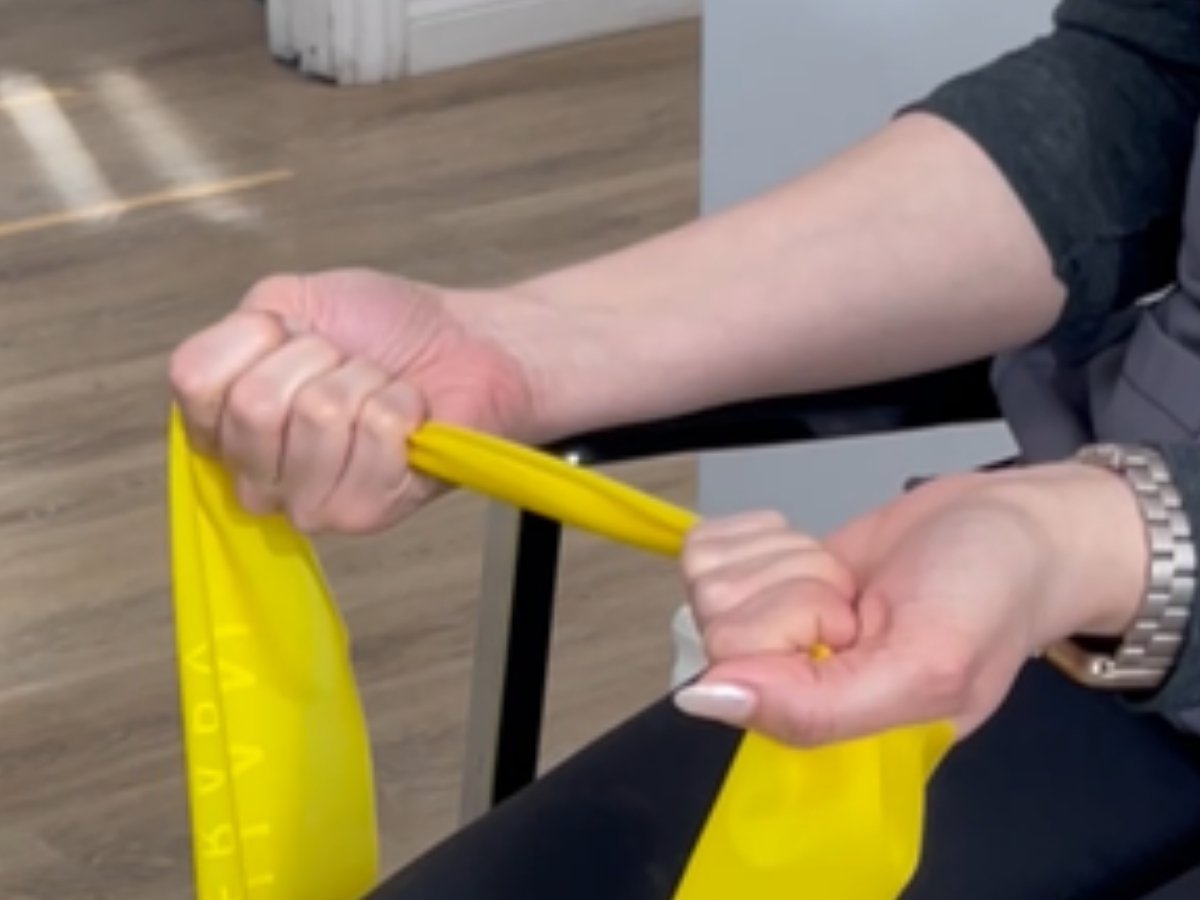
Person doing a wrist strengthening exercise with a resistance band
Resistance band work for the wrist and thumb lets the tendon take on load gradually, starting light and adding resistance as pain allows.

Once pain is settling, the focus shifts to strength. A 2023 systematic review of 11 studies found that exercise for hand and wrist tendinopathy was always combined with other treatments and patients often improved, but the studies could not show how much came from the exercise itself. Almost all studied de Quervain's, and ECU and FCR tendinopathy have barely been studied (Cordella et al., 2023). Exercise is a sensible, low-risk part of care, but the best dose is not yet known.

Your program is matched to the tendon involved and may include:

  • Isometric holds: pressing the thumb or wrist gently against resistance without moving, often a comfortable starting point when the tendon is irritable
  • Slow controlled strengthening: lifting and lowering light weights or bands with the wrist and thumb. Eccentric (lowering) exercise was the most commonly tested type in the research (Cordella et al., 2023)
  • Forearm rotation strength: turning the palm up and down with a light hammer or bar, especially for ECU tendinopathy
  • Grip and pinch work: putty, soft balls, and grip trainers, progressed in resistance over time

Mild discomfort during exercise is usually fine if it settles within a day. We adjust the program at each visit.

Manual therapy

Joint mobilization, mobilization with movement, and forearm soft tissue work can ease pain and stiffness so you can keep exercising. Mobilization with movement was used in three of the studies in the 2023 review, always alongside other treatments (Cordella et al., 2023), so its individual effect is not yet clear.

Phase 4: Return to Full Activity (Weeks 6 to 12+)

  • Task-specific training: practising the real movements you need, such as lifting a toddler, carrying groceries, or using tools, with good wrist position
  • Sport-specific progressions: gradual return to racquet, stick, golf, or gym work while symptoms stay settled
  • Technique and equipment review: grip size, racquet or club setup, and wrist position during the movements that load the tendon
  • A maintenance program: a few key exercises to keep the tendon strong after discharge

Beyond Physiotherapy: Complementary Care for Wrist Tendinopathy

Load management, splinting, and strengthening form the core of care, and for de Quervain's, injection plus splinting has the clearest support. Some patients also benefit from other services at our clinic to ease pain so they can stay consistent with rehab. Here is an honest summary of the evidence for each.

How Acupuncture and Dry Needling Can Help

Acupuncture and dry needling use fine needles to reduce pain and ease tight, tender muscles in the forearm and hand.

  • What the evidence shows: in one small randomized trial of 30 people with de Quervain's tenosynovitis, five sessions of acupuncture were compared with a single corticosteroid injection. Both groups had large improvements in pain and function by six weeks. The injection group did slightly better, and the authors suggested acupuncture could be considered as an alternative option (Hadianfard et al., 2014). This was a small, short trial with moderate quality, and we found no trials of needling for ECU or FCR tendinopathy
  • Where it fits: a short-term option to settle pain, especially if you prefer to avoid an injection, alongside load changes and exercise
  • Safety: generally very safe. Minor bruising or soreness at needle sites is the most common side effect. Needling is avoided over areas of infection or broken skin

How Massage Therapy Can Help

Registered massage therapy focuses on the soft tissues of the forearm, wrist, and hand.

  • What the evidence shows: we did not find any trials testing massage therapy on its own for wrist tendinopathy. Soft tissue mobilization appears in some of the studies in the 2023 exercise review, but always combined with other treatments, so its own effect is unknown (Cordella et al., 2023)
  • Where it fits: for comfort and for forearm, neck, and shoulder tension from repetitive work or caring for a baby, as a supportive add-on only
  • Safety: very safe. Direct deep pressure over a very irritated tendon is avoided early on. Some temporary soreness afterward is normal

How Chiropractic and Joint Manipulation Can Help

Chiropractic care for the wrist uses joint mobilization and, where suitable, gentle manipulation of the wrist, thumb, forearm, and elbow joints.

  • What the evidence shows: we did not find peer-reviewed trials of chiropractic adjustment for wrist tendinopathy. The closest indirect evidence is mobilization with movement, which has been used in a few de Quervain's studies, but only together with other treatments (Cordella et al., 2023)
  • Where it fits: for stiffness in the wrist, thumb base, or forearm that may be changing how load passes through the tendons, combined with strengthening and load management
  • Safety: generally safe. It is not appropriate over a suspected fracture, tendon rupture, ECU instability, infection, or a flare of inflammatory arthritis

Whichever combination you and your clinician choose, these treatments share one purpose: settling symptoms so you can keep using your hand while the real fix, a stronger tendon and smarter daily loading, takes hold.

When Is Surgery Considered?

Most people with wrist tendinopathy do not need surgery. For de Quervain's tenosynovitis, surgery is usually considered only after about six months of well-run non-surgical care has not helped. The operation releases the roof of the first compartment so the tendons can glide freely. Some people have a thin wall (septum) splitting the compartment into two tunnels, which can make injections less effective and must be fully released during surgery (Fakoya et al., 2023). After surgery, a thumb splint is usually worn for one to two weeks, followed by exercise (Fakoya et al., 2023).

For ECU tendinopathy that does not respond to conservative care, surgeons may clean up the damaged tendon and release or repair its sheath. If the tendon is slipping out of its groove (instability), treatment is different and may involve 6 to 8 weeks of immobilization or surgical repair (Pang & Yao, 2017). If you do have surgery, we follow your surgeon's protocol closely during rehab.

How Long Will It Take?

Recovery depends on which tendon is involved, how long you have had symptoms, and how much hand use your work, family life, and sport demand. There is little reliable data on recovery time for wrist tendinopathy in general. In the acupuncture versus injection trial, both groups had made large gains in pain and function by six weeks (Hadianfard et al., 2014), and expert guidance links the choice and intensity of treatment to how severe and long-lasting the problem is (Huisstede et al., 2014).

In our experience, many people notice less pain within a few weeks once the tendon is protected and load is adjusted, with full return to heavy gripping or sport over the following one to three months. Long-standing cases can take longer.

Prevention and Long-Term Management

  • Build up gradually: avoid big jumps in gripping, typing, tool use, or racquet and stick training
  • Keep the wrist near neutral: avoid long periods with the wrist bent hard to one side, especially while gripping or twisting
  • Use your whole hand and arm: lift with palms up and elbows close, and avoid pinching heavy objects between the thumb and fingers
  • Check your set-up: grip size, tool handles, mouse and keyboard, and racquet or club fit, with regular micro-breaks
  • Keep your forearms strong: continue a few wrist, thumb, and grip exercises two to three times a week
  • Act early: if the ache returns, go back to your splint, load changes, and exercises straight away rather than pushing through

Frequently Asked Questions

Is wrist tendinopathy the same as tendonitis?

The terms are often used interchangeably. "Tendonitis" suggests inflammation, but wrist tendon problems involve a mix of inflammation and gradual tissue change (Fakoya et al., 2023), so "tendinopathy" is the more accurate term. Treatment is the same either way.

Why does my wrist hurt so much after having a baby?

De Quervain's tenosynovitis is common during pregnancy and after childbirth (Fakoya et al., 2023). Lifting and holding a baby with the thumb spread wide and the wrist bent puts constant load on the thumb tendons, often at a time when you are tired and have little chance to rest your hands. Small changes in how you lift and hold your baby, plus a splint and exercises, often make a big difference.

Should I wear a brace?

A splint often helps early on, especially for de Quervain's, and works best combined with other treatment (Cavaleri et al., 2016; Huisstede et al., 2014). We usually suggest wearing it for aggravating tasks and at night for a set period, then weaning off as strength improves.

Do I need a cortisone injection?

Not always. Many people improve with load changes, splinting, and exercise. For de Quervain's that is severe or not settling, an injection plus a splint works better than either alone (Cavaleri et al., 2016). Injections are given by a physician, and we can help you decide whether to ask about one.

Can I keep playing tennis, golf, or hockey?

Often yes, at a reduced level. We will help you find a training load that keeps you active without flaring the tendon, and may adjust your grip, equipment, or technique. If the ECU tendon is unstable or snapping out of place, a period of protection comes first (Pang & Yao, 2017).

Can acupuncture, massage, or chiropractic replace exercise and load management?

No. Load management, splinting when needed, and progressive strengthening are the foundation, and for de Quervain's, injection plus splinting has the strongest support. Acupuncture has one small positive trial (Hadianfard et al., 2014), while massage and chiropractic have not been studied on their own for this condition. They are best used as short-term supports to ease pain and tension while you rebuild.

Our Specialized Approach at Vaughan Physiotherapy Clinic

✓ Precise diagnosis: we identify which wrist tendon is involved and rule out fractures, nerve, and joint problems

✓ Practical load changes: real-world advice for parents, desk workers, trades, and athletes so the tendon can settle without stopping your life

✓ Splinting and taping: fitted and adjusted in clinic to protect the tendon without stiffening the hand

✓ Progressive strengthening: a simple, graded home program for the wrist, thumb, grip, and forearm

✓ Integrated care: physiotherapy, massage therapy, acupuncture, and chiropractic under one roof when they add value

✓ Team approach: coordination with your family doctor when an injection, imaging, or a surgical opinion is needed

Take the First Step Toward a Strong, Pain-Free Wrist

Wrist pain does not have to limit your work, sport, or family life. Our team at Vaughan Physiotherapy Clinic helps patients from Thornhill, Vaughan, North York, Richmond Hill, and surrounding communities get back to full use of their hands with evidence-based, hands-on care.

Book your assessment today:

📞 Phone: 905-669-1221

📍 Location: 398 Steeles Ave W #201, Thornhill, ON L4J 6X3

🌐 Online Booking: www.vaughanphysiotherapy.com

References

Cavaleri R, Schabrun SM, Te M, Chipchase LS. Hand therapy versus corticosteroid injections in the treatment of de Quervain's disease: a systematic review and meta-analysis. Journal of Hand Therapy. 2016;29(1):3-11. doi:10.1016/j.jht.2015.10.004

Cordella M, Pellicciari L, Scopece F, Fornaro R, Giovannico G, Lanfranchi E. Evidence for exercise therapy in patients with hand and wrist tendinopathy is limited: a systematic review. Journal of Hand Therapy. 2023;36(4):940-955. doi:10.1016/j.jht.2023.08.016

Fakoya AO, Tarzian M, Sabater EL, Burgos DM, Maldonado Marty GI. De Quervain's disease: a discourse on etiology, diagnosis, and treatment. Cureus. 2023;15(4):e38079. doi:10.7759/cureus.38079

Ferrara PE, Codazza S, Cerulli S, Maccauro G, Ferriero G, Ronconi G. Physical modalities for the conservative treatment of wrist and hand's tenosynovitis: a systematic review. Seminars in Arthritis and Rheumatism. 2020;50(6):1280-1290. doi:10.1016/j.semarthrit.2020.08.006

Hadianfard M, Ashraf A, Fakheri M, Nasiri A. Efficacy of acupuncture versus local methylprednisolone acetate injection in de Quervain's tenosynovitis: a randomized controlled trial. Journal of Acupuncture and Meridian Studies. 2014;7(3):115-121. doi:10.1016/j.jams.2013.10.003

Huisstede BM, Coert JH, Fridén J, Hoogvliet P. Consensus on a multidisciplinary treatment guideline for de Quervain disease: results from the European HANDGUIDE study. Physical Therapy. 2014;94(8):1095-1110. doi:10.2522/ptj.20130069

Pang EQ, Yao J. Ulnar-sided wrist pain in the athlete (TFCC/DRUJ/ECU). Current Reviews in Musculoskeletal Medicine. 2017;10(1):53-61. doi:10.1007/s12178-017-9384-9

Petit Le Manac'h A, Roquelaure Y, Ha C, et al. Risk factors for de Quervain's disease in a French working population. Scandinavian Journal of Work, Environment & Health. 2011;37(5):394-401. doi:10.5271/sjweh.3160

Disclaimer: This article is for educational purposes only and does not replace professional medical advice. Wrist pain can have several causes, including fractures, tendon rupture or instability, cartilage tears, nerve irritation, infection, and inflammatory arthritis. Always consult a qualified healthcare provider for diagnosis and treatment specific to your condition.

Team

Condition guide

Wrist Tendinopathy

Pain and weakness in a wrist tendon, such as de Quervain's or ECU tendinopathy, usually from overloading the tendon with gripping or twisting.

Padel player in a backhand ready position wearing a wrist sweatband, a sport that loads the wrist tendonsWrist Tendinopathy

Does the thumb side or the pinky side of your wrist ache when you lift your child, grip a pan, turn a screwdriver, or swing a racquet? Does the pain flare with certain twisting movements and then linger afterward? If so, you may be dealing with wrist tendinopathy, an overload problem in one of the tendons that cross the wrist.

At Vaughan Physiotherapy Clinic, we assess and treat wrist tendon pain in new parents, office and trades workers, gardeners, and athletes in racquet, stick, and contact sports. Our aim is not just to calm the pain for a few days, but to find out which tendon is irritated and why, then rebuild its capacity so you can use your hand normally again.

Here is what wrist tendinopathy is, how to recognize it, what it can be confused with, and what the research says about treating it.

What Is Wrist Tendinopathy?

Wrist tendinopathy is pain and reduced function in a tendon at the wrist, usually caused by doing more gripping, twisting, or bending than the tendon is ready for. Tendons at the wrist run through narrow tunnels (called compartments) lined with a slippery sheath. When a tendon or its sheath becomes irritated and thickened, it no longer glides smoothly, and movement becomes painful. When the sheath is involved, you may also hear the term tenosynovitis.

Researchers still debate how much of this is true inflammation and how much is a gradual breakdown of tendon tissue. Tissue studies have found evidence of both, which is part of why the treatment focus is on managing load rather than just calming inflammation (Fakoya et al., 2023).

Common Types of Wrist Tendinopathy

  • De Quervain's tenosynovitis: the most common and best studied type. It affects the two tendons that move the thumb out and back (abductor pollicis longus and extensor pollicis brevis) where they pass through the first compartment on the thumb side of the wrist (Fakoya et al., 2023)
  • Extensor carpi ulnaris (ECU) tendinopathy: pain on the back of the wrist on the pinky side, where the ECU tendon sits in a groove on the ulna. It is common in sports with lots of forearm twisting and side-to-side wrist movement, such as tennis, golf, hockey, and rugby (Pang & Yao, 2017)
  • Flexor carpi radialis (FCR) tendinopathy: pain on the palm side of the wrist near the base of the thumb. It is less common and has very little research behind it (Cordella et al., 2023)
  • Intersection syndrome: pain and sometimes a creaking feeling a few finger widths above the wrist on the thumb side of the forearm, where two groups of tendons cross over each other

Who Gets It?

In a study of more than 3,700 French workers, about 1 in 100 had de Quervain's tenosynovitis: 0.6 percent of men and 2.1 percent of women. Women had roughly five times higher odds, and the risk rose with age. Jobs that involved repeated or sustained bending of the wrist into end positions, or repeated twisting such as driving screws, carried roughly two and a half to three and a half times higher odds (Petit Le Manac'h et al., 2011). It most often appears between the ages of 30 and 50, and it is especially common during pregnancy and after childbirth, when lifting and carrying a baby loads the thumb side of the wrist all day (Fakoya et al., 2023).

Recognizing the Symptoms

Wrist tendinopathy usually builds over days to weeks rather than starting with one clear injury. Common symptoms include:

  • Pain and tenderness on one side of the wrist, often over a specific tendon
  • Pain that sometimes spreads up the forearm or toward the thumb (Fakoya et al., 2023)
  • Mild swelling or a thickened feeling over the sore area
  • Pain with gripping, pinching, or twisting, such as opening jars, turning door handles, or wringing a cloth
  • For de Quervain's: sharp pain when the thumb is tucked into the palm and the wrist is bent toward the pinky side
  • For ECU tendinopathy: a vague ache on the pinky side of the back of the wrist that is worse with pushing the wrist up and toward the pinky side, and often worse with the palm turned up (Pang & Yao, 2017)
  • A feeling of weak grip, mostly because it hurts to squeeze

What Makes It Worse?

  • Sudden increases in hand use: a new job task, a renovation weekend, a jump in tennis or golf, or the first weeks with a new baby
  • End-range wrist positions: repeated or held bending of the wrist to the extremes is linked to de Quervain's in workers (Petit Le Manac'h et al., 2011)
  • Repeated twisting: using screwdrivers, wringing, and turning motions (Petit Le Manac'h et al., 2011)
  • Forearm rotation under load: repeated turning of the palm up and down, especially with a racquet, stick, or club, stresses the ECU tendon (Pang & Yao, 2017)
  • Pregnancy and the months after delivery (Fakoya et al., 2023)
  • Pushing through pain: continuing the same heavy, repetitive task without breaks or changes

What Else Could It Be?

Several other problems cause wrist pain in the same areas and need different care. Part of our assessment is ruling these in or out:

  • Thumb base arthritis: wear in the joint at the base of the thumb causes aching and stiffness close to the de Quervain's area, especially in people over 50
  • Scaphoid fracture: a small wrist bone that can break after a fall on an outstretched hand. Early X-rays can look normal, so a missed fracture is a real risk
  • Superficial radial nerve irritation (Wartenberg syndrome): burning, tingling, or numbness over the back of the thumb, sometimes after a tight watch strap or cast
  • TFCC injury: a tear in the cartilage on the pinky side of the wrist, often after a fall or twisting injury. It is common in the same athletes who get ECU problems (Pang & Yao, 2017)
  • ECU instability: the ECU tendon can slip out of its groove, usually after a sudden twisting injury, sometimes with a painful snap (Pang & Yao, 2017)
  • Ganglion cyst: a fluid-filled lump that can press on nearby tendons
  • Carpal tunnel syndrome or pain referred from the neck, if numbness or tingling is the main complaint
  • Inflammatory arthritis: rheumatoid arthritis and related conditions can cause tendon sheath swelling at the wrist

When to See a Doctor First

See your physician promptly, or go to urgent care, if you have:

  • Wrist pain after a fall onto an outstretched hand, especially with tenderness at the base of the thumb, since a scaphoid fracture needs proper imaging and protection
  • A hot, red, rapidly swelling wrist or tendon sheath, or a red streak up the arm, especially with fever or after a cut, bite, or puncture wound, as tendon sheath infection is an emergency
  • Sudden loss of the ability to straighten the thumb or move the wrist, which may mean a tendon has ruptured
  • Several swollen joints in both hands, or long morning stiffness, which may point to inflammatory arthritis
  • Numbness, tingling, or weakness that is spreading or getting worse
  • Pain at night that does not ease with rest, unexplained weight loss, or a growing lump

Our physiotherapists screen for these signs at your first visit and will coordinate with your physician if imaging or a referral is needed.

Related reading: Related tendon problems in the wrist include De Quervain's tenosynovitis, extensor tendonitis and flexor tendonitis.

Why Physiotherapy Is Essential

Wrist tendinopathy is a load problem. A tendon is being asked to grip, twist, and bend more than it can currently handle, and pain is the warning light. Rest, a brace, or an injection can quiet the pain, but if the tendon is never rebuilt and daily load never changes, symptoms often return.

A European consensus guideline on de Quervain's tenosynovitis, agreed by 35 hand therapists, hand surgeons, and rehabilitation physicians, says patient education and activity advice should always be part of treatment, combined with splinting, anti-inflammatory medication, or a corticosteroid injection, with surgery kept for cases that do not respond. The right choice depends on severity, duration, and what has already been tried (Huisstede et al., 2014).

Physiotherapy addresses the main drivers:

  • Which tendon is involved: a hands-on exam that also rules out joint, bone, and nerve problems
  • How much load the tendon is getting: adjusting how you lift, grip, type, play, or care for a baby so the tendon can settle without you stopping everything
  • Protecting the tendon early: splinting and taping when needed, and coordinating with your physician if an injection is a good option
  • Rebuilding capacity: a graded strengthening program for the wrist, thumb, and forearm so the tendon tolerates normal life again

Your Treatment Plan at Vaughan Physiotherapy Clinic

Phase 1: Assessment and Diagnosis (Visit 1)

Your first visit focuses on finding the exact source of pain. A full assessment includes:

  • History: when the pain started, what you do with your hands at work, at home, and in sport, any recent pregnancy or new baby, and other health conditions
  • Hands-on examination: pressing along each tendon and its compartment, and checking the thumb base joint, the small wrist bones, and the nerves
  • Special tests: for de Quervain's, tests such as the Finkelstein test and the WHAT test (wrist hyperflexion and abduction of the thumb) stretch or load the first compartment tendons. Each has strengths and weaknesses, so we use them together with the rest of the exam rather than relying on one test (Fakoya et al., 2023)
  • Resisted movement tests: for ECU tendinopathy, pain with resisted wrist extension toward the pinky side is typical, and specific tests help separate tendon pain from problems inside the joint (Pang & Yao, 2017)
  • Strength, movement, and task review: grip and pinch strength, wrist and thumb range, forearm rotation, and how you perform the tasks that hurt

Imaging is not usually needed. If we suspect a fracture, tendon rupture, ECU instability, or cartilage tear, we will refer you to your physician for imaging. Scans must be read alongside symptoms: up to 75 percent of wrists without pain show ECU tendon changes on ultrasound (Pang & Yao, 2017).

Phase 2: Settling Pain and Protecting the Tendon (Weeks 1 to 3)

Load modification comes first. The goal is to reduce the specific movements that irritate the tendon, not to stop using your hand. This may include:

  • Changing grips: lifting a baby with palms up and wrists straight, and using larger handles
  • Avoiding end-range positions: limiting repeated or held wrist bending and twisting, which are linked to de Quervain's in workers (Petit Le Manac'h et al., 2011)
  • Pacing: breaking up long gripping or typing sessions and temporarily reducing racquet, stick, or gym volume

Splinting rests the irritated tendon. For de Quervain's, this is usually a thumb spica splint that holds the thumb and wrist still (Fakoya et al., 2023). For ECU tendinopathy, a short period of wrist immobilization is often used before rehabilitation begins (Pang & Yao, 2017). We fit splints so they protect the tendon without making the rest of the hand stiff.

Working with your physician on injections

For de Quervain's, a corticosteroid injection into the first compartment is a well-established option. A systematic review of six studies found that hand therapy and injections both improved pain and function. However, combining a splint with an injection led to significantly more successful outcomes than either a splint alone or an injection alone (Cavaleri et al., 2016). If your symptoms are severe or not settling, we will discuss this with you and your family doctor, then continue splinting and rehab alongside it.

Other pain relief options include ice, taping, and modalities. Ultrasound and low-level laser were the most promising modalities for de Quervain's in a systematic review, but only 2 of 15 studies had a low risk of bias (Ferrara et al., 2020), so we use them as add-ons only.

Phase 3: Rebuilding Tendon Capacity (Weeks 3 to 10)

Progressive tendon loading

Person doing a wrist strengthening exercise with a resistance band
Resistance band work for the wrist and thumb lets the tendon take on load gradually, starting light and adding resistance as pain allows.

Once pain is settling, the focus shifts to strength. A 2023 systematic review of 11 studies found that exercise for hand and wrist tendinopathy was always combined with other treatments and patients often improved, but the studies could not show how much came from the exercise itself. Almost all studied de Quervain's, and ECU and FCR tendinopathy have barely been studied (Cordella et al., 2023). Exercise is a sensible, low-risk part of care, but the best dose is not yet known.

Your program is matched to the tendon involved and may include:

  • Isometric holds: pressing the thumb or wrist gently against resistance without moving, often a comfortable starting point when the tendon is irritable
  • Slow controlled strengthening: lifting and lowering light weights or bands with the wrist and thumb. Eccentric (lowering) exercise was the most commonly tested type in the research (Cordella et al., 2023)
  • Forearm rotation strength: turning the palm up and down with a light hammer or bar, especially for ECU tendinopathy
  • Grip and pinch work: putty, soft balls, and grip trainers, progressed in resistance over time

Mild discomfort during exercise is usually fine if it settles within a day. We adjust the program at each visit.

Manual therapy

Joint mobilization, mobilization with movement, and forearm soft tissue work can ease pain and stiffness so you can keep exercising. Mobilization with movement was used in three of the studies in the 2023 review, always alongside other treatments (Cordella et al., 2023), so its individual effect is not yet clear.

Phase 4: Return to Full Activity (Weeks 6 to 12+)

  • Task-specific training: practising the real movements you need, such as lifting a toddler, carrying groceries, or using tools, with good wrist position
  • Sport-specific progressions: gradual return to racquet, stick, golf, or gym work while symptoms stay settled
  • Technique and equipment review: grip size, racquet or club setup, and wrist position during the movements that load the tendon
  • A maintenance program: a few key exercises to keep the tendon strong after discharge

Beyond Physiotherapy: Complementary Care for Wrist Tendinopathy

Load management, splinting, and strengthening form the core of care, and for de Quervain's, injection plus splinting has the clearest support. Some patients also benefit from other services at our clinic to ease pain so they can stay consistent with rehab. Here is an honest summary of the evidence for each.

How Acupuncture and Dry Needling Can Help

Acupuncture and dry needling use fine needles to reduce pain and ease tight, tender muscles in the forearm and hand.

  • What the evidence shows: in one small randomized trial of 30 people with de Quervain's tenosynovitis, five sessions of acupuncture were compared with a single corticosteroid injection. Both groups had large improvements in pain and function by six weeks. The injection group did slightly better, and the authors suggested acupuncture could be considered as an alternative option (Hadianfard et al., 2014). This was a small, short trial with moderate quality, and we found no trials of needling for ECU or FCR tendinopathy
  • Where it fits: a short-term option to settle pain, especially if you prefer to avoid an injection, alongside load changes and exercise
  • Safety: generally very safe. Minor bruising or soreness at needle sites is the most common side effect. Needling is avoided over areas of infection or broken skin

How Massage Therapy Can Help

Registered massage therapy focuses on the soft tissues of the forearm, wrist, and hand.

  • What the evidence shows: we did not find any trials testing massage therapy on its own for wrist tendinopathy. Soft tissue mobilization appears in some of the studies in the 2023 exercise review, but always combined with other treatments, so its own effect is unknown (Cordella et al., 2023)
  • Where it fits: for comfort and for forearm, neck, and shoulder tension from repetitive work or caring for a baby, as a supportive add-on only
  • Safety: very safe. Direct deep pressure over a very irritated tendon is avoided early on. Some temporary soreness afterward is normal

How Chiropractic and Joint Manipulation Can Help

Chiropractic care for the wrist uses joint mobilization and, where suitable, gentle manipulation of the wrist, thumb, forearm, and elbow joints.

  • What the evidence shows: we did not find peer-reviewed trials of chiropractic adjustment for wrist tendinopathy. The closest indirect evidence is mobilization with movement, which has been used in a few de Quervain's studies, but only together with other treatments (Cordella et al., 2023)
  • Where it fits: for stiffness in the wrist, thumb base, or forearm that may be changing how load passes through the tendons, combined with strengthening and load management
  • Safety: generally safe. It is not appropriate over a suspected fracture, tendon rupture, ECU instability, infection, or a flare of inflammatory arthritis

Whichever combination you and your clinician choose, these treatments share one purpose: settling symptoms so you can keep using your hand while the real fix, a stronger tendon and smarter daily loading, takes hold.

When Is Surgery Considered?

Most people with wrist tendinopathy do not need surgery. For de Quervain's tenosynovitis, surgery is usually considered only after about six months of well-run non-surgical care has not helped. The operation releases the roof of the first compartment so the tendons can glide freely. Some people have a thin wall (septum) splitting the compartment into two tunnels, which can make injections less effective and must be fully released during surgery (Fakoya et al., 2023). After surgery, a thumb splint is usually worn for one to two weeks, followed by exercise (Fakoya et al., 2023).

For ECU tendinopathy that does not respond to conservative care, surgeons may clean up the damaged tendon and release or repair its sheath. If the tendon is slipping out of its groove (instability), treatment is different and may involve 6 to 8 weeks of immobilization or surgical repair (Pang & Yao, 2017). If you do have surgery, we follow your surgeon's protocol closely during rehab.

How Long Will It Take?

Recovery depends on which tendon is involved, how long you have had symptoms, and how much hand use your work, family life, and sport demand. There is little reliable data on recovery time for wrist tendinopathy in general. In the acupuncture versus injection trial, both groups had made large gains in pain and function by six weeks (Hadianfard et al., 2014), and expert guidance links the choice and intensity of treatment to how severe and long-lasting the problem is (Huisstede et al., 2014).

In our experience, many people notice less pain within a few weeks once the tendon is protected and load is adjusted, with full return to heavy gripping or sport over the following one to three months. Long-standing cases can take longer.

Prevention and Long-Term Management

  • Build up gradually: avoid big jumps in gripping, typing, tool use, or racquet and stick training
  • Keep the wrist near neutral: avoid long periods with the wrist bent hard to one side, especially while gripping or twisting
  • Use your whole hand and arm: lift with palms up and elbows close, and avoid pinching heavy objects between the thumb and fingers
  • Check your set-up: grip size, tool handles, mouse and keyboard, and racquet or club fit, with regular micro-breaks
  • Keep your forearms strong: continue a few wrist, thumb, and grip exercises two to three times a week
  • Act early: if the ache returns, go back to your splint, load changes, and exercises straight away rather than pushing through

Frequently Asked Questions

Is wrist tendinopathy the same as tendonitis?

The terms are often used interchangeably. "Tendonitis" suggests inflammation, but wrist tendon problems involve a mix of inflammation and gradual tissue change (Fakoya et al., 2023), so "tendinopathy" is the more accurate term. Treatment is the same either way.

Why does my wrist hurt so much after having a baby?

De Quervain's tenosynovitis is common during pregnancy and after childbirth (Fakoya et al., 2023). Lifting and holding a baby with the thumb spread wide and the wrist bent puts constant load on the thumb tendons, often at a time when you are tired and have little chance to rest your hands. Small changes in how you lift and hold your baby, plus a splint and exercises, often make a big difference.

Should I wear a brace?

A splint often helps early on, especially for de Quervain's, and works best combined with other treatment (Cavaleri et al., 2016; Huisstede et al., 2014). We usually suggest wearing it for aggravating tasks and at night for a set period, then weaning off as strength improves.

Do I need a cortisone injection?

Not always. Many people improve with load changes, splinting, and exercise. For de Quervain's that is severe or not settling, an injection plus a splint works better than either alone (Cavaleri et al., 2016). Injections are given by a physician, and we can help you decide whether to ask about one.

Can I keep playing tennis, golf, or hockey?

Often yes, at a reduced level. We will help you find a training load that keeps you active without flaring the tendon, and may adjust your grip, equipment, or technique. If the ECU tendon is unstable or snapping out of place, a period of protection comes first (Pang & Yao, 2017).

Can acupuncture, massage, or chiropractic replace exercise and load management?

No. Load management, splinting when needed, and progressive strengthening are the foundation, and for de Quervain's, injection plus splinting has the strongest support. Acupuncture has one small positive trial (Hadianfard et al., 2014), while massage and chiropractic have not been studied on their own for this condition. They are best used as short-term supports to ease pain and tension while you rebuild.

Our Specialized Approach at Vaughan Physiotherapy Clinic

✓ Precise diagnosis: we identify which wrist tendon is involved and rule out fractures, nerve, and joint problems

✓ Practical load changes: real-world advice for parents, desk workers, trades, and athletes so the tendon can settle without stopping your life

✓ Splinting and taping: fitted and adjusted in clinic to protect the tendon without stiffening the hand

✓ Progressive strengthening: a simple, graded home program for the wrist, thumb, grip, and forearm

✓ Integrated care: physiotherapy, massage therapy, acupuncture, and chiropractic under one roof when they add value

✓ Team approach: coordination with your family doctor when an injection, imaging, or a surgical opinion is needed

Take the First Step Toward a Strong, Pain-Free Wrist

Wrist pain does not have to limit your work, sport, or family life. Our team at Vaughan Physiotherapy Clinic helps patients from Thornhill, Vaughan, North York, Richmond Hill, and surrounding communities get back to full use of their hands with evidence-based, hands-on care.

Book your assessment today:

📞 Phone: 905-669-1221

📍 Location: 398 Steeles Ave W #201, Thornhill, ON L4J 6X3

🌐 Online Booking: www.vaughanphysiotherapy.com

References

Cavaleri R, Schabrun SM, Te M, Chipchase LS. Hand therapy versus corticosteroid injections in the treatment of de Quervain's disease: a systematic review and meta-analysis. Journal of Hand Therapy. 2016;29(1):3-11. doi:10.1016/j.jht.2015.10.004

Cordella M, Pellicciari L, Scopece F, Fornaro R, Giovannico G, Lanfranchi E. Evidence for exercise therapy in patients with hand and wrist tendinopathy is limited: a systematic review. Journal of Hand Therapy. 2023;36(4):940-955. doi:10.1016/j.jht.2023.08.016

Fakoya AO, Tarzian M, Sabater EL, Burgos DM, Maldonado Marty GI. De Quervain's disease: a discourse on etiology, diagnosis, and treatment. Cureus. 2023;15(4):e38079. doi:10.7759/cureus.38079

Ferrara PE, Codazza S, Cerulli S, Maccauro G, Ferriero G, Ronconi G. Physical modalities for the conservative treatment of wrist and hand's tenosynovitis: a systematic review. Seminars in Arthritis and Rheumatism. 2020;50(6):1280-1290. doi:10.1016/j.semarthrit.2020.08.006

Hadianfard M, Ashraf A, Fakheri M, Nasiri A. Efficacy of acupuncture versus local methylprednisolone acetate injection in de Quervain's tenosynovitis: a randomized controlled trial. Journal of Acupuncture and Meridian Studies. 2014;7(3):115-121. doi:10.1016/j.jams.2013.10.003

Huisstede BM, Coert JH, Fridén J, Hoogvliet P. Consensus on a multidisciplinary treatment guideline for de Quervain disease: results from the European HANDGUIDE study. Physical Therapy. 2014;94(8):1095-1110. doi:10.2522/ptj.20130069

Pang EQ, Yao J. Ulnar-sided wrist pain in the athlete (TFCC/DRUJ/ECU). Current Reviews in Musculoskeletal Medicine. 2017;10(1):53-61. doi:10.1007/s12178-017-9384-9

Petit Le Manac'h A, Roquelaure Y, Ha C, et al. Risk factors for de Quervain's disease in a French working population. Scandinavian Journal of Work, Environment & Health. 2011;37(5):394-401. doi:10.5271/sjweh.3160

Disclaimer: This article is for educational purposes only and does not replace professional medical advice. Wrist pain can have several causes, including fractures, tendon rupture or instability, cartilage tears, nerve irritation, infection, and inflammatory arthritis. Always consult a qualified healthcare provider for diagnosis and treatment specific to your condition.

How it works

Getting started.

  1. 01

    No referral needed

    You can book directly. Some benefit plans ask for a doctor's note, so check yours before your visit.

  2. 02

    Your first assessment, 45 minutes

    Your history, movement testing, a clear diagnosis and a plan you understand.

  3. 03

    Follow-up sessions

    Hands-on care and exercise, progressed each visit.

  4. 04

    Not the right fit? Second opinion on us

    If you're not satisfied with your initial assessment, a second assessment with another therapist is complimentary.

Who treats this

Clinicians who treat this.

Tap a profile for credentials and booking.

Not sure this is what you have?

One of our therapists can check what is going on and build a plan around what they find. Book online, or call us at 905-669-1221.