



Condition guide
Achilles Rupture Rehabilitation
A tear through the Achilles tendon at the back of the ankle, often treated without surgery using a walking boot and early, structured rehab.
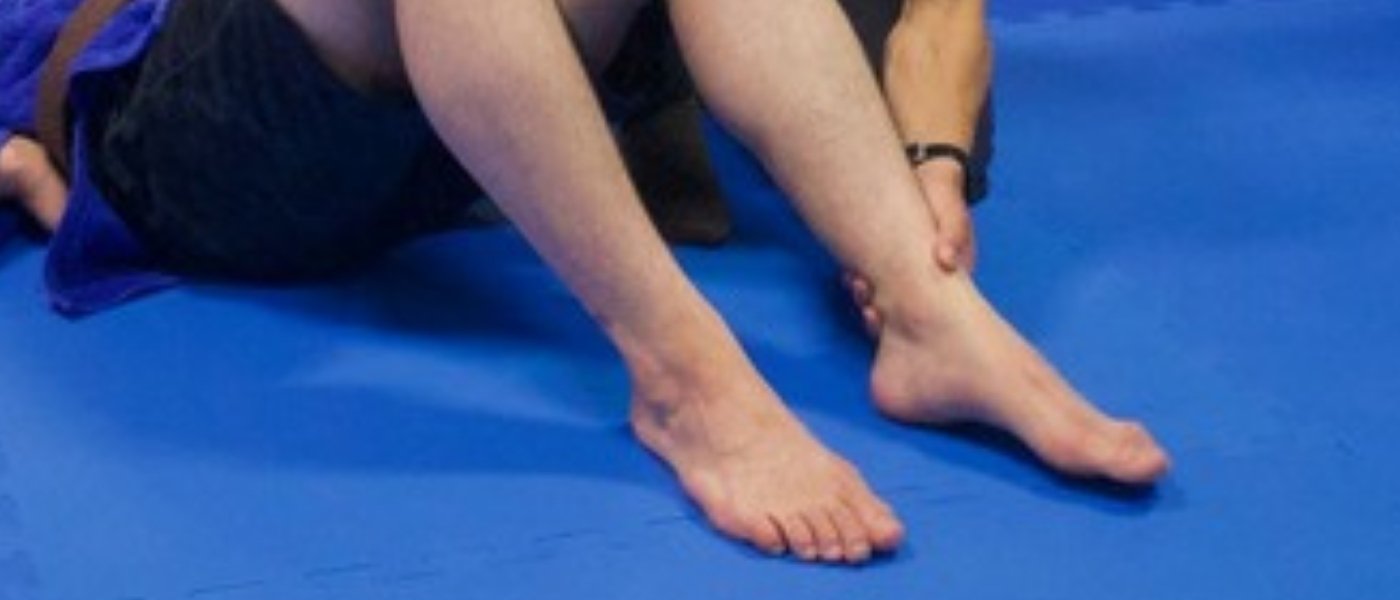
Did you feel a sudden pop or a kick to the back of your ankle while pushing off, landing, or sprinting, and then find you could not walk normally? Were you told you have torn your Achilles tendon and that you may not need surgery? If so, you are facing one of the bigger injuries in sport, but also one where the research on recovery has changed a lot in recent years.
At Vaughan Physiotherapy Clinic, we guide people through every stage of Achilles tendon rupture recovery, from the first weeks in a boot to getting back on the court, the field, or the trail. We work alongside your physician or surgeon, follow their boot and weight-bearing plan, and focus on rebuilding the calf strength that this injury so often leaves behind. If you have had your tendon surgically repaired, we have a separate page on rehabilitation after Achilles tendon repair surgery.
Here is what an Achilles tendon rupture is, how to recognize it, what else it could be, and what the research says about treating it without surgery.
What Is an Achilles Tendon Rupture?
The Achilles tendon is the thick cord at the back of your ankle that joins your calf muscles to your heel bone. It is the largest tendon in the body, and it carries large forces every time you walk, run, or jump. An Achilles tendon rupture is a tear through the tendon, so the calf can no longer pull on the heel properly.
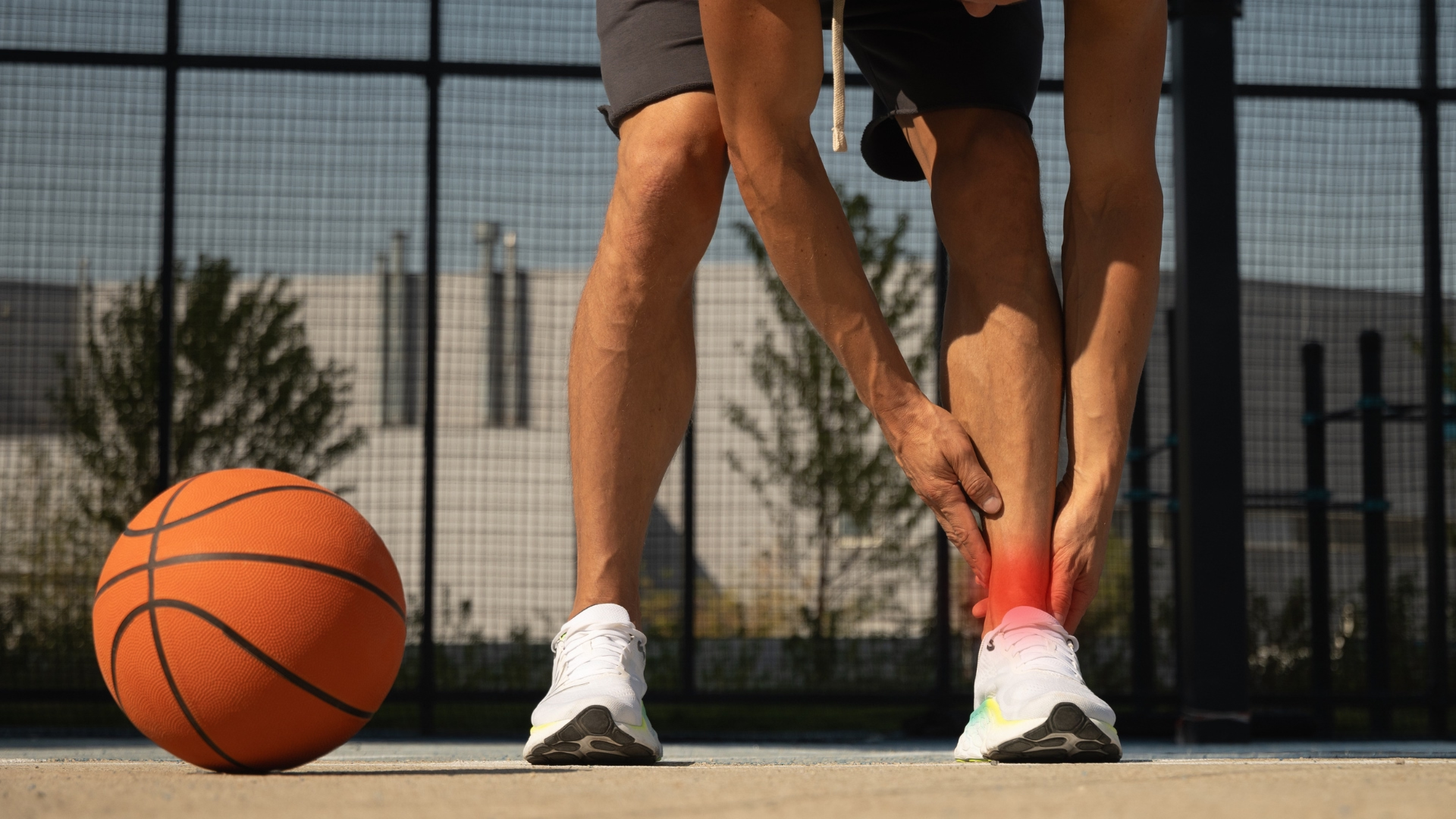
Most ruptures happen during sport, especially activities with quick starts, stops, and jumps, such as basketball, badminton, squash, tennis, pickleball, and soccer. They are most common in people in middle age. In the large trials that inform this page, the average patient age was roughly 40 to 50 years (Willits et al., 2010; Costa et al., 2020).
Types of Achilles Tendon Injury
- Acute complete rupture: the most common type, where the tendon tears all the way through, usually a few centimetres above the heel. This page focuses on this type
- Partial rupture: part of the tendon is torn. This is less common and is often managed differently
- Chronic or missed rupture: a tear that was not diagnosed or treated in the first few weeks. The tendon ends can pull apart and heal long, and these cases are more likely to need a surgical opinion
- Re-rupture: a second tear of a tendon that was previously torn, which is the complication that much of the research tries to prevent
Understanding the Anatomy
Several structures work together at the back of the lower leg:
- Gastrocnemius: the large, visible calf muscle that crosses both the knee and the ankle
- Soleus: a deeper calf muscle under the gastrocnemius that does much of the work in walking and running
- Achilles tendon: the shared tendon of these two muscles, attaching to the back of the heel bone (calcaneus)
- Plantaris: a small, thin muscle and tendon that runs alongside the Achilles. It can stay intact after a rupture, so some people can still point their foot weakly
- Sural nerve: a small skin nerve that runs beside the tendon. It matters mostly if surgery is done, because it can be injured during repair (Myhrvold et al., 2022)
A torn tendon heals by filling the gap with new tissue. The goal of early treatment, whether with or without surgery, is to keep the tendon ends close together so it heals at the right length. If it heals too long, the calf loses power, which is why your boot and heel position in the first weeks matter so much.
Recognizing the Symptoms
An Achilles rupture usually happens suddenly. Common signs include:
- A pop or snap at the back of the ankle, often heard or felt
- A feeling of being kicked or hit in the back of the leg, even when nobody was nearby
- Sudden pain at the back of the ankle, which may settle surprisingly fast
- Weakness pushing off: difficulty walking normally, climbing stairs, or rising onto your toes on the injured side
- Swelling and bruising around the back of the ankle
- A gap or dip you can feel in the tendon a few centimetres above the heel
Because some people can still walk and point their foot using other muscles, Achilles ruptures are sometimes mistaken for a sprain. A simple clinic test, the Thompson (calf squeeze) test, checks whether squeezing the calf still moves the foot. If the foot does not move, the tendon is likely torn.
What Makes It Worse?
- Walking without protection: putting weight through the foot with the heel flat or the ankle bent up, before you are in a boot, can stretch the healing tendon
- Delaying diagnosis: the longer a rupture goes untreated, the further apart the tendon ends can drift
- Coming out of the boot too early: removing wedges or the boot ahead of your treating team's plan can let the tendon heal long
- Stretching the calf too soon: aggressive calf stretching in the early months can lengthen the healing tendon
- Long periods without moving the leg: sitting for hours in a boot raises the risk of blood clots in the calf (Svedman et al., 2020)
What Else Could It Be?
A few other problems can cause sudden pain at the back of the lower leg. Part of the assessment is telling these apart:
- Calf muscle strain ("tennis leg"): a tear in the inner gastrocnemius muscle, higher up the calf. The Achilles tendon itself is intact, and the calf squeeze test is usually normal
- Partial Achilles tear: pain and weakness, but the tendon still moves the foot on testing. Ultrasound may be needed to sort this out
- Achilles tendinopathy flare: pain and stiffness in the tendon, usually building over time rather than with a single pop
- Ankle fracture or severe sprain: pain and swelling around the ankle bones, often after a twist rather than a push-off
- Heel bursa problems: pain right where the tendon attaches to the heel
- Deep vein thrombosis (DVT): a blood clot in the calf can cause pain, swelling, and warmth, and it must not be missed
When to See a Doctor First
An Achilles tendon rupture should be confirmed and managed by a physician, sports medicine doctor, or orthopaedic surgeon, who will decide on the boot or cast plan and whether surgery is worth discussing. Seek medical care promptly, or go to an emergency department, if you have:
- A sudden pop with weakness at the back of the ankle that has not been assessed yet. Early diagnosis keeps more treatment options open
- Calf pain, swelling, warmth, or redness that is getting worse, especially while in a boot or cast. Blood clots are common after this injury, partly because the leg is immobilized (Svedman et al., 2020)
- Sudden shortness of breath, chest pain, or coughing up blood, which can signal a clot that has travelled to the lungs. Call 911
- A second pop or sudden new weakness during recovery, which may mean the tendon has torn again
- Redness, warmth, drainage, or fever around a surgical wound if you had surgery, which may mean infection. Infection is the main reason surgery carries a higher complication rate than non-operative care (Ochen et al., 2019)
- New numbness or tingling on the outer side of the foot, or skin breakdown under the boot or cast
Our physiotherapists screen for these signs at your first visit and at every session after, and will contact your physician or surgeon right away if anything needs medical attention.
Related reading: You may also find our guides to Achilles tendinopathy, calf strain and Achilles pain in basketball helpful.
Why Physiotherapy Is Essential
For many people, a ruptured Achilles tendon can now be treated without surgery. That shift happened because of rehabilitation. When non-operative care is paired with early, structured, functional rehab, large trials show results that are close to surgery for most people (Willits et al., 2010; Myhrvold et al., 2022). In other words, the rehab is not an extra. It is the treatment.
The tendon will heal in a boot, but healing alone does not bring back a strong calf. Even a year after injury, many people still report limits in daily activity and sport compared with before the rupture (Myhrvold et al., 2022), and in trials of both surgical and non-surgical care, some people still could not do a single-leg heel rise on the injured side at follow-up (Fan et al., 2024). A clear, progressive plan gives you the best chance of closing that gap.
Physiotherapy addresses the main parts of recovery:
- Protecting the healing tendon: helping you follow your physician's boot, wedge, and weight-bearing plan safely and confidently
- Keeping you moving: early walking in the boot, safe ankle movement, and exercise for the rest of the body
- Rebuilding the calf: a staged strength program for the gastrocnemius and soleus, which is the key to returning to full function
- Returning to activity: walking without a limp, then running, jumping, and sport when strength tests show you are ready
Your Treatment Plan at Vaughan Physiotherapy Clinic
Every patient's plan starts with the protocol set by the treating physician or surgeon. Boot type, heel wedges, when you can bear weight, and when the boot comes off all follow their instructions. The phases below describe the general pattern, and we adjust the details to match your team's plan.
Phase 1: Assessment and Early Protection (Weeks 0 to 2)
Your first visit focuses on understanding the injury and making the early weeks go well. A full assessment includes:
- History: how the injury happened, how long ago, what your physician has advised, and other health conditions that affect healing or clot risk
- Review of your protocol: boot or cast type, number of heel wedges, weight-bearing status, and the timeline from your physician
- Screening: checking for signs of a blood clot, skin pressure areas, and nerve symptoms
- Walking check: making sure you can move safely with the boot and crutches, including on stairs
Early care usually includes:
- Boot and crutch training: walking, stairs, and daily tasks in the boot, following your physician's advice
- Swelling control: elevation and gentle toe and knee movement
- Clot prevention habits: moving often, avoiding long periods of sitting, and following any blood thinner your physician prescribes. Blood clots are common in the weeks after an Achilles rupture, and in one large group of patients who had their tendon repaired, screening ultrasound found a clot in about half within six weeks, most without obvious symptoms. Those who developed a clot had worse self-reported outcomes at one year (Svedman et al., 2020)
Phase 2: Early Weight Bearing and Protected Movement (Weeks 2 to 8)
Many people used to be kept off their foot in a plaster cast for weeks. In the UKSTAR trial of 540 patients treated without surgery, people who walked with full weight in a functional boot right away did just as well at nine months as people kept in a plaster cast. Re-rupture rates were similar, at about 5 to 6 percent in both groups, and the boot cost slightly less (Costa et al., 2020).
In this phase, and always within your physician's plan, your program may include:
- Walking in the boot with the heel raised, gradually reducing crutch use
- Gradual removal of heel wedges on the schedule your treating team sets, so the ankle slowly comes toward a neutral position
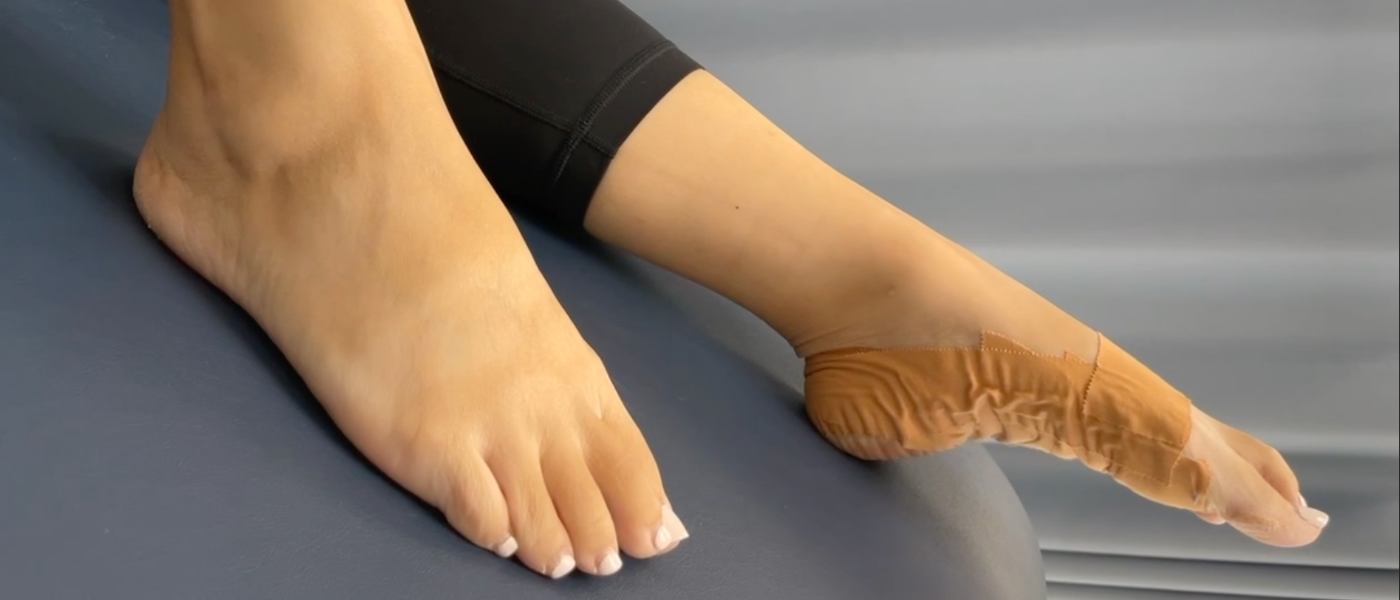
- Gentle active ankle movement within the limits allowed, usually pointing the foot down and bringing it back only to the position your protocol permits. No stretching of the calf
- Isometric calf work, where the muscle tightens without the ankle moving, when your protocol allows
- Exercise for the rest of the body, such as hip, core, and upper body work, to keep fitness up
Phase 3: Rebuilding Calf Strength (Week 8 to Month 6)
Once the boot comes off, usually around eight weeks (Costa et al., 2020), the main work begins. Calf strength is the biggest gap after this injury. In a 2024 review of 14 trials, people treated with and without surgery ended up with similar heel-rise ability, but some people in both groups still could not do a single-leg heel rise when they were followed up (Fan et al., 2024). Our aim is to rebuild that strength step by step.
Calf strengthening
The calf is loaded gradually, starting with both legs and progressing to the injured leg alone. Your program may include:
- Seated calf raises with light resistance, to load the soleus with the knee bent
- Double-leg calf raises, then raises with more weight on the injured side
- Single-leg calf raises, working toward full height on the injured side
- Balance work on one leg, progressing to unstable surfaces
Getting your walk back
- Weaning from a heel lift in the shoe, if your physician has advised one
- Practising a smooth heel-to-toe walk without a limp
Hands-on treatment
Gentle soft tissue work for the calf and the muscles around it, and mobilization of stiff ankle and foot joints, can help with comfort and movement. We use these to support exercise, not replace it. We avoid forceful stretching of the healing tendon, because a tendon that heals too long leaves the calf weaker.
Phase 4: Return to Running, Jumping, and Sport (Months 4 to 12)
- Strength testing first: single-leg heel-rise height and number of repetitions, compared with your other leg, help guide when to progress
- Running progression: a walk-run program on flat ground once your strength and walking are ready
- Hopping and jumping drills: starting with both legs and low heights, then moving to single-leg and quicker efforts
- Sport-specific work: cutting, quick starts, and drills for your sport
Beyond Physiotherapy: Complementary Care for Achilles Tendon Rupture
Protected early walking and a progressive calf strengthening program are the core of Achilles rupture rehab, and that is where the research is. Some patients also use other services at our clinic to manage pain, stiffness, and swelling so they can keep up with their exercises. Here is an honest summary of what the evidence does and does not show for each.
How Acupuncture and Dry Needling Can Help
Acupuncture and dry needling use fine needles to reduce pain and ease tight, tender muscles.
- What the evidence shows: we did not find published trials of acupuncture or dry needling in rehab after an Achilles rupture. One trial of acupuncture added to rehab has been registered, but we found no published results
- Where it fits: possibly later in rehab, for calf or foot muscle tension and soreness that is limiting your exercise
- Safety: needling directly into or near the healing tendon is avoided. Needling is not used over a surgical wound or any area of suspected clot or infection
How Massage Therapy Can Help
Registered massage therapy focuses on the soft tissues of the calf, foot, and the rest of the leg.
- What the evidence shows: we did not find published trials of massage therapy for Achilles rupture rehab.
- Where it fits: for muscle tightness in the calf, thigh, hip, and back that builds up from walking in a boot, and for comfort as you rebuild strength
- Safety: deep pressure on the healing tendon is avoided in the early months. Massage of the calf is not appropriate if a blood clot is suspected or has not yet been ruled out
How Chiropractic and Joint Manipulation Can Help
Chiropractic care for the lower limb uses joint mobilization and manipulation of the ankle, foot, knee, and hip.
- What the evidence shows: we did not find peer-reviewed trials of chiropractic care or joint manipulation for Achilles rupture rehab.
- Where it fits: after the boot phase, for stiffness in the ankle, foot, or other joints, or for back or hip discomfort from a changed walking pattern, alongside your exercise program
- Safety: forceful techniques that stretch the calf or push the ankle up hard are avoided while the tendon is still healing. It is not appropriate over a suspected clot, infection, or new tendon injury
Whichever combination you and your clinician choose, these treatments share one purpose: keeping you comfortable and consistent while the real work, protecting the tendon and rebuilding calf strength, takes hold.
When Is Surgery Considered?
Whether to operate is a decision for you and your physician or orthopaedic surgeon. We can help you understand the research before that conversation. Here is what the best current evidence shows.
- Function is similar for most people: in a large Norwegian trial of 526 patients, non-operative treatment, open surgery, and minimally invasive surgery led to similar self-reported function at 12 months. All three groups followed the same rehab plan (Myhrvold et al., 2022)
- Surgery lowers the chance of re-rupture: in the same trial, re-rupture occurred in about 6 percent of people treated without surgery, compared with under 1 percent in each surgical group (Myhrvold et al., 2022). A 2024 review of 14 trials found a similar pattern, about 10 percent without surgery versus about 3 percent with it, although that review included older trials that used casting and slower rehab (Fan et al., 2024)
- Surgery has its own risks: nerve injury was more common after surgery than without it, especially after the minimally invasive approach (Myhrvold et al., 2022). Across trials, other complications such as wound problems and infection were more common with surgery (Ochen et al., 2019; Fan et al., 2024)
- Early functional rehab narrows the gap: when trials used accelerated rehab with early weight bearing and movement, the difference in re-rupture between surgery and non-operative care was much smaller and not statistically significant (Ochen et al., 2019). In a Canadian trial of 144 patients using this type of rehab, re-rupture occurred in 3 people treated without surgery and 2 treated with surgery, and strength and movement were similar (Willits et al., 2010)
Surgery may be discussed more seriously after a re-rupture, a late diagnosis, a large gap between the tendon ends, or for very high sport demands. Smoking, diabetes, and wound healing risks also matter. If you and your surgeon choose surgery, please see our page on rehabilitation after Achilles tendon repair surgery.
How Long Will It Take?
Achilles rupture recovery takes time, and it is fair to plan in months rather than weeks. As a general guide:
- Boot phase: usually around eight weeks, with weight bearing in a functional boot from early on if your physician allows (Costa et al., 2020)
- Walking normally: often a few weeks to a few months after the boot comes off, as calf strength returns
- Running and sport: usually not before several months, and only once strength testing shows you are ready
Recovery is often not complete at one year. In the Norwegian trial, average function scores in all three groups were still below pre-injury levels at 12 months (Myhrvold et al., 2022). That is why we keep strength work going long after you are back on your feet.
Prevention and Long-Term Management
- Follow the protocol: wear the boot and use the wedges exactly as your treating team advises, since the early weeks set the tendon's final length
- Respect the re-rupture window: in the UKSTAR trial, no re-ruptures happened later than six months after injury (Costa et al., 2020), so the early months are when to be most careful with sudden, unplanned jumps or sprints
- Keep moving to protect against clots: get up and walk often, avoid long sitting, and report calf swelling or pain right away
- Keep strengthening: continue calf raises and heavier calf work for at least a year, and keep a maintenance routine after that
- Build sport back gradually: increase running, jumping, and court time step by step
Frequently Asked Questions
Do I need surgery for a ruptured Achilles tendon?
Not always. For many people, non-operative treatment in a functional boot with early rehab gives similar function to surgery at one year, with fewer surgical complications but a somewhat higher chance of re-rupture (Myhrvold et al., 2022; Ochen et al., 2019). The decision belongs to you and your physician or surgeon.
Can I walk on my foot in the boot?
In many cases, yes. The UKSTAR trial found that walking with full weight in a functional boot from early on was as effective as a plaster cast (Costa et al., 2020). However, your weight-bearing plan must come from your treating physician, and we follow it exactly.
What is the risk of tearing it again?
The risk is real but fairly low. Without surgery, re-rupture rates in recent trials ranged from about 4 to 6 percent (Willits et al., 2010; Costa et al., 2020; Myhrvold et al., 2022).
Why is my calf still weak months later?
Lasting calf weakness is common after an Achilles rupture, and it happens whether or not you had surgery (Fan et al., 2024). The calf muscle shrinks in the boot, and the tendon may heal slightly long. A steady, progressive strength program is the best way to rebuild it.
How do I know if I have a blood clot?
Watch for calf pain, swelling, warmth, or redness that is getting worse, especially in the first weeks. Clots are common after this injury, and many cause no obvious symptoms (Svedman et al., 2020). If you notice these signs, contact your physician the same day. Sudden shortness of breath or chest pain needs a 911 call.
Can acupuncture, massage, or chiropractic replace exercise and the boot protocol?
No. Protecting the tendon in the boot and then rebuilding calf strength are the foundation of recovery, and they are what the research supports. Needling, massage, and joint mobilization can help with comfort and stiffness, but there are no published trials showing they improve healing or strength after an Achilles rupture.
Our Specialized Approach at Vaughan Physiotherapy Clinic
✓ Protocol-led care: we follow your physician's or surgeon's boot and weight-bearing plan and keep them updated on your progress
✓ Early, safe movement: evidence-based functional rehab from the first weeks, not weeks of waiting
✓ Calf strength focus: a staged strengthening program with regular heel-rise testing to track the gap between legs
✓ Return-to-sport planning: running, jumping, and sport-specific progressions for court, field, and endurance athletes
✓ Integrated care: physiotherapy, massage therapy, acupuncture, and chiropractic under one roof when they add value
✓ Safety first: screening for blood clots, re-rupture, wound and skin problems at every visit, with prompt physician contact when needed
Take the First Step Toward a Strong Return to Activity
An Achilles rupture is a long recovery, but you do not have to work through it alone. Our team at Vaughan Physiotherapy Clinic helps patients from Thornhill, Vaughan, North York, Richmond Hill, and surrounding communities move from the boot back to full activity with evidence-based, hands-on care that works with your medical team.
Book your assessment today:
📞 Phone: 905-669-1221
📍 Location: 398 Steeles Ave W #201, Thornhill, ON L4J 6X3
🌐 Online Booking: www.vaughanphysiotherapy.com
References
Costa ML, Achten J, Marian IR, et al. Plaster cast versus functional brace for non-surgical treatment of Achilles tendon rupture (UKSTAR): a multicentre randomised controlled trial and economic evaluation. The Lancet. 2020;395(10222):441-448. doi:10.1016/S0140-6736(19)32942-3
Fan L, Hu Y, Zhou L, Fu W. Surgical vs. nonoperative treatment for acute Achilles' tendon rupture: a meta-analysis of randomized controlled trials. Frontiers in Surgery. 2024;11:1483584. doi:10.3389/fsurg.2024.1483584
Myhrvold SB, Brouwer EF, Andresen TKM, et al. Nonoperative or surgical treatment of acute Achilles' tendon rupture. New England Journal of Medicine. 2022;386(15):1409-1420. doi:10.1056/NEJMoa2108447
Ochen Y, Beks RB, van Heijl M, et al. Operative treatment versus nonoperative treatment of Achilles tendon ruptures: systematic review and meta-analysis. BMJ. 2019;364:k5120. doi:10.1136/bmj.k5120
Svedman S, Edman G, Ackermann PW. Deep venous thrombosis after Achilles tendon rupture is associated with poor patient-reported outcome. Knee Surgery, Sports Traumatology, Arthroscopy. 2020;28(10):3309-3317. doi:10.1007/s00167-020-05945-2
Willits K, Amendola A, Bryant D, et al. Operative versus nonoperative treatment of acute Achilles tendon ruptures: a multicenter randomized trial using accelerated functional rehabilitation. Journal of Bone and Joint Surgery (American). 2010;92(17):2767-2775. doi:10.2106/JBJS.I.01401
Disclaimer: This article is for educational purposes only and does not replace professional medical advice. An Achilles tendon rupture should be diagnosed and managed by a physician or orthopaedic surgeon, and the decision about surgery, boot protocol, and weight bearing rests with your treating medical team. Calf pain or swelling, shortness of breath, or signs of wound infection need prompt medical attention. Always consult a qualified healthcare provider for diagnosis and treatment specific to your situation.