


Raised hands and forearms holding a length of fabric against the sky

Forearm Tendinopathy (Intersection Syndrome)

An overuse irritation of the forearm tendons where the thumb muscles cross the wrist extensors, causing pain, swelling and creaking above the wrist.
Does the back of your forearm, a few finger widths above the wrist on the thumb side, ache or swell after rowing, paddling, lifting, or a long day of repetitive work? Can you feel a creaking or squeaking under the skin when you move your wrist? If so, you may be dealing with intersection syndrome, an overuse tendon problem of the forearm that is often missed or mistaken for other wrist conditions.

At Vaughan Physiotherapy Clinic, we assess and treat forearm and wrist pain for rowers, paddlers, gym-goers, racquet players, skiers, and people whose jobs keep their hands busy all day. Our goal is not just to calm the pain for a few days, but to understand why the tendons became irritated and change that, so you can get back to training and working without the creak coming back.

Here is what intersection syndrome is, how to recognize it, what it can be confused with, and what the research says about treating it.

What Is Intersection Syndrome?

Intersection syndrome is a painful irritation of the tendons and their sheaths on the back of the forearm, at the spot where two groups of tendons cross over each other. It is caused by repetitive wrist movement, especially bending the wrist back and forth, which creates friction at the crossing point (Beutel et al., 2025).

It is usually felt about 4 to 8 cm above the bony bump on the thumb side of the wrist (Balakatounis et al., 2017). It is considered uncommon, showing up in roughly 0.2 to 0.37 percent of patients in the studies reviewed (Balakatounis et al., 2017), but it is much more common in certain sports. In one group of 42 skiers, almost 12 percent developed symptoms within the first two days, and in an elite national rowing squad, about 5 percent of athletes developed it over three years (Balakatounis et al., 2017; Hoy et al., 2019). It tends to affect the dominant hand and often starts soon after taking up a new sport or activity (Balakatounis et al., 2017).

Understanding the Anatomy

The tendons that move your wrist and thumb run along the back of the forearm in six separate channels, called dorsal compartments. Two of these channels matter here (Beutel et al., 2025):

  • First compartment: the abductor pollicis longus and extensor pollicis brevis, the muscles that lift and pull the thumb back. Their muscle bellies wrap around the thumb side of the forearm
  • Second compartment: the extensor carpi radialis longus and brevis, the main tendons that pull the wrist back
  • The crossing point: the first compartment crosses over the second at an angle of about 60 degrees. In a small study using touch and ultrasound, this overlap sat roughly 3.5 to 7.7 cm above the small bump on the back of the wrist (Lister's tubercle) (Naredo et al., 2024)

Why It Happens

Experts still debate the exact cause. Surgical findings in 13 patients pointed to a narrowing and thickening of the sheath around the wrist extensor tendons, called stenosing tenosynovitis (Grundberg & Reagan, 1985). Other authors describe it as friction between the two tendon groups, or as the bulky thumb muscles compressing the wrist extensor tendons underneath them, especially in rowers (Hoy et al., 2019; Balakatounis et al., 2017). Either way, the common thread is too much repetitive load, too soon.

Recognizing the Symptoms

Intersection syndrome usually builds over days to weeks of repetitive activity. Common symptoms include (Beutel et al., 2025; Balakatounis et al., 2017):

  • Pain and tenderness on the back of the forearm, on the thumb side, a few centimetres above the wrist
  • Swelling over the same area, sometimes with redness
  • A creaking, squeaking, or grating feeling (crepitus) under the skin when you move the wrist or thumb. Some people describe it as feeling like wet leather or a rubbing sensation
  • Pain with gripping, lifting, and bending the wrist back
  • Pain that eases with rest and returns with the aggravating activity

What Makes It Worse?

  • Repetitive wrist bending and straightening: rowing, paddling, weightlifting, racquet sports, skiing with poles, horseback riding, and climbing are all linked to it (Balakatounis et al., 2017; Beutel et al., 2025)
  • Bending the wrist back and toward the little finger side: these positions often reproduce the pain (Balakatounis et al., 2017)
  • Sudden jumps in activity: a new sport, a training camp, a big increase in volume, or a new job task
  • Technique and equipment: grip, handle size, and wrist position during rowing, paddling, or lifting can change how much the tendons rub at the crossing point
  • Working through it: continuing to load irritated tendons hard can turn a short flare into a longer problem

What Else Could It Be?

Several conditions cause pain in or near the same area and need a different approach. Part of our assessment is ruling these in or out (Beutel et al., 2025; Balakatounis et al., 2017):

  • De Quervain's tenosynovitis: the most common mix-up. Pain is lower down, right at the bony point of the wrist on the thumb side, usually without crepitus, and the Finkelstein test (tucking the thumb into a fist and tilting the wrist) is often painful
  • Wartenberg syndrome: irritation of the small sensory nerve on the thumb side of the forearm, causing burning, tingling, or numbness on the back of the thumb and hand
  • Scaphoid fracture: pain at the base of the thumb after a fall on an outstretched hand
  • Wrist ligament injury: such as a scapholunate ligament sprain, often after a fall or twist
  • Dorsal wrist ganglion: a fluid-filled lump on the back of the wrist
  • Other tendon problems: irritation of the finger extensor tendons, or a rupture of the long thumb extensor tendon
  • Thumb base arthritis: pain lower down at the joint where the thumb meets the wrist

When to See a Doctor First

See your physician promptly, or go to urgent care, if you have:

  • A hot, red, swollen forearm or wrist with fever or feeling unwell, or after a cut or puncture wound, since tendon sheath infection needs urgent treatment
  • Pain after a fall on an outstretched hand, especially with tenderness at the base of the thumb, which may be a fracture
  • A sudden loss of the ability to lift your thumb or straighten a finger, which may mean a tendon has ruptured
  • Numbness, tingling, or weakness that is spreading or getting worse
  • Several swollen joints in both hands, or long morning stiffness, which may point to inflammatory arthritis
  • A lump that is growing, pain at night, or unexplained weight loss

Our physiotherapists screen for these signs at your first visit and will coordinate with your physician if imaging or a referral is needed.

Related reading: You may also find our guides to De Quervain's tenosynovitis, extensor tendonitis of the hand and wrist and tennis elbow helpful.

Start Your Journey to 

‍Better Health Today

Recover faster, move better, and feel stronger with expert physiotherapy. Our team is here to guide you every step of the way.

Why Physiotherapy Is Essential

Intersection syndrome is a load problem. The tendons at the crossing point have been asked to do more than they can currently handle. Rest and pills can quiet things for a while, but symptoms tend to return if you go back to the same volume, technique, and grip.

Reviews agree that conservative care is the first line of treatment, including rest from the aggravating activity, splinting, ice, and anti-inflammatory medication, followed by gradual stretching and strengthening (Balakatounis et al., 2017; Beutel et al., 2025). In the studies pulled together in one review, about 60 percent of patients recovered with conservative care alone (Balakatounis et al., 2017). Surgery is kept for the small group who do not respond.

Research on intersection syndrome itself is thin, mostly small case series, so we also draw on evidence for related forearm tendon problems such as lateral elbow pain (Lucado et al., 2022) and say so when we do.

Physiotherapy addresses the main drivers:

  • How much load the tendons get: a plan to calm the irritated area while keeping you as active as possible
  • How the tendons are positioned: splinting and taping to reduce friction at the crossing point in the early stage
  • How strong and tolerant the tendons are: a graded strengthening program so the tissues can handle your sport or job again
  • How you move: grip, wrist position, and technique in rowing, paddling, lifting, or work tasks

Your Treatment Plan at Vaughan Physiotherapy Clinic

Phase 1: Assessment (First Visit)

Your first visit focuses on confirming the diagnosis and finding the cause. Most cases of intersection syndrome can be diagnosed from a careful history and examination (Balakatounis et al., 2017; Beutel et al., 2025). A full assessment includes:

  • History: when the pain started, what changed in your training or work, and any falls or other health conditions
  • Hands-on examination: feeling for tenderness, swelling, and crepitus at the crossing point. Crepitus when you extend the wrist and thumb against resistance is a fairly specific sign (Beutel et al., 2025)
  • Ruling out de Quervain's tenosynovitis: checking whether the pain is higher up the forearm or lower down at the wrist, and testing the thumb tendons at the wrist (Beutel et al., 2025)
  • Strength and movement testing: grip, wrist, and thumb strength and range of motion
  • Nerve screen: checking the sensory nerve on the thumb side of the forearm

If the picture is unclear, ultrasound or MRI can help. On MRI, the typical finding is swelling around the tendons of the first and second compartments, starting at the crossing point and running up the forearm, on average about 3.5 cm in one small series (Costa et al., 2003). Ultrasound is also used, though its accuracy depends on the person scanning (Beutel et al., 2025).

Phase 2: Settling the Irritated Tendons (Weeks 1 to 3)

The first goal is to cut the friction at the crossing point so the swelling and creaking can settle.

  • Relative rest: pausing or reducing the activity that set it off, while keeping other training going
  • Splinting: reviews describe a wrist splint, sometimes including the thumb, worn for about 2 to 3 weeks with the wrist held slightly bent back, around 20 degrees (Balakatounis et al., 2017). Other sources suggest a brace in a neutral wrist position (Beutel et al., 2025). We fit and adjust this to your symptoms and your daily tasks
  • Ice, elevation, and compression for swelling in the early days (Balakatounis et al., 2017)
  • Medication: anti-inflammatory medication is commonly used in this phase (Beutel et al., 2025). Talk to your physician or pharmacist about what is safe for you

Taping

Taping is one of the few treatments studied in intersection syndrome itself. In a case series of five adults, rigid tape applied across the back of the forearm, pulling the soft tissue toward the little finger side, stopped the crepitus in all five. With daily taping for 3 weeks, crepitus, tenderness, and swelling had gone by week 3, and better arm function was still there at 1 year (Kaneko & Takasaki, 2011). Five people with no comparison group is early evidence, but taping is simple and low risk. In the guideline for lateral elbow pain, rigid taping is also recommended for short-term pain relief in irritable forearm tendons (Lucado et al., 2022).

Phase 3: Rebuilding Tendon Strength (Weeks 3 to 8)

Once the swelling and creaking have settled, the focus shifts from protecting the tendons to building them back up. Reviews describe a second phase of gradual stretching, mobility work, and then careful strengthening, typically over 4 to 6 weeks (Balakatounis et al., 2017).

Progressive tendon loading
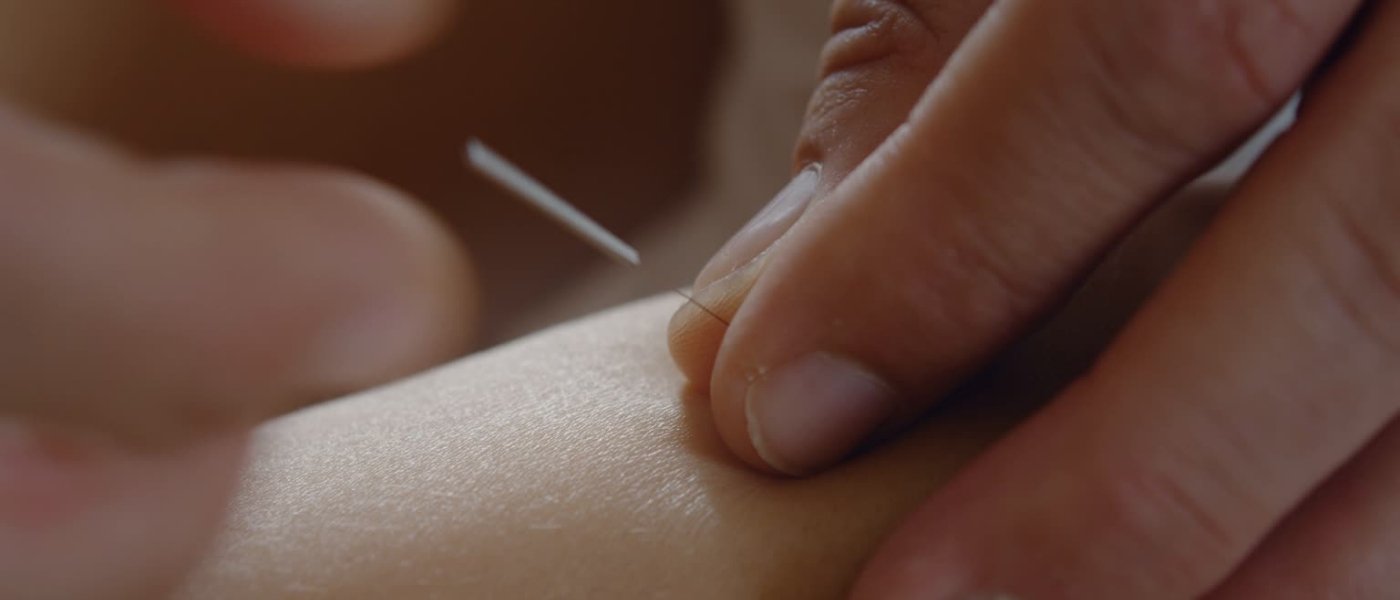
Clinician inserting a fine needle into the skin of the forearm
Dry needling around the forearm muscles can ease pain and tension while you build tendon strength.

There are no trials of specific exercise programs for intersection syndrome. The strongest indirect evidence comes from lateral elbow tendinopathy, another overuse problem of the forearm extensor tendons, where the clinical practice guideline recommends resisted wrist extensor exercise, using holds, lifting, or slow lowering, as a core treatment (Lucado et al., 2022). Stretching and slow lowering (eccentric) exercises are also suggested for intersection syndrome specifically (Beutel et al., 2025). Your program may include:

  • Isometric wrist holds: pressing the back of the hand gently against resistance without moving, a good starting point when tendons are still sensitive
  • Wrist extension with a light dumbbell or band: lifting and slowly lowering the weight, progressing the load over time
  • Thumb lifts and thumb pull-backs against a band to load the first compartment muscles
  • Grip strengthening with putty or a hand gripper
  • Gentle wrist and forearm stretches

We aim for exercises that feel like effort but do not bring back the creaking or a lasting increase in swelling.

Manual therapy

Gentle soft tissue work and mobilization of stiff wrist, elbow, or neck joints can ease pain so you can stay consistent with exercise. For lateral elbow pain, the guideline supports joint mobilization to reduce pain in the short term, and gives weaker support to soft tissue mobilization (Lucado et al., 2022). In one case report, a professional motorcycle racer treated with splinting, manual therapy, massage, eccentric training, and laser therapy returned to racing (Marenghi et al., 2019). We use these techniques alongside exercise, not in place of it.

Phase 4: Return to Sport and Work (Weeks 6 to 12+)

  • Graded return to the activity that caused it, building up time, distance, or weight in steps while the forearm stays settled
  • Technique review: grip pressure, wrist position, and handle or bar setup for rowers, paddlers, and lifters
  • Workplace advice for repetitive jobs, including task rotation, tool grip, and planned breaks
  • A simple check: if active loading of the tendons no longer brings on the creaking, that is a good sign you are ready for harder training (Beutel et al., 2025)

Beyond Physiotherapy: Complementary Care for Intersection Syndrome

Relative rest, splinting or taping, and gradual strengthening form the core of care for intersection syndrome. Some patients also benefit from other services at our clinic to ease pain and tightness so they can keep up with rehab. We could not find any published trials of acupuncture, massage, or chiropractic care for intersection syndrome specifically, so the summaries below rely on indirect evidence from other forearm tendon problems, and we label it that way.

How Acupuncture and Dry Needling Can Help

Acupuncture and dry needling use fine needles to reduce pain and ease tight, tender muscles.

  • What the evidence shows: there is no research on needling for intersection syndrome. The closest evidence comes from lateral elbow pain, where the clinical practice guideline recommends dry needling of the tendon or of trigger points in the forearm muscles to improve pain and function (Lucado et al., 2022). That guideline did not make a separate recommendation for traditional acupuncture
  • Where it fits: as a short-term option to ease forearm muscle tension and pain, usually once the acute swelling has settled, while you work on strengthening
  • Safety: generally very safe. Minor bruising or soreness at needle sites is the most common side effect. We avoid needling directly into a hot, swollen, or possibly infected area

How Massage Therapy Can Help

Registered massage therapy focuses on the soft tissues of the forearm, upper arm, shoulder, and neck.

  • What the evidence shows: there are no trials of massage for intersection syndrome. For lateral elbow pain, the guideline gives weak support to soft tissue mobilization, and found the evidence on deep cross friction massage conflicting, so it made no recommendation either way (Lucado et al., 2022).
  • Where it fits: for comfort and for tight forearm and upper body muscles, as a supportive add-on to exercise rather than a stand-alone treatment.
  • Safety: very safe. Some temporary muscle soreness afterward is normal

How Chiropractic and Joint Manipulation Can Help

Chiropractic care for the arm uses joint mobilization and manipulation of the wrist, elbow, and neck, along with soft tissue techniques.

  • What the evidence shows: we did not find any trials of chiropractic care for intersection syndrome. For lateral elbow pain, the guideline recommends elbow joint mobilization or manipulation for short-term pain relief and grip strength, and gives weaker support to neck, upper back, and wrist mobilization when stiffness is found there (Lucado et al., 2022). This suggests a possible role, but it has not been tested in this condition
  • Where it fits: for stiffness in the wrist, elbow, or neck that may be adding to forearm strain, combined with exercise and load management
  • Safety: generally safe. It is not appropriate over a suspected fracture, infection, or a very swollen, acutely inflamed area

Whichever combination you and your clinician choose, these treatments share one purpose: settling symptoms so you can keep moving while the real fix, calmer tendons and a stronger forearm, takes hold.

When Is Surgery or an Injection Considered?

Corticosteroid injection: if symptoms have not improved after 2 to 3 weeks of good conservative care, your physician may suggest a steroid injection near the most tender spot. In the studies reviewed, relief was reported after about 10 days (Balakatounis et al., 2017). Side effects were reported in about 5.8 percent of cases, ranging from bruising to, at worst, tendon rupture (Balakatounis et al., 2017). Other possible effects include thinning of the fat under the skin, lighter skin at the site, and a short-term rise in blood sugar in people with diabetes, and repeated injections raise the risk of tendon damage (Beutel et al., 2025).

Surgery: surgery is rare and kept for people who do not improve with well-run conservative care. It usually involves releasing the tight sheath around the wrist extensor tendons, and sometimes the first compartment, at the crossing point (Beutel et al., 2025). In one early series of 13 patients who had not responded to conservative treatment, all had their symptoms resolve after surgery, at an average of about 10 months (Balakatounis et al., 2017; Grundberg & Reagan, 1985). In elite rowers, one Australian team has argued for early surgery to limit time out of the boat: in their six rowers, the median return to training was 7 days, and five of the six got back to their goals (Hoy et al., 2019). This comes from a small, uncontrolled series of elite athletes. After surgery, physiotherapy follows your surgeon's protocol.

How Long Will It Take?

Recovery depends on how irritated the tendons are, how long you have had symptoms, and how much your sport or job asks of your forearm. There is very little high quality data on recovery time. Reviews describe about 2 to 3 weeks of protection and settling, followed by about 4 to 6 weeks of gradual strengthening (Balakatounis et al., 2017). In a small MRI series, two of three patients improved within a few weeks, and the third after an injection (Costa et al., 2003).

For athletes, the time lost can be significant: in one elite rowing squad, intersection syndrome cut training time by roughly 20 to 40 percent over the period studied (Hoy et al., 2019). Acting early matters, since long-standing cases with a thickened, scarred sheath tend to do less well (Beutel et al., 2025).

Prevention and Long-Term Management

  • Build up gradually: avoid big jumps in rowing, paddling, lifting, or climbing volume, especially at the start of a season or a training camp
  • Check your technique: a relaxed grip and a neutral wrist reduce friction at the crossing point. Ask a coach or your physiotherapist to review your stroke or lift
  • Keep your forearms strong: continue a few wrist, thumb, and grip exercises a couple of times a week
  • Set up your equipment: handle size, oar or paddle grip, tool design, and regular breaks in repetitive work all matter
  • Act early: if the ache or creaking comes back, reduce the load, use your tape or splint, and return to your exercises straight away

Frequently Asked Questions

Is intersection syndrome serious?

Usually not. Most cases settle with relative rest, splinting or taping, and gradual strengthening. It is still worth an assessment, because it is often mistaken for other wrist problems.

What is the creaking I can feel in my forearm?

That creaking is called crepitus: irritated tendons and sheaths rubbing at the crossing point. It is one of the most typical signs of intersection syndrome (Beutel et al., 2025) and usually fades as the tendons settle.

How is it different from de Quervain's tenosynovitis?

Both affect the thumb side of the wrist and forearm, but intersection syndrome hurts higher up, a few centimetres above the wrist, and often creaks. De Quervain's hurts lower down, right at the bony point of the wrist, and usually does not creak (Beutel et al., 2025). The treatment approaches overlap, but getting the location right helps guide splinting, taping, and any injection.

Do I need to stop rowing or training completely?

Not always. You will likely need to cut back the activity that set it off for a short time, but you can usually keep training other areas, then build back step by step.

Will a cortisone shot fix it?

An injection can help when a few weeks of good conservative care have not worked (Balakatounis et al., 2017). It is not risk free and does not change the load that caused the problem, so it works best alongside rehab.

Can acupuncture, massage, or chiropractic replace exercise and load management?

No. Relative rest, splinting or taping, and gradual strengthening are the foundation of care. Needling, massage, and joint mobilization have no direct research in intersection syndrome and are best used as short-term supports to ease pain and tightness while you rebuild.

Our Specialized Approach at Vaughan Physiotherapy Clinic

Accurate diagnosis: careful testing to tell intersection syndrome apart from de Quervain's tenosynovitis, nerve irritation, and wrist injuries

Hands-on settling: splinting advice and taping fitted and adjusted in clinic

Progressive tendon loading: a simple, graded wrist, thumb, and grip program you can do at home or in the gym

Sport and work focus: technique, grip, and equipment review for rowers, paddlers, lifters, and repetitive work

Integrated care: physiotherapy, massage therapy, acupuncture, and chiropractic under one roof when they add value

Safety first: screening for fractures, tendon ruptures, infection, and nerve problems, with physician referral when needed

Take the First Step Toward a Pain-Free Forearm and Wrist

Forearm pain and creaking do not have to keep you off the water, out of the gym, or struggling through your workday. Our team at Vaughan Physiotherapy Clinic helps patients from Thornhill, Vaughan, North York, Richmond Hill, and surrounding communities get back to full strength with evidence-based, hands-on care.

Book your assessment today:

Phone: 905-669-1221

Location: 398 Steeles Ave W #201, Thornhill, ON L4J 6X3

Online Booking: www.vaughanphysiotherapy.com

References

Balakatounis K, Angoules AG, Angoules NA, Panagiotopoulou K. Synthesis of evidence for the treatment of intersection syndrome. World Journal of Orthopedics. 2017;8(8):619-623. doi:10.5312/wjo.v8.i8.619

Beutel BG, Taylor K, Michols NJ, Taqi M. Intersection syndrome. In: StatPearls. Treasure Island (FL): StatPearls Publishing; updated 2025. https://www.ncbi.nlm.nih.gov/books/NBK430899/

Costa CR, Morrison WB, Carrino JA. MRI features of intersection syndrome of the forearm. American Journal of Roentgenology. 2003;181(5):1245-1249. doi:10.2214/ajr.181.5.1811245

Grundberg AB, Reagan DS. Pathologic anatomy of the forearm: intersection syndrome. Journal of Hand Surgery (American). 1985;10(2):299-302. doi:10.1016/s0363-5023(85)80129-5

Hoy G, Trease L, Braybon W. Intersection syndrome: an acute surgical disease in elite rowers. BMJ Open Sport & Exercise Medicine. 2019;5(1):e000535. doi:10.1136/bmjsem-2019-000535

Kaneko S, Takasaki H. Forearm pain, diagnosed as intersection syndrome, managed by taping: a case series. Journal of Orthopaedic & Sports Physical Therapy. 2011;41(7):514-519. doi:10.2519/jospt.2011.3569

Lucado AM, Day JM, Vincent JI, MacDermid JC, Fedorczyk J, Grewal R, Martin RL. Lateral elbow pain and muscle function impairments: clinical practice guidelines linked to the International Classification of Functioning, Disability and Health. Journal of Orthopaedic & Sports Physical Therapy. 2022;52(12):CPG1-CPG111. doi:10.2519/jospt.2022.0302

Marenghi L, Mainardi G, Zasa M. Management of intersection syndrome in professional motorcycle rider: a case report. Acta Biomedica. 2019;90(4):556-559. doi:10.23750/abm.v90i4.7760

Naredo E, Murillo-González J, Mérida Velasco JR, et al. Examining the forearm intersection through palpation and ultrasonography. Diagnostics. 2024;14(1):116. doi:10.3390/diagnostics14010116

Disclaimer: This article is for educational purposes only and does not replace professional medical advice. Pain on the back of the forearm and wrist can have several causes, including de Quervain's tenosynovitis, fractures, tendon ruptures, nerve irritation, infection, and inflammatory arthritis. Always consult a qualified healthcare provider for diagnosis and treatment specific to your condition.

Team

Condition guide

Forearm Tendinopathy (Intersection Syndrome)

An overuse irritation of the forearm tendons where the thumb muscles cross the wrist extensors, causing pain, swelling and creaking above the wrist.

Raised hands and forearms holding a length of fabric against the skyForearm Tendinopathy (Intersection Syndrome)

Does the back of your forearm, a few finger widths above the wrist on the thumb side, ache or swell after rowing, paddling, lifting, or a long day of repetitive work? Can you feel a creaking or squeaking under the skin when you move your wrist? If so, you may be dealing with intersection syndrome, an overuse tendon problem of the forearm that is often missed or mistaken for other wrist conditions.

At Vaughan Physiotherapy Clinic, we assess and treat forearm and wrist pain for rowers, paddlers, gym-goers, racquet players, skiers, and people whose jobs keep their hands busy all day. Our goal is not just to calm the pain for a few days, but to understand why the tendons became irritated and change that, so you can get back to training and working without the creak coming back.

Here is what intersection syndrome is, how to recognize it, what it can be confused with, and what the research says about treating it.

What Is Intersection Syndrome?

Intersection syndrome is a painful irritation of the tendons and their sheaths on the back of the forearm, at the spot where two groups of tendons cross over each other. It is caused by repetitive wrist movement, especially bending the wrist back and forth, which creates friction at the crossing point (Beutel et al., 2025).

It is usually felt about 4 to 8 cm above the bony bump on the thumb side of the wrist (Balakatounis et al., 2017). It is considered uncommon, showing up in roughly 0.2 to 0.37 percent of patients in the studies reviewed (Balakatounis et al., 2017), but it is much more common in certain sports. In one group of 42 skiers, almost 12 percent developed symptoms within the first two days, and in an elite national rowing squad, about 5 percent of athletes developed it over three years (Balakatounis et al., 2017; Hoy et al., 2019). It tends to affect the dominant hand and often starts soon after taking up a new sport or activity (Balakatounis et al., 2017).

Understanding the Anatomy

The tendons that move your wrist and thumb run along the back of the forearm in six separate channels, called dorsal compartments. Two of these channels matter here (Beutel et al., 2025):

  • First compartment: the abductor pollicis longus and extensor pollicis brevis, the muscles that lift and pull the thumb back. Their muscle bellies wrap around the thumb side of the forearm
  • Second compartment: the extensor carpi radialis longus and brevis, the main tendons that pull the wrist back
  • The crossing point: the first compartment crosses over the second at an angle of about 60 degrees. In a small study using touch and ultrasound, this overlap sat roughly 3.5 to 7.7 cm above the small bump on the back of the wrist (Lister's tubercle) (Naredo et al., 2024)

Why It Happens

Experts still debate the exact cause. Surgical findings in 13 patients pointed to a narrowing and thickening of the sheath around the wrist extensor tendons, called stenosing tenosynovitis (Grundberg & Reagan, 1985). Other authors describe it as friction between the two tendon groups, or as the bulky thumb muscles compressing the wrist extensor tendons underneath them, especially in rowers (Hoy et al., 2019; Balakatounis et al., 2017). Either way, the common thread is too much repetitive load, too soon.

Recognizing the Symptoms

Intersection syndrome usually builds over days to weeks of repetitive activity. Common symptoms include (Beutel et al., 2025; Balakatounis et al., 2017):

  • Pain and tenderness on the back of the forearm, on the thumb side, a few centimetres above the wrist
  • Swelling over the same area, sometimes with redness
  • A creaking, squeaking, or grating feeling (crepitus) under the skin when you move the wrist or thumb. Some people describe it as feeling like wet leather or a rubbing sensation
  • Pain with gripping, lifting, and bending the wrist back
  • Pain that eases with rest and returns with the aggravating activity

What Makes It Worse?

  • Repetitive wrist bending and straightening: rowing, paddling, weightlifting, racquet sports, skiing with poles, horseback riding, and climbing are all linked to it (Balakatounis et al., 2017; Beutel et al., 2025)
  • Bending the wrist back and toward the little finger side: these positions often reproduce the pain (Balakatounis et al., 2017)
  • Sudden jumps in activity: a new sport, a training camp, a big increase in volume, or a new job task
  • Technique and equipment: grip, handle size, and wrist position during rowing, paddling, or lifting can change how much the tendons rub at the crossing point
  • Working through it: continuing to load irritated tendons hard can turn a short flare into a longer problem

What Else Could It Be?

Several conditions cause pain in or near the same area and need a different approach. Part of our assessment is ruling these in or out (Beutel et al., 2025; Balakatounis et al., 2017):

  • De Quervain's tenosynovitis: the most common mix-up. Pain is lower down, right at the bony point of the wrist on the thumb side, usually without crepitus, and the Finkelstein test (tucking the thumb into a fist and tilting the wrist) is often painful
  • Wartenberg syndrome: irritation of the small sensory nerve on the thumb side of the forearm, causing burning, tingling, or numbness on the back of the thumb and hand
  • Scaphoid fracture: pain at the base of the thumb after a fall on an outstretched hand
  • Wrist ligament injury: such as a scapholunate ligament sprain, often after a fall or twist
  • Dorsal wrist ganglion: a fluid-filled lump on the back of the wrist
  • Other tendon problems: irritation of the finger extensor tendons, or a rupture of the long thumb extensor tendon
  • Thumb base arthritis: pain lower down at the joint where the thumb meets the wrist

When to See a Doctor First

See your physician promptly, or go to urgent care, if you have:

  • A hot, red, swollen forearm or wrist with fever or feeling unwell, or after a cut or puncture wound, since tendon sheath infection needs urgent treatment
  • Pain after a fall on an outstretched hand, especially with tenderness at the base of the thumb, which may be a fracture
  • A sudden loss of the ability to lift your thumb or straighten a finger, which may mean a tendon has ruptured
  • Numbness, tingling, or weakness that is spreading or getting worse
  • Several swollen joints in both hands, or long morning stiffness, which may point to inflammatory arthritis
  • A lump that is growing, pain at night, or unexplained weight loss

Our physiotherapists screen for these signs at your first visit and will coordinate with your physician if imaging or a referral is needed.

Related reading: You may also find our guides to De Quervain's tenosynovitis, extensor tendonitis of the hand and wrist and tennis elbow helpful.

Why Physiotherapy Is Essential

Intersection syndrome is a load problem. The tendons at the crossing point have been asked to do more than they can currently handle. Rest and pills can quiet things for a while, but symptoms tend to return if you go back to the same volume, technique, and grip.

Reviews agree that conservative care is the first line of treatment, including rest from the aggravating activity, splinting, ice, and anti-inflammatory medication, followed by gradual stretching and strengthening (Balakatounis et al., 2017; Beutel et al., 2025). In the studies pulled together in one review, about 60 percent of patients recovered with conservative care alone (Balakatounis et al., 2017). Surgery is kept for the small group who do not respond.

Research on intersection syndrome itself is thin, mostly small case series, so we also draw on evidence for related forearm tendon problems such as lateral elbow pain (Lucado et al., 2022) and say so when we do.

Physiotherapy addresses the main drivers:

  • How much load the tendons get: a plan to calm the irritated area while keeping you as active as possible
  • How the tendons are positioned: splinting and taping to reduce friction at the crossing point in the early stage
  • How strong and tolerant the tendons are: a graded strengthening program so the tissues can handle your sport or job again
  • How you move: grip, wrist position, and technique in rowing, paddling, lifting, or work tasks

Your Treatment Plan at Vaughan Physiotherapy Clinic

Phase 1: Assessment (First Visit)

Your first visit focuses on confirming the diagnosis and finding the cause. Most cases of intersection syndrome can be diagnosed from a careful history and examination (Balakatounis et al., 2017; Beutel et al., 2025). A full assessment includes:

  • History: when the pain started, what changed in your training or work, and any falls or other health conditions
  • Hands-on examination: feeling for tenderness, swelling, and crepitus at the crossing point. Crepitus when you extend the wrist and thumb against resistance is a fairly specific sign (Beutel et al., 2025)
  • Ruling out de Quervain's tenosynovitis: checking whether the pain is higher up the forearm or lower down at the wrist, and testing the thumb tendons at the wrist (Beutel et al., 2025)
  • Strength and movement testing: grip, wrist, and thumb strength and range of motion
  • Nerve screen: checking the sensory nerve on the thumb side of the forearm

If the picture is unclear, ultrasound or MRI can help. On MRI, the typical finding is swelling around the tendons of the first and second compartments, starting at the crossing point and running up the forearm, on average about 3.5 cm in one small series (Costa et al., 2003). Ultrasound is also used, though its accuracy depends on the person scanning (Beutel et al., 2025).

Phase 2: Settling the Irritated Tendons (Weeks 1 to 3)

The first goal is to cut the friction at the crossing point so the swelling and creaking can settle.

  • Relative rest: pausing or reducing the activity that set it off, while keeping other training going
  • Splinting: reviews describe a wrist splint, sometimes including the thumb, worn for about 2 to 3 weeks with the wrist held slightly bent back, around 20 degrees (Balakatounis et al., 2017). Other sources suggest a brace in a neutral wrist position (Beutel et al., 2025). We fit and adjust this to your symptoms and your daily tasks
  • Ice, elevation, and compression for swelling in the early days (Balakatounis et al., 2017)
  • Medication: anti-inflammatory medication is commonly used in this phase (Beutel et al., 2025). Talk to your physician or pharmacist about what is safe for you

Taping

Taping is one of the few treatments studied in intersection syndrome itself. In a case series of five adults, rigid tape applied across the back of the forearm, pulling the soft tissue toward the little finger side, stopped the crepitus in all five. With daily taping for 3 weeks, crepitus, tenderness, and swelling had gone by week 3, and better arm function was still there at 1 year (Kaneko & Takasaki, 2011). Five people with no comparison group is early evidence, but taping is simple and low risk. In the guideline for lateral elbow pain, rigid taping is also recommended for short-term pain relief in irritable forearm tendons (Lucado et al., 2022).

Phase 3: Rebuilding Tendon Strength (Weeks 3 to 8)

Once the swelling and creaking have settled, the focus shifts from protecting the tendons to building them back up. Reviews describe a second phase of gradual stretching, mobility work, and then careful strengthening, typically over 4 to 6 weeks (Balakatounis et al., 2017).

Progressive tendon loading

Clinician inserting a fine needle into the skin of the forearm
Dry needling around the forearm muscles can ease pain and tension while you build tendon strength.

There are no trials of specific exercise programs for intersection syndrome. The strongest indirect evidence comes from lateral elbow tendinopathy, another overuse problem of the forearm extensor tendons, where the clinical practice guideline recommends resisted wrist extensor exercise, using holds, lifting, or slow lowering, as a core treatment (Lucado et al., 2022). Stretching and slow lowering (eccentric) exercises are also suggested for intersection syndrome specifically (Beutel et al., 2025). Your program may include:

  • Isometric wrist holds: pressing the back of the hand gently against resistance without moving, a good starting point when tendons are still sensitive
  • Wrist extension with a light dumbbell or band: lifting and slowly lowering the weight, progressing the load over time
  • Thumb lifts and thumb pull-backs against a band to load the first compartment muscles
  • Grip strengthening with putty or a hand gripper
  • Gentle wrist and forearm stretches

We aim for exercises that feel like effort but do not bring back the creaking or a lasting increase in swelling.

Manual therapy

Gentle soft tissue work and mobilization of stiff wrist, elbow, or neck joints can ease pain so you can stay consistent with exercise. For lateral elbow pain, the guideline supports joint mobilization to reduce pain in the short term, and gives weaker support to soft tissue mobilization (Lucado et al., 2022). In one case report, a professional motorcycle racer treated with splinting, manual therapy, massage, eccentric training, and laser therapy returned to racing (Marenghi et al., 2019). We use these techniques alongside exercise, not in place of it.

Phase 4: Return to Sport and Work (Weeks 6 to 12+)

  • Graded return to the activity that caused it, building up time, distance, or weight in steps while the forearm stays settled
  • Technique review: grip pressure, wrist position, and handle or bar setup for rowers, paddlers, and lifters
  • Workplace advice for repetitive jobs, including task rotation, tool grip, and planned breaks
  • A simple check: if active loading of the tendons no longer brings on the creaking, that is a good sign you are ready for harder training (Beutel et al., 2025)

Beyond Physiotherapy: Complementary Care for Intersection Syndrome

Relative rest, splinting or taping, and gradual strengthening form the core of care for intersection syndrome. Some patients also benefit from other services at our clinic to ease pain and tightness so they can keep up with rehab. We could not find any published trials of acupuncture, massage, or chiropractic care for intersection syndrome specifically, so the summaries below rely on indirect evidence from other forearm tendon problems, and we label it that way.

How Acupuncture and Dry Needling Can Help

Acupuncture and dry needling use fine needles to reduce pain and ease tight, tender muscles.

  • What the evidence shows: there is no research on needling for intersection syndrome. The closest evidence comes from lateral elbow pain, where the clinical practice guideline recommends dry needling of the tendon or of trigger points in the forearm muscles to improve pain and function (Lucado et al., 2022). That guideline did not make a separate recommendation for traditional acupuncture
  • Where it fits: as a short-term option to ease forearm muscle tension and pain, usually once the acute swelling has settled, while you work on strengthening
  • Safety: generally very safe. Minor bruising or soreness at needle sites is the most common side effect. We avoid needling directly into a hot, swollen, or possibly infected area

How Massage Therapy Can Help

Registered massage therapy focuses on the soft tissues of the forearm, upper arm, shoulder, and neck.

  • What the evidence shows: there are no trials of massage for intersection syndrome. For lateral elbow pain, the guideline gives weak support to soft tissue mobilization, and found the evidence on deep cross friction massage conflicting, so it made no recommendation either way (Lucado et al., 2022).
  • Where it fits: for comfort and for tight forearm and upper body muscles, as a supportive add-on to exercise rather than a stand-alone treatment.
  • Safety: very safe. Some temporary muscle soreness afterward is normal

How Chiropractic and Joint Manipulation Can Help

Chiropractic care for the arm uses joint mobilization and manipulation of the wrist, elbow, and neck, along with soft tissue techniques.

  • What the evidence shows: we did not find any trials of chiropractic care for intersection syndrome. For lateral elbow pain, the guideline recommends elbow joint mobilization or manipulation for short-term pain relief and grip strength, and gives weaker support to neck, upper back, and wrist mobilization when stiffness is found there (Lucado et al., 2022). This suggests a possible role, but it has not been tested in this condition
  • Where it fits: for stiffness in the wrist, elbow, or neck that may be adding to forearm strain, combined with exercise and load management
  • Safety: generally safe. It is not appropriate over a suspected fracture, infection, or a very swollen, acutely inflamed area

Whichever combination you and your clinician choose, these treatments share one purpose: settling symptoms so you can keep moving while the real fix, calmer tendons and a stronger forearm, takes hold.

When Is Surgery or an Injection Considered?

Corticosteroid injection: if symptoms have not improved after 2 to 3 weeks of good conservative care, your physician may suggest a steroid injection near the most tender spot. In the studies reviewed, relief was reported after about 10 days (Balakatounis et al., 2017). Side effects were reported in about 5.8 percent of cases, ranging from bruising to, at worst, tendon rupture (Balakatounis et al., 2017). Other possible effects include thinning of the fat under the skin, lighter skin at the site, and a short-term rise in blood sugar in people with diabetes, and repeated injections raise the risk of tendon damage (Beutel et al., 2025).

Surgery: surgery is rare and kept for people who do not improve with well-run conservative care. It usually involves releasing the tight sheath around the wrist extensor tendons, and sometimes the first compartment, at the crossing point (Beutel et al., 2025). In one early series of 13 patients who had not responded to conservative treatment, all had their symptoms resolve after surgery, at an average of about 10 months (Balakatounis et al., 2017; Grundberg & Reagan, 1985). In elite rowers, one Australian team has argued for early surgery to limit time out of the boat: in their six rowers, the median return to training was 7 days, and five of the six got back to their goals (Hoy et al., 2019). This comes from a small, uncontrolled series of elite athletes. After surgery, physiotherapy follows your surgeon's protocol.

How Long Will It Take?

Recovery depends on how irritated the tendons are, how long you have had symptoms, and how much your sport or job asks of your forearm. There is very little high quality data on recovery time. Reviews describe about 2 to 3 weeks of protection and settling, followed by about 4 to 6 weeks of gradual strengthening (Balakatounis et al., 2017). In a small MRI series, two of three patients improved within a few weeks, and the third after an injection (Costa et al., 2003).

For athletes, the time lost can be significant: in one elite rowing squad, intersection syndrome cut training time by roughly 20 to 40 percent over the period studied (Hoy et al., 2019). Acting early matters, since long-standing cases with a thickened, scarred sheath tend to do less well (Beutel et al., 2025).

Prevention and Long-Term Management

  • Build up gradually: avoid big jumps in rowing, paddling, lifting, or climbing volume, especially at the start of a season or a training camp
  • Check your technique: a relaxed grip and a neutral wrist reduce friction at the crossing point. Ask a coach or your physiotherapist to review your stroke or lift
  • Keep your forearms strong: continue a few wrist, thumb, and grip exercises a couple of times a week
  • Set up your equipment: handle size, oar or paddle grip, tool design, and regular breaks in repetitive work all matter
  • Act early: if the ache or creaking comes back, reduce the load, use your tape or splint, and return to your exercises straight away

Frequently Asked Questions

Is intersection syndrome serious?

Usually not. Most cases settle with relative rest, splinting or taping, and gradual strengthening. It is still worth an assessment, because it is often mistaken for other wrist problems.

What is the creaking I can feel in my forearm?

That creaking is called crepitus: irritated tendons and sheaths rubbing at the crossing point. It is one of the most typical signs of intersection syndrome (Beutel et al., 2025) and usually fades as the tendons settle.

How is it different from de Quervain's tenosynovitis?

Both affect the thumb side of the wrist and forearm, but intersection syndrome hurts higher up, a few centimetres above the wrist, and often creaks. De Quervain's hurts lower down, right at the bony point of the wrist, and usually does not creak (Beutel et al., 2025). The treatment approaches overlap, but getting the location right helps guide splinting, taping, and any injection.

Do I need to stop rowing or training completely?

Not always. You will likely need to cut back the activity that set it off for a short time, but you can usually keep training other areas, then build back step by step.

Will a cortisone shot fix it?

An injection can help when a few weeks of good conservative care have not worked (Balakatounis et al., 2017). It is not risk free and does not change the load that caused the problem, so it works best alongside rehab.

Can acupuncture, massage, or chiropractic replace exercise and load management?

No. Relative rest, splinting or taping, and gradual strengthening are the foundation of care. Needling, massage, and joint mobilization have no direct research in intersection syndrome and are best used as short-term supports to ease pain and tightness while you rebuild.

Our Specialized Approach at Vaughan Physiotherapy Clinic

Accurate diagnosis: careful testing to tell intersection syndrome apart from de Quervain's tenosynovitis, nerve irritation, and wrist injuries

Hands-on settling: splinting advice and taping fitted and adjusted in clinic

Progressive tendon loading: a simple, graded wrist, thumb, and grip program you can do at home or in the gym

Sport and work focus: technique, grip, and equipment review for rowers, paddlers, lifters, and repetitive work

Integrated care: physiotherapy, massage therapy, acupuncture, and chiropractic under one roof when they add value

Safety first: screening for fractures, tendon ruptures, infection, and nerve problems, with physician referral when needed

Take the First Step Toward a Pain-Free Forearm and Wrist

Forearm pain and creaking do not have to keep you off the water, out of the gym, or struggling through your workday. Our team at Vaughan Physiotherapy Clinic helps patients from Thornhill, Vaughan, North York, Richmond Hill, and surrounding communities get back to full strength with evidence-based, hands-on care.

Book your assessment today:

Phone: 905-669-1221

Location: 398 Steeles Ave W #201, Thornhill, ON L4J 6X3

Online Booking: www.vaughanphysiotherapy.com

References

Balakatounis K, Angoules AG, Angoules NA, Panagiotopoulou K. Synthesis of evidence for the treatment of intersection syndrome. World Journal of Orthopedics. 2017;8(8):619-623. doi:10.5312/wjo.v8.i8.619

Beutel BG, Taylor K, Michols NJ, Taqi M. Intersection syndrome. In: StatPearls. Treasure Island (FL): StatPearls Publishing; updated 2025. https://www.ncbi.nlm.nih.gov/books/NBK430899/

Costa CR, Morrison WB, Carrino JA. MRI features of intersection syndrome of the forearm. American Journal of Roentgenology. 2003;181(5):1245-1249. doi:10.2214/ajr.181.5.1811245

Grundberg AB, Reagan DS. Pathologic anatomy of the forearm: intersection syndrome. Journal of Hand Surgery (American). 1985;10(2):299-302. doi:10.1016/s0363-5023(85)80129-5

Hoy G, Trease L, Braybon W. Intersection syndrome: an acute surgical disease in elite rowers. BMJ Open Sport & Exercise Medicine. 2019;5(1):e000535. doi:10.1136/bmjsem-2019-000535

Kaneko S, Takasaki H. Forearm pain, diagnosed as intersection syndrome, managed by taping: a case series. Journal of Orthopaedic & Sports Physical Therapy. 2011;41(7):514-519. doi:10.2519/jospt.2011.3569

Lucado AM, Day JM, Vincent JI, MacDermid JC, Fedorczyk J, Grewal R, Martin RL. Lateral elbow pain and muscle function impairments: clinical practice guidelines linked to the International Classification of Functioning, Disability and Health. Journal of Orthopaedic & Sports Physical Therapy. 2022;52(12):CPG1-CPG111. doi:10.2519/jospt.2022.0302

Marenghi L, Mainardi G, Zasa M. Management of intersection syndrome in professional motorcycle rider: a case report. Acta Biomedica. 2019;90(4):556-559. doi:10.23750/abm.v90i4.7760

Naredo E, Murillo-González J, Mérida Velasco JR, et al. Examining the forearm intersection through palpation and ultrasonography. Diagnostics. 2024;14(1):116. doi:10.3390/diagnostics14010116

Disclaimer: This article is for educational purposes only and does not replace professional medical advice. Pain on the back of the forearm and wrist can have several causes, including de Quervain's tenosynovitis, fractures, tendon ruptures, nerve irritation, infection, and inflammatory arthritis. Always consult a qualified healthcare provider for diagnosis and treatment specific to your condition.

How it works

Getting started.

  1. 01

    No referral needed

    You can book directly. Some benefit plans ask for a doctor's note, so check yours before your visit.

  2. 02

    Your first assessment, 45 minutes

    Your history, movement testing, a clear diagnosis and a plan you understand.

  3. 03

    Follow-up sessions

    Hands-on care and exercise, progressed each visit.

  4. 04

    Not the right fit? Second opinion on us

    If you're not satisfied with your initial assessment, a second assessment with another therapist is complimentary.

Who treats this

Clinicians who treat this.

Tap a profile for credentials and booking.

Not sure this is what you have?

One of our therapists can check what is going on and build a plan around what they find. Book online, or call us at 905-669-1221.