








Condition guide
Occipital Neuralgia
Occipital neuralgia is irritation of the occipital nerves that causes sharp, shooting pain from the base of the skull over the back of the head.
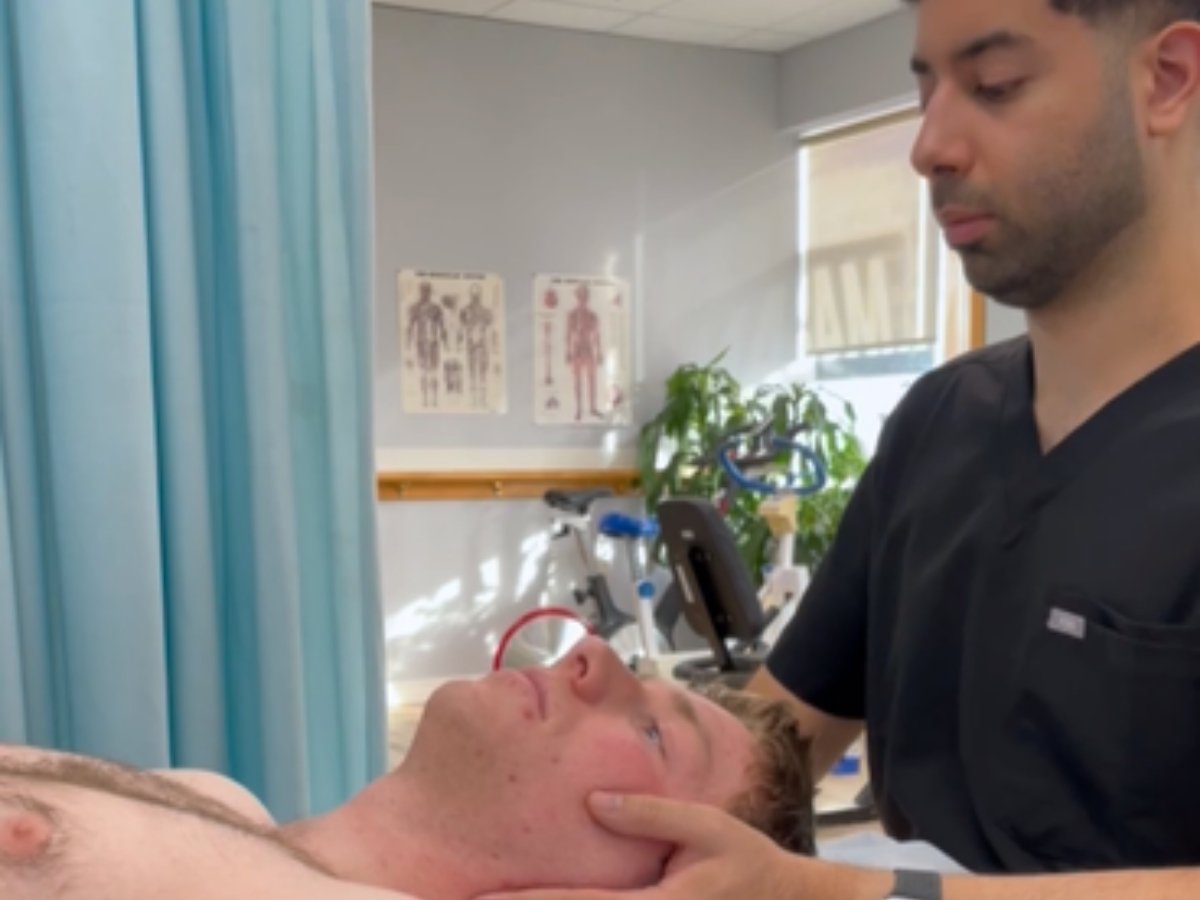
Do you get sudden, sharp, electric jolts of pain that shoot from the base of your skull up over the back of your head? Does brushing your hair or resting your head on a pillow suddenly feel sore? If so, you may be dealing with occipital neuralgia, an irritation of the nerves that supply the back of the scalp.
At Vaughan Physiotherapy Clinic, we assess and treat neck-related head pain for desk workers, drivers, athletes, and people recovering from neck injuries. Our goal is not just to calm the pain for now, but to work out what is irritating the nerve and reduce that load, working alongside your physician when medical care is also needed.
Here is what occipital neuralgia is, how to recognize it, what it can be confused with, and what the research says about treating it.
What Is Occipital Neuralgia?
Occipital neuralgia is a nerve pain condition. It causes brief attacks of shooting, stabbing, or electric pain in the back of the scalp, along the path of the occipital nerves (Headache Classification Committee of the International Headache Society, 2018). It can affect one side or both sides of the head.
It is less common than many other headache types. A Dutch population study estimated about 3 new cases per 100,000 people each year (Urits et al., 2020). Because its symptoms overlap with migraine, tension-type headache, and headache coming from the neck, it can be easy to mislabel.
How It Is Diagnosed
Doctors use the international headache criteria to diagnose occipital neuralgia. In plain terms, the pain must (Headache Classification Committee of the International Headache Society, 2018):
- Follow the occipital nerves: the back of the head, on one or both sides
- Have at least two of these features: repeated attacks lasting seconds to minutes, severe intensity, and a shooting, stabbing, or sharp quality
- Come with a sensitive scalp: unpleasant or painful feelings from light touch, such as combing the hair, along with tenderness over the nerve
- Ease temporarily with a numbing injection (a local anaesthetic nerve block) given by a physician
- Not be better explained by another headache diagnosis
Understanding the Anatomy
Three nerves carry feeling from the back of the scalp. All of them start in the upper neck (Choi & Jeon, 2016; Urits et al., 2020):
- Greater occipital nerve: comes from the second cervical nerve (C2) and passes through the muscles at the base of the skull. It surfaces roughly 3 cm below the bump at the back of the skull and about 1.5 cm from the midline. It is involved in about 90 percent of cases (Choi & Jeon, 2016)
- Lesser occipital nerve: runs further out to the side, toward the area behind the ear. It is involved in about 10 percent of cases (Choi & Jeon, 2016)
- Third occipital nerve: comes from C3 and supplies the lower back of the head and upper neck
- Suboccipital muscles: the small, deep muscles where the neck meets the skull, which the greater occipital nerve travels close to
The most common cause is irritation of these nerves by tight, overworked neck muscles or by wear-and-tear changes in the upper neck joints (Choi & Jeon, 2016). Less often, the nerve is irritated by injury, a growth, or a blood vessel problem, which is why a proper workup matters.
Recognizing the Symptoms
Common symptoms include (Headache Classification Committee of the International Headache Society, 2018; Choi & Jeon, 2016):
- Sudden jolts of pain that start at the base of the skull and shoot up over the back of the head, sometimes toward the top of the head
- Pain that is usually on one side, though both sides can be affected
- A constant ache between the sharp attacks in some people
- A tender spot at the base of the skull, where pressing reproduces the pain
- Scalp sensitivity: brushing your hair, wearing a hat, or lying on a pillow feels unpleasant or painful
- Pain that spreads toward the forehead or behind the eye. This happens because nerves from the upper neck and the face share connections in the brainstem
- Some people also report eye discomfort, dizziness, or nausea, although these are described mainly in small case reports
What Makes It Worse?
- Neck movements: tipping the head back or turning it, especially while lying on a pillow (Choi & Jeon, 2016)
- Sustained postures: long periods at a desk, screen, or steering wheel that keep the neck muscles working
- Muscle tension: tight muscles at the base of the skull can press on the nerve (Choi & Jeon, 2016)
- Pressure on the area: tight hats, helmets, headbands, or firm pillows
- Neck injury: whiplash or a blow to the back of the head
- Stress and poor sleep, which can raise muscle tension and pain sensitivity
What Else Could It Be?
Several conditions cause pain in the back of the head and need different care. Part of our assessment is sorting these out (Choi & Jeon, 2016; Urits et al., 2020):
- Cervicogenic headache: pain referred from the joints or muscles of the upper neck. It is usually a steadier ache that changes with neck movement, rather than electric jolts. It is the most common look-alike, and the two can occur together
- Tension-type headache: a pressing, band-like ache around the head without sharp shooting attacks
- Migraine: throbbing pain, often with nausea and sensitivity to light and sound, lasting hours to days. Migraine can also respond to a nerve block, so a block alone does not prove occipital neuralgia
- Cluster headache: severe pain around one eye with a red, watery eye or runny nose, in clusters of attacks
- Myofascial trigger points: tender knots in the neck and shoulder muscles that refer pain to the head (Headache Classification Committee of the International Headache Society, 2018)
- Upper neck arthritis or joint problems at the top two vertebrae
When to See a Doctor First
Most occipital pain is not dangerous, but rare causes include tumours, infection, blood vessel problems, and structural problems where the skull meets the spine (Choi & Jeon, 2016). See your physician promptly, or go to the emergency department, if you have:
- A sudden, severe "worst ever" headache that peaks within seconds to a minute
- Headache with fever, a stiff neck, confusion, or a rash
- Weakness, numbness, slurred speech, double vision, loss of vision, or trouble with balance
- Head or neck pain after a fall, car accident, or other trauma, especially with dizziness or new neurological symptoms
- A new headache after age 50, especially with scalp tenderness, jaw pain when chewing, or vision changes, which can point to giant cell arteritis (Choi & Jeon, 2016)
- Headache that is steadily getting worse, wakes you from sleep, or is triggered by coughing or straining
- A history of cancer, unexplained weight loss, or a weakened immune system
Our physiotherapists screen for these signs at your first visit and will coordinate with your family physician if medical assessment, imaging, or a referral to a neurologist or pain specialist is needed.
Related reading: Pain at the back of the head can also come from cervicogenic headaches, tension-type headaches or mechanical neck pain.
Why Physiotherapy Is Essential
Occipital neuralgia is a nerve pain problem, but in many people the nerve is being irritated by what is happening around it: tight muscles at the base of the skull, stiff upper neck joints, and long hours in the same posture (Choi & Jeon, 2016). Medication and injections can settle a flare, but if the neck keeps loading the nerve the same way, the pain tends to return.
Reviews consistently list conservative care as the first line of treatment for occipital neuralgia, including physiotherapy for muscle tension and posture, before injections or procedures are considered (Urits et al., 2020; Choi & Jeon, 2016). We want to be honest: research on physiotherapy for occipital neuralgia itself is limited, and much of what we do is based on how the nerve and neck work, plus stronger evidence from closely related neck-related headaches (Deuel et al., 2024).
Physiotherapy focuses on the main drivers:
- Muscle tension: easing the tight muscles at the base of the skull that the nerve passes through
- Neck joint stiffness: restoring movement in the upper neck and upper back
- Neck muscle control: retraining the deep neck muscles that support the head so the bigger muscles do not overwork
- Daily habits: desk setup, sleep posture, and pillow choice
Your Treatment Plan at Vaughan Physiotherapy Clinic
Phase 1: Assessment and Screening (Visit 1)
Your first visit focuses on confirming that the pain pattern fits occipital neuralgia and ruling out anything more serious. A full assessment includes:
- Headache history: what the pain feels like, where it travels, what triggers it, and your work and injury history
- Red flag screening: neurological and medical warning signs that need a physician first
- Neurological check: sensation, strength, reflexes, and scalp sensitivity
- Nerve palpation: gently pressing along the greater and lesser occipital nerves to find the tender, pain-reproducing spots (Choi & Jeon, 2016)
- Upper neck examination: joint movement at the top of the neck and muscle tenderness, which helps tell nerve pain apart from cervicogenic headache or muscle trigger points (Headache Classification Committee of the International Headache Society, 2018)
- Deep neck muscle testing: control of a gentle chin nod (Jull et al., 2002)
A firm diagnosis of occipital neuralgia includes temporary relief from a numbing nerve block, which is done by a physician (Headache Classification Committee of the International Headache Society, 2018). If needed, we will refer you to your family doctor, who may order imaging such as MRI (Choi & Jeon, 2016).
Phase 2: Settling the Nerve (Weeks 1 to 3)
Early care aims to calm the irritated nerve and the tight tissues around it. Reviews list simple measures such as rest, warm or cold packs, massage, and physiotherapy as first steps (Urits et al., 2020). This phase may include:
- Education and reassurance: what is causing the pain and how to avoid flare-ups, which is part of recommended care (Choi & Jeon, 2016)
- Gentle soft tissue work: easing the muscles at the base of the skull and upper neck, avoiding heavy pressure directly over a very sensitive nerve
- Heat or cold: whichever you find more soothing at home
- Activity changes: screen breaks, monitor height, and pillow adjustments
Phase 3: Restoring Mobility and Neck Control (Weeks 2 to 8)
The strongest exercise and manual therapy research for this region comes from cervicogenic headache, a closely related neck-related headache. We use it as the closest available evidence, while recognizing it was not tested in occipital neuralgia itself.
Deep neck flexor training
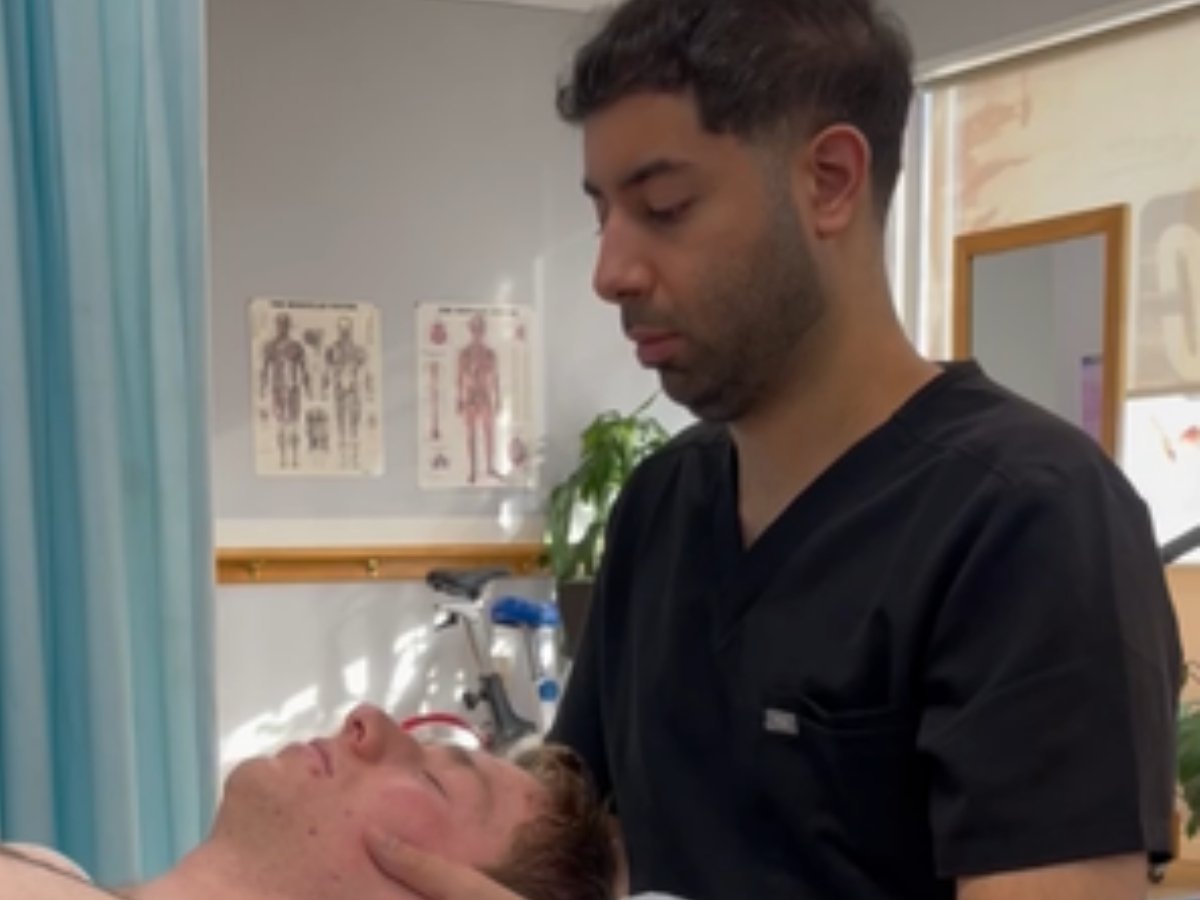
In a well-known trial of 200 people with cervicogenic headache, a six-week program of low-load neck exercise reduced headache frequency and intensity, and the benefit was still present at 12 months (Jull et al., 2002). A Canadian clinical practice guideline recommends low-load endurance exercises for the deep neck and shoulder blade muscles, along with education, for persistent neck-related headache (Côté et al., 2019). Your program may include:
- Chin nods: lying on your back, gently nod as if saying "yes", without lifting your head, and hold for a few seconds
- Seated chin tucks with the spine tall
- Shoulder blade setting: gently drawing the shoulder blades back and down, then progressing to resisted rows
Manual therapy
In the same trial, manual therapy to the neck also reduced headache frequency and intensity over 12 months. Combining exercise with manual therapy helped about 10 percent more people, but this difference was not statistically significant (Jull et al., 2002). The Canadian guideline suggests either exercise or manual therapy to the neck and upper back for persistent neck-related headache, rather than combining many treatments at once (Côté et al., 2019). Techniques may include:
- Gentle mobilization of the upper neck and upper back joints
- Suboccipital release and soft tissue work for the neck and upper shoulder muscles
Phase 4: Return to Full Activity and Self-Management (Weeks 6 to 12+)
- Progressive strengthening of the neck and upper back so they tolerate work, sport, and daily life
- Flare-up plan: a short list of exercises, positions, and load changes to use as soon as symptoms return
- Workplace advice for desk work and driving
- Coordination with your physician if attacks remain frequent
Beyond Physiotherapy: Complementary Care for Occipital Neuralgia
Exercise, manual therapy, education, and good medical care form the core of occipital neuralgia management. Some patients also benefit from other services at our clinic to ease pain and muscle tension so they can stay consistent with rehab. Here is an honest summary of what the evidence does and does not show for each.
How Acupuncture and Dry Needling Can Help
Acupuncture and dry needling use fine needles to reduce pain and ease tight, tender muscles.
- What the evidence shows: a systematic review of 11 randomized trials, all from China, found that acupuncture lowered pain scores more than medication, by about 2.4 points on the pain scales used. However, the trials were small and poorly blinded, the certainty of the evidence was low to very low, and the authors called the results inconclusive (Yun et al., 2020). There are no trials of dry needling for occipital neuralgia. The closest evidence comes from neck pain with muscle trigger points, where a review of 28 trials found dry needling reduced pain in the short term compared with sham or no treatment, and worked about as well as other physiotherapy treatments (Navarro-Santana et al., 2020)
- Where it fits: as a short-term option to settle pain and tension in the muscles at the base of the skull while you work on exercise and posture
- Safety: generally safe. In the neck pain trials, side effects were minor, mostly soreness that settled within one to two days (Navarro-Santana et al., 2020). Needling near the base of the skull requires careful technique, and we avoid needling directly into a highly irritable nerve
How Massage Therapy Can Help
Registered massage therapy focuses on the soft tissues of the neck, upper back, and shoulders.
- What the evidence shows: a 2021 evidence review by WorkSafeBC found no studies showing whether massage works for occipital neuralgia (Martin, 2021). Reviews still list massage among first-line conservative options (Urits et al., 2020), and the Canadian guideline supports clinical massage for chronic tension-type headache (Côté et al., 2019), which is indirect evidence only
- Where it fits: it may help with comfort and with tension in the neck and shoulder muscles that can irritate the nerve. We treat it as a supportive add-on, not a stand-alone treatment
- Safety: very safe. Firm pressure directly over a sensitive nerve is avoided
How Chiropractic and Joint Manipulation Can Help
Chiropractic care uses joint mobilization and manipulation of the neck and upper back.
- What the evidence shows: we did not find trials of chiropractic manipulation for occipital neuralgia specifically. In cervicogenic headache, manual therapy including manipulation reduced headache frequency and intensity (Jull et al., 2002), and the Canadian guideline suggests manipulation with or without mobilization of the neck and upper back as one option for persistent neck-related headache (Côté et al., 2019). The same guideline advises against neck manipulation for episodic tension-type headache and against using it as the only treatment for chronic tension-type headache
- Where it fits: for upper neck or upper back stiffness that may be adding load around the nerve, combined with exercise and education
- Safety: generally safe after proper screening. Manipulation is not appropriate with red flags, a recent neck injury, or neurological symptoms, and gentle mobilization can be used instead
Whichever combination you choose, these treatments share one purpose: settling symptoms while the longer-term fix, a more mobile and better-supported neck, takes hold.
When Are Injections or Surgery Considered?
Medical care for occipital neuralgia is managed by your physician, neurologist, or pain specialist, and it usually follows a step-by-step approach (Choi & Jeon, 2016):
- Medication: common pain relievers tend to give only short-lived relief. Some nerve pain medications, such as certain anticonvulsants and tricyclic antidepressants, may reduce how often and how strongly attacks occur (Urits et al., 2020)
- Nerve blocks: a numbing injection, often with a steroid, near the occipital nerve. It helps confirm the diagnosis and usually gives temporary relief. In some people, relief lasts several months (Choi & Jeon, 2016)
- Botulinum toxin and pulsed radiofrequency: options for pain that keeps returning. In one randomized trial, pulsed radiofrequency gave better results than steroid injections up to six months, but most other studies in this area are small and uncontrolled (Urits et al., 2020)
- Surgery: nerve decompression, nerve stimulation, or, rarely, procedures that cut the nerve. These are a last resort for severe pain that has not responded to other care. Procedures that cut the nerve cannot be reversed and can sometimes cause harder-to-treat pain (Choi & Jeon, 2016)
Physiotherapy fits alongside all of these. Many people use the calmer period after an injection to build neck strength.
How Long Will It Take?
There is very little research on how long occipital neuralgia takes to settle with conservative care. Recovery depends on the cause, how long you have had symptoms, and whether muscle tension, joint stiffness, or an injury is driving the problem.
In the closely related cervicogenic headache, a six-week exercise or manual therapy program produced benefits that lasted to 12 months (Jull et al., 2002). In our experience, many people notice fewer or milder attacks within a few weeks, with strength building over the following months. Some people also need medical treatment, which is a normal part of care.
Prevention and Long-Term Management
- Move often: break up long periods at a desk, screen, or steering wheel with short, regular movement breaks
- Set up your workstation: screen at eye level, keyboard close, and chair supporting your back
- Choose your pillow well: enough support to keep your neck level, without a firm edge pressing on the base of the skull
- Keep up your neck exercises: a few minutes of chin nods and shoulder blade work several times a week
- Manage stress and sleep: both affect muscle tension and pain sensitivity
- Act early: if the familiar jolts return, go back to your flare-up plan straight away and book a check-in if they do not settle
Frequently Asked Questions
Is occipital neuralgia serious?
Usually not. Most cases are caused by irritation from muscles or upper neck joints and can be managed. But because rare causes such as tumours, infection, and blood vessel problems can cause similar pain (Choi & Jeon, 2016), it is important to be properly assessed, especially if the pain is new, getting worse, or comes with any neurological symptoms.
Is it occipital neuralgia or a migraine?
Occipital neuralgia usually causes brief, shooting, electric jolts at the back of the head, with a tender spot at the base of the skull. Migraine is more often a throbbing headache lasting hours, with nausea and sensitivity to light and sound. The two can overlap, and pain from the back of the head can spread to the front, so a careful assessment matters (Headache Classification Committee of the International Headache Society, 2018).
How is it different from a headache coming from the neck?
Cervicogenic headache is pain referred from neck joints or muscles and tends to be a steadier ache that changes with neck movement. Occipital neuralgia is pain from the nerve itself, with sharp shooting attacks and scalp sensitivity (Choi & Jeon, 2016). They can occur together, and the physiotherapy approach overlaps a great deal.
Do I need an MRI?
Not always. Your physician decides on imaging. MRI is the most useful test when a structural cause is suspected (Choi & Jeon, 2016).
Will a nerve block fix it?
A nerve block helps confirm the diagnosis and often gives temporary relief, sometimes for several months (Choi & Jeon, 2016). It does not change the muscle tension, joint stiffness, or habits that may be irritating the nerve, which is why we often combine it with physiotherapy.
Can acupuncture, massage, or chiropractic replace exercise and medical care?
No. Neck exercise, education, posture changes, and appropriate medical care are the foundation. Acupuncture has early but low-certainty evidence (Yun et al., 2020), and massage and manipulation have not been tested in occipital neuralgia specifically. They are best used as short-term supports to ease pain and tension while you rebuild.
Our Specialized Approach at Vaughan Physiotherapy Clinic
Careful headache screening: we check for warning signs first and refer to your physician when medical care is needed
Clear diagnosis: sorting out occipital neuralgia from neck-related, tension-type, and migraine headaches so treatment fits the cause
Hands-on care: gentle upper neck mobilization and soft tissue work for the muscles at the base of the skull
Deep neck muscle retraining: a short, simple home program based on headache research
Integrated care: physiotherapy, massage therapy, acupuncture, and chiropractic under one roof when they add value
Team approach: working alongside your family physician, neurologist, or pain specialist if injections or medication are part of your plan
Take the First Step Toward Relief From Head and Neck Pain
Shooting pain at the back of your head does not have to control your workday or your sleep. Our team at Vaughan Physiotherapy Clinic helps patients from Thornhill, Vaughan, North York, Richmond Hill, and surrounding communities manage nerve-related head pain with evidence-based, hands-on care.
Book your assessment today:
Phone: 905-669-1221
Location: 398 Steeles Ave W #201, Thornhill, ON L4J 6X3
Online Booking: www.vaughanphysiotherapy.com
References
Choi I, Jeon SR. Neuralgias of the head: occipital neuralgia. Journal of Korean Medical Science. 2016;31(4):479-488. doi:10.3346/jkms.2016.31.4.479
Côté P, Yu H, Shearer HM, et al. Non-pharmacological management of persistent headaches associated with neck pain: a clinical practice guideline from the Ontario Protocol for Traffic Injury Management (OPTIMa) Collaboration. European Journal of Pain. 2019;23(6):1051-1070. doi:10.1002/ejp.1374
Deuel D, Sandgren A, Nelson EO, et al. Conservative management of occipital neuralgia supported by physical therapy: a review of available research and mechanistic rationale to guide treatment. Current Pain and Headache Reports. 2024;28(12):1321-1331. doi:10.1007/s11916-024-01288-6
Headache Classification Committee of the International Headache Society. The International Classification of Headache Disorders, 3rd edition. Cephalalgia. 2018;38(1):1-211. doi:10.1177/0333102417738202
Jull G, Trott P, Potter H, et al. A randomized controlled trial of exercise and manipulative therapy for cervicogenic headache. Spine. 2002;27(17):1835-1843. doi:10.1097/00007632-200209010-00004
Martin CW. Acupuncture or massage therapy as treatment for occipital neuralgia. WorkSafeBC Evidence-Based Practice Group (Mini Health Technology Assessment). 2021.
Navarro-Santana MJ, Sanchez-Infante J, Fernández-de-las-Peñas C, Cleland JA, Martín-Casas P, Plaza-Manzano G. Effectiveness of dry needling for myofascial trigger points associated with neck pain symptoms: an updated systematic review and meta-analysis. Journal of Clinical Medicine. 2020;9(10):3300. doi:10.3390/jcm9103300
Urits I, Schwartz RH, Patel P, et al. A review of the recent findings in minimally invasive treatment options for the management of occipital neuralgia. Neurology and Therapy. 2020;9(2):229-241. doi:10.1007/s40120-020-00197-1
Yun JM, Lee SH, Cho JH, Kim KW, Ha IH. The effects of acupuncture on occipital neuralgia: a systematic review and meta-analysis. BMC Complementary Medicine and Therapies. 2020;20:171. doi:10.1186/s12906-020-02955-y
Disclaimer: This article is for educational purposes only and does not replace professional medical advice. Pain at the back of the head can have several causes, including migraine, neck-related headache, and, rarely, serious conditions affecting the brain, blood vessels, or upper spine. Diagnosis of occipital neuralgia and treatments such as medication and nerve blocks are provided by a physician. Always consult a qualified healthcare provider for diagnosis and treatment specific to your condition, and seek emergency care for a sudden severe headache or new neurological symptoms.







