





Condition guide
Return to Running Program
A structured, step by step plan to return to running safely after injury, surgery such as ACL reconstruction, a stress fracture, or pregnancy.
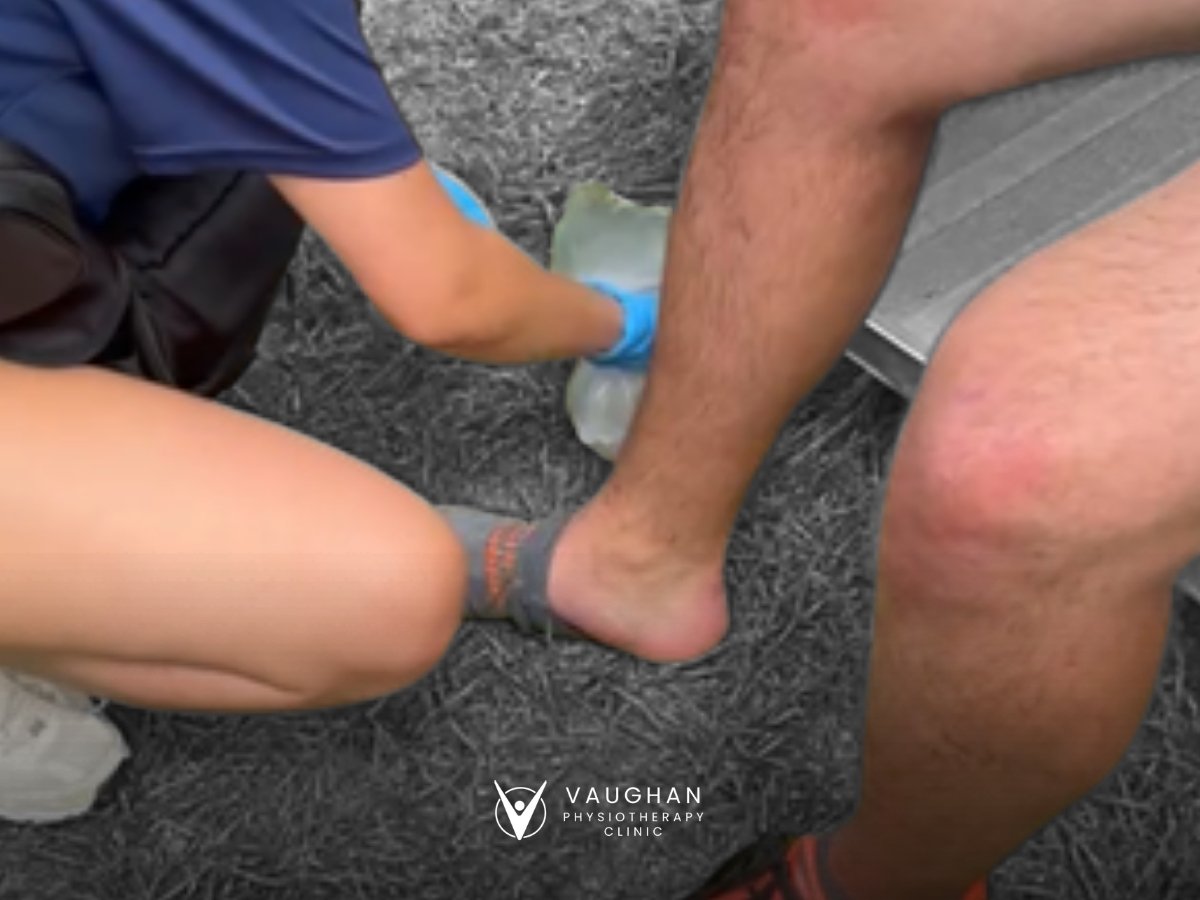
Are you itching to run again after a knee surgery, a stress fracture, or having a baby, but not sure when it is safe to start? Did your last comeback end with the same pain returning after a few weeks? You are not alone. Getting back to running is one of the most common goals we see, and one of the easiest to rush.
At Vaughan Physiotherapy Clinic, our Return to Running Program helps runners of every level get back on the road or trail after injury, surgery such as ACL reconstruction, a bone stress injury, or pregnancy. Instead of guessing, we use clear checkpoints for strength, control, and symptoms, then build your running back step by step so it lasts.
Here is what a return to running program involves, how to tell whether you are ready, what setbacks usually mean, and what the research says about doing it well.
What Is a Return to Running Program?
A return to running program is a planned, gradual path from not running at all back to your usual training. It combines readiness testing (can your body handle the impact yet?), strength work, and a graded running plan, usually starting with short run-walk intervals.
The main idea is simple. Running is a high-impact, repetitive activity. Every stride loads your bones, tendons, muscles, and pelvic floor. After time off, those tissues have lost some of their tolerance, and they need to be reloaded gradually. Going back too fast is one of the most common reasons comebacks fail.
Who Is It For?
We most often build return to running plans for people in these situations:
- After ACL reconstruction or other knee surgery: running is a major milestone in knee rehab. Many studies allow it at a set time after surgery, but research suggests that strength and movement checks should be used as well, not time alone (Rambaud et al., 2018)
- After a bone stress injury or stress fracture: how quickly you can return depends a great deal on which bone is involved. Some sites heal reliably with a simple graded plan, while others need much more caution (Hoenig et al., 2023)
- After pregnancy: the leading postnatal guideline advises waiting until at least 3 months after birth and passing a set of strength and impact checks first (Goom et al., 2019)
- After tendon, muscle, or joint injuries: such as Achilles or patellar tendon pain, calf or hamstring strains, and ankle sprains
- After a long break: illness, a busy season of life, or simply time away from the sport
Why Time Alone Is Not Enough
A large review of research after ACL reconstruction looked at 201 studies and found that running was most often allowed around 12 weeks after surgery, with a very wide range of 5 to 39 weeks. Fewer than one in five of those studies used any strength, movement, or performance test to decide. The authors suggested combining time since surgery with performance-based checks (Rambaud et al., 2018). We apply the same idea to every type of return: time sets the earliest start, and your body's readiness decides the rest.
Signs You Are Ready (and Not Ready)
Readiness looks a little different depending on why you stopped running, but some signs are common to most people.
Signs you may be ready to start:
- You can walk briskly for 30 minutes without pain or symptoms (Goom et al., 2019)
- Daily activities, stairs, and a full day on your feet feel normal
- Any pain is mild and settles quickly, and is not worse the next morning
- You can hop and land on one leg with good control
- Your injured leg is close in strength to your other leg
- After surgery or a fracture, your surgeon or doctor has cleared you for impact
Signs you are not ready yet:
- Pain on walking, or a limp
- A specific spot on a bone that is still tender to press
- Swelling in the knee or ankle after activity
- Clear weakness or poor control in single-leg tasks
- After pregnancy: leaking, heaviness or dragging in the pelvis, or pelvic or low back pain with impact (Goom et al., 2019)
What Makes a Comeback Go Wrong?
- Doing too much, too soon: large, sudden jumps in weekly distance are a likely contributor to running injuries, although the research is limited and no exact "safe" percentage has been proven (Damsted et al., 2018)
- Starting before the tissue is ready: for example, running on a bone that is still tender
- Skipping strength work: running alone rarely rebuilds the strength lost during time off
- Underfuelling: low energy availability and low vitamin D are risk factors for bone stress injuries (Schroeder et al., 2024)
- Poor sleep and high life stress, which are common after having a baby or during a busy work season (Goom et al., 2019)
- Adding speed and hills too early: it is safer to build distance first and add intensity later
Common Setbacks and What They Mean
A little discomfort during a return to running is common and is not always a sign of harm. What matters is the type of symptom, how strong it is, and how it behaves the next day. Part of our job is helping you tell the difference:
- General muscle soreness that peaks a day or two after a run and then fades: usually a normal response to new load
- Mild tendon or joint ache that stays low and settles by the next morning: often acceptable. The postnatal guideline, for example, treats pain of 0 to 3 out of 10 that settles quickly as generally acceptable, while moderate or lasting pain suggests the load is too high (Goom et al., 2019)
- Pain that builds during a run, makes you change your stride, or lasts into the next day: a sign to step back a stage
- Focal bone pain, one small spot that is sore to press: needs assessment before you continue, since it may be a bone stress injury
- Knee swelling after running following knee surgery: the knee is not ready for that load yet
- Leaking, heaviness, or bulging after pregnancy: a pelvic floor sign, not just a fitness issue, and worth a pelvic health assessment
When to See a Doctor First
See your physician promptly, or go to the emergency department, if you have:
- Chest pain, fainting, a racing or irregular heartbeat, or unusual shortness of breath while running. Stop running and seek medical care right away
- Calf swelling, warmth, or tenderness, especially after surgery, a long flight, or recent childbirth, which can be a sign of a blood clot
- Bone pain at night or at rest, or bone pain that keeps getting worse
- Worsening pain at one spot on a bone, or deep groin pain with running. Some stress fractures, such as those in the hip, need urgent medical attention (Schroeder et al., 2024)
- A hot, swollen joint, fever, or a surgical wound that is red or draining
- Heavy vaginal bleeding or bleeding that returns after it had stopped following childbirth
- Repeated stress fractures, or missed or absent periods, which can point to low energy availability
Our physiotherapists screen for these signs at your first visit and will coordinate with your physician or surgeon if imaging, a referral, or medical clearance is needed.
Related reading: Before you build your mileage, see our running assessment, our guide to shin splints and our 5 smart tips for running.
Why Physiotherapy Is Essential
Most failed comebacks follow the same pattern: the injury feels better, you head out for a "normal" run, and within a week or two the pain is back. Tissue that feels fine at rest may not be ready for thousands of impact steps.
Research supports a more structured approach. After ACL reconstruction, experts recommend using strength and performance checks alongside time since surgery, rather than time alone (Rambaud et al., 2018). After pregnancy, the leading guideline sets out specific impact and strength tests to pass before running (Goom et al., 2019). After a bone stress injury, return timelines depend strongly on which bone was injured, so the plan has to match the injury (Hoenig et al., 2023).
Physiotherapy brings these pieces together:
- Readiness testing: objective checks of strength, hopping, balance, and symptoms so you know when to start
- A graded running plan: run-walk intervals that build in clear stages, adjusted to how your body responds
- Strength and control: rebuilding the calf, thigh, hip, trunk, and pelvic floor capacity that running demands
- Communication with your care team: following your surgeon's protocol and involving your doctor when needed
Your Treatment Plan at Vaughan Physiotherapy Clinic
Phase 1: Assessment and Planning
Your first visit focuses on where you are now and what you are returning to. A full assessment includes:
- History: your injury, surgery, or pregnancy and birth details, your running history, your goals, and any races on the calendar
- Medical clearance: after surgery or a fracture, we confirm what your surgeon or doctor has approved and follow their protocol
- Red flag screen: bone pain patterns, heart and breathing symptoms, signs of a blood clot, and energy and nutrition concerns
- Movement and strength testing: range of motion, single-leg strength, balance, squatting, and hopping
- Pelvic health screen for postnatal runners: leaking, heaviness, and abdominal wall control. When an internal pelvic floor assessment is needed, we arrange this with a pelvic health physiotherapist
If anything suggests a stress fracture that has not been diagnosed, a high-risk bone stress injury, or a medical problem, we will recommend imaging or a physician referral before running starts. X-rays are usually done first but often miss early bone stress injuries, and MRI is the preferred follow-up test (Schroeder et al., 2024).
Phase 2: Building the Foundation (Before Running)
Before your first run, we build the strength and impact tolerance running needs. Cycling, swimming, or other low-impact options keep you fit in the meantime.
Strength and impact tests
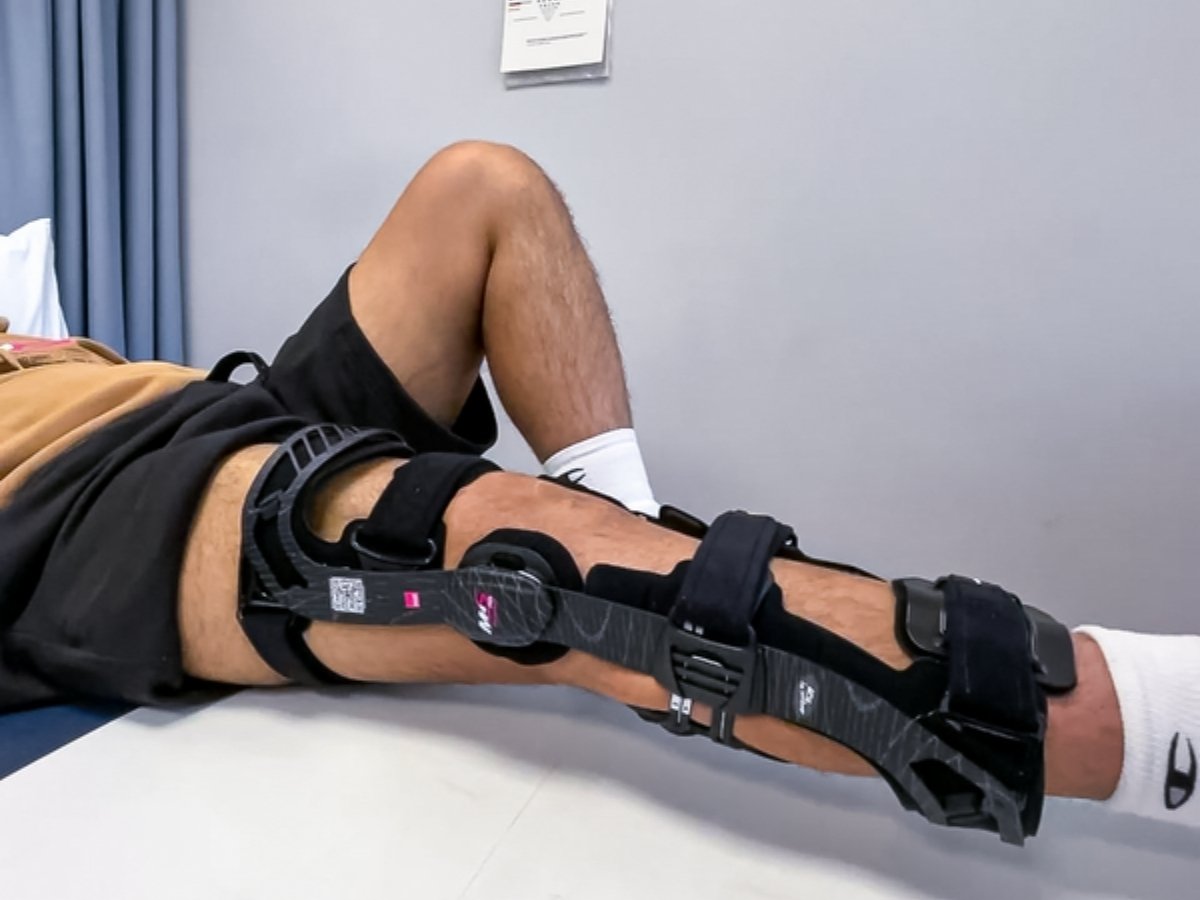
We use simple, repeatable tests to decide when you are ready to run. The checks depend on your situation:
- After pregnancy: the postnatal guideline suggests being able to walk for 30 minutes, balance on one leg for 10 seconds, do 10 single-leg squats on each side, jog on the spot for 1 minute, and do 10 forward bounds and 10 hops on each leg, all without pain, heaviness, or leaking. It also suggests aiming for 20 repetitions of single-leg calf raises, single-leg bridges, single-leg sit to stands, and side-lying leg lifts (Goom et al., 2019)
- After ACL reconstruction: criteria commonly used in research include full or near-full knee movement (more than 95 percent of the other side), little or no pain, thigh strength of at least 70 percent of the other leg, and hop tests of at least 70 percent of the other leg (Rambaud et al., 2018). These are minimum starting points, and your surgeon's protocol comes first
- After a bone stress injury: pain-free walking, normal daily activity, and no tenderness when the injured spot is pressed are the usual starting points, along with clearance from your doctor for high-risk sites
Strength program
Your program may include calf raises (two legs, then one, then with weight), split squats, step-ups, bridges, hip strengthening, trunk and pelvic floor work, and gradually introduced hopping and bounding drills.
Phase 3: Graded Return to Running
Once you pass your readiness checks, running starts small. Most programs use run-walk intervals, for example one or two minutes of easy running followed by walking, repeated several times. The postnatal guideline describes starting with roughly 1 to 2 minutes of easy running mixed with walk breaks (Goom et al., 2019). From there we build:
- Running time first: longer running intervals and shorter walk breaks until you can run continuously
- Then distance and frequency: more runs per week, with rest or cross-training days between runs at first
- Then speed and hills: intensity is added last, once volume is well tolerated (Goom et al., 2019)
- One change at a time: so that if symptoms flare, we know what caused it
How fast should you progress? You may have heard of the "10 percent rule" for weekly increases. It is a reasonable rule of thumb, but the research behind it is thin. A systematic review found no evidence supporting the 10 percent rule, and in one trial novice runners who increased by 10 percent a week had about the same injury rate as those who increased faster (Damsted et al., 2018). The same review did find a trend toward more injuries when weekly distance jumped by more than 30 percent. In practice, we progress based on how you respond: if a stage feels comfortable and symptoms settle by the next morning, you move on; if not, you repeat or step back.
Some apps use the acute to chronic workload ratio to predict injury risk. This method has been strongly criticized, and experts have concluded that there is no evidence supporting its use to manage training loads (Impellizzeri et al., 2020). We keep things simpler and track your running time, distance, effort, and symptoms.
Phase 4: Return to Full Training and Performance
- Continuous running at your usual easy pace and distance
- Speed work, hills, and trail running, reintroduced gradually
- Return to sport testing for field and court athletes after ACL reconstruction, a separate step from running
- Running with a stroller: the postnatal guideline suggests waiting until your baby is about 6 to 9 months old and using a stroller designed for running (Goom et al., 2019)
Beyond Physiotherapy: Complementary Care for Return to Running
A graded running plan and strength work are the core of any return to running program, and that is where the evidence is clearest. Some runners also benefit from other services at our clinic to ease pain, soreness, and tightness so they can stay consistent. There is no research testing these treatments as part of a return to running program specifically, so the evidence below comes from athletes and sport more broadly. Here is an honest summary.
How Acupuncture and Dry Needling Can Help
Acupuncture and dry needling use fine needles to reduce pain and ease tight, tender muscles.
- What the evidence shows: a 2025 systematic review of dry needling in sport included 24 studies and 580 athletes from 13 sports. It found that dry needling generally helped more with pain and muscle stiffness than with athletic performance, and the overall study quality was modest (Kużdżał et al., 2025). We found no studies of needling as part of a return to running program
- Where it fits: as a short-term option for calf, hamstring, or hip muscle tightness and pain that is getting in the way of your strength work or running
- Safety: generally very safe. Minor bruising or soreness at needle sites is the most common side effect
How Massage Therapy Can Help
Registered massage therapy focuses on muscle tightness and soreness in the legs, hips, and back.
- What the evidence shows: a meta-analysis of 11 studies with 504 participants found that massage after hard exercise reduced muscle soreness, with the biggest effect at around 48 hours. The included trials were small and generally low quality (Guo et al., 2017). There are no trials of massage as part of a return to running program
- Where it fits: helping you recover between sessions as running volume builds, and easing tight muscles. It supports the plan but does not replace gradual loading
- Safety: very safe. Deep pressure should be avoided over a recent surgical site, a healing fracture, or a calf that may have a blood clot
How Chiropractic and Joint Manipulation Can Help
Chiropractic care uses joint mobilization and manipulation of the spine, pelvis, and lower limb joints.
- What the evidence shows: we did not find quality trials of chiropractic care or joint manipulation for people returning to running. Research on chiropractic care in sport is limited to a few small studies, so no firm conclusions can be drawn
- Where it fits: for runners with joint stiffness in the back, hips, or ankles that is limiting comfortable movement, combined with exercise and the graded running plan
- Safety: generally safe. It is not appropriate over a suspected or healing stress fracture, a recently repaired joint, or during pregnancy and early postnatal recovery without careful assessment
Whichever combination you choose, these treatments share one purpose: keeping you comfortable and consistent while the real work, gradual loading and stronger tissues, takes hold.
Working With Your Surgeon, Doctor, and Care Team
Many runners come to us after surgery, a fracture, or childbirth, so teamwork matters:
- After ACL reconstruction or other surgery: your surgeon's protocol sets the earliest point at which running can start and any restrictions, such as on certain graft types or repairs. We follow that protocol and add strength and performance checks on top of it, never instead of it
- After a bone stress injury: injuries at high-risk sites such as the hip (femoral neck), the front of the shin, and the navicular bone in the foot have more complications and harder returns (Hoenig et al., 2023). A stress fracture on the tension side of the femoral neck needs urgent surgical consultation (Schroeder et al., 2024). These cases need close medical oversight, and we coordinate with your doctor
- Energy and bone health: low energy availability and low vitamin D are risk factors for bone stress injuries (Schroeder et al., 2024), so repeated stress fractures or cycle changes are reasons to involve your doctor and a sports dietitian
- After pregnancy: we work with your family doctor or midwife, and with pelvic health physiotherapy where needed. The guideline also recommends checking on mood and sleep, not just physical readiness (Goom et al., 2019)
How Long Will It Take?
It depends on why you stopped, how long you have been away, and what you are returning to. Some general guides from the research:
- After ACL reconstruction: studies most often allowed running at about 12 weeks after surgery, but the range was 5 to 39 weeks (Rambaud et al., 2018). Many people take longer to meet strength and hop criteria, and that is normal
- After a bone stress injury: a large review of 76 studies found that more than 90 percent of athletes returned to sport. Average return times ranged from about 44 days for injuries at the back and inside of the shin to about 107 days for the femoral neck and 127 days for the navicular bone (Hoenig et al., 2023)
- After pregnancy: the guideline advises against running before 3 months after birth and suggests 3 to 6 months as a general window, with the actual timing based on your symptoms and test results. Recovery after a caesarean birth generally takes longer (Goom et al., 2019)
Building back to your previous training usually takes several more weeks to months after that. We will give you an honest estimate after your assessment.
Prevention and Long-Term Management
- Build gradually: avoid big jumps in weekly distance, and change one thing at a time
- Distance before speed: add hills and fast sessions only after your volume is well tolerated
- Keep strength training: two short sessions a week for your calves, thighs, and hips
- Fuel your training: eat enough to match your running
- Prioritize sleep and recovery: especially with a new baby, a busy job, or a heavy training block
- Use the next-morning check: if pain is worse the next morning, ease off for a few days
Frequently Asked Questions
When can I start running after ACL surgery?
There is no single date that fits everyone. Research shows running is often allowed around 12 weeks after surgery, but many experts recommend also meeting strength, movement, and hop criteria first (Rambaud et al., 2018). Your surgeon's protocol sets the earliest start, and we test when you are physically ready.
How soon can I run after having a baby?
The leading postnatal guideline advises waiting until at least 3 months after birth, and only then if you can pass a set of impact and strength tests without leaking, heaviness, or pain (Goom et al., 2019). Some women are ready soon after 3 months and some need longer, especially after a caesarean birth or with pelvic floor symptoms.
Is some pain during my return normal?
Mild discomfort that stays low and settles quickly, without being worse the next day, is common and often acceptable. Pain that builds during a run, changes how you run, or lasts into the next day means the load is too high. Sharp, focal bone pain should always be checked.
Should I follow the 10 percent rule?
It is a reasonable starting point, but research has not shown that 10 percent is a magic number (Damsted et al., 2018). We adjust your plan based on how your body responds rather than a fixed formula.
Can I keep training for my race while I recover?
Often, yes. Cycling, swimming, or pool running can maintain fitness while running is reintroduced, and we will help you judge whether your race date is realistic.
Can acupuncture, massage, or chiropractic replace a graded return to running?
No. A graded running plan and strength work are the foundation, and they have the most research behind them. Needling, massage, and joint mobilization are best used as short-term supports to ease pain, soreness, and tightness while you rebuild.
Our Specialized Approach at Vaughan Physiotherapy Clinic
✓ Criteria-based readiness testing: clear strength, hop, and symptom checks rather than guesswork or time alone
✓ Run-walk progressions: a written, stage-by-stage running plan adjusted to how you respond
✓ Post-surgical and postnatal experience: following your surgeon's protocol and the postnatal running guideline
✓ Strength that lasts: a practical program for your calves, hips, thighs, trunk, and pelvic floor
✓ Integrated care: physiotherapy, massage therapy, acupuncture, and chiropractic under one roof when they add value
✓ Safety first: screening for bone stress injuries, blood clots, heart symptoms, and energy deficiency, with physician referral when needed
Take the First Step Toward Running With Confidence
Your next comeback does not have to end like the last one. Our team at Vaughan Physiotherapy Clinic helps runners from Thornhill, Vaughan, North York, Richmond Hill, and surrounding communities return to running safely after injury, surgery, or pregnancy with evidence-based, hands-on care.
Book your assessment today:
📞 Phone: 905-669-1221
📍 Location: 398 Steeles Ave W #201, Thornhill, ON L4J 6X3
🌐 Online Booking: www.vaughanphysiotherapy.com
References
Damsted C, Glad S, Nielsen RO, Sørensen H, Malisoux L. Is there evidence for an association between changes in training load and running-related injuries? A systematic review. International Journal of Sports Physical Therapy. 2018;13(6):931-942.
Goom T, Donnelly G, Brockwell E. Returning to running postnatal: guidelines for medical, health and fitness professionals managing this population. 2019. Available from: https://athleticsni.org/download/files/Returning_to_running_postnatal_guideline_for_medical_health_and_fitness_professionals_managing_this_population.05.pdf
Guo J, Li L, Gong Y, et al. Massage alleviates delayed onset muscle soreness after strenuous exercise: a systematic review and meta-analysis. Frontiers in Physiology. 2017;8:747. doi:10.3389/fphys.2017.00747
Hoenig T, Eissele J, Strahl A, et al. Return to sport following low-risk and high-risk bone stress injuries: a systematic review and meta-analysis. British Journal of Sports Medicine. 2023;57(7):427-432. doi:10.1136/bjsports-2022-106328
Impellizzeri FM, Tenan MS, Kempton T, Novak A, Coutts AJ. Acute:chronic workload ratio: conceptual issues and fundamental pitfalls. International Journal of Sports Physiology and Performance. 2020;15(6):907-913. doi:10.1123/ijspp.2019-0864
Kużdżał A, Trybulski R, Muracki J, Klich S, Clemente FM, Kawczyński A. Dry needling in sports and sport recovery: a systematic review with an evidence gap map. Sports Medicine. 2025;55(4):811-844. doi:10.1007/s40279-025-02175-9
Rambaud AJM, Ardern CL, Thoreux P, Regnaux JP, Edouard P. Criteria for return to running after anterior cruciate ligament reconstruction: a scoping review. British Journal of Sports Medicine. 2018;52(22):1437-1444. doi:10.1136/bjsports-2017-098602
Schroeder JD, Trigg SD, Capo Dosal GE. Bone stress injuries: diagnosis and management. American Family Physician. 2024;110(6):592-600.
Disclaimer: This article is for educational purposes only and does not replace professional medical advice. Returning to running after surgery, a bone stress injury, or pregnancy should be guided by your surgeon, physician, or midwife as well as your physiotherapist. Chest pain, fainting, calf swelling, or worsening bone pain need prompt medical assessment. Always consult a qualified healthcare provider for diagnosis and treatment specific to your situation.