




Condition guide
Stinger or Burner (Brachial Plexus Injury in Contact Sport)
A brief stretch or pinch of the nerves from the neck to the arm after a hit, causing burning pain, tingling or weakness in one arm.
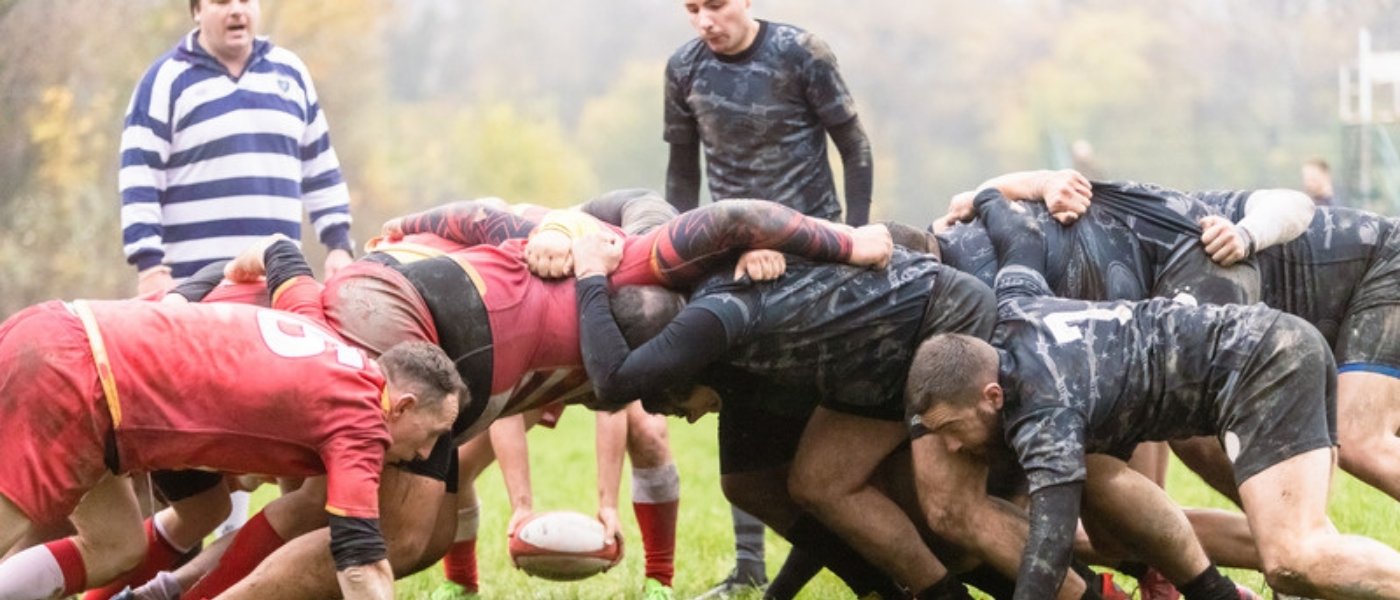
Did a tackle, a hit, or a fall onto your shoulder send a hot, electric pain shooting down one arm? Did the arm go numb or "dead" for a few seconds or minutes, then slowly come back? If so, you may have had a stinger, also called a burner, one of the most common nerve injuries in rugby, football, and other contact sports.
At Vaughan Physiotherapy Clinic, we work with rugby and contact sport athletes on the sideline and in the clinic. A stinger usually settles quickly, but it is a nerve injury, and it deserves a proper check. Our goal is to make sure nothing more serious is going on, get the arm and neck working fully again, and build the strength and tackling habits that make the next one less likely.
Here is what a stinger is, how to recognize it, what else it could be, and when it needs urgent medical attention.
What Is a Stinger or Burner?
A stinger or burner is a short-lived injury to the nerves that run from the neck into the arm. These nerves leave the spine as nerve roots and then join into a network above the collarbone called the brachial plexus. A stinger happens when one of these nerves is suddenly stretched or pinched, causing burning pain, tingling, numbness, or weakness in one arm. Symptoms often last from a few seconds to a few hours (Bowles et al., 2020).
Stingers are very common in collision sports. In United States college football, they are the most common neck-related injury, and they are almost four times more likely in games than in practice (Bowles et al., 2020). Surveys of high school and college rugby players found that 30 to 40 percent reported at least one stinger (Kawasaki et al., as cited in Bowles et al., 2020). Closer to home, a study of Canadian Atlantic University Sport football players found that 26 percent had a stinger in a single season (Charbonneau et al., 2012).
How a Stinger Happens
Researchers describe three main ways a stinger occurs (Bowles et al., 2020; Windmueller et al., 2025):
- Stretch (traction): the shoulder is driven down while the head and neck are forced to the opposite side, for example in a shoulder tackle. This stretches the upper part of the brachial plexus
- Direct blow: a hit just above the collarbone compresses the nerves where they sit close to the surface, an area called Erb's point
- Pinching at the neck: the neck is forced back and toward the injured side, narrowing the opening where the nerve root leaves the spine. This is more likely in athletes with a narrow spinal canal or worn discs
How Severe Is It?
Nerve injuries are graded by how much of the nerve is affected (Bowles et al., 2020; Windmueller et al., 2025):
- Grade 1 (neurapraxia): the nerve's outer coating is irritated, but the nerve fibres are intact. This is the typical stinger. Recovery is usually within minutes to about 2 weeks
- Grade 2 (axonotmesis): some nerve fibres are damaged and must regrow, at roughly 1 millimetre a day. Weakness can last weeks to months, but the outlook is generally good
- Grade 3 (neurotmesis): the nerve is badly disrupted. This is rare in sport and needs specialist care
Understanding the Anatomy
- Cervical nerve roots (C5 to T1): leave the spine through small openings between the neck bones. The C5 and C6 roots, which supply the shoulder and upper arm, are the ones most often involved in stingers (Bowles et al., 2020)
- Brachial plexus: the bundle of nerves that forms above and behind the collarbone and carries movement and feeling to the whole arm
- Shoulder girdle and upper back: the collarbone, shoulder blade, and mid-back position the shoulder and help absorb force before it reaches the neck
- Neck muscles: help control the head and neck when a hit arrives
Recognizing the Symptoms
In a survey of university football players who had stingers, the most common symptoms were tingling (77 percent), numbness (61 percent), weakness (44 percent), and neck pain (17 percent) (Bowles et al., 2020). Typical signs include:
- Sudden burning or electric pain that starts above the collarbone and shoots down one arm
- Tingling or numbness in the arm or hand, often not following a neat pattern
- A "dead arm" feeling, with the athlete shaking the arm or holding it limp at their side
- Weakness in the shoulder and upper arm, especially lifting the arm out to the side, bending the elbow, or turning the arm outward
- Symptoms in one arm only
Most stingers settle within seconds to a day, but weakness can take several days to clear and some cases last longer than 2 weeks (Bowles et al., 2020). Symptoms can also appear or change over the first 1 to 3 days after the hit, so a recheck matters even if the player felt fine at the end of the game (Windmueller et al., 2025).
What Makes It Worse?
- A previous stinger: a history of stingers was the strongest predictor of having another in the Canadian university study, along with more years played (Charbonneau et al., 2012)
- A narrow spinal canal or disc wear in the neck: both are linked to more stingers and more recurrences (Bowles et al., 2020)
- Reduced neck extension range: limited ability to bend the neck back was linked to a history of stingers in one study (Hakkaku et al., as cited in Bowles et al., 2020)
- Tackling technique: dropping the head or leading with the crown of the head raises the risk of neck injury. Head up, shoulder-led tackling is encouraged (Bowles et al., 2020)
- Playing on too early: returning before strength and movement are fully back may leave the area less protected
What Else Could It Be?
Several injuries can look like a stinger in the first few minutes. Telling them apart is a key part of sideline and clinic assessment:
- Neck fracture or ligament injury: neck pain, reduced neck movement, or tenderness over the spine. Some players first thought to have stingers have later been found to have neck fractures (Bowles et al., 2020)
- Spinal cord injury (transient cord neurapraxia): symptoms in both arms, or in the legs, point to the spinal cord rather than one nerve (Bowles et al., 2020)
- Cervical disc herniation or nerve root compression: arm pain that keeps going, or keeps coming back, may be a cervical disc herniation or cervical radiculopathy
- Shoulder injuries: a shoulder dislocation, AC joint injury, or broken collarbone can happen in the same tackle, and shoulder injury was the most common injury found alongside stingers in one review (Windmueller et al., 2025). See our guide to rugby shoulder injuries
- Concussion: a hit hard enough to cause a stinger can also cause a concussion, so it should be screened for at the same time. Read more on rugby concussion and safe return to play
- Thoracic outlet syndrome: arm tingling that builds with overhead or sustained positions, rather than starting with a hit, is more typical of thoracic outlet syndrome
When to See a Doctor First
Stop play and get urgent medical assessment (call 911 if needed) if there is (Bowles et al., 2020; Windmueller et al., 2025):
- Symptoms in both arms, or any tingling, numbness, or weakness in the legs
- Significant neck pain, tenderness over the spine, or reluctance to move the neck
- Weakness without much pain or numbness, or weakness that is not improving
- Signs of concussion, such as headache, confusion, dizziness, nausea, vision changes, or loss of consciousness
- Slurred speech, trouble swallowing, severe headache, or vomiting, which can point to a blood vessel injury in the neck
- Symptoms lasting more than an hour, a second stinger in the same game, or a third stinger in your playing history, which call for imaging and a medical review before returning to contact
Our physiotherapists screen for these signs at your first visit, including a full nerve check of both arms, and will coordinate with your physician or sport medicine doctor if imaging, nerve testing, or specialist review is needed.
Why Physiotherapy Is Essential
Most stingers settle on their own, and many players are back on the field within the same game or week. In one review, about 85 percent of collision athletes with stingers did not miss later practices or games (Bowles et al., 2020). So why see a physiotherapist?
Because the stinger itself is rarely the whole story. A stinger tells you that, in that moment, more force reached the nerves than they could tolerate. A history of stingers is the strongest predictor of the next one (Charbonneau et al., 2012), and the same study found that only 59 percent of stingers were ever reported to medical staff. Players who keep quiet and keep playing may be the ones who end up with repeated episodes.
Reviews of stinger care recommend non-surgical management built around posture, flexibility, and balanced strengthening of the neck, upper back, and shoulder girdle, with a structured strengthening program to help reduce recurrence (Bowles et al., 2020). Physiotherapy addresses the main drivers:
- Safety first: a full nerve, neck, and shoulder check to make sure this really is a stinger and not a neck, cord, or shoulder injury
- Neck and upper back movement: restoring pain-free neck motion, including extension, and mid-back mobility that lets the neck share load
- Strength and control: neck, shoulder blade, and shoulder muscles that can brace and absorb force when a hit arrives
- How you tackle and take contact: body position from the feet and hips up through the trunk, so the head and shoulder are not left to take the force alone
- Return to contact: clear criteria before full contact, rather than guesswork
Your Treatment Plan at Vaughan Physiotherapy Clinic
Phase 1: Assessment and Screening (First Visit)
Your first visit focuses on ruling out anything serious and finding out why the nerve was overloaded. A full assessment includes:
- History: how the hit happened, what you felt, how long it lasted, whether this is a first or repeat stinger, and any concussion symptoms
- Neurological exam of both arms: strength, feeling, and reflexes from C5 to T1, compared side to side (Bowles et al., 2020)
- Neck exam: range of motion and, once fracture and instability are ruled out, a Spurling test, which presses gently through the neck to see if arm symptoms are reproduced (Bowles et al., 2020)
- Shoulder and collarbone check: to pick up an AC joint, collarbone, or shoulder injury from the same tackle
- Load chain screen: how your upper back, shoulder blades, trunk, and hips set your body position in contact, since force travels through the whole chain before it reaches the neck
A first stinger that clears completely within minutes usually does not need imaging. Persistent symptoms, neck pain, symptoms in one exact nerve pattern, or a repeat stinger are reasons for X-rays or MRI, and nerve testing (EMG) becomes useful from about 1 to 3 weeks after injury (Bowles et al., 2020; Windmueller et al., 2025). We will refer you to your physician or a sport medicine doctor when this is needed.
Phase 2: Settle Symptoms and Protect the Nerve (Days to 2 Weeks)
The aim here is to let the irritated nerve calm down while keeping you moving:
- No contact until symptoms have fully cleared and strength is back to normal
- Relative rest, not bed rest: keep up running, cycling, and lower body training as long as the arm and neck stay quiet
- Gentle neck and shoulder movement within comfort to prevent stiffness
- Posture and positioning advice for sleep, study, and work to avoid positions that bring on arm symptoms
- Manual therapy for the upper back and shoulder girdle, and soft tissue work for guarded neck and shoulder muscles, to restore movement so you can do your exercises well. Firm neck manipulation is avoided after a fresh neck injury
- Short-term pain relief such as heat or, occasionally, TENS, used only to help you stay active, not as the treatment itself
Phase 3: Rebuild Strength and Control (Weeks 1 to 6)
Reviews recommend starting neck and shoulder strengthening once nerve recovery is clear on testing, focusing on neck and shoulder range of motion and on the neck, upper back, and shoulder muscles (Windmueller et al., 2025). In people with neck pain more broadly, a Cochrane review found that strengthening the neck, shoulder blade, and upper limb muscles reduced pain, with moderate-quality evidence (Gross et al., 2015a). That evidence is indirect for stingers, but it supports the same approach.
Neck strength and control
- Deep neck flexor activation: a gentle chin nod lying down, building endurance in the small muscles that hold the neck steady
- Isometric neck holds in all directions (forward, back, and to each side), pushing into your hand or a band without moving the head
- Progressive loading: holds in sport-like positions, such as bent over in a tackle or ruck stance, then with heavier bands or partner resistance
- Reaction drills: bracing the neck quickly when a partner pushes from different directions
Shoulder blade and shoulder strength
- Rows, shrugs, and pulling exercises to support the shoulder girdle, with the order of muscle activation coached so the shoulder blade sets before the arm loads
- Rotator cuff and overhead strength, since weakness after a stinger often shows up in the shoulder muscles first
- Push-up and plank progressions to train the shoulder and trunk together
Upper back and trunk
- Mid-back mobility exercises, so the neck does not have to make up for a stiff upper back
- Trunk and hip strength to hold a strong, low body position in contact
In one professional rugby squad, adding a supervised 26-week neck strengthening program was followed by fewer neck injuries in matches (11 down to 2), although total neck injuries and days lost did not change significantly, and the study had no control group (Naish et al., 2013). It is early evidence, but neck training is low risk and is part of every stinger program we run.
Phase 4: Return to Contact (Criteria-Based)
There is no single standard return-to-play protocol for stingers (Bowles et al., 2020). We use clear criteria drawn from the published guidance:
- No or minimal pain, and full, pain-free neck and shoulder movement
- Normal strength and feeling in the arm, matching the other side
- A negative Spurling test
- Contact progressions: tackle bags, then controlled partner contact, then full contact, with technique coaching for a head up, shoulder-led tackle
- Concussion screening cleared if there was any doubt at the time of injury
Published guidance also suggests that a player who has two stingers in one game should not return that day, and that three or more stingers call for a full medical work-up before contact (Bowles et al., 2020). We follow these limits and coordinate with your team doctor.
Beyond Physiotherapy: Complementary Care for Stingers
Strength, movement, and smart return to contact form the core of stinger care. There are no trials of other therapies for stingers specifically, so the evidence below comes from neck pain in general and should be read as indirect. Here is an honest summary.
How Acupuncture and Dry Needling Can Help
- What the evidence shows: there is no research on needling for stingers. For musculoskeletal pain, including several neck pain trials, a review of 13 trials found low-quality evidence that dry needling by physiotherapists reduced pain more than no treatment or sham in the short term (Gattie et al., 2017)
- Where it fits: to settle tight, guarded neck and shoulder muscles after the nerve symptoms have cleared, so you can train more comfortably
- Safety: generally very safe. Mild bruising and soreness are common. Needling is not used over the injured nerve area in the acute phase
How Massage Therapy Can Help
- What the evidence shows: we did not find any studies of massage for stingers
- Where it fits: as a comfort measure for upper trapezius, neck, and shoulder tightness that often follows a heavy hit, alongside your exercise program
- Safety: very safe once a neck or shoulder injury has been ruled out. Deep pressure over the area just above the collarbone is avoided while nerve symptoms are present
How Chiropractic and Joint Manipulation Can Help
- What the evidence shows: there are no trials of manipulation for stingers. For neck pain in general, a Cochrane review found that manipulation and mobilization give similar results to each other, and that mid-back (thoracic) manipulation had the most consistent support (Gross et al., 2015b)
- Where it fits: mid-back and rib mobility work, and gentle neck mobilization later in recovery, to restore movement for your exercises
- Safety: neck manipulation is not appropriate after a fresh neck injury until fracture, ligament injury, and blood vessel injury are ruled out. International guidance asks clinicians to screen for neck blood vessel problems before any neck treatment (Rushton et al., 2023)
Whichever combination you choose, these treatments have one purpose: easing pain and stiffness so you can complete the strength and return-to-contact work that protects you from the next stinger.
When Is Surgery or Further Medical Care Considered?
Surgery is almost never needed for a stinger. It is reserved for rare cases where a nerve has been severely damaged and does not recover, or where imaging shows a disc, bone spur, or narrowing that is compressing a nerve root or the spinal cord (Bowles et al., 2020). Players with repeated stingers and a narrow spinal canal need a sport medicine or spine specialist's opinion about continuing collision sport. A narrow canal on its own is not always a reason to stop, but it is when combined with ongoing nerve symptoms (Bowles et al., 2020).
How Long Will It Take?
- Typical stinger (grade 1): symptoms settle within seconds to a day, and most players miss little or no time (Bowles et al., 2020)
- Lingering weakness: may take several days to clear, and symptoms lasting more than 2 weeks suggest a deeper nerve injury (Windmueller et al., 2025)
- Grade 2 injury: nerve fibres regrow at roughly 1 millimetre a day, so recovery of strength can take weeks to months (Windmueller et al., 2025)
In our experience, the strength and technique work after the symptoms have gone is what takes time, usually a few weeks of focused training alongside your season.
Prevention and Long-Term Management
- Report every stinger: tell your coach, trainer, or physio, even if it settles quickly
- Train your neck: keep a short neck strength routine in your weekly gym program, in and out of season
- Train the whole chain: shoulder blade, shoulder, trunk, and hip strength all help you take contact in a strong position
- Tackle with your head up: lead with the shoulder, keep the head up and to the side, and never lead with the crown of the head
- Keep your upper back mobile, especially if you sit at a desk or study for long hours
- Consider protective equipment where your sport allows it. In football, a "cowboy collar" may help against direct compression, although the evidence is limited (Bowles et al., 2020; Windmueller et al., 2025)
- Act on repeats: a second stinger in a season is a signal to get assessed before more contact
Frequently Asked Questions
Is a stinger serious?
Usually not. Most are short-lived nerve irritations that recover fully. But a stinger can look like a neck fracture or spinal cord injury in the first few minutes, so any neck pain, symptoms in both arms, or leg symptoms means stopping play and getting checked straight away.
Can I go back on in the same game?
Published guidance says yes only if the pain has gone or is minimal, strength and feeling are normal, neck and shoulder movement are full, and a Spurling test is negative (Bowles et al., 2020). A second stinger in the same game means no return that day.
Why do I keep getting stingers?
Having had one stinger is the biggest risk factor for another (Charbonneau et al., 2012). A narrow spinal canal, disc wear, reduced neck extension, and tackling technique can all play a part (Bowles et al., 2020). Repeated stingers deserve imaging and a structured strength program.
Is it a stinger or a pinched nerve?
A stinger is a sudden injury from a hit, and it usually clears quickly. A pinched nerve from a disc or bone spur tends to build up or linger, often with neck pain. If arm symptoms keep going after a stinger, we check for a nerve root problem such as cervical radiculopathy.
Will a neck roll or collar prevent stingers?
Collars may help against direct blows in football, but they do little to stop the neck bending to the side, which is a key part of the stretch injury, and the evidence is limited to small studies (Windmueller et al., 2025). Strength and technique remain the foundation.
Does neck strengthening really help?
The evidence is still early. One rugby team saw fewer neck injuries in matches after adding a neck program, but the study had no control group (Naish et al., 2013). Reviews still recommend structured strengthening as part of stinger care (Bowles et al., 2020), and it is safe and simple to add to training.
Can acupuncture, massage, or chiropractic replace exercise?
No. They can help ease muscle guarding and stiffness, but none has been tested for stingers. Strength, movement, and a criteria-based return to contact are the parts of care with the clearest support.
Our Specialized Approach at Vaughan Physiotherapy Clinic
✓ Contact sport experience: our team provides sideline coverage for rugby and other contact sports and knows how these injuries happen
✓ Safety first: a full nerve, neck, shoulder, and concussion screen, with physician referral when imaging or nerve testing is needed
✓ Whole-chain assessment: we look at the upper back, shoulder blades, trunk, and hips, not just the neck
✓ Neck and shoulder strength programs: progressive, sport-specific training you can keep up through the season
✓ Integrated care: physiotherapy, massage therapy, acupuncture, and chiropractic under one roof when they add value
✓ Clear return-to-contact criteria: so you and your coach know when you are ready
Take the First Step Toward Confident Contact
A stinger does not have to mean a season of worry every time you hit a ruck or make a tackle. Our team at Vaughan Physiotherapy Clinic helps athletes from Thornhill, Vaughan, North York, Richmond Hill, and surrounding communities recover fully and get back to contact sport with strength and confidence.
Book your assessment today:
📞 Phone: 905-669-1221
📍 Location: 398 Steeles Ave W #201, Thornhill, ON L4J 6X3
🌐 Online Booking: www.vaughanphysiotherapy.com
References
Bowles DR, Canseco JA, Alexander TD, Schroeder GD, Hecht AC, Vaccaro AR. The prevalence and management of stingers in college and professional collision athletes. Current Reviews in Musculoskeletal Medicine. 2020;13(6):651-662. doi:10.1007/s12178-020-09665-5
Charbonneau RM, McVeigh SA, Thompson K. Brachial neuropraxia in Canadian Atlantic University Sport football players: what is the incidence of "stingers"? Clinical Journal of Sport Medicine. 2012. PMID: 23006981
Gattie E, Cleland JA, Snodgrass S. The effectiveness of trigger point dry needling for musculoskeletal conditions by physical therapists: a systematic review and meta-analysis. Journal of Orthopaedic & Sports Physical Therapy. 2017;47(3):133-149. doi:10.2519/jospt.2017.7096
Gross A, Kay TM, Paquin JP, et al. Exercises for mechanical neck disorders. Cochrane Database of Systematic Reviews. 2015;(1):CD004250. doi:10.1002/14651858.CD004250.pub5
Gross A, Langevin P, Burnie SJ, et al. Manipulation and mobilisation for neck pain contrasted against an inactive control or another active treatment. Cochrane Database of Systematic Reviews. 2015;(9):CD004249. doi:10.1002/14651858.CD004249.pub4
Naish R, Burnett A, Burrows S, Andrews W, Appleby B. Can a specific neck strengthening program decrease cervical spine injuries in a men's professional rugby union team? A retrospective analysis. Journal of Sports Science and Medicine. 2013;12(3):542-550.
Rushton A, Carlesso LC, Flynn T, Hing WA, Rubinstein SM, Vogel S, Kerry R. International framework for examination of the cervical region for potential of vascular pathologies of the neck prior to musculoskeletal intervention: International IFOMPT Cervical Framework. Journal of Orthopaedic & Sports Physical Therapy. 2023;53(1):7-22. doi:10.2519/jospt.2022.11147
Windmueller RA, Gbayisomore OO, Mead RL, Desai MJ, Bowman EN. Brachial plexus injuries in the contact athlete: a narrative review. Annals of Joint. 2025;10:18. doi:10.21037/aoj-24-67
Disclaimer: This article is for educational purposes only and does not replace professional medical advice. Arm pain, numbness, or weakness after a hit can come from a neck fracture, spinal cord injury, blood vessel injury, or concussion as well as a stinger. If you have symptoms in both arms or your legs, significant neck pain, or signs of concussion, stop playing and seek urgent medical care.