




Snowboarder carving a hard turn on a sunny slope, a sport where falls on an outstretched hand can break the wrist

Distal Radius Fracture Rehabilitation (Broken Wrist)

A distal radius fracture is a break at the wrist end of the forearm bone, often from a fall on an outstretched hand, treated with a cast or surgery.

Did you fall on an outstretched hand and break your wrist? Is your cast finally off, but your wrist feels stiff, weak, and swollen, and simple jobs like opening a jar or turning a doorknob are suddenly hard? You are not alone. A broken wrist is one of the most common fractures in adults, and good rehabilitation makes a real difference to how well it recovers.

At Vaughan Physiotherapy Clinic, we guide people through every stage of recovery after a distal radius fracture, whether it was treated in a cast or with surgery. Our goal is to get your hand, wrist, and whole arm working well again for the things you need to do, and to help lower the chance of another fall or fracture.

Here is what a distal radius fracture is, what recovery usually looks like, which warning signs need attention, and what the research says about rehabilitation.

What Is a Distal Radius Fracture?

The radius is the larger of the two forearm bones, on the thumb side. A distal radius fracture is a break near its wrist end, usually within a few centimetres of the wrist joint. You may hear it called a broken wrist, a wrist fracture, or by older names such as a Colles fracture (when the broken piece tips backward) or a Smith fracture (when it tips forward).

It is the most common upper limb fracture in adults and makes up nearly 18 percent of adult fractures. It is most common in two age groups: young people aged 10 to 18, often from sport, and adults aged 70 to 80, often from a fall. After age 50, women are affected far more often than men, and a woman's lifetime risk of an osteoporosis-related wrist fracture is about 16 percent (Mehta et al., 2024).

Types of Treatment

How the fracture is treated depends on its pattern, whether the joint surface is involved, how far the bone has shifted, and your age and activity level:

  • Cast or splint (non-operative): for stable fractures, or after the bone has been set back into place (closed reduction)
  • Surgery: most often a metal plate and screws on the front of the radius (volar plate), or sometimes pins or an external frame, for unstable or displaced fractures

Rehabilitation is important after both. The timing of exercises depends on how stable the fracture is and on your surgeon's or physician's instructions (Mehta et al., 2024).

Understanding the Anatomy

The wrist is not a single joint. It links the radius and ulna (forearm bones) to eight small carpal bones and the hand. Key structures include:

  • Radiocarpal joint: where the radius meets the carpal bones, allowing the wrist to bend up and down
  • Distal radioulnar joint (DRUJ): where the radius and ulna meet, allowing you to turn your palm up and down
  • Triangular fibrocartilage complex (TFCC): a cushion and ligament system on the little finger side of the wrist, often injured at the same time
  • Tendons and nerves: the finger and thumb tendons and the median nerve all pass close to the fracture site

Because the hand, wrist, forearm, elbow, and shoulder work as one chain, stiffness at the wrist often leads to compensation higher up. That is why good rehab looks at the whole arm, not just the break.

Recognizing the Symptoms

At the time of injury, a broken wrist usually causes sudden pain, swelling, bruising, and sometimes a visible bend. Once the bone is healing and the cast or splint comes off, the most common problems are:

  • Stiffness in bending the wrist up and down and in turning the palm up and down
  • Swelling in the hand and fingers, often worse at the end of the day
  • Weak grip, making it hard to carry bags, open jars, or hold a cup
  • Pain with weight bearing through the hand, such as pushing up from a chair
  • Stiff fingers, elbow, or shoulder from being held still in a cast or sling
  • A clumsy or unfamiliar feeling in the hand, since the brain's sense of where the wrist is can be dulled after immobilization

What Makes Recovery Harder?

  • Older age, high pain or disability early on, workplace compensation claims, and low mood or depression are linked to slower recovery (Mehta et al., 2024)
  • High early pain, female sex, and low mood are linked to a higher risk of persistent pain, including complex regional pain syndrome (CRPS) (Mehta et al., 2024)
  • Keeping the fingers, elbow, and shoulder still while the wrist is in a cast, which leads to stiffness beyond the fracture
  • Ongoing swelling that is not managed

What Else Could It Be?

A distal radius fracture is often confirmed on X-ray, but other problems can happen at the same time or cause similar pain later. Part of our assessment is checking for:

  • Scaphoid fracture: a break in a small wrist bone near the base of the thumb, which can be missed on early X-rays and needs proper follow-up
  • TFCC tears: ongoing pain on the little finger side of the wrist, especially with twisting. TFCC injuries are very common alongside distal radius fractures (Mehta et al., 2024)
  • Ligament injuries between the carpal bones
  • Carpal tunnel syndrome: numbness or tingling in the thumb, index, and middle fingers from pressure on the median nerve
  • Tendon problems: irritation or, rarely, rupture of a thumb tendon, especially if you suddenly cannot lift the thumb
  • Hand fractures such as a broken knuckle, if the pain is further down in the hand

When to See a Doctor First

See your physician promptly, or go to the emergency department, if you have:

  • Fingers that are numb, pale, blue, or cold, or pain that keeps getting worse inside a cast, which may mean the cast is too tight or there is pressure on nerves or blood vessels
  • New or worsening numbness in the thumb and first fingers
  • Sudden loss of thumb movement, especially being unable to lift the thumb, which can signal a tendon problem
  • Burning pain out of proportion to the injury, with colour, temperature, sweating, or skin changes in the hand, which may be early CRPS and needs prompt attention
  • Redness, heat, discharge, or fever after surgery, which may mean infection
  • A wrist that changes shape or gives way after the cast comes off
  • A wrist fracture from a minor fall after age 50, which is a signal to have your bone health checked

Our physiotherapists screen for these signs at your first visit and will coordinate with your surgeon or family doctor if anything needs medical attention.

Start Your Journey to 

‍Better Health Today

Recover faster, move better, and feel stronger with expert physiotherapy. Our team is here to guide you every step of the way.

Why Physiotherapy Is Essential

The bone usually heals. The challenge is everything around it: stiff joints, swollen fingers, weak grip, and a brain that has partly "forgotten" how the wrist moves after weeks in a cast. Most people recover well after a broken wrist, but about 15 to 20 percent are left with ongoing pain or difficulty using the hand (Mehta et al., 2024). Well-timed rehabilitation aims to keep you out of that group.

The 2024 clinical practice guideline for distal radius fracture rehabilitation, written for physical and hand therapists, makes several strong recommendations (Mehta et al., 2024):

  • Early movement: after surgery, start active movement of the hand, wrist, and shoulder and light daily use within the first three weeks. This improves pain, movement, grip, and function in the short term, and movement and grip in the long term
  • Therapist-taught home program: physiotherapists or occupational therapists should be the main instructors of your home exercise program
  • Supervised therapy for higher-risk groups: people aged 60 and over, or with complications or other health conditions, should see a therapist at least once a week alongside their home program
  • Measure progress: track pain and function, wrist movement, and grip strength over time

For younger people with a simple fracture and no complications, the research is mixed on how much supervised therapy adds to a good home program (Mehta et al., 2024). In a Cochrane review, structured home exercise taught or coached by a therapist did as well as routine therapy sessions in several trials, while a single physiotherapy session of advice and exercises after cast removal improved function compared with no help at all (Handoll & Elliott, 2015). So we tailor how often you come in: some people need weekly visits, others do best with a few well-timed sessions and a clear plan to follow at home.

Your Treatment Plan at Vaughan Physiotherapy Clinic

Phase 1: Protection and Early Movement (In the Cast or Early After Surgery)

Rehab can start before the cast comes off. With your physician's or surgeon's approval, early care focuses on keeping everything that is not broken moving:

  • Finger movement: full fist, straight fingers, and tendon gliding exercises several times a day to prevent stiffness and help swelling drain
  • Thumb, elbow, and shoulder movement: so the rest of the arm does not stiffen while the wrist is protected
  • Swelling control: elevation, gentle movement, and, where appropriate, compression gloves or manual swelling techniques. Combined swelling management can give short-term gains in swelling, movement, function, and pain (Mehta et al., 2024)
  • Graded motor imagery: picturing and "mirroring" wrist movement to keep the brain's map of the hand active. The guideline gives this a strong recommendation in the first 6 to 8 weeks (Mehta et al., 2024)
  • Exercising the other hand: strength training of the uninjured hand may give a small benefit to the injured side, through a "cross-education" effect (Handoll & Elliott, 2015)

After surgery with a plate, active wrist movement often starts within the first few weeks, guided by your surgeon's protocol (Mehta et al., 2024).

Phase 2: Restoring Movement (After Cast Removal or Weeks 2 to 6 After Surgery)

A full assessment at this stage includes your pain and function scores, wrist and forearm range of motion, grip strength, swelling, sensation, and how your elbow, shoulder, and neck are moving. We also ask about your daily tasks, work, and hobbies, because they set the goals.

  • Active movement: wrist bending up and down, side to side, and turning the palm up and down, several times a day
  • Tendon gliding and finger work to keep the hand supple
  • Manual therapy: joint mobilizations, mobilization with movement, and sustained stretches matched to how stable the fracture is. The guideline supports these as part of a combined program for short-term gains in pain, movement, and arm function (Mehta et al., 2024). The aim is to restore joint movement so your exercises work better
  • Sensorimotor training: position sense and proprioceptive exercises to rebuild control of the wrist, especially after surgery (Mehta et al., 2024)
  • Functional practice: using the hand in light daily tasks rather than protecting it

Heat, ice, and other modalities may be used briefly to ease pain and stiffness before exercise. The guideline supports them only as part of a combined program for short-term gains, and single trials of ice, whirlpool, or electromagnetic devices used on their own showed no meaningful benefit (Mehta et al., 2024; Handoll & Elliott, 2015). They are helpers, never the main treatment.

Phase 3: Rebuilding Strength and Control (Weeks 6 to 12)

Once the bone is healing well, strengthening becomes the focus. For stable, uncomplicated fractures, gentle gripping such as squeezing a towel or putty can begin as early as the second week of casting or two weeks after surgery, with heavier strengthening usually from around 6 to 8 weeks (Mehta et al., 2024).

  • Grip and pinch strength: putty, grippers, and towel wringing
  • Wrist and forearm strength: light weights, bands, and rotation with a hammer or bar
  • Weight bearing through the hand: wall push-ups, then table and floor variations
  • Shoulder blade and shoulder strength: the guideline recommends progressive resistance for the shoulder blade and shoulder muscles, since the whole arm shares the load (Mehta et al., 2024)
  • Motor control: smooth, coordinated movement of the hand, wrist, elbow, and shoulder together, so the wrist is not overloaded by stiffness elsewhere

If stiffness persists despite good effort, a static progressive or dynamic splint may be added for a short time (Mehta et al., 2024).

Phase 4: Return to Full Activity and Preventing the Next Fracture

  • Work and sport: task-specific training for lifting, typing, tools, racquet sports, cycling, yoga, or the gym
  • Fall risk screening: for older adults, simple tests such as timed walking and chair stands, plus questions about balance confidence, help spot who may benefit from a falls program (Mehta et al., 2024)
  • Balance and strength training: exercise programs that include balance and functional training reduce the rate of falls in older adults by about a quarter (Sherrington et al., 2019). See our guide on preventing falls in older adults
  • Bone health: for adults over 50, a wrist fracture is a major osteoporotic fracture. Canada's osteoporosis guideline recommends that people over 50 with a recent fracture have access to fracture risk assessment and follow-up (Morin et al., 2023). Read more about osteoporosis risk factors

Beyond Physiotherapy: Complementary Care for Distal Radius Fracture

Early movement, a well-taught home program, and progressive strengthening are the core of recovery. Other services at our clinic can help with pain, swelling, and muscle tension along the way. Here is an honest summary of the evidence.

How Acupuncture and Dry Needling Can Help
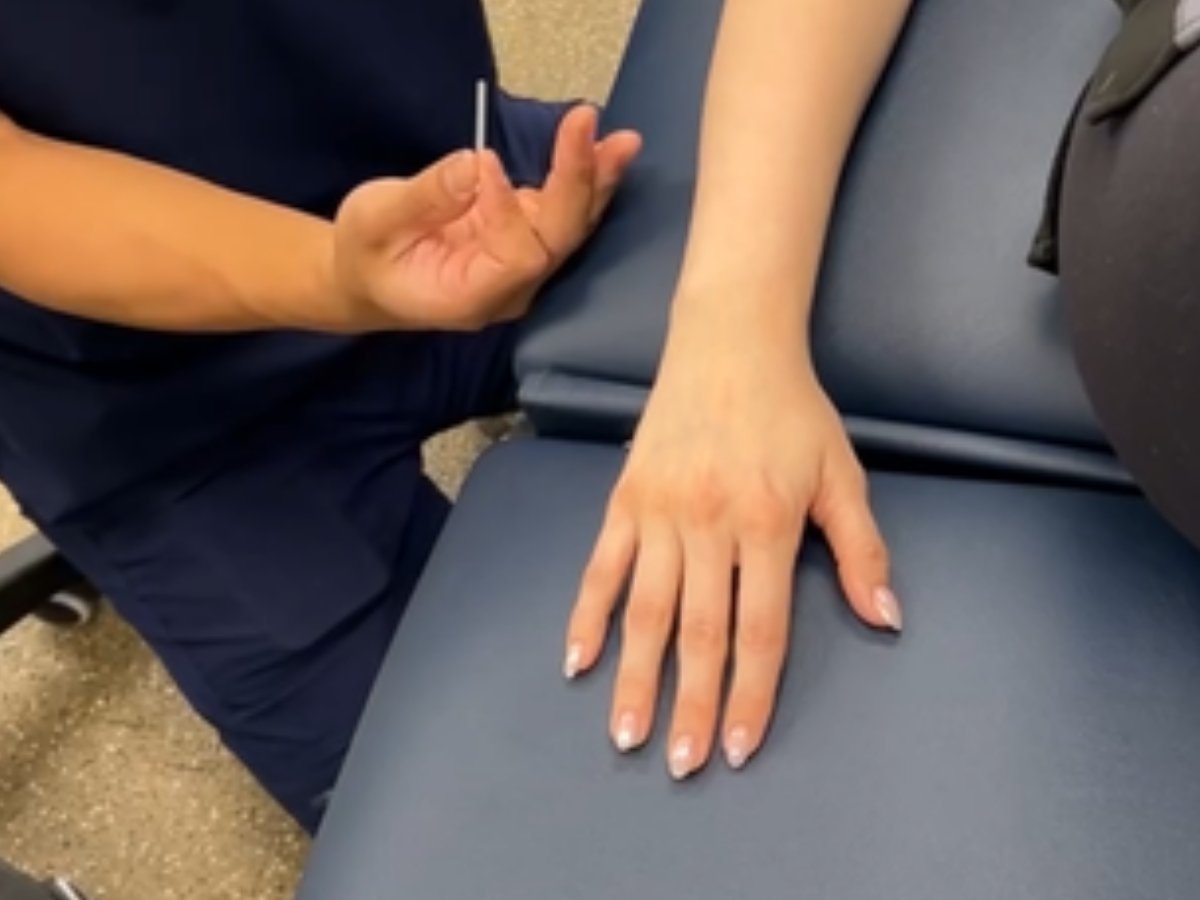
Physiotherapist inserting a fine dry needle into the forearm near the wrist of a patient on a treatment table
Dry needling of tight forearm muscles can ease tension so wrist and hand exercises feel easier once the fracture is stable.

Acupuncture and dry needling use fine needles to reduce pain and ease tight muscles in the forearm and hand.

  • What the evidence shows: we did not find trials of needling after wrist fractures. A review of dry needling for muscle pain across several conditions found a moderate short-term reduction in pain compared with sham or no treatment, based on low-quality evidence, and function was no better than with other physiotherapy treatments (Gattie et al., 2017)
  • Where it fits: for tight, sore forearm muscles that are limiting your exercises once the fracture is stable, never into a fresh fracture or surgical wound
  • Safety: generally very safe. In a survey of more than 7,600 dry needling treatments, there were no serious side effects; mild bruising and soreness were most common (Brady et al., 2014)

How Massage Therapy Can Help

Registered massage therapy can work on the forearm, hand, upper arm, neck, and shoulders, and on scar tissue after surgery once the wound has healed.

  • What the evidence shows: there are no trials of general massage after wrist fracture. Manual swelling techniques, such as lymphatic drainage and swelling massage, are supported by the guideline as part of a combined swelling program for short-term benefit (Mehta et al., 2024)
  • Where it fits: for swelling, scar mobility, and tension in the forearm, neck, and shoulder from guarding the arm
  • Safety: very safe once the surgeon clears the wound. Pressure is kept gentle over the fracture site

How Chiropractic and Joint Manipulation Can Help

Chiropractic care uses joint mobilization and, where appropriate, manipulation.

  • What the evidence shows: we did not find trials of chiropractic care after wrist fractures. Gentle wrist joint mobilization is recommended in the guideline as part of a combined program (Mehta et al., 2024), but forceful manipulation of a healing wrist is not appropriate
  • Where it fits: for neck, upper back, elbow, or shoulder stiffness that develops while the arm is protected, combined with exercise
  • Safety: not appropriate over an unhealed fracture or with unstable hardware. Always coordinated with your surgeon's restrictions

What about bone stimulators? Low-intensity pulsed ultrasound devices are sometimes promoted to speed fracture healing. A large review of 26 trials found they did not improve outcomes that matter to patients, such as pain, return to work, or time to full use, in well-run studies (Schandelmaier et al., 2017). We do not rely on them.

Whatever the combination, the purpose is the same: easing pain, swelling, and tension so you can keep doing the exercises that restore your hand.

When Is Surgery Considered?

Your surgeon decides on surgery based on the fracture pattern, how far the bone has moved, whether the joint surface is involved, and your age and activity level. A review of 23 studies with more than 2,200 adults found that surgery gave somewhat better arm function scores and grip strength within a year overall. In studies of people aged 60 and over, however, function was about the same with or without surgery, and complications were more common after surgery (Ochen et al., 2020). This is why many older adults with stable fractures are treated in a cast, with rehabilitation doing the heavy lifting afterward.

Whichever path you take, physiotherapy follows your surgeon's or physician's protocol. We never move the wrist beyond what your fixation and healing allow, and we keep your medical team informed of your progress.

How Long Will It Take?

Recovery varies with the fracture, the treatment, your age, and your health. As a general pattern:

  • Weeks 0 to 6: bone protection in a cast or splint, or early guided movement after surgery
  • Weeks 6 to 12: the main period of regaining movement and starting to build strength
  • 3 to 6 months: continued gains in grip strength and confidence for heavier tasks
  • Up to a year: some people keep improving slowly, especially in grip and full rotation

Most people regain good function, but about 15 to 20 percent have ongoing pain or difficulty (Mehta et al., 2024). Starting gentle movement early, managing swelling, and staying consistent with your home program give you the best chance of a full recovery.

Prevention and Long-Term Management

  • Keep the whole arm moving while the wrist is in a cast: fingers, thumb, elbow, and shoulder
  • Do your home exercises daily, little and often, rather than all at once
  • Manage swelling: elevate the hand, keep the fingers moving, and use compression if advised
  • Get your bone health checked if you are over 50 and broke your wrist in a minor fall
  • Train your balance and leg strength to lower the risk of another fall
  • Use wrist guards for snowboarding, inline skating, and similar sports
  • Keep up grip and forearm strength a few times a week once you have recovered

Frequently Asked Questions

When can I start moving my wrist?

It depends on how the fracture was treated. In a cast, you can usually move your fingers, thumb, elbow, and shoulder straight away, and the wrist once the cast is off. After surgery with a plate, active wrist movement often starts within the first few weeks if your surgeon agrees (Mehta et al., 2024).

Is it normal for my wrist to be so stiff after the cast comes off?

Yes. Weeks of immobilization leave the joint, tendons, and muscles stiff, and swelling adds to it. Stiffness improves steadily with regular movement. Our guide on snowboarder's wrist covers similar recovery steps for sport-related wrist injuries.

Do I need physiotherapy, or can I do exercises at home?

Many people do well with a home program, as long as a therapist teaches and progresses it (Mehta et al., 2024). If you are 60 or over, have complications, or are not progressing, regular supervised sessions are recommended.

When can I drive, type, or lift again?

Light tasks like typing often return in the first weeks after the cast comes off. Driving depends on your grip strength, wrist movement, and your physician's advice. Heavier lifting and sports usually come back between 2 and 4 months, depending on healing and strength.

Why did my doctor mention osteoporosis?

A wrist fracture from a simple fall after age 50 can be the first sign of weaker bones. Canada's guideline recommends fracture risk assessment and follow-up for people over 50 with a recent fracture (Morin et al., 2023). Treating bone health and training balance can help prevent a more serious hip or spine fracture later.

Can acupuncture, massage, or chiropractic replace exercise?

No. Movement and strengthening are what restore your wrist. Needling, massage, and joint mobilization can ease pain, swelling, and tension so you can keep up with your program, but they work best as supports.

What if my pain is getting worse instead of better?

Pain that is out of proportion, with burning, colour, temperature, or sweating changes in the hand, needs prompt assessment for complex regional pain syndrome. Contact us or your physician right away.

Our Specialized Approach at Vaughan Physiotherapy Clinic

✓ Protocol-aware care: we follow your surgeon's or physician's plan and keep them updated

✓ Early, safe movement: fingers, elbow, and shoulder kept moving from day one

✓ Hands-on treatment: joint mobilization and swelling care to restore movement so your exercises work

✓ Whole-arm strength: grip, forearm, and shoulder work so the wrist is not doing it alone

✓ A program you can do at home: clear, progressive exercises with the right number of check-ins for you

✓ Fall and bone health screening: balance training and referral to help prevent the next fracture

Take the First Step Toward a Strong, Working Wrist

A broken wrist does not have to leave you with a stiff, weak hand. Our team at Vaughan Physiotherapy Clinic helps patients from Thornhill, Vaughan, North York, Richmond Hill, and surrounding communities get back to work, sport, and daily life with evidence-based, hands-on care.

Book your assessment today:

📞 Phone: 905-669-1221

📍 Location: 398 Steeles Ave W #201, Thornhill, ON L4J 6X3

🌐 Online Booking: www.vaughanphysiotherapy.com

References

Brady S, McEvoy J, Dommerholt J, Doody C. Adverse events following trigger point dry needling: a prospective survey of chartered physiotherapists. Journal of Manual & Manipulative Therapy. 2014;22(3):134-140. doi:10.1179/2042618613Y.0000000044

Gattie E, Cleland JA, Snodgrass S. The effectiveness of trigger point dry needling for musculoskeletal conditions by physical therapists: a systematic review and meta-analysis. Journal of Orthopaedic & Sports Physical Therapy. 2017;47(3):133-149. doi:10.2519/jospt.2017.7096

Handoll HHG, Elliott J. Rehabilitation for distal radial fractures in adults. Cochrane Database of Systematic Reviews. 2015;(9):CD003324. doi:10.1002/14651858.CD003324.pub3

Mehta SP, Karagiannopoulos C, Pepin ME, Ballantyne BT, Michlovitz S, MacDermid JC, Grewal R, Martin RL. Distal radius fracture rehabilitation: clinical practice guidelines linked to the International Classification of Functioning, Disability, and Health from the Academy of Orthopaedic Physical Therapy and Academy of Hand and Upper Extremity Physical Therapy of the American Physical Therapy Association. Journal of Orthopaedic & Sports Physical Therapy. 2024;54(9):CPG1-CPG78. doi:10.2519/jospt.2024.0301

Morin SN, Feldman S, Funnell L, et al. Clinical practice guideline for management of osteoporosis and fracture prevention in Canada: 2023 update. Canadian Medical Association Journal. 2023;195(39):E1333-E1348. doi:10.1503/cmaj.221647

Ochen Y, Peek J, van der Velde D, Beeres FJP, van Heijl M, Groenwold RHH, Houwert RM, Heng M. Operative vs nonoperative treatment of distal radius fractures in adults: a systematic review and meta-analysis. JAMA Network Open. 2020;3(4):e203497. doi:10.1001/jamanetworkopen.2020.3497

Schandelmaier S, Kaushal A, Lytvyn L, et al. Low intensity pulsed ultrasound for bone healing: systematic review of randomized controlled trials. BMJ. 2017;356:j656. doi:10.1136/bmj.j656

Sherrington C, Fairhall NJ, Wallbank GK, Tiedemann A, Michaleff ZA, Howard K, Clemson L, Hopewell S, Lamb SE. Exercise for preventing falls in older people living in the community. Cochrane Database of Systematic Reviews. 2019;(1):CD012424. doi:10.1002/14651858.CD012424.pub2

Disclaimer: This article is for educational purposes only and does not replace professional medical advice. Wrist fractures vary widely, and your rehabilitation must follow the instructions of your surgeon or physician. Numbness, colour change, severe or worsening pain, or signs of infection need prompt medical attention. Always consult a qualified healthcare provider for diagnosis and treatment specific to your condition.

Team

Condition guide

Distal Radius Fracture Rehabilitation (Broken Wrist)

A distal radius fracture is a break at the wrist end of the forearm bone, often from a fall on an outstretched hand, treated with a cast or surgery.

Snowboarder carving a hard turn on a sunny slope, a sport where falls on an outstretched hand can break the wristDistal Radius Fracture Rehabilitation (Broken Wrist)

Did you fall on an outstretched hand and break your wrist? Is your cast finally off, but your wrist feels stiff, weak, and swollen, and simple jobs like opening a jar or turning a doorknob are suddenly hard? You are not alone. A broken wrist is one of the most common fractures in adults, and good rehabilitation makes a real difference to how well it recovers.

At Vaughan Physiotherapy Clinic, we guide people through every stage of recovery after a distal radius fracture, whether it was treated in a cast or with surgery. Our goal is to get your hand, wrist, and whole arm working well again for the things you need to do, and to help lower the chance of another fall or fracture.

Here is what a distal radius fracture is, what recovery usually looks like, which warning signs need attention, and what the research says about rehabilitation.

What Is a Distal Radius Fracture?

The radius is the larger of the two forearm bones, on the thumb side. A distal radius fracture is a break near its wrist end, usually within a few centimetres of the wrist joint. You may hear it called a broken wrist, a wrist fracture, or by older names such as a Colles fracture (when the broken piece tips backward) or a Smith fracture (when it tips forward).

It is the most common upper limb fracture in adults and makes up nearly 18 percent of adult fractures. It is most common in two age groups: young people aged 10 to 18, often from sport, and adults aged 70 to 80, often from a fall. After age 50, women are affected far more often than men, and a woman's lifetime risk of an osteoporosis-related wrist fracture is about 16 percent (Mehta et al., 2024).

Types of Treatment

How the fracture is treated depends on its pattern, whether the joint surface is involved, how far the bone has shifted, and your age and activity level:

  • Cast or splint (non-operative): for stable fractures, or after the bone has been set back into place (closed reduction)
  • Surgery: most often a metal plate and screws on the front of the radius (volar plate), or sometimes pins or an external frame, for unstable or displaced fractures

Rehabilitation is important after both. The timing of exercises depends on how stable the fracture is and on your surgeon's or physician's instructions (Mehta et al., 2024).

Understanding the Anatomy

The wrist is not a single joint. It links the radius and ulna (forearm bones) to eight small carpal bones and the hand. Key structures include:

  • Radiocarpal joint: where the radius meets the carpal bones, allowing the wrist to bend up and down
  • Distal radioulnar joint (DRUJ): where the radius and ulna meet, allowing you to turn your palm up and down
  • Triangular fibrocartilage complex (TFCC): a cushion and ligament system on the little finger side of the wrist, often injured at the same time
  • Tendons and nerves: the finger and thumb tendons and the median nerve all pass close to the fracture site

Because the hand, wrist, forearm, elbow, and shoulder work as one chain, stiffness at the wrist often leads to compensation higher up. That is why good rehab looks at the whole arm, not just the break.

Recognizing the Symptoms

At the time of injury, a broken wrist usually causes sudden pain, swelling, bruising, and sometimes a visible bend. Once the bone is healing and the cast or splint comes off, the most common problems are:

  • Stiffness in bending the wrist up and down and in turning the palm up and down
  • Swelling in the hand and fingers, often worse at the end of the day
  • Weak grip, making it hard to carry bags, open jars, or hold a cup
  • Pain with weight bearing through the hand, such as pushing up from a chair
  • Stiff fingers, elbow, or shoulder from being held still in a cast or sling
  • A clumsy or unfamiliar feeling in the hand, since the brain's sense of where the wrist is can be dulled after immobilization

What Makes Recovery Harder?

  • Older age, high pain or disability early on, workplace compensation claims, and low mood or depression are linked to slower recovery (Mehta et al., 2024)
  • High early pain, female sex, and low mood are linked to a higher risk of persistent pain, including complex regional pain syndrome (CRPS) (Mehta et al., 2024)
  • Keeping the fingers, elbow, and shoulder still while the wrist is in a cast, which leads to stiffness beyond the fracture
  • Ongoing swelling that is not managed

What Else Could It Be?

A distal radius fracture is often confirmed on X-ray, but other problems can happen at the same time or cause similar pain later. Part of our assessment is checking for:

  • Scaphoid fracture: a break in a small wrist bone near the base of the thumb, which can be missed on early X-rays and needs proper follow-up
  • TFCC tears: ongoing pain on the little finger side of the wrist, especially with twisting. TFCC injuries are very common alongside distal radius fractures (Mehta et al., 2024)
  • Ligament injuries between the carpal bones
  • Carpal tunnel syndrome: numbness or tingling in the thumb, index, and middle fingers from pressure on the median nerve
  • Tendon problems: irritation or, rarely, rupture of a thumb tendon, especially if you suddenly cannot lift the thumb
  • Hand fractures such as a broken knuckle, if the pain is further down in the hand

When to See a Doctor First

See your physician promptly, or go to the emergency department, if you have:

  • Fingers that are numb, pale, blue, or cold, or pain that keeps getting worse inside a cast, which may mean the cast is too tight or there is pressure on nerves or blood vessels
  • New or worsening numbness in the thumb and first fingers
  • Sudden loss of thumb movement, especially being unable to lift the thumb, which can signal a tendon problem
  • Burning pain out of proportion to the injury, with colour, temperature, sweating, or skin changes in the hand, which may be early CRPS and needs prompt attention
  • Redness, heat, discharge, or fever after surgery, which may mean infection
  • A wrist that changes shape or gives way after the cast comes off
  • A wrist fracture from a minor fall after age 50, which is a signal to have your bone health checked

Our physiotherapists screen for these signs at your first visit and will coordinate with your surgeon or family doctor if anything needs medical attention.

Why Physiotherapy Is Essential

The bone usually heals. The challenge is everything around it: stiff joints, swollen fingers, weak grip, and a brain that has partly "forgotten" how the wrist moves after weeks in a cast. Most people recover well after a broken wrist, but about 15 to 20 percent are left with ongoing pain or difficulty using the hand (Mehta et al., 2024). Well-timed rehabilitation aims to keep you out of that group.

The 2024 clinical practice guideline for distal radius fracture rehabilitation, written for physical and hand therapists, makes several strong recommendations (Mehta et al., 2024):

  • Early movement: after surgery, start active movement of the hand, wrist, and shoulder and light daily use within the first three weeks. This improves pain, movement, grip, and function in the short term, and movement and grip in the long term
  • Therapist-taught home program: physiotherapists or occupational therapists should be the main instructors of your home exercise program
  • Supervised therapy for higher-risk groups: people aged 60 and over, or with complications or other health conditions, should see a therapist at least once a week alongside their home program
  • Measure progress: track pain and function, wrist movement, and grip strength over time

For younger people with a simple fracture and no complications, the research is mixed on how much supervised therapy adds to a good home program (Mehta et al., 2024). In a Cochrane review, structured home exercise taught or coached by a therapist did as well as routine therapy sessions in several trials, while a single physiotherapy session of advice and exercises after cast removal improved function compared with no help at all (Handoll & Elliott, 2015). So we tailor how often you come in: some people need weekly visits, others do best with a few well-timed sessions and a clear plan to follow at home.

Your Treatment Plan at Vaughan Physiotherapy Clinic

Phase 1: Protection and Early Movement (In the Cast or Early After Surgery)

Rehab can start before the cast comes off. With your physician's or surgeon's approval, early care focuses on keeping everything that is not broken moving:

  • Finger movement: full fist, straight fingers, and tendon gliding exercises several times a day to prevent stiffness and help swelling drain
  • Thumb, elbow, and shoulder movement: so the rest of the arm does not stiffen while the wrist is protected
  • Swelling control: elevation, gentle movement, and, where appropriate, compression gloves or manual swelling techniques. Combined swelling management can give short-term gains in swelling, movement, function, and pain (Mehta et al., 2024)
  • Graded motor imagery: picturing and "mirroring" wrist movement to keep the brain's map of the hand active. The guideline gives this a strong recommendation in the first 6 to 8 weeks (Mehta et al., 2024)
  • Exercising the other hand: strength training of the uninjured hand may give a small benefit to the injured side, through a "cross-education" effect (Handoll & Elliott, 2015)

After surgery with a plate, active wrist movement often starts within the first few weeks, guided by your surgeon's protocol (Mehta et al., 2024).

Phase 2: Restoring Movement (After Cast Removal or Weeks 2 to 6 After Surgery)

A full assessment at this stage includes your pain and function scores, wrist and forearm range of motion, grip strength, swelling, sensation, and how your elbow, shoulder, and neck are moving. We also ask about your daily tasks, work, and hobbies, because they set the goals.

  • Active movement: wrist bending up and down, side to side, and turning the palm up and down, several times a day
  • Tendon gliding and finger work to keep the hand supple
  • Manual therapy: joint mobilizations, mobilization with movement, and sustained stretches matched to how stable the fracture is. The guideline supports these as part of a combined program for short-term gains in pain, movement, and arm function (Mehta et al., 2024). The aim is to restore joint movement so your exercises work better
  • Sensorimotor training: position sense and proprioceptive exercises to rebuild control of the wrist, especially after surgery (Mehta et al., 2024)
  • Functional practice: using the hand in light daily tasks rather than protecting it

Heat, ice, and other modalities may be used briefly to ease pain and stiffness before exercise. The guideline supports them only as part of a combined program for short-term gains, and single trials of ice, whirlpool, or electromagnetic devices used on their own showed no meaningful benefit (Mehta et al., 2024; Handoll & Elliott, 2015). They are helpers, never the main treatment.

Phase 3: Rebuilding Strength and Control (Weeks 6 to 12)

Once the bone is healing well, strengthening becomes the focus. For stable, uncomplicated fractures, gentle gripping such as squeezing a towel or putty can begin as early as the second week of casting or two weeks after surgery, with heavier strengthening usually from around 6 to 8 weeks (Mehta et al., 2024).

  • Grip and pinch strength: putty, grippers, and towel wringing
  • Wrist and forearm strength: light weights, bands, and rotation with a hammer or bar
  • Weight bearing through the hand: wall push-ups, then table and floor variations
  • Shoulder blade and shoulder strength: the guideline recommends progressive resistance for the shoulder blade and shoulder muscles, since the whole arm shares the load (Mehta et al., 2024)
  • Motor control: smooth, coordinated movement of the hand, wrist, elbow, and shoulder together, so the wrist is not overloaded by stiffness elsewhere

If stiffness persists despite good effort, a static progressive or dynamic splint may be added for a short time (Mehta et al., 2024).

Phase 4: Return to Full Activity and Preventing the Next Fracture

  • Work and sport: task-specific training for lifting, typing, tools, racquet sports, cycling, yoga, or the gym
  • Fall risk screening: for older adults, simple tests such as timed walking and chair stands, plus questions about balance confidence, help spot who may benefit from a falls program (Mehta et al., 2024)
  • Balance and strength training: exercise programs that include balance and functional training reduce the rate of falls in older adults by about a quarter (Sherrington et al., 2019). See our guide on preventing falls in older adults
  • Bone health: for adults over 50, a wrist fracture is a major osteoporotic fracture. Canada's osteoporosis guideline recommends that people over 50 with a recent fracture have access to fracture risk assessment and follow-up (Morin et al., 2023). Read more about osteoporosis risk factors

Beyond Physiotherapy: Complementary Care for Distal Radius Fracture

Early movement, a well-taught home program, and progressive strengthening are the core of recovery. Other services at our clinic can help with pain, swelling, and muscle tension along the way. Here is an honest summary of the evidence.

How Acupuncture and Dry Needling Can Help

Physiotherapist inserting a fine dry needle into the forearm near the wrist of a patient on a treatment table
Dry needling of tight forearm muscles can ease tension so wrist and hand exercises feel easier once the fracture is stable.

Acupuncture and dry needling use fine needles to reduce pain and ease tight muscles in the forearm and hand.

  • What the evidence shows: we did not find trials of needling after wrist fractures. A review of dry needling for muscle pain across several conditions found a moderate short-term reduction in pain compared with sham or no treatment, based on low-quality evidence, and function was no better than with other physiotherapy treatments (Gattie et al., 2017)
  • Where it fits: for tight, sore forearm muscles that are limiting your exercises once the fracture is stable, never into a fresh fracture or surgical wound
  • Safety: generally very safe. In a survey of more than 7,600 dry needling treatments, there were no serious side effects; mild bruising and soreness were most common (Brady et al., 2014)

How Massage Therapy Can Help

Registered massage therapy can work on the forearm, hand, upper arm, neck, and shoulders, and on scar tissue after surgery once the wound has healed.

  • What the evidence shows: there are no trials of general massage after wrist fracture. Manual swelling techniques, such as lymphatic drainage and swelling massage, are supported by the guideline as part of a combined swelling program for short-term benefit (Mehta et al., 2024)
  • Where it fits: for swelling, scar mobility, and tension in the forearm, neck, and shoulder from guarding the arm
  • Safety: very safe once the surgeon clears the wound. Pressure is kept gentle over the fracture site

How Chiropractic and Joint Manipulation Can Help

Chiropractic care uses joint mobilization and, where appropriate, manipulation.

  • What the evidence shows: we did not find trials of chiropractic care after wrist fractures. Gentle wrist joint mobilization is recommended in the guideline as part of a combined program (Mehta et al., 2024), but forceful manipulation of a healing wrist is not appropriate
  • Where it fits: for neck, upper back, elbow, or shoulder stiffness that develops while the arm is protected, combined with exercise
  • Safety: not appropriate over an unhealed fracture or with unstable hardware. Always coordinated with your surgeon's restrictions

What about bone stimulators? Low-intensity pulsed ultrasound devices are sometimes promoted to speed fracture healing. A large review of 26 trials found they did not improve outcomes that matter to patients, such as pain, return to work, or time to full use, in well-run studies (Schandelmaier et al., 2017). We do not rely on them.

Whatever the combination, the purpose is the same: easing pain, swelling, and tension so you can keep doing the exercises that restore your hand.

When Is Surgery Considered?

Your surgeon decides on surgery based on the fracture pattern, how far the bone has moved, whether the joint surface is involved, and your age and activity level. A review of 23 studies with more than 2,200 adults found that surgery gave somewhat better arm function scores and grip strength within a year overall. In studies of people aged 60 and over, however, function was about the same with or without surgery, and complications were more common after surgery (Ochen et al., 2020). This is why many older adults with stable fractures are treated in a cast, with rehabilitation doing the heavy lifting afterward.

Whichever path you take, physiotherapy follows your surgeon's or physician's protocol. We never move the wrist beyond what your fixation and healing allow, and we keep your medical team informed of your progress.

How Long Will It Take?

Recovery varies with the fracture, the treatment, your age, and your health. As a general pattern:

  • Weeks 0 to 6: bone protection in a cast or splint, or early guided movement after surgery
  • Weeks 6 to 12: the main period of regaining movement and starting to build strength
  • 3 to 6 months: continued gains in grip strength and confidence for heavier tasks
  • Up to a year: some people keep improving slowly, especially in grip and full rotation

Most people regain good function, but about 15 to 20 percent have ongoing pain or difficulty (Mehta et al., 2024). Starting gentle movement early, managing swelling, and staying consistent with your home program give you the best chance of a full recovery.

Prevention and Long-Term Management

  • Keep the whole arm moving while the wrist is in a cast: fingers, thumb, elbow, and shoulder
  • Do your home exercises daily, little and often, rather than all at once
  • Manage swelling: elevate the hand, keep the fingers moving, and use compression if advised
  • Get your bone health checked if you are over 50 and broke your wrist in a minor fall
  • Train your balance and leg strength to lower the risk of another fall
  • Use wrist guards for snowboarding, inline skating, and similar sports
  • Keep up grip and forearm strength a few times a week once you have recovered

Frequently Asked Questions

When can I start moving my wrist?

It depends on how the fracture was treated. In a cast, you can usually move your fingers, thumb, elbow, and shoulder straight away, and the wrist once the cast is off. After surgery with a plate, active wrist movement often starts within the first few weeks if your surgeon agrees (Mehta et al., 2024).

Is it normal for my wrist to be so stiff after the cast comes off?

Yes. Weeks of immobilization leave the joint, tendons, and muscles stiff, and swelling adds to it. Stiffness improves steadily with regular movement. Our guide on snowboarder's wrist covers similar recovery steps for sport-related wrist injuries.

Do I need physiotherapy, or can I do exercises at home?

Many people do well with a home program, as long as a therapist teaches and progresses it (Mehta et al., 2024). If you are 60 or over, have complications, or are not progressing, regular supervised sessions are recommended.

When can I drive, type, or lift again?

Light tasks like typing often return in the first weeks after the cast comes off. Driving depends on your grip strength, wrist movement, and your physician's advice. Heavier lifting and sports usually come back between 2 and 4 months, depending on healing and strength.

Why did my doctor mention osteoporosis?

A wrist fracture from a simple fall after age 50 can be the first sign of weaker bones. Canada's guideline recommends fracture risk assessment and follow-up for people over 50 with a recent fracture (Morin et al., 2023). Treating bone health and training balance can help prevent a more serious hip or spine fracture later.

Can acupuncture, massage, or chiropractic replace exercise?

No. Movement and strengthening are what restore your wrist. Needling, massage, and joint mobilization can ease pain, swelling, and tension so you can keep up with your program, but they work best as supports.

What if my pain is getting worse instead of better?

Pain that is out of proportion, with burning, colour, temperature, or sweating changes in the hand, needs prompt assessment for complex regional pain syndrome. Contact us or your physician right away.

Our Specialized Approach at Vaughan Physiotherapy Clinic

✓ Protocol-aware care: we follow your surgeon's or physician's plan and keep them updated

✓ Early, safe movement: fingers, elbow, and shoulder kept moving from day one

✓ Hands-on treatment: joint mobilization and swelling care to restore movement so your exercises work

✓ Whole-arm strength: grip, forearm, and shoulder work so the wrist is not doing it alone

✓ A program you can do at home: clear, progressive exercises with the right number of check-ins for you

✓ Fall and bone health screening: balance training and referral to help prevent the next fracture

Take the First Step Toward a Strong, Working Wrist

A broken wrist does not have to leave you with a stiff, weak hand. Our team at Vaughan Physiotherapy Clinic helps patients from Thornhill, Vaughan, North York, Richmond Hill, and surrounding communities get back to work, sport, and daily life with evidence-based, hands-on care.

Book your assessment today:

📞 Phone: 905-669-1221

📍 Location: 398 Steeles Ave W #201, Thornhill, ON L4J 6X3

🌐 Online Booking: www.vaughanphysiotherapy.com

References

Brady S, McEvoy J, Dommerholt J, Doody C. Adverse events following trigger point dry needling: a prospective survey of chartered physiotherapists. Journal of Manual & Manipulative Therapy. 2014;22(3):134-140. doi:10.1179/2042618613Y.0000000044

Gattie E, Cleland JA, Snodgrass S. The effectiveness of trigger point dry needling for musculoskeletal conditions by physical therapists: a systematic review and meta-analysis. Journal of Orthopaedic & Sports Physical Therapy. 2017;47(3):133-149. doi:10.2519/jospt.2017.7096

Handoll HHG, Elliott J. Rehabilitation for distal radial fractures in adults. Cochrane Database of Systematic Reviews. 2015;(9):CD003324. doi:10.1002/14651858.CD003324.pub3

Mehta SP, Karagiannopoulos C, Pepin ME, Ballantyne BT, Michlovitz S, MacDermid JC, Grewal R, Martin RL. Distal radius fracture rehabilitation: clinical practice guidelines linked to the International Classification of Functioning, Disability, and Health from the Academy of Orthopaedic Physical Therapy and Academy of Hand and Upper Extremity Physical Therapy of the American Physical Therapy Association. Journal of Orthopaedic & Sports Physical Therapy. 2024;54(9):CPG1-CPG78. doi:10.2519/jospt.2024.0301

Morin SN, Feldman S, Funnell L, et al. Clinical practice guideline for management of osteoporosis and fracture prevention in Canada: 2023 update. Canadian Medical Association Journal. 2023;195(39):E1333-E1348. doi:10.1503/cmaj.221647

Ochen Y, Peek J, van der Velde D, Beeres FJP, van Heijl M, Groenwold RHH, Houwert RM, Heng M. Operative vs nonoperative treatment of distal radius fractures in adults: a systematic review and meta-analysis. JAMA Network Open. 2020;3(4):e203497. doi:10.1001/jamanetworkopen.2020.3497

Schandelmaier S, Kaushal A, Lytvyn L, et al. Low intensity pulsed ultrasound for bone healing: systematic review of randomized controlled trials. BMJ. 2017;356:j656. doi:10.1136/bmj.j656

Sherrington C, Fairhall NJ, Wallbank GK, Tiedemann A, Michaleff ZA, Howard K, Clemson L, Hopewell S, Lamb SE. Exercise for preventing falls in older people living in the community. Cochrane Database of Systematic Reviews. 2019;(1):CD012424. doi:10.1002/14651858.CD012424.pub2

Disclaimer: This article is for educational purposes only and does not replace professional medical advice. Wrist fractures vary widely, and your rehabilitation must follow the instructions of your surgeon or physician. Numbness, colour change, severe or worsening pain, or signs of infection need prompt medical attention. Always consult a qualified healthcare provider for diagnosis and treatment specific to your condition.

How it works

Getting started.

  1. 01

    No referral needed

    You can book directly. Some benefit plans ask for a doctor's note, so check yours before your visit.

  2. 02

    Your first assessment, 45 minutes

    Your history, movement testing, a clear diagnosis and a plan you understand.

  3. 03

    Follow-up sessions

    Hands-on care and exercise, progressed each visit.

  4. 04

    Not the right fit? Second opinion on us

    If you're not satisfied with your initial assessment, a second assessment with another therapist is complimentary.

Who treats this

Clinicians who treat this.

Tap a profile for credentials and booking.

Not sure this is what you have?

One of our therapists can check what is going on and build a plan around what they find. Book online, or call us at 905-669-1221.