


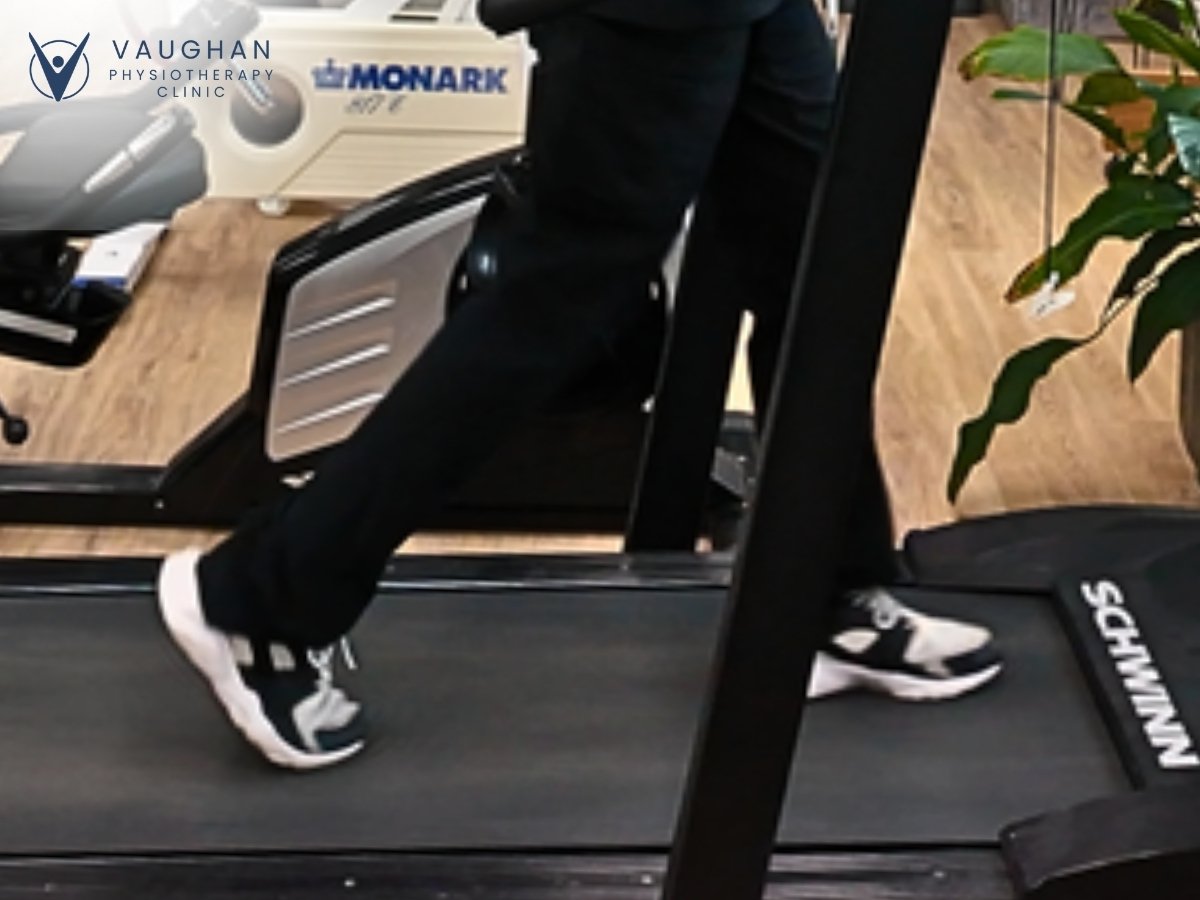
Patient walking on a treadmill during gait and balance training at Vaughan Physiotherapy Clinic

Fall Prevention

Falls risk is the chance an older adult will fall, shaped by strength, balance, vision, medications, and home hazards.
Have you had a fall in the past year, or a near miss that left you shaken? Do you hold on to the furniture when you walk around the house, or avoid stairs, curbs, and icy sidewalks because you no longer trust your balance? If so, you are not alone, and the good news is that falls risk is something that can be measured and improved.

At Vaughan Physiotherapy Clinic, we help older adults and their families find out why falls are happening, or why they might happen, and build a plan to prevent them. That means testing strength, balance, and walking, looking at the bigger picture of health and home, and then training the body to be steadier and more confident on its feet.

Here is what falls risk is, how to tell if you or a loved one may be at risk, what else could be behind unsteadiness, and what the research says about preventing falls.

What Is Falls Risk?

A fall is any event where a person unexpectedly comes to rest on the ground, floor, or another lower level. Falls risk is the chance that this will happen. It is not a single disease. It is the result of several factors adding up, such as weaker legs, slower reactions, poorer vision, certain medications, and hazards in the home.

Falls are very common. About 1 in 3 adults over 65 falls each year, and falls are linked to injury, loss of independence, hospital stays, and moves into long-term care (Montero-Odasso et al., 2022). Many falls are preventable, and exercise that challenges balance and strength is the best-supported way to lower the risk (Sherrington et al., 2019).

Why Falls Become More Likely With Age

Staying upright depends on several body systems working together. With age, inactivity, or illness, each one can lose a little ground:

  • Muscle strength: especially the hips, thighs, and ankles, which catch you when you trip and help you stand up from a chair
  • Balance reactions: the quick steps and adjustments that keep you upright when you are bumped or misjudge a step
  • Sensation: the feet send constant information about the ground. Nerve problems, such as those from diabetes, blunt this signal
  • Vision: the eyes help judge edges, steps, and distances
  • The inner ear (vestibular system): senses head movement and helps keep the eyes and body steady
  • Blood pressure control: a drop in blood pressure on standing can cause light-headedness and falls

Levels of Falls Risk

The World Falls Guidelines suggest sorting older adults into low, intermediate, and high risk, so that the level of help matches the level of need (Montero-Odasso et al., 2022):

  • Low risk: no falls or one minor fall, and walking and balance are good. Advice on staying active and general fall prevention is usually enough
  • Intermediate risk: a fall or other warning signs without the high-risk features, plus problems with walking or balance on testing. A targeted strength and balance program is recommended
  • High risk: a fall with injury, two or more falls in the past year, being unable to get up without help after a fall, or frailty. A full multifactorial assessment and a personalized plan are recommended

Warning Signs You May Be at Risk

Falls risk often creeps up quietly. Screening questions used by clinicians focus on recent falls, dizziness, blackouts, trouble with walking or balance, and fear of falling (Montero-Odasso et al., 2022; Stevens & Phelan, 2013). Common warning signs include:

  • One or more falls in the past year, even if you were not hurt
  • Feeling unsteady when standing or walking
  • Worrying about falling, or cutting back on activities because of that worry
  • Needing to push up with your arms to get out of a chair
  • Holding on to walls or furniture, or "furniture walking" around the house
  • Walking more slowly, shuffling, or taking shorter steps
  • Trouble with stairs, curbs, or uneven ground
  • Feeling dizzy or light-headed when you stand up

What Makes Falls More Likely?

  • Inactivity: less movement means weaker legs and poorer balance, which leads to even less movement
  • Medications: sleeping pills, some antidepressants, sedatives, opioids, and some blood pressure medicines can cause drowsiness, dizziness, or a drop in blood pressure. Reviewing all medications is a standard part of a falls assessment (Stevens & Phelan, 2013)
  • Taking many medications at once
  • Vision problems: cataracts, out-of-date glasses, or multifocal lenses when walking outdoors or on stairs
  • Foot problems and footwear: foot pain, loose slippers, high heels, or slick soles
  • Home hazards: loose rugs, clutter, poor lighting, and no grab bars or railings
  • Health conditions: arthritis, diabetes, Parkinson's disease, stroke, dementia, and low blood pressure
  • Fear of falling: it can lead to avoiding activity, which in turn weakens the muscles and balance that prevent falls

What Else Could It Be?

Unsteadiness and falls are often a sign of something else that needs attention. Part of our assessment is sorting out what is driving the problem and who else needs to be involved:

  • Orthostatic hypotension: a drop in blood pressure when standing that causes light-headedness or near-fainting
  • Heart rhythm problems or fainting (syncope): a fall with a blackout is not a balance problem and needs a medical work-up
  • Inner ear disorders: such as benign paroxysmal positional vertigo (BPPV), which causes brief spinning with head movement and responds well to specific treatment
  • Peripheral neuropathy: numbness or reduced feeling in the feet, often linked to diabetes
  • Neurological conditions: Parkinson's disease, stroke, normal pressure hydrocephalus, or early cognitive decline
  • Medication side effects: new or changed medications are a common, fixable cause
  • Joint pain or weakness: hip or knee arthritis, or recovering from surgery
  • Low vision: cataracts, macular degeneration, or glaucoma
  • Dehydration, infection, or low blood sugar: which can cause sudden weakness or confusion

When to See a Doctor First

Seek urgent medical care, or call 911, if you or a loved one has:

  • A fall with a head injury while taking a blood thinner, even if you feel fine, since bleeding inside the skull can develop slowly
  • A fall followed by headache that keeps getting worse, vomiting, confusion, or unusual drowsiness
  • Fainting, a blackout, or not remembering the fall, or chest pain or a racing or irregular heartbeat before falling
  • New neurological signs, such as sudden weakness or numbness on one side, a drooping face, slurred speech, sudden loss of vision, or sudden severe dizziness
  • Being unable to stand or bear weight after a fall, or a leg that looks shortened or turned out, which may mean a hip fracture
  • A sudden change in walking, balance, or thinking over days, rather than a slow change over months

See your family physician soon if falls are becoming more frequent, if you feel dizzy when standing, or if you have started a new medication. Our physiotherapists screen for these signs at your first visit and will coordinate with your physician or pharmacist when a medical review is needed.

Related reading: You may also find our guides to how to prevent seniors from falling, sarcopenia (age-related muscle loss) and vestibular rehabilitation helpful.

Start Your Journey to 

‍Better Health Today

Recover faster, move better, and feel stronger with expert physiotherapy. Our team is here to guide you every step of the way.

Why Physiotherapy Is Essential

Most falls do not happen by bad luck. They happen when the demands of daily life, such as a curb, a dark hallway, or turning quickly to answer the phone, are greater than what the body can handle in that moment.

Exercise is the single best-supported way to prevent falls in older adults living in the community. A Cochrane review of 108 trials with more than 23,000 people found that exercise programs reduced the rate of falls by about 23 percent, with high-certainty evidence (Sherrington et al., 2019). The World Falls Guidelines recommend exercise that targets balance and strength for every older adult at increased risk, and a full multifactorial assessment for those at high risk (Montero-Odasso et al., 2022).

Not all exercise is equal, though. Walking, dance, or strength training on their own have not been shown to reliably prevent falls (Sherrington et al., 2019), and the World Falls Guidelines do not recommend them as stand-alone falls prevention (Montero-Odasso et al., 2022). The programs that work are specific, progressive, and done often enough, which is what a physiotherapist is trained to design.

Physiotherapy addresses the main drivers of falls:

  • Balance: training the reactions and stepping strategies that keep you upright
  • Strength: especially in the hips, thighs, and ankles
  • Confidence: safely building trust in your body so you stay active
  • The bigger picture: flagging vision, medication, blood pressure, foot, and home issues for the right person to address

Your Treatment Plan at Vaughan Physiotherapy Clinic

Phase 1: Falls Risk Assessment (Week 1)

A full assessment includes:

  • Falls history: how many falls, where and when they happened, whether you were hurt, and whether you could get up on your own
  • Health and medication review: your conditions and a list of your current medications, so we can flag any that commonly increase falls risk for your physician or pharmacist to review
  • Walking speed and the Timed Up and Go test: simple, standard measures of mobility used in falls screening tool kits such as the CDC's STEADI (Stevens & Phelan, 2013)
  • Strength: such as the 30-second chair stand test
  • Balance: a four-stage balance test, from feet side by side to heel-to-toe to standing on one leg, plus how you react to small challenges
  • Blood pressure lying and standing: to screen for a drop on standing
  • Feet, footwear, and walking aids: checking your feet, your usual shoes, and whether your cane or walker fits (Stevens & Phelan, 2013)
  • Fear of falling: a short questionnaire about how confident you feel in daily tasks

From this, we place you in a risk category and build a matching plan. If something needs medical input, such as dizziness on standing or medications worth reviewing, we will let your family physician know.

Phase 2: Building a Safe Foundation (Weeks 1 to 4)

The first few weeks focus on getting you moving safely and building good habits:

  • Starting exercises at the right level: supported balance and strength work, often holding a counter or sturdy chair
  • A short home program: a few exercises you can do safely every day
  • Walking aid check: making sure any cane or walker is the right type and height
  • Getting up from the floor: practising a safe way to get up after a fall, and a plan for what to do if you cannot

Phase 3: Strength and Balance Training (Weeks 4 to 12+)

Balance and functional exercise
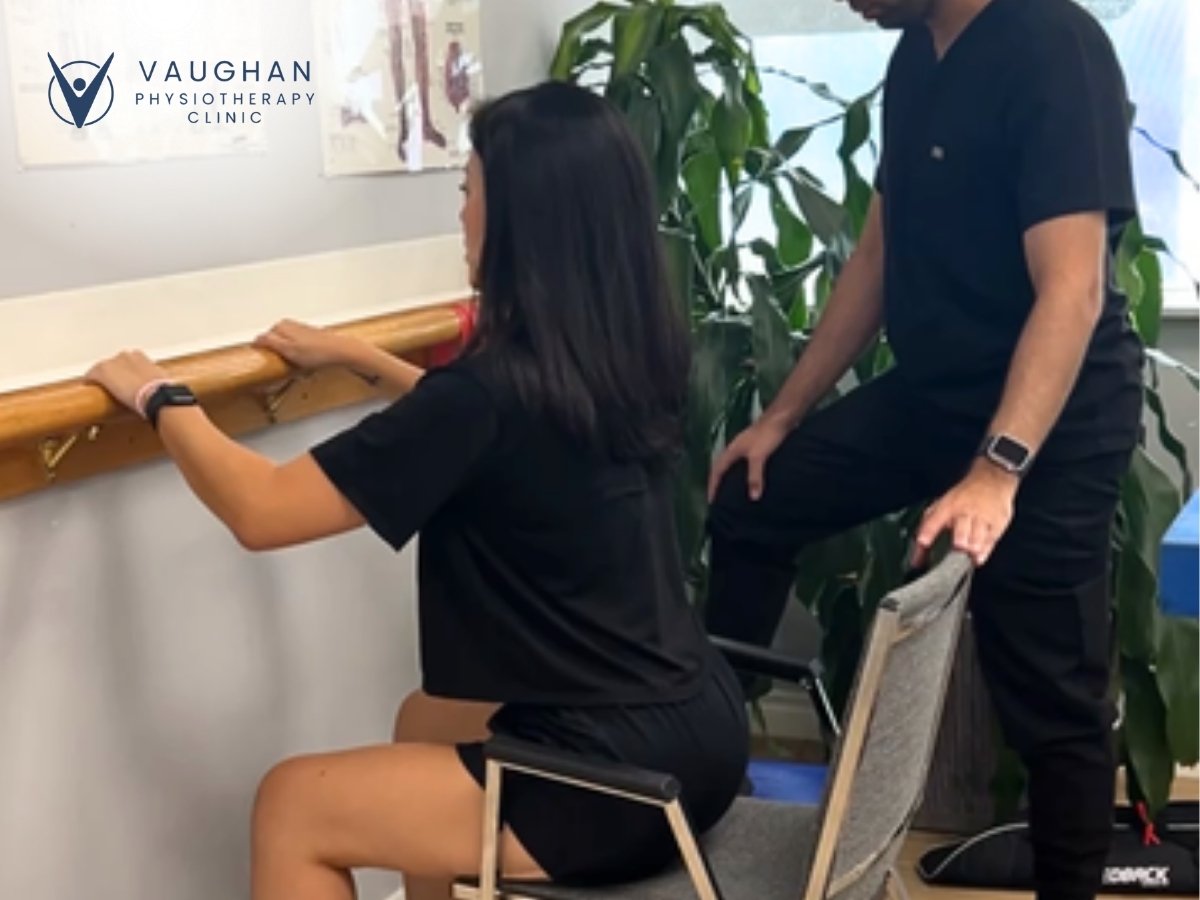
Patient practising a supported sit-to-stand at a wall barre beside a chair while a physiotherapist stands by
Balance exercises done with support nearby, then progressed as you get steadier, are the core of falls prevention.

Balance and functional exercises alone reduced the rate of falls by about 24 percent in the Cochrane review, and programs that combined several types of exercise, usually balance plus strength, reduced it by about a third (Sherrington et al., 2019). The World Falls Guidelines recommend training that is challenging and progressive, about three sessions a week, continued for at least 12 weeks, with longer being better (Montero-Odasso et al., 2022). Examples include:

  • Standing with feet closer together, then heel-to-toe, then on one leg, with support nearby
  • Sit-to-stand from a chair, without using your hands as you improve
  • Stepping in different directions, over small obstacles, and turning
  • Heel raises and toe raises for ankle strength

The Otago Exercise Program

The Otago program is a home-based set of leg strengthening and balance exercises, plus a walking plan, prescribed and progressed by a trained clinician over several visits. A review of seven trials with about 1,500 adults aged 65 and over found that Otago lowered the rate of falls by about 32 percent and also lowered the risk of death over 12 months, although it did not change the risk of an injurious fall (Thomas et al., 2010).

Building confidence

Fear of falling is common and understandable, but avoiding activity weakens the very muscles and reactions that keep you safe. A Cochrane review found that exercise probably reduces fear of falling by a small to moderate amount right after a program ends, though the evidence is low quality and it is unclear how long the effect lasts (Kendrick et al., 2014). We grade challenges carefully so that each success builds trust in your body.

Phase 4: Staying Strong for the Long Term (Week 12 Onward)

  • Transition to independent or group exercise: including Tai Chi or community balance classes
  • Ongoing home program: a routine you can keep up for the long term
  • Outdoor and community walking: curbs, slopes, uneven paths, and busy places

Working With Your Physician, Pharmacist, and Eye Care Provider

Falls usually have more than one cause, and the best results come from a team approach (Montero-Odasso et al., 2022):

  • Medication review: certain medications, especially those that affect the brain or blood pressure, raise falls risk. Your physician or pharmacist can review whether a dose can be reduced or a medication changed. In one trial, gradually withdrawing psychotropic medications reduced the rate of falls (Gillespie et al., 2012). Never stop or change a medication on your own
  • Vision: regular eye exams matter. Cataract surgery on the first eye reduced the rate of falls in one trial (Gillespie et al., 2012). For people who regularly go outdoors, switching from multifocal to single-lens distance glasses for walking reduced falls in one trial, but it increased outdoor falls in people who rarely went out (Gillespie et al., 2012)
  • Feet and footwear: in a trial of 305 older adults with disabling foot pain, a package of foot orthoses, footwear advice, a footwear subsidy, and home foot and ankle exercises led to 36 percent fewer falls than usual podiatry care (Spink et al., 2011).
  • Home safety: reducing hazards in the home lowered the rate of falls by about 26 percent overall, and by about 38 percent in people at higher risk, such as those who had already fallen. It made no difference in people who were not at increased risk (Clemson et al., 2023)

Beyond Physiotherapy: Complementary Care for Fall Prevention

Balance and strength exercise, along with medical review and home safety, form the core of falls prevention, and that is where the research is clearest. Here is an honest summary of what the evidence does and does not show for each.

One complementary approach does have strong evidence: Tai Chi. In the Cochrane review, Tai Chi reduced the number of people who fell by about 20 percent (Sherrington et al., 2019), and the World Falls Guidelines include it as an option for balance training (Montero-Odasso et al., 2022).

How Acupuncture and Dry Needling Can Help

Acupuncture and dry needling use fine needles to reduce pain and ease tight, tender muscles.

  • What the evidence shows: we did not find good-quality trials showing that acupuncture or dry needling prevents falls. Any role is indirect, by easing pain that keeps people from being active
  • Where it fits: as an optional add-on to settle joint or muscle pain that is getting in the way of exercise, never as a replacement for balance training
  • Safety: generally very safe. Tell your clinician if you take blood thinners, since bruising may be more likely

How Massage Therapy Can Help

Registered massage therapy focuses on the soft tissues, such as tight calves, hips, and back muscles.

  • What the evidence shows: we did not find trials showing that massage reduces falls. Any benefit for falls risk is indirect, by easing pain and stiffness and helping people feel comfortable moving
  • Where it fits: as a supportive add-on for comfort when starting a new exercise program
  • Safety: very safe when pressure is adjusted for older or fragile skin. Let your therapist know about blood thinners, osteoporosis, or circulation problems

How Chiropractic and Joint Manipulation Can Help

Chiropractic care uses joint mobilization and manipulation, mostly of the spine.

  • What the evidence shows: evidence is very limited. In a trial of 60 adults over 65, 12 weeks of chiropractic care improved stepping reaction time and some measures of sensation compared with no care, but the study did not measure falls, so we do not know whether it prevents them (Holt et al., 2016)
  • Where it fits: it may help with back or neck pain and stiffness that limits activity, alongside exercise
  • Safety: forceful spinal manipulation is generally avoided in people with osteoporosis or a history of fragility fractures. Gentler mobilization is usually preferred in older adults

Whichever combination you and your clinician choose, these treatments share one purpose: keeping you comfortable and active so the real work, building strength, balance, and confidence, can take hold.

The Role of Medical Management

Some causes of falls need medical treatment rather than, or alongside, physiotherapy. Your physician may look at blood pressure on standing, heart rhythm, bone health, vision, and your medication list. For example, in people with a specific heart reflex problem called carotid sinus hypersensitivity, a pacemaker reduced the rate of falls (Gillespie et al., 2012). Vitamin D supplements, on the other hand, did not reduce the rate of falls overall in the trials reviewed (Gillespie et al., 2012), so whether you need them is a question for your physician rather than a falls prevention strategy on their own. People who have had a fall with a fracture may also be assessed for osteoporosis treatment.

How Long Will It Take?

Balance and strength improve with consistent practice over weeks to months. The World Falls Guidelines recommend at least 12 weeks of progressive training, and the benefits stop when the exercise stops, so the best results come from making it a long-term habit (Montero-Odasso et al., 2022). Sticking with it is the hard part: in the Otago trials, only about 37 percent of participants were still exercising three or more times a week after a year (Thomas et al., 2010). Many people notice they feel steadier and more confident within the first few weeks.

Prevention and Long-Term Management

  • Keep moving: do balance and strength exercises at least three times a week, and keep them challenging
  • Review your medications with your physician or pharmacist at least once a year, and after any fall
  • Check your eyes: have regular eye exams and update your glasses
  • Wear good shoes: secure, low-heeled, with a firm, slip-resistant sole, indoors and out. Avoid loose slippers and socks on smooth floors
  • Make your home safer: good lighting, night lights, no loose rugs, grab bars in the bathroom, and railings on both sides of stairs
  • Stand up slowly: especially at night, and sit on the edge of the bed for a moment first
  • Speak up early: tell your physician or physiotherapist about any fall or near miss, even if you were not hurt

Frequently Asked Questions

I have never fallen. Do I need a falls assessment?

Not everyone does. But if you feel unsteady, worry about falling, or have slowed down, a quick assessment can pick up early changes in strength and balance when they are easiest to fix. Prevention works best before the first fall.

Isn't walking enough exercise to prevent falls?

Walking is great for heart health and fitness, but on its own it has not been shown to prevent falls (Sherrington et al., 2019; Montero-Odasso et al., 2022). The programs that work challenge your balance and strengthen your legs. Keep walking, and add balance and strength work on top.

How often do I need to exercise?

The World Falls Guidelines recommend challenging balance and strength exercise about three times a week, progressed over time and continued for at least 12 weeks, with longer being better (Montero-Odasso et al., 2022).

I am afraid of falling again. Will that get better?

For most people, yes. Fear of falling is common after a fall, and exercise probably helps reduce it, at least in the short term (Kendrick et al., 2014). Building strength step by step, and knowing how to get up from the floor, helps restore confidence.

Can acupuncture, massage, or chiropractic replace exercise for preventing falls?

No. There is no good evidence that acupuncture, massage, or chiropractic care prevents falls on their own. They may help ease pain or stiffness that makes it hard to stay active, but balance and strength training remain the foundation. Tai Chi is the exception among complementary options, with good evidence for reducing falls.

Should I stop my medication if I think it is making me dizzy?

No. Never stop or change a medication without talking to your physician or pharmacist, since some medications are risky to stop suddenly. Tell them about your dizziness or falls, and they can review whether a change is safe.

Our Specialized Approach at Vaughan Physiotherapy Clinic

✓ Thorough falls risk assessment: standard tests of walking, strength, balance, and blood pressure, so we know exactly where you stand

✓ Evidence-based exercise: progressive balance and strength programs based on the Otago program and current guidelines

✓ One-on-one care: exercises chosen and progressed for your level, health, and goals

✓ Confidence building: practical training for stairs, curbs, outdoor walking, and getting up from the floor

✓ Team approach: clear communication with your physician, pharmacist, and family about medications, vision, and home safety

✓ Integrated care: physiotherapy, massage therapy, acupuncture, and chiropractic under one roof when they add value

Take the First Step Toward Steadier, More Confident Living

A fall does not have to be a normal part of getting older. Our team at Vaughan Physiotherapy Clinic helps older adults from Thornhill, Vaughan, North York, Richmond Hill, and surrounding communities stay strong, steady, and independent with evidence-based, one-on-one care.

Book your assessment today:

📞 Phone: 905-669-1221

📍 Location: 398 Steeles Ave W #201, Thornhill, ON L4J 6X3

🌐 Online Booking: www.vaughanphysiotherapy.com

References

Clemson L, Stark S, Pighills AC, Fairhall NJ, Lamb SE, Ali J, Sherrington C. Environmental interventions for preventing falls in older people living in the community. Cochrane Database of Systematic Reviews. 2023;(3):CD013258. doi:10.1002/14651858.CD013258.pub2

Gillespie LD, Robertson MC, Gillespie WJ, Sherrington C, Gates S, Clemson LM, Lamb SE. Interventions for preventing falls in older people living in the community. Cochrane Database of Systematic Reviews. 2012;(9):CD007146. doi:10.1002/14651858.CD007146.pub3

Holt KR, Haavik H, Lee ACL, Murphy B, Elley CR. Effectiveness of chiropractic care to improve sensorimotor function associated with falls risk in older people: a randomized controlled trial. Journal of Manipulative and Physiological Therapeutics. 2016;39(4):267-278. doi:10.1016/j.jmpt.2016.02.003

Kendrick D, Kumar A, Carpenter H, et al. Exercise for reducing fear of falling in older people living in the community. Cochrane Database of Systematic Reviews. 2014;(11):CD009848. doi:10.1002/14651858.CD009848.pub2

Montero-Odasso M, van der Velde N, Martin FC, et al. World guidelines for falls prevention and management for older adults: a global initiative. Age and Ageing. 2022;51(9):afac205. doi:10.1093/ageing/afac205

Sherrington C, Fairhall NJ, Wallbank GK, et al. Exercise for preventing falls in older people living in the community. Cochrane Database of Systematic Reviews. 2019;(1):CD012424. doi:10.1002/14651858.CD012424.pub2

Spink MJ, Menz HB, Fotoohabadi MR, Wee E, Landorf KB, Hill KD, Lord SR. Effectiveness of a multifaceted podiatry intervention to prevent falls in community dwelling older people with disabling foot pain: randomised controlled trial. BMJ. 2011;342:d3411. doi:10.1136/bmj.d3411

Stevens JA, Phelan EA. Development of STEADI: a fall prevention resource for health care providers. Health Promotion Practice. 2013;14(5):706-714. doi:10.1177/1524839912463576

Thomas S, Mackintosh S, Halbert J. Does the 'Otago exercise programme' reduce mortality and falls in older adults? A systematic review and meta-analysis. Age and Ageing. 2010;39(6):681-687. doi:10.1093/ageing/afq102

Disclaimer: This article is for educational purposes only and does not replace professional medical advice. Falls can be a sign of medical problems such as heart rhythm disorders, low blood pressure, stroke, or medication side effects. Always consult a qualified healthcare provider for diagnosis and treatment specific to your situation, and never stop or change a medication without speaking to your physician or pharmacist.

Team

Condition guide

Fall Prevention

Falls risk is the chance an older adult will fall, shaped by strength, balance, vision, medications, and home hazards.

Patient walking on a treadmill during gait and balance training at Vaughan Physiotherapy ClinicFall Prevention

Have you had a fall in the past year, or a near miss that left you shaken? Do you hold on to the furniture when you walk around the house, or avoid stairs, curbs, and icy sidewalks because you no longer trust your balance? If so, you are not alone, and the good news is that falls risk is something that can be measured and improved.

At Vaughan Physiotherapy Clinic, we help older adults and their families find out why falls are happening, or why they might happen, and build a plan to prevent them. That means testing strength, balance, and walking, looking at the bigger picture of health and home, and then training the body to be steadier and more confident on its feet.

Here is what falls risk is, how to tell if you or a loved one may be at risk, what else could be behind unsteadiness, and what the research says about preventing falls.

What Is Falls Risk?

A fall is any event where a person unexpectedly comes to rest on the ground, floor, or another lower level. Falls risk is the chance that this will happen. It is not a single disease. It is the result of several factors adding up, such as weaker legs, slower reactions, poorer vision, certain medications, and hazards in the home.

Falls are very common. About 1 in 3 adults over 65 falls each year, and falls are linked to injury, loss of independence, hospital stays, and moves into long-term care (Montero-Odasso et al., 2022). Many falls are preventable, and exercise that challenges balance and strength is the best-supported way to lower the risk (Sherrington et al., 2019).

Why Falls Become More Likely With Age

Staying upright depends on several body systems working together. With age, inactivity, or illness, each one can lose a little ground:

  • Muscle strength: especially the hips, thighs, and ankles, which catch you when you trip and help you stand up from a chair
  • Balance reactions: the quick steps and adjustments that keep you upright when you are bumped or misjudge a step
  • Sensation: the feet send constant information about the ground. Nerve problems, such as those from diabetes, blunt this signal
  • Vision: the eyes help judge edges, steps, and distances
  • The inner ear (vestibular system): senses head movement and helps keep the eyes and body steady
  • Blood pressure control: a drop in blood pressure on standing can cause light-headedness and falls

Levels of Falls Risk

The World Falls Guidelines suggest sorting older adults into low, intermediate, and high risk, so that the level of help matches the level of need (Montero-Odasso et al., 2022):

  • Low risk: no falls or one minor fall, and walking and balance are good. Advice on staying active and general fall prevention is usually enough
  • Intermediate risk: a fall or other warning signs without the high-risk features, plus problems with walking or balance on testing. A targeted strength and balance program is recommended
  • High risk: a fall with injury, two or more falls in the past year, being unable to get up without help after a fall, or frailty. A full multifactorial assessment and a personalized plan are recommended

Warning Signs You May Be at Risk

Falls risk often creeps up quietly. Screening questions used by clinicians focus on recent falls, dizziness, blackouts, trouble with walking or balance, and fear of falling (Montero-Odasso et al., 2022; Stevens & Phelan, 2013). Common warning signs include:

  • One or more falls in the past year, even if you were not hurt
  • Feeling unsteady when standing or walking
  • Worrying about falling, or cutting back on activities because of that worry
  • Needing to push up with your arms to get out of a chair
  • Holding on to walls or furniture, or "furniture walking" around the house
  • Walking more slowly, shuffling, or taking shorter steps
  • Trouble with stairs, curbs, or uneven ground
  • Feeling dizzy or light-headed when you stand up

What Makes Falls More Likely?

  • Inactivity: less movement means weaker legs and poorer balance, which leads to even less movement
  • Medications: sleeping pills, some antidepressants, sedatives, opioids, and some blood pressure medicines can cause drowsiness, dizziness, or a drop in blood pressure. Reviewing all medications is a standard part of a falls assessment (Stevens & Phelan, 2013)
  • Taking many medications at once
  • Vision problems: cataracts, out-of-date glasses, or multifocal lenses when walking outdoors or on stairs
  • Foot problems and footwear: foot pain, loose slippers, high heels, or slick soles
  • Home hazards: loose rugs, clutter, poor lighting, and no grab bars or railings
  • Health conditions: arthritis, diabetes, Parkinson's disease, stroke, dementia, and low blood pressure
  • Fear of falling: it can lead to avoiding activity, which in turn weakens the muscles and balance that prevent falls

What Else Could It Be?

Unsteadiness and falls are often a sign of something else that needs attention. Part of our assessment is sorting out what is driving the problem and who else needs to be involved:

  • Orthostatic hypotension: a drop in blood pressure when standing that causes light-headedness or near-fainting
  • Heart rhythm problems or fainting (syncope): a fall with a blackout is not a balance problem and needs a medical work-up
  • Inner ear disorders: such as benign paroxysmal positional vertigo (BPPV), which causes brief spinning with head movement and responds well to specific treatment
  • Peripheral neuropathy: numbness or reduced feeling in the feet, often linked to diabetes
  • Neurological conditions: Parkinson's disease, stroke, normal pressure hydrocephalus, or early cognitive decline
  • Medication side effects: new or changed medications are a common, fixable cause
  • Joint pain or weakness: hip or knee arthritis, or recovering from surgery
  • Low vision: cataracts, macular degeneration, or glaucoma
  • Dehydration, infection, or low blood sugar: which can cause sudden weakness or confusion

When to See a Doctor First

Seek urgent medical care, or call 911, if you or a loved one has:

  • A fall with a head injury while taking a blood thinner, even if you feel fine, since bleeding inside the skull can develop slowly
  • A fall followed by headache that keeps getting worse, vomiting, confusion, or unusual drowsiness
  • Fainting, a blackout, or not remembering the fall, or chest pain or a racing or irregular heartbeat before falling
  • New neurological signs, such as sudden weakness or numbness on one side, a drooping face, slurred speech, sudden loss of vision, or sudden severe dizziness
  • Being unable to stand or bear weight after a fall, or a leg that looks shortened or turned out, which may mean a hip fracture
  • A sudden change in walking, balance, or thinking over days, rather than a slow change over months

See your family physician soon if falls are becoming more frequent, if you feel dizzy when standing, or if you have started a new medication. Our physiotherapists screen for these signs at your first visit and will coordinate with your physician or pharmacist when a medical review is needed.

Related reading: You may also find our guides to how to prevent seniors from falling, sarcopenia (age-related muscle loss) and vestibular rehabilitation helpful.

Why Physiotherapy Is Essential

Most falls do not happen by bad luck. They happen when the demands of daily life, such as a curb, a dark hallway, or turning quickly to answer the phone, are greater than what the body can handle in that moment.

Exercise is the single best-supported way to prevent falls in older adults living in the community. A Cochrane review of 108 trials with more than 23,000 people found that exercise programs reduced the rate of falls by about 23 percent, with high-certainty evidence (Sherrington et al., 2019). The World Falls Guidelines recommend exercise that targets balance and strength for every older adult at increased risk, and a full multifactorial assessment for those at high risk (Montero-Odasso et al., 2022).

Not all exercise is equal, though. Walking, dance, or strength training on their own have not been shown to reliably prevent falls (Sherrington et al., 2019), and the World Falls Guidelines do not recommend them as stand-alone falls prevention (Montero-Odasso et al., 2022). The programs that work are specific, progressive, and done often enough, which is what a physiotherapist is trained to design.

Physiotherapy addresses the main drivers of falls:

  • Balance: training the reactions and stepping strategies that keep you upright
  • Strength: especially in the hips, thighs, and ankles
  • Confidence: safely building trust in your body so you stay active
  • The bigger picture: flagging vision, medication, blood pressure, foot, and home issues for the right person to address

Your Treatment Plan at Vaughan Physiotherapy Clinic

Phase 1: Falls Risk Assessment (Week 1)

A full assessment includes:

  • Falls history: how many falls, where and when they happened, whether you were hurt, and whether you could get up on your own
  • Health and medication review: your conditions and a list of your current medications, so we can flag any that commonly increase falls risk for your physician or pharmacist to review
  • Walking speed and the Timed Up and Go test: simple, standard measures of mobility used in falls screening tool kits such as the CDC's STEADI (Stevens & Phelan, 2013)
  • Strength: such as the 30-second chair stand test
  • Balance: a four-stage balance test, from feet side by side to heel-to-toe to standing on one leg, plus how you react to small challenges
  • Blood pressure lying and standing: to screen for a drop on standing
  • Feet, footwear, and walking aids: checking your feet, your usual shoes, and whether your cane or walker fits (Stevens & Phelan, 2013)
  • Fear of falling: a short questionnaire about how confident you feel in daily tasks

From this, we place you in a risk category and build a matching plan. If something needs medical input, such as dizziness on standing or medications worth reviewing, we will let your family physician know.

Phase 2: Building a Safe Foundation (Weeks 1 to 4)

The first few weeks focus on getting you moving safely and building good habits:

  • Starting exercises at the right level: supported balance and strength work, often holding a counter or sturdy chair
  • A short home program: a few exercises you can do safely every day
  • Walking aid check: making sure any cane or walker is the right type and height
  • Getting up from the floor: practising a safe way to get up after a fall, and a plan for what to do if you cannot

Phase 3: Strength and Balance Training (Weeks 4 to 12+)

Balance and functional exercise

Patient practising a supported sit-to-stand at a wall barre beside a chair while a physiotherapist stands by
Balance exercises done with support nearby, then progressed as you get steadier, are the core of falls prevention.

Balance and functional exercises alone reduced the rate of falls by about 24 percent in the Cochrane review, and programs that combined several types of exercise, usually balance plus strength, reduced it by about a third (Sherrington et al., 2019). The World Falls Guidelines recommend training that is challenging and progressive, about three sessions a week, continued for at least 12 weeks, with longer being better (Montero-Odasso et al., 2022). Examples include:

  • Standing with feet closer together, then heel-to-toe, then on one leg, with support nearby
  • Sit-to-stand from a chair, without using your hands as you improve
  • Stepping in different directions, over small obstacles, and turning
  • Heel raises and toe raises for ankle strength

The Otago Exercise Program

The Otago program is a home-based set of leg strengthening and balance exercises, plus a walking plan, prescribed and progressed by a trained clinician over several visits. A review of seven trials with about 1,500 adults aged 65 and over found that Otago lowered the rate of falls by about 32 percent and also lowered the risk of death over 12 months, although it did not change the risk of an injurious fall (Thomas et al., 2010).

Building confidence

Fear of falling is common and understandable, but avoiding activity weakens the very muscles and reactions that keep you safe. A Cochrane review found that exercise probably reduces fear of falling by a small to moderate amount right after a program ends, though the evidence is low quality and it is unclear how long the effect lasts (Kendrick et al., 2014). We grade challenges carefully so that each success builds trust in your body.

Phase 4: Staying Strong for the Long Term (Week 12 Onward)

  • Transition to independent or group exercise: including Tai Chi or community balance classes
  • Ongoing home program: a routine you can keep up for the long term
  • Outdoor and community walking: curbs, slopes, uneven paths, and busy places

Working With Your Physician, Pharmacist, and Eye Care Provider

Falls usually have more than one cause, and the best results come from a team approach (Montero-Odasso et al., 2022):

  • Medication review: certain medications, especially those that affect the brain or blood pressure, raise falls risk. Your physician or pharmacist can review whether a dose can be reduced or a medication changed. In one trial, gradually withdrawing psychotropic medications reduced the rate of falls (Gillespie et al., 2012). Never stop or change a medication on your own
  • Vision: regular eye exams matter. Cataract surgery on the first eye reduced the rate of falls in one trial (Gillespie et al., 2012). For people who regularly go outdoors, switching from multifocal to single-lens distance glasses for walking reduced falls in one trial, but it increased outdoor falls in people who rarely went out (Gillespie et al., 2012)
  • Feet and footwear: in a trial of 305 older adults with disabling foot pain, a package of foot orthoses, footwear advice, a footwear subsidy, and home foot and ankle exercises led to 36 percent fewer falls than usual podiatry care (Spink et al., 2011).
  • Home safety: reducing hazards in the home lowered the rate of falls by about 26 percent overall, and by about 38 percent in people at higher risk, such as those who had already fallen. It made no difference in people who were not at increased risk (Clemson et al., 2023)

Beyond Physiotherapy: Complementary Care for Fall Prevention

Balance and strength exercise, along with medical review and home safety, form the core of falls prevention, and that is where the research is clearest. Here is an honest summary of what the evidence does and does not show for each.

One complementary approach does have strong evidence: Tai Chi. In the Cochrane review, Tai Chi reduced the number of people who fell by about 20 percent (Sherrington et al., 2019), and the World Falls Guidelines include it as an option for balance training (Montero-Odasso et al., 2022).

How Acupuncture and Dry Needling Can Help

Acupuncture and dry needling use fine needles to reduce pain and ease tight, tender muscles.

  • What the evidence shows: we did not find good-quality trials showing that acupuncture or dry needling prevents falls. Any role is indirect, by easing pain that keeps people from being active
  • Where it fits: as an optional add-on to settle joint or muscle pain that is getting in the way of exercise, never as a replacement for balance training
  • Safety: generally very safe. Tell your clinician if you take blood thinners, since bruising may be more likely

How Massage Therapy Can Help

Registered massage therapy focuses on the soft tissues, such as tight calves, hips, and back muscles.

  • What the evidence shows: we did not find trials showing that massage reduces falls. Any benefit for falls risk is indirect, by easing pain and stiffness and helping people feel comfortable moving
  • Where it fits: as a supportive add-on for comfort when starting a new exercise program
  • Safety: very safe when pressure is adjusted for older or fragile skin. Let your therapist know about blood thinners, osteoporosis, or circulation problems

How Chiropractic and Joint Manipulation Can Help

Chiropractic care uses joint mobilization and manipulation, mostly of the spine.

  • What the evidence shows: evidence is very limited. In a trial of 60 adults over 65, 12 weeks of chiropractic care improved stepping reaction time and some measures of sensation compared with no care, but the study did not measure falls, so we do not know whether it prevents them (Holt et al., 2016)
  • Where it fits: it may help with back or neck pain and stiffness that limits activity, alongside exercise
  • Safety: forceful spinal manipulation is generally avoided in people with osteoporosis or a history of fragility fractures. Gentler mobilization is usually preferred in older adults

Whichever combination you and your clinician choose, these treatments share one purpose: keeping you comfortable and active so the real work, building strength, balance, and confidence, can take hold.

The Role of Medical Management

Some causes of falls need medical treatment rather than, or alongside, physiotherapy. Your physician may look at blood pressure on standing, heart rhythm, bone health, vision, and your medication list. For example, in people with a specific heart reflex problem called carotid sinus hypersensitivity, a pacemaker reduced the rate of falls (Gillespie et al., 2012). Vitamin D supplements, on the other hand, did not reduce the rate of falls overall in the trials reviewed (Gillespie et al., 2012), so whether you need them is a question for your physician rather than a falls prevention strategy on their own. People who have had a fall with a fracture may also be assessed for osteoporosis treatment.

How Long Will It Take?

Balance and strength improve with consistent practice over weeks to months. The World Falls Guidelines recommend at least 12 weeks of progressive training, and the benefits stop when the exercise stops, so the best results come from making it a long-term habit (Montero-Odasso et al., 2022). Sticking with it is the hard part: in the Otago trials, only about 37 percent of participants were still exercising three or more times a week after a year (Thomas et al., 2010). Many people notice they feel steadier and more confident within the first few weeks.

Prevention and Long-Term Management

  • Keep moving: do balance and strength exercises at least three times a week, and keep them challenging
  • Review your medications with your physician or pharmacist at least once a year, and after any fall
  • Check your eyes: have regular eye exams and update your glasses
  • Wear good shoes: secure, low-heeled, with a firm, slip-resistant sole, indoors and out. Avoid loose slippers and socks on smooth floors
  • Make your home safer: good lighting, night lights, no loose rugs, grab bars in the bathroom, and railings on both sides of stairs
  • Stand up slowly: especially at night, and sit on the edge of the bed for a moment first
  • Speak up early: tell your physician or physiotherapist about any fall or near miss, even if you were not hurt

Frequently Asked Questions

I have never fallen. Do I need a falls assessment?

Not everyone does. But if you feel unsteady, worry about falling, or have slowed down, a quick assessment can pick up early changes in strength and balance when they are easiest to fix. Prevention works best before the first fall.

Isn't walking enough exercise to prevent falls?

Walking is great for heart health and fitness, but on its own it has not been shown to prevent falls (Sherrington et al., 2019; Montero-Odasso et al., 2022). The programs that work challenge your balance and strengthen your legs. Keep walking, and add balance and strength work on top.

How often do I need to exercise?

The World Falls Guidelines recommend challenging balance and strength exercise about three times a week, progressed over time and continued for at least 12 weeks, with longer being better (Montero-Odasso et al., 2022).

I am afraid of falling again. Will that get better?

For most people, yes. Fear of falling is common after a fall, and exercise probably helps reduce it, at least in the short term (Kendrick et al., 2014). Building strength step by step, and knowing how to get up from the floor, helps restore confidence.

Can acupuncture, massage, or chiropractic replace exercise for preventing falls?

No. There is no good evidence that acupuncture, massage, or chiropractic care prevents falls on their own. They may help ease pain or stiffness that makes it hard to stay active, but balance and strength training remain the foundation. Tai Chi is the exception among complementary options, with good evidence for reducing falls.

Should I stop my medication if I think it is making me dizzy?

No. Never stop or change a medication without talking to your physician or pharmacist, since some medications are risky to stop suddenly. Tell them about your dizziness or falls, and they can review whether a change is safe.

Our Specialized Approach at Vaughan Physiotherapy Clinic

✓ Thorough falls risk assessment: standard tests of walking, strength, balance, and blood pressure, so we know exactly where you stand

✓ Evidence-based exercise: progressive balance and strength programs based on the Otago program and current guidelines

✓ One-on-one care: exercises chosen and progressed for your level, health, and goals

✓ Confidence building: practical training for stairs, curbs, outdoor walking, and getting up from the floor

✓ Team approach: clear communication with your physician, pharmacist, and family about medications, vision, and home safety

✓ Integrated care: physiotherapy, massage therapy, acupuncture, and chiropractic under one roof when they add value

Take the First Step Toward Steadier, More Confident Living

A fall does not have to be a normal part of getting older. Our team at Vaughan Physiotherapy Clinic helps older adults from Thornhill, Vaughan, North York, Richmond Hill, and surrounding communities stay strong, steady, and independent with evidence-based, one-on-one care.

Book your assessment today:

📞 Phone: 905-669-1221

📍 Location: 398 Steeles Ave W #201, Thornhill, ON L4J 6X3

🌐 Online Booking: www.vaughanphysiotherapy.com

References

Clemson L, Stark S, Pighills AC, Fairhall NJ, Lamb SE, Ali J, Sherrington C. Environmental interventions for preventing falls in older people living in the community. Cochrane Database of Systematic Reviews. 2023;(3):CD013258. doi:10.1002/14651858.CD013258.pub2

Gillespie LD, Robertson MC, Gillespie WJ, Sherrington C, Gates S, Clemson LM, Lamb SE. Interventions for preventing falls in older people living in the community. Cochrane Database of Systematic Reviews. 2012;(9):CD007146. doi:10.1002/14651858.CD007146.pub3

Holt KR, Haavik H, Lee ACL, Murphy B, Elley CR. Effectiveness of chiropractic care to improve sensorimotor function associated with falls risk in older people: a randomized controlled trial. Journal of Manipulative and Physiological Therapeutics. 2016;39(4):267-278. doi:10.1016/j.jmpt.2016.02.003

Kendrick D, Kumar A, Carpenter H, et al. Exercise for reducing fear of falling in older people living in the community. Cochrane Database of Systematic Reviews. 2014;(11):CD009848. doi:10.1002/14651858.CD009848.pub2

Montero-Odasso M, van der Velde N, Martin FC, et al. World guidelines for falls prevention and management for older adults: a global initiative. Age and Ageing. 2022;51(9):afac205. doi:10.1093/ageing/afac205

Sherrington C, Fairhall NJ, Wallbank GK, et al. Exercise for preventing falls in older people living in the community. Cochrane Database of Systematic Reviews. 2019;(1):CD012424. doi:10.1002/14651858.CD012424.pub2

Spink MJ, Menz HB, Fotoohabadi MR, Wee E, Landorf KB, Hill KD, Lord SR. Effectiveness of a multifaceted podiatry intervention to prevent falls in community dwelling older people with disabling foot pain: randomised controlled trial. BMJ. 2011;342:d3411. doi:10.1136/bmj.d3411

Stevens JA, Phelan EA. Development of STEADI: a fall prevention resource for health care providers. Health Promotion Practice. 2013;14(5):706-714. doi:10.1177/1524839912463576

Thomas S, Mackintosh S, Halbert J. Does the 'Otago exercise programme' reduce mortality and falls in older adults? A systematic review and meta-analysis. Age and Ageing. 2010;39(6):681-687. doi:10.1093/ageing/afq102

Disclaimer: This article is for educational purposes only and does not replace professional medical advice. Falls can be a sign of medical problems such as heart rhythm disorders, low blood pressure, stroke, or medication side effects. Always consult a qualified healthcare provider for diagnosis and treatment specific to your situation, and never stop or change a medication without speaking to your physician or pharmacist.

How it works

Getting started.

  1. 01

    No referral needed

    You can book directly. Some benefit plans ask for a doctor's note, so check yours before your visit.

  2. 02

    Your first assessment, 45 minutes

    Your history, movement testing, a clear diagnosis and a plan you understand.

  3. 03

    Follow-up sessions

    Hands-on care and exercise, progressed each visit.

  4. 04

    Not the right fit? Second opinion on us

    If you're not satisfied with your initial assessment, a second assessment with another therapist is complimentary.

Not sure this is what you have?

One of our therapists can check what is going on and build a plan around what they find. Book online, or call us at 905-669-1221.