Condition guide
Pectoralis Strain
An injury to the large chest muscle or its tendon, ranging from a mild overstretch to a full tendon rupture, often during bench pressing.
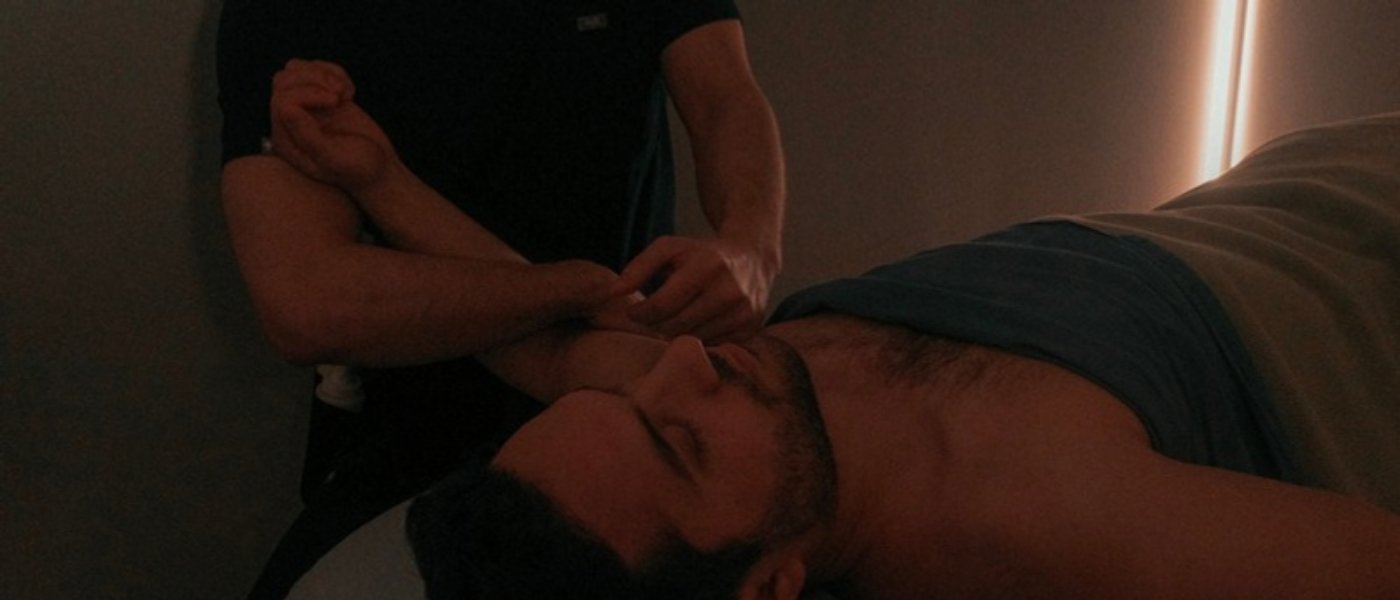
Did you feel a sharp pull across the front of your chest during a bench press, a push-up, or a hard tackle? Maybe it is now sore to reach across your body, push a door open, or lift your arm overhead. If so, you may have strained your pectoralis major, the large muscle that forms the front of the chest.
At Vaughan Physiotherapy Clinic, we assess and treat chest muscle injuries in lifters, contact athletes, and active people of all ages. Most chest strains are minor and recover well with a structured plan. A small number are full tendon ruptures that do much better with early surgical repair. Our first job is to tell the two apart quickly, so you get the right care at the right time.
Here is what a pectoralis strain is, how to recognize it, how to spot the warning signs of a tendon rupture, and what else could be causing your chest pain.
What Is a Pectoralis Strain?
A pectoralis strain is an injury to the fibres of the pectoralis major muscle or its tendon. Like any muscle strain, it ranges from a mild overstretch of a few fibres to a complete tear where the tendon pulls away from the arm bone.
Serious pectoralis major tears were once rare, but they are being reported more often. A large review of 365 published cases found that 75 percent were reported in the last 20 years, most were caused by the muscle being overloaded rather than by a direct blow, and nearly half happened during weight training (ElMaraghy & Devereaux, 2012). The typical patient with a full tear is a muscular man between about 20 and 40 years old (Long et al., 2022).
Minor Strain or Tendon Rupture?
Specialists describe pectoralis injuries by three features: whether the injury is recent or old, where the tear is, and how much of the muscle or tendon is torn (ElMaraghy & Devereaux, 2012). In practical terms, injuries fall into two broad groups:
- Minor strains and partial tears: injuries in the muscle belly, or partial tears that leave most of the tendon intact. These are usually managed without surgery, with a physiotherapy-led rehab program (Long et al., 2022)
- Complete tendon ruptures: the tendon tears off the upper arm bone (humerus) or tears where muscle turns into tendon. In published cases, about 65 percent of tears are at the bone and about 27 percent at the muscle and tendon junction (Long et al., 2022). In young, active people, these are usually referred for surgical repair
This distinction matters because timing affects the outcome of surgery. Repairs done early tend to give better function and appearance than delayed repairs (Bodendorfer et al., 2020b), so a suspected rupture should be assessed by a physician within days, not weeks.
Understanding the Anatomy
The pectoralis major is a large fan-shaped muscle with two main parts (Long et al., 2022):
- Clavicular head: the upper portion, starting from the inner part of the collarbone
- Sternocostal head: the larger lower portion, starting from the breastbone and the cartilage of the upper ribs. This is the part most often torn
- Tendon: the two heads join into a flat, layered tendon that twists before attaching to the front of the upper arm bone, just below the shoulder
The muscle pulls the arm across the body, rotates it inward, and helps push. Tears most often happen when the arm is behind the body and turned out while the muscle is working hard to slow the weight down, as in the lowering phase of a heavy bench press (Long et al., 2022).
Recognizing the Symptoms
Symptoms depend on how badly the muscle or tendon is injured.
A minor strain usually causes:
- A pulling or sharp pain in the front of the chest or near the armpit during effort
- Tenderness when you press on the muscle
- Pain when pushing, lifting, or bringing the arm across the body
- Mild swelling, sometimes a small bruise, and strength limited mainly by pain
A complete tendon rupture often causes (Long et al., 2022):
- A pop or tearing feeling at the moment of injury, followed by immediate pain
- Large bruising spreading into the armpit and upper arm over the next few days
- A change in chest shape: the fold at the front of the armpit looks thinner or missing
- On the injured side, the nipple may sit lower than on the other side
- Clear weakness pulling the arm across the body or turning it inward
Bruising in the armpit or upper arm points to a tear near the tendon attachment, while bruising on the front of the chest suggests a muscle belly injury (Long et al., 2022).
What Makes It Worse?
- Heavy pressing: bench press, dips, and push-ups, especially the lowering phase with a wide grip
- Stretching the chest: reaching the arm back and out to the side
- Contact sport: tackling, wrestling, and blocking with the arm out to the side
- Sudden spikes in load: a new maximum lift, training through fatigue, or returning to heavy lifting too soon
What Else Could It Be?
Chest and front-of-shoulder pain has many causes. Part of our assessment is ruling these in or out:
- Complete pectoralis tendon rupture: pop, large bruising, change in chest shape, and clear weakness (Long et al., 2022). This needs a prompt medical referral
- Shoulder dislocation or fracture: these can happen with similar forces, and X-rays are used to rule them out (Long et al., 2022)
- Rib injury or rib fracture: pain over a rib that is worse with deep breathing, coughing, or twisting, often after a direct hit
- Costochondritis or other chest wall pain: tenderness where the ribs meet the breastbone, often without a clear injury
- Rotator cuff or biceps tendon problems: pain at the front of the shoulder with overhead or lifting movements
- Neck-related pain: a pinched nerve in the neck can refer pain into the chest and arm, often with tingling or numbness
- Heart, lung, or other medical causes: chest pain is never assumed to be muscular until these have been considered
When to See a Doctor First
Call 911 or go to the emergency department right away if you have chest pain:
- With shortness of breath, sweating, nausea, light-headedness, or pain spreading into the jaw, neck, back, or left arm
- That came on without a clear muscle injury, at rest, or with exertion that normally does not hurt
- After a hard hit, with trouble breathing or coughing up blood
See your physician promptly, ideally within a few days, if you have:
- A pop at the time of injury, large bruising in the armpit or upper arm, a change in the shape of your chest, or marked weakness, since these suggest a tendon rupture where early surgical review gives the best results (Bodendorfer et al., 2020b)
- A shoulder that looks deformed or that you cannot move
- Numbness, tingling, or weakness in the arm or hand
- Fever, or a hot, red, swollen area over the chest
Our physiotherapists screen for these signs at your first visit and will coordinate with your physician or a sports medicine doctor if imaging or a surgical opinion is needed.
Related reading: Chest and front of shoulder pain can also come from pec minor tightness, chest wall pain or a biceps strain.
Why Physiotherapy Is Essential
A pectoralis strain happens when the muscle is asked to control more force than it can handle, usually in a stretched position. Rest settles the pain, but it does not rebuild the strength and control you need to press and push again safely.
Physiotherapy has two jobs with chest injuries. The first is sorting the injury. Minor strains and partial tears are usually managed without surgery, while complete tendon ruptures in active people are usually repaired (Long et al., 2022). A systematic review of 664 injuries found that people who had a ruptured tendon repaired had better function, strength, and appearance than people treated without surgery (Bodendorfer et al., 2020a). Getting that call right early is one of the most valuable things we do.
The second job is rebuilding, whether you are recovering from a minor strain or following your surgeon's plan after a repair. Physiotherapy addresses the main drivers:
- Pain and protection: settling the injury without unnecessary rest
- Range of motion: restoring shoulder and chest mobility gradually, without overstretching healing tissue
- Strength: progressive loading of the chest, shoulder, and upper back
- Technique and training load: lifting position, grip width, and sensible progression
Your Treatment Plan at Vaughan Physiotherapy Clinic
The plan below applies to minor strains and partial tears managed without surgery. If you have had a tendon repair, your physiotherapy will follow your surgeon's protocol, which is described in the surgery section further down.
Phase 1: Assessment and Triage (First Visit)
Your first visit focuses on finding out exactly what is injured. A full assessment includes:
- History: how the injury happened, the position of your arm, whether you felt a pop, and how quickly bruising appeared
- Visual check: comparing both sides for bruising, the armpit fold, and nipple height (Long et al., 2022)
- Hands-on examination: feeling along the muscle and tendon to find the painful spot and check whether the tendon edge can be felt
- Strength testing: comparing pushing, pulling across the body, and inward rotation between sides
- Shoulder, neck, and rib screen: to rule out the other causes of chest and shoulder pain
If anything suggests a complete rupture, we will help arrange a prompt physician review. X-rays are used to rule out a fracture or dislocation, and MRI is the best test for showing where the tear is and how large it is. Ultrasound is quicker and less costly, but its accuracy depends heavily on the person doing the scan (Long et al., 2022).
Phase 2: Settle and Protect (Roughly the First 1 to 2 Weeks)
Early pain relief usually includes:
- Relative rest: stopping pressing, dips, and heavy pushing for now, while keeping the rest of your training going
- Pain-free movement: gentle shoulder movement within a comfortable range, so the shoulder does not stiffen
- Early gentle muscle work: light, pain-free squeezes of the chest muscle (isometrics), such as pressing your palms together
Starting rehab early, rather than resting for a long time, appears to help muscle strains recover faster. In a trial of amateur athletes with acute muscle strains, starting rehab within a few days of injury led to a faster pain-free recovery than waiting more than a week (Bayer et al., 2017). That study looked at other muscles, not the chest, so we treat it as indirect support for staying active within comfort rather than as a firm rule for pectoralis injuries.
Phase 3: Restoring Mobility and Strength
Progressive chest and shoulder strengthening
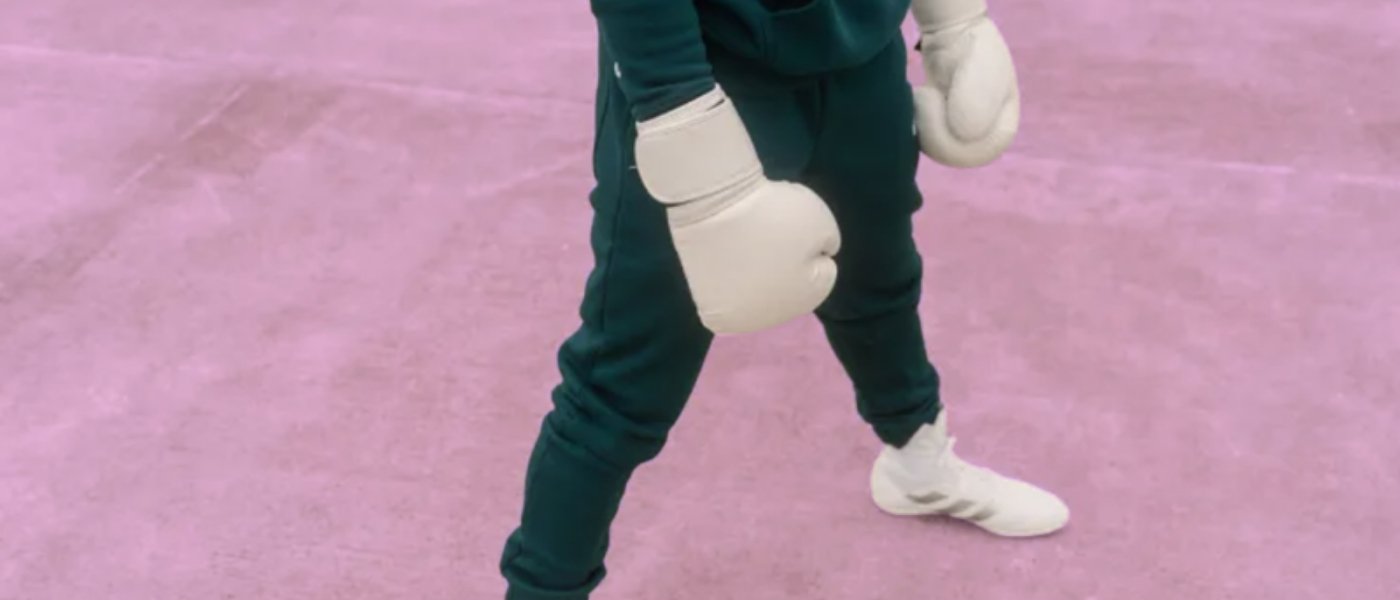
Once everyday movements are comfortable, we begin loading the muscle step by step. There are no clinical trials of specific exercise programs for minor pectoralis strains, so this phase follows general muscle strain principles: start easy, progress steadily, and let pain and strength guide the pace. Your program may include:
- Isometric holds: pressing into a wall or your own hands at different arm positions
- Wall push-ups, then incline push-ups on a bench, then floor push-ups
- Band chest presses and band flys with a short range, gradually lengthening the range
- Light dumbbell presses with a neutral grip, keeping the elbows tucked and the range short at first
- Upper back and rotator cuff work: rows, band pull-aparts, and rotation exercises to balance the shoulder
Restoring range of motion
Gentle chest opening, such as a low doorway stretch, is added gradually. Hard stretching is avoided early, since the stretched position is what caused the injury.
Manual therapy
Soft tissue work and gentle mobilization of a stiff shoulder or mid back can ease pain so you can stay consistent with exercise. We use it alongside, not instead of, progressive loading.
Phase 4: Return to Lifting and Sport
- Gradual return to pressing: starting with light weights and a shortened range, then slowly building load and depth
- Bench press technique review: grip width, bar path, and controlled lowering, since the lowering phase of a heavy press is the classic injury moment (Long et al., 2022)
- Sport-specific drills for tackling, blocking, or grappling
- Strength checks: comparing sides before heavy lifting or full contact
Beyond Physiotherapy: Complementary Care for Pectoralis Strain
Accurate diagnosis and progressive strengthening are the core of pectoralis strain care. Some patients also use other services at our clinic to ease pain and tightness during rehab. We found no trials of acupuncture, massage, or chiropractic care for pectoralis strains, so the evidence below comes from related conditions.
How Acupuncture and Dry Needling Can Help
Acupuncture and dry needling use fine needles to reduce pain and ease tight, tender muscles.
- What the evidence shows: there are no studies of needling for pectoralis strains. The closest evidence is a systematic review of 13 trials of dry needling by physiotherapists for a range of muscle and joint pain conditions. It found dry needling may reduce pain in the short term, up to about 12 weeks, but the quality of evidence ranged from very low to moderate, and there was no clear long-term benefit (Gattie et al., 2017)
- Where it fits: as a short-term option to ease pain and muscle guarding around the chest, shoulder, and upper back during the strengthening phase
- Safety: generally safe when performed by a trained clinician. Needling over the chest wall needs extra care because the lungs sit close beneath the ribs, so technique and depth are chosen carefully. It is not used over a fresh tear or a large bruise
How Massage Therapy Can Help
Registered massage therapy focuses on the soft tissues of the chest, shoulder, neck, and upper back.
- What the evidence shows: there are no trials of massage for pectoralis strains. A systematic review of 29 trials in athletes found that sports massage did not improve strength, sprinting, or jumping, but it may modestly ease delayed-onset muscle soreness and improve flexibility. The size of those benefits was uncertain because the studies varied a lot (Davis et al., 2020)
- Where it fits: for comfort, and for tightness in the surrounding muscles once the acute stage has passed. We treat it as a supportive add-on, not a stand-alone treatment
- Safety: very safe. Deep pressure directly over a fresh strain or bruise is avoided in the first days after injury
How Chiropractic and Joint Manipulation Can Help
Chiropractic care uses joint mobilization and manipulation, often of the mid back, ribs, and shoulder.
- What the evidence shows: there are no trials of chiropractic care for pectoralis strains. The closest evidence is a randomized trial of 115 people with acute chest pain from a muscle or joint source. Earlier results had favoured chiropractic care at 4 and 12 weeks, but at one year both the chiropractic group and the self-management group had improved, with no clear difference between them (Stochkendahl et al., 2012). That study was about chest wall pain in general, not muscle tears
- Where it fits: for stiffness in the mid back, ribs, or shoulder that is adding to your symptoms, combined with exercise
- Safety: generally safe. It does not treat a torn muscle, and it is not used until heart, lung, rib, and tendon problems have been ruled out
Whichever combination you and your clinician choose, these treatments share one purpose: settling symptoms so you can keep moving while the real fix, a stronger and better-controlled chest and shoulder, takes hold.
When Is Surgery Considered?
Surgery is not needed for most minor strains. It is considered for complete tendon ruptures, especially in younger, active people. Non-surgical care is mainly reserved for partial tears, muscle belly tears, and older or less active people (Long et al., 2022).
The research supports surgery for complete ruptures:
- A systematic review of 23 studies and 664 injuries found that surgical repair gave better function, more strength, better appearance, and less resting deformity than non-surgical care. Complications occurred in about 14 percent of surgical cases, and the tendon re-tore in about 3 percent (Bodendorfer et al., 2020a)
- A second review of 20 studies found that early repair gave significantly better function and satisfaction with appearance than delayed repair, and the method used to fix the tendon did not change outcomes (Bodendorfer et al., 2020b)
- Repairs done within about 8 weeks tend to do better, since scarring and shortening of the tendon can make later repairs more difficult (Long et al., 2022)
- In a study of 291 military members who had surgery, waiting more than 6 weeks was linked to a higher risk of complications, and over 95 percent of those followed for a year returned to duty (Balazs et al., 2016)
After a repair, physiotherapy follows your surgeon's protocol: usually a sling for several weeks, protected range of motion, then gradual strengthening. We never push past your surgeon's restrictions, and we keep your surgical team updated.
How Long Will It Take?
Recovery depends on how badly the muscle or tendon is injured and what you need to get back to. There is very little published data on recovery times for minor pectoralis strains, so we avoid promising a fixed date.
In our experience, mild strains often feel much better within a few weeks, with a return to heavy pressing building over the following weeks to months as strength comes back. Partial tears usually take longer. After surgical repair, a full return to sport is commonly around six months, sometimes sooner in selected cases (Liem & Olafsen, 2017), and always on your surgeon's timeline.
Prevention and Long-Term Management
- Warm up properly before pressing, with lighter sets that build to your working weight
- Control the lowering phase of the bench press, and avoid letting the bar drop or bounce
- Watch your grip and depth: a very wide grip and a very deep bottom position put the chest muscle under more strain
- Build load gradually: use a spotter, and avoid big jumps in weight or testing new maximums when fatigued
- Train the whole shoulder: keep rows, upper back, and rotator cuff work in your program
- Act early: if the chest feels tight or pulls during a lift, stop the set rather than pushing through
Frequently Asked Questions
How do I know if I tore my pec or just strained it?
A minor strain usually causes soreness and tenderness, with strength that is limited mostly by pain. A complete tear often comes with a pop, large bruising in the armpit or upper arm, a change in the shape of the chest or armpit fold, and clear weakness (Long et al., 2022). If you have any of these signs, get assessed within days, since early repair gives better results (Bodendorfer et al., 2020b).
Do I need an MRI?
Not for most minor strains. If a complete or large partial tear is suspected, MRI is the best test to confirm it (Long et al., 2022), and your physician will arrange it.
Can a torn pec heal without surgery?
Minor strains, muscle belly tears, and partial tears usually heal well without surgery. Complete tendon ruptures can heal with scar tissue, but people treated without surgery tend to have less strength and more visible deformity than people who have the tendon repaired (Bodendorfer et al., 2020a). For older or less active people, non-surgical care can still be a reasonable choice, and that decision is made with your surgeon.
When can I bench press again?
After a minor strain, light short-range pressing usually starts once push-ups feel comfortable. After a repair, heavy pressing is one of the last things to return, on your surgeon's timeline.
Should I stop training completely?
Usually not. Legs, core, and many pulling movements can often continue while the chest settles, and early gentle loading appears to beat long rest (Bayer et al., 2017).
Is chest pain after lifting always a muscle strain?
No. Most chest pain after a clear lifting injury is muscular, but chest pain with shortness of breath, sweating, nausea, or pain spreading to the jaw or arm needs emergency care right away. Chest pain that started without a clear injury should also be checked by a physician.
Can acupuncture, massage, or chiropractic replace exercise for a pec strain?
No. Progressive strengthening and a gradual return to lifting are the foundation of recovery. Needling, massage, and joint mobilization are best used as short-term supports to ease pain and tightness while you rebuild.
Our Specialized Approach at Vaughan Physiotherapy Clinic
Accurate triage: we check carefully for the signs of tendon rupture so time-sensitive injuries get a prompt surgical opinion
Lifter-friendly rehab: exercise programs built around pressing, pushing, and the way you actually train
Shoulder and upper back focus: addressing mobility, rotator cuff strength, and posture that affect chest loading
Progressive strengthening: clear steps from gentle isometrics back to full pressing
Integrated care: physiotherapy, massage therapy, acupuncture, and chiropractic under one roof when they add value
Safety first: screening for heart, lung, rib, and neck causes of chest pain, and close coordination with your surgeon after a repair
Take the First Step Toward Pain-Free Lifting
A chest strain does not have to sideline your training, your sport, or your workday. Our team at Vaughan Physiotherapy Clinic helps patients from Thornhill, Vaughan, North York, Richmond Hill, and surrounding communities recover from chest and shoulder injuries with evidence-based, hands-on care.
Book your assessment today:
Phone: 905-669-1221
Location: 398 Steeles Ave W #201, Thornhill, ON L4J 6X3
Online Booking: www.vaughanphysiotherapy.com
References
Balazs GC, Brelin AM, Donohue MA, Dworak TC, Rue JPH, Giuliani JR, Dickens JF. Incidence rate and results of the surgical treatment of pectoralis major tendon ruptures in active-duty military personnel. American Journal of Sports Medicine. 2016;44(7):1837-1843. doi:10.1177/0363546516637177
Bayer ML, Magnusson SP, Kjaer M. Early versus delayed rehabilitation after acute muscle injury. New England Journal of Medicine. 2017;377(13):1300-1301. doi:10.1056/NEJMc1708134
Bodendorfer BM, McCormick BP, Wang DX, et al. Treatment of pectoralis major tendon tears: a systematic review and meta-analysis of operative and nonoperative treatment. Orthopaedic Journal of Sports Medicine. 2020a;8(2):2325967119900813. doi:10.1177/2325967119900813
Bodendorfer BM, Wang DX, McCormick BP, et al. Treatment of pectoralis major tendon tears: a systematic review and meta-analysis of repair timing and fixation methods. American Journal of Sports Medicine. 2020b;48(13):3376-3385. doi:10.1177/0363546520904402
Davis HL, Alabed S, Chico TJA. Effect of sports massage on performance and recovery: a systematic review and meta-analysis. BMJ Open Sport & Exercise Medicine. 2020;6(1):e000614. doi:10.1136/bmjsem-2019-000614
ElMaraghy AW, Devereaux MW. A systematic review and comprehensive classification of pectoralis major tears. Journal of Shoulder and Elbow Surgery. 2012;21(3):412-422. doi:10.1016/j.jse.2011.04.035
Gattie E, Cleland JA, Snodgrass S. The effectiveness of trigger point dry needling for musculoskeletal conditions by physical therapists: a systematic review and meta-analysis. Journal of Orthopaedic & Sports Physical Therapy. 2017;47(3):133-149. doi:10.2519/jospt.2017.7096
Liem BC, Olafsen N. Pectoralis major injuries: return to play potential. Current Physical Medicine and Rehabilitation Reports. 2017;5(2):91-97. doi:10.1007/s40141-017-0154-9
Long MK, Ward T, DiVella M, Enders T, Ruotolo C. Injuries of the pectoralis major: diagnosis and management. Orthopedic Reviews. 2022;14(4). doi:10.52965/001c.36984
Stochkendahl MJ, Christensen HW, Vach W, Hoilund-Carlsen PF, Haghfelt T, Hartvigsen J. A randomized clinical trial of chiropractic treatment and self-management in patients with acute musculoskeletal chest pain: 1-year follow-up. Journal of Manipulative and Physiological Therapeutics. 2012;35(4):254-262. doi:10.1016/j.jmpt.2012.04.003
Disclaimer: This article is for educational purposes only and does not replace professional medical advice. Chest pain can have serious causes, including heart and lung conditions, and a suspected pectoralis tendon rupture needs prompt medical assessment because early surgical repair gives the best results. If you have chest pain with shortness of breath, sweating, or pain spreading to the jaw or arm, call 911. Always consult a qualified healthcare provider for diagnosis and treatment specific to your condition.