







Condition guide
The Science Behind Effective Physiotherapy for Knee Pain (Knee Osteoarthritis)
Knee osteoarthritis is a long-term joint condition causing activity-related knee pain and stiffness, best managed with education, exercise and weight control.

Do your knees ache after a walk, feel stiff when you get out of the car, or complain on the stairs? Have you been told it is "just wear and tear" and that there is not much you can do? If so, you may be living with knee osteoarthritis, one of the most common causes of knee pain in adults over 45.
At Vaughan Physiotherapy Clinic, we help people with knee osteoarthritis stay active, from those who want to keep up with their grandchildren to those aiming to get back on the golf course or the trail. Knee osteoarthritis is not a reason to stop moving. In fact, the right kind of movement is the most strongly recommended treatment there is.
Here is what knee osteoarthritis is, how to recognize it, what else it could be, and what the research says about treating it.
What Is Knee Osteoarthritis?
Knee osteoarthritis (OA) is a long-term condition that affects the whole knee joint, not just the cartilage. Over time, the smooth cartilage that covers the ends of the bones thins, the bone underneath changes, small bony spurs can form at the joint edges, and the joint lining and surrounding muscles are affected too.
The phrase "wear and tear" is a bit misleading. Joints are living tissue that respond to how they are loaded. Osteoarthritis is better thought of as a joint that is having trouble keeping up with repair, and many things influence that, including age, previous injury, body weight, muscle strength, and genetics. Importantly, what an X-ray shows often does not match how much pain a person has. Some people with a lot of change on imaging have little pain, and the reverse is also true.
Current guidelines say knee osteoarthritis can usually be diagnosed from your history and examination alone, without an X-ray, in people aged 45 or older who have activity-related joint pain and either no morning stiffness or stiffness lasting 30 minutes or less (NICE, 2022).
Which Part of the Knee Is Affected?
The knee has three compartments, and osteoarthritis can affect one or more of them:
- Medial (inner) compartment: between the thigh bone and shin bone on the inside of the knee. This is the most commonly affected area
- Lateral (outer) compartment: the same joint on the outside of the knee
- Patellofemoral compartment: behind the kneecap, where it glides on the thigh bone. This often causes pain with stairs, squatting, and getting up from a chair
Understanding the Anatomy
- Articular cartilage: the smooth, slippery covering on the ends of the bones that lets the joint glide
- Menisci: two C-shaped pads of fibrocartilage that act as shock absorbers and help spread load across the joint
- Subchondral bone: the bone just under the cartilage, which can become sensitive as osteoarthritis develops
- Synovium: the joint lining that makes lubricating fluid. When it becomes irritated, the knee can swell
- Quadriceps and hip muscles: the main muscles that control and protect the knee. Building their strength is a key part of treatment
Recognizing the Symptoms
Knee osteoarthritis usually develops slowly over months or years. Symptoms tend to come and go, with good days and flare-ups. Common signs include:
- Pain with activity, such as walking, stairs, or standing for long periods, that eases with rest
- Short-lived stiffness in the morning or after sitting, usually loosening up within 30 minutes
- Difficulty with stairs, squatting, kneeling, or getting up from a low chair
- Mild swelling after a busy day
- A grinding or crackling feeling (crepitus) when the knee bends
- A feeling that the knee is weak or might give way
- Over time, a knee that will not fully straighten or bend, or a change in leg shape such as bowing
What Makes It Worse?
- Sudden jumps in activity: a long hike, a day of gardening, or a lot of stairs after a quiet spell
- Weak thigh and hip muscles: less muscle support means the joint takes more of the load
- Extra body weight: every step puts more load through the knee, and weight loss is a core treatment for people who are overweight (Bannuru et al., 2019; NICE, 2022)
- Long periods without moving: sitting for hours can leave the knee stiff and sore when you get up
- Previous knee injury: an old ligament or meniscus injury can change how the joint is loaded for years afterward
- Poor sleep, stress, and low mood: these can all raise sensitivity to pain, which is one reason guidelines include education and self-management in care (Kolasinski et al., 2020)
What Else Could It Be?
Several other conditions can cause knee pain in midlife and later and need a different approach. Part of our assessment is ruling these in or out:
- Patellofemoral pain: pain around or behind the kneecap, common in younger and active people, without the joint changes of osteoarthritis
- Degenerative meniscus tear: often present alongside osteoarthritis. True locking, where the knee gets stuck and cannot straighten, needs further assessment
- Inflammatory arthritis: rheumatoid arthritis and related conditions tend to cause long morning stiffness (well over 30 minutes), warm swollen joints, and pain in several joints at once
- Gout or pseudogout: a sudden attack of a hot, red, very painful, swollen knee
- Bursitis or tendon pain: such as pes anserine bursitis on the inner shin just below the knee, or patellar tendon pain at the front
- Referred pain from the hip or lower back: hip osteoarthritis in particular can show up as knee pain
- Insufficiency fracture or bone stress: sudden, severe knee pain without a clear injury, especially in people with osteoporosis
When to See a Doctor First
See your physician promptly, or go to urgent care, if you have:
- A hot, red, very swollen knee, especially with fever or feeling unwell, since a joint infection needs urgent treatment
- Inability to bear weight after a fall or injury, which may point to a fracture
- Calf pain, swelling, warmth or redness, especially after surgery, a long trip, or a period of bed rest, which may be a blood clot
- Morning stiffness lasting well over 30 minutes and swelling in several joints, which may suggest inflammatory arthritis
- A knee that is locked and cannot be straightened
- Pain at night that does not ease with rest or change of position, or unexplained weight loss
Our physiotherapists screen for these signs at your first visit and will coordinate with your physician if imaging, blood tests, or a referral is needed.
Related reading: You may also find our guides to degenerative meniscus injuries and joint pain and arthritis helpful.
Why Physiotherapy Is Essential
For knee osteoarthritis, the treatments with the strongest guideline support are not pills or injections. They are education, exercise, and, where it applies, weight management.
- The Osteoarthritis Research Society International (OARSI) lists arthritis education and structured land-based exercise, with or without dietary weight management, as the core treatments for everyone with knee osteoarthritis (Bannuru et al., 2019)
- The UK's National Institute for Health and Care Excellence (NICE) says the core treatments are therapeutic exercise and weight management where appropriate, supported by information and self-management (NICE, 2022)
- The American College of Rheumatology and Arthritis Foundation strongly recommend exercise, weight loss for people who are overweight, self-management programs, and tai chi (Kolasinski et al., 2020)
The largest review of exercise for knee osteoarthritis pooled 139 trials with more than 12,000 people. It found that exercise probably improves pain, physical function, and quality of life in the short term, compared with no exercise (Lawford et al., 2024). To be honest about the size of the effect, the average improvement was modest, which is why we tailor and progress your program and pair it with education and weight management.
Physiotherapy addresses the main drivers of knee osteoarthritis pain: strength, confidence that movement is safe, pacing of load, mobility and walking, and body weight where relevant.
Your Treatment Plan at Vaughan Physiotherapy Clinic
Phase 1: Assessment and Understanding Your Knee (Weeks 1 to 2)
Your first visit focuses on understanding your knee and what matters to you. A full assessment includes:
- History: your symptoms, previous injuries, other health conditions, and your goals
- Movement and function: knee range, quadriceps and hip strength, balance, stairs, and walking
- Screening: ruling out red flags and conditions that need a different approach
- The whole leg, not just the knee: how your hip, foot and ankle move and how you walk, since stiffness or weakness above or below the knee changes how much load the joint takes
In most cases you do not need an X-ray or MRI to start treatment. Guidelines advise against routine imaging unless there are unusual features or another diagnosis is suspected (NICE, 2022). If anything in your assessment suggests something other than osteoarthritis, we will refer you back to your physician.
Education starts on day one. Guidelines rank education as part of core care (Bannuru et al., 2019; NICE, 2022). We will explain what osteoarthritis is and is not, why movement is safe and helpful, how to handle flare-ups, and what to expect from treatment. Structured programs that pair education with supervised exercise follow this model, and NICE recommends combining the two (NICE, 2022). Our clinic runs its own one-on-one program for older adults built on the same principles.
Phase 2: Settling Pain and Building Confidence (Weeks 1 to 4)
- Activity pacing: spreading tasks through the day and building up gradually rather than stopping activity altogether
- Walking aids: a cane, used in the hand opposite the sore knee, is strongly recommended when osteoarthritis significantly affects walking (Kolasinski et al., 2020)
- Taping: knee taping is conditionally recommended as a short-term support (Kolasinski et al., 2020)
- Bracing: guidelines disagree. The American guideline strongly recommends a knee brace in suitable people (Kolasinski et al., 2020), while OARSI recommends against it because the evidence is poor (Bannuru et al., 2019). We will discuss whether one makes sense for you
- Pain medication: this is your physician's or pharmacist's area, but topical anti-inflammatory gels are recommended for knee osteoarthritis, while strong opioids are not (Bannuru et al., 2019; NICE, 2022)
Electrical treatments such as TENS, ultrasound, and laser are not recommended for knee osteoarthritis (NICE, 2022; Kolasinski et al., 2020), so we spend your time on treatments that work.
Phase 3: Strengthening and Rebuilding (Weeks 2 to 12)
Strengthening exercise

Exercise is the centre of your program. The Cochrane review found no clear difference between types of exercise (Lawford et al., 2024), so we choose exercises you can do well, enjoy, and keep doing. A typical program includes:
- Quadriceps strengthening: sit to stand from a chair, step-ups, wall squats, and leg press or knee extension, progressed over time
- Hip strengthening: side-lying leg lifts, bridges, and banded side steps
- Balance and neuromuscular training: single-leg standing and controlled stepping drills, conditionally recommended for knee osteoarthritis (Kolasinski et al., 2020)
- Aerobic exercise: walking, cycling, or swimming to build fitness. A stationary bike is often very knee-friendly
- Mind-body options: tai chi is strongly recommended and yoga is conditionally recommended for knee osteoarthritis (Kolasinski et al., 2020)
Some soreness at first is normal. NICE notes that pain may increase when you start exercising, but sticking with it improves outcomes (NICE, 2022). We will show you what level of discomfort is acceptable and adjust your program if a flare-up happens.
Weight management
For people who are overweight, weight loss improves pain, function, and quality of life (NICE, 2022). Benefits appear with a loss of 5 percent or more of body weight and keep growing with larger losses (Kolasinski et al., 2020), and losing 10 percent is likely to be better than 5 percent (NICE, 2022). Combining weight loss with exercise adds to the benefit (Kolasinski et al., 2020). We can work alongside your physician or a dietitian to support this.
Manual therapy
Hands-on joint mobilization and soft tissue work can help ease stiffness and pain so you can exercise more comfortably. Guidelines are cautious: NICE says manual therapy can be considered for knee osteoarthritis only alongside exercise, because there is not enough evidence to support it on its own (NICE, 2022), and the American guideline found little added benefit beyond exercise alone (Kolasinski et al., 2020). We use it as a short-term helper, never as the main treatment.
Phase 4: Return to Activity and Self-Management (Week 8 Onward)
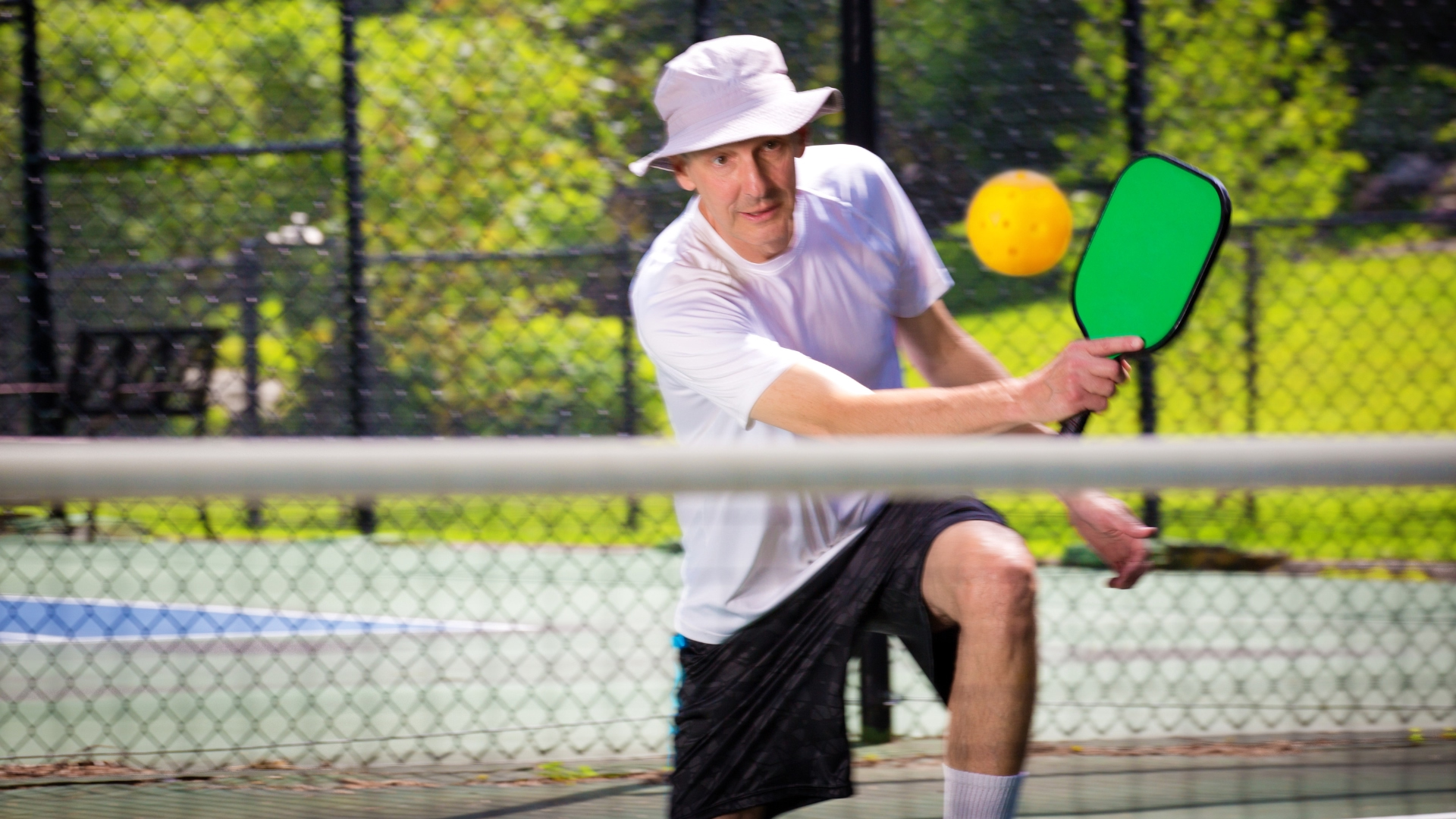
- Building toward your goals: longer walks, golf, pickleball, gardening, or travel
- A home or gym program you can continue on your own
- A flare-up plan: what to do, and what to change, when your knee has a bad week
Practical tips for building up activity
- Load management: Gradually increasing the duration and intensity of activities based on symptom response, following the 24-hour pain rule (activity level is appropriate if pain returns to baseline within 24 hours)
- Activity substitution: Replacing high-impact activities with lower-impact alternatives that provide similar benefits (e.g., swimming or cycling instead of running)
- Environmental modification: Using supportive footwear, appropriate walking aids when needed, and modifying home or work environments to reduce unnecessary joint stress
- Walking programs should begin on flat, even surfaces with gradual increases in distance and pace
- Avoid prolonged static postures (sitting or standing in one position)
Beyond Physiotherapy: Complementary Care for Knee Osteoarthritis
Education, exercise, and weight management form the core of knee osteoarthritis care, and that is where the research is strongest. Some patients also benefit from other services at our clinic to ease pain and stiffness so they can stay consistent with exercise. Here is an honest summary of what the evidence does and does not show for each, including where the major guidelines disagree.
How Acupuncture and Dry Needling Can Help
Acupuncture and dry needling use fine needles to reduce pain and ease tight, tender muscles.
- What the evidence shows: this is an area where guidelines openly conflict. The American College of Rheumatology conditionally recommends acupuncture for knee osteoarthritis, noting that the most positive trials are in the knee. It also notes that much of the benefit seems to come from the overall treatment experience, with only a small extra effect of real needling over sham needling (Kolasinski et al., 2020). NICE takes the opposite view and recommends not offering acupuncture or dry needling for osteoarthritis (NICE, 2022). In one large Australian trial of 282 adults over 50 with chronic knee pain, needle and laser acupuncture were no better than sham laser treatment, and modest gains compared with no treatment did not last to one year (Hinman et al., 2014)
- Where it fits: some patients find it helpful for short-term pain relief. If you choose it, it should be an add-on to exercise, not a replacement, and we will be upfront that the evidence is mixed
- Safety: generally very safe. No serious side effects were reported in the Australian trial (Hinman et al., 2014). Minor bruising or soreness at needle sites is the most common side effect
How Massage Therapy Can Help
Registered massage therapy focuses on the muscles and soft tissues around the knee, thigh, and hip.
- What the evidence shows: in a trial of 222 people with knee osteoarthritis, eight weekly 60-minute full-body massages improved pain, stiffness, and function more than light touch or usual care at eight weeks. However, by one year, continued massage every two weeks gave no added benefit over usual care (Perlman et al., 2019). The American guideline conditionally recommends against massage, mainly because studies have been small with a high risk of bias, though it acknowledges massage may have other benefits (Kolasinski et al., 2020)
- Where it fits: as a short-term option for comfort and muscle tightness, especially early on or during a flare-up, while you build up your exercise program
- Safety: very safe. Side effects were minimal in the trial (Perlman et al., 2019). Some temporary muscle soreness afterward is normal
How Chiropractic and Joint Manipulation Can Help
Chiropractic care for the knee usually involves joint mobilization and manipulation of the knee, hip, and surrounding joints.
- What the evidence shows: guidelines group chiropractic joint techniques with manual therapy. NICE allows manual therapy for knee osteoarthritis only when combined with exercise (NICE, 2022), and the American guideline found little benefit from adding it to exercise (Kolasinski et al., 2020). We are not aware of strong trials showing chiropractic manipulation on its own improves knee osteoarthritis
- Where it fits: for joint stiffness in the knee or hip that is limiting your exercise, used together with an active program
- Safety: generally safe when adapted to the person. Forceful techniques are avoided with a hot, swollen joint, recent fracture, or significant osteoporosis
Whichever combination you and your clinician choose, these treatments share one purpose: making it easier to keep moving, because regular, progressive exercise is what makes the lasting difference.
When Is Surgery Considered?
Total knee replacement is a very effective operation for the right person, but it is not the first step. NICE suggests considering referral for joint replacement when symptoms substantially affect your quality of life and non-surgical care has not worked or is not suitable. That decision should be based on a clinical assessment, not on an X-ray score alone, and people should not be ruled out based only on age, sex, smoking, other health conditions, or weight, although these do change the risks (NICE, 2022).
In a landmark Danish trial, 100 people eligible for knee replacement were randomized to surgery plus a 12-week non-surgical program, or to the 12-week non-surgical program alone. The program, run by physiotherapists and dietitians, included exercise, education, dietary advice, insoles, and pain medication. The surgery group improved more, but also had more serious complications, and only about a quarter of the non-surgical group went on to have a knee replacement within the year (Skou et al., 2015). Surgery helps when it is needed, but a well-run exercise and education program is a reasonable first step.
Arthroscopic "clean-out" surgery (washing out or trimming the joint) is not recommended for knee osteoarthritis (NICE, 2022). If you do have a knee replacement, our team provides rehabilitation in line with your surgeon's protocol.
How Long Will It Take?
Knee osteoarthritis is a long-term condition, so the goal is less pain, better function, and confidence in managing your knee, rather than a quick fix. Most structured programs in the research run for about 8 to 12 weeks of supervised exercise (Skou et al., 2015; Perlman et al., 2019), and the Cochrane review found that the benefits of exercise are clearest in the short term (Lawford et al., 2024). Keeping the gains means keeping up the exercise.
In our experience, many people move more easily within a few weeks, with strength and confidence building over the following two to three months. Flare-ups can still happen, but they are easier to manage once you have a plan.
Prevention and Long-Term Management
- Keep moving every day: regular activity is one of the best things you can do for an arthritic knee
- Strengthen twice a week: keep up your thigh and hip exercises even when your knee feels good
- Manage your weight: even modest weight loss reduces knee load and pain if you are carrying extra weight
- Build up gradually: increase walking distance, hikes, or sport step by step
- Have a flare-up plan: ease back, keep gentle movement going, and return to your program as the knee settles
Frequently Asked Questions
Will exercise wear out my knee faster?
No. Every major guideline recommends exercise as a core treatment for knee osteoarthritis (Bannuru et al., 2019; NICE, 2022; Kolasinski et al., 2020). Joints respond well to sensible, progressive loading, and some discomfort when starting is not a sign of damage.
What is the best exercise for knee osteoarthritis?
The one you will keep doing. The largest review found no clear difference between types of exercise (Lawford et al., 2024). Strengthening, walking, cycling, water exercise, tai chi, and yoga can all help. We tailor your program to your knee, your goals, and what you enjoy.
Will losing weight really help my knee?
Yes, if you are overweight. Losing 5 percent or more of your body weight is linked with meaningful improvement, and more weight loss tends to bring more benefit (Kolasinski et al., 2020; NICE, 2022). Adding exercise to weight loss increases the benefit (Kolasinski et al., 2020).
Should I get a cortisone injection?
That is a decision to make with your physician. Injections can be considered when other treatments have not helped enough, or to make exercise easier, but NICE notes the relief typically lasts only about 2 to 10 weeks (NICE, 2022). They work best as a window to get moving, not as a stand-alone fix.
Do I eventually need a knee replacement?
Not necessarily. Many people manage well for years with exercise, education, and weight management. Surgery is considered when symptoms seriously affect your quality of life despite good non-surgical care (NICE, 2022). In one trial, about three in four people who did a structured non-surgical program had not had surgery a year later (Skou et al., 2015).
Can acupuncture, massage, or chiropractic replace exercise for knee osteoarthritis?
No. Exercise, education, and weight management are the foundation and have the most research behind them. Massage and acupuncture may give some people short-term relief, and joint mobilization can ease stiffness, but none of them has evidence to replace exercise, and guidelines disagree on whether some of them should be offered at all.
Our Specialized Approach at Vaughan Physiotherapy Clinic
Thorough assessment: we look at your strength, movement, walking, and goals, not just your X-ray
Education that builds confidence: clear explanations of what is happening in your knee and why movement helps
Progressive strengthening: a tailored, supervised program that grows with you
Programs for older adults: our own one-on-one seniors program built on education and exercise
Integrated care: physiotherapy, massage therapy, acupuncture, and chiropractic under one roof when they add value
Safety first: screening for infection, inflammatory arthritis, and other red flags, with physician referral when needed
Take the First Step Toward Stronger, More Comfortable Knees
Knee osteoarthritis does not have to mean giving up the things you enjoy. Our team at Vaughan Physiotherapy Clinic helps patients from Thornhill, Vaughan, North York, Richmond Hill, and surrounding communities stay active with evidence-based, hands-on care.
Book your assessment today:
Phone: 905-669-1221
Location: 398 Steeles Ave W #201, Thornhill, ON L4J 6X3
Online Booking: www.vaughanphysiotherapy.com
References
Bannuru RR, Osani MC, Vaysbrot EE, et al. OARSI guidelines for the non-surgical management of knee, hip, and polyarticular osteoarthritis. Osteoarthritis and Cartilage. 2019;27(11):1578-1589. doi:10.1016/j.joca.2019.06.011
Hinman RS, McCrory P, Pirotta M, et al. Acupuncture for chronic knee pain: a randomized clinical trial. JAMA. 2014;312(13):1313-1322. doi:10.1001/jama.2014.12660
Kolasinski SL, Neogi T, Hochberg MC, et al. 2019 American College of Rheumatology/Arthritis Foundation guideline for the management of osteoarthritis of the hand, hip, and knee. Arthritis & Rheumatology. 2020;72(2):220-233. doi:10.1002/art.41142
Lawford BJ, Hall M, Hinman RS, et al. Exercise for osteoarthritis of the knee. Cochrane Database of Systematic Reviews. 2024;(12):CD004376. doi:10.1002/14651858.CD004376.pub4
National Institute for Health and Care Excellence (NICE). Osteoarthritis in over 16s: diagnosis and management. NICE guideline NG226. 2022. https://www.nice.org.uk/guidance/ng226
Perlman A, Fogerite SG, Glass O, et al. Efficacy and safety of massage for osteoarthritis of the knee: a randomized clinical trial. Journal of General Internal Medicine. 2019;34(3):379-386. doi:10.1007/s11606-018-4763-5
Skou ST, Roos EM, Laursen MB, et al. A randomized, controlled trial of total knee replacement. New England Journal of Medicine. 2015;373(17):1597-1606. doi:10.1056/NEJMoa1505467
Disclaimer: This article is for educational purposes only and does not replace professional medical advice. Knee pain can have several causes, including joint infection, inflammatory arthritis, gout, fractures, and blood clots, some of which need urgent care. Decisions about medication, injections, and surgery should be made with your physician or surgeon. Always consult a qualified healthcare provider for diagnosis and treatment specific to your condition.







