

Person walking on a red track, close view of feet and white sneakers

Metatarsalgia

Metatarsalgia is pain under the ball of the foot, usually beneath the second to fourth toes, caused by too much pressure on the metatarsal heads.

Does the ball of your foot ache or burn when you walk, run, or stand for long periods? Does it feel like you are stepping on a pebble, especially when you push off? If so, you may be dealing with metatarsalgia, one of the most common causes of forefoot pain.

At Vaughan Physiotherapy Clinic, we assess and treat ball-of-foot pain for runners, workers on their feet all day, and anyone who has started to notice every step. The goal is not just to quiet the pain for now, but to find out why the forefoot is overloaded and fix that, so you can get back to walking, training, and working comfortably.

Here is what metatarsalgia is, how to recognize it, what it can be confused with, and what the research says about treating it.

What Is Metatarsalgia?

Metatarsalgia means pain under the metatarsal heads, the rounded ends of the long foot bones that form the ball of your foot. It most often affects the area under the second, third and fourth toes (Park & Chang, 2019).

Metatarsalgia is a description of where the pain is, not a single diagnosis. Many different problems can overload the forefoot, which is why a proper assessment matters. Forefoot pain is common, affecting roughly 1 in 10 people in the general population, and it becomes more common with age (Palka et al., 2025).

The Three Types of Metatarsalgia

Clinicians usually group metatarsalgia into three types (Park & Chang, 2019; Besse, 2017):

  • Primary metatarsalgia: caused by the shape and alignment of the foot itself, such as a long second metatarsal, a high-arched (cavus) foot, or a big toe that does not carry its share of the load
  • Secondary metatarsalgia: caused by something else that overloads the forefoot, such as an injury to the ligaments under a toe joint, a neuroma, arthritis, or an inflammatory condition
  • Iatrogenic metatarsalgia: pain that develops after previous foot surgery changes how load is shared across the forefoot

Understanding the Anatomy

Every time you walk, your weight rolls from the heel to the toes. During push-off, most of the pressure is concentrated under the metatarsal heads (Park & Chang, 2019). Key structures in this area include:

  • Metatarsal heads: the five rounded bone ends that form the ball of the foot
  • Metatarsophalangeal (MTP) joints: the knuckle joints where the toes meet the foot
  • Plantar plate: a tough band of fibrocartilage under each toe joint that stops the toe from drifting upward. The second toe joint takes the highest peak pressure, which is why it is the most commonly injured (Park et al., 2025)
  • Transverse arch: the gentle side-to-side curve across the forefoot that helps spread load between the metatarsals

Recognizing the Symptoms

Metatarsalgia usually builds gradually rather than starting with a single injury. Common symptoms include:

  • Aching, burning, or sharp pain under the ball of the foot
  • A feeling of walking on a stone or a fold in your sock
  • Pain that is worse when pushing off, running, jumping, or climbing stairs
  • Pain that increases with long periods of standing, walking barefoot on hard floors, or wearing thin-soled or high-heeled shoes
  • Pain that eases with rest
  • In some cases, callus build-up under one or more metatarsal heads

What Makes It Worse?

  • Footwear: tight, narrow, thin-soled, or high-heeled shoes push more load onto the forefoot (Park & Chang, 2019)
  • Foot shape: high arches, a long second metatarsal, bunions, or a stiff or unstable big toe joint (Park & Chang, 2019)
  • Tight calves: in one study, people with forefoot or midfoot problems were far more likely to have tight calf muscles than people without foot problems. A tight gastrocnemius limits ankle movement and can shift more load onto the forefoot (DiGiovanni et al., 2002)
  • Sudden increases in activity: more running, more hours on your feet, or a new sport
  • Other health conditions: rheumatoid arthritis, diabetes, and general ligament laxity are linked to forefoot problems such as plantar plate injury (Park et al., 2025)

What Else Could It Be?

Several conditions cause pain in the same area and need different treatment. Part of our assessment is ruling these in or out (Palka et al., 2025):

  • Plantar plate injury: pain under the second toe joint, sometimes with mild swelling, and a toe that starts to drift or lift. Left untreated, it can progress to a "crossover toe"
  • Morton's neuroma: burning, tingling, or numbness that spreads into the toes, usually between the third and fourth toes. Squeezing the forefoot often reproduces it
  • Metatarsal stress fracture: pain that builds with training and becomes very specific to one bone. X-rays can look normal for the first two to three weeks
  • Freiberg's disease: a problem with the bone of the second metatarsal head, most often in younger people
  • Sesamoid problems: pain under the big toe joint rather than the middle toes
  • Inflammatory arthritis: rheumatoid arthritis often affects the toe joints early, sometimes before the hands
  • Gout and other causes of a hot, swollen joint

When to See a Doctor First

See your physician promptly, or go to urgent care, if you have:

  • A hot, red, swollen toe joint, especially with fever or if you have diabetes, since joint infection needs urgent treatment (Palka et al., 2025)
  • Several swollen toe joints on both feet, or morning stiffness in many joints, which may point to inflammatory arthritis
  • Pain at a single spot on a bone that is worsening with activity, which may be a stress fracture
  • Numbness that is spreading, or foot pain with diabetes or poor circulation
  • Pain at night, unexplained weight loss, or a toe that is rapidly changing shape

Our physiotherapists screen for these signs at your first visit and will coordinate with your physician if imaging or a referral is needed.

Related reading: Other causes of pain in the ball of the foot include Morton's neuroma, a plantar plate tear and a metatarsal stress fracture.

Start Your Journey to 

‍Better Health Today

Recover faster, move better, and feel stronger with expert physiotherapy. Our team is here to guide you every step of the way.

Why Physiotherapy Is Essential

Metatarsalgia is a load problem. The ball of the foot is taking more pressure than it can tolerate, and the pain is the signal. Pills and rest can settle symptoms for a while, but the pain tends to come back as soon as you return to the same shoes, the same training, and the same movement patterns.

Major reviews recommend conservative care as the first line of treatment for metatarsalgia, including stretching, footwear changes, and insoles, with surgery reserved for cases that do not respond (Besse, 2017). The most important step is identifying what is driving the overload, then addressing it directly (Park & Chang, 2019).

Physiotherapy addresses the main drivers:

  • Where the pressure goes: pads, insoles, and footwear changes to spread load away from the painful metatarsal heads
  • How the foot and ankle move: calf flexibility, ankle range of motion, and big toe mobility, all of which affect how much load lands on the forefoot
  • How strong the foot is: the small muscles of the foot and toes help support the forefoot during push-off
  • How much you are doing: a plan to keep you active while the tissues settle, rather than stopping everything

Your Treatment Plan at Vaughan Physiotherapy Clinic

Phase 1: Assessment and Settling Pain (Weeks 1 to 2)

Your first visit focuses on finding the cause. A full assessment includes:

  • History: when the pain started, your footwear, your work and training load, and other health conditions
  • Hands-on examination: pressing on each metatarsal head and the spaces between them to pinpoint the painful structure
  • Special tests: a squeeze test for neuroma and a drawer test for plantar plate instability. The drawer test is a useful early screen for plantar plate injury (Park et al., 2025)
  • Foot type and alignment: arch height, toe position, and how well the big toe joint moves and carries load
  • Calf length: ankle bend measured with the knee straight and bent to see whether tight calves are adding to forefoot load (DiGiovanni et al., 2002)
  • Gait and footwear review: how you walk or run, and what your shoes are doing

If anything suggests a stress fracture, plantar plate tear, or inflammatory arthritis, we will recommend imaging or a physician referral. Weight-bearing X-rays are usually the first test, with ultrasound or MRI if more detail is needed (Palka et al., 2025).

Early pain relief usually includes:

  • Load modification: temporarily reducing the activities that provoke pain, and swapping in lower-impact options such as cycling or swimming
  • Footwear changes: moving to cushioned shoes with a wider toe box and a lower heel
  • Metatarsal padding: a small pad or dome positioned to take pressure off the painful area
  • Taping: to offload a sore toe joint in the short term

Phase 2: Offloading the Forefoot

Metatarsal pads work by spreading pressure over a larger area so the painful metatarsal heads carry less load (Park & Chang, 2019). In a study of older adults with forefoot pain, every pad tested lowered peak forefoot pressure compared with the shoe alone, and the best-placed pads reduced it by about 17 to 19 percent. The same study found that where the pad sits matters as much as what kind of pad it is (Lee et al., 2014). That is why we fit and adjust pads in clinic rather than leaving it to guesswork.

Foot orthoses have the strongest research support among conservative treatments for forefoot pain:

  • A systematic review of nine studies (487 participants) found that custom foot orthoses gave the greatest reduction in forefoot pain in most of the studies, including in secondary metatarsalgia (Arias-Martín et al., 2018)
  • In a randomized trial in primary metatarsalgia, people reported less pain with custom-moulded insoles than with ready-made insoles (Postema et al., 1998)
  • In people with rheumatoid arthritis and ball-of-foot pain, semi-rigid orthoses reduced pain, while soft insoles and supportive shoes alone did not (Chalmers et al., 2000)

Rocker-sole shoes reduce pressure under the forefoot by about 16 percent, but in one trial they did not reduce pain on their own (Postema et al., 1998). We may recommend them as part of a package, not as a stand-alone fix.

Phase 3: Restoring Mobility and Strength (Weeks 2 to 8)

Calf stretching
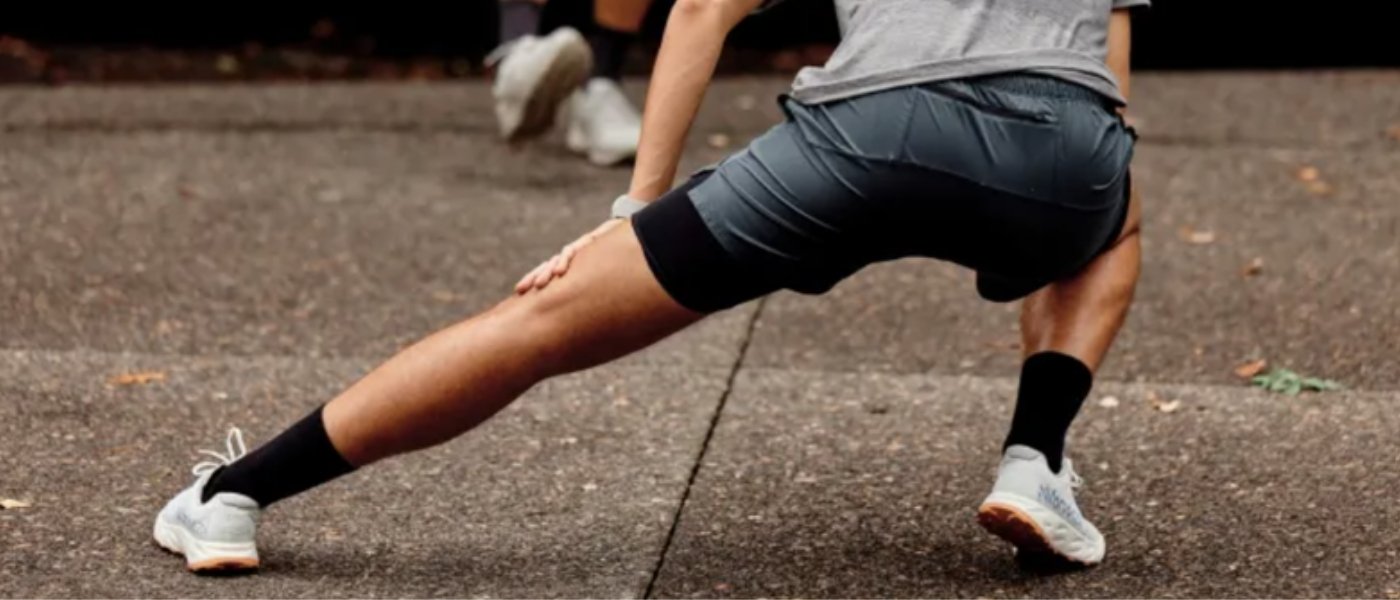
Person doing a deep lunge stretch on pavement, stretching the calf and hip
Regular calf stretching helps reduce the load that tight calves push onto the forefoot.

Tight calves are common in people with forefoot pain (DiGiovanni et al., 2002), and stretching is listed as a first-line treatment for metatarsalgia (Besse, 2017). Your program may include:

  • Straight-knee wall calf stretch (gastrocnemius)
  • Bent-knee wall calf stretch (soleus)
  • Held for 30 seconds, repeated several times, once or twice daily

Toe and foot strengthening

In a study of people with primary metatarsalgia, an eight-week toe exercise program improved toe grip strength, and pain scores dropped by more than half, with no side effects (Amaha et al., 2020). That study did not have a comparison group, so the evidence is early, but the exercises are simple and low risk. Examples include:

  • Towel scrunches
  • Toe curls and toe spreading
  • "Short foot" arch holds
  • Calf raises, progressing from two feet to one

Manual therapy

Gentle mobilization of stiff toe and midfoot joints, and soft tissue work for the calf and the sole of the foot, can help restore movement and ease pain so you can stay consistent with exercise. There are no trials of manual therapy for metatarsalgia specifically, but the same techniques are strongly recommended for heel pain in the current clinical practice guideline (Koc et al., 2023), and we use them alongside, not instead of, exercise and offloading.

Phase 4: Return to Full Activity (Weeks 6 to 12+)

  • Gradual return to running or impact sport, increasing distance or volume step by step while pain stays settled
  • Hopping and push-off drills to rebuild forefoot tolerance
  • Running technique and footwear review for runners
  • Workplace advice for people who stand or walk all day, including footwear, flooring, and break planning

Beyond Physiotherapy: Complementary Care for Metatarsalgia

Offloading, footwear, and exercise form the core of metatarsalgia care, and that is where the research is clearest. Some patients also benefit from other services at our clinic to ease pain and tightness so they can stay consistent with rehab. Here is an honest summary of what the evidence does and does not show for each.

How Acupuncture and Dry Needling Can Help

Acupuncture and dry needling use fine needles to reduce pain and ease tight, tender muscles.

  • What the evidence shows: research on needling for ball-of-foot pain specifically is limited. The closest evidence comes from heel pain, where a systematic review found acupuncture to be about as effective as common treatments such as stretching (Clark & Tighe, 2012), and the clinical practice guideline supports dry needling of trigger points in the calf and foot (Koc et al., 2023)
  • Where it fits: as a short-term option to settle pain and calf or foot muscle tension while you work on offloading and strengthening
  • Safety: generally very safe. Minor bruising or soreness at needle sites is the most common side effect

How Massage Therapy Can Help

Registered massage therapy focuses on the soft tissues of the calf and foot.

  • What the evidence shows: there are currently no published trials of massage for metatarsalgia. A research review on the topic has been planned but not yet reported
  • Where it fits: it may help with comfort and with calf and foot tightness, which can contribute to forefoot overload. We treat it as a supportive add-on, not a stand-alone treatment
  • Safety: very safe. Some temporary muscle soreness afterward is normal

How Chiropractic and Joint Manipulation Can Help

Chiropractic care for the foot uses joint mobilization and manipulation of the toe, midfoot, and ankle joints.

  • What the evidence shows: we did not find peer-reviewed trials of chiropractic adjustment for metatarsalgia. Joint mobilization of the foot and ankle is strongly recommended for heel pain (Koc et al., 2023), which suggests a possible role, but this has not been tested in ball-of-foot pain
  • Where it fits: for stiffness in the big toe, midfoot, or ankle that is shifting load onto the forefoot, combined with exercise and offloading
  • Safety: generally safe. It is not appropriate over a suspected stress fracture, infection, or acute inflammatory flare

Whichever combination you and your clinician choose, these treatments share one purpose: settling symptoms so you can keep moving while the real fix, better load distribution and a stronger foot, takes hold.

When Is Surgery Considered?

Surgery is only considered when a structural problem is clear and well-run conservative care has not worked. Options may include calf lengthening, plantar plate repair, or a metatarsal osteotomy such as the Weil procedure (Besse, 2017). Surgery itself can change forefoot loading and sometimes causes metatarsalgia of its own (Park & Chang, 2019), which is one more reason to give conservative care a proper trial first.

How Long Will It Take?

Recovery depends on the cause, how long you have had symptoms, and how much load your feet need to handle day to day. There is little published data on recovery time for metatarsalgia. What we do know is that people who have had symptoms for more than a year and people with a higher body weight tended to improve less with exercise (Amaha et al., 2020), so earlier treatment is better.

In our experience, many people notice less pain within a few weeks once their pressure points are offloaded, with strength and return to full activity building over the following weeks to months.

Prevention and Long-Term Management

  • Choose shoes well: cushioned soles, a wide toe box, and a low heel. Save high heels and thin flats for short periods
  • Replace worn shoes: cushioning breaks down over time, especially in running shoes
  • Keep using your inserts: if pads or orthoses helped, keep them in the shoes you wear most
  • Stretch your calves regularly, especially if you run or stand all day
  • Keep your feet strong: continue a few toe and calf exercises a few times a week
  • Build training gradually: avoid big jumps in running distance, speed, or hill work
  • Act early: if the ball-of-foot ache comes back, return to your pads, exercises, and a lighter load straight away

Frequently Asked Questions

Is metatarsalgia serious?

Usually not. Most ball-of-foot pain is caused by overload and responds well to conservative care. But because stress fractures, plantar plate tears, infection, and inflammatory arthritis can cause similar pain, it is worth getting a proper assessment, especially if the pain is getting worse, a toe is changing position, or the joint is hot and swollen.

Should I stop running?

Not necessarily. Many runners can keep training at a reduced level with the right shoes, padding, and a modified plan. We will help you find a level of activity that keeps you moving without flaring the pain. If a stress fracture is suspected, a period of offloading comes first.

Do metatarsal pads work?

Pads reliably lower pressure under the ball of the foot, and the best-placed pads reduce peak pressure by about 17 to 19 percent (Lee et al., 2014). Placement is critical, since a pad in the wrong spot can make things worse. We position and adjust pads in clinic.

Do I need custom orthotics?

Not always. Many people do well with a well-fitted shoe and a metatarsal pad. Custom orthoses have the best evidence for reducing forefoot pain (Arias-Martín et al., 2018), and may be recommended if your foot shape is a major driver or simpler options have not been enough.

Is it metatarsalgia or Morton's neuroma?

A neuroma usually causes burning, tingling, or numbness spreading into two neighbouring toes, often the third and fourth. Metatarsalgia is more of an ache or bruised feeling under the ball of the foot. They can occur together, and the treatment approach overlaps, but your clinician will check for both.

Can acupuncture, massage, or chiropractic replace exercise and orthotics?

No. Offloading, footwear, and strengthening are the foundation, and they have the most research behind them. Needling, massage, and joint mobilization are best used as short-term supports to ease pain and tightness while you rebuild.

Our Specialized Approach at Vaughan Physiotherapy Clinic

Cause-focused assessment: we find out why your forefoot is overloaded instead of just treating where it hurts

Hands-on offloading: pads, taping, and orthotic recommendations fitted and adjusted in clinic

Calf, ankle, and big toe mobility: addressing the movement restrictions that push load onto the forefoot

Progressive strengthening: a short, simple home program you can keep up

Integrated care: physiotherapy, massage therapy, acupuncture, and chiropractic under one roof when they add value

Safety first: screening for stress fractures, plantar plate tears, and inflammatory conditions, with physician referral when needed

Take the First Step Toward Pain-Free Walking

Ball-of-foot pain does not have to limit your runs, your workday, or your weekend. Our team at Vaughan Physiotherapy Clinic helps patients from Thornhill, Vaughan, North York, Richmond Hill, and surrounding communities get back on their feet with evidence-based, hands-on care.

Book your assessment today:

Phone: 905-669-1221

Location: 398 Steeles Ave W #201, Thornhill, ON L4J 6X3

Online Booking: www.vaughanphysiotherapy.com

References

Amaha K, Arimoto T, Kitamura N. Effect of toe exercises and toe grip strength on the treatment of primary metatarsalgia. Journal of Orthopaedic Surgery and Research. 2020. doi:10.1186/s13018-020-02113-7

Arias-Martín I, Reina-Bueno M, Munuera-Martínez PV. Effectiveness of custom-made foot orthoses for treating forefoot pain: a systematic review. International Orthopaedics. 2018;42(8):1865-1875. doi:10.1007/s00264-018-3817-y

Besse JL. Metatarsalgia. Orthopaedics & Traumatology: Surgery & Research. 2017;103(1S):S29-S39. doi:10.1016/j.otsr.2016.06.020

Chalmers AC, Busby C, Goyert J, Porter B, Schulzer M. Metatarsalgia and rheumatoid arthritis: a randomized, single blind, sequential trial comparing 2 types of foot orthoses and supportive shoes. Journal of Rheumatology. 2000;27(7):1643-1647.

Clark RJ, Tighe M. The effectiveness of acupuncture for plantar heel pain: a systematic review. Acupuncture in Medicine. 2012;30(4):298-306. doi:10.1136/acupmed-2012-010183

DiGiovanni CW, Kuo R, Tejwani N, et al. Isolated gastrocnemius tightness. Journal of Bone and Joint Surgery (American). 2002;84(6):962-970.

Koc TA Jr, Bise CG, Neville C, Carreira D, Martin RL, McDonough CM. Heel pain: plantar fasciitis. Revision 2023. Journal of Orthopaedic & Sports Physical Therapy. 2023;53(12):CPG1-CPG39. doi:10.2519/jospt.2023.0303

Lee PY, Landorf KB, Bonanno DR, Menz HB. Comparison of the pressure-relieving properties of various types of forefoot pads in older people with forefoot pain. Journal of Foot and Ankle Research. 2014;7:18. doi:10.1186/1757-1146-7-18

Palka O, Guillin R, Lecigne R, et al. Radiological approach to metatarsalgia in current practice: an educational review. Insights into Imaging. 2025;16:94. doi:10.1186/s13244-025-01945-3

Park CH, Chang MC. Forefoot disorders and conservative treatment. Yeungnam University Journal of Medicine. 2019;36(2):92-98. doi:10.12701/yujm.2019.00185

Park JJ, Seok HG, Park CH. Diagnosing plantar plate injuries: a narrative review of clinical and imaging approaches. Diagnostics. 2025;15(17):2188. doi:10.3390/diagnostics15172188

Postema K, Burm PET, van der Zande ME, van Limbeek J. Primary metatarsalgia: the influence of a custom moulded insole and a rockerbar on plantar pressure. Prosthetics and Orthotics International. 1998;22:35-44. doi:10.3109/03093649809164455

Disclaimer: This article is for educational purposes only and does not replace professional medical advice. Ball-of-foot pain can have several causes, including stress fractures, nerve and ligament injuries, infection, and inflammatory arthritis. Always consult a qualified healthcare provider for diagnosis and treatment specific to your condition.


Team

Condition guide

Metatarsalgia

Metatarsalgia is pain under the ball of the foot, usually beneath the second to fourth toes, caused by too much pressure on the metatarsal heads.

Person walking on a red track, close view of feet and white sneakersMetatarsalgia

Does the ball of your foot ache or burn when you walk, run, or stand for long periods? Does it feel like you are stepping on a pebble, especially when you push off? If so, you may be dealing with metatarsalgia, one of the most common causes of forefoot pain.

At Vaughan Physiotherapy Clinic, we assess and treat ball-of-foot pain for runners, workers on their feet all day, and anyone who has started to notice every step. The goal is not just to quiet the pain for now, but to find out why the forefoot is overloaded and fix that, so you can get back to walking, training, and working comfortably.

Here is what metatarsalgia is, how to recognize it, what it can be confused with, and what the research says about treating it.

What Is Metatarsalgia?

Metatarsalgia means pain under the metatarsal heads, the rounded ends of the long foot bones that form the ball of your foot. It most often affects the area under the second, third and fourth toes (Park & Chang, 2019).

Metatarsalgia is a description of where the pain is, not a single diagnosis. Many different problems can overload the forefoot, which is why a proper assessment matters. Forefoot pain is common, affecting roughly 1 in 10 people in the general population, and it becomes more common with age (Palka et al., 2025).

The Three Types of Metatarsalgia

Clinicians usually group metatarsalgia into three types (Park & Chang, 2019; Besse, 2017):

  • Primary metatarsalgia: caused by the shape and alignment of the foot itself, such as a long second metatarsal, a high-arched (cavus) foot, or a big toe that does not carry its share of the load
  • Secondary metatarsalgia: caused by something else that overloads the forefoot, such as an injury to the ligaments under a toe joint, a neuroma, arthritis, or an inflammatory condition
  • Iatrogenic metatarsalgia: pain that develops after previous foot surgery changes how load is shared across the forefoot

Understanding the Anatomy

Every time you walk, your weight rolls from the heel to the toes. During push-off, most of the pressure is concentrated under the metatarsal heads (Park & Chang, 2019). Key structures in this area include:

  • Metatarsal heads: the five rounded bone ends that form the ball of the foot
  • Metatarsophalangeal (MTP) joints: the knuckle joints where the toes meet the foot
  • Plantar plate: a tough band of fibrocartilage under each toe joint that stops the toe from drifting upward. The second toe joint takes the highest peak pressure, which is why it is the most commonly injured (Park et al., 2025)
  • Transverse arch: the gentle side-to-side curve across the forefoot that helps spread load between the metatarsals

Recognizing the Symptoms

Metatarsalgia usually builds gradually rather than starting with a single injury. Common symptoms include:

  • Aching, burning, or sharp pain under the ball of the foot
  • A feeling of walking on a stone or a fold in your sock
  • Pain that is worse when pushing off, running, jumping, or climbing stairs
  • Pain that increases with long periods of standing, walking barefoot on hard floors, or wearing thin-soled or high-heeled shoes
  • Pain that eases with rest
  • In some cases, callus build-up under one or more metatarsal heads

What Makes It Worse?

  • Footwear: tight, narrow, thin-soled, or high-heeled shoes push more load onto the forefoot (Park & Chang, 2019)
  • Foot shape: high arches, a long second metatarsal, bunions, or a stiff or unstable big toe joint (Park & Chang, 2019)
  • Tight calves: in one study, people with forefoot or midfoot problems were far more likely to have tight calf muscles than people without foot problems. A tight gastrocnemius limits ankle movement and can shift more load onto the forefoot (DiGiovanni et al., 2002)
  • Sudden increases in activity: more running, more hours on your feet, or a new sport
  • Other health conditions: rheumatoid arthritis, diabetes, and general ligament laxity are linked to forefoot problems such as plantar plate injury (Park et al., 2025)

What Else Could It Be?

Several conditions cause pain in the same area and need different treatment. Part of our assessment is ruling these in or out (Palka et al., 2025):

  • Plantar plate injury: pain under the second toe joint, sometimes with mild swelling, and a toe that starts to drift or lift. Left untreated, it can progress to a "crossover toe"
  • Morton's neuroma: burning, tingling, or numbness that spreads into the toes, usually between the third and fourth toes. Squeezing the forefoot often reproduces it
  • Metatarsal stress fracture: pain that builds with training and becomes very specific to one bone. X-rays can look normal for the first two to three weeks
  • Freiberg's disease: a problem with the bone of the second metatarsal head, most often in younger people
  • Sesamoid problems: pain under the big toe joint rather than the middle toes
  • Inflammatory arthritis: rheumatoid arthritis often affects the toe joints early, sometimes before the hands
  • Gout and other causes of a hot, swollen joint

When to See a Doctor First

See your physician promptly, or go to urgent care, if you have:

  • A hot, red, swollen toe joint, especially with fever or if you have diabetes, since joint infection needs urgent treatment (Palka et al., 2025)
  • Several swollen toe joints on both feet, or morning stiffness in many joints, which may point to inflammatory arthritis
  • Pain at a single spot on a bone that is worsening with activity, which may be a stress fracture
  • Numbness that is spreading, or foot pain with diabetes or poor circulation
  • Pain at night, unexplained weight loss, or a toe that is rapidly changing shape

Our physiotherapists screen for these signs at your first visit and will coordinate with your physician if imaging or a referral is needed.

Related reading: Other causes of pain in the ball of the foot include Morton's neuroma, a plantar plate tear and a metatarsal stress fracture.

Why Physiotherapy Is Essential

Metatarsalgia is a load problem. The ball of the foot is taking more pressure than it can tolerate, and the pain is the signal. Pills and rest can settle symptoms for a while, but the pain tends to come back as soon as you return to the same shoes, the same training, and the same movement patterns.

Major reviews recommend conservative care as the first line of treatment for metatarsalgia, including stretching, footwear changes, and insoles, with surgery reserved for cases that do not respond (Besse, 2017). The most important step is identifying what is driving the overload, then addressing it directly (Park & Chang, 2019).

Physiotherapy addresses the main drivers:

  • Where the pressure goes: pads, insoles, and footwear changes to spread load away from the painful metatarsal heads
  • How the foot and ankle move: calf flexibility, ankle range of motion, and big toe mobility, all of which affect how much load lands on the forefoot
  • How strong the foot is: the small muscles of the foot and toes help support the forefoot during push-off
  • How much you are doing: a plan to keep you active while the tissues settle, rather than stopping everything

Your Treatment Plan at Vaughan Physiotherapy Clinic

Phase 1: Assessment and Settling Pain (Weeks 1 to 2)

Your first visit focuses on finding the cause. A full assessment includes:

  • History: when the pain started, your footwear, your work and training load, and other health conditions
  • Hands-on examination: pressing on each metatarsal head and the spaces between them to pinpoint the painful structure
  • Special tests: a squeeze test for neuroma and a drawer test for plantar plate instability. The drawer test is a useful early screen for plantar plate injury (Park et al., 2025)
  • Foot type and alignment: arch height, toe position, and how well the big toe joint moves and carries load
  • Calf length: ankle bend measured with the knee straight and bent to see whether tight calves are adding to forefoot load (DiGiovanni et al., 2002)
  • Gait and footwear review: how you walk or run, and what your shoes are doing

If anything suggests a stress fracture, plantar plate tear, or inflammatory arthritis, we will recommend imaging or a physician referral. Weight-bearing X-rays are usually the first test, with ultrasound or MRI if more detail is needed (Palka et al., 2025).

Early pain relief usually includes:

  • Load modification: temporarily reducing the activities that provoke pain, and swapping in lower-impact options such as cycling or swimming
  • Footwear changes: moving to cushioned shoes with a wider toe box and a lower heel
  • Metatarsal padding: a small pad or dome positioned to take pressure off the painful area
  • Taping: to offload a sore toe joint in the short term

Phase 2: Offloading the Forefoot

Metatarsal pads work by spreading pressure over a larger area so the painful metatarsal heads carry less load (Park & Chang, 2019). In a study of older adults with forefoot pain, every pad tested lowered peak forefoot pressure compared with the shoe alone, and the best-placed pads reduced it by about 17 to 19 percent. The same study found that where the pad sits matters as much as what kind of pad it is (Lee et al., 2014). That is why we fit and adjust pads in clinic rather than leaving it to guesswork.

Foot orthoses have the strongest research support among conservative treatments for forefoot pain:

  • A systematic review of nine studies (487 participants) found that custom foot orthoses gave the greatest reduction in forefoot pain in most of the studies, including in secondary metatarsalgia (Arias-Martín et al., 2018)
  • In a randomized trial in primary metatarsalgia, people reported less pain with custom-moulded insoles than with ready-made insoles (Postema et al., 1998)
  • In people with rheumatoid arthritis and ball-of-foot pain, semi-rigid orthoses reduced pain, while soft insoles and supportive shoes alone did not (Chalmers et al., 2000)

Rocker-sole shoes reduce pressure under the forefoot by about 16 percent, but in one trial they did not reduce pain on their own (Postema et al., 1998). We may recommend them as part of a package, not as a stand-alone fix.

Phase 3: Restoring Mobility and Strength (Weeks 2 to 8)

Calf stretching

Person doing a deep lunge stretch on pavement, stretching the calf and hip
Regular calf stretching helps reduce the load that tight calves push onto the forefoot.

Tight calves are common in people with forefoot pain (DiGiovanni et al., 2002), and stretching is listed as a first-line treatment for metatarsalgia (Besse, 2017). Your program may include:

  • Straight-knee wall calf stretch (gastrocnemius)
  • Bent-knee wall calf stretch (soleus)
  • Held for 30 seconds, repeated several times, once or twice daily

Toe and foot strengthening

In a study of people with primary metatarsalgia, an eight-week toe exercise program improved toe grip strength, and pain scores dropped by more than half, with no side effects (Amaha et al., 2020). That study did not have a comparison group, so the evidence is early, but the exercises are simple and low risk. Examples include:

  • Towel scrunches
  • Toe curls and toe spreading
  • "Short foot" arch holds
  • Calf raises, progressing from two feet to one

Manual therapy

Gentle mobilization of stiff toe and midfoot joints, and soft tissue work for the calf and the sole of the foot, can help restore movement and ease pain so you can stay consistent with exercise. There are no trials of manual therapy for metatarsalgia specifically, but the same techniques are strongly recommended for heel pain in the current clinical practice guideline (Koc et al., 2023), and we use them alongside, not instead of, exercise and offloading.

Phase 4: Return to Full Activity (Weeks 6 to 12+)

  • Gradual return to running or impact sport, increasing distance or volume step by step while pain stays settled
  • Hopping and push-off drills to rebuild forefoot tolerance
  • Running technique and footwear review for runners
  • Workplace advice for people who stand or walk all day, including footwear, flooring, and break planning

Beyond Physiotherapy: Complementary Care for Metatarsalgia

Offloading, footwear, and exercise form the core of metatarsalgia care, and that is where the research is clearest. Some patients also benefit from other services at our clinic to ease pain and tightness so they can stay consistent with rehab. Here is an honest summary of what the evidence does and does not show for each.

How Acupuncture and Dry Needling Can Help

Acupuncture and dry needling use fine needles to reduce pain and ease tight, tender muscles.

  • What the evidence shows: research on needling for ball-of-foot pain specifically is limited. The closest evidence comes from heel pain, where a systematic review found acupuncture to be about as effective as common treatments such as stretching (Clark & Tighe, 2012), and the clinical practice guideline supports dry needling of trigger points in the calf and foot (Koc et al., 2023)
  • Where it fits: as a short-term option to settle pain and calf or foot muscle tension while you work on offloading and strengthening
  • Safety: generally very safe. Minor bruising or soreness at needle sites is the most common side effect

How Massage Therapy Can Help

Registered massage therapy focuses on the soft tissues of the calf and foot.

  • What the evidence shows: there are currently no published trials of massage for metatarsalgia. A research review on the topic has been planned but not yet reported
  • Where it fits: it may help with comfort and with calf and foot tightness, which can contribute to forefoot overload. We treat it as a supportive add-on, not a stand-alone treatment
  • Safety: very safe. Some temporary muscle soreness afterward is normal

How Chiropractic and Joint Manipulation Can Help

Chiropractic care for the foot uses joint mobilization and manipulation of the toe, midfoot, and ankle joints.

  • What the evidence shows: we did not find peer-reviewed trials of chiropractic adjustment for metatarsalgia. Joint mobilization of the foot and ankle is strongly recommended for heel pain (Koc et al., 2023), which suggests a possible role, but this has not been tested in ball-of-foot pain
  • Where it fits: for stiffness in the big toe, midfoot, or ankle that is shifting load onto the forefoot, combined with exercise and offloading
  • Safety: generally safe. It is not appropriate over a suspected stress fracture, infection, or acute inflammatory flare

Whichever combination you and your clinician choose, these treatments share one purpose: settling symptoms so you can keep moving while the real fix, better load distribution and a stronger foot, takes hold.

When Is Surgery Considered?

Surgery is only considered when a structural problem is clear and well-run conservative care has not worked. Options may include calf lengthening, plantar plate repair, or a metatarsal osteotomy such as the Weil procedure (Besse, 2017). Surgery itself can change forefoot loading and sometimes causes metatarsalgia of its own (Park & Chang, 2019), which is one more reason to give conservative care a proper trial first.

How Long Will It Take?

Recovery depends on the cause, how long you have had symptoms, and how much load your feet need to handle day to day. There is little published data on recovery time for metatarsalgia. What we do know is that people who have had symptoms for more than a year and people with a higher body weight tended to improve less with exercise (Amaha et al., 2020), so earlier treatment is better.

In our experience, many people notice less pain within a few weeks once their pressure points are offloaded, with strength and return to full activity building over the following weeks to months.

Prevention and Long-Term Management

  • Choose shoes well: cushioned soles, a wide toe box, and a low heel. Save high heels and thin flats for short periods
  • Replace worn shoes: cushioning breaks down over time, especially in running shoes
  • Keep using your inserts: if pads or orthoses helped, keep them in the shoes you wear most
  • Stretch your calves regularly, especially if you run or stand all day
  • Keep your feet strong: continue a few toe and calf exercises a few times a week
  • Build training gradually: avoid big jumps in running distance, speed, or hill work
  • Act early: if the ball-of-foot ache comes back, return to your pads, exercises, and a lighter load straight away

Frequently Asked Questions

Is metatarsalgia serious?

Usually not. Most ball-of-foot pain is caused by overload and responds well to conservative care. But because stress fractures, plantar plate tears, infection, and inflammatory arthritis can cause similar pain, it is worth getting a proper assessment, especially if the pain is getting worse, a toe is changing position, or the joint is hot and swollen.

Should I stop running?

Not necessarily. Many runners can keep training at a reduced level with the right shoes, padding, and a modified plan. We will help you find a level of activity that keeps you moving without flaring the pain. If a stress fracture is suspected, a period of offloading comes first.

Do metatarsal pads work?

Pads reliably lower pressure under the ball of the foot, and the best-placed pads reduce peak pressure by about 17 to 19 percent (Lee et al., 2014). Placement is critical, since a pad in the wrong spot can make things worse. We position and adjust pads in clinic.

Do I need custom orthotics?

Not always. Many people do well with a well-fitted shoe and a metatarsal pad. Custom orthoses have the best evidence for reducing forefoot pain (Arias-Martín et al., 2018), and may be recommended if your foot shape is a major driver or simpler options have not been enough.

Is it metatarsalgia or Morton's neuroma?

A neuroma usually causes burning, tingling, or numbness spreading into two neighbouring toes, often the third and fourth. Metatarsalgia is more of an ache or bruised feeling under the ball of the foot. They can occur together, and the treatment approach overlaps, but your clinician will check for both.

Can acupuncture, massage, or chiropractic replace exercise and orthotics?

No. Offloading, footwear, and strengthening are the foundation, and they have the most research behind them. Needling, massage, and joint mobilization are best used as short-term supports to ease pain and tightness while you rebuild.

Our Specialized Approach at Vaughan Physiotherapy Clinic

Cause-focused assessment: we find out why your forefoot is overloaded instead of just treating where it hurts

Hands-on offloading: pads, taping, and orthotic recommendations fitted and adjusted in clinic

Calf, ankle, and big toe mobility: addressing the movement restrictions that push load onto the forefoot

Progressive strengthening: a short, simple home program you can keep up

Integrated care: physiotherapy, massage therapy, acupuncture, and chiropractic under one roof when they add value

Safety first: screening for stress fractures, plantar plate tears, and inflammatory conditions, with physician referral when needed

Take the First Step Toward Pain-Free Walking

Ball-of-foot pain does not have to limit your runs, your workday, or your weekend. Our team at Vaughan Physiotherapy Clinic helps patients from Thornhill, Vaughan, North York, Richmond Hill, and surrounding communities get back on their feet with evidence-based, hands-on care.

Book your assessment today:

Phone: 905-669-1221

Location: 398 Steeles Ave W #201, Thornhill, ON L4J 6X3

Online Booking: www.vaughanphysiotherapy.com

References

Amaha K, Arimoto T, Kitamura N. Effect of toe exercises and toe grip strength on the treatment of primary metatarsalgia. Journal of Orthopaedic Surgery and Research. 2020. doi:10.1186/s13018-020-02113-7

Arias-Martín I, Reina-Bueno M, Munuera-Martínez PV. Effectiveness of custom-made foot orthoses for treating forefoot pain: a systematic review. International Orthopaedics. 2018;42(8):1865-1875. doi:10.1007/s00264-018-3817-y

Besse JL. Metatarsalgia. Orthopaedics & Traumatology: Surgery & Research. 2017;103(1S):S29-S39. doi:10.1016/j.otsr.2016.06.020

Chalmers AC, Busby C, Goyert J, Porter B, Schulzer M. Metatarsalgia and rheumatoid arthritis: a randomized, single blind, sequential trial comparing 2 types of foot orthoses and supportive shoes. Journal of Rheumatology. 2000;27(7):1643-1647.

Clark RJ, Tighe M. The effectiveness of acupuncture for plantar heel pain: a systematic review. Acupuncture in Medicine. 2012;30(4):298-306. doi:10.1136/acupmed-2012-010183

DiGiovanni CW, Kuo R, Tejwani N, et al. Isolated gastrocnemius tightness. Journal of Bone and Joint Surgery (American). 2002;84(6):962-970.

Koc TA Jr, Bise CG, Neville C, Carreira D, Martin RL, McDonough CM. Heel pain: plantar fasciitis. Revision 2023. Journal of Orthopaedic & Sports Physical Therapy. 2023;53(12):CPG1-CPG39. doi:10.2519/jospt.2023.0303

Lee PY, Landorf KB, Bonanno DR, Menz HB. Comparison of the pressure-relieving properties of various types of forefoot pads in older people with forefoot pain. Journal of Foot and Ankle Research. 2014;7:18. doi:10.1186/1757-1146-7-18

Palka O, Guillin R, Lecigne R, et al. Radiological approach to metatarsalgia in current practice: an educational review. Insights into Imaging. 2025;16:94. doi:10.1186/s13244-025-01945-3

Park CH, Chang MC. Forefoot disorders and conservative treatment. Yeungnam University Journal of Medicine. 2019;36(2):92-98. doi:10.12701/yujm.2019.00185

Park JJ, Seok HG, Park CH. Diagnosing plantar plate injuries: a narrative review of clinical and imaging approaches. Diagnostics. 2025;15(17):2188. doi:10.3390/diagnostics15172188

Postema K, Burm PET, van der Zande ME, van Limbeek J. Primary metatarsalgia: the influence of a custom moulded insole and a rockerbar on plantar pressure. Prosthetics and Orthotics International. 1998;22:35-44. doi:10.3109/03093649809164455

Disclaimer: This article is for educational purposes only and does not replace professional medical advice. Ball-of-foot pain can have several causes, including stress fractures, nerve and ligament injuries, infection, and inflammatory arthritis. Always consult a qualified healthcare provider for diagnosis and treatment specific to your condition.

How it works

Getting started.

  1. 01

    No referral needed

    You can book directly. Some benefit plans ask for a doctor's note, so check yours before your visit.

  2. 02

    Your first assessment, 45 minutes

    Your history, movement testing, a clear diagnosis and a plan you understand.

  3. 03

    Follow-up sessions

    Hands-on care and exercise, progressed each visit.

  4. 04

    Not the right fit? Second opinion on us

    If you're not satisfied with your initial assessment, a second assessment with another therapist is complimentary.

Not sure this is what you have?

One of our therapists can check what is going on and build a plan around what they find. Book online, or call us at 905-669-1221.




