
Condition guide
Post-Stroke Hemiparesis & Spasticity
Weakness on one side of the body and stiff, overactive muscles after a stroke, which can affect walking, balance, and arm and hand use.
Since your stroke, does one arm or leg feel weak, heavy, or hard to control? Do the muscles on that side feel tight, pull your hand into a fist, or make your foot catch when you walk? If so, you are dealing with two of the most common effects of stroke: hemiparesis and spasticity.
At Vaughan Physiotherapy Clinic, we help stroke survivors keep making progress after they leave the hospital or inpatient rehab. We work as part of your stroke care team, alongside your family doctor, neurologist, and physiatrist, to build strength, improve walking and arm use, and manage muscle tightness so everyday tasks get easier. We do not provide emergency or acute stroke care; that always belongs in hospital.
Here is what post-stroke hemiparesis and spasticity are, how to recognize them, what else can cause similar problems, and the warning signs that need a doctor or 911 right away.
What Is Post-Stroke Hemiparesis and Spasticity?
Hemiparesis means weakness on one side of the body. A stroke damages part of the brain that controls movement, so the arm, leg, and sometimes the face on the opposite side of the body become weak, slow, or clumsy. When the weakness is complete, it is called hemiplegia.
Spasticity is a change in muscle tone after damage to the brain or spinal cord. The affected muscles become stiff and resist being stretched, especially when they are moved quickly, and reflexes become overactive. Canadian stroke guidelines describe spasticity as a common consequence of stroke that can limit both arm and leg function (Salbach et al., 2026).
A large review of studies found that about 1 in 4 people develop spasticity after a stroke. Among people who have weakness after a first stroke, that rises to roughly 4 in 10. Spasticity can appear within the first month, but it can also develop or worsen over the following months, and the share of people with severe spasticity grew over the first year (Zeng et al., 2021).
Who Is Most at Risk?
The same review found that the strongest risk factor for spasticity was moderate to severe weakness after the stroke. People who had a bleeding (hemorrhagic) stroke also appeared more likely to develop it (Zeng et al., 2021). Age, sex, and the side of the brain affected did not predict who would develop spasticity.
How Stroke Affects Movement
- Weakness: the brain cannot send strong enough signals to switch muscles on, so movements are smaller and slower
- Loss of coordination: movements that used to be automatic, like reaching or stepping, need more effort and attention
- Spasticity: some muscles stay "switched on" when they should relax, often the arm and finger bending muscles and the calf
- Contracture: over time, muscles and joints that stay in one position can become shorter and stiffer, limiting how far they can move
- Sensation and balance changes: reduced feeling or body awareness on one side can affect balance and fine hand control
Recognizing the Symptoms
Every stroke is different, so symptoms vary a lot from person to person. Common signs include:
- Weakness or heaviness in the arm, hand, or leg on one side
- A hand that curls into a fist, a bent elbow, or a wrist that pulls down
- A foot that points down or turns in, catching the toes when walking (often called foot drop)
- A stiff, straight knee or a leg that swings out to the side when stepping
- Tight, jumpy, or cramping muscles, sometimes with sudden jerks (clonus) at the ankle
- Shoulder pain on the weak side
- Trouble with balance, getting up from a chair, or climbing stairs
- Getting tired much faster than before the stroke
What Makes It Worse?
- Pain, infection, and constipation: Canadian guidelines advise checking for these, since they can make spasticity worse (Salbach et al., 2026)
- Long periods without moving: sitting or lying in one position lets tight muscles shorten further
- Cold, stress, and fatigue: many people notice more stiffness when they are cold, anxious, or tired
- Tight clothing, poor positioning, or pressure sores
- Stopping exercise: strength and walking ability can slip when practice stops
What Else Could It Be?
Not every change in strength or tone after a stroke is spasticity, and not every new symptom is the old stroke. Part of our assessment is looking for other causes that need different care:
- A new stroke or mini-stroke (TIA): any sudden new weakness, numbness, speech, or vision change is an emergency
- Contracture: stiffness from shortened muscle and joint tissue that does not change with speed of movement, unlike spasticity
- Hemiplegic shoulder pain: pain from a partly dislocated (subluxed) shoulder, rotator cuff irritation, or nerve sensitivity on the weak side
- Peripheral nerve problems: pinched nerves in the neck or back, or nerve damage from diabetes, can add weakness or numbness
- Seizures: can cause sudden jerking or temporary weakness after a stroke
- Medication side effects: some medications can cause drowsiness, dizziness, or weakness
- Other neurological conditions: such as Parkinson's disease or multiple sclerosis, which can also affect tone and movement
When to See a Doctor First
Call 911 right away if you notice signs of a new stroke. Use BE FAST to remember them:
- Balance: sudden loss of balance or coordination
- Eyes: sudden loss of vision or double vision
- Face: is the face drooping?
- Arms: can you raise both arms, or is one suddenly weaker?
- Speech: is speech slurred or jumbled?
- Time: call 911 immediately. Do not drive yourself, and do not wait to see if it passes
Also seek urgent medical care if you have:
- A sudden, severe headache, often described as the worst headache of your life
- Sudden worsening of weakness, stiffness, speech, or confusion over hours or days
- A fall with a blow to the head, especially if you take blood thinners, or new drowsiness, vomiting, or confusion after a fall
- A seizure, or sudden jerking you cannot control
- A hot, swollen, painful calf or sudden shortness of breath, which may signal a blood clot
- Fever with a sharp increase in spasticity, which may point to an infection
Our physiotherapists screen for these signs at every visit and will contact your physician or neurologist, or direct you to emergency care, whenever something has changed.
Related reading: You may also want to read about the warning signs of stroke, preventing falls, traumatic brain injury rehabilitation and Parkinson's disease.
Why Physiotherapy Is Essential
After a stroke, the brain can learn new ways to control movement, but it learns through practice. Rest and medication alone do not rebuild walking or arm use.
A Cochrane review of 96 trials and over 10,000 people found that physical rehabilitation improves independence in daily activities compared with no treatment, and also improves motor function, balance, and walking speed compared with usual care. The benefit for daily activities lasted after treatment ended (Pollock et al., 2014). Both the Canadian Stroke Best Practice Recommendations and the American Heart Association/American Stroke Association guideline describe rehabilitation as an essential part of stroke care, delivered by a coordinated team that includes the patient, family, physicians, nurses, and therapists (Salbach et al., 2026; Winstein et al., 2016).
Outpatient physiotherapy is one part of that team. It focuses on:
- Function: strength and practice of the real tasks that matter to you, such as walking, standing up, and reaching
- Spasticity and range of motion: keeping joints moving and working with your physician when injections or medication are part of the plan
- Safety and fitness: balance, fall prevention, and building the stamina to get through your day
Your Treatment Plan at Vaughan Physiotherapy Clinic
Phase 1: Assessment and Team Coordination (First 1 to 2 Visits)
Your first visit is about understanding your stroke, your goals, and where you are now. A full assessment includes:
- History: type and date of stroke, rehab so far, medications (including blood thinners), and other health conditions
- Goals: what you want to get back to, such as walking outdoors or getting dressed on your own
- Movement and strength: how well each part of the arm, hand, and leg can move on its own
- Spasticity and range of motion: measured with tools such as the Modified Ashworth Scale and repeated over time (Salbach et al., 2026)
- Walking, balance, and transfers: walking speed and distance, getting up from a chair, stairs, and fall risk
- Equipment review: walking aids, ankle-foot orthoses (AFOs), and splints
With your permission, we share our findings with your family doctor, neurologist, or physiatrist. If you are seeing a spasticity clinic for botulinum toxin injections, we plan your physiotherapy around those appointments.
Phase 2: Settling Pain and Protecting Joints
Early sessions focus on comfort and preventing problems that slow progress:
- Shoulder care and positioning: supporting the weak arm, avoiding pulling on it, and resting positions that keep muscles at a comfortable length
- Active range of motion and joint mobilization: for the ankle, Canadian guidelines strongly recommend active stretching and joint mobilization to improve range of motion, walking, and spasticity (Salbach et al., 2026)
- Splints and orthoses: for specific goals, such as an AFO to help the foot clear the ground. Canadian guidelines advise against splints alone as a spasticity treatment (Salbach et al., 2026)
A note on stretching: many people expect stretching to fix tight muscles. A large Cochrane review found high-quality evidence that regular stretching, done for up to several months, does not make a meaningful difference to joint range of motion in people with neurological conditions, including stroke (Harvey et al., 2017). That is why we use stretching as one small part of care, and put most of our time into active movement and task practice.
Phase 3: Rebuilding Strength, Walking, and Arm Use
This is the core of stroke rehabilitation. The research is clear that how much you practise, and what you practise, matters.
Task-specific practice
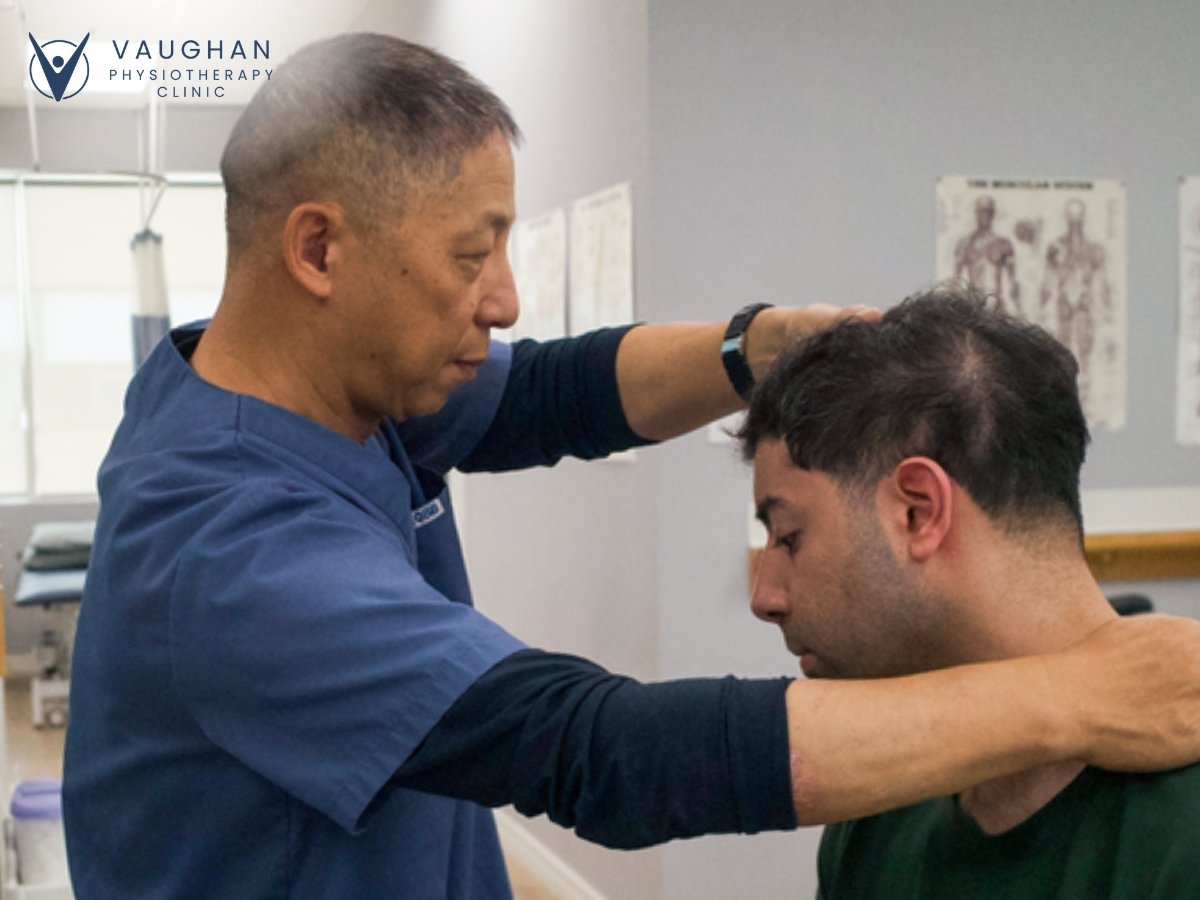
Repetitive task training means practising whole, real-life movements over and over, such as standing up from a chair, stepping, reaching for a cup, or picking up objects. A Cochrane review of 33 trials found that this type of training improved arm and hand function, leg function, and walking ability, with some gains lasting up to six months. Walking distance improved by an average of about 35 metres compared with control groups (French et al., 2016). Your program may include:
- Sit-to-stand practice, progressing to lower seats and fewer hand supports
- Walking practice on level ground, slopes, stairs, and uneven surfaces
- Reaching, grasping, and releasing objects of different sizes and weights
Strength and fitness training
Many stroke survivors lose fitness, which makes every task more tiring. A Cochrane review of 75 studies found that cardiorespiratory (aerobic) training reduced disability and improved fitness, and that training involving walking should be part of stroke rehabilitation. No serious adverse events were found (Saunders et al., 2020). We may use cycling, walking, and progressive strength exercises, adjusted to your blood pressure, heart health, and fatigue.
Balance and fall prevention
Balance exercises and safe ways to get up after a fall are built into your program. Canadian guidelines include balance training, aerobic training, and aquatic exercise among the effective options for improving balance and walking (Salbach et al., 2026).
Supporting treatments such as joint mobilization, electrical stimulation to activate weak muscles, and taping may be added to make active practice easier.
No single named treatment method has been shown to be better than another; combining well-defined approaches works (Pollock et al., 2014). Dose matters too: that review found larger benefits for daily activities with about 30 to 60 minutes of therapy a day, five to seven days a week, although this evidence was limited. That is why your home program matters as much as your clinic sessions.
Phase 4: Returning to Your Life and Staying Active
- Community walking: building distance, speed, and confidence outdoors
- Long-term exercise plan: a routine you can keep up on your own or in a community program
- Regular check-ins: reassessing spasticity and walking, especially around injection cycles
Beyond Physiotherapy: Complementary Care for Post-Stroke Hemiparesis and Spasticity
Active practice and exercise are the foundation of stroke recovery. Some patients also use other services at our clinic to ease pain, stiffness, or stress so they can keep practising. Here is an honest summary of the evidence for each.
How Acupuncture and Dry Needling Can Help
Acupuncture uses fine needles at traditional points. Dry needling places fine needles into tight or overactive muscles.
- What the evidence shows: a Cochrane review of 31 trials found that adding acupuncture to usual care may improve independence and some movement measures, but the evidence was low or very low quality. Trials comparing real with sham acupuncture found no difference in motor function, and the authors judged the evidence too weak to support routine use (Yang et al., 2016). For dry needling, a systematic review of 16 studies found that spasticity, pain, and range of motion generally improved, but only 7 were randomized trials and results could not be combined (Valencia-Chulián et al., 2020).
- Where it fits: as an optional add-on to reduce muscle tension or pain before active practice, never in place of exercise
- Safety: generally safe. Minor soreness or bruising is most common. We check for blood thinners, skin changes, reduced sensation, and swelling before needling
How Massage Therapy Can Help
Registered massage therapy works on the soft tissues of the arm, leg, shoulder, and neck.
- What the evidence shows: a systematic review of 18 trials found that massage added to physiotherapy reduced arm and leg spasticity and, in some stages, improved arm movement scores. However, most trials used Tuina, a Chinese massage style, and were done in Asia, so the authors cautioned that results may not apply to the Swedish-style massage common in Canada (Cabanas-Valdés et al., 2021)
- Where it fits: for comfort, relaxation, and easing tight muscles so movement feels easier. We treat it as supportive care
- Safety: very safe with a few precautions: gentle pressure over areas with reduced feeling, and no massage of a swollen, painful calf until a blood clot has been ruled out
How Chiropractic and Joint Manipulation Can Help
Chiropractic care uses joint mobilization and manipulation, most often of the spine.
- What the evidence shows: we did not find quality trials of chiropractic manipulation for weakness or spasticity after stroke. The closest evidence is for gentle joint mobilization of the ankle, which Canadian guidelines recommend to improve range of motion and walking (Salbach et al., 2026)
- Where it fits: for separate back, neck, or joint pain that is limiting your activity, using gentle techniques chosen with your stroke history in mind
- Safety: an American Heart Association statement found that neck manipulation may be associated with tears in the neck arteries (cervical artery dissection), a known cause of stroke. Cause and effect has not been proven and the risk appears low, but the statement advises that patients be told about this link before neck manipulation (Biller et al., 2014). For anyone with a history of stroke, artery dissection, or other blood vessel disease, our clinicians avoid high-velocity neck manipulation and use gentler options instead
Whatever combination you and your care team choose, these treatments share one purpose: making it easier to keep moving and practising, because practice is what drives recovery.
Medical Treatments That Work Alongside Physio
Your physician, neurologist, or physiatrist decides on medical treatment for spasticity, and physiotherapy helps you make the most of it.
- Botulinum toxin injections: given by a physician trained in spasticity care into specific overactive muscles. A review of 40 trials found that these injections reliably reduce muscle stiffness and spasticity-related pain, improve passive range of motion, and make self-care of the affected arm easier, but on their own they do not improve active arm and hand function (Andringa et al., 2019). Canadian guidelines recommend botulinum toxin as a first choice for focal spasticity, and support funding for the rehabilitation that follows each injection (Salbach et al., 2026). The weeks after an injection are a good time to step up active practice
- Oral medications: such as baclofen or tizanidine may be used for more widespread spasticity. They can cause tiredness and drowsiness, which we watch for during sessions (Salbach et al., 2026)
- Intrathecal baclofen: a pump that delivers medication near the spinal cord, considered for severe spasticity that does not respond to other treatment (Salbach et al., 2026)
We never change your medications; if something is or is not helping, we let your physician know.
How Long Will It Take?
Recovery depends on the size and location of the stroke, how much movement you had early on, your overall health, and how much practice you can do. Many people make their fastest gains in the first months, but improvement with targeted practice is still possible later.
The research gives some guidance. Gains from repetitive task training lasted up to six months after training ended (French et al., 2016), and the benefits of rehabilitation on daily independence persisted beyond the treatment period (Pollock et al., 2014). Spasticity can also change over time, and severe spasticity became more common over the first year in one large review (Zeng et al., 2021), which is why regular reassessment matters.
We will set short-term goals with you, review progress regularly, and taper visits as your home routine takes over. We cannot promise a timeline, but we will be honest about what is realistic.
Prevention and Long-Term Management
- Keep practising: a short daily home program for walking, standing up, and arm use maintains what you have gained
- Stay active: regular aerobic exercise, such as walking or cycling, supports fitness and heart health
- Move your joints every day: active movement and good positioning help prevent stiffness and contracture
- Reduce fall risk: clear walkways, good lighting, proper footwear, and using your AFO or walking aid as advised
- Manage stroke risk factors: take medications as prescribed and see your doctor regularly
- Know BE FAST: make sure you and your family know the signs of a new stroke and call 911 right away
Frequently Asked Questions
Is it too late to improve if my stroke was a long time ago?
Not necessarily. In the Cochrane review of repetitive task training, the benefits did not differ based on how long ago the stroke happened (French et al., 2016). Gains may be slower than in the early months, but meaningful improvement in walking, strength, and daily tasks is often still possible.
Will stretching fix my spasticity?
Stretching on its own has not been shown to make a meaningful difference to range of motion after stroke (Harvey et al., 2017). It can still feel good and help comfort, but active movement, task practice, positioning, and medical treatments such as botulinum toxin play a bigger role.
Do I need a referral from my doctor?
Not to see a physiotherapist in Ontario, although some insurance plans require one. We encourage you to tell your doctor or neurologist you are starting physio, and we share updates with your permission.
Should I get physio after a botulinum toxin injection?
Yes, if possible. The injection lowers muscle stiffness, but on its own it does not improve active arm and hand function (Andringa et al., 2019). Pairing injections with active practice gives you the best chance to turn reduced stiffness into better movement.
Is exercise safe after a stroke?
For most people, yes, when it is properly screened and progressed. A large Cochrane review found no serious adverse events from fitness training after stroke (Saunders et al., 2020). We monitor blood pressure and heart rate as needed.
Can acupuncture, massage, or chiropractic replace exercise and physio after a stroke?
No. Active practice and exercise have the strongest research behind them. Acupuncture, dry needling, and massage may help with stiffness, pain, or stress, but the evidence is lower quality (Yang et al., 2016; Valencia-Chulián et al., 2020; Cabanas-Valdés et al., 2021). They work best as supports that help you keep practising.
Our Specialized Approach at Vaughan Physiotherapy Clinic
Team-based care: we work with your family doctor, neurologist, physiatrist, and spasticity clinic, not in isolation
Goal-focused assessment: we measure strength, spasticity, walking, and balance, and build your plan around what matters most to you
Task-specific practice: real-life movements repeated and progressed, the approach with the strongest evidence
Spasticity support: active range of motion, positioning, splint and AFO review, and therapy timed around botulinum toxin injections
Integrated care: physiotherapy, massage therapy, acupuncture, and chiropractic under one roof, used carefully and only when they add value
Safety first: screening for new stroke signs, falls, and blood clots at every visit, with urgent referral when needed
Take the First Step Toward Stronger, More Confident Movement
Life after a stroke can feel uncertain, but you do not have to keep working on recovery alone. Our team at Vaughan Physiotherapy Clinic helps stroke survivors from Thornhill, Vaughan, North York, Richmond Hill, and surrounding communities build strength, walk more confidently, and manage spasticity with evidence-based, hands-on care, in partnership with your medical team.
Book your assessment today:
Phone: 905-669-1221
Location: 398 Steeles Ave W #201, Thornhill, ON L4J 6X3
Online Booking: www.vaughanphysiotherapy.com
References
Andringa A, van de Port I, van Wegen E, Ket J, Meskers C, Kwakkel G. Effectiveness of botulinum toxin treatment for upper limb spasticity poststroke over different ICF domains: a systematic review and meta-analysis. Archives of Physical Medicine and Rehabilitation. 2019;100(9):1703-1725. doi:10.1016/j.apmr.2019.01.016
Biller J, Sacco RL, Albuquerque FC, et al. Cervical arterial dissections and association with cervical manipulative therapy: a statement for healthcare professionals from the American Heart Association/American Stroke Association. Stroke. 2014;45(10):3155-3174. doi:10.1161/STR.0000000000000016
Cabanas-Valdés R, Calvo-Sanz J, Serra-Llobet P, Alcoba-Kait J, González-Rueda V, Rodríguez-Rubio PR. The effectiveness of massage therapy for improving sequelae in post-stroke survivors: a systematic review and meta-analysis. International Journal of Environmental Research and Public Health. 2021;18(9):4424. doi:10.3390/ijerph18094424
French B, Thomas LH, Coupe J, et al. Repetitive task training for improving functional ability after stroke. Cochrane Database of Systematic Reviews. 2016;(11):CD006073. doi:10.1002/14651858.CD006073.pub3
Harvey LA, Katalinic OM, Herbert RD, Moseley AM, Lannin NA, Schurr K. Stretch for the treatment and prevention of contractures. Cochrane Database of Systematic Reviews. 2017;(1):CD007455. doi:10.1002/14651858.CD007455.pub3
Pollock A, Baer G, Campbell P, et al. Physical rehabilitation approaches for the recovery of function and mobility following stroke. Cochrane Database of Systematic Reviews. 2014;(4):CD001920. doi:10.1002/14651858.CD001920.pub3
Salbach NM, Yao JK, Lindsay MP, et al. Canadian Stroke Best Practice Recommendations: Rehabilitation, Recovery, and Community Participation Following Stroke. Part Two: Delivery of Stroke Rehabilitation to Optimize Functional Recovery, 7th Edition Update 2025. American Journal of Physical Medicine & Rehabilitation. 2026;105(2). doi:10.1097/PHM.0000000000002821
Saunders DH, Sanderson M, Hayes S, et al. Physical fitness training for stroke patients. Cochrane Database of Systematic Reviews. 2020;(3):CD003316. doi:10.1002/14651858.CD003316.pub7
Valencia-Chulián R, Heredia-Rizo AM, Moral-Munoz JA, Lucena-Anton D, Luque-Moreno C. Dry needling for the management of spasticity, pain, and range of movement in adults after stroke: a systematic review. Complementary Therapies in Medicine. 2020;52:102515. doi:10.1016/j.ctim.2020.102515
Winstein CJ, Stein J, Arena R, et al. Guidelines for adult stroke rehabilitation and recovery: a guideline for healthcare professionals from the American Heart Association/American Stroke Association. Stroke. 2016;47(6):e98-e169. doi:10.1161/STR.0000000000000098
Yang A, Wu HM, Tang JL, Xu L, Yang M, Liu GJ. Acupuncture for stroke rehabilitation. Cochrane Database of Systematic Reviews. 2016;(8):CD004131. doi:10.1002/14651858.CD004131.pub3
Zeng H, Chen J, Guo Y, Tan S. Prevalence and risk factors for spasticity after stroke: a systematic review and meta-analysis. Frontiers in Neurology. 2021;11:616097. doi:10.3389/fneur.2020.616097
Disclaimer: This article is for educational purposes only and does not replace professional medical advice. Physiotherapy after a stroke is one part of care led by your physician and stroke team, and is not emergency or acute stroke treatment. If you notice any sudden new stroke signs, such as face drooping, arm weakness, speech changes, vision loss, or loss of balance, call 911 immediately. Always consult your physician or neurologist about medications, injections, and changes in your condition.