




Condition guide
Toe Flexor/Extensor Tendinopathy
Overload pain in the tendons that bend or lift the toes, felt behind the inner ankle, in the arch, or on the top of the foot.
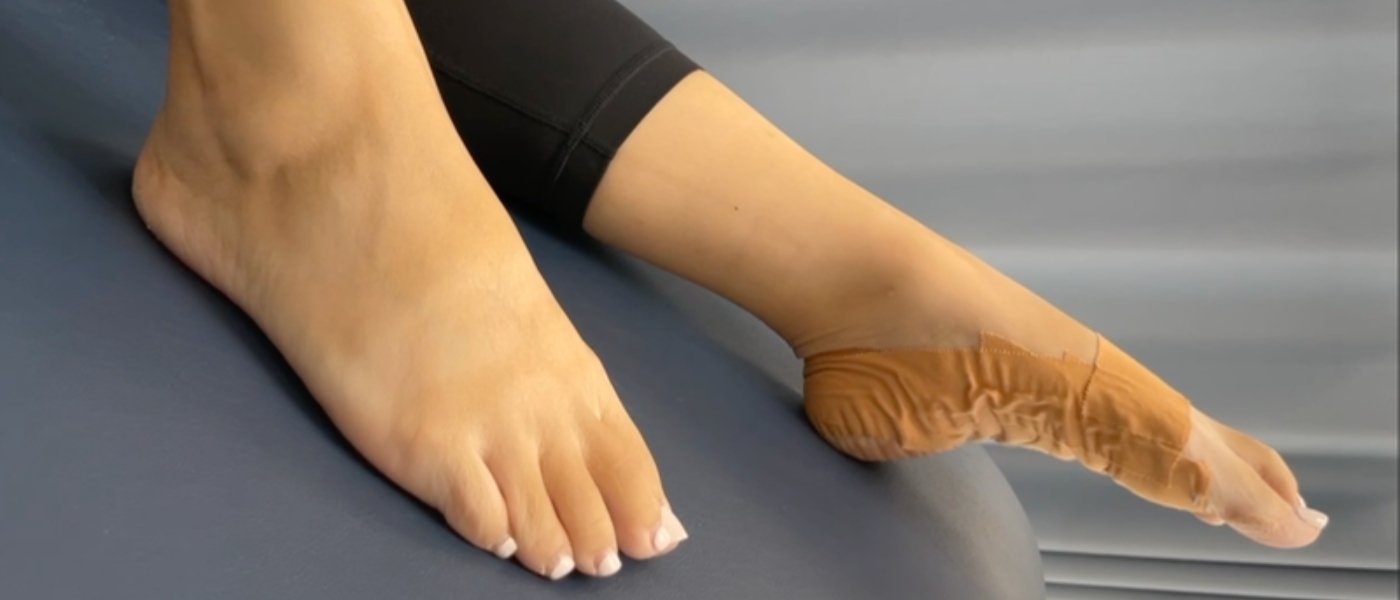
Do you feel a deep ache behind the inside of your ankle when you rise up onto your toes, push off, or point your foot? Or does the top of your foot hurt along the tendons after a long run, a hike, or a day in tightly laced boots or skates? If so, one of the tendons that move your toes may be irritated and overloaded.
At Vaughan Physiotherapy Clinic, we assess and treat toe tendon pain in dancers, runners, hockey players, hikers, and people who are on their feet all day. Our goal is to settle the pain, find out why the tendon was overloaded, and rebuild it so you can get back to training, performing, and working.
Here is what toe flexor and extensor tendinopathy is, how to recognize it, what it can be confused with, and what the research does and does not tell us about treating it.
What Is Toe Flexor and Extensor Tendinopathy?
Tendinopathy is the general term for a painful tendon that is not coping with the load being placed on it. It causes pain, reduced function, and lower tolerance for exercise. Inside the tendon, the collagen fibres become disorganized and the tissue's normal balance of repair and breakdown is disrupted, alongside some inflammatory activity (Millar et al., 2021). This is why the older term "tendinitis", which suggests inflammation alone, is being replaced.
Toe flexor and extensor tendinopathy covers the tendons that curl your toes down (the flexors) and lift them up (the extensors). They are far less studied than the Achilles, so much of what we know about treating them is borrowed from research on other tendons. We will be clear about that throughout this page.
The Main Types
- Flexor hallucis longus (FHL) tendinopathy: the tendon that bends the big toe runs down the back of the ankle, through a narrow tunnel behind the ankle bone, and under the foot. It is often called "dancer's tendinitis" because ballet positions on pointe and demi-pointe load it heavily. It is described as the most common lower limb tendon problem in classical ballet dancers, and it also affects others who push off repeatedly (Simpson & Howard, 2009). It frequently occurs together with posterior ankle impingement (Rietveld et al., 2018)
- Flexor digitorum longus (FDL) tendinopathy: the tendon that curls the four smaller toes, running behind the inside ankle bone next to the tibialis posterior tendon. It is less common and rarely studied on its own; it is usually considered as one of the possible causes of pain along the inside of the ankle (Simpson & Howard, 2009)
- Extensor tendinopathy: irritation of the tendons on the top of the foot and front of the ankle that lift the toes and foot. It is often linked to pressure from tight laces, stiff boots, or skate tongues, as well as to sudden increases in walking or running. In hockey players, a closely related problem called "lace bite" affects the tibialis anterior tendon at the front of the ankle (Levitsky et al., 2020)
Understanding the Anatomy
The long toe tendons start from muscles in the lower leg and cross the ankle before reaching the toes. That is why a "toe" tendon can cause pain at the ankle, the arch, or the top of the foot. Key structures include:
- FHL tunnel: a fibrous tunnel at the back of the ankle where the FHL tendon changes direction.
- Medial ankle tendons: the tibialis posterior, FDL, and FHL tendons sit side by side behind the inside ankle bone, close to the tibial nerve
- Extensor retinaculum: bands of tissue across the front of the ankle that hold the extensor tendons in place, right where laces and skate tongues press
Recognizing the Symptoms
Toe tendinopathy usually comes on gradually rather than with a single injury. Early on, pain often eases once you warm up, then returns with longer activity. If it keeps building, it may start to hurt at rest (Simpson & Howard, 2009). Common symptoms include:
- FHL: pain deep at the back and inside of the ankle that is worse when rising onto the toes, jumping, pushing off, or pointing the foot fully. Pain or creaking when you press the big toe down against resistance with the foot pointed is a typical sign (Simpson & Howard, 2009)
- FHL: pain can also show up under the heel or the middle of the arch. In one study of 81 people with FHL tenosynovitis, 45 had already been treated for another problem first, most often "plantar fasciitis" (Michelson & Dunn, 2005)
- FDL: pain behind and below the inside ankle bone, worse with push-off
- Extensor: aching or burning along the top of the foot, sometimes with mild swelling, that is worse with lacing up, running, or walking uphill
- All types: tenderness along the tendon and pain when the toes are resisted in the direction that tendon moves them
What Makes It Worse?
- Repeated end-range positions: pointe and relevé in dance need extreme pointing of the ankle (Rietveld et al., 2018), and sprinting and jumping also load the FHL heavily
- Dance technique and surfaces: forcing hip turnout and dancing on hard floors are listed as factors to address for FHL problems (Simpson & Howard, 2009)
- Sudden changes in load: more running, more hills, a new sport, more rehearsals, or a return after time off. Tendinopathy is an overuse problem, so the tendon reacts when load climbs faster than it can adapt (Millar et al., 2021)
- Footwear pressure: laces tied tightly over the same spot, new or stiff boots, and skate tongues pressing on the front of the ankle. Lace bite is most common early in the hockey season, when skates are not yet broken in (Levitsky et al., 2020)
- Foot mechanics: a stiff big toe or poor ankle control can shift load onto these tendons
What Else Could It Be?
Several other conditions cause pain in the same areas and need a different plan. Part of our assessment is ruling these in or out:
- Stress fracture: a small crack in a bone from repeated load, such as a metatarsal on the top of the foot or the navicular in the midfoot. Pain is sharp at one spot on the bone and builds with activity. X-rays can look normal early on
- Posterior ankle impingement: pinching at the back of the ankle when the foot is fully pointed, sometimes caused by an extra small bone called an os trigonum. FHL irritation is itself a common part of this picture, and the two often occur together, so both are checked (Rungprai et al., 2015; Rietveld et al., 2018)
- Plantar plate injury: pain under the ball of the foot near the second toe, sometimes with the toe starting to drift
- Gout: sudden, severe pain with a hot, red, swollen joint, most often the big toe, sometimes the midfoot. This needs medical diagnosis and treatment
- Tibialis posterior tendinopathy: pain along the inside of the ankle and arch, sometimes with the arch slowly flattening. It sits right next to the FDL and FHL tendons and is one of the main look-alikes (Simpson & Howard, 2009)
When to See a Doctor First
See your physician promptly, or go to urgent care, if you have:
- A hot, red, very swollen joint, especially with fever, if you have diabetes, or if you cannot bear weight, since gout and joint infection both need medical care
- Sharp pain at one spot on a bone that is getting worse with activity or is present at rest, which may be a stress fracture
- A sudden pop followed by loss of the ability to bend or lift a toe, which may mean a tendon has torn
- Spreading numbness, tingling, or weakness in the foot
- Pain and swelling in several tendons or joints at once, which can point to an inflammatory or rheumatological condition (Simpson & Howard, 2009)
- Redness, warmth, or a wound over a tendon from footwear rubbing, which may be infected
- Pain with diabetes or poor circulation, night pain, or unexplained weight loss
Our physiotherapists screen for these signs at your first visit and will coordinate with your physician if imaging or a referral is needed.
Related reading: Other causes of toe and forefoot pain include a toe sprain, metatarsalgia and a plantar plate tear.
Why Physiotherapy Is Essential
Toe tendinopathy is a load problem. The tendon has been asked to do more than it can currently handle, and pain is the warning light. Rest, ice, and pain medication can quiet symptoms for a while. Anti-inflammatory pills and acetaminophen give short-term relief but do not appear to change the long-term outcome (Simpson & Howard, 2009). Without a plan to rebuild the tendon and fix what overloaded it, pain often returns once you go back to the same training, shoes, and movement habits.
We want to be honest up front: there are no clinical practice guidelines and almost no clinical trials that focus on the toe flexor or extensor tendons. A systematic review of FHL tendinopathy and posterior ankle impingement in dancers found that only a handful of small reports described non-surgical care, too few to support firm recommendations (Rietveld et al., 2018). Our approach therefore borrows from the much larger body of research on other tendons, mainly the Achilles and patellar tendons, adapted to the foot. In that research, progressive strengthening, especially slow lowering (eccentric) exercise, has the best support, and it may help other tendons too (Simpson & Howard, 2009). A major review notes that the best way to use each tendinopathy treatment, exercise included, is still being worked out (Millar et al., 2021). That is why we track your progress closely and adjust the plan as we go.
There is one useful FHL study. Of 58 people with FHL tenosynovitis treated without surgery using a stretching program for the tendon and, for some, a short period of immobilization, 37 (64%) had a successful result (Michelson & Dunn, 2005). The study had no comparison group, but it supports trying conservative care first.
Physiotherapy addresses the main drivers:
- How much load the tendon gets: adjusting training, rehearsal, and work demands so the tendon can settle without you stopping everything
- How strong the tendon is: a graded strengthening program for the toe flexors or extensors, the calf, and the foot
- How the foot and ankle move: big toe mobility, ankle range, and control in positions such as rising onto the toes
- What is pressing on it: lacing, boot, and skate changes for extensor problems
Your Treatment Plan at Vaughan Physiotherapy Clinic
Phase 1: Assessment (First Visit)
Your first visit focuses on finding which tendon is involved and why. A full assessment includes:
- History: when the pain started, your training, dance, or work load, footwear and skates, and other health conditions
- Hands-on examination: feeling along each tendon to pinpoint the sore structure, and checking the bones nearby for signs of a stress fracture
- Resisted toe tests: pressing against the big toe and small toes as you curl or lift them, to see which tendon reproduces your pain
- Movement tests: big toe range with the ankle pointed and flexed, single-leg heel raises, and, for dancers, relevé and pointe positions
- Impingement screen: forcing the ankle into full point to check for posterior ankle impingement, which often occurs alongside FHL problems (Rietveld et al., 2018)
- Footwear review: lacing pattern, boot or skate fit, and pressure points on the top of the foot
If anything suggests a stress fracture, a tendon tear, gout, or infection, we will recommend imaging or a physician referral before loading the area.
Phase 2: Settling the Tendon (Weeks 1 to 3)
The aim is to calm the tendon down without necessarily stopping all activity. In a randomized trial in Achilles tendinopathy, people who kept running and jumping, guided by a pain-monitoring approach, improved just as much over 12 months as people who stopped those activities for six weeks, with no sign of harm (Silbernagel et al., 2007).
- Load management: temporarily reducing jumps, sprinting, hills, pointe work, or long walks, and swapping in activities that do not flare the tendon, such as cycling or swimming
- The pain-monitoring approach: you keep doing activities that cause only mild, acceptable discomfort that settles by the next morning, and ease off when pain climbs or lingers. We set your limits with you at the first visit
- Isometric holds: pressing the toes gently into the floor or against your hand and holding, at an effort level that does not increase pain
- Pressure relief for extensor pain: changing the lacing pattern to skip the eyelets over the sore spot, loosening laces, padding the tongue, or using a gel lace-bite pad in skates
- Short-term protection: for a stubborn, very irritable FHL, a family physician review suggests two to three weeks in a walking boot (Simpson & Howard, 2009). We use this only when needed, and keep the rest of the leg working
Phase 3: Rebuilding Strength (Weeks 3 to 10)
Progressive loading
Strengthening is the core of tendon rehab. Exercises are progressed step by step based on how your tendon responds, the same pain-guided principle used in Achilles research (Silbernagel et al., 2007). In the FHL study above, restoring the normal gliding and stretch of the tendon was a key part of treatment (Michelson & Dunn, 2005). Your program will build gradually through:
- FHL gliding and stretch: gently pulling the big toe up while the ankle is bent upward, to restore the tendon's normal movement
- Toe flexor work (FHL and FDL): towel scrunches, toe curls against a resistance band, and pressing the big toe down while rising onto the toes
- Toe extensor work: lifting the toes against a light band, then heel walking, progressing to slow controlled lowering
- Calf raises: two feet to one, then off a step, then with added weight, with attention to keeping the big toe pressed down
- Foot strength: "short foot" arch holds and balance work
- Heavy, slow loading: once pain allows, slower, heavier exercises to build tendon capacity
Manual therapy
Gentle mobilization of a stiff big toe, midfoot, or ankle, and soft tissue work for the calf and sole of the foot, can ease pain and restore movement so you can keep up with exercise. There is no direct research on manual therapy for toe tendons, so we use it alongside loading, not instead of it.
Phase 4: Return to Sport, Dance, and Work (Weeks 8 to 16+)
- Plyometrics: skipping, hopping, and bounding, built up gradually
- Dance-specific progressions: relevé, then jumps, then pointe work, with technique review
- Running progressions: flat surfaces first, then hills and speed
- Skate and boot fit: breaking in new equipment slowly
- Workplace advice for people who stand, climb ladders, or kneel at work
Beyond Physiotherapy: Complementary Care for Toe Flexor and Extensor Tendinopathy
Progressive loading and load management form the core of tendon care, and that is where the research is clearest. Some patients also use other services at our clinic to ease pain and tension so they can stay consistent with rehab. We could not find any trials of these treatments for the toe tendons specifically, so the summaries below rely on research from other tendons and are labelled as indirect.
How Acupuncture and Dry Needling Can Help
Acupuncture and dry needling use fine needles to reduce pain and ease tight, tender muscles.
- What the evidence shows: we found no studies of needling for the FHL, FDL, or toe extensor tendons. A narrative review of dry needling for tendinopathy (3 systematic reviews, 7 randomized trials, and 6 cohort studies) found early support for needling directly into the tendon, mostly at the elbow, knee, shoulder, and hip, but techniques varied widely and better trials are still needed (Stoychev et al., 2020). This is indirect evidence
- Where it fits: as a short-term option for calf, foot, or shin muscle tension and pain while you build strength
- Safety: generally very safe. Minor bruising or soreness at needle sites is the most common side effect
How Massage Therapy Can Help
Registered massage therapy focuses on the soft tissues of the calf, shin, and foot.
- What the evidence shows: there are no trials of massage for toe tendon problems. A systematic review of 26 trials across common musculoskeletal conditions found that massage on its own gave short-term pain relief compared with no treatment in some conditions, but no clear benefit over other active treatments (Bervoets et al., 2015). This is indirect evidence
- Where it fits: for comfort and for calf and foot tightness, as a supportive add-on rather than a stand-alone treatment. Firm pressure directly over an irritated extensor tendon on top of the foot is usually avoided in the early stage
- Safety: very safe. Some temporary muscle soreness afterward is normal
How Chiropractic and Joint Manipulation Can Help
Chiropractic care for the foot uses joint mobilization and manipulation of the toe, midfoot, and ankle joints.
- What the evidence shows: we found no trials of chiropractic adjustment or joint manipulation for toe tendinopathy. A review of manipulative therapy for lower limb conditions found fair short-term evidence for plantar fasciitis and ankle sprains, and limited evidence for big toe stiffness (hallux limitus or rigidus) and ball-of-foot pain (Brantingham et al., 2012). One FHL study also linked a tight FHL tendon with big toe stiffness (Michelson & Dunn, 2005), so there is a possible role, but it has not been tested
- Where it fits: for a stiff big toe, midfoot, or ankle that may be shifting extra load onto the toe tendons, combined with exercise
- Safety: generally safe. It is not appropriate over a suspected stress fracture, infection, gout flare, or tendon tear
Whichever combination you and your clinician choose, these treatments share one purpose: settling symptoms so you can keep moving while the real fix, a stronger tendon and smarter loading, takes hold.
When Is Surgery Considered?
Surgery is rarely needed and is only considered when a well-run program of conservative care has not worked, usually after at least three to six months, or if a tendon has torn (Simpson & Howard, 2009). For FHL problems, the usual operation frees the tendon from its tight tunnel at the back of the ankle and, if present, removes an os trigonum. This can be done through small keyhole incisions, which has become more popular because of less scarring and a quicker return to activity (Rungprai et al., 2015).
Results in dancers are generally good. A systematic review of 324 dancers (376 ankles) found good to excellent results in 89% after surgery, with an average return to dance of 16 weeks for isolated FHL tendinopathy (range 8 to 36 weeks). All of these studies looked back at past cases, so the quality of evidence is low (Rietveld et al., 2018). In the FHL study above, all 23 people who needed surgery after failed conservative care had a successful outcome (Michelson & Dunn, 2005). Physiotherapy afterward restores movement, strength, and return to sport or dance.
How Long Will It Take?
Recovery depends on which tendon is involved, how long you have had symptoms, and how much load your sport, dance, or job demands. There is very little published data on recovery time for toe tendinopathy, so please treat any timeline as a rough guide:
- Pressure-related extensor pain and lace bite: often settles quickly once the pressure is removed. Lace bite usually resolves within about two weeks (Levitsky et al., 2020)
- FHL and FDL tendinopathy: in our experience, many people notice clear improvement within 6 to 12 weeks of consistent loading, with full return to dance or high-level sport taking longer
Prevention and Long-Term Management
- Build load gradually: avoid big jumps in running distance, hills, rehearsal hours, or pointe work
- Keep your toes and calves strong: continue a few toe curl and calf raise exercises two or three times a week
- Lace smart: skip eyelets over a sore spot, avoid cranking laces down over the same area, and pad skate tongues if needed
- Break in new footwear slowly: especially stiff hiking boots, work boots, and skates
- Keep your big toe and ankle moving: stiffness here can shift load onto the toe tendons
- Respect the warning signs: pain that lingers into the next morning is a cue to ease off for a few days
- Act early: if the ache comes back, return to your exercises and a lighter load straight away
Frequently Asked Questions
Is it tendinitis or tendinopathy?
Tendinopathy is the more accurate term. Painful tendons show changes in their structure and how they handle load, rather than simple inflammation (Millar et al., 2021). This matters because treatment focuses on building the tendon up, not only on calming inflammation.
Should I stop dancing or running completely?
Usually not. Most people can keep training at a reduced level while the tendon settles, as long as pain stays within an acceptable range and settles by the next day. We will help you find that level.
What is "lace bite"?
Lace bite is the hockey and skating name for pain and swelling at the front of the ankle from pressure by the skate tongue and laces on the tendons beneath. Changing how you lace, padding the tongue, and gradually breaking in new skates usually help.
Do I need an MRI or ultrasound?
Not always. Many cases can be diagnosed with a careful examination. Imaging is useful if a stress fracture, tear, or posterior ankle impingement is suspected, or if symptoms are not improving with good rehab.
Will a cortisone injection fix it?
Cortisone may ease pain for a short time but does not rebuild the tendon. Injections into the sheath of some ankle tendons have been linked with tendon rupture, so they are used cautiously and only by a physician (Simpson & Howard, 2009). Most people do well with a structured loading program without needing an injection.
Can acupuncture, massage, or chiropractic replace exercise for toe tendinopathy?
No. Progressive loading and load management are the foundation and have the most research behind them across tendon problems. Needling, massage, and joint mobilization are best used as short-term supports to ease pain and tightness while you rebuild.
Our Specialized Approach at Vaughan Physiotherapy Clinic
✓ Precise diagnosis: we pinpoint which tendon is involved and screen for impingement, stress fractures, and other look-alikes
✓ Load management, not just rest: a plan that keeps you training, dancing, or working while the tendon settles
✓ Progressive tendon loading: a clear, staged strengthening program for the toe flexors, extensors, calf, and foot
✓ Footwear and equipment fixes: lacing, boot, and skate adjustments for pressure-related pain
✓ Integrated care: physiotherapy, massage therapy, acupuncture, and chiropractic under one roof when they add value
✓ Safety first: screening for fractures, tears, gout, and infection, with physician referral when needed
Take the First Step Toward Pain-Free Movement
Toe and ankle tendon pain does not have to keep you off the stage, the ice, the trail, or your feet at work. Our team at Vaughan Physiotherapy Clinic helps patients from Thornhill, Vaughan, North York, Richmond Hill, and surrounding communities get back to full activity with evidence-based, hands-on care.
Book your assessment today:
📞 Phone: 905-669-1221
📍 Location: 398 Steeles Ave W #201, Thornhill, ON L4J 6X3
🌐 Online Booking: www.vaughanphysiotherapy.com
References
Bervoets DC, Luijsterburg PAJ, Alessie JJN, Buijs MJ, Verhagen AP. Massage therapy has short-term benefits for people with common musculoskeletal disorders compared to no treatment: a systematic review. Journal of Physiotherapy. 2015;61(3):106-116. doi:10.1016/j.jphys.2015.05.018
Brantingham JW, Bonnefin D, Perle SM, et al. Manipulative therapy for lower extremity conditions: update of a literature review. Journal of Manipulative and Physiological Therapeutics. 2012;35(2):127-166. doi:10.1016/j.jmpt.2012.01.001
Levitsky MM, Vosseller JT, Popkin CA. Lace bite: a review of tibialis anterior tendinopathy in ice hockey players. Translational Sports Medicine. 2020;3(4):296-299. doi:10.1002/tsm2.152
Michelson J, Dunn L. Tenosynovitis of the flexor hallucis longus: a clinical study of the spectrum of presentation and treatment. Foot & Ankle International. 2005;26(4):291-303. doi:10.1177/107110070502600405
Millar NL, Silbernagel KG, Thorborg K, et al. Tendinopathy. Nature Reviews Disease Primers. 2021;7:1. doi:10.1038/s41572-020-00234-1
Rietveld ABMB, Hagemans FMT, Haitjema S, Vissers T, Nelissen RGHH. Results of treatment of posterior ankle impingement syndrome and flexor hallucis longus tendinopathy in dancers: a systematic review. Journal of Dance Medicine & Science. 2018;22(1):19-32. doi:10.12678/1089-313X.22.1.19
Rungprai C, Tennant JN, Phisitkul P. Disorders of the flexor hallucis longus and os trigonum. Clinics in Sports Medicine. 2015;34(4):741-759. doi:10.1016/j.csm.2015.06.005
Silbernagel KG, Thomeé R, Eriksson BI, Karlsson J. Continued sports activity, using a pain-monitoring model, during rehabilitation in patients with Achilles tendinopathy: a randomized controlled study. American Journal of Sports Medicine. 2007;35(6):897-906. doi:10.1177/0363546506298279
Simpson MR, Howard TM. Tendinopathies of the foot and ankle. American Family Physician. 2009;80(10):1107-1114.
Stoychev V, Finestone AS, Kalichman L. Dry needling as a treatment modality for tendinopathy: a narrative review. Current Reviews in Musculoskeletal Medicine. 2020;13(1):133-140. doi:10.1007/s12178-020-09608-0
Disclaimer: This article is for educational purposes only and does not replace professional medical advice. Pain at the back of the ankle or on the top of the foot can have several causes, including stress fractures, tendon tears, posterior ankle impingement, gout, and infection. Always consult a qualified healthcare provider for diagnosis and treatment specific to your condition.