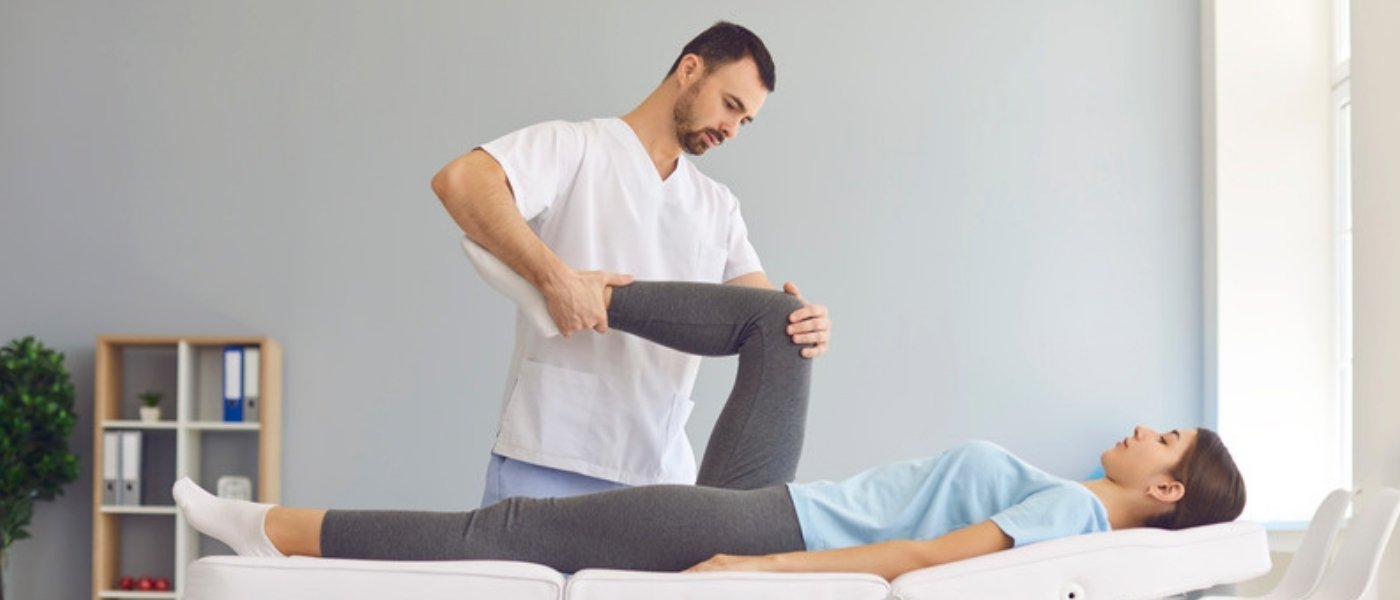
Physiotherapist moving a woman's hip and knee during a treatment session

Trochanteric Bursitis

Pain on the outside of the hip, now usually called greater trochanteric pain syndrome and most often caused by gluteal tendinopathy.
Does the outside of your hip ache when you lie on that side at night? Does it hurt to climb stairs, stand on one leg to put on your pants, or get up after sitting for a while? If so, you may have what is often called trochanteric bursitis, one of the most common causes of pain on the side of the hip.

At Vaughan Physiotherapy Clinic, we assess and treat lateral hip pain for walkers, runners, busy parents, and anyone who has started dreading bedtime because they cannot get comfortable. Our goal is not just to settle the pain for a few weeks, but to find out why the tendons on the side of your hip are overloaded and build them back up, so the pain is less likely to return.

Here is what trochanteric bursitis really is, why most experts now call it something else, how to recognize it, what it can be confused with, and what the research says about treating it.

What Is Trochanteric Bursitis?

Trochanteric bursitis is the traditional name for pain and tenderness over the greater trochanter, the bony point you can feel on the outside of your upper thigh. A bursa is a small fluid-filled sac that helps tissues glide over bone, and "bursitis" means that sac is inflamed.

For many years, doctors assumed that an irritated bursa was the main cause of this pain. Research now shows that this is usually not the case. Today, most experts use the term greater trochanteric pain syndrome (GTPS), and the most common problem underneath it is gluteal tendinopathy: an overloaded, irritated tendon of the gluteus medius or gluteus minimus muscle where it attaches to the hip bone (Grimaldi & Fearon, 2015; Speers & Bhogal, 2017).

GTPS is common. It accounts for roughly 10 to 20 percent of people who see their family doctor for hip pain (Speers & Bhogal, 2017), and it is estimated to affect about one in four women over 50 (Mellor et al., 2018). Women are affected two to four times more often than men, and it usually appears between the ages of 40 and 60 (Grimaldi & Fearon, 2015; Gill et al., 2025).

Bursitis or Tendinopathy? Why the Name Matters

When researchers look at painful hips with ultrasound, the tendons are far more often the problem than the bursa. In one ultrasound study of 75 people with lateral hip pain, only 8 had an enlarged bursa, while tendon changes in the gluteus medius were the most common finding. In a much larger study of 877 people, about 20 percent showed bursa thickening (Grimaldi & Fearon, 2015). When the bursa is involved, it often sits alongside a tendon problem rather than on its own (Speers & Bhogal, 2017).

This matters for you because tendons and bursae need different care. An inflamed bursa might be expected to settle with rest and anti-inflammatory treatment. An overloaded tendon, on the other hand, usually needs the right kind of loading to recover. Resting it completely, or stretching it in the wrong position, can keep the problem going (Grimaldi & Fearon, 2015).

Understanding the Anatomy

Several structures meet at the outside of the hip (Grimaldi & Fearon, 2015):

  • Greater trochanter: the bony bump at the top of the thigh bone (femur), on the outside of the hip
  • Gluteus medius and gluteus minimus: the muscles on the side of your buttock that hold your pelvis level when you stand on one leg. Their tendons attach to the greater trochanter, and the deeper tendon fibres are the ones most often affected
  • Iliotibial band (ITB): a thick band of tissue running down the outside of the thigh, which passes over the trochanter
  • Trochanteric bursae: small cushioning sacs that sit between the ITB and the bone

When your thigh moves inward across the midline of your body (called hip adduction), the ITB presses harder against the tendons and bursa. Laboratory work shows this compression rises sharply as the hip moves further inward (Grimaldi & Fearon, 2015). This is why crossing your legs or hanging on one hip can be so irritating.

Recognizing the Symptoms

Lateral hip pain usually builds gradually, although it can sometimes start after a fall, a sudden increase in walking or running, or a long day on your feet (Speers & Bhogal, 2017). Common symptoms include:

  • Aching or sharp pain on the outside of the hip, centred on the bony point
  • Pain that may spread down the outside of the thigh, sometimes toward the knee
  • Pain lying on the affected side, and sometimes on the other side too, which often disturbs sleep
  • Pain with climbing stairs, walking uphill, or standing on one leg
  • Pain or stiffness when getting up after sitting, especially from low chairs

What Makes It Worse?

  • Compressive positions: crossing your legs or knees, sitting in low chairs, standing with your weight shifted onto one hip, and lying on your side (Grimaldi & Fearon, 2015)
  • Stretching the outside of the hip: common ITB and piriformis stretches pull the leg across the body and can increase tendon compression (Grimaldi & Fearon, 2015)
  • Sudden changes in activity: a new walking program, more running, longer hikes, or more hill and stair work (Speers & Bhogal, 2017)
  • Weak or poorly controlled hip muscles: letting the pelvis drop or shift sideways when walking or standing on one leg
  • Other back, hip, or knee problems: about a third of people with low back pain also report lateral hip pain, and these conditions often travel together (Grimaldi & Fearon, 2015)

What Else Could It Be?

Several conditions can cause pain in or around the hip and need different treatment. Part of our assessment is ruling these in or out (Grimaldi & Fearon, 2015; Speers & Bhogal, 2017):

  • Hip osteoarthritis: usually felt more in the groin, with stiffness and trouble putting on socks and shoes. GTPS and hip arthritis can also occur together
  • Referred pain from the lower back: irritated joints or nerves in the lumbar spine can send pain to the buttock and outer thigh, often with tingling or numbness
  • Hip joint problems such as femoroacetabular impingement (FAI) or a labral tear, which tend to cause deep groin pain
  • Avascular necrosis: loss of blood supply to the head of the femur, which causes deep, worsening hip pain
  • Gluteal tendon tear: a more advanced tendon problem that may cause a limp or noticeable weakness
  • Inflammatory arthritis affecting the hip or pelvis

When to See a Doctor First

See your physician promptly, or go to the emergency department, if you have:

  • Hip pain after a fall, especially if you cannot put weight on the leg, since a hip fracture needs urgent care (Grimaldi & Fearon, 2015)
  • A hot, red, swollen area over the hip, especially with fever or chills, which may mean infection
  • A history of cancer, unexplained weight loss, or pain at night that does not change with position, which can point to bone disease (Grimaldi & Fearon, 2015)
  • Deep groin pain that is getting steadily worse, especially if you have used steroid medication long term or drink heavily, which are risk factors for avascular necrosis
  • Numbness, weakness, or tingling spreading down the leg, or any change in bladder or bowel control
  • Sudden severe weakness or a new limp, which may suggest a tendon tear

Our physiotherapists screen for these signs at your first visit and will coordinate with your physician if imaging or a referral is needed.

Related reading: Outer hip pain is also covered in our guides to greater trochanteric pain syndrome, gluteal tendinopathy and IT band syndrome.

Start Your Journey to 

‍Better Health Today

Recover faster, move better, and feel stronger with expert physiotherapy. Our team is here to guide you every step of the way.

Why Physiotherapy Is Essential

For most people, lateral hip pain is a tendon load problem. The gluteal tendons on the side of the hip are being squeezed and loaded more than they can currently tolerate, and pain is the signal. Rest, painkillers, or an injection can quiet things down for a while, but the pain often comes back if the tendons are still weak and the same positions and habits continue.

The best research on this condition supports education and exercise as the foundation of care. In a large trial of 204 people with gluteal tendinopathy, a physiotherapy program of education plus exercise beat both a corticosteroid injection and a "wait and see" approach at 8 weeks and at one year (Mellor et al., 2018). A 2025 network meta-analysis of 19 randomized trials also ranked exercise as the most effective conservative option for reducing pain (Wang et al., 2025).

Physiotherapy addresses the main drivers:

  • Compression: changing the everyday positions that press the ITB against the tendons, such as crossing your legs or hanging on one hip
  • Tendon capacity: progressive strengthening so the gluteal tendons can handle walking, stairs, and sport again
  • Movement control: retraining how your pelvis and hip move when you walk, climb, and stand on one leg
  • Related problems: checking the lower back and hip joint

Your Treatment Plan at Vaughan Physiotherapy Clinic

Phase 1: Assessment and Understanding Your Pain (Weeks 1 to 2)

Your first visit focuses on confirming the diagnosis and finding out what is driving it. A full assessment includes:

  • History: when the pain started, what makes it worse, how you sleep, your activity and work demands, and your general health
  • Hands-on examination: pressing over the greater trochanter and surrounding tissues to locate the painful structure. Tenderness alone is not enough to make the diagnosis, since many people without pain are also tender here (Grimaldi & Fearon, 2015)
  • Provocation tests: standing on one leg for up to 30 seconds and resisted hip turning tests are among the most useful clinical tests for gluteal tendinopathy (Grimaldi & Fearon, 2015; Speers & Bhogal, 2017).
  • Hip joint and lower back screen: to rule out arthritis, impingement, or referred pain from the spine
  • Strength and movement: how well your hip muscles hold your pelvis level during walking, stairs, and single-leg tasks

Most people do not need imaging to start treatment, because this is mainly a clinical diagnosis (Gill et al., 2025). If we suspect a tendon tear, hip arthritis, or another cause, we will recommend a physician referral. An X-ray is usually the first test, and it is often normal in GTPS. Ultrasound or MRI may follow if more detail is needed, keeping in mind that tendon changes on MRI are also common in people with no pain (Speers & Bhogal, 2017).

Education is a key part of the first visit. Understanding why the tendon is sore, and how to avoid irritating it, is one of the two core parts of the program that worked best in the research (Mellor et al., 2018). Interestingly, in another trial, women who received education alone improved about as much overall as those who also did a gluteal strengthening program, which shows how powerful good advice can be on its own (Ganderton et al., 2018).

Phase 2: Settling Pain and Reducing Compression

Early care focuses on calming the tendon by reducing the positions that squeeze it (Grimaldi & Fearon, 2015):

  • Sleeping: avoid lying on the sore side. If you sleep on the other side, place a pillow between your knees so the top leg does not drop across your body
  • Sitting: avoid crossing your legs or knees and avoid very low chairs. Keep your knees slightly apart and level with or below your hips
  • Standing: share weight evenly on both legs rather than hanging on one hip
  • Stretching: stop ITB and piriformis stretches that pull the leg across the body. Massage or needling can be used instead to ease tight tissue
  • Activity changes: temporarily reduce hills, stairs, and long walks without stopping activity altogether

Isometric exercises, where the muscle works without the joint moving, may help ease tendon pain early on. For example, gently pressing the leg outward against a wall or a belt while standing or lying on your back. The best dose for the hip is not yet known, so we adjust it to how your symptoms respond (Grimaldi & Fearon, 2015).

Phase 3: Rebuilding Hip Strength and Control (Weeks 2 to 12)

Progressive hip strengthening
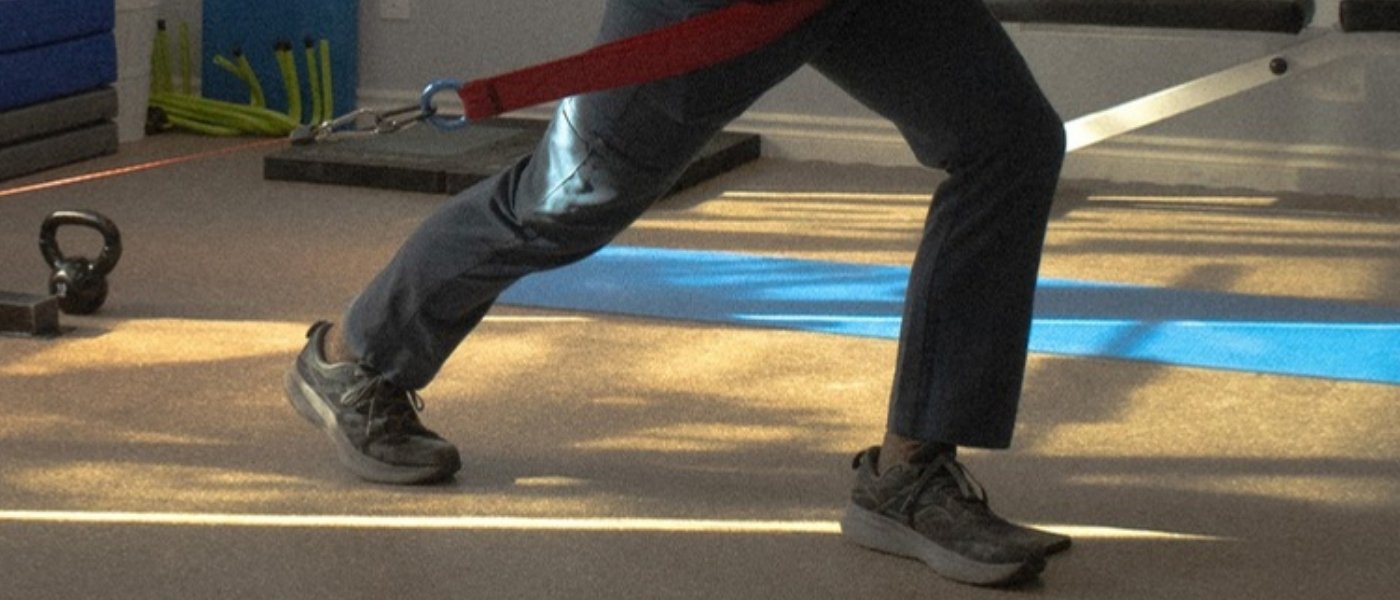
Person doing a resisted walking exercise with a belt harness in the clinic gym
Progressive loaded hip and leg exercise in the clinic gym helps the gluteal tendons tolerate everyday load again.

Tendons respond to gradually increasing load. In the trial that showed the best results, people attended 14 physiotherapy sessions over 8 weeks and did 4 to 6 exercises daily at home, focused on strengthening the hip abductors and controlling the hip from dropping inward (Mellor et al., 2018). At 8 weeks, 77 percent of the education and exercise group reported success, compared with 58 percent after an injection and 29 percent with wait and see. At one year, it was 78 percent, 57 percent, and 52 percent (Mellor et al., 2018).

Your program may include:

  • Bridges and side-supported bridges
  • Standing hip abduction with a band, progressing to heavier resistance
  • Step-ups and step-downs with a level pelvis
  • Squats and sit-to-stands from a raised chair, lowering the height over time
  • Single-leg balance and single-leg strength work

Heavier tendon-loading exercises are usually done about three times per week, and night pain is a useful guide: if it settles, you can progress; if it flares, we adjust the load (Grimaldi & Fearon, 2015).

Movement retraining

Strength alone does not always change how you move, so we practise the tasks that hurt, such as walking and stairs, with better pelvic control (Grimaldi & Fearon, 2015).

Manual therapy

Soft tissue work around the hip and thigh, and treatment of a stiff lower back or hip joint, may help ease pain so you can stay consistent with exercise. There are no trials of manual therapy for GTPS specifically, so we use it alongside, not instead of, the exercise program.

Shockwave therapy

Radial shockwave therapy is sometimes used for stubborn cases. In one trial of 229 people (in which treatment was not truly randomly assigned), 68 percent of the shockwave group reported success at 4 months, compared with 41 percent with home training (Rompe et al., 2009). Later reviews found the evidence limited and mixed (Barratt et al., 2017; Gill et al., 2025), so we see it as an optional add-on, not a replacement for exercise.

Phase 4: Return to Full Activity (Weeks 8 to 16+)

  • Gradual return to walking, hiking, and running, building distance and hills step by step while symptoms stay settled
  • Higher-level strength and hopping drills for runners and sport
  • Running technique review, including how much the pelvis drops and whether your feet cross the midline
  • A maintenance program of a few key exercises to keep the tendons strong

Beyond Physiotherapy: Complementary Care for Trochanteric Bursitis

Education, load management, and progressive exercise form the core of care for lateral hip pain, and that is where the research is strongest. Some patients also benefit from other services at our clinic to ease pain and tightness so they can stay consistent with rehab. Here is an honest summary of what the evidence does and does not show for each.

How Acupuncture and Dry Needling Can Help

Acupuncture and dry needling use fine needles to reduce pain and ease tight, tender muscles.

  • What the evidence shows: one small randomized trial of 43 people compared dry needling with a cortisone injection and found dry needling was no worse for pain and function at 6 weeks, with no side effects reported (Brennan et al., 2017). We did not find trials of traditional acupuncture for this condition, and the evidence for needling overall is still thin
  • Where it fits: as a short-term option to ease pain and gluteal muscle tension, especially for people who want to avoid or delay an injection, while the exercise program does the long-term work
  • Safety: generally very safe. Minor bruising or soreness at needle sites is the most common side effect

How Massage Therapy Can Help

Registered massage therapy focuses on the soft tissues of the hip, buttock, and thigh.

  • What the evidence shows: we did not find any published trials of massage for GTPS or trochanteric bursitis. Expert guidance suggests massage as a way to ease tight tissue around the hip in place of stretches that compress the tendon (Grimaldi & Fearon, 2015), but this is expert opinion rather than tested evidence
  • Where it fits: as a supportive add-on for comfort and muscle tightness. Your therapist should avoid heavy, deep pressure directly over the painful tendon
  • Safety: very safe. Some temporary soreness afterward is normal

How Chiropractic and Joint Manipulation Can Help

Chiropractic care uses joint mobilization and manipulation, often of the lower back, pelvis, and hip.

  • What the evidence shows: we did not find peer-reviewed trials of chiropractic care or joint manipulation for GTPS. The closest indirect evidence is that low back problems commonly occur alongside lateral hip pain, and treating related spine or hip problems is recommended as part of care (Grimaldi & Fearon, 2015). Whether manipulation itself helps the tendon has not been tested
  • Where it fits: for people whose lower back or hip joint stiffness appears to be contributing to their symptoms, combined with exercise
  • Safety: generally safe. It is not appropriate when a fracture, infection, or bone disease has not been ruled out

Whichever combination you and your clinician choose, these treatments share one purpose: settling symptoms so you can stay active while the real fix, stronger tendons and less compression, takes hold.

When Are Injections or Surgery Considered?

Corticosteroid injections can give strong short-term relief. Most people feel better within a few weeks, but the benefit tends to fade over the following months, and by 12 months people who had an injection do no better than those who did not (Grimaldi & Fearon, 2015; Speers & Bhogal, 2017). A systematic review found injections gave better pain relief than other options for up to about 3 months, but not beyond that (Barratt et al., 2017). If an injection is used, it works best as a short-term bridge into an exercise program, and repeated injections are generally not recommended (Gill et al., 2025).

Platelet-rich plasma (PRP) injections have mixed results so far (Gill et al., 2025).

Surgery is uncommon. It is considered only when well-run conservative care has failed and imaging shows a clear problem, such as a significant gluteal tendon tear. Options include repairing the tendon, removing the bursa, or releasing the ITB, often through keyhole surgery (Gill et al., 2025; Grimaldi & Fearon, 2015). Much of the surgical research comes from case series without comparison groups, so the evidence is lower quality than for exercise.

How Long Will It Take?

Recovery depends on how long you have had symptoms, how irritable the tendon is, and what you need your hip to do. Tendons recover slowly, and exercise benefits are not immediate (Gill et al., 2025). In the best research, most people in the education and exercise group reported meaningful improvement by 8 weeks and kept that improvement at one year (Mellor et al., 2018). In another study, the share of people reporting success with home training kept rising over time, from 7 percent at one month to 80 percent at 15 months (Rompe et al., 2009).

In our experience, many people sleep better and notice less pain within a few weeks once they change their positions, with strength and full return to activity building over the following two to four months. Longstanding cases can take longer. Sticking with the program, even after the pain eases, is what makes the difference.

Prevention and Long-Term Management

  • Watch your positions: avoid crossing your legs, very low chairs, and standing with your weight hanging on one hip
  • Sleep smart: use a pillow between your knees when side-lying, and consider a softer mattress topper if lying on your side is painful
  • Keep your hips strong: continue a few gluteal strengthening exercises two to three times a week
  • Build activity gradually: avoid big jumps in walking or running distance, hills, or stairs
  • Skip the ITB stretch: use massage or a foam roller on the muscles around the hip rather than stretching the leg across your body
  • Act early: if night pain returns, go back to your position changes and exercises straight away

Frequently Asked Questions

Is it bursitis or tendinopathy?

For most people with lateral hip pain, the main problem is the gluteal tendons, not the bursa. Ultrasound studies show bursa changes in only a minority of painful hips, while tendon changes are much more common (Grimaldi & Fearon, 2015). The good news is that the same exercise-based approach helps in either case.

Why does my hip hurt more at night?

Lying on your side presses the ITB against the tendons on the side that is down. Lying on the other side can also irritate the sore hip if your top leg drops across your body. A pillow between your knees, or lying on your back, usually helps (Grimaldi & Fearon, 2015).

Should I get a cortisone injection?

An injection can help in the short term, but research shows the benefit usually fades, and by one year results are no better than without it (Speers & Bhogal, 2017). Education plus exercise gave better results than an injection at both 8 weeks and one year (Mellor et al., 2018). If pain is stopping you from exercising, an injection may be worth discussing with your doctor as a bridge into rehab.

Do I need an MRI or ultrasound?

Usually not at first. The diagnosis is mainly clinical, and tendon changes on imaging are common even in people without pain (Speers & Bhogal, 2017). Imaging helps if you are not improving or a tear is suspected.

Can I keep walking or running?

In most cases, yes, with some changes. We often reduce hills, stairs, or distance for a while, then build back up gradually.

Can acupuncture, massage, or chiropractic replace exercise?

No. Education and progressive exercise have the strongest research behind them. Dry needling, massage, and joint mobilization are best used as short-term supports to ease pain and tightness while you rebuild strength in the hip.

Our Specialized Approach at Vaughan Physiotherapy Clinic

Accurate diagnosis: we separate tendon pain from hip arthritis, back-related pain, and other causes before treatment starts

Clear education: practical advice on sleeping, sitting, and standing positions that take pressure off the tendons

Progressive tendon loading: a structured, step-by-step strengthening program based on the best available research

Movement retraining: better hip and pelvis control for walking, stairs, running, and daily tasks

Integrated care: physiotherapy, massage therapy, acupuncture, and chiropractic under one roof when they add value

Safety first: screening for fractures, tendon tears, infection, and other serious causes, with physician referral when needed

Take the First Step Toward Comfortable Nights and Stronger Hips

Hip pain does not have to keep you up at night or stop you from walking, climbing stairs, or staying active. Our team at Vaughan Physiotherapy Clinic helps patients from Thornhill, Vaughan, North York, Richmond Hill, and surrounding communities get back to moving comfortably with evidence-based, hands-on care.

Book your assessment today:

Phone: 905-669-1221

Location: 398 Steeles Ave W #201, Thornhill, ON L4J 6X3

Online Booking: www.vaughanphysiotherapy.com

References

Barratt PA, Brookes N, Newson A. Conservative treatments for greater trochanteric pain syndrome: a systematic review. British Journal of Sports Medicine. 2017;51(2):97-104. doi:10.1136/bjsports-2015-095858

Brennan KL, Allen BC, Maldonado YM. Dry needling versus cortisone injection in the treatment of greater trochanteric pain syndrome: a noninferiority randomized clinical trial. Journal of Orthopaedic & Sports Physical Therapy. 2017;47(4):232-239. doi:10.2519/jospt.2017.6994

Ganderton C, Semciw A, Cook J, Moreira E, Pizzari T. Gluteal loading versus sham exercises to improve pain and dysfunction in postmenopausal women with greater trochanteric pain syndrome: a randomized controlled trial. Journal of Women's Health. 2018;27(6):815-829. doi:10.1089/jwh.2017.6729

Gill JK, Neal-Smith G, Saed A, Burgan A, Fernquest S. Management of greater trochanteric pain syndrome: a narrative review. Cureus. 2025;17(6):e85859. doi:10.7759/cureus.85859

Grimaldi A, Fearon A. Gluteal tendinopathy: integrating pathomechanics and clinical features in its management. Journal of Orthopaedic & Sports Physical Therapy. 2015;45(11):910-922. doi:10.2519/jospt.2015.5829

Mellor R, Bennell K, Grimaldi A, et al. Education plus exercise versus corticosteroid injection use versus a wait and see approach on global outcome and pain from gluteal tendinopathy: prospective, single blinded, randomised clinical trial. BMJ. 2018;361:k1662. doi:10.1136/bmj.k1662

Rompe JD, Segal NA, Cacchio A, Furia JP, Morral A, Maffulli N. Home training, local corticosteroid injection, or radial shock wave therapy for greater trochanter pain syndrome. American Journal of Sports Medicine. 2009;37(10):1981-1990. doi:10.1177/0363546509334374

Speers CJB, Bhogal GS. Greater trochanteric pain syndrome: a review of diagnosis and management in general practice. British Journal of General Practice. 2017;67(663):479-480. doi:10.3399/bjgp17X693041

Wang SQ, Guo NY, Liu W, Huang HJ, Xu BB, Wang JQ. Effect of conservative treatment on greater trochanteric pain syndrome: a systematic review and network meta-analysis of randomized controlled trials. Journal of Orthopaedic Surgery and Research. 2025;20:126. doi:10.1186/s13018-025-05477-w

Disclaimer: This article is for educational purposes only and does not replace professional medical advice. Pain on the outside of the hip can have several causes, including tendon tears, hip arthritis, referred pain from the lower back, fractures, infection, and bone disease. Always consult a qualified healthcare provider for diagnosis and treatment specific to your condition.


Team

Condition guide

Trochanteric Bursitis

Pain on the outside of the hip, now usually called greater trochanteric pain syndrome and most often caused by gluteal tendinopathy.

Physiotherapist moving a woman's hip and knee during a treatment sessionTrochanteric Bursitis

Does the outside of your hip ache when you lie on that side at night? Does it hurt to climb stairs, stand on one leg to put on your pants, or get up after sitting for a while? If so, you may have what is often called trochanteric bursitis, one of the most common causes of pain on the side of the hip.

At Vaughan Physiotherapy Clinic, we assess and treat lateral hip pain for walkers, runners, busy parents, and anyone who has started dreading bedtime because they cannot get comfortable. Our goal is not just to settle the pain for a few weeks, but to find out why the tendons on the side of your hip are overloaded and build them back up, so the pain is less likely to return.

Here is what trochanteric bursitis really is, why most experts now call it something else, how to recognize it, what it can be confused with, and what the research says about treating it.

What Is Trochanteric Bursitis?

Trochanteric bursitis is the traditional name for pain and tenderness over the greater trochanter, the bony point you can feel on the outside of your upper thigh. A bursa is a small fluid-filled sac that helps tissues glide over bone, and "bursitis" means that sac is inflamed.

For many years, doctors assumed that an irritated bursa was the main cause of this pain. Research now shows that this is usually not the case. Today, most experts use the term greater trochanteric pain syndrome (GTPS), and the most common problem underneath it is gluteal tendinopathy: an overloaded, irritated tendon of the gluteus medius or gluteus minimus muscle where it attaches to the hip bone (Grimaldi & Fearon, 2015; Speers & Bhogal, 2017).

GTPS is common. It accounts for roughly 10 to 20 percent of people who see their family doctor for hip pain (Speers & Bhogal, 2017), and it is estimated to affect about one in four women over 50 (Mellor et al., 2018). Women are affected two to four times more often than men, and it usually appears between the ages of 40 and 60 (Grimaldi & Fearon, 2015; Gill et al., 2025).

Bursitis or Tendinopathy? Why the Name Matters

When researchers look at painful hips with ultrasound, the tendons are far more often the problem than the bursa. In one ultrasound study of 75 people with lateral hip pain, only 8 had an enlarged bursa, while tendon changes in the gluteus medius were the most common finding. In a much larger study of 877 people, about 20 percent showed bursa thickening (Grimaldi & Fearon, 2015). When the bursa is involved, it often sits alongside a tendon problem rather than on its own (Speers & Bhogal, 2017).

This matters for you because tendons and bursae need different care. An inflamed bursa might be expected to settle with rest and anti-inflammatory treatment. An overloaded tendon, on the other hand, usually needs the right kind of loading to recover. Resting it completely, or stretching it in the wrong position, can keep the problem going (Grimaldi & Fearon, 2015).

Understanding the Anatomy

Several structures meet at the outside of the hip (Grimaldi & Fearon, 2015):

  • Greater trochanter: the bony bump at the top of the thigh bone (femur), on the outside of the hip
  • Gluteus medius and gluteus minimus: the muscles on the side of your buttock that hold your pelvis level when you stand on one leg. Their tendons attach to the greater trochanter, and the deeper tendon fibres are the ones most often affected
  • Iliotibial band (ITB): a thick band of tissue running down the outside of the thigh, which passes over the trochanter
  • Trochanteric bursae: small cushioning sacs that sit between the ITB and the bone

When your thigh moves inward across the midline of your body (called hip adduction), the ITB presses harder against the tendons and bursa. Laboratory work shows this compression rises sharply as the hip moves further inward (Grimaldi & Fearon, 2015). This is why crossing your legs or hanging on one hip can be so irritating.

Recognizing the Symptoms

Lateral hip pain usually builds gradually, although it can sometimes start after a fall, a sudden increase in walking or running, or a long day on your feet (Speers & Bhogal, 2017). Common symptoms include:

  • Aching or sharp pain on the outside of the hip, centred on the bony point
  • Pain that may spread down the outside of the thigh, sometimes toward the knee
  • Pain lying on the affected side, and sometimes on the other side too, which often disturbs sleep
  • Pain with climbing stairs, walking uphill, or standing on one leg
  • Pain or stiffness when getting up after sitting, especially from low chairs

What Makes It Worse?

  • Compressive positions: crossing your legs or knees, sitting in low chairs, standing with your weight shifted onto one hip, and lying on your side (Grimaldi & Fearon, 2015)
  • Stretching the outside of the hip: common ITB and piriformis stretches pull the leg across the body and can increase tendon compression (Grimaldi & Fearon, 2015)
  • Sudden changes in activity: a new walking program, more running, longer hikes, or more hill and stair work (Speers & Bhogal, 2017)
  • Weak or poorly controlled hip muscles: letting the pelvis drop or shift sideways when walking or standing on one leg
  • Other back, hip, or knee problems: about a third of people with low back pain also report lateral hip pain, and these conditions often travel together (Grimaldi & Fearon, 2015)

What Else Could It Be?

Several conditions can cause pain in or around the hip and need different treatment. Part of our assessment is ruling these in or out (Grimaldi & Fearon, 2015; Speers & Bhogal, 2017):

  • Hip osteoarthritis: usually felt more in the groin, with stiffness and trouble putting on socks and shoes. GTPS and hip arthritis can also occur together
  • Referred pain from the lower back: irritated joints or nerves in the lumbar spine can send pain to the buttock and outer thigh, often with tingling or numbness
  • Hip joint problems such as femoroacetabular impingement (FAI) or a labral tear, which tend to cause deep groin pain
  • Avascular necrosis: loss of blood supply to the head of the femur, which causes deep, worsening hip pain
  • Gluteal tendon tear: a more advanced tendon problem that may cause a limp or noticeable weakness
  • Inflammatory arthritis affecting the hip or pelvis

When to See a Doctor First

See your physician promptly, or go to the emergency department, if you have:

  • Hip pain after a fall, especially if you cannot put weight on the leg, since a hip fracture needs urgent care (Grimaldi & Fearon, 2015)
  • A hot, red, swollen area over the hip, especially with fever or chills, which may mean infection
  • A history of cancer, unexplained weight loss, or pain at night that does not change with position, which can point to bone disease (Grimaldi & Fearon, 2015)
  • Deep groin pain that is getting steadily worse, especially if you have used steroid medication long term or drink heavily, which are risk factors for avascular necrosis
  • Numbness, weakness, or tingling spreading down the leg, or any change in bladder or bowel control
  • Sudden severe weakness or a new limp, which may suggest a tendon tear

Our physiotherapists screen for these signs at your first visit and will coordinate with your physician if imaging or a referral is needed.

Related reading: Outer hip pain is also covered in our guides to greater trochanteric pain syndrome, gluteal tendinopathy and IT band syndrome.

Why Physiotherapy Is Essential

For most people, lateral hip pain is a tendon load problem. The gluteal tendons on the side of the hip are being squeezed and loaded more than they can currently tolerate, and pain is the signal. Rest, painkillers, or an injection can quiet things down for a while, but the pain often comes back if the tendons are still weak and the same positions and habits continue.

The best research on this condition supports education and exercise as the foundation of care. In a large trial of 204 people with gluteal tendinopathy, a physiotherapy program of education plus exercise beat both a corticosteroid injection and a "wait and see" approach at 8 weeks and at one year (Mellor et al., 2018). A 2025 network meta-analysis of 19 randomized trials also ranked exercise as the most effective conservative option for reducing pain (Wang et al., 2025).

Physiotherapy addresses the main drivers:

  • Compression: changing the everyday positions that press the ITB against the tendons, such as crossing your legs or hanging on one hip
  • Tendon capacity: progressive strengthening so the gluteal tendons can handle walking, stairs, and sport again
  • Movement control: retraining how your pelvis and hip move when you walk, climb, and stand on one leg
  • Related problems: checking the lower back and hip joint

Your Treatment Plan at Vaughan Physiotherapy Clinic

Phase 1: Assessment and Understanding Your Pain (Weeks 1 to 2)

Your first visit focuses on confirming the diagnosis and finding out what is driving it. A full assessment includes:

  • History: when the pain started, what makes it worse, how you sleep, your activity and work demands, and your general health
  • Hands-on examination: pressing over the greater trochanter and surrounding tissues to locate the painful structure. Tenderness alone is not enough to make the diagnosis, since many people without pain are also tender here (Grimaldi & Fearon, 2015)
  • Provocation tests: standing on one leg for up to 30 seconds and resisted hip turning tests are among the most useful clinical tests for gluteal tendinopathy (Grimaldi & Fearon, 2015; Speers & Bhogal, 2017).
  • Hip joint and lower back screen: to rule out arthritis, impingement, or referred pain from the spine
  • Strength and movement: how well your hip muscles hold your pelvis level during walking, stairs, and single-leg tasks

Most people do not need imaging to start treatment, because this is mainly a clinical diagnosis (Gill et al., 2025). If we suspect a tendon tear, hip arthritis, or another cause, we will recommend a physician referral. An X-ray is usually the first test, and it is often normal in GTPS. Ultrasound or MRI may follow if more detail is needed, keeping in mind that tendon changes on MRI are also common in people with no pain (Speers & Bhogal, 2017).

Education is a key part of the first visit. Understanding why the tendon is sore, and how to avoid irritating it, is one of the two core parts of the program that worked best in the research (Mellor et al., 2018). Interestingly, in another trial, women who received education alone improved about as much overall as those who also did a gluteal strengthening program, which shows how powerful good advice can be on its own (Ganderton et al., 2018).

Phase 2: Settling Pain and Reducing Compression

Early care focuses on calming the tendon by reducing the positions that squeeze it (Grimaldi & Fearon, 2015):

  • Sleeping: avoid lying on the sore side. If you sleep on the other side, place a pillow between your knees so the top leg does not drop across your body
  • Sitting: avoid crossing your legs or knees and avoid very low chairs. Keep your knees slightly apart and level with or below your hips
  • Standing: share weight evenly on both legs rather than hanging on one hip
  • Stretching: stop ITB and piriformis stretches that pull the leg across the body. Massage or needling can be used instead to ease tight tissue
  • Activity changes: temporarily reduce hills, stairs, and long walks without stopping activity altogether

Isometric exercises, where the muscle works without the joint moving, may help ease tendon pain early on. For example, gently pressing the leg outward against a wall or a belt while standing or lying on your back. The best dose for the hip is not yet known, so we adjust it to how your symptoms respond (Grimaldi & Fearon, 2015).

Phase 3: Rebuilding Hip Strength and Control (Weeks 2 to 12)

Progressive hip strengthening

Person doing a resisted walking exercise with a belt harness in the clinic gym
Progressive loaded hip and leg exercise in the clinic gym helps the gluteal tendons tolerate everyday load again.

Tendons respond to gradually increasing load. In the trial that showed the best results, people attended 14 physiotherapy sessions over 8 weeks and did 4 to 6 exercises daily at home, focused on strengthening the hip abductors and controlling the hip from dropping inward (Mellor et al., 2018). At 8 weeks, 77 percent of the education and exercise group reported success, compared with 58 percent after an injection and 29 percent with wait and see. At one year, it was 78 percent, 57 percent, and 52 percent (Mellor et al., 2018).

Your program may include:

  • Bridges and side-supported bridges
  • Standing hip abduction with a band, progressing to heavier resistance
  • Step-ups and step-downs with a level pelvis
  • Squats and sit-to-stands from a raised chair, lowering the height over time
  • Single-leg balance and single-leg strength work

Heavier tendon-loading exercises are usually done about three times per week, and night pain is a useful guide: if it settles, you can progress; if it flares, we adjust the load (Grimaldi & Fearon, 2015).

Movement retraining

Strength alone does not always change how you move, so we practise the tasks that hurt, such as walking and stairs, with better pelvic control (Grimaldi & Fearon, 2015).

Manual therapy

Soft tissue work around the hip and thigh, and treatment of a stiff lower back or hip joint, may help ease pain so you can stay consistent with exercise. There are no trials of manual therapy for GTPS specifically, so we use it alongside, not instead of, the exercise program.

Shockwave therapy

Radial shockwave therapy is sometimes used for stubborn cases. In one trial of 229 people (in which treatment was not truly randomly assigned), 68 percent of the shockwave group reported success at 4 months, compared with 41 percent with home training (Rompe et al., 2009). Later reviews found the evidence limited and mixed (Barratt et al., 2017; Gill et al., 2025), so we see it as an optional add-on, not a replacement for exercise.

Phase 4: Return to Full Activity (Weeks 8 to 16+)

  • Gradual return to walking, hiking, and running, building distance and hills step by step while symptoms stay settled
  • Higher-level strength and hopping drills for runners and sport
  • Running technique review, including how much the pelvis drops and whether your feet cross the midline
  • A maintenance program of a few key exercises to keep the tendons strong

Beyond Physiotherapy: Complementary Care for Trochanteric Bursitis

Education, load management, and progressive exercise form the core of care for lateral hip pain, and that is where the research is strongest. Some patients also benefit from other services at our clinic to ease pain and tightness so they can stay consistent with rehab. Here is an honest summary of what the evidence does and does not show for each.

How Acupuncture and Dry Needling Can Help

Acupuncture and dry needling use fine needles to reduce pain and ease tight, tender muscles.

  • What the evidence shows: one small randomized trial of 43 people compared dry needling with a cortisone injection and found dry needling was no worse for pain and function at 6 weeks, with no side effects reported (Brennan et al., 2017). We did not find trials of traditional acupuncture for this condition, and the evidence for needling overall is still thin
  • Where it fits: as a short-term option to ease pain and gluteal muscle tension, especially for people who want to avoid or delay an injection, while the exercise program does the long-term work
  • Safety: generally very safe. Minor bruising or soreness at needle sites is the most common side effect

How Massage Therapy Can Help

Registered massage therapy focuses on the soft tissues of the hip, buttock, and thigh.

  • What the evidence shows: we did not find any published trials of massage for GTPS or trochanteric bursitis. Expert guidance suggests massage as a way to ease tight tissue around the hip in place of stretches that compress the tendon (Grimaldi & Fearon, 2015), but this is expert opinion rather than tested evidence
  • Where it fits: as a supportive add-on for comfort and muscle tightness. Your therapist should avoid heavy, deep pressure directly over the painful tendon
  • Safety: very safe. Some temporary soreness afterward is normal

How Chiropractic and Joint Manipulation Can Help

Chiropractic care uses joint mobilization and manipulation, often of the lower back, pelvis, and hip.

  • What the evidence shows: we did not find peer-reviewed trials of chiropractic care or joint manipulation for GTPS. The closest indirect evidence is that low back problems commonly occur alongside lateral hip pain, and treating related spine or hip problems is recommended as part of care (Grimaldi & Fearon, 2015). Whether manipulation itself helps the tendon has not been tested
  • Where it fits: for people whose lower back or hip joint stiffness appears to be contributing to their symptoms, combined with exercise
  • Safety: generally safe. It is not appropriate when a fracture, infection, or bone disease has not been ruled out

Whichever combination you and your clinician choose, these treatments share one purpose: settling symptoms so you can stay active while the real fix, stronger tendons and less compression, takes hold.

When Are Injections or Surgery Considered?

Corticosteroid injections can give strong short-term relief. Most people feel better within a few weeks, but the benefit tends to fade over the following months, and by 12 months people who had an injection do no better than those who did not (Grimaldi & Fearon, 2015; Speers & Bhogal, 2017). A systematic review found injections gave better pain relief than other options for up to about 3 months, but not beyond that (Barratt et al., 2017). If an injection is used, it works best as a short-term bridge into an exercise program, and repeated injections are generally not recommended (Gill et al., 2025).

Platelet-rich plasma (PRP) injections have mixed results so far (Gill et al., 2025).

Surgery is uncommon. It is considered only when well-run conservative care has failed and imaging shows a clear problem, such as a significant gluteal tendon tear. Options include repairing the tendon, removing the bursa, or releasing the ITB, often through keyhole surgery (Gill et al., 2025; Grimaldi & Fearon, 2015). Much of the surgical research comes from case series without comparison groups, so the evidence is lower quality than for exercise.

How Long Will It Take?

Recovery depends on how long you have had symptoms, how irritable the tendon is, and what you need your hip to do. Tendons recover slowly, and exercise benefits are not immediate (Gill et al., 2025). In the best research, most people in the education and exercise group reported meaningful improvement by 8 weeks and kept that improvement at one year (Mellor et al., 2018). In another study, the share of people reporting success with home training kept rising over time, from 7 percent at one month to 80 percent at 15 months (Rompe et al., 2009).

In our experience, many people sleep better and notice less pain within a few weeks once they change their positions, with strength and full return to activity building over the following two to four months. Longstanding cases can take longer. Sticking with the program, even after the pain eases, is what makes the difference.

Prevention and Long-Term Management

  • Watch your positions: avoid crossing your legs, very low chairs, and standing with your weight hanging on one hip
  • Sleep smart: use a pillow between your knees when side-lying, and consider a softer mattress topper if lying on your side is painful
  • Keep your hips strong: continue a few gluteal strengthening exercises two to three times a week
  • Build activity gradually: avoid big jumps in walking or running distance, hills, or stairs
  • Skip the ITB stretch: use massage or a foam roller on the muscles around the hip rather than stretching the leg across your body
  • Act early: if night pain returns, go back to your position changes and exercises straight away

Frequently Asked Questions

Is it bursitis or tendinopathy?

For most people with lateral hip pain, the main problem is the gluteal tendons, not the bursa. Ultrasound studies show bursa changes in only a minority of painful hips, while tendon changes are much more common (Grimaldi & Fearon, 2015). The good news is that the same exercise-based approach helps in either case.

Why does my hip hurt more at night?

Lying on your side presses the ITB against the tendons on the side that is down. Lying on the other side can also irritate the sore hip if your top leg drops across your body. A pillow between your knees, or lying on your back, usually helps (Grimaldi & Fearon, 2015).

Should I get a cortisone injection?

An injection can help in the short term, but research shows the benefit usually fades, and by one year results are no better than without it (Speers & Bhogal, 2017). Education plus exercise gave better results than an injection at both 8 weeks and one year (Mellor et al., 2018). If pain is stopping you from exercising, an injection may be worth discussing with your doctor as a bridge into rehab.

Do I need an MRI or ultrasound?

Usually not at first. The diagnosis is mainly clinical, and tendon changes on imaging are common even in people without pain (Speers & Bhogal, 2017). Imaging helps if you are not improving or a tear is suspected.

Can I keep walking or running?

In most cases, yes, with some changes. We often reduce hills, stairs, or distance for a while, then build back up gradually.

Can acupuncture, massage, or chiropractic replace exercise?

No. Education and progressive exercise have the strongest research behind them. Dry needling, massage, and joint mobilization are best used as short-term supports to ease pain and tightness while you rebuild strength in the hip.

Our Specialized Approach at Vaughan Physiotherapy Clinic

Accurate diagnosis: we separate tendon pain from hip arthritis, back-related pain, and other causes before treatment starts

Clear education: practical advice on sleeping, sitting, and standing positions that take pressure off the tendons

Progressive tendon loading: a structured, step-by-step strengthening program based on the best available research

Movement retraining: better hip and pelvis control for walking, stairs, running, and daily tasks

Integrated care: physiotherapy, massage therapy, acupuncture, and chiropractic under one roof when they add value

Safety first: screening for fractures, tendon tears, infection, and other serious causes, with physician referral when needed

Take the First Step Toward Comfortable Nights and Stronger Hips

Hip pain does not have to keep you up at night or stop you from walking, climbing stairs, or staying active. Our team at Vaughan Physiotherapy Clinic helps patients from Thornhill, Vaughan, North York, Richmond Hill, and surrounding communities get back to moving comfortably with evidence-based, hands-on care.

Book your assessment today:

Phone: 905-669-1221

Location: 398 Steeles Ave W #201, Thornhill, ON L4J 6X3

Online Booking: www.vaughanphysiotherapy.com

References

Barratt PA, Brookes N, Newson A. Conservative treatments for greater trochanteric pain syndrome: a systematic review. British Journal of Sports Medicine. 2017;51(2):97-104. doi:10.1136/bjsports-2015-095858

Brennan KL, Allen BC, Maldonado YM. Dry needling versus cortisone injection in the treatment of greater trochanteric pain syndrome: a noninferiority randomized clinical trial. Journal of Orthopaedic & Sports Physical Therapy. 2017;47(4):232-239. doi:10.2519/jospt.2017.6994

Ganderton C, Semciw A, Cook J, Moreira E, Pizzari T. Gluteal loading versus sham exercises to improve pain and dysfunction in postmenopausal women with greater trochanteric pain syndrome: a randomized controlled trial. Journal of Women's Health. 2018;27(6):815-829. doi:10.1089/jwh.2017.6729

Gill JK, Neal-Smith G, Saed A, Burgan A, Fernquest S. Management of greater trochanteric pain syndrome: a narrative review. Cureus. 2025;17(6):e85859. doi:10.7759/cureus.85859

Grimaldi A, Fearon A. Gluteal tendinopathy: integrating pathomechanics and clinical features in its management. Journal of Orthopaedic & Sports Physical Therapy. 2015;45(11):910-922. doi:10.2519/jospt.2015.5829

Mellor R, Bennell K, Grimaldi A, et al. Education plus exercise versus corticosteroid injection use versus a wait and see approach on global outcome and pain from gluteal tendinopathy: prospective, single blinded, randomised clinical trial. BMJ. 2018;361:k1662. doi:10.1136/bmj.k1662

Rompe JD, Segal NA, Cacchio A, Furia JP, Morral A, Maffulli N. Home training, local corticosteroid injection, or radial shock wave therapy for greater trochanter pain syndrome. American Journal of Sports Medicine. 2009;37(10):1981-1990. doi:10.1177/0363546509334374

Speers CJB, Bhogal GS. Greater trochanteric pain syndrome: a review of diagnosis and management in general practice. British Journal of General Practice. 2017;67(663):479-480. doi:10.3399/bjgp17X693041

Wang SQ, Guo NY, Liu W, Huang HJ, Xu BB, Wang JQ. Effect of conservative treatment on greater trochanteric pain syndrome: a systematic review and network meta-analysis of randomized controlled trials. Journal of Orthopaedic Surgery and Research. 2025;20:126. doi:10.1186/s13018-025-05477-w

Disclaimer: This article is for educational purposes only and does not replace professional medical advice. Pain on the outside of the hip can have several causes, including tendon tears, hip arthritis, referred pain from the lower back, fractures, infection, and bone disease. Always consult a qualified healthcare provider for diagnosis and treatment specific to your condition.

How it works

Getting started.

  1. 01

    No referral needed

    You can book directly. Some benefit plans ask for a doctor's note, so check yours before your visit.

  2. 02

    Your first assessment, 45 minutes

    Your history, movement testing, a clear diagnosis and a plan you understand.

  3. 03

    Follow-up sessions

    Hands-on care and exercise, progressed each visit.

  4. 04

    Not the right fit? Second opinion on us

    If you're not satisfied with your initial assessment, a second assessment with another therapist is complimentary.

Not sure this is what you have?

One of our therapists can check what is going on and build a plan around what they find. Book online, or call us at 905-669-1221.