







Condition guide
Sacroiliac Joint Dysfunction
Pain coming from the sacroiliac joint, where the base of the spine meets the pelvis, felt low in the back and buttock on one side.
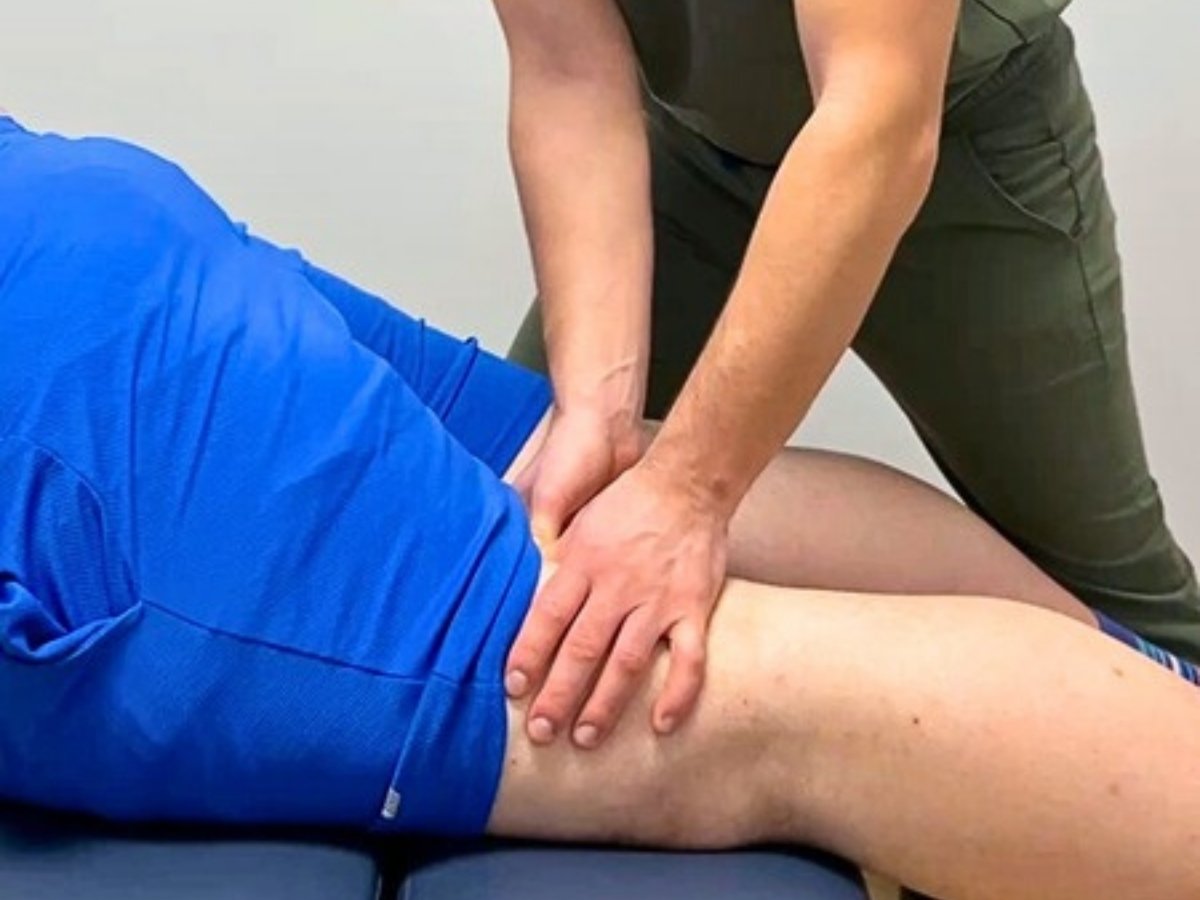
Do you have a deep ache on one side of your low back, right over the dimple at the top of your buttock? Does it catch when you roll over in bed, climb stairs, or stand on one leg to put on your pants? If so, your sacroiliac joint may be part of the problem.
At Vaughan Physiotherapy Clinic, we assess and treat sacroiliac joint (SIJ) pain in runners, lifters, parents of young kids, pregnant and postpartum patients, and anyone whose back pain sits low and off to one side. Our goal is not to "put your pelvis back in place." It is to find out what is irritating the area, settle it down, and build the strength and confidence you need to get back to normal life.
Here is what sacroiliac joint dysfunction is, how it is diagnosed (and the limits of that), what else it could be, and what the research says about treating it.
What Is Sacroiliac Joint Dysfunction?
The sacroiliac joints are where the base of your spine (the sacrum) meets the two large pelvic bones (the ilia). You have one on each side, just under the dimples at the top of your buttocks. Sacroiliac joint dysfunction is the term commonly used when pain is coming from one or both of these joints or the strong ligaments around them. You will also see it called SIJ pain or, when it is linked to pregnancy, pelvic girdle pain.
SIJ pain is more common than many people expect. It is thought to be part of the problem in about 1 in 5 people with long-lasting low back pain (Prather et al., 2020).
A Word About "Out of Place"
Many people are told their SI joint is "out," "rotated," or "out of alignment." This idea is understandable, but it is not supported by the research. The SI joints are very stable and move only a tiny amount. Hands-on tests that try to feel small differences in pelvic position or joint movement are not reliable: two skilled clinicians examining the same person often disagree. For this reason, researchers who study SIJ diagnosis leave these tests out (Laslett et al., 2005), and European guidelines recommend against using them (Vleeming et al., 2008). A painful SI joint is an irritated, sensitive joint, not a bone that has slipped out of position.
Understanding the Anatomy
- The joint itself: a strong, interlocking joint surface between the sacrum and the pelvis, designed for stability rather than movement
- Ligaments: very strong ligaments wrap the joint and hold it firmly together
- Muscles: the glutes, deep abdominals, back muscles, and pelvic floor help transfer load between your trunk and legs
- Nerves: the joint is supplied by small nerves from the low back, which is why SIJ pain can spread into the buttock and the back of the thigh
Who Gets It?
- Pregnant and postpartum people: hormonal and body changes increase the load on the pelvis. About 1 in 5 pregnant women has pelvic girdle pain at any given time (Vleeming et al., 2008). Most recover soon after delivery, but a small group, around 7 percent, has ongoing problems that can last for years (Stuge, 2012)
- People after a fall or jolt: such as landing on the buttock or missing a step
- Athletes in one-sided or impact sports: running, golf, hockey, skating, and lifting
- People with inflammatory arthritis, such as axial spondyloarthritis, which often starts in the SI joints (see below)
Recognizing the Symptoms
SIJ pain often builds gradually, but it can also start after a specific fall, twist, or pregnancy. Common symptoms include:
- Pain on one side of the low back, centred just below the belt line over the SIJ
- Pain that spreads into the buttock, groin, or back of the thigh, usually not past the knee
- Pain when standing on one leg, such as putting on pants or shoes, or climbing stairs
- Pain when rolling over in bed, getting in and out of a car, or getting up from a low chair
- Difficulty sitting for long periods, especially on the painful side
- A feeling that the leg or pelvis is weak or heavy, for example when lifting a straight leg while lying on your back
What Makes It Worse?
- Single-leg loading: stairs, hills, lunges, kicking, and long strides
- Twisting under load: shovelling, golf, and lifting a child or groceries off to one side
- Sudden jumps in training: more running, more hills, or a new sport or lifting program
- Prolonged positions: long periods of sitting or standing
- Fear and guarding: bracing hard and avoiding movement can keep the area sensitive. Worry about being "out of alignment" can make this worse
What Else Could It Be?
There is no single test, scan, or symptom that confirms SIJ pain, so it is often a diagnosis reached by ruling other things out (Prather et al., 2020). Conditions that can feel similar include:
- Lumbar disc or facet joint pain: the most common causes of low back pain, often with pain that moves toward the middle of the back with certain repeated movements. Laslett et al. (2003) found that screening for this pattern alongside SIJ tests made diagnosis more accurate than SIJ tests alone
- Sciatica (nerve root irritation): pain travelling below the knee, with numbness, tingling, or weakness in the leg or foot
- Hip joint problems: such as hip osteoarthritis or femoroacetabular impingement, which usually cause groin pain and stiffness turning the hip inward
- Gluteal tendinopathy or piriformis-related pain: pain on the side or middle of the buttock, often tender to touch
- Pubic symphysis pain: pain at the front of the pelvis, common alongside pelvic girdle pain in pregnancy
- Axial spondyloarthritis: an inflammatory arthritis that commonly involves the SI joints, causes back pain with a typical inflammatory pattern (Sieper et al., 2009), and needs medical treatment
- Stress fracture of the sacrum or pelvis: mainly in distance runners, people with low bone density, and postpartum patients
When to See a Doctor First
See your physician promptly, or go to the emergency department, if you have:
- Numbness in the groin or saddle area, new trouble controlling your bladder or bowels, or weakness in both legs. This needs emergency care
- Inflammatory back pain: back pain lasting more than three months where at least four of these five features apply: it began before age 40, it came on gradually, it improves with exercise, it does not improve with rest, and it causes pain at night that eases once you get up (Sieper et al., 2009). Long-lasting morning stiffness and buttock pain that switches sides are also worth mentioning. These features can point to axial spondyloarthritis and should be checked by a physician, who may refer you to a rheumatologist
- A history of psoriasis, inflammatory bowel disease, or uveitis (a painful red eye), or a close family member with spondyloarthritis, along with back pain
- Fever, feeling unwell, or a hot, very tender area over the joint, especially after giving birth, an infection, or injection drug use. SI joint infection is rare but serious
- Pain after a significant fall or accident, or pain that builds with running and is very localized, which may be a fracture
- Unexplained weight loss, a history of cancer, or pain that is constant and does not change with position or rest
Our physiotherapists screen for these signs at your first visit and will coordinate with your physician if blood work, imaging, or a referral is needed.
Related reading: Low back and pelvic pain can also come from pelvic girdle pain, mechanical low back pain or lumbar facet joint syndrome.
Why Physiotherapy Is Essential
SIJ pain is a sensitivity and load problem. The joint and nearby tissues have become irritated and react to everyday loads such as stairs, sitting, or rolling over in bed. Rest and medication can calm things for a while, but symptoms tend to return unless you build your tolerance back up.
Nonoperative care, including education, exercise, manual therapy, and pelvic belts, comes first, with injections and procedures kept for people who do not improve (Prather et al., 2020). Exercise has the most consistent support for reducing disability, although SIJ research overall is still low in quality (Ramírez & Ramírez, 2023).
Physiotherapy addresses the main drivers:
- What is causing the pain: telling SIJ pain apart from the spine, hip, and inflammatory conditions
- How sensitive the area is: clear advice and short-term relief so you can keep moving
- How well your body transfers load: strength and control in the glutes, trunk, and hips
- How much you are doing: adjusting training, work, or childcare tasks rather than stopping everything
Your Treatment Plan at Vaughan Physiotherapy Clinic
Phase 1: Assessment and Understanding Your Pain (Week 1)
Your first visit focuses on finding where the pain is really coming from. A full assessment includes:
- History: how the pain started, what eases and aggravates it, any pregnancy or recent delivery, and screening for inflammatory back pain and other medical causes
- Low back screen: repeated back movements to see whether your pain moves toward the centre of the spine, which points to the lumbar spine instead. Adding this step made SIJ diagnosis more accurate (Laslett et al., 2003)
- Pain provocation tests: gentle tests that compress or stretch the SI joint to see whether they bring on your familiar pain
- Hip examination: range of motion and strength, since hip problems can feel very similar
- Movement testing: single-leg standing, the active straight leg raise, and the tasks that bring on your pain
What the tests can and cannot tell us
No single SIJ test is accurate on its own, so we use a cluster of provocation tests. In one study, when at least two of four tests (distraction, thigh thrust, compression, and sacral thrust) reproduced the patient's usual pain, the clinical exam agreed with a diagnostic injection about 88 percent of the time when SIJ pain was present and correctly ruled it out about 78 percent of the time when it was not. When none of the six provocation tests brought on the familiar pain, the SI joint was very unlikely to be the source (Laslett et al., 2005).
What we do not rely on are tests that try to feel whether one side of the pelvis is higher, rotated, or "stuck." These tests have poor agreement between examiners (Laslett et al., 2005). A positive cluster suggests the SI region is the likely pain source. It does not mean the joint is out of position.
Most people do not need X-rays or MRI. European guidelines advise against routine X-rays and suggest MRI mainly to rule out inflammatory arthritis or when red flags are present (Vleeming et al., 2008). If needed, we will refer you to your physician.
Early pain relief usually includes:
- Reassurance and education: understanding that the joint is sensitive, not damaged or displaced, often reduces fear and guarding on its own
- Load modification: temporarily reducing stairs, lunges, long strides, and twisting under load, and breaking up long periods of sitting
- Medication: your physician or pharmacist may suggest a short course of anti-inflammatory medication, usually for two weeks or less in the early phase (Prather et al., 2020)
Phase 2: Settling Symptoms
Pelvic belts (SI belts)
An SI belt wraps snugly around the pelvis and can make walking and stairs more comfortable for some people. In cadaver studies, a belt reduced SI joint movement by about 30 percent, and in a small study of 17 patients a belt improved pain and physical function. A belt does not realign the pelvis: one study found it made only minimal changes to pelvic position, and those changes were not linked to pain relief (Prather et al., 2020). During pregnancy, the evidence that support belts reduce pelvic pain is not strong enough to say for sure (Stuge, 2012). If lifting a straight leg while lying on your back (the active straight leg raise) is hard or painful, a belt trial may be worthwhile (Prather et al., 2020). We use it as a short-term comfort aid and wean it off as your strength improves.
Manual therapy and manipulation
Mobilization, manipulation, and soft tissue work can ease pain in the short term. Several small studies have linked SI manipulation with less pain and disability, but the studies were small and many did not report how often treatment was repeated (Prather et al., 2020). A study that tracked the pelvic bones with precise X-ray measurement found that manipulation did not change the position of the joint (Tullberg et al., 1998). Any relief most likely comes from effects on the nervous system and muscles, not from putting a bone back in place, so we use it to open a window for exercise.
Phase 3: Building Strength and Load Tolerance (Weeks 2 to 8)
Progressive exercise
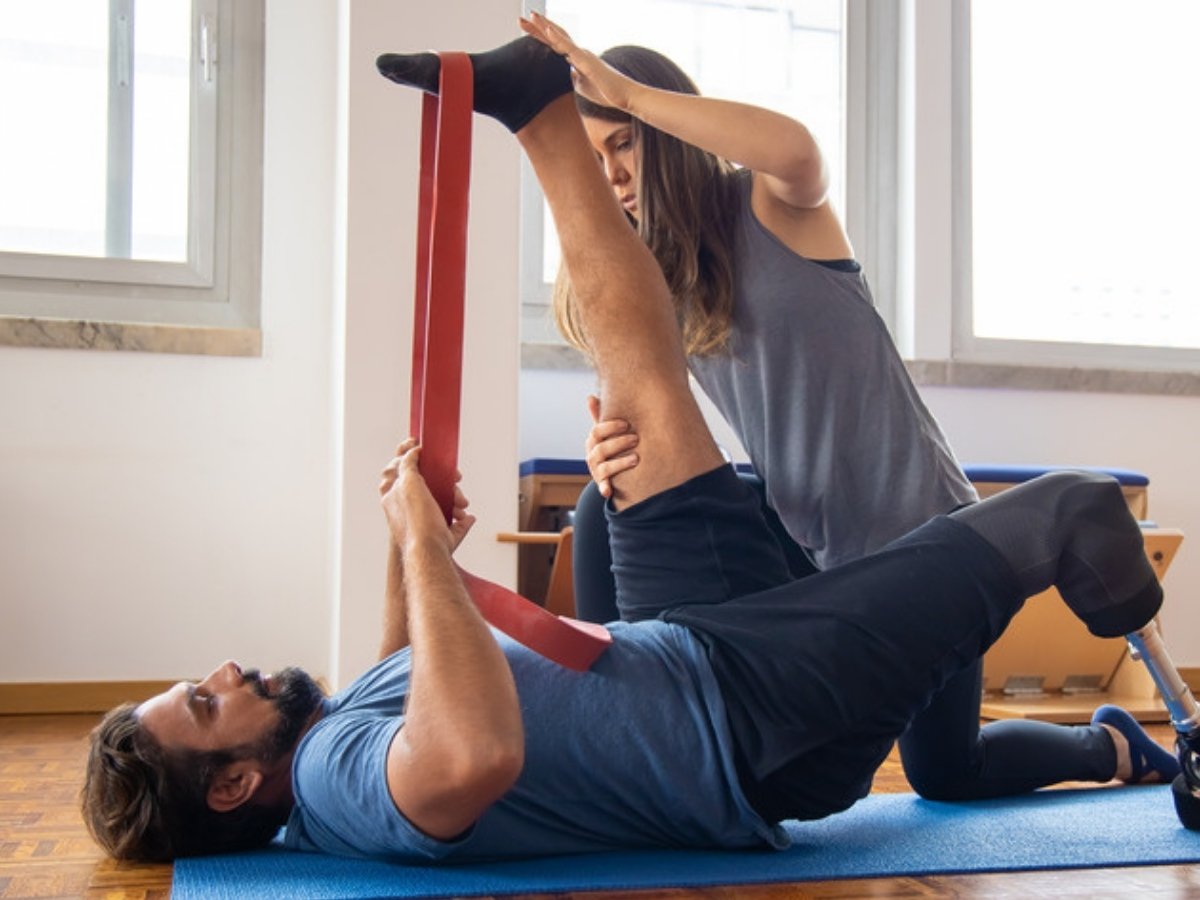
Exercise is the backbone of SIJ rehab. A 2023 systematic review of 8 randomized trials (422 participants) found that therapeutic exercise reduced pain and disability in people with SIJ pain. Exercise and manual therapy gave similar pain relief, but exercise led to greater improvement in disability. The certainty of this evidence was low (Ramírez & Ramírez, 2023). In one small trial of 22 patients, only the group that did exercise still reported less pain at 12 months (Prather et al., 2020).
Your program is built around your symptoms and goals and may include:
- Glute strength: bridges, side-lying leg raises, and side planks, progressing to single-leg bridges
- Trunk control: breathing with gentle deep abdominal and pelvic floor activation, then dead bugs, bird dogs, and carries
- Single-leg control: step-ups, split squats, and single-leg balance, keeping the pelvis level
- Hip hinge and lifting: learning to bend and lift from the hips, progressing to deadlifts and kettlebell work if they suit your goals
Pregnancy and postpartum
Pelvic girdle pain is common in pregnancy, and European guidelines recommend information, reassurance, and individualized exercise (Vleeming et al., 2008). The research here is mixed: exercise programs in pregnancy have shown small benefits in lower-quality studies, and general group exercise classes did not clearly reduce pelvic pain (Liddle & Pennick, 2015; Stuge, 2012). After delivery, a program of specific exercises for trunk and pelvic control had clear, long-lasting benefits in one trial, and this approach is what the guidelines recommend (Stuge, 2012). During pregnancy we keep exercises comfortable and avoid aggressive stretching (Prather et al., 2020). After delivery we rebuild glute, abdominal, and pelvic floor strength, and refer to a pelvic health physiotherapist if you have leaking or heaviness.
Phase 4: Return to Full Activity (Weeks 6 to 12+)
- Gradual return to running or sport, increasing distance, speed, and hills step by step while symptoms stay settled
- Power and impact work, such as hopping and change-of-direction drills
- Lifting and workplace tasks, including lifting a child, car seat, or heavier loads at work
Beyond Physiotherapy: Complementary Care for Sacroiliac Joint Dysfunction
Education, exercise, and gradual loading form the core of SIJ care. Some patients also benefit from other services at our clinic to ease pain and muscle tension so they can stay consistent with rehab. Here is an honest summary of the evidence for each.
How Acupuncture and Dry Needling Can Help
Acupuncture and dry needling use fine needles to reduce pain and ease tight, tender muscles.
- What the evidence shows: we did not find published trials of acupuncture or dry needling for SIJ pain outside of pregnancy. The closest evidence is from pregnancy: a Cochrane review found that acupuncture eased pelvic pain more than usual prenatal care in individual studies, with moderate certainty (Liddle & Pennick, 2015), but a high-quality trial found no clear benefit over sham (placebo) acupuncture (Stuge, 2012). The evidence is limited and indirect
- Where it fits: as a short-term option to ease pain and buttock or low back muscle tension while you build strength
- Safety: generally very safe when done by a trained provider. Minor bruising or soreness is the most common side effect. During pregnancy, some needle points are avoided, so always tell your provider if you are pregnant
How Massage Therapy Can Help
Registered massage therapy focuses on the muscles of the low back, buttock, and hips.
- What the evidence shows: we did not find any trials of massage for SIJ pain specifically. The closest evidence comes from general low back pain, where a Cochrane review of 25 trials found that massage gave short-term pain relief, but the quality of evidence was low to very low and benefits did not last (Furlan et al., 2015). This is indirect evidence
- Where it fits: as a supportive add-on for comfort and muscle tension, especially in pregnancy when some other treatment options are limited
- Safety: very safe. Prenatal massage should be done in a supported side-lying position by a therapist trained in pregnancy care
How Chiropractic and Joint Manipulation Can Help
Chiropractic care for SIJ pain uses mobilization and manipulation of the pelvis and low back.
- What the evidence shows: several small studies have linked SI manipulation with short-term improvements in pain and disability (Prather et al., 2020), and a systematic review found similar pain relief from manual therapy and exercise, though exercise did more for disability (Ramírez & Ramírez, 2023). In pregnancy, manipulation may help low back pain and function, although results for pelvic pain are mixed (Liddle & Pennick, 2015; Stuge, 2012). It does not move the joint back into place (Tullberg et al., 1998)
- Where it fits: as a short-term option to reduce pain and stiffness so you can move and exercise more comfortably
- Safety: generally safe. It is not appropriate with a suspected fracture, infection, or an active inflammatory flare, and techniques are modified in pregnancy
Whichever combination you choose, these treatments share one purpose: calming symptoms so you can keep moving while the long-term fix, a stronger and less sensitive pelvis, takes hold.
When Are Injections or Surgery Considered?
Most people improve without procedures. If pain persists despite a good trial of conservative care, your physician may refer you to a specialist. Options include:
- Diagnostic and therapeutic injections: numbing medication, sometimes with a steroid, placed into the joint under X-ray guidance. Injections can help confirm whether the joint is the pain source (Prather et al., 2020)
- Radiofrequency ablation: a procedure that quiets the small nerves supplying the joint, considered when pain has lasted at least two to three months and a diagnostic injection gave more than 50 percent relief (Prather et al., 2020)
- SI joint fusion surgery: reserved for a small number of carefully selected people with confirmed SIJ pain who have not responded to other treatment
Axial spondyloarthritis is managed by your physician and a rheumatologist, with physiotherapy and regular exercise as part of care.
How Long Will It Take?
Recovery depends on how long you have had symptoms and what you need your body to do. There is little published data on typical recovery times for SIJ pain specifically. Pregnancy-related pelvic girdle pain usually improves soon after delivery, although around 7 percent of women have ongoing problems that can last for years (Stuge, 2012).
In our experience, many people notice less pain and easier daily movement within a few weeks once they understand their pain and start a targeted program. Building enough strength to return to full sport or heavy work usually takes longer, often a few months. Setbacks are common and usually settle with a short reduction in load.
Prevention and Long-Term Management
- Keep your glutes and trunk strong: keep a couple of strength sessions in your week once you are better
- Build training gradually: avoid big jumps in running distance, hills, or lifting load
- Break up long positions: get up and move regularly if you sit for work
- Lift smart: keep loads close to your body and avoid twisting while lifting, especially with car seats and strollers
- Plan ahead for pregnancy: if you had pelvic girdle pain before, start an exercise program early in your next pregnancy
- Act early: if the ache comes back, return to your exercises and a lighter load straight away
Frequently Asked Questions
Is my SI joint out of place?
Almost certainly not. The SI joints are very stable and move only slightly. The feeling of being "out" is real pain and stiffness, but the tests used to judge pelvic position are unreliable (Laslett et al., 2005), and an imaging study found that manipulation did not change joint position (Tullberg et al., 1998). You do not need to be "put back in." You need the area to settle and get stronger.
How do you know it is my SI joint and not my back?
There is no perfect test. We combine your history, a back and hip screen, and a cluster of provocation tests. When at least two of four key tests reproduce your usual pain, SIJ pain is more likely, and when none of them do, it is very unlikely (Laslett et al., 2005). A diagnostic injection is the research standard for confirming it, but it is rarely needed to start treatment.
Should I wear an SI belt?
A belt can make walking and daily tasks more comfortable for some people. It does not realign the pelvis (Prather et al., 2020). We usually suggest it for short-term comfort while you build strength, then gradually wean it off.
Is it safe to exercise with SIJ pain during pregnancy?
Yes, for most people. Individualized exercise is recommended for pelvic girdle pain (Vleeming et al., 2008), although benefits in research have been modest (Stuge, 2012). Check with your obstetrician or midwife if you have pregnancy complications.
Could my back pain be inflammatory arthritis?
It is less common, but worth checking. Back pain lasting more than three months that started before age 40, came on slowly, gets better with exercise but not with rest, and causes pain at night may point to axial spondyloarthritis (Sieper et al., 2009). If you have these features, we will refer you to your physician.
Can acupuncture, massage, or chiropractic replace exercise for SIJ pain?
No. Exercise and gradual loading have the most consistent evidence for reducing disability (Ramírez & Ramírez, 2023). Needling, massage, and manipulation are best used as short-term supports to ease pain and muscle tension while you rebuild.
Our Specialized Approach at Vaughan Physiotherapy Clinic
Honest, evidence-based diagnosis: we use validated pain provocation tests and a low back and hip screen, not unreliable "alignment" checks
Clear explanations: we help you understand your pain so you can move with confidence instead of fear
Short-term relief that serves the plan: manual therapy, belts, and taping used to help you exercise, not as a crutch
Progressive strengthening: glute, trunk, and single-leg work matched to your sport, job, or family life
Pregnancy and postpartum care: adjusted programs for pelvic girdle pain before and after delivery
Safety first: screening for inflammatory back pain, fractures, and other medical causes, with physician referral when needed
Take the First Step Toward Pain-Free Movement
SI joint pain does not have to limit your workouts, your workday, or your time with your family. Our team at Vaughan Physiotherapy Clinic helps patients from Thornhill, Vaughan, North York, Richmond Hill, and surrounding communities move comfortably again with evidence-based, hands-on care.
Book your assessment today:
Phone: 905-669-1221
Location: 398 Steeles Ave W #201, Thornhill, ON L4J 6X3
Online Booking: www.vaughanphysiotherapy.com
References
Furlan AD, Giraldo M, Baskwill A, Irvin E, Imamura M. Massage for low-back pain. Cochrane Database of Systematic Reviews. 2015;(9):CD001929. doi:10.1002/14651858.CD001929.pub3
Laslett M, Aprill CN, McDonald B, Young SB. Diagnosis of sacroiliac joint pain: validity of individual provocation tests and composites of tests. Manual Therapy. 2005;10(3):207-218. doi:10.1016/j.math.2005.01.003
Laslett M, Young SB, Aprill CN, McDonald B. Diagnosing painful sacroiliac joints: a validity study of a McKenzie evaluation and sacroiliac provocation tests. Australian Journal of Physiotherapy. 2003;49(2):89-97.
Liddle SD, Pennick V. Interventions for preventing and treating low-back and pelvic pain during pregnancy. Cochrane Database of Systematic Reviews. 2015;(9):CD001139. doi:10.1002/14651858.CD001139.pub4
Prather H, Bonnette M, Hunt D. Nonoperative treatment options for patients with sacroiliac joint pain. International Journal of Spine Surgery. 2020;14(Suppl 1):S35-S40. doi:10.14444/6082
Ramírez C, Ramírez P. Effect of therapeutic exercise in persons with sacroiliac joint dysfunction: a systematic review and meta-analysis. Revista de la Sociedad Española del Dolor. 2023;30(2):95-108. doi:10.20986/resed.2023.4034/2022
Sieper J, van der Heijde D, Landewé R, et al. New criteria for inflammatory back pain in patients with chronic back pain: a real patient exercise by experts from the Assessment of SpondyloArthritis international Society (ASAS). Annals of the Rheumatic Diseases. 2009;68(6):784-788. doi:10.1136/ard.2008.101501
Stuge B. Pelvic girdle pain: examination, treatment, and the development and implementation of the European guidelines. Journal of the Association of Chartered Physiotherapists in Women's Health. 2012;111:5-12.
Tullberg T, Blomberg S, Branth B, Johnsson R. Manipulation does not alter the position of the sacroiliac joint: a roentgen stereophotogrammetric analysis. Spine. 1998;23(10):1124-1129.
Vleeming A, Albert HB, Östgaard HC, Sturesson B, Stuge B. European guidelines for the diagnosis and treatment of pelvic girdle pain. European Spine Journal. 2008;17(6):794-819. doi:10.1007/s00586-008-0602-4
Disclaimer: This article is for educational purposes only and does not replace professional medical advice. Pain around the sacroiliac joint can have several causes, including lumbar spine problems, hip conditions, stress fractures, infection, and inflammatory arthritis such as axial spondyloarthritis. Always consult a qualified healthcare provider for diagnosis and treatment specific to your condition, especially if you are pregnant or have recently given birth.







