



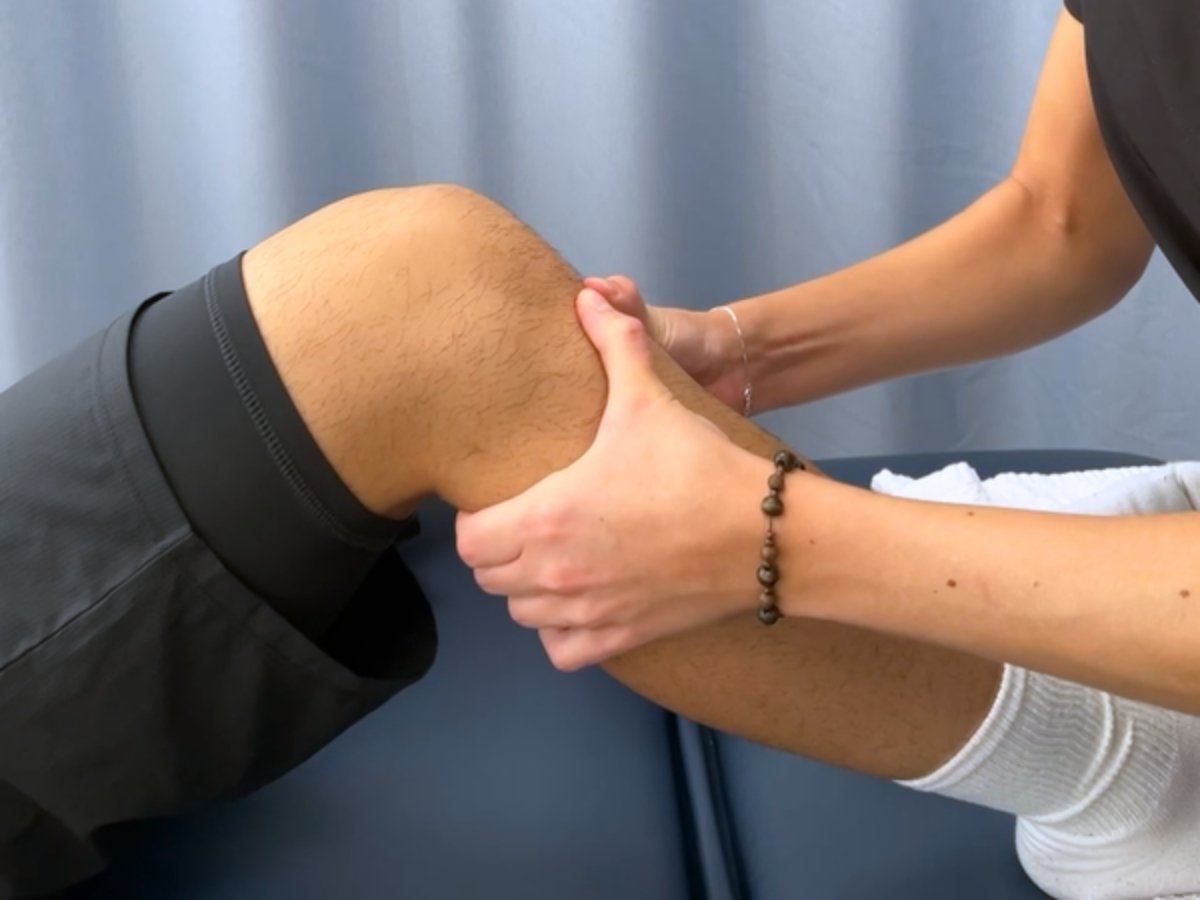
Physiotherapist's hands mobilizing a patient's knee on a treatment table at Vaughan Physiotherapy Clinic

Scar Tissue and Adhesion Management

Care for tight, thick, itchy, or sensitive scars after surgery, injury, or burns to improve comfort, skin mobility, and movement.
Has your scar healed on the outside but still feels tight, thick, itchy, or tender? Does the skin around it pull when you reach, bend, or stand up straight, or does a nearby joint feel stiffer than it did before your surgery or injury? You are not alone, and there are practical, evidence-informed ways to make a scar more comfortable and easier to move with.

At Vaughan Physiotherapy Clinic, we help people manage scars after surgery, injuries, burns, and Caesarean sections. We work within your surgeon's healing timeline, then focus on what matters day to day: less sensitivity, softer and more mobile skin, and full movement in the joints and muscles around the scar.

Here is what scar tissue and "adhesions" really are, how to tell a normal healing scar from one that needs attention, what else can cause similar symptoms, and what the research honestly says about scar care.

What Is Scar Tissue and Adhesion Management?

A scar is the body's way of repairing skin and deeper tissue after a cut, surgical incision, burn, or injury. The repair tissue is mostly collagen, laid down quickly to close the wound. It is strong enough to do its job, but it is usually less stretchy than the skin around it, and it can feel firmer, look different in colour, and be more sensitive for a while.

Scars change for a long time after the wound has closed. Early scars are often pink or red, raised, and itchy. Over the following months, most scars gradually become flatter, paler, and softer as the collagen is remodelled. That is why scar care is usually a matter of months, not days.

Scar management is the group of treatments used to help this process along: keeping the scar hydrated and protected, reducing itch and sensitivity, and keeping the skin and the tissues underneath moving freely. Expert guidelines describe early measures such as reducing tension on the scar, hydration, and sun protection, with silicone products as the main first-line option for preventing and treating raised scars (Monstrey et al., 2014).

Types of Scars

  • Normal (mature) scars: flat, pale lines that may still feel a little different from the surrounding skin but do not limit movement
  • Hypertrophic scars: raised, red, and often itchy scars that stay within the edges of the original wound. They are common after burns and wounds that took a long time to heal, and they often improve slowly over time
  • Keloid scars: scars that grow beyond the edges of the original wound and keep enlarging. Keloids need medical assessment, usually by a dermatologist or plastic surgeon
  • Contracture scars: tight scars, often after burns or scars that cross a joint, that pull the skin and limit movement
  • Tethered or "stuck" scars: scars that feel anchored to the layers underneath, so the skin dimples or pulls when you move

What Does "Adhesion" Mean?

In everyday clinic language, an "adhesion" usually means a scar that does not glide freely over the tissue beneath it. Inside the body, surgeons also use the word for bands of scar tissue between internal organs, for example after abdominal surgery. You may hear claims that hands-on treatment can "break up" adhesions. That has not been shown in good-quality research. A more honest way to describe what physiotherapy can offer is better mobility, less sensitivity, and more comfort around the scar, along with better movement in the joints and muscles nearby.

Recognizing the Symptoms

Scars affect people differently. Common symptoms include:

  • Tightness or pulling when you stretch, reach, bend, or stand tall
  • Itching, which is very common in raised and burn scars
  • Tenderness or sensitivity to touch, clothing, or waistbands
  • Numbness or altered sensation around the scar, since small skin nerves are cut during surgery and recover slowly
  • A scar that is raised, thick, firm, or red
  • Reduced movement in a nearby joint, for example a knee, shoulder, or hand after surgery
  • Skin that dimples or puckers when you move, suggesting the scar is tethered
  • Worry about how the scar looks, which is a real and valid part of living with a scar

What Makes It Worse?

  • Tension across the scar: scars over joints, the chest, shoulders, or the abdomen are under more stretch and are more likely to thicken. Reducing skin tension is one of the basic prevention measures in scar guidelines (Monstrey et al., 2014)
  • Slow wound healing: wounds that stay open longer, or that become infected, are more likely to form raised scars
  • Burns: deeper burns carry a higher risk of hypertrophic scarring and contracture
  • Sun exposure: UV light can darken a young scar, so sun protection is recommended in the early months (Monstrey et al., 2014)
  • Avoiding movement: holding a joint still for a long time out of fear can let the skin and joint stiffen
  • Personal risk factors: some people and families are more prone to raised or keloid scars

What Else Could It Be?

Pain or stiffness near a scar is not always coming from the scar itself. Part of our assessment is checking for other causes:

  • Joint stiffness: after surgery or immobilization, the joint capsule and muscles can tighten, independent of the skin scar
  • Nerve irritation: a small nerve caught in or near the scar can cause burning, shooting, or electric pain, or a very sensitive spot
  • Hernia: a bulge near an abdominal scar that grows when you cough or strain may be an incisional hernia
  • Persistent post-surgical pain: pain that continues well beyond normal healing and is out of proportion to how the scar looks
  • Muscle weakness or guarding: muscles near the surgery may be weak or tense, causing aching and tightness
  • Lymphedema or swelling: particularly after cancer surgery that involved lymph nodes
  • Complex regional pain syndrome: rare, but marked pain, colour change, swelling, and temperature change in a limb after injury or surgery needs prompt medical attention

When to See a Doctor First

Contact your surgeon or family physician promptly, or go to urgent care, if you have:

  • Signs of infection: spreading redness, warmth, increasing pain, pus or cloudy drainage, a bad smell, or fever
  • A wound that opens or separates, or a scab that is not healing
  • A scar that keeps growing beyond the original wound, which may be a keloid and needs medical assessment
  • Signs of a blood clot (DVT) after surgery: new calf or leg pain, swelling, warmth, or redness, especially in one leg. Sudden shortness of breath or chest pain needs emergency care right away
  • A new lump, bulge, or change in the scar, including bleeding, a sore that will not heal, or a change in colour or texture years later
  • Severe or worsening pain, or numbness and weakness that are spreading

Our physiotherapists check for these signs at your first visit, confirm your surgeon's restrictions, and will contact your physician or surgical team if anything needs a closer look.

Related reading: You may also find our guides to fascial adhesions, C-section recovery and post-operative knee rehab helpful.

Start Your Journey to 

‍Better Health Today

Recover faster, move better, and feel stronger with expert physiotherapy. Our team is here to guide you every step of the way.

Why Physiotherapy Is Essential

A scar is not just a skin problem. A tight or sensitive scar can change how you move, and moving less can then stiffen the joints and weaken the muscles around it. After surgery, the scar is often only one part of the recovery: the joint, muscles, and confidence to use that part of the body all need rebuilding too.

Research on scar treatment is still developing, and much of it is small or of low quality. Even so, a systematic review of 19 controlled trials found that physical scar treatments such as massage, silicone, and some laser and shockwave therapies were linked with improvements in scar pliability, itch, pain, colour, and thickness, although the studies were small and their results varied a lot (Deflorin et al., 2020). A 2025 scoping review of 92 studies came to a similar view: physical approaches are widely used and may help, but most of the evidence comes from small studies and expert opinion (Di Serio et al., 2025).

Physiotherapy addresses the parts of scar recovery that matter most in daily life:

  • Timing: knowing what is safe at each stage of healing, and following your surgeon's restrictions
  • Sensitivity: gradually helping an over-sensitive scar tolerate touch, clothing, and pressure
  • Skin and tissue mobility: helping the scar glide and stretch as you move
  • Joint range and strength: restoring movement and strength in the area around the scar
  • Self-management: teaching you how to care for your scar at home over the months it takes to mature

Your Treatment Plan at Vaughan Physiotherapy Clinic

Phase 1: Assessment and Protecting Healing

Your first visit focuses on where you are in the healing process and what is limiting you. A full assessment includes:

  • History: the type of surgery or injury, the date, any complications such as infection or slow healing, and your surgeon's instructions
  • Wound and scar check: whether the wound is fully closed, and the scar's colour, height, firmness, and sensitivity
  • Scar mobility: how freely the scar moves over the tissue underneath, and whether it pulls or dimples when you move
  • Joint range and strength: movement and strength of the nearby joints and muscles, compared with the other side
  • Sensation: areas of numbness, tingling, or very sensitive skin
  • Function: what you are finding hard, such as reaching overhead, kneeling, bending, lifting, or returning to sport

An important rule: we do not massage or stretch a scar until the wound is fully closed and your surgeon or physician has cleared it. Guidance on scar massage is to start only once the healed skin can tolerate friction (Di Serio et al., 2025). Before that point, physiotherapy focuses on what your surgical team allows, such as:

  • Gentle movement of nearby joints within your surgeon's limits, to limit stiffness
  • Swelling management through positioning, gentle activity, and advice
  • Breathing, walking, and circulation exercises after surgery, as appropriate
  • Education on what is normal in a healing wound and what needs a call to your surgeon

Phase 2: Early Scar Care Once the Wound Has Healed

Once your wound has closed and you have been cleared, we start working directly with the scar. The aims at this stage are comfort, hydration, and keeping the scar mobile.

Gentle scar massage and mobility work
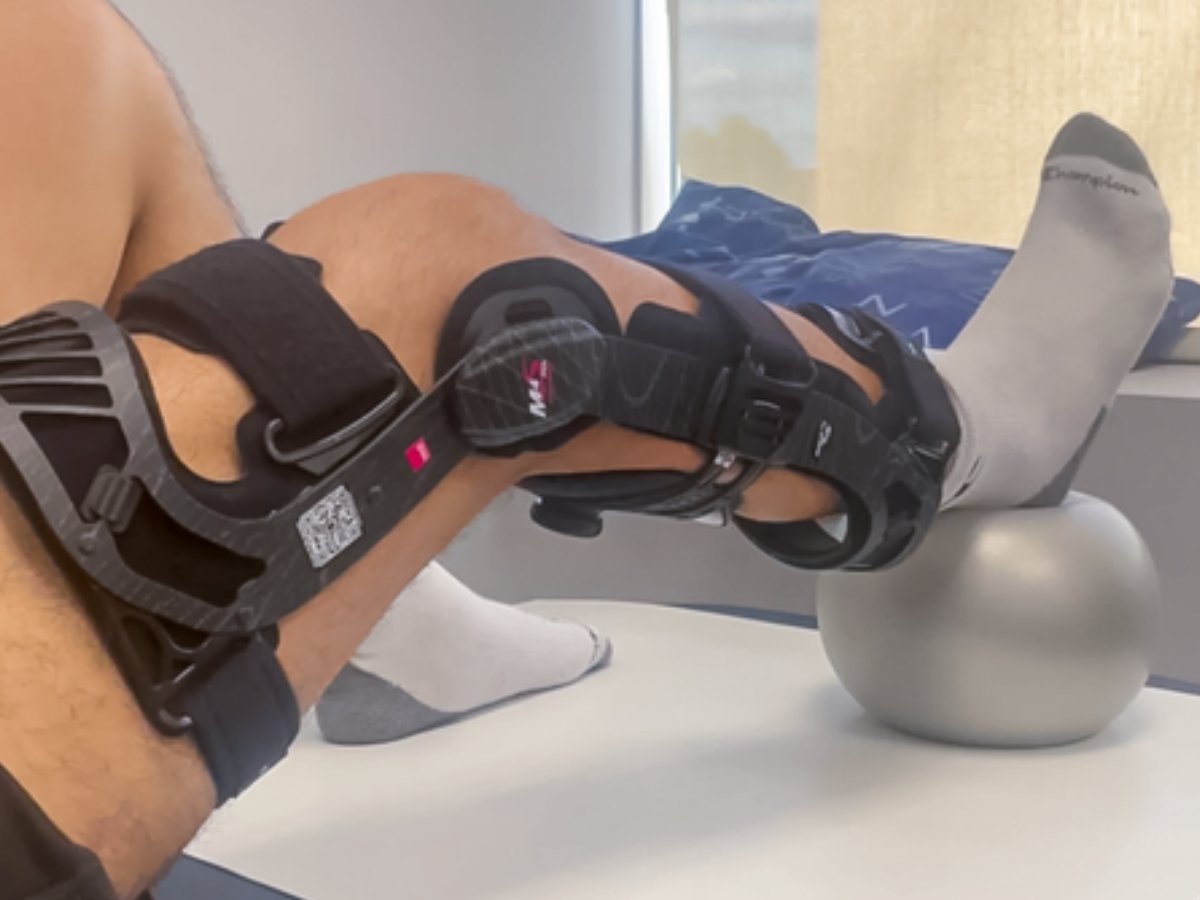
Patient's leg in a hinged post-operative knee brace resting on a ball during early rehab at Vaughan Physiotherapy Clinic
After surgery, early rehab protects the healing incision while restoring movement, and gentle scar care begins once the wound has closed and been cleared.

Scar massage is one of the most common scar treatments. Early research points to possible benefits, but the studies so far are small, mixed and of low quality, so this is an area where research is still growing:

  • A systematic review of eight studies in burn scars found early signs that massage may help with pain, pliability, thickness, and scar height, but the authors rated the evidence as poor quality (Ault et al., 2018)
  • Another review of nine studies looking at massage, stretching, and splinting for burn scars found no strong evidence that these improve raised scars, with inconsistent results and measures between studies. In several trials, massage started roughly three months after the injury (Zhang et al., 2017)
  • The 2025 scoping review describes massage as possibly helpful for thickness, pliability, pain, itch, and movement, but notes that no specific technique has been validated (Di Serio et al., 2025)

Because of this, we use scar massage for what it can reasonably offer: helping the skin move more freely, reducing sensitivity, and making the area more comfortable to touch and use. We do not claim it "breaks up" scar tissue. Your program may include:

  • Gentle circles and strokes along and across the scar, using a plain moisturizer
  • Skin rolling or lifting once the scar is less sensitive
  • Desensitization: touching the scar and nearby skin with different textures, such as a soft cloth, then a towel, to settle a hypersensitive area
  • Short, regular sessions at home, usually a few minutes at a time, adjusted to how your scar responds

Silicone gel or sheeting

For scars at risk of becoming raised, or scars that are already raised, silicone is the most widely recommended non-invasive option. Expert guidelines describe it as the first-line choice for preventing and treating raised scars (Monstrey et al., 2014). A Cochrane review of 20 trials found that silicone sheeting lowered the rate of raised scarring in people at high risk, and improved thickness and colour in existing scars, but the studies were of poor quality, so the results are uncertain (O'Brien & Jones, 2013). Silicone sheets are usually worn 12 to 24 hours a day, and gel applied about twice a day, for at least two months (Di Serio et al., 2025). We can show you how to use them safely, and we follow your surgeon's or dermatologist's advice.

Sun protection and skin care

Keeping a young scar covered or protected from the sun, and keeping the skin moisturized, are simple steps recommended in scar guidelines (Monstrey et al., 2014).

Phase 3: Restoring Movement and Strength

As the scar becomes less sensitive and more mobile, the focus shifts to the joints and muscles around it.

  • Active stretching: slow, sustained stretches that gently lengthen the skin and tissue across the scar, especially when a scar crosses a joint
  • Joint mobilization: hands-on techniques to restore movement in stiff joints near the scar
  • Soft tissue work: for tight muscles that have been guarding the area
  • Progressive strengthening: targeted exercises for the muscles affected by surgery or injury, for example the abdominal wall after abdominal surgery, the shoulder after breast surgery, or the knee after knee surgery
  • Pressure garments or taping: in selected cases, such as larger burn scars, and usually in coordination with your medical team (Monstrey et al., 2014)

Phase 4: Return to Full Activity and Long-Term Care

  • Return to work, sport, and lifting, built up gradually and in line with your surgeon's timeline
  • Exercises that load the area in real-life positions, such as reaching, twisting, kneeling, or lifting
  • A simple home routine of scar care and stretching you can continue while the scar matures

Beyond Physiotherapy: Complementary Care for Scar Tissue and Adhesion Management

Protecting the healing wound, then scar care, movement, and strengthening, are the core of scar management. Some patients also use other services at our clinic to help with comfort and tightness. Here is an honest summary of what the evidence does and does not show.

How Acupuncture and Dry Needling Can Help

Acupuncture and dry needling use fine needles, sometimes placed in or around a scar.

  • What the evidence shows: a 2024 systematic review found only 11 studies, most of them single case reports, with just two randomized trials. Many reported less scar pain, but the authors concluded that the evidence is not enough to show that needling works for scars (Chmielewska et al., 2024)
  • Where it fits: as an optional add-on for a painful or tight scar, or for tight muscles around the area, once the scar is fully healed. It is not a replacement for scar care and exercise
  • Safety: few studies tracked side effects, so safety data for needling into scars are limited (Chmielewska et al., 2024). Needling is never done into an open, infected, or fresh wound

How Massage Therapy Can Help

Registered massage therapy can include scar massage and work on the muscles and tissues around the scar.

  • What the evidence shows: reviews of scar massage, mostly in burn scars, show possible benefits for pliability, itch, pain, and thickness, but the studies are small, inconsistent, and of low quality (Ault et al., 2018; Zhang et al., 2017; Deflorin et al., 2020)
  • Where it fits: for comfort, sensitivity, and mobility around a healed scar, and for tight or guarded muscles nearby. It works best alongside a home program and exercise
  • Safety: very safe once the wound is closed and cleared. Massage should stop if the scar breaks down, blisters, or becomes red and hot

How Chiropractic and Joint Manipulation Can Help

Chiropractic care uses joint mobilization and manipulation, mainly to restore joint movement.

  • What the evidence shows: we did not find published trials of chiropractic adjustment for scars or adhesions. Joint mobilization may help stiff joints near a scar, but this is indirect and has not been tested specifically in scar care
  • Where it fits: for joint or spinal stiffness that has developed alongside a scar, for example after a long period of reduced movement, combined with exercise
  • Safety: manipulation near a recent surgical site must respect your surgeon's restrictions and is not appropriate until healing is well established

Whichever combination you choose, these treatments share one goal: making the scar and surrounding area comfortable enough that you keep moving, stretching, and strengthening while the scar matures.

Medical and Surgical Scar Treatments

Some scars need treatment beyond physiotherapy. Guidelines describe a step-by-step approach, with simple measures and silicone first, and more specialized options for high-risk patients or scars that do not respond (Monstrey et al., 2014). Depending on the scar, your physician, dermatologist, or plastic surgeon may consider:

  • Corticosteroid injections: commonly used for raised hypertrophic scars and keloids to flatten and soften them
  • Laser treatment: some lasers can reduce redness and improve texture and thickness. Lasers were among the physical treatments included in the 2020 review of scar management (Deflorin et al., 2020)
  • Scar revision surgery: usually reserved for mature scars that remain problematic, and often combined with other treatments afterward (Monstrey et al., 2014)
  • Specialist keloid care: keloids can come back after treatment and need a medical plan

If your scar is growing, very thick, or affecting your movement or wellbeing despite good conservative care, we will recommend you discuss these options with your physician. Physiotherapy often continues alongside medical treatment, and after any scar revision we follow the surgeon's protocol again from the start.

How Long Will It Take?

Scars keep changing for many months after the wound closes, and raised scars can take longer to settle. Treatment programs in the research reflect this: silicone is usually used for at least two months (Di Serio et al., 2025), and many massage trials ran for about three months (Zhang et al., 2017).

In our experience, many people notice that the scar feels less sensitive and moves more easily within a few weeks of starting regular scar care, while joint movement and strength often take longer to rebuild, depending on the surgery or injury. A scar will not disappear, but most people can expect it to become softer, flatter, and less noticeable, with movement that feels normal again. We cannot promise a specific outcome or timeline, and we will review your progress regularly.

Prevention and Long-Term Management

  • Follow your surgeon's wound care advice carefully in the first weeks, and report signs of infection early
  • Start scar care once you are cleared: gentle massage and moisturizing once the wound has closed
  • Use silicone if advised: especially if you or your family tend to form raised scars
  • Protect the scar from the sun while it is still pink or red
  • Keep moving: regular, gentle movement of the joints near the scar helps prevent stiffness
  • Avoid heavy strain too early: respect lifting and activity limits after surgery to reduce tension on the healing scar

Frequently Asked Questions

When can I start massaging my scar?

Only after the wound is fully closed, with no scabs, drainage, or open areas, and your surgeon or physician has cleared you. For many surgical incisions this is a few weeks after surgery, but it depends on the operation and how you are healing. We will confirm with you before starting.

Can physiotherapy break up scar tissue or adhesions?

There is no good evidence that hands-on treatment physically breaks up scar tissue or internal adhesions. What scar care and exercise can do is help the skin and tissues move more freely, reduce sensitivity, and restore movement and strength, which is what most people want.

Does silicone gel actually work?

Silicone is the most commonly recommended non-invasive treatment for raised scars (Monstrey et al., 2014). A Cochrane review found it may lower the risk of raised scars in high-risk people and improve thickness and colour, but the studies were weak (O'Brien & Jones, 2013). It is low risk and worth considering, particularly if you tend to form raised scars.

Is it too late to treat an old scar?

Not necessarily. Older scars change more slowly, but many people with older scars still gain movement, comfort, and confidence with targeted stretching, scar mobility work, and strengthening. Raised or keloid scars may need medical treatment as well.

My scar is numb. Will feeling come back?

Small skin nerves are cut during surgery, so some numbness around a scar is common. Feeling often improves slowly over months, though some areas may stay a little different. Numbness that spreads, or comes with weakness, should be checked.

Can acupuncture, massage, or chiropractic replace scar care and exercise?

No. Following your surgeon's timeline, regular scar care, silicone when appropriate, and stretching and strengthening are the foundation. Needling, massage therapy, and joint mobilization are optional extras that may help with comfort and tightness, and the evidence for them in scars is limited.

Our Specialized Approach at Vaughan Physiotherapy Clinic

Surgeon-aligned care: we follow your surgical team's healing timeline and restrictions at every stage

Thorough assessment: we look at the scar, the nearby joints and muscles, sensation, and how you are actually moving

Honest, evidence-informed scar care: scar mobility, desensitization, and silicone guidance, without overpromising

Movement and strength first: restoring the range and strength you need for work, sport, and daily life

Integrated care: physiotherapy, massage therapy, acupuncture, and chiropractic under one roof when they add value

Safety first: screening for infection, wound problems, keloids, and blood clots, with physician referral when needed

Take the First Step Toward a More Comfortable, Mobile Scar

A tight, sensitive, or stiff scar does not have to hold back your recovery. Our team at Vaughan Physiotherapy Clinic helps patients from Thornhill, Vaughan, North York, Richmond Hill, and surrounding communities recover after surgery and injury with evidence-based, hands-on care.

Book your assessment today:

Phone: 905-669-1221

Location: 398 Steeles Ave W #201, Thornhill, ON L4J 6X3

Online Booking: www.vaughanphysiotherapy.com

References

Ault P, Plaza A, Paratz J, et al. Scar massage for hypertrophic burns scarring: a systematic review. Burns. 2018. doi:10.1016/j.burns.2017.05.006

Chmielewska D, Malá J, Opala-Berdzik A, et al. Acupuncture and dry needling for physical therapy of scar: a systematic review. BMC Complementary Medicine and Therapies. 2024;24:14. doi:10.1186/s12906-023-04301-4

Deflorin C, Hohenauer E, Stoop R, van Daele U, Clijsen R, Taeymans J. Physical management of scar tissue: a systematic review and meta-analysis. Journal of Alternative and Complementary Medicine. 2020;26(10):854-865. doi:10.1089/acm.2020.0109

Di Serio S, Congiu M, Minnucci S, Scalise V, Mourad F. Current physical therapy for skin scar management: a scoping review. Journal of Clinical Medicine. 2025;14(17):5920. doi:10.3390/jcm14175920

Monstrey S, Middelkoop E, Vranckx JJ, et al. Updated scar management practical guidelines: non-invasive and invasive measures. Journal of Plastic, Reconstructive & Aesthetic Surgery. 2014;67(8):1017-1025. doi:10.1016/j.bjps.2014.04.011

O'Brien L, Jones DJ. Silicone gel sheeting for preventing and treating hypertrophic and keloid scars. Cochrane Database of Systematic Reviews. 2013;(9):CD003826. doi:10.1002/14651858.CD003826.pub3

Zhang YT, Li-Tsang CWP, Au RKC. A systematic review on the effect of mechanical stretch on hypertrophic scars after burn injuries. Hong Kong Journal of Occupational Therapy. 2017;29(1):1-9. doi:10.1016/j.hkjot.2016.11.001

Disclaimer: This article is for educational purposes only and does not replace professional medical advice. Scar care should always follow your surgeon's or physician's instructions about wound healing. Signs of infection, a wound that opens, a growing scar, or symptoms of a blood clot need prompt medical attention. Always consult a qualified healthcare provider for diagnosis and treatment specific to your situation.
Team

Condition guide

Scar Tissue and Adhesion Management

Care for tight, thick, itchy, or sensitive scars after surgery, injury, or burns to improve comfort, skin mobility, and movement.

Physiotherapist's hands mobilizing a patient's knee on a treatment table at Vaughan Physiotherapy ClinicScar Tissue and Adhesion Management

Has your scar healed on the outside but still feels tight, thick, itchy, or tender? Does the skin around it pull when you reach, bend, or stand up straight, or does a nearby joint feel stiffer than it did before your surgery or injury? You are not alone, and there are practical, evidence-informed ways to make a scar more comfortable and easier to move with.

At Vaughan Physiotherapy Clinic, we help people manage scars after surgery, injuries, burns, and Caesarean sections. We work within your surgeon's healing timeline, then focus on what matters day to day: less sensitivity, softer and more mobile skin, and full movement in the joints and muscles around the scar.

Here is what scar tissue and "adhesions" really are, how to tell a normal healing scar from one that needs attention, what else can cause similar symptoms, and what the research honestly says about scar care.

What Is Scar Tissue and Adhesion Management?

A scar is the body's way of repairing skin and deeper tissue after a cut, surgical incision, burn, or injury. The repair tissue is mostly collagen, laid down quickly to close the wound. It is strong enough to do its job, but it is usually less stretchy than the skin around it, and it can feel firmer, look different in colour, and be more sensitive for a while.

Scars change for a long time after the wound has closed. Early scars are often pink or red, raised, and itchy. Over the following months, most scars gradually become flatter, paler, and softer as the collagen is remodelled. That is why scar care is usually a matter of months, not days.

Scar management is the group of treatments used to help this process along: keeping the scar hydrated and protected, reducing itch and sensitivity, and keeping the skin and the tissues underneath moving freely. Expert guidelines describe early measures such as reducing tension on the scar, hydration, and sun protection, with silicone products as the main first-line option for preventing and treating raised scars (Monstrey et al., 2014).

Types of Scars

  • Normal (mature) scars: flat, pale lines that may still feel a little different from the surrounding skin but do not limit movement
  • Hypertrophic scars: raised, red, and often itchy scars that stay within the edges of the original wound. They are common after burns and wounds that took a long time to heal, and they often improve slowly over time
  • Keloid scars: scars that grow beyond the edges of the original wound and keep enlarging. Keloids need medical assessment, usually by a dermatologist or plastic surgeon
  • Contracture scars: tight scars, often after burns or scars that cross a joint, that pull the skin and limit movement
  • Tethered or "stuck" scars: scars that feel anchored to the layers underneath, so the skin dimples or pulls when you move

What Does "Adhesion" Mean?

In everyday clinic language, an "adhesion" usually means a scar that does not glide freely over the tissue beneath it. Inside the body, surgeons also use the word for bands of scar tissue between internal organs, for example after abdominal surgery. You may hear claims that hands-on treatment can "break up" adhesions. That has not been shown in good-quality research. A more honest way to describe what physiotherapy can offer is better mobility, less sensitivity, and more comfort around the scar, along with better movement in the joints and muscles nearby.

Recognizing the Symptoms

Scars affect people differently. Common symptoms include:

  • Tightness or pulling when you stretch, reach, bend, or stand tall
  • Itching, which is very common in raised and burn scars
  • Tenderness or sensitivity to touch, clothing, or waistbands
  • Numbness or altered sensation around the scar, since small skin nerves are cut during surgery and recover slowly
  • A scar that is raised, thick, firm, or red
  • Reduced movement in a nearby joint, for example a knee, shoulder, or hand after surgery
  • Skin that dimples or puckers when you move, suggesting the scar is tethered
  • Worry about how the scar looks, which is a real and valid part of living with a scar

What Makes It Worse?

  • Tension across the scar: scars over joints, the chest, shoulders, or the abdomen are under more stretch and are more likely to thicken. Reducing skin tension is one of the basic prevention measures in scar guidelines (Monstrey et al., 2014)
  • Slow wound healing: wounds that stay open longer, or that become infected, are more likely to form raised scars
  • Burns: deeper burns carry a higher risk of hypertrophic scarring and contracture
  • Sun exposure: UV light can darken a young scar, so sun protection is recommended in the early months (Monstrey et al., 2014)
  • Avoiding movement: holding a joint still for a long time out of fear can let the skin and joint stiffen
  • Personal risk factors: some people and families are more prone to raised or keloid scars

What Else Could It Be?

Pain or stiffness near a scar is not always coming from the scar itself. Part of our assessment is checking for other causes:

  • Joint stiffness: after surgery or immobilization, the joint capsule and muscles can tighten, independent of the skin scar
  • Nerve irritation: a small nerve caught in or near the scar can cause burning, shooting, or electric pain, or a very sensitive spot
  • Hernia: a bulge near an abdominal scar that grows when you cough or strain may be an incisional hernia
  • Persistent post-surgical pain: pain that continues well beyond normal healing and is out of proportion to how the scar looks
  • Muscle weakness or guarding: muscles near the surgery may be weak or tense, causing aching and tightness
  • Lymphedema or swelling: particularly after cancer surgery that involved lymph nodes
  • Complex regional pain syndrome: rare, but marked pain, colour change, swelling, and temperature change in a limb after injury or surgery needs prompt medical attention

When to See a Doctor First

Contact your surgeon or family physician promptly, or go to urgent care, if you have:

  • Signs of infection: spreading redness, warmth, increasing pain, pus or cloudy drainage, a bad smell, or fever
  • A wound that opens or separates, or a scab that is not healing
  • A scar that keeps growing beyond the original wound, which may be a keloid and needs medical assessment
  • Signs of a blood clot (DVT) after surgery: new calf or leg pain, swelling, warmth, or redness, especially in one leg. Sudden shortness of breath or chest pain needs emergency care right away
  • A new lump, bulge, or change in the scar, including bleeding, a sore that will not heal, or a change in colour or texture years later
  • Severe or worsening pain, or numbness and weakness that are spreading

Our physiotherapists check for these signs at your first visit, confirm your surgeon's restrictions, and will contact your physician or surgical team if anything needs a closer look.

Related reading: You may also find our guides to fascial adhesions, C-section recovery and post-operative knee rehab helpful.

Why Physiotherapy Is Essential

A scar is not just a skin problem. A tight or sensitive scar can change how you move, and moving less can then stiffen the joints and weaken the muscles around it. After surgery, the scar is often only one part of the recovery: the joint, muscles, and confidence to use that part of the body all need rebuilding too.

Research on scar treatment is still developing, and much of it is small or of low quality. Even so, a systematic review of 19 controlled trials found that physical scar treatments such as massage, silicone, and some laser and shockwave therapies were linked with improvements in scar pliability, itch, pain, colour, and thickness, although the studies were small and their results varied a lot (Deflorin et al., 2020). A 2025 scoping review of 92 studies came to a similar view: physical approaches are widely used and may help, but most of the evidence comes from small studies and expert opinion (Di Serio et al., 2025).

Physiotherapy addresses the parts of scar recovery that matter most in daily life:

  • Timing: knowing what is safe at each stage of healing, and following your surgeon's restrictions
  • Sensitivity: gradually helping an over-sensitive scar tolerate touch, clothing, and pressure
  • Skin and tissue mobility: helping the scar glide and stretch as you move
  • Joint range and strength: restoring movement and strength in the area around the scar
  • Self-management: teaching you how to care for your scar at home over the months it takes to mature

Your Treatment Plan at Vaughan Physiotherapy Clinic

Phase 1: Assessment and Protecting Healing

Your first visit focuses on where you are in the healing process and what is limiting you. A full assessment includes:

  • History: the type of surgery or injury, the date, any complications such as infection or slow healing, and your surgeon's instructions
  • Wound and scar check: whether the wound is fully closed, and the scar's colour, height, firmness, and sensitivity
  • Scar mobility: how freely the scar moves over the tissue underneath, and whether it pulls or dimples when you move
  • Joint range and strength: movement and strength of the nearby joints and muscles, compared with the other side
  • Sensation: areas of numbness, tingling, or very sensitive skin
  • Function: what you are finding hard, such as reaching overhead, kneeling, bending, lifting, or returning to sport

An important rule: we do not massage or stretch a scar until the wound is fully closed and your surgeon or physician has cleared it. Guidance on scar massage is to start only once the healed skin can tolerate friction (Di Serio et al., 2025). Before that point, physiotherapy focuses on what your surgical team allows, such as:

  • Gentle movement of nearby joints within your surgeon's limits, to limit stiffness
  • Swelling management through positioning, gentle activity, and advice
  • Breathing, walking, and circulation exercises after surgery, as appropriate
  • Education on what is normal in a healing wound and what needs a call to your surgeon

Phase 2: Early Scar Care Once the Wound Has Healed

Once your wound has closed and you have been cleared, we start working directly with the scar. The aims at this stage are comfort, hydration, and keeping the scar mobile.

Gentle scar massage and mobility work

Patient's leg in a hinged post-operative knee brace resting on a ball during early rehab at Vaughan Physiotherapy Clinic
After surgery, early rehab protects the healing incision while restoring movement, and gentle scar care begins once the wound has closed and been cleared.

Scar massage is one of the most common scar treatments. Early research points to possible benefits, but the studies so far are small, mixed and of low quality, so this is an area where research is still growing:

  • A systematic review of eight studies in burn scars found early signs that massage may help with pain, pliability, thickness, and scar height, but the authors rated the evidence as poor quality (Ault et al., 2018)
  • Another review of nine studies looking at massage, stretching, and splinting for burn scars found no strong evidence that these improve raised scars, with inconsistent results and measures between studies. In several trials, massage started roughly three months after the injury (Zhang et al., 2017)
  • The 2025 scoping review describes massage as possibly helpful for thickness, pliability, pain, itch, and movement, but notes that no specific technique has been validated (Di Serio et al., 2025)

Because of this, we use scar massage for what it can reasonably offer: helping the skin move more freely, reducing sensitivity, and making the area more comfortable to touch and use. We do not claim it "breaks up" scar tissue. Your program may include:

  • Gentle circles and strokes along and across the scar, using a plain moisturizer
  • Skin rolling or lifting once the scar is less sensitive
  • Desensitization: touching the scar and nearby skin with different textures, such as a soft cloth, then a towel, to settle a hypersensitive area
  • Short, regular sessions at home, usually a few minutes at a time, adjusted to how your scar responds

Silicone gel or sheeting

For scars at risk of becoming raised, or scars that are already raised, silicone is the most widely recommended non-invasive option. Expert guidelines describe it as the first-line choice for preventing and treating raised scars (Monstrey et al., 2014). A Cochrane review of 20 trials found that silicone sheeting lowered the rate of raised scarring in people at high risk, and improved thickness and colour in existing scars, but the studies were of poor quality, so the results are uncertain (O'Brien & Jones, 2013). Silicone sheets are usually worn 12 to 24 hours a day, and gel applied about twice a day, for at least two months (Di Serio et al., 2025). We can show you how to use them safely, and we follow your surgeon's or dermatologist's advice.

Sun protection and skin care

Keeping a young scar covered or protected from the sun, and keeping the skin moisturized, are simple steps recommended in scar guidelines (Monstrey et al., 2014).

Phase 3: Restoring Movement and Strength

As the scar becomes less sensitive and more mobile, the focus shifts to the joints and muscles around it.

  • Active stretching: slow, sustained stretches that gently lengthen the skin and tissue across the scar, especially when a scar crosses a joint
  • Joint mobilization: hands-on techniques to restore movement in stiff joints near the scar
  • Soft tissue work: for tight muscles that have been guarding the area
  • Progressive strengthening: targeted exercises for the muscles affected by surgery or injury, for example the abdominal wall after abdominal surgery, the shoulder after breast surgery, or the knee after knee surgery
  • Pressure garments or taping: in selected cases, such as larger burn scars, and usually in coordination with your medical team (Monstrey et al., 2014)

Phase 4: Return to Full Activity and Long-Term Care

  • Return to work, sport, and lifting, built up gradually and in line with your surgeon's timeline
  • Exercises that load the area in real-life positions, such as reaching, twisting, kneeling, or lifting
  • A simple home routine of scar care and stretching you can continue while the scar matures

Beyond Physiotherapy: Complementary Care for Scar Tissue and Adhesion Management

Protecting the healing wound, then scar care, movement, and strengthening, are the core of scar management. Some patients also use other services at our clinic to help with comfort and tightness. Here is an honest summary of what the evidence does and does not show.

How Acupuncture and Dry Needling Can Help

Acupuncture and dry needling use fine needles, sometimes placed in or around a scar.

  • What the evidence shows: a 2024 systematic review found only 11 studies, most of them single case reports, with just two randomized trials. Many reported less scar pain, but the authors concluded that the evidence is not enough to show that needling works for scars (Chmielewska et al., 2024)
  • Where it fits: as an optional add-on for a painful or tight scar, or for tight muscles around the area, once the scar is fully healed. It is not a replacement for scar care and exercise
  • Safety: few studies tracked side effects, so safety data for needling into scars are limited (Chmielewska et al., 2024). Needling is never done into an open, infected, or fresh wound

How Massage Therapy Can Help

Registered massage therapy can include scar massage and work on the muscles and tissues around the scar.

  • What the evidence shows: reviews of scar massage, mostly in burn scars, show possible benefits for pliability, itch, pain, and thickness, but the studies are small, inconsistent, and of low quality (Ault et al., 2018; Zhang et al., 2017; Deflorin et al., 2020)
  • Where it fits: for comfort, sensitivity, and mobility around a healed scar, and for tight or guarded muscles nearby. It works best alongside a home program and exercise
  • Safety: very safe once the wound is closed and cleared. Massage should stop if the scar breaks down, blisters, or becomes red and hot

How Chiropractic and Joint Manipulation Can Help

Chiropractic care uses joint mobilization and manipulation, mainly to restore joint movement.

  • What the evidence shows: we did not find published trials of chiropractic adjustment for scars or adhesions. Joint mobilization may help stiff joints near a scar, but this is indirect and has not been tested specifically in scar care
  • Where it fits: for joint or spinal stiffness that has developed alongside a scar, for example after a long period of reduced movement, combined with exercise
  • Safety: manipulation near a recent surgical site must respect your surgeon's restrictions and is not appropriate until healing is well established

Whichever combination you choose, these treatments share one goal: making the scar and surrounding area comfortable enough that you keep moving, stretching, and strengthening while the scar matures.

Medical and Surgical Scar Treatments

Some scars need treatment beyond physiotherapy. Guidelines describe a step-by-step approach, with simple measures and silicone first, and more specialized options for high-risk patients or scars that do not respond (Monstrey et al., 2014). Depending on the scar, your physician, dermatologist, or plastic surgeon may consider:

  • Corticosteroid injections: commonly used for raised hypertrophic scars and keloids to flatten and soften them
  • Laser treatment: some lasers can reduce redness and improve texture and thickness. Lasers were among the physical treatments included in the 2020 review of scar management (Deflorin et al., 2020)
  • Scar revision surgery: usually reserved for mature scars that remain problematic, and often combined with other treatments afterward (Monstrey et al., 2014)
  • Specialist keloid care: keloids can come back after treatment and need a medical plan

If your scar is growing, very thick, or affecting your movement or wellbeing despite good conservative care, we will recommend you discuss these options with your physician. Physiotherapy often continues alongside medical treatment, and after any scar revision we follow the surgeon's protocol again from the start.

How Long Will It Take?

Scars keep changing for many months after the wound closes, and raised scars can take longer to settle. Treatment programs in the research reflect this: silicone is usually used for at least two months (Di Serio et al., 2025), and many massage trials ran for about three months (Zhang et al., 2017).

In our experience, many people notice that the scar feels less sensitive and moves more easily within a few weeks of starting regular scar care, while joint movement and strength often take longer to rebuild, depending on the surgery or injury. A scar will not disappear, but most people can expect it to become softer, flatter, and less noticeable, with movement that feels normal again. We cannot promise a specific outcome or timeline, and we will review your progress regularly.

Prevention and Long-Term Management

  • Follow your surgeon's wound care advice carefully in the first weeks, and report signs of infection early
  • Start scar care once you are cleared: gentle massage and moisturizing once the wound has closed
  • Use silicone if advised: especially if you or your family tend to form raised scars
  • Protect the scar from the sun while it is still pink or red
  • Keep moving: regular, gentle movement of the joints near the scar helps prevent stiffness
  • Avoid heavy strain too early: respect lifting and activity limits after surgery to reduce tension on the healing scar

Frequently Asked Questions

When can I start massaging my scar?

Only after the wound is fully closed, with no scabs, drainage, or open areas, and your surgeon or physician has cleared you. For many surgical incisions this is a few weeks after surgery, but it depends on the operation and how you are healing. We will confirm with you before starting.

Can physiotherapy break up scar tissue or adhesions?

There is no good evidence that hands-on treatment physically breaks up scar tissue or internal adhesions. What scar care and exercise can do is help the skin and tissues move more freely, reduce sensitivity, and restore movement and strength, which is what most people want.

Does silicone gel actually work?

Silicone is the most commonly recommended non-invasive treatment for raised scars (Monstrey et al., 2014). A Cochrane review found it may lower the risk of raised scars in high-risk people and improve thickness and colour, but the studies were weak (O'Brien & Jones, 2013). It is low risk and worth considering, particularly if you tend to form raised scars.

Is it too late to treat an old scar?

Not necessarily. Older scars change more slowly, but many people with older scars still gain movement, comfort, and confidence with targeted stretching, scar mobility work, and strengthening. Raised or keloid scars may need medical treatment as well.

My scar is numb. Will feeling come back?

Small skin nerves are cut during surgery, so some numbness around a scar is common. Feeling often improves slowly over months, though some areas may stay a little different. Numbness that spreads, or comes with weakness, should be checked.

Can acupuncture, massage, or chiropractic replace scar care and exercise?

No. Following your surgeon's timeline, regular scar care, silicone when appropriate, and stretching and strengthening are the foundation. Needling, massage therapy, and joint mobilization are optional extras that may help with comfort and tightness, and the evidence for them in scars is limited.

Our Specialized Approach at Vaughan Physiotherapy Clinic

Surgeon-aligned care: we follow your surgical team's healing timeline and restrictions at every stage

Thorough assessment: we look at the scar, the nearby joints and muscles, sensation, and how you are actually moving

Honest, evidence-informed scar care: scar mobility, desensitization, and silicone guidance, without overpromising

Movement and strength first: restoring the range and strength you need for work, sport, and daily life

Integrated care: physiotherapy, massage therapy, acupuncture, and chiropractic under one roof when they add value

Safety first: screening for infection, wound problems, keloids, and blood clots, with physician referral when needed

Take the First Step Toward a More Comfortable, Mobile Scar

A tight, sensitive, or stiff scar does not have to hold back your recovery. Our team at Vaughan Physiotherapy Clinic helps patients from Thornhill, Vaughan, North York, Richmond Hill, and surrounding communities recover after surgery and injury with evidence-based, hands-on care.

Book your assessment today:

Phone: 905-669-1221

Location: 398 Steeles Ave W #201, Thornhill, ON L4J 6X3

Online Booking: www.vaughanphysiotherapy.com

References

Ault P, Plaza A, Paratz J, et al. Scar massage for hypertrophic burns scarring: a systematic review. Burns. 2018. doi:10.1016/j.burns.2017.05.006

Chmielewska D, Malá J, Opala-Berdzik A, et al. Acupuncture and dry needling for physical therapy of scar: a systematic review. BMC Complementary Medicine and Therapies. 2024;24:14. doi:10.1186/s12906-023-04301-4

Deflorin C, Hohenauer E, Stoop R, van Daele U, Clijsen R, Taeymans J. Physical management of scar tissue: a systematic review and meta-analysis. Journal of Alternative and Complementary Medicine. 2020;26(10):854-865. doi:10.1089/acm.2020.0109

Di Serio S, Congiu M, Minnucci S, Scalise V, Mourad F. Current physical therapy for skin scar management: a scoping review. Journal of Clinical Medicine. 2025;14(17):5920. doi:10.3390/jcm14175920

Monstrey S, Middelkoop E, Vranckx JJ, et al. Updated scar management practical guidelines: non-invasive and invasive measures. Journal of Plastic, Reconstructive & Aesthetic Surgery. 2014;67(8):1017-1025. doi:10.1016/j.bjps.2014.04.011

O'Brien L, Jones DJ. Silicone gel sheeting for preventing and treating hypertrophic and keloid scars. Cochrane Database of Systematic Reviews. 2013;(9):CD003826. doi:10.1002/14651858.CD003826.pub3

Zhang YT, Li-Tsang CWP, Au RKC. A systematic review on the effect of mechanical stretch on hypertrophic scars after burn injuries. Hong Kong Journal of Occupational Therapy. 2017;29(1):1-9. doi:10.1016/j.hkjot.2016.11.001

Disclaimer: This article is for educational purposes only and does not replace professional medical advice. Scar care should always follow your surgeon's or physician's instructions about wound healing. Signs of infection, a wound that opens, a growing scar, or symptoms of a blood clot need prompt medical attention. Always consult a qualified healthcare provider for diagnosis and treatment specific to your situation.

How it works

Getting started.

  1. 01

    No referral needed

    You can book directly. Some benefit plans ask for a doctor's note, so check yours before your visit.

  2. 02

    Your first assessment, 45 minutes

    Your history, movement testing, a clear diagnosis and a plan you understand.

  3. 03

    Follow-up sessions

    Hands-on care and exercise, progressed each visit.

  4. 04

    Not the right fit? Second opinion on us

    If you're not satisfied with your initial assessment, a second assessment with another therapist is complimentary.

Who treats this

Clinicians who treat this.

Tap a profile for credentials and booking.

Not sure this is what you have?

One of our therapists can check what is going on and build a plan around what they find. Book online, or call us at 905-669-1221.