



Condition guide
Knee Hyperextension
Knee hyperextension is when the knee straightens past its normal limit, from a sudden injury or a long-standing back knee called genu recurvatum.
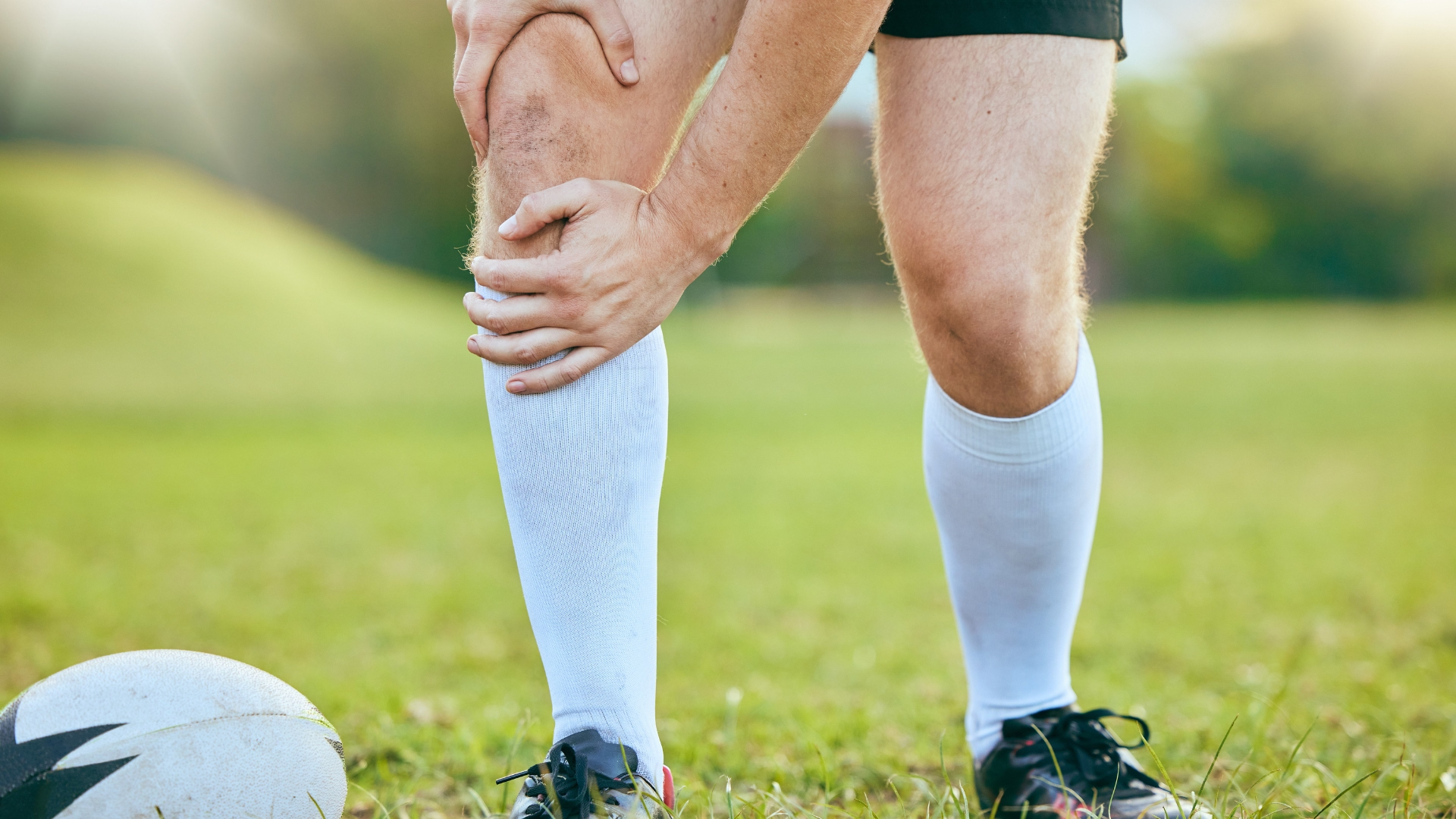
Did your knee bend the wrong way when you landed, got tackled, or stepped into a hole? Or have you always stood with your knees pushed back, and now they ache after a long day on your feet? Both are forms of knee hyperextension, and both are worth taking seriously.
At Vaughan Physiotherapy Clinic, we assess and treat knee hyperextension in athletes, active adults, and people recovering from neurological conditions such as stroke. Our goal is to find out exactly what was injured or what is letting the knee drift too far back, then rebuild the strength and control that keeps it stable, so you can walk, train, and play with confidence.
Here is what knee hyperextension is, how to recognize it, what it can be confused with, and what the research says about treating it.
What Is Knee Hyperextension?
Knee hyperextension means the knee straightens past its normal end point, so the joint bends slightly backward. It shows up in two quite different ways:
- Acute hyperextension injury: a sudden force drives the knee backward, for example landing from a jump with a straight leg, a blow to the front of the shin, or a tackle. This can sprain or tear ligaments and bruise the bones inside the joint
- Genu recurvatum: a long-standing tendency for the knee to sit or move into hyperextension when you stand or walk. It is sometimes called "back knee"
Acute Hyperextension Injuries
When the knee is forced backward, the structures at the back and inside of the joint take the strain. Hyperextension is one of the recognized ways the posterior cruciate ligament (PCL) is injured, accounting for about 12 percent of PCL injuries in the research summarized by the knee ligament clinical practice guideline (Logerstedt et al., 2017). A combined hyperextension and twisting force can also injure the posterolateral corner, the group of ligaments and tendons on the outer back of the knee (Logerstedt et al., 2017).
On MRI, hyperextension often leaves a typical "footprint": bone bruises at the front of the shin bone and the front of the thigh bone where they jam together, sometimes with a torn PCL, a stretched or torn back of the joint capsule, or injury to the popliteus tendon and outer collateral ligament (Hayes et al., 2000). Because several structures can be hurt at once, a careful examination matters even when the pain seems minor.
Genu Recurvatum
Genu recurvatum is an alignment pattern rather than a single injury. Common contributors include:
- Generalized joint hypermobility: naturally loose ligaments throughout the body. A standard hypermobility screen, the Beighton score, includes a check for knee hyperextension
- Muscle weakness or poor control: after a stroke or other neurological condition, many people walk with the knee snapping back during stance (Geerars et al., 2022)
- Connective tissue conditions such as Ehlers-Danlos syndrome, and less commonly past polio or an old injury to the growth plate at the top of the shin bone (Radiopaedia, n.d.)
- Habit: "locking" the knees back when standing, which places constant stretch on the back of the joint
Understanding the Anatomy
- Posterior cruciate ligament (PCL): the strong ligament inside the knee that stops the shin from sliding backward
- Anterior cruciate ligament (ACL): the ligament that stops the shin from sliding forward and twisting
- Posterior capsule: the tough sleeve at the back of the joint that tightens as the knee straightens
- Posterolateral corner: the outer back of the knee, including the lateral collateral ligament and popliteus tendon
- Hamstrings and calf muscles: these cross the back of the knee and act as active "brakes" against hyperextension
- Popliteal artery and nerves: run directly behind the knee, which is why severe hyperextension injuries need careful checking
Recognizing the Symptoms
After an acute hyperextension injury, you may notice:
- Pain at the back of the knee, or at the front where the bones jammed together
- Swelling, sometimes quickly. Rapid swelling within the first hours is a common sign of an ACL injury (Logerstedt et al., 2017)
- Pain with kneeling or slowing down, which is typical of PCL injury (Logerstedt et al., 2017)
- A feeling that the knee is unstable or giving way
- Difficulty fully straightening or bending the knee
With genu recurvatum, symptoms are often milder and build over time:
- Aching at the front or back of the knee after standing for long periods
- Knees that visibly bow backward when you stand relaxed
- Fatigue or poor control when walking, especially after a stroke
- A history of other joint sprains if you are generally hypermobile
What Makes It Worse?
- Standing with locked knees for long periods
- Landing stiff-legged from jumps or decelerating hard with a straight knee
- Weak hamstrings, quadriceps, or calves, which leave the ligaments to do the work
- Limited ankle movement or a tight calf, which can push the knee back during walking
- Returning to sport too soon after an injury, before strength and control are restored
What Else Could It Be?
Several problems can follow a hyperextension or cause similar symptoms. Part of our assessment is ruling these in or out:
- ACL tear: a pop, fast swelling, and giving way during cutting or pivoting (Logerstedt et al., 2017)
- PCL tear: the shin sags backward when the knee is bent. The posterior drawer test is very accurate for this injury (Logerstedt et al., 2017)
- Posterolateral corner injury: outer knee pain and instability, often with a hyperextension or twisting mechanism
- Meniscus tear: locking, catching, or pain along the joint line
- Bone bruise or fracture: deep, aching pain that may need imaging to confirm
- Patellofemoral pain: pain around the kneecap with stairs, squatting, or sitting
- Hamstring or calf strain: pain in the muscle behind the knee rather than in the joint
When to See a Doctor First
Go to the emergency department right away if, after a hyperextension injury, you have:
- A knee that looked out of place or was "put back" at the scene. Knee dislocations come with a high rate of injury to the main artery and nerves behind the knee (Medina et al., 2014)
- A cold, pale, or numb foot, weak pulses in the foot, or a foot you cannot lift (foot drop)
- Severe swelling and pain, or you cannot take any weight on the leg
- Calf pain, warmth, and swelling in the days after the injury, which could be a blood clot
See your physician promptly if the knee keeps giving way, locks, or will not straighten, if you have a fever with a hot swollen knee, or if a long-standing back knee is getting rapidly worse or comes with new weakness or numbness.
Our physiotherapists screen for these signs at your first visit and will coordinate with your physician if imaging or a referral is needed.
Related reading: You may also find our guides to ACL rehab without surgery, Hoffa fat pad syndrome and hamstring strain helpful.
Why Physiotherapy Is Essential
Whether your knee was forced backward in a single moment or has drifted into hyperextension over years, the problem comes down to stability and control. Once ligaments are stretched, torn, or naturally loose, the muscles around the knee have to take over the job of stopping it from going too far back, and rest alone does not rebuild that protection.
The knee ligament clinical practice guideline recommends that people with knee instability and movement coordination problems receive neuromuscular re-education combined with strengthening exercise, guided by a clinician and supported by a home program (Logerstedt et al., 2017). For people who hyperextend during walking after a stroke, a systematic review found moderate evidence that adding proprioceptive (body awareness and control) training to physiotherapy reduces knee hyperextension in the early months of recovery (Geerars et al., 2022).
Physiotherapy addresses the main drivers:
- What was injured: identifying the affected structures and whether you need imaging or a surgical opinion
- How strong the knee is: the hamstrings, quadriceps, calves, and hips all help hold the knee in a safe position
- How you stand, walk, and land: retraining habits that push the knee into its end range
Your Treatment Plan at Vaughan Physiotherapy Clinic
Phase 1: Assessment and Protection (Weeks 1 to 2)
Your first visit focuses on finding out exactly what is going on. A full assessment includes:
- History: how the injury happened, whether you felt a pop, how quickly the knee swelled, and any past episodes of giving way or general joint looseness
- Circulation and nerve check: pulses, skin colour, and sensation in the foot, especially after a significant injury
- Ligament tests: the Lachman test for the ACL and the posterior drawer test for the PCL. Both are accurate when done by a trained clinician, and the posterior drawer test correctly identified PCL tears in about 9 out of 10 cases in the research reviewed by the guideline (Logerstedt et al., 2017)
- Collateral and range of motion tests: stress tests for the inner and outer knee, and how far the knee bends and straightens
- Hypermobility screen and walking analysis: for a long-standing back knee
If we suspect a ligament tear, fracture, or posterolateral corner injury, we will refer you for imaging and a physician or surgical opinion. Injuries to several ligaments at once are time sensitive and often need specialist care.
Early care usually includes:
- Protection: crutches or a brace for a short period if walking is painful or the knee feels unstable. The guideline notes that bracing may be used after acute PCL, posterolateral corner, or more severe collateral ligament injuries (Logerstedt et al., 2017)
- Swelling control and quadriceps activation: ice, compression, gentle movement, and simple thigh tightening exercises
- Avoiding the end range: learning to stand and walk with a "soft" knee rather than locking it back
Phase 2: Restoring Movement and Control (Weeks 2 to 6)
Once the knee settles, the focus moves to regaining comfortable movement and teaching the muscles to protect the joint.
- Range of motion work: regaining full bending and normal straightening, without pushing into hyperextension
- Hamstring and calf activation: the active brakes at the back of the knee
- Balance and position sense: single-leg standing with the knee slightly bent, progressing to unstable surfaces
- Bracing and taping: to block the last few degrees of straightening while control improves
Retraining standing and walking
For people with genu recurvatum, a big part of treatment is changing how the knee is used every day. In small studies of healthy young women who walked with a hyperextension pattern, treadmill walking with live visual feedback of knee angle reduced hyperextension, and the change carried over to normal walking afterward (Teran-Yengle et al., 2011). We use simpler versions in clinic: mirrors, video, and hands-on cues to help you feel a locked knee versus a soft knee. Your program may include:
- Standing with weight evenly spread and knees unlocked
- Slow step-ups and step-downs without the knee snapping back
- Walking drills with a slightly bent knee at heel strike
After a stroke, knee hyperextension during walking is common. A systematic review of eight controlled trials found moderate evidence for proprioceptive training added to regular physiotherapy in the early months after stroke, limited evidence for orthoses that cover the knee, and no clear evidence for electrical stimulation. All of the trials looked only at short-term effects (Geerars et al., 2022). A separate review of 14 studies on orthoses for genu recurvatum concluded that there is not yet enough evidence to say which brace works best, and that the choice depends on how severe the problem is and whether the knee also bends inward (Karimi et al., 2025).
Phase 3: Rebuilding Strength (Weeks 4 to 12)
Strength through the full range
Strong muscles are your best protection against the knee going too far back. Your program may include:
- Hamstring strengthening: bridges, hamstring curls, and Romanian deadlifts with soft knees
- Quadriceps strengthening: squats, split squats, and step-ups, working in the mid-range where the knee is most stable
- Calf strengthening: calf raises with straight and bent knees
- Hip strengthening: side-lying and standing exercises to control the thigh and knee position
The guideline supports strength training combined with neuromuscular training for knee ligament injuries, with progress measured against the uninjured leg (Logerstedt et al., 2017). For PCL and posterolateral corner injuries, we follow the specific exercise restrictions set by your physician or surgeon, since some hamstring exercises need to be delayed.
Manual therapy
Hands-on treatment such as soft tissue work and gentle joint mobilization can help ease pain and stiffness after the injury settles, so you can keep up with exercise. We avoid techniques that push the knee into extension, and use manual therapy alongside, not instead of, strengthening.
Phase 4: Return to Sport and Full Activity (Weeks 8 to 16+)
- Landing training: learning to land softly with bent knees and hips, a key skill since straight-leg landings load the back of the knee
- Hopping, cutting, and deceleration drills that build up gradually
- Return-to-sport testing: single-leg hop tests and strength testing compared with your other leg, as recommended by the guideline (Logerstedt et al., 2017)
- Confidence and readiness: checking how ready you feel to return, since fear of reinjury affects how well people get back to sport (Logerstedt et al., 2017)
Beyond Physiotherapy: Complementary Care for Knee Hyperextension
Strength, control, and a sensible return to activity are the core of treatment, and that is where the research is clearest. Other services at our clinic can help ease pain and muscle tension so you stay consistent with rehab. There are no studies of these treatments for knee hyperextension specifically, so the evidence below comes from other knee conditions. Here is an honest summary of what it does and does not show.
How Acupuncture and Dry Needling Can Help
Acupuncture and dry needling use fine needles to reduce pain and ease tight, tender muscles.
- What the evidence shows: we found no research on needling for knee hyperextension. The closest evidence is a review of 10 trials in other knee pain conditions, mostly pain around the kneecap. It found a moderate short-term reduction in pain and disability, but no clear benefit beyond about 10 weeks, and no clear benefit in knee osteoarthritis or after surgery (Rahou-El-Bachiri et al., 2020)
- Where it fits: as a short-term option for sore, tight muscles around the knee, such as the hamstrings, calf, or quadriceps, while you work on strength and control
- Safety: no serious side effects were reported in the reviewed trials. Soreness after needling is common and usually settles within a day or two (Rahou-El-Bachiri et al., 2020). It is not used over a fresh injury with significant swelling
How Massage Therapy Can Help
Registered massage therapy focuses on the soft tissues around the knee, thigh, and calf.
- What the evidence shows: there are no trials of massage for knee hyperextension. In a randomized trial of 222 adults with knee osteoarthritis, eight weekly one-hour massage sessions improved pain, stiffness, and function more than light touch or usual care, but the advantage was not seen at one year (Perlman et al., 2019). This is indirect evidence from a different knee problem
- Where it fits: it may help with comfort and with muscle tightness that develops as you protect a sore knee. We treat it as a supportive add-on, not a stand-alone treatment
- Safety: very safe. The trial reported minimal side effects (Perlman et al., 2019). Deep work is avoided directly over a fresh injury or suspected blood clot
How Chiropractic and Joint Manipulation Can Help
Chiropractic care for the knee uses joint mobilization and, at times, manipulation of the knee, ankle, and hip.
- What the evidence shows: we did not find trials of chiropractic adjustment for knee hyperextension. In knee osteoarthritis, a review of six trials found that manual therapy improved pain and function in the short term, and worked better when combined with exercise, although the quality of the trials was mixed (Tsokanos et al., 2021)
- Where it fits: for stiffness in the ankle, hip, or knee bending range that affects how you walk and load the knee, combined with strengthening
- Safety: forceful techniques that push the knee into extension are not appropriate for a hyperextension injury, a loose or unstable knee, or a healing ligament. Gentle mobilization is generally safe when chosen carefully
Whichever combination you and your clinician choose, these treatments share one purpose: easing symptoms so you can keep moving while the real fix, stronger muscles and better control of the knee, takes hold.
When Is Surgery Considered?
Most mild hyperextension sprains and most cases of genu recurvatum are managed without surgery. Surgery may be considered when:
- Several ligaments are torn, such as a PCL injury combined with a posterolateral corner injury, or after a knee dislocation
- An ACL tear leaves the knee giving way despite good rehab, or you want to return to cutting and pivoting sports
- A fracture or displaced bone fragment is present
- A bony deformity is causing severe recurvatum
If surgery is needed, physiotherapy before and after remains a core part of recovery, following your surgeon's protocol.
How Long Will It Take?
Recovery depends on which structures were injured, how severe the injury was, and what you need your knee to do. There is little published data on recovery times for hyperextension injuries as a group, because the injury can range from a mild sprain to a multi-ligament tear.
In our experience, a mild sprain with a bone bruise often settles over several weeks, while ligament tears can take several months of rehab, and longer after surgery. For genu recurvatum, changing a long-standing movement habit usually takes consistent practice over a few months.
Prevention and Long-Term Management
- Stand with soft knees: avoid locking your knees back, especially when standing for long periods
- Land softly: bend at the hips and knees when landing from jumps or stopping quickly
- Keep the back of the leg strong: continue hamstring and calf strengthening a few times a week
- Screen if you are hypermobile: knee hyperextension was linked to about a five times higher risk of ACL injury in young female soccer and basketball players (Myer et al., 2008), so injury prevention training is worth the effort
- Act early: if the knee aches or feels unstable again, return to your exercises
Frequently Asked Questions
Is a hyperextended knee serious?
It ranges from a mild sprain to a serious ligament injury. Fast swelling, instability, or trouble bearing weight need prompt assessment, and a knee that looked out of place or a cold, numb foot needs emergency care.
I have always stood with my knees pushed back. Is that a problem?
Not always. Many people with naturally loose joints have no pain. It becomes worth addressing if your knees ache, feel unstable, or you play sports that involve jumping and landing, since knee hyperextension has been linked to a higher risk of ACL injury in young female athletes (Myer et al., 2008).
Should I wear a knee brace?
A brace can help after some injuries, such as PCL or posterolateral corner sprains (Logerstedt et al., 2017), or for some people after a stroke. For most people with genu recurvatum, it is a short-term aid while control improves. The research on which type of brace works best is still limited (Karimi et al., 2025).
Can I keep playing sport?
With a mild sprain, many people can keep doing modified training. With a ligament tear or an unstable knee, cutting, jumping, and contact should wait until testing shows you are ready.
Will my knee always hyperextend?
Your ligament laxity may not change, but how your muscles control the knee can. Small studies show that people can learn to walk with less hyperextension through targeted training (Teran-Yengle et al., 2011), and strength work helps protect the joint.
Can acupuncture, massage, or chiropractic replace exercise and rehab?
No. Strength, control, and gradual return to activity are the foundation, and they have the most research behind them. Needling, massage, and joint mobilization are best used as short-term supports to ease pain and tightness while you rebuild.
Our Specialized Approach at Vaughan Physiotherapy Clinic
✓ Thorough injury assessment: ligament, circulation, and nerve checks to find exactly what was injured
✓ Control, not just strength: retraining how you stand, walk, and land to keep the knee out of hyperextension
✓ Back-of-the-knee strength: targeted hamstring, calf, and quadriceps work to protect the joint
✓ Return-to-sport testing: objective hop and strength testing before you go back to full play
✓ Integrated care: physiotherapy, massage therapy, acupuncture, and chiropractic under one roof when they add value
✓ Safety first: screening for multi-ligament injuries, vascular problems, and fractures, with physician referral when needed
Take the First Step Toward a Stable, Confident Knee
A knee that bends the wrong way does not have to keep you off the field or off your feet. Our team at Vaughan Physiotherapy Clinic helps patients from Thornhill, Vaughan, North York, Richmond Hill, and surrounding communities rebuild knee strength and control with evidence-based, hands-on care.
Book your assessment today:
📞 Phone: 905-669-1221
📍 Location: 398 Steeles Ave W #201, Thornhill, ON L4J 6X3
🌐 Online Booking: www.vaughanphysiotherapy.com
References
Geerars M, Minnaar-van der Feen N, Huisstede BMA. Treatment of knee hyperextension in post-stroke gait: a systematic review. Gait & Posture. 2022;91:137-148. doi:10.1016/j.gaitpost.2021.08.016
Hayes CW, Brigido MK, Jamadar DA, Propeck T. Mechanism-based pattern approach to classification of complex injuries of the knee depicted at MR imaging. RadioGraphics. 2000;20(suppl_1):S121-S134. doi:10.1148/radiographics.20.suppl_1.g00oc21s121
Karimi MT, Kamali M, Tahmasebi A, Akbari Aghdam MH. Different types of orthoses in the management of genu recurvatum: what are the best choices? Muscles, Ligaments and Tendons Journal. 2025;15(2). doi:10.32098/mltj.02.2025.13
Logerstedt DS, Snyder-Mackler L, Ritter RC, Axe MJ, Godges JJ. Knee stability and movement coordination impairments: knee ligament sprain revision 2017. Journal of Orthopaedic & Sports Physical Therapy. 2017;47(7):A1-A83. doi:10.2519/jospt.2017.0302
Medina O, Arom GA, Yeranosian MG, Petrigliano FA, McAllister DR. Vascular and nerve injury after knee dislocation: a systematic review. Clinical Orthopaedics and Related Research. 2014;472(9):2621-2629. doi:10.1007/s11999-014-3511-3
Myer GD, Ford KR, Paterno MV, Nick TG, Hewett TE. The effects of generalized joint laxity on risk of anterior cruciate ligament injury in young female athletes. American Journal of Sports Medicine. 2008;36(6):1073-1080. doi:10.1177/0363546507313572
Perlman A, Fogerite SG, Glass O, et al. Efficacy and safety of massage for osteoarthritis of the knee: a randomized clinical trial. Journal of General Internal Medicine. 2019;34(3):379-386. doi:10.1007/s11606-018-4763-5
Radiopaedia. Genu recurvatum. Radiopaedia.org. Reference article. https://radiopaedia.org/articles/genu-recurvatum
Rahou-El-Bachiri Y, Navarro-Santana MJ, Gómez-Chiguano GF, et al. Effects of trigger point dry needling for the management of knee pain syndromes: a systematic review and meta-analysis. Journal of Clinical Medicine. 2020;9(7):2044. doi:10.3390/jcm9072044
Teran-Yengle P, Birkhofer R, Weber MA, Patton K, Thatcher E, Yack HJ. Efficacy of gait training with real-time biofeedback in correcting knee hyperextension patterns in young women. Journal of Orthopaedic & Sports Physical Therapy. 2011;41(12):948-952. doi:10.2519/jospt.2011.3660
Tsokanos A, Livieratou E, Billis E, et al. The efficacy of manual therapy in patients with knee osteoarthritis: a systematic review. Medicina. 2021;57(7):696. doi:10.3390/medicina57070696
Disclaimer: This article is for educational purposes only and does not replace professional medical advice. A knee that has been forced backward can involve ligament tears, bone injury, or damage to the blood vessels and nerves behind the knee, and long-standing knee hyperextension can be linked to neurological or connective tissue conditions. Always consult a qualified healthcare provider for diagnosis and treatment specific to your condition.